
What Are the Best Hobbies for Seniors Who Love Books?

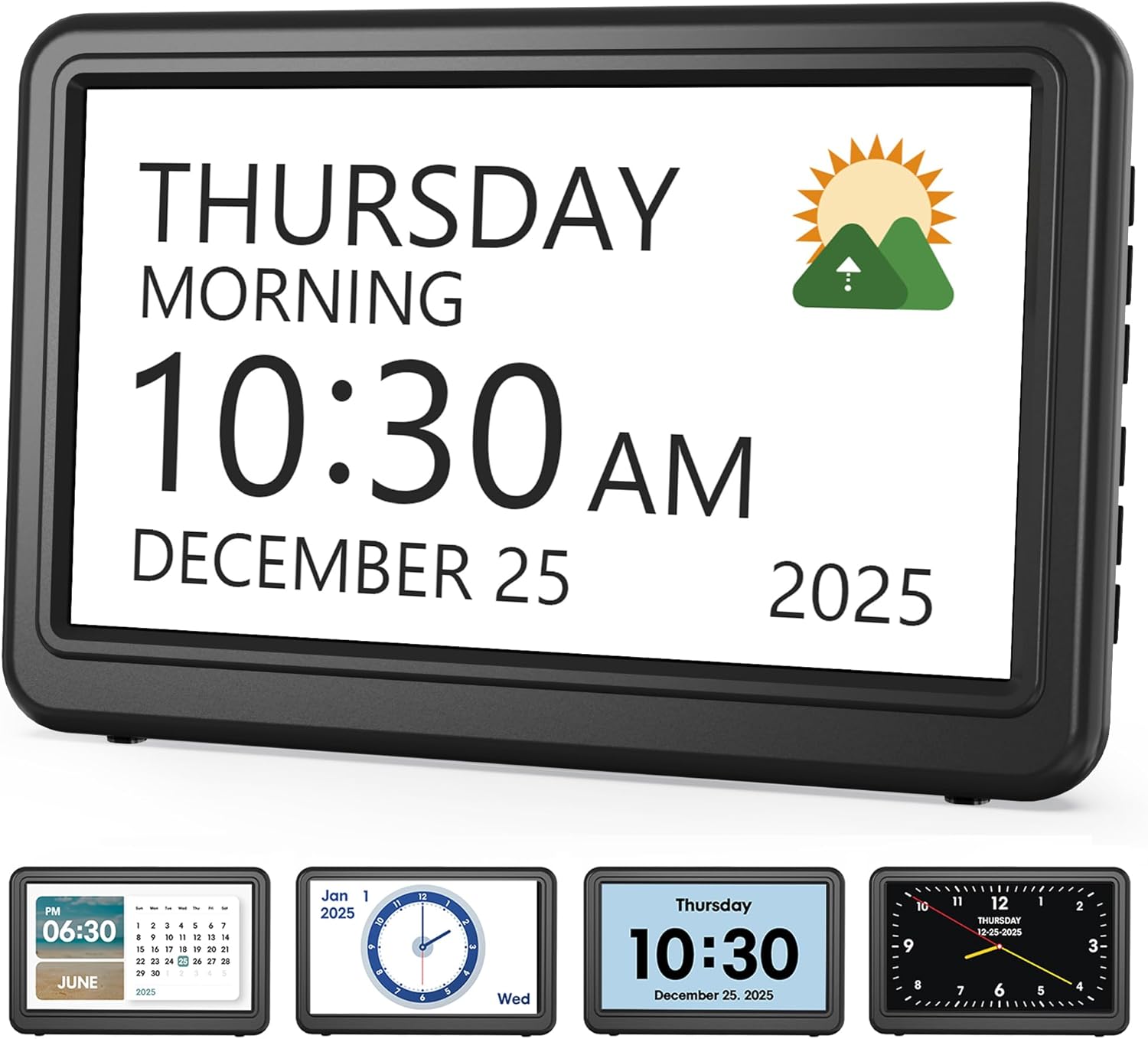
Medication Reminder Alarm

Kindle E-Reader
Medical Alert System
Quick Answer
The best hobbies for seniors who love books include book clubs, audiobooks, literary journaling, memoir writing, creative writing, genealogy, library volunteering, reading challenges, book reviewing, and attending author events. These activities build naturally on a love of reading while adding creativity, learning, movement, or social connection. For more choices beyond reading, explore these hobbies for seniors.
Good places to start
- For socializing: Join a book club, library discussion group, or shared reading circle.
- For creativity: Try literary journaling, memoir writing, bookbinding, or short-story writing.
- For learning: Explore genealogy, local history, language study, or nonfiction reading projects.
- For gentle movement: Listen to audiobooks while walking, gardening, or doing light household activities.
- For home: Review books, keep a reading journal, complete reading challenges, or join an online book group.
Simple first step
- Choose one idea and try it for 20 to 30 minutes this week before committing to a bigger routine.
If you already love books, you don’t need to leave reading behind to find a new hobby. You can use books as the starting point for activities that are social, creative, active, or educational.
I prefer this approach because it builds on an interest you already have. As of 2026, print books, digital libraries, audiobooks, online clubs, and community programs give older readers more choices than ever.
In This Guide
- What Makes a Book-Related Hobby Good for Seniors?
- What Are the Best Hobbies for Seniors Who Love Books?
- Which Book Hobbies Are Best for Social Connection?
- Which Book Hobbies Encourage Learning and Creativity?
- How Can Seniors Make Book Hobbies More Comfortable?
- How Do Different Book-Based Hobbies Compare?
- How Can You Build a Book Hobby Into Your Week?
- Frequently Asked Questions
- Final Takeaway
What Makes a Book-Related Hobby Good for Seniors?
A good book-related hobby should be enjoyable, accessible, and easy to repeat. It should fit your energy, eyesight, mobility, budget, and preferred amount of social interaction.
Definition: A book-centered hobby is a regular leisure activity that uses books, stories, reading, writing, listening, or literary discussion as its starting point.
The hobby doesn’t have to involve sitting with a printed novel for hours. Audiobooks, writing, library activities, history research, and discussion groups all fit.
The National Institute on Aging encourages older adults to take part in meaningful activities they enjoy. Its examples include reading, book clubs, learning, volunteering, creative activities, and community involvement.
Look for a hobby you’ll want to repeat
- Enjoyment: Pick a subject or activity that already interests you.
- Comfort: Adapt print size, lighting, seating, or listening options as needed.
- Flexibility: Choose something you can enjoy for 15 minutes or an entire afternoon.
- Affordability: Libraries can make reading and related activities inexpensive.
- Connection: Add a club or group if you’d like more conversation.
If reading itself is your main interest, this guide to reading as a hobby for seniors looks more closely at formats, comfort, and everyday reading routines.
What Are the Best Hobbies for Seniors Who Love Books?
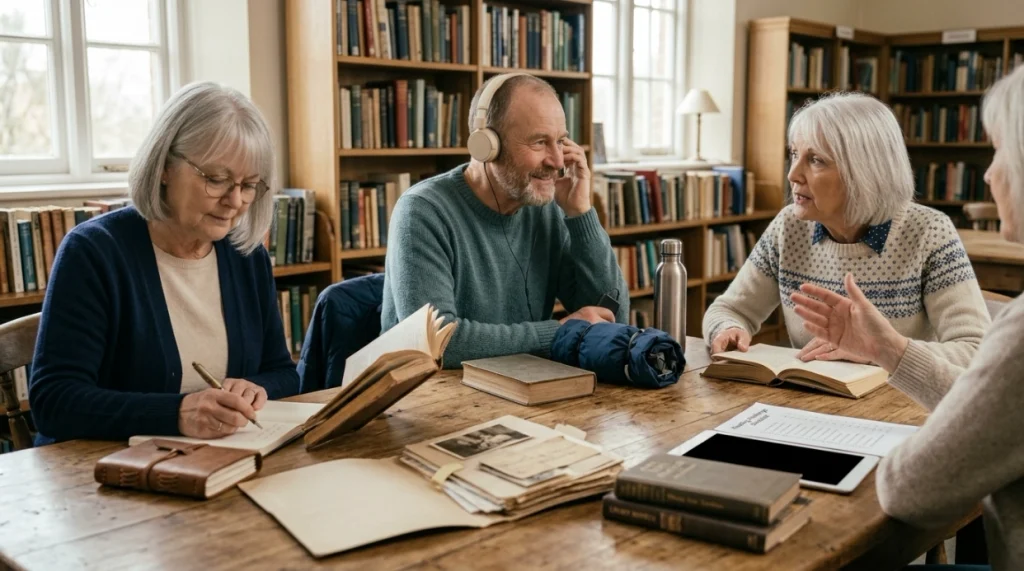
The strongest choices take something readers already enjoy and give it a fresh direction. You can discuss books, create something from them, research their subjects, or combine listening with another activity.
1. Join a book club
A book club turns a private pastime into a regular social event. A monthly meeting is often enough to create routine without making reading feel like homework.
- Choose books as a group.
- Meet at a library, café, senior center, or home.
- Keep discussion questions simple.
- Allow audiobooks and large-print editions.
2. Keep a literary journal
A literary journal is more relaxed than writing formal reviews. Record favorite passages, character thoughts, questions, memories, or ideas sparked by your reading.
Start with five minutes after each reading session. Even three or four sentences can make a book more memorable.
3. Try audiobooks while walking
An audiobook can turn a gentle walk into story time. A 20-minute chapter can also make a regular walking routine feel more interesting.
- Keep the volume low enough to hear your surroundings.
- Choose a familiar, safe walking route.
- Use one earbud when greater environmental awareness is needed.
- Save longer books for several short walks.
Reading and listening are mentally engaging activities, although no single hobby should be presented as a guaranteed way to prevent cognitive decline. The National Institute on Aging’s cognitive health guidance recommends a broader approach that includes physical health, meaningful activities, learning, and social engagement.
4. Write your memoir or family stories
Book lovers often appreciate how stories preserve people, places, and moments. Memoir writing lets you turn your own experiences into something future generations can read.
You don’t need to write an entire autobiography. Begin with one event, one person, one job, one holiday, or one childhood memory.
5. Explore genealogy and local history
Genealogy combines reading with detective work. Family documents, newspapers, maps, photographs, local histories, and archives can lead to months of interesting research.
This works especially well for readers who prefer nonfiction. It can also produce a family tree, scrapbook, or written family history.
6. Write short book reviews
After finishing a book, write a 100- to 200-word review. Focus on what you liked, what surprised you, and who might enjoy it.
You can keep the reviews privately or share them with friends. Some readers enjoy posting reviews online, while others build a personal reading notebook.
7. Volunteer at a library or literacy program
Libraries can offer a natural community for people who already enjoy books. Opportunities vary, but may include organizing materials, supporting events, helping with sales, or participating in reading programs.
Volunteering also adds a sense of purpose and regular contact with other people. Check directly with your local library because roles and accessibility vary.
8. Try creative writing
Reading often gives people an instinct for stories, language, and characters. You can use that interest to experiment with short stories, poetry, family fiction, or personal essays.
There’s no need to publish anything. A 15-minute writing session can be a complete hobby on its own.
9. Create a personal reading challenge
A reading challenge adds gentle structure without turning books into a competition. Choose a target that feels inviting rather than impressive.
- Read one biography each month.
- Try six authors you’ve never read.
- Read one book from six different countries.
- Explore one decade of history at a time.
- Alternate fiction and nonfiction.
10. Attend author talks and literary events
Libraries, bookstores, universities, museums, and book festivals often host talks. Online events can work well when transportation or mobility makes attending in person difficult.
An event also gives you a reason to explore an unfamiliar author. It combines reading with learning and conversation.
11. Learn bookbinding or paper crafts
If you enjoy books as physical objects, simple bookbinding can become a hands-on creative hobby. Beginners can start with small notebooks, stitched pamphlets, bookmarks, or decorated journals.
For more creative options, these artistic hobbies for seniors offer ideas that can complement reading and writing.
12. Compare books with their film adaptations
Read a novel, watch its film adaptation, then compare the two. You can do this alone, with a spouse, or as a small monthly group.
Ask what changed, which characters worked better, and whether the film captured the book’s atmosphere. It creates an easy discussion without requiring academic analysis.
Section Takeaway: Start with the version of books you already enjoy, then add one new element. A reader who likes quiet hobbies might journal or write, while someone seeking more company may prefer clubs, volunteering, or literary events.
Which Book Hobbies Are Best for Social Connection?
Book clubs, reading circles, library volunteering, author events, and shared reading projects are the strongest options when you want books to create more social contact. They give people a natural subject to discuss.
The CDC’s guidance for older adults specifically includes book clubs among activities that can support social connectedness.
Book clubs don’t have to be formal
Four friends meeting once a month can be enough. You don’t need officers, complicated rules, or lengthy discussion sheets.
- Choose one book every four to six weeks.
- Let members alternate choosing titles.
- Meet for 60 to 90 minutes.
- Allow members to attend even if they didn’t finish.
Try shared reading across generations
Reading aloud to grandchildren or discussing the same novel with an adult child can make books part of family life. You can also exchange recommendations through phone calls or video chats.
The goal isn’t to make every reading activity social. Quiet reading can remain yours while one book-related activity adds regular connection.
Which Book Hobbies Encourage Learning and Creativity?
Creative writing, memoirs, genealogy, language learning, research projects, and literary journaling all ask you to do more than consume information. They encourage you to remember, organize, interpret, or create.
If that’s your priority, you can also explore these hobbies for mental stimulation for ideas beyond books.
Turn one book into a learning project
A history book can lead to maps, documentaries, museum visits, or family research. A travel memoir can inspire geography study, cooking, photography, or language practice.
- Historical novel: Research the real events behind the story.
- Travel book: Map the author’s route.
- Biography: Read about the person’s historical period.
- Nature book: Pair it with birdwatching or gardening.
- Cookbook memoir: Prepare one recipe mentioned in the story.
Don’t turn mental stimulation into pressure
A hobby isn’t a test of memory or intelligence. Choose activities because they interest you, not because someone promises they will keep your brain young.
Older adults can continue learning new things, and meaningful activities can be worthwhile for enjoyment and engagement. Health outcomes, however, depend on many factors beyond any one hobby.
How Can Seniors Make Book Hobbies More Comfortable?
Book-related hobbies can be adapted for changes in eyesight, hearing, hand comfort, mobility, or energy. Changing the format is usually easier than giving up the hobby.
If print is difficult to see
- Try large-print editions.
- Increase text size on an e-reader or tablet.
- Use brighter, glare-controlled reading light.
- Try audiobooks when reading becomes tiring.
- Use a book stand to position pages more comfortably.
If holding books is uncomfortable
Large hardcovers can become tiring during longer sessions. Lightweight e-readers, book stands, tablets, or audiobooks can reduce the need to grip a heavy book.
If concentration comes and goes
- Read short stories or essays.
- Choose books with shorter chapters.
- Try 10- to 15-minute sessions.
- Keep a small note about where you stopped.
- Read during the time of day when you feel most alert.
Health note: New or significant changes in vision, hearing, memory, or concentration shouldn’t simply be treated as a hobby problem. An appropriate healthcare professional can help evaluate concerning changes.
How Do Different Book-Based Hobbies Compare?
The best choice depends on whether you want quiet time, conversation, creativity, movement, or structured learning. You can also combine several options.
| Hobby | Simple Starting Session | Social Level | Good Fit For |
|---|---|---|---|
| Book club | 60-minute monthly meeting | High | Conversation and routine |
| Literary journal | 5-10 minutes | Low | Reflection and quiet creativity |
| Audiobook walk | 15-20 minutes | Low to medium | Combining stories with movement |
| Memoir writing | 15 minutes | Low | Creativity and family history |
| Library volunteering | Varies by program | High | Community and purpose |
| Genealogy | 20-30 minutes | Low to medium | Research and family stories |
Don’t treat these times as requirements. They’re practical starting points designed to make a new hobby feel manageable.
How Can You Build a Book Hobby Into Your Week?

Start with one book-centered activity and give it a regular place in your week. A small routine usually works better than an ambitious schedule you abandon after several days.
Try a simple one-week pattern
- Monday: Read for 20 minutes.
- Tuesday: Listen to an audiobook during a short walk or household task.
- Wednesday: Write five minutes in a reading journal.
- Thursday: Read another chapter or short story.
- Friday: Call a friend and exchange book recommendations.
- Weekend: Attend a club, library event, or spend longer with your current book.
You don’t have to do something every day. Two or three enjoyable sessions may be enough to make the hobby part of your routine.
If retirement has opened up more free time, these hobbies to start after retirement can help you combine reading with movement, creativity, volunteering, and other interests.
Use the two-week test
Try a hobby several times before buying lots of equipment or committing to a long program. After two weeks, ask whether you look forward to doing it again.
- Was it enjoyable?
- Was it physically comfortable?
- Did the cost feel reasonable?
- Did you like the amount of social interaction?
- Would you choose to do it without being reminded?
That’s a more useful test than choosing an activity because it appears on a list of things seniors are supposed to do. If you’d like more context, see why hobbies can matter for seniors.
Frequently Asked Questions
What is the easiest hobby for a senior who loves reading?
A reading journal is one of the easiest options because it requires only a notebook and a book you’re already reading. Write a few sentences about a character, idea, favorite passage, or reaction after each session.
What is a good social hobby for an older book lover?
A book club is a natural choice because conversation already has a clear topic. Library groups, literary events, reading circles, and volunteering can also add regular contact with people who share similar interests.
Are audiobooks a good hobby for seniors?
Yes. Audiobooks can make stories and nonfiction easier to enjoy when printed text or holding a heavy book is uncomfortable. They’re also convenient while walking, resting, traveling, crafting, or doing simple household activities.
What can seniors do besides simply reading books?
Try reviewing books, keeping a journal, researching genealogy, writing memoirs, attending author talks, learning bookbinding, joining a literary group, or comparing books with film adaptations. A favorite book can also lead into history, travel, cooking, art, or language study.
Can book-related hobbies help seniors meet people?
Yes. Book clubs, library volunteering, reading groups, classes, and literary events create shared interests that can make conversation easier. The CDC recommends shared-interest groups as one way people can build social connections.
How much time should a senior spend on a hobby?
There is no required amount. Start with about 15 to 30 minutes when trying something new, then adjust according to comfort, energy, enjoyment, and schedule.
What if reading has become difficult because of eyesight or hand discomfort?
Large-print books, adjustable e-readers, book stands, brighter lighting, lightweight tablets, and audiobooks can remove common barriers. New or significant vision changes or persistent discomfort should be discussed with an appropriate healthcare professional.
Final Takeaway
The best hobbies for seniors who love books don’t require giving up reading. They use that interest as a doorway into writing, learning, movement, creativity, volunteering, and friendship.
Choose one idea that sounds enjoyable and make the first session small. One chapter, a 15-minute audiobook walk, five journal lines, or one book-club meeting is enough to discover whether you want to continue.