
Wooden Cane Handle Explained: Types & Benefits


Heated Blanket

Bathtub Grab Bar

Toilet Safety Rails
Quick Answer
A wooden cane handle is the part of a wooden walking cane that you hold for balance and support. It may have a traditional crook, derby, T-shaped, or contoured design. The best shape depends on your grip, hand comfort, cane fit, and support needs—not simply the wood or appearance.
A wooden cane handle combines a practical grip with the traditional appearance of a wooden walking cane. Depending on its shape, it may curve around the hand, provide a broader surface for the palm, or create a straightforward place to hold while walking.
However, a wooden handle is not automatically more comfortable or supportive than a handle made from another material. Its shape, surface finish, size, and relationship to the cane shaft all influence how it feels in use.
What Is a Wooden Cane Handle?
A wooden cane handle is the grip at the top of a walking cane, made from wood or incorporating wooden components. It allows the user to guide the cane and apply appropriate pressure through the hand while walking.
Traditional wooden canes sometimes have a handle and shaft carved from one continuous piece of wood. Other designs attach a separately shaped handle to the shaft. The construction varies, so the appearance alone does not establish how the handle is secured or how much weight the complete cane can safely support.
The handle serves several practical purposes:
- Grip: It provides a surface for the fingers and palm to hold.
- Control: It helps the user position the cane tip during walking.
- Comfort: Its shape influences how pressure is distributed across the hand.
- Appearance: Wood grain, color, and finish give traditional canes a distinctive look.
The handle is only one part of the mobility aid. The shaft, attachment points, and rubber tip must also be appropriate for the user’s needs and in good condition.
What Are the Common Shapes of Wooden Cane Handles?
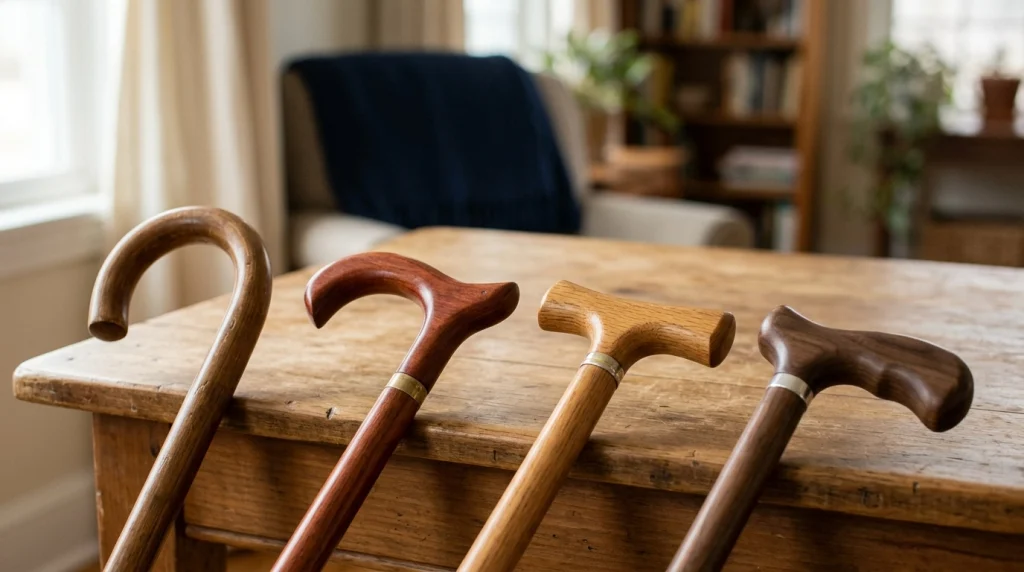
Wooden cane handles come in several shapes, and the differences affect how the hand rests on the grip. Some styles emphasize a traditional curved design, while others provide a more defined surface for the palm.
1. Crook handle
A crook handle has a curved, hook-like shape. It is associated with traditional walking sticks and classic wooden canes.
The curve can make it convenient to hang the cane over a forearm or hook it over a suitable support when it is not in use. However, the grip may concentrate pressure on particular areas of the hand, depending on its dimensions and how the user holds it.
This style may suit someone who prefers a traditional design and finds the curve comfortable. It may be less suitable for someone who struggles to grasp narrow handles or experiences pain when pressure is concentrated in the palm.
2. Derby handle
A derby handle generally has a shaped grip that curves slightly downward at one end. Its design provides a more defined resting surface for the hand than a simple narrow hook.
Derby-style handles are common on traditional walking canes because they combine a classic appearance with a practical grip. Some wooden derby handles are carved and polished, while others use different materials.
For a closer explanation of the shape, see the guide to derby cane handles.
3. T-shaped handle
A T-shaped handle has a relatively straight grip positioned across the top of the shaft, forming a shape similar to the letter T. The hand wraps around the horizontal section.
This design may appeal to users who prefer a simple, clearly defined grip. Comfort depends on the handle’s thickness, length, surface, and how well it fits the user’s hand.
A T-shaped wooden handle should not be assumed to provide extra weight-bearing capacity simply because it looks substantial. The strength and rating of the entire cane are what matter.
4. Contoured or ergonomic handle
A contoured handle has a shape designed to follow some of the natural curves of the hand. Depending on the design, it may provide a broader contact area or guide the fingers into a particular position.
Contoured handles are not always made of wood, and some are designed specifically for the left or right hand. A wooden version can offer a firm, shaped surface, but a rigid finish may feel uncomfortable if it presses against a sensitive area.
Read the walking cane handle types guide for more detail on how different grip designs compare.
What Are the Benefits of a Wooden Cane Handle?
A wooden handle can be a good choice when its shape and finish match the user’s grip preferences. Its main benefits are practical and aesthetic rather than a guarantee of better mobility support.
- Traditional appearance: Natural grain and wood finishes suit people who prefer a classic walking cane.
- Firm grip surface: Finished wood provides a solid surface without the soft compression of foam.
- Variety of shapes: Wooden handles can be curved, rounded, flattened, or carved into more specific profiles.
- Potentially integrated construction: Some traditional designs use a continuous piece of wood for the handle and shaft, avoiding a separate handle-to-shaft joint.
- Personal style: Different woods, stains, and finishes can create a distinctive appearance.
These benefits come with tradeoffs. Wood can be rigid, and a smooth polished surface may feel slippery if the user’s hand is damp. A bulky or narrow grip can also create discomfort, regardless of how attractive the cane looks.
Most importantly, a comfortable handle does not automatically make the cane appropriate for someone who needs substantial weight-bearing assistance. The complete device must suit the person’s mobility requirements.
How Do You Choose a Comfortable Wooden Cane Handle?
Start with your hand comfort and the level of support you need. The handle should feel secure without requiring you to squeeze excessively or bend your wrist into an uncomfortable position.
Check the grip size
A handle that is too narrow may dig into the fingers or palm. One that is too large can make it difficult to close the fingers securely around it.
Hold the cane naturally if possible. Your fingers should be able to wrap around the grip without excessive effort, and the handle should not create a sharp pressure point.
Consider hand or wrist discomfort
If you have arthritis, reduced finger strength, numbness, or recurring wrist pain, the traditional wooden grip may not be the best fit. A larger or ergonomically shaped handle may distribute contact differently and feel easier to hold.
The Cleveland Clinic’s cane guidance explains that handle selection should account for grip comfort and individual needs. Persistent pain or numbness during cane use is a reason to reassess the handle and seek professional advice when appropriate.
Check the surface and finish
The grip should feel smooth, even, and free from splinters, cracks, sharp edges, or peeling finish. A very glossy surface is not necessarily better if it becomes slippery in your hand.
Look for signs of damage around the handle and any connection to the shaft. A loose handle can affect control and should not be used until the problem has been properly addressed.
Match the handle to the way you use the cane
Someone who uses a cane for occasional balance may prioritize a simple, lightweight design. Someone who regularly places pressure through the grip may need more careful assessment of handle shape, shaft alignment, and the cane’s rated capacity.
If you need to lean heavily on a cane, have repeated falls, or cannot maintain balance with one hand-held aid, ask a healthcare professional whether a different mobility device would provide more appropriate support.
Does the Wooden Handle Affect Cane Fit and Safety?
Yes. Handle height and shape influence posture and control, but the entire cane must be fitted correctly. A comfortable grip cannot compensate for a shaft that is too long, too short, damaged, or unsuitable for the user.
For a basic height check, wear your usual walking shoes and stand upright with your arms relaxed at your sides. The handle should generally align with the crease of your wrist. When you hold the cane, your elbow should remain slightly bent rather than locked straight.
The Mayo Clinic’s guide to choosing and using canes explains how handle comfort, wrist height, elbow position, and cane technique contribute to proper use.
Also check the following before regular use:
- The handle is firmly attached and does not rotate or wobble.
- The shaft has no cracks, splits, bends, or other structural damage.
- The rubber tip is secure and has usable tread.
- The cane stands at a suitable height without forcing you to lean sideways.
- The handle remains comfortable during ordinary use, without new pain or numbness.
A fixed-length wooden cane may require professional cutting to achieve the correct height. Do not cut a cane casually, particularly if doing so could damage its construction or compromise its structural integrity.
Warning
Do not rely on a cracked wooden handle, a loose handle joint, or a worn rubber tip. Stop using a damaged cane until it has been appropriately repaired or replaced.
How Should You Clean and Maintain a Wooden Cane Handle?
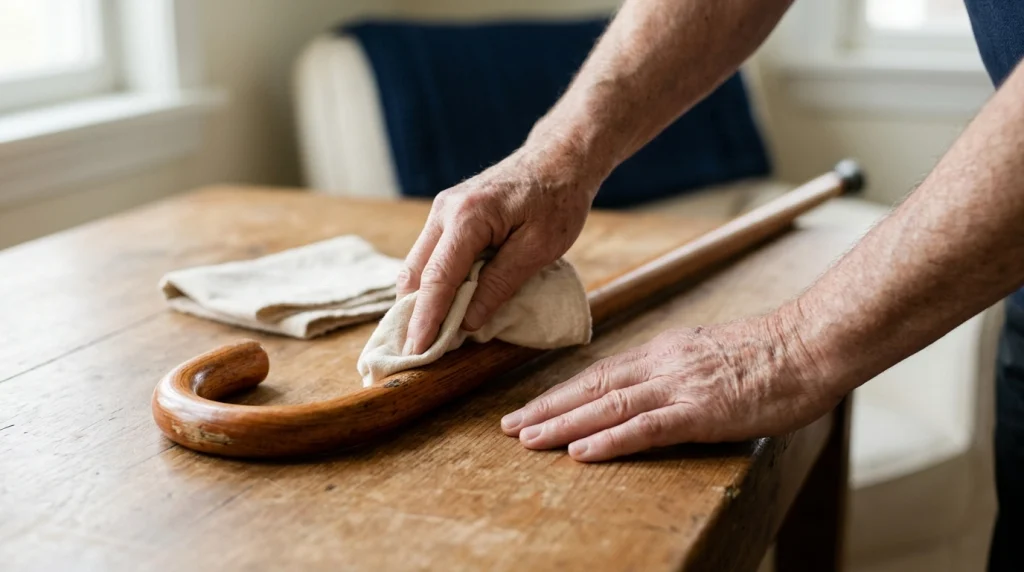
Basic care helps preserve the finish and makes it easier to spot wear. The appropriate cleaning method depends on the wood, protective coating, and manufacturer’s instructions.
- Remove surface dirt: Wipe the handle with a soft, slightly damp cloth.
- Dry it promptly: Use a clean cloth and avoid leaving moisture on the wood.
- Avoid harsh cleaners: Solvents, abrasive pads, and excessive water may damage the finish or expose the wood.
- Inspect the grip: Look for splinters, cracks, loose fittings, or areas where the finish has deteriorated.
- Check the whole cane: Examine the shaft and rubber tip as well as the handle.
Do not apply oil, wax, varnish, or another treatment unless it is suitable for the particular finish and recommended by the manufacturer. An unsuitable coating may change the grip’s feel or make the surface slippery.
Maintenance is not a substitute for structural assessment. If a wooden handle splits or its connection becomes loose, replacing or professionally repairing the cane is safer than attempting an improvised fix.
Frequently Asked Questions
Is a wooden cane handle better than a plastic handle?
Not automatically. Wood offers a firm, traditional grip, while some plastic or cushioned handles may provide shapes or textures that suit particular users better. Comfort, secure control, and proper fit matter more than material alone.
Can a wooden cane handle be replaced?
Sometimes, but it depends on how the handle is attached and whether the cane was designed for replacement parts. Have a damaged or loose handle assessed rather than improvising a repair on a mobility aid.
Are wooden cane handles suitable for people with arthritis?
Some people with arthritis may find a well-sized wooden handle comfortable, while others may struggle with a narrow or rigid grip. A larger, contoured, or otherwise ergonomic handle may be worth assessing with a healthcare professional.
Does a heavier wooden handle provide more support?
No. Handle weight alone does not establish the support a cane can safely provide. The cane’s construction, shaft, attachment points, tip, and stated capacity all matter.
Can a wooden cane handle get slippery?
Yes. Moisture, residue, a worn finish, or a highly polished surface may reduce grip security. Keep the handle clean and dry, and choose a surface that you can hold comfortably without excessive squeezing.
How can I tell if my wooden cane handle is damaged?
Look for cracks, splinters, loose joints, movement where the handle meets the shaft, or changes in the way the cane feels during use. Stop using the cane if structural damage or instability is present.
Conclusion
A wooden cane handle is more than a decorative feature: its shape, size, finish, and attachment affect how comfortably and securely you can hold a walking cane. Crook, derby, T-shaped, and contoured designs offer different grip experiences, so the most suitable option depends on your hand and mobility needs.
Before choosing a cane, check that the handle feels comfortable, the height supports an upright posture, and the shaft and rubber tip are in good condition. If you experience hand pain, numbness, repeated falls, or difficulty using the cane safely, seek help selecting an appropriate mobility aid. A well-fitted cane with a suitable handle is more useful than one chosen for appearance alone.