
What Are Some Fun Hobbies to Start After Retirement?


Spill-Proof Travel Mug

Bed Exit Alarm Sensor

Electric Heating Pad
Quick Answer: Some of the best hobbies to start after retirement include gardening, walking, painting, photography, cooking, volunteering, reading, playing music, joining clubs, and learning new skills. The right hobby gives you something enjoyable to look forward to while keeping your mind, body, or social life active.
The National Institute on Aging encourages older adults to take part in meaningful activities they enjoy as part of healthy aging.
- For creativity: Painting, photography, woodworking, knitting, or writing
- For movement: Walking, gardening, swimming, dancing, or gentle cycling
- For social connection: Clubs, volunteering, group games, or community classes
- For mental stimulation: Reading, puzzles, languages, music, or online courses
- For relaxation: Birdwatching, cooking, journaling, or container gardening
Retirement can suddenly give you something that felt scarce during your working years: time. I think the best way to use some of that time is to choose hobbies that feel interesting rather than simply filling your calendar.
You don’t need an expensive pastime or an ambitious new goal. A satisfying retirement hobby can be as simple as walking with a neighbor, growing herbs, joining a book club, or finally learning to play the guitar.
Table of Contents
- Why are hobbies important after retirement?
- How do I choose a retirement hobby?
- What creative hobbies are fun for retirees?
- What active hobbies can seniors start?
- What hobbies help retirees meet people?
- What hobbies keep your mind active after retirement?
- Which retirement hobby should I try first?
- Frequently asked questions
- Final takeaway
Why Are Hobbies Important After Retirement?
Hobbies can add structure, enjoyment, curiosity, and connection to days that may suddenly feel much less scheduled. Retirement changes more than your work routine because it can also change how often you see other people and where you find a sense of accomplishment.
Definition: A retirement hobby is a voluntary activity you do regularly for enjoyment, learning, creativity, movement, social connection, or personal fulfillment after leaving full-time work.
The CDC’s social connection guidance explains that supportive relationships are important to physical and emotional well-being. That makes hobbies involving other people especially useful when retirement reduces daily contact with coworkers.
Hobbies can give your week a comfortable rhythm
You don’t need to recreate the schedule you had at work. Still, having a few regular activities can make each week feel more purposeful.
- A Tuesday morning gardening session gives you something to plan for.
- A Thursday book club creates regular conversation.
- A weekend walk gets you outdoors.
- A Sunday afternoon art session provides quiet creative time.
I like hobbies that create small reasons to get started each day without making retirement feel over-scheduled. A hobby should support your life, not become another obligation.
They can support several parts of healthy aging
Different hobbies challenge different abilities. Walking involves movement, chess challenges thinking, painting encourages creativity, and volunteering adds social contact and purpose.
Mayo Clinic’s guidance on healthy aging also suggests staying physically active, mentally active, and socially connected. One enjoyable hobby can sometimes cover two or three of those areas at once.
How Do I Choose a Retirement Hobby?
Start with what sounds enjoyable rather than what other retirees seem to be doing. The best hobby is usually one you can realistically imagine continuing after the novelty wears off.
Ask yourself five simple questions
- Do I want to be indoors or outdoors?
- Do I prefer doing things alone or with people?
- Do I want movement, relaxation, creativity, or learning?
- How much money do I want to spend?
- How much physical effort feels comfortable?
Your answers quickly narrow a huge list of possibilities. Someone who likes quiet indoor activities may enjoy watercolor painting, while someone craving new friendships may prefer a walking group or community class.
Try before you invest
One mistake is buying expensive equipment before discovering whether you enjoy an activity. Start with a library book, borrowed supplies, a beginner class, a rental, or an inexpensive starter kit.
AARP’s collection of ways to fill retirement days includes activities ranging from creative pursuits to volunteering. Exploring several possibilities before committing can make the process more fun.
What Creative Hobbies Are Fun for Retirees?
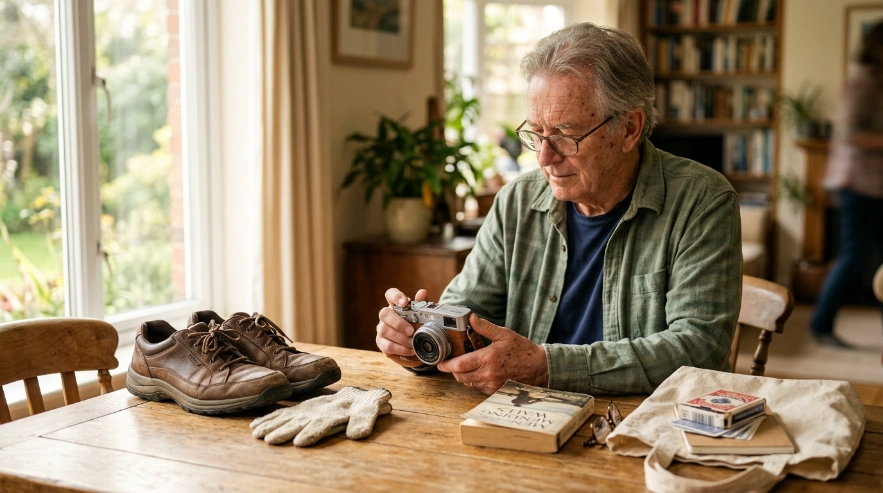
Creative hobbies are especially appealing because there’s no requirement to be talented before starting. The enjoyment often comes from learning, experimenting, and making something that didn’t exist before.
Painting and drawing
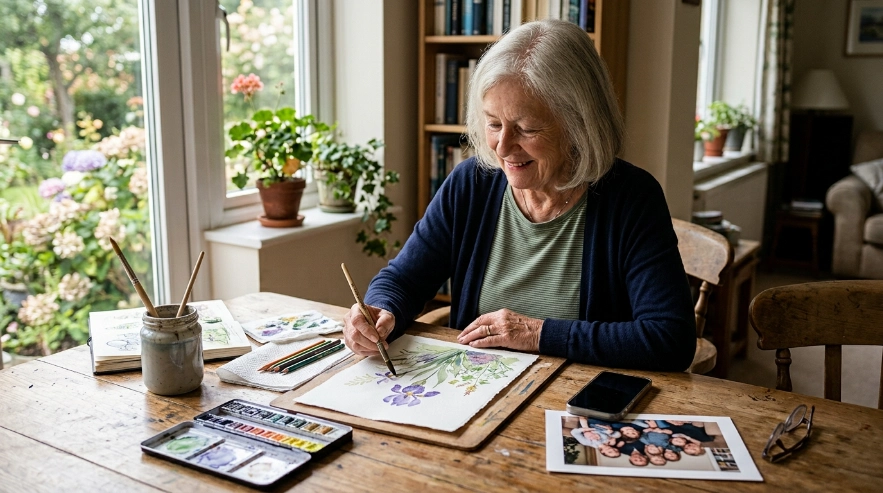
Watercolor, colored pencils, sketching, and acrylic painting can all work for complete beginners. Start with simple landscapes, flowers, pets, household objects, or scenes from photographs.
You can work quietly at home or join a community art class. The second option adds conversation and feedback without turning your new interest into a competition.
Photography
You don’t need a professional camera to begin photography. A smartphone is enough to learn composition, lighting, portraits, nature photography, and basic editing.
Photography also creates a reason to explore parks, markets, family gatherings, historic neighborhoods, and day-trip destinations. That combination of creativity and movement makes it an appealing retirement hobby.
Knitting, sewing, woodworking, and crafts
Hands-on projects can provide a satisfying sense of progress. Depending on your interests, you might make scarves, quilts, birdhouses, models, greeting cards, pottery, or simple home decorations.
- Start with one small project.
- Use beginner-friendly tools.
- Choose comfortable working positions.
- Take regular breaks from repetitive hand movements.
If you’re looking for more inspiration, this guide to activities to do with seniors includes additional creative and recreational possibilities.
Writing and family history
Retirement can also be a wonderful time to write. You could keep a journal, write short stories, document family history, create a recipe collection, or record memories for children and grandchildren.
The goal doesn’t have to be publication. Creating something meaningful for yourself or your family is enough.
What Active Hobbies Can Seniors Start?
An active hobby doesn’t need to involve intense workouts. It simply needs to get you moving at a level that fits your health, mobility, and current fitness.
The CDC’s physical activity guidance for adults 65 and older notes benefits for areas including sleep, brain health, heart health, bone strength, balance, and independent living.
Walking
Walking is one of the easiest hobbies to customize. You can walk through your neighborhood, a shopping center, a park, a botanical garden, or a local trail.
For more ideas on making walking comfortable and sustainable, see this guide explaining what a senior walk is.
Gardening
Gardening combines movement, creativity, routine, and time outdoors. You can start with a backyard garden, raised bed, balcony container, windowsill herb garden, or a few indoor plants.
Keep the setup appropriate for your mobility. Raised containers and lightweight tools can reduce the amount of bending and lifting required.
Swimming, dancing, and cycling
Some retirees enjoy hobbies that feel more like recreation than exercise. Swimming, water aerobics, dancing, and stationary cycling are all options worth exploring when appropriate for your abilities.
If you want a broader fitness foundation first, review these exercise ideas for seniors over 70. Anyone managing significant health or mobility concerns should discuss a new exercise routine with a qualified healthcare professional.
What Hobbies Help Retirees Meet People?
Retirement can remove the everyday conversations that once happened automatically at work. A social hobby creates new places where relationships can develop naturally around a shared interest.
Join a club
Book clubs, gardening clubs, photography groups, walking groups, card clubs, and hobby associations make conversation easier because everyone already has something in common. You don’t need to be outgoing to participate.
Play games with other people
Board games, cards, trivia, dominoes, chess, bingo, and word games can turn a quiet afternoon into a regular social event. If you need ideas for gatherings, browse these group games for senior citizens.
Volunteer
Volunteering can be a hobby when you choose a cause and schedule you genuinely enjoy. Libraries, schools, food programs, animal organizations, museums, gardens, hospitals, community groups, and nonprofits may all need volunteers.
The benefit isn’t limited to being busy. Volunteering gives your time a clear purpose while creating repeated opportunities to meet people.
Try your local senior or community center
Community programs can be useful when you’re not sure where to start. You may find art sessions, exercise groups, lectures, games, technology classes, trips, lunches, and seasonal events in one place.
Checking a free senior center calendar of events can help you see what a typical activity schedule might include.
What Hobbies Keep Your Mind Active After Retirement?
Retirement is a good time to become a beginner again. Learning something unfamiliar can make everyday life feel fresh without the pressure of exams, promotions, or professional performance.
Learn a language
Choose a language connected to your travel plans, family background, or simple curiosity. Short daily practice can include vocabulary, podcasts, conversation groups, videos, and beginner courses.
Learn an instrument
Piano, guitar, ukulele, harmonica, and keyboard can all work for adult beginners. Start with basic chords or simple songs you already enjoy rather than focusing immediately on music theory.
Take a class
Libraries, community colleges, recreation centers, museums, and online learning platforms often provide opportunities to study subjects without pursuing a degree. Possible topics include history, cooking, technology, astronomy, art, photography, gardening, and personal finance.
Read, do puzzles, or join a discussion group
Reading can become more social through a book club. Crosswords, jigsaw puzzles, chess, Sudoku, trivia, and strategy games also provide enjoyable mental challenges.
The important part is choosing something you genuinely want to continue. Mental stimulation works better as a lifestyle when it feels like recreation rather than homework.
Which Retirement Hobby Should I Try First?
If several ideas sound appealing, test two or three for a month. Keep the hobby that makes you look forward to doing it again.
The table below uses suggested beginner routines rather than strict rules. Adjust the time and difficulty to your interests, health, and schedule.
| Hobby | Physical Demand | Social Level | Suggested Starter Rhythm |
|---|---|---|---|
| Walking | Low to moderate | Solo or social | 10–20 minutes, 3 days weekly |
| Gardening | Low to moderate | Usually solo | 20–30 minutes, 2–3 days weekly |
| Painting | Low | Solo or class | 30 minutes, 1–2 days weekly |
| Photography | Low to moderate | Solo or social | One photo outing weekly |
| Book club | Low | High | One meeting monthly |
| Volunteering | Varies | High | 1–2 hours weekly |
| Learning an instrument | Low | Mostly solo | 15 minutes, 3–5 days weekly |
| Group games | Low | High | One gathering weekly |
Use the three-hobby method
If you have plenty of free time, I prefer a simple combination rather than searching for one perfect pastime. Choose one hobby for movement, one for your mind, and one for connection.
- Movement: Walking, swimming, gardening, or dancing
- Mind: Reading, photography, music, puzzles, or language learning
- Connection: Volunteering, clubs, classes, games, or group activities
This approach gives your week variety. It also allows you to change activities when weather, energy, mobility, or your schedule changes.
Frequently Asked Questions About Hobbies After Retirement
What is the easiest hobby to start after retirement?
Walking, reading, gardening, photography, journaling, puzzles, and cooking are among the easiest because they need little preparation. Start with something that fits your current routine and equipment, then give yourself two or three weeks to decide whether you enjoy it enough to continue.
What are inexpensive hobbies for retirees?
Low-cost possibilities include walking, reading library books, birdwatching, journaling, drawing, puzzles, volunteering, container gardening, photography with a smartphone, and free community events. Check libraries, recreation departments, community centers, and local clubs before paying for private lessons or expensive equipment.
What hobbies are good for a retired couple?
Retired couples may enjoy walking, gardening, cooking, dancing, photography, travel planning, volunteering, card games, museum visits, and taking classes together. It can also be healthy for each partner to maintain one or two separate interests so retirement doesn’t require spending every free hour together.
How can I find a hobby if nothing interests me?
Don’t wait for a perfect passion to appear. Choose three low-commitment activities that seem mildly interesting, try each several times, and notice which one improves your mood or makes you curious enough to return.
Are hobbies important for people living alone after retirement?
They can be especially helpful because hobbies create routine and opportunities for interaction. Group activities, volunteering, walking clubs, classes, faith communities, and game groups may help expand social contact when retirement or other life changes reduce everyday connections.
Can I start a physically active hobby in my 70s?
Many adults remain active well into their 70s and beyond, but the right activity depends on health and mobility. Begin gradually, choose an appropriate intensity, and seek medical guidance when you have significant health conditions, pain, balance concerns, or uncertainty about what is safe.
How many hobbies should a retiree have?
There’s no ideal number. One deeply satisfying hobby may be enough, while someone else may prefer three or four activities covering movement, creativity, learning, and social connection.
Final Takeaway: Make Retirement a Time to Explore
As of 2026, healthy-aging guidance continues to emphasize staying active, engaged, mentally stimulated, and socially connected. Hobbies offer a practical way to bring those elements into ordinary life without turning retirement into another job.
You don’t need to find your forever hobby this week. Pick one activity that makes you curious, make the first step easy, and give yourself permission to be a beginner.
- Take a 15-minute walk somewhere new.
- Borrow an art or gardening book from the library.
- Call a local community center about a class.
- Invite a friend to play cards.
- Buy one small plant and learn how to grow it.
- Volunteer for one short shift.
Retirement gives you room to rediscover old interests and build new ones. Start small, stay curious, and keep the hobbies that make your days feel richer.
