
Derby Cane Handle Explained: Benefits & Fit


Tablet for Seniors

Electric Jar Opener

Lap Desk for Reading
Quick Answer
A Derby cane handle is a curved, palm-friendly grip with a slightly hooked or tapered end. It offers a familiar handhold for everyday walking support and can be hooked over an arm when the cane is not in use. Its suitability depends on your hand size, grip comfort, balance needs, and the amount of support you require.
What Is a Derby Cane Handle?
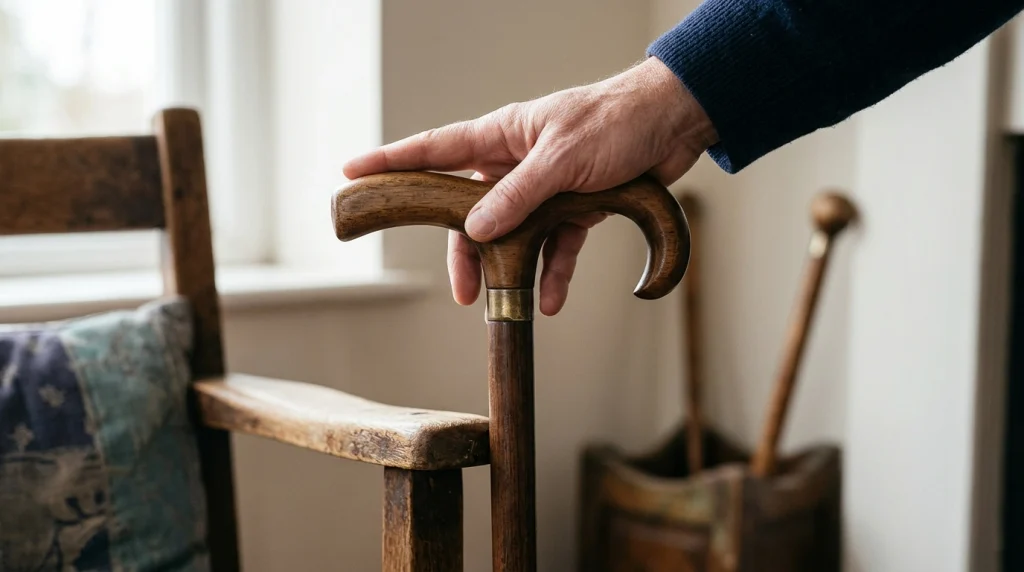
A Derby cane handle is a traditional walking-cane grip shaped with a gently curved top and a downward-turning end. Viewed from the side, it often resembles a short, rounded hook attached to the cane shaft.
The design gives your hand a horizontal surface to hold while the curved end helps keep your hand positioned on the grip. Unlike a simple round knob, a Derby handle provides a more defined place for your palm and fingers.
Derby handles are commonly found on walking sticks and mobility canes made from wood, aluminum, and other materials. Some have a firm, polished finish, while others feature molded or cushioned surfaces for a softer feel.
The word “Derby” describes the handle style, not a specific material, cane height, or level of weight support. Two canes with Derby handles can feel quite different because their grip dimensions, shaft construction, padding, and intended use may vary.
How Does a Derby Handle Work?
The handle gives you a defined gripping surface for controlling the cane as you walk. When the cane is correctly fitted and positioned, you can press down through the grip to help with balance and reduce some of the load on an affected leg, as appropriate for your mobility needs.
The curved end also makes the cane easier to hang over your forearm when you need a free hand briefly. You may also be able to rest it over a suitable hook or support, although whether it stays in place depends on the handle shape and the surface.
One important distinction is that the handle shape alone does not determine how much weight a cane can safely support. That depends on the cane’s construction, its stated weight capacity, its condition, and how it is used.
What Are the Main Benefits of a Derby Cane Handle?
1. A defined, easy-to-find grip
The shaped top gives your hand a recognizable place to rest. Many people find this more intuitive than holding a narrow, rounded knob, particularly when they want a conventional walking-cane grip.
Comfort is personal, however. A handle that fits one person’s palm well may feel too wide, narrow, hard, or curved for someone else.
2. Convenient hanging when the cane is not needed
The curved end can hook over an arm, allowing you to carry the cane while briefly using your hand for another task. It may also make storage easier when a suitable hanging point is available.
This is a convenience feature, not a substitute for placing the cane somewhere secure. A cane that slides off a chair, table, or hook can create a tripping hazard.
3. Often usable with either hand
Most conventional Derby handles are symmetrical enough to be used with either hand. This can be helpful if your preferred hand changes during the day, provided you can grip the handle comfortably and use the cane safely.
That flexibility differs from some anatomical or palm-contoured handles, which are shaped specifically for the left or right hand.
4. A choice of materials and finishes
Derby handles are available in different finishes, colors, and grip materials. A smooth wooden handle may appeal to someone who prefers a traditional appearance, while a molded or cushioned handle may feel more comfortable during regular use.
Appearance should remain secondary to grip security, correct fit, and the cane’s suitability for the user’s mobility needs.
Who Should Consider a Derby Handle?
A Derby handle may suit someone who wants a conventional cane grip, values the ability to hang the cane over an arm, and can comfortably wrap their fingers around the handle without excessive pressure.
It can be a reasonable option for people who use a cane for everyday balance assistance, provided the complete cane meets their support needs. The best choice depends on how the grip feels during actual standing and walking, rather than on the handle’s appearance alone.
Consider a different grip or seek advice about alternatives if:
- Your fingers struggle to wrap around the handle securely.
- Your palm or wrist becomes sore after a short period of use.
- You have arthritis, reduced hand strength, numbness, or limited finger movement.
- The handle feels unstable or forces your wrist into an uncomfortable position.
- You need more support than a standard single-tip cane can safely provide.
A larger, padded, ergonomic, or palm-contoured grip may be more comfortable for some people with hand problems. However, no particular handle style is automatically best for everyone with arthritis or another condition affecting the hands.
If your balance is significantly impaired or you need substantial weight-bearing assistance, a clinician or physical therapist can help determine whether a different mobility aid is more appropriate.
Derby vs. Offset, Fritz, T-Handle, and Crook Handles
These handle styles can look similar in product photographs, but their shapes affect how your hand meets the grip and how the cane sits when loaded. The following comparison explains the main practical differences.
| Handle style | Typical design | What to consider |
|---|---|---|
| Derby | Gently curved grip with a hooked end | Conventional grip and convenient hanging |
| Offset | Grip positioned over a bend in the shaft | Alignment between the hand, shaft, and cane tip |
| Fritz | Crutch-like horizontal grip, often more tapered | Hand shape, finger clearance, and grip width |
| T-handle | Straight crossbar at the top | Whether the bar feels secure and natural in your hand |
| Crook | Pronounced curved hook | Traditional carrying convenience and grip comfort |
These descriptions are general because handle designs vary among manufacturers. In particular, Derby and Fritz styles can overlap in appearance, and sellers do not always use the names consistently.
Is a Derby handle better than an offset handle?
Neither is universally better. An offset handle positions the grip over a bend in the shaft, which can help align the applied force with the cane’s support point. A Derby handle offers a traditional curved grip that many users find convenient and familiar.
If you use a cane frequently, experience wrist discomfort, or need to press down firmly, compare both designs in person if possible. The correct fit, comfort under load, and safe technique matter more than the label.
Is a Derby handle the same as a Fritz handle?
No, although the two styles can look similar. A Derby handle generally has a more pronounced rounded or hooked end, while a Fritz handle is often shaped more like a tapered crutch grip. Naming conventions vary, so examine the actual handle profile rather than relying on the product title alone.
How Do You Choose the Right Derby Cane Handle?
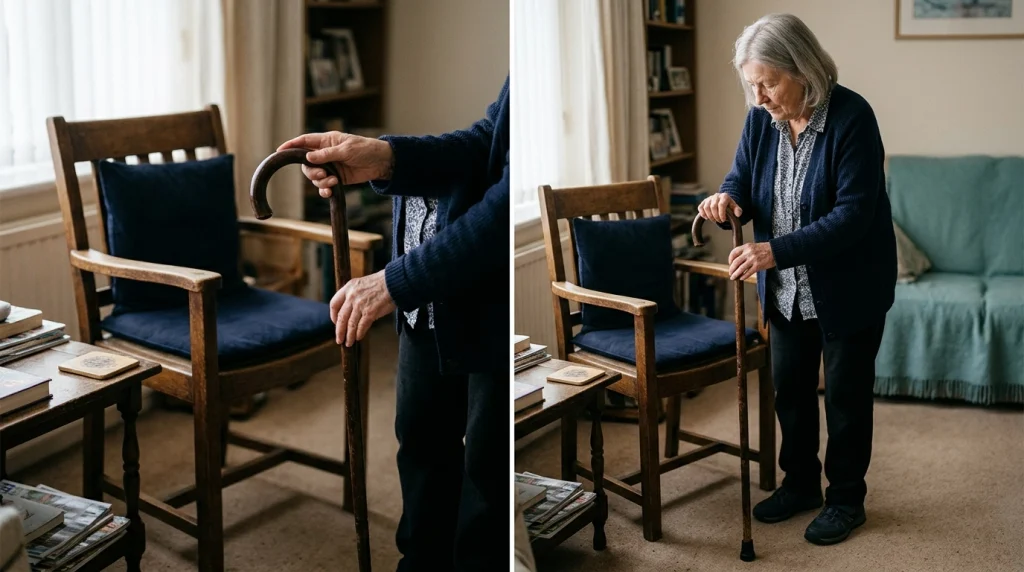
Use these practical checks to compare handles before deciding which one to use.
- Check the grip width. Your fingers should fit around the handle without being squeezed together or stretched uncomfortably. A petite or narrower handle may work better for a smaller hand.
- Check palm and wrist comfort. Hold the cane in your normal walking position. The grip should not create a sharp pressure point or force your wrist into an awkward angle.
- Check the surface. Choose a finish you can hold securely. If your hand is weak or tends to slip, consider a suitable textured or cushioned grip.
- Check the complete cane. Confirm that the cane’s height range, weight capacity, tip, and construction are suitable for your needs.
- Try the grip while standing safely. If possible, test it with assistance and in the shoes you normally wear. Notice whether you can hold the handle without leaning, twisting, or gripping excessively hard.
Do not choose a cane based on handle style alone. If you cannot test it in person, review the handle dimensions and return policy, and ask a healthcare professional for guidance when your mobility needs are complex.
How Should a Derby Cane Be Fitted?
A comfortable handle will not compensate for a cane that is too tall or too short. According to MedlinePlus guidance on using a cane, the handle should reach wrist level when your arm hangs at your side, and your elbow should bend slightly when you hold the grip.
To check the starting fit:
- Wear the shoes you usually use for walking and stand upright, using support if you need help maintaining balance.
- Let your arm rest naturally at your side.
- Check that the top of the handle aligns approximately with the crease of your wrist.
- Hold the handle and confirm that your elbow remains slightly bent rather than locked straight or excessively flexed.
- Ask a physical therapist or other qualified healthcare professional to check the fit if the cane feels awkward or you are unsure how to adjust it.
Many aluminum canes have adjustable shafts, whereas some wooden canes require professional sizing or cutting. Follow the manufacturer’s instructions and ensure any adjustment mechanism is securely locked before use.
For walking with a weak or painful leg, a cane is commonly held in the opposite hand, with the cane and affected leg moving forward together. Follow your clinician’s instructions if your condition, surgery, or weight-bearing restrictions require a different technique.
Common Derby Handle Mistakes to Avoid
- Choosing appearance over comfort: A stylish handle is not a good choice if it causes pain or is difficult to grasp.
- Assuming the handle determines weight capacity: Check the specifications for the entire cane, not just the grip design.
- Using a poorly fitted cane: Incorrect height can affect posture and balance. Recheck the fit if your shoes or mobility needs change.
- Ignoring hand symptoms: Persistent pain, tingling, numbness, or difficulty holding the grip may indicate that the handle or cane setup needs reassessment.
- Neglecting the cane tip: Inspect the rubber tip for wear and replace it as directed. A worn or damaged tip can reduce traction.
- Leaning on unsuitable furniture or hooks: Do not assume a cane will remain securely suspended just because its handle is curved.
If you feel increasingly unsteady, repeatedly stumble, or cannot support yourself safely with a single-tip cane, do not rely on a new handle alone to solve the problem. Ask a qualified healthcare professional to reassess the type of mobility aid you need.
Related Product
Walking Cane With a Derby-Style Handle
Compare handle dimensions, height adjustment, weight capacity, and grip materials to find a cane that suits your needs.
As an Amazon Associate, we earn from qualifying purchases.
Frequently Asked Questions
Can you use a Derby cane handle with either hand?
Generally, yes. Most conventional Derby handles are not molded specifically for the left or right hand. Hold the cane on the side appropriate for your mobility needs and follow any personalized instructions you have received.
Is a Derby handle suitable for someone with arthritis?
It may be comfortable for some people, but the shape alone does not guarantee relief. Compare grip width, cushioning, and wrist position; an ergonomic or palm-contoured handle may be more comfortable if gripping causes pain.
Can a Derby handle support your full body weight?
Do not assume that it can. A cane’s safe loading capacity depends on its complete construction and manufacturer specifications. If you need substantial weight-bearing support, seek professional guidance about a suitable mobility aid.
What is the difference between a Derby handle and a crook handle?
A Derby handle usually has a shorter, more defined grip with a gently curved end. A crook handle has a more pronounced hook. Both may be convenient to hang over an arm, but their comfort and control differ by design.
How do you know if a Derby cane handle is too small?
If your fingers feel cramped, your grip becomes uncomfortable, or you cannot hold the cane securely, the handle may not fit your hand. Compare a larger or differently shaped grip and seek advice if hand weakness or pain affects safe use.
Can you replace the handle on an existing walking cane?
It depends on the cane’s construction. Some handles are permanently fitted or integrated into the shaft, and replacement may not be safe or practical. Check the manufacturer’s instructions or ask a mobility-aid specialist before attempting a modification.
Conclusion
A Derby cane handle is a traditional, gently curved grip that combines a defined handhold with the convenience of hanging the cane over an arm. It can be a practical choice for everyday mobility support, but it is not automatically the most comfortable or appropriate option for every user.
Compare the grip with your hand, check that the cane is correctly fitted, and verify the complete cane’s weight capacity and condition. If you experience hand pain, numbness, or persistent balance problems, seek guidance from a qualified healthcare professional. The right handle should make a properly selected cane easier to control—not compensate for a cane that does not meet your support needs.