
Why Should Seniors Have Hobbies? Benefits for a Happier, Healthier Life


Foot Massager Machine

Smart Digital Photo Frame

Air Fryer for Easy Cooking
Quick Answer
Seniors should have hobbies because enjoyable activities can add purpose, social connection, movement, creativity, and mental stimulation to everyday life. The National Institute on Aging encourages older adults to take part in meaningful activities they enjoy as part of healthy aging.
Why hobbies matter for seniors
- Daily purpose: A hobby gives you something enjoyable to plan, practice, or look forward to.
- Social connection: Clubs, classes, volunteering, and group hobbies create natural opportunities to meet people.
- Mental engagement: Reading, music, crafts, games, and learning can keep the mind actively involved.
- More movement: Walking, gardening, swimming, and dancing can make physical activity more enjoyable.
- Personal enjoyment: Hobbies create space for creativity, relaxation, curiosity, and accomplishment.
A good first step
- Choose one activity that matches your interests, abilities, budget, and preferred level of social contact.
Hobbies aren’t just ways to fill spare time after retirement. The right activity can give an older adult a reason to learn, move, create, connect, and enjoy the week.
As I look at hobby choices for seniors, I use one simple rule: enjoyment comes first. This guide explains why that matters and how to choose an activity that fits real life in 2026.
In This Guide
- Why are hobbies important for seniors?
- How can hobbies support mental and emotional well-being?
- Do hobbies help seniors stay socially connected?
- Can hobbies help seniors stay physically active?
- How do hobbies create purpose after retirement?
- What kinds of hobbies are best for seniors?
- How should seniors choose a hobby safely?
- Frequently asked questions
- Final takeaway
Why Are Hobbies Important for Seniors?
Hobbies are important because they give older adults enjoyable ways to stay engaged with everyday life. They can create structure without making retirement feel like another job.
A senior hobby is a voluntary activity an older adult does regularly for enjoyment, creativity, learning, movement, relaxation, social connection, or personal fulfillment.
Hobbies can meet several needs at once
A good pastime rarely provides only one benefit. Gardening, for example, can combine gentle movement, planning, creativity, outdoor time, and a sense of progress.
- Walking groups combine movement with conversation.
- Book clubs combine reading with social interaction.
- Gardening combines routine, movement, and creativity.
- Volunteering can combine purpose with community involvement.
- Photography combines creativity with exploration.
This is why I don’t think seniors need a long list of hobbies. One or two well-chosen activities can support several parts of daily life.
A hobby should add enjoyment, not pressure
Some people turn retirement into a new competition. They feel they should constantly travel, exercise, volunteer, learn, and stay busy.
That misses the point. A hobby should feel worthwhile enough that you want to return to it.
- It should fit your energy.
- It should fit your mobility.
- It should fit your budget.
- It should fit your personality.
- It should be easy to adapt when life changes.
Even ten or twenty enjoyable minutes can count. Consistency matters more than creating an impressive schedule.
How Can Hobbies Support Mental and Emotional Well-Being?
Hobbies can give the mind something positive and interesting to focus on. Activities involving learning, creativity, problem-solving, or personal goals may be especially engaging.
Learning gives the brain a challenge
Retirement doesn’t have to mean that learning stops. It can become the first time you get to learn without deadlines, grades, or job expectations.
- Learn basic phrases in another language.
- Practice piano or guitar for 15 minutes.
- Try watercolor painting.
- Research family history.
- Complete crosswords or strategy games.
- Take a community or online class.
The National Institute on Aging notes that mentally stimulating and meaningful activities may support well-being as people age. Its broader healthy aging guidance also emphasizes caring for mental, physical, and cognitive health.
Small accomplishments can feel meaningful
Completing a puzzle, harvesting a tomato, finishing a scarf, or learning a song creates a visible result. Those small wins can make an ordinary week feel more rewarding.
I prefer hobbies with easy milestones for beginners. Progress becomes easier to notice when the first goal is small.
- Read one chapter.
- Grow one herb plant.
- Take ten photographs.
- Finish one simple drawing.
- Learn one new recipe.
The goal isn’t to become an expert. Curiosity itself can make an activity worth doing.
Do Hobbies Help Seniors Stay Socially Connected?
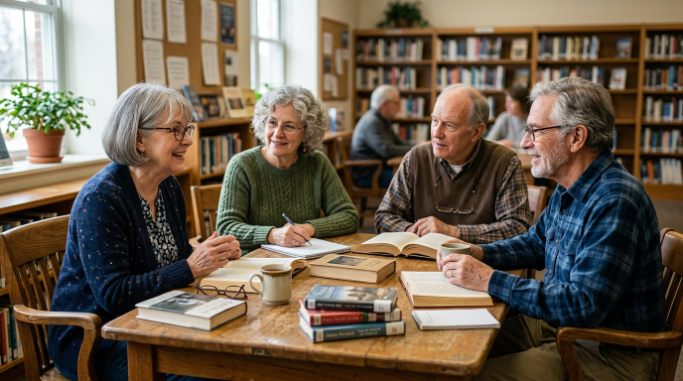
Yes. Social hobbies can create repeated opportunities for conversation, friendship, and belonging, especially after retirement changes daily contact with coworkers.
This can matter because social isolation and loneliness may affect older adults’ physical and emotional well-being. The National Institute on Aging’s guidance on staying connected explains the importance of meaningful social relationships.
Shared interests make conversation easier
Meeting strangers can feel uncomfortable when there is no obvious reason to talk. A shared hobby removes much of that pressure.
- A book club gives everyone the same book to discuss.
- A walking group gives people a regular meeting point.
- A gardening club creates natural questions and advice.
- A card group provides structure for conversation.
- A class lets beginners learn together.
You don’t need to be highly outgoing. Even quiet people can enjoy being around others while focusing on an activity.
Solo hobbies can become social too
A hobby doesn’t need to begin as a group activity. Photography, reading, knitting, cooking, and gardening can all start at home.
Later, the same interest can create connections through clubs, classes, local events, online communities, or family projects.
- Share photographs with relatives.
- Cook a recipe for friends.
- Give handmade crafts as gifts.
- Join a monthly book discussion.
- Exchange plants or gardening tips.
That flexibility makes hobbies useful for seniors who enjoy both independence and occasional social contact.
Can Hobbies Help Seniors Stay Physically Active?
Yes. An enjoyable active hobby can make movement feel like recreation instead of a chore.
Walking, gardening, dancing, swimming, nature photography, and similar activities can all involve physical movement. The right intensity depends on each person’s health and abilities.
Movement doesn’t need to look like a workout
Someone who dislikes gyms may happily spend 30 minutes gardening. Another person may walk farther when birdwatching or taking photographs.
- Walking: Easy to adjust by distance, pace, and location.
- Gardening: Can involve standing, reaching, carrying, and light movement.
- Dancing: Adds music and social enjoyment to movement.
- Swimming: Provides an active recreational option for suitable participants.
- Tai chi: Combines controlled movement and balance practice.
Current CDC guidance for adults 65 and older recommends a weekly mix of aerobic, muscle-strengthening, and balance activities. Adults who cannot meet the full recommendations should remain as active as their abilities and conditions allow.
Adapt the hobby instead of abandoning it
Physical limitations don’t always mean giving up an interest. Often, the setup can change.
- Use raised planters instead of ground-level garden beds.
- Take shorter walks with more rest breaks.
- Choose seated creative projects.
- Use lightweight tools with larger handles.
- Try indoor activities during extreme weather.
Vet note: For this senior-health topic, consult your doctor or another qualified healthcare professional before starting strenuous physical activity if you have medical, mobility, balance, or exercise concerns.
How Do Hobbies Create Purpose After Retirement?
Hobbies can give retirement a comfortable rhythm by creating small events to anticipate. That structure can be especially useful after decades of work schedules suddenly disappear.
Purpose doesn’t need to be dramatic
Purpose can be as simple as tending a garden every morning or meeting friends every Thursday. It doesn’t need to involve a major project.
- Monday: 20 minutes of painting.
- Tuesday: Walk with a neighbor.
- Wednesday: Work on a family-history project.
- Thursday: Attend a club or class.
- Weekend: Garden, cook, photograph, or volunteer.
A routine like this provides structure while leaving plenty of unplanned time. That’s different from rebuilding a full workweek.
Hobbies can create something worth sharing
Some hobbies become especially meaningful when the result benefits another person. Cooking, woodworking, quilting, storytelling, genealogy, and volunteering can all produce something useful or memorable.
A grandparent might record family stories for grandchildren. Another senior might grow vegetables, repair furniture, mentor a student, or volunteer a few hours each month.
- Create: Make something tangible.
- Teach: Share knowledge you already have.
- Learn: Become a beginner again.
- Serve: Help a cause that matters to you.
- Connect: Build regular contact with others.
The best form of purpose is personal. It should matter to you, not simply look productive to someone else.
What Kinds of Hobbies Are Best for Seniors?
The best hobbies for seniors are enjoyable, accessible, affordable, and realistic to continue. Age alone doesn’t determine which activity is appropriate.
I recommend choosing based on the benefit you want most right now. You can always add another hobby later.
| Hobby type | Examples | Typical physical demand | Social flexibility | Easy starter session |
|---|---|---|---|---|
| Creative | Painting, knitting, writing | Low | Solo or group | 20–30 minutes |
| Learning | Languages, music, genealogy | Low | Solo or group | 15–30 minutes |
| Outdoor | Gardening, birdwatching | Low to moderate | Solo or group | 15–30 minutes |
| Active | Walking, dancing, swimming | Adaptable | Often social | 10–20 minutes |
| Social | Cards, clubs, volunteering | Varies | High | One short meeting |
Consider having hobbies for different needs
You don’t have to find one perfect activity. A small mix can provide more variety.
- For movement: Walking, gardening, swimming, or dancing.
- For your mind: Reading, puzzles, music, or language learning.
- For creativity: Painting, writing, crafts, or photography.
- For connection: Clubs, volunteering, games, or classes.
- For relaxation: Birdwatching, reading, journaling, or cooking.
Start with one category that feels missing from your current routine. That keeps the decision manageable.
How Should Seniors Choose a Hobby Safely?
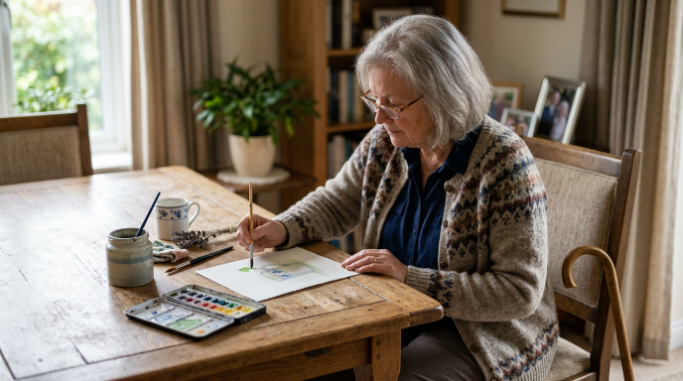
Choose a hobby by balancing interest with comfort, cost, accessibility, and physical demands. Start small before buying expensive equipment or making a long commitment.
Use a simple two-week test
- Choose one activity: Pick something you already feel curious about.
- Start cheaply: Borrow, rent, or buy only basic supplies.
- Try it several times: One awkward first session isn’t enough to judge it.
- Notice how you feel: Consider enjoyment, comfort, energy, and frustration.
- Adapt if necessary: Change the tools, pace, location, or session length.
- Continue only if it fits: You don’t need to keep a hobby you dislike.
Check practical barriers before committing
A hobby may sound perfect until transportation, cost, mobility, eyesight, hearing, or equipment becomes a problem. Thinking about those details early prevents frustration.
- Can I do it comfortably?
- Can I reach the location?
- Can I afford the ongoing cost?
- Can the activity be adapted?
- Do I want a solo or social hobby?
- Would I still enjoy this after the novelty fades?
Stop an active hobby if it causes concerning pain, dizziness, unusual shortness of breath, or unsafe balance. Ask a healthcare professional for guidance when you’re uncertain about physical activity.
Vet note: A personal healthcare professional can account for medications, medical conditions, previous injuries, and mobility limitations that a general article cannot assess.
Frequently Asked Questions
Why are hobbies important for older adults?
Hobbies can provide enjoyment, structure, creativity, movement, mental engagement, and opportunities for social connection. The best hobby is one that an older adult genuinely likes and can comfortably continue.
Can hobbies help seniors feel less lonely?
Social hobbies can create regular contact with people who share similar interests. Walking groups, book clubs, classes, volunteering, games, choirs, and community groups can all provide opportunities for conversation and friendship.
What hobbies keep seniors mentally active?
Reading, puzzles, chess, music, writing, photography, crafts, genealogy, language learning, and classes can all provide mental engagement. Choose an activity that feels challenging enough to be interesting without becoming frustrating.
What are good hobbies for seniors with limited mobility?
Reading, audiobooks, painting, knitting, card games, puzzles, music, genealogy, journaling, photography, container gardening, and online learning can work well. Tools and setups can often be adapted for comfort, vision, hearing, or hand strength.
How many hobbies should a senior have?
There is no ideal number. One meaningful hobby may be enough, while another person may enjoy several activities covering movement, learning, creativity, relaxation, and social connection.
Is it too late to start a new hobby at 70 or 80?
No fixed age makes someone too old to become a beginner. The important factors are interest, safety, accessibility, and choosing a pace that matches the person’s abilities and circumstances.
What is the easiest hobby for a senior to start?
Reading, walking, journaling, puzzles, smartphone photography, birdwatching, simple gardening, and card games are easy starting points for many people. Most require little equipment and can begin with short sessions.
Final Takeaway: Choose a Hobby That Makes Life More Enjoyable
So, why should seniors have hobbies? Because a good hobby can turn free time into something meaningful, enjoyable, social, creative, active, or mentally engaging.
As of 2026, healthy-aging guidance continues to support staying engaged in meaningful activities and maintaining social and physical activity. You don’t need to transform your lifestyle overnight.
- Take a 15-minute walk somewhere pleasant.
- Borrow a book from your local library.
- Plant one herb in a container.
- Try a beginner art project.
- Call a friend about playing cards.
- Visit one community class or club.
- Volunteer for one short shift.
My advice is to begin with curiosity instead of commitment. Try one simple activity, give it a fair chance, and keep it only if you look forward to doing it again.
A hobby doesn’t have to make you more productive. Sometimes making your days richer is reason enough.