
T-Handle Cane Explained: Benefits, Fit & Safety


Large Print Keyboard

Adjustable Bed Wedge Pillow
Medication Reminder Alarm
Quick Answer
A T-handle cane is a walking cane with a straight, horizontal grip that resembles the letter T. It gives the hand a defined place to rest and hold, making it a practical option for people who need light walking support and find traditional curved handles uncomfortable. The correct choice depends on hand comfort, balance, cane fit, and the amount of support needed.
What Is a T-Handle Cane?
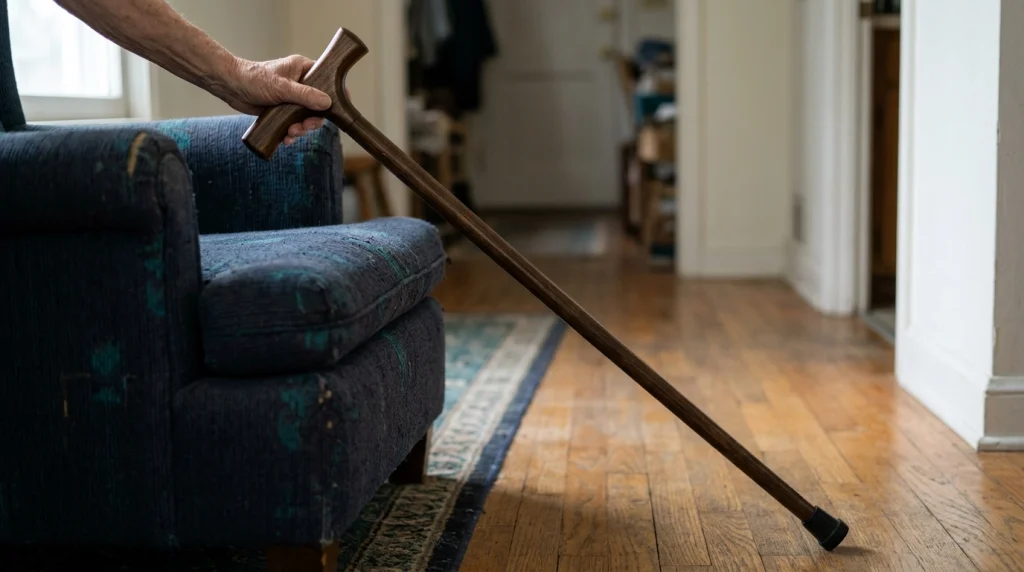
A T-handle cane is a walking aid with a horizontal handgrip attached to the top of a vertical shaft. Viewed from the side or front, depending on the design, the handle resembles a capital letter T. It is also commonly described as a straight-handle or T-grip walking cane.
The main purpose of this design is to provide a straightforward gripping surface. Rather than curling around a traditional hook-shaped handle, the user holds the horizontal grip while the shaft rests on the ground beside them.
T-handle canes are available in different materials, including wood, aluminum, and molded plastic. Some are height-adjustable, while others have a fixed length. Folding models are also available, although folding ability depends on the particular cane rather than the handle shape itself.
A T-shaped grip does not automatically make a cane more stable than every other design. Stability also depends on the base, the shaft, the user’s walking ability, and how the cane is fitted and used.
How Does a T-Handle Cane Work?
The cane provides an additional contact point with the ground, helping some users maintain balance and reduce the load placed on a painful or weaker leg. The T-shaped handle gives the user a defined surface to hold while moving the cane forward.
During ordinary walking, a person who needs support on one side generally holds the cane in the hand opposite the affected leg. For example, someone with right-knee pain will often hold the cane in the left hand, unless a healthcare professional recommends a different technique.
When the cane is positioned correctly, the user can apply controlled pressure through the grip as they move. However, a standard single-point cane is not designed to support the person’s entire body weight or replace a walker when substantial support is required.
Why the horizontal grip matters
The horizontal bar offers a recognizable place for the hand to rest. Some people find this arrangement easier to grasp than a rounded crook handle, particularly when they prefer a more direct grip.
Comfort is individual, though. A straight grip can still create pressure points or discomfort if it is too narrow, too thick, too hard, or poorly suited to the user’s fingers and palm. The shape alone does not guarantee less wrist strain or better control.
Who May Benefit From a T-Handle Cane?
A T-handle cane may suit someone who walks independently but needs a modest amount of extra support. The grip is one consideration when choosing a cane, alongside walking stability, hand strength, comfort, and the intended environment.
- People who need light balance assistance: A properly fitted cane can provide an extra point of contact during walking.
- People recovering from certain injuries: A cane may help during recovery when a healthcare professional has approved its use and specified the appropriate level of weight-bearing.
- People with occasional joint discomfort: The cane may help reduce some pressure on an affected leg when used correctly.
- People who prefer a straight grip: The horizontal handle may feel more natural than a curved handle for some users.
- Older adults who want to maintain mobility: A cane may support everyday movement when the person’s balance and strength are appropriate for a single-point walking aid.
A T-handle cane is not necessarily the right choice for someone who has frequent falls, severe balance difficulties, significant weakness on both sides, or trouble controlling the cane. In these situations, a walker or another prescribed mobility aid may offer more appropriate support.
T-Handle Cane vs. Other Walking Cane Handles
Different handle shapes affect how the hand contacts the cane, how easily the user grips it, and how comfortable it feels during repeated use. The most useful comparison is not which handle is universally best, but which design suits the individual’s hand and walking needs.
| Handle type | Main characteristic | What to consider |
|---|---|---|
| T-handle | Straight horizontal grip | Whether the grip feels secure and comfortable |
| Crook handle | Curved or hooked grip | Easy to hang over an arm or suitable hook, but may be less comfortable for some hands |
| Derby handle | Curved, shaped grip that follows the hand | The curve and grip dimensions should suit the user’s hand |
| Ergonomic or contoured grip | Shaped to support the palm and fingers | Some designs are specific to the left or right hand |
| Offset handle | Grip and shaft are positioned to improve alignment over the base | Shaft alignment and comfortable weight transfer |
These categories can overlap: a cane may have a straight grip and other design features that affect how it distributes pressure. For more background, see our guide to walking cane handle types.
How Should a T-Handle Cane Fit?
A cane should be fitted to the user’s standing posture, not selected solely by estimating height. Incorrect length can make walking less comfortable and may interfere with balance.
- Stand upright comfortably. Wear the shoes normally used for walking and let both arms hang naturally at the sides.
- Check the handle height. The top of the grip should generally line up with the crease of the wrist on the side where the cane will be held.
- Hold the handle naturally. Keep the shoulders relaxed rather than raising one shoulder to reach the grip.
- Check the elbow angle. The elbow should remain slightly bent, commonly around 15 to 30 degrees, when holding the cane upright.
- Check the cane’s adjustment. For an adjustable model, make sure the locking mechanism is secure before walking. Fixed-length canes may require professional sizing or cutting according to the manufacturer’s instructions.
If the cane is too short, the user may lean toward it. If it is too tall, the shoulder may lift or the arm may feel awkward. Either problem can make the cane harder to use effectively.
For additional guidance, the Mayo Clinic’s guide to choosing and using canes explains fit, handle comfort, and safe walking technique.
How to Use a T-Handle Cane Safely
Correct technique matters more than the handle shape alone. A cane that fits well can still be difficult to use safely if it is held on the wrong side or moved out of sequence.
- Hold the cane on the appropriate side. For many people who need support for one affected leg, this is the opposite hand. Follow individualized instructions if your clinician has recommended a different technique.
- Move the cane and affected leg together. Place the cane a short distance ahead while advancing the affected leg, following the walking pattern taught to you.
- Step through with the stronger leg. Use the cane for controlled support rather than leaning heavily on it.
- Take small, steady steps. Avoid rushing, twisting suddenly, or placing the cane so far forward that you must stretch to reach it.
- Check the walking surface. Watch for loose rugs, wet floors, uneven pavement, and other hazards. Wear shoes with suitable nonslip soles.
Stairs require particular care. Use a handrail whenever possible and follow the technique taught for your specific mobility needs. If you cannot manage a step safely with your cane, do not attempt it alone.
Warning
A standard cane is not intended to bear your entire body weight. If you need to pull yourself upright using the handle, lean heavily on the cane, or frequently lose balance, seek an assessment to determine whether a different walking aid is safer.
What Should You Check Before Using One?

Make a quick inspection part of your routine, particularly if the cane is used every day or has been stored for a while.
- Handle: Check for cracks, loose connections, rough edges, or a surface that becomes slippery when your hand is damp.
- Shaft: Look for bending, damage, or loose adjustment components.
- Height lock: On an adjustable cane, confirm that the pin or locking mechanism is fully engaged.
- Rubber tip: Check for wear, splitting, looseness, or a smooth surface that may slip.
- Grip comfort: Notice whether holding the handle causes pain, numbness, tingling, or pressure in the fingers or palm.
Replace damaged rubber tips and stop using a cane with a loose handle or unreliable locking mechanism until it has been repaired or replaced. Do not modify the shaft or handle in a way that compromises its strength.
When Is Another Mobility Aid a Better Choice?
A T-handle cane is primarily a handle design, not a guarantee of a particular level of support. The number of contact points at the base and the user’s mobility needs also determine whether a cane is appropriate.
- Consider a quad cane: A base with four contact points may provide a broader support base for some users, although it can be heavier and requires the feet of the base to be positioned correctly.
- Consider a walker: A walker may be more suitable when a person needs more support than a single cane can safely provide.
- Request a professional assessment: Repeated falls, new walking difficulties, significant weakness, or uncertainty about weight-bearing instructions are reasons to have the mobility aid reviewed.
Our guide to the four-point cane and its uses explains how a multi-point base differs from a standard cane. For broader context, the guide to what a walking cane does and the main types available covers the role of canes in everyday mobility.
If walking suddenly becomes difficult, or a person develops sudden weakness, severe pain, or an inability to bear weight, stop and seek prompt medical assessment rather than relying on a different handle or cane.
Frequently Asked Questions
1. Is a T-handle cane the same as a straight-handle cane?
Usually, yes. Both terms commonly describe a cane with a horizontal grip rather than a traditional curved crook handle. Exact designs vary between manufacturers.
2. Is a T-handle cane good for older adults?
It can be suitable for an older adult who needs light walking support and finds the grip comfortable. The person’s balance, hand function, strength, and overall mobility determine whether a cane is appropriate.
3. Can a T-handle cane help with arthritis?
It may be comfortable for some people with arthritis, but not everyone benefits from the same grip. If holding the handle increases joint pain or pressure, try a professionally recommended alternative grip.
4. Should a T-handle cane be held on the weaker side?
For many people who need support for one affected leg, the cane is held in the opposite hand. Some conditions require a different technique, so follow the instructions provided by your healthcare professional.
5. How do you know if a T-handle cane is too tall or too short?
When standing naturally, the grip should generally align with the wrist crease, and the elbow should remain slightly bent. Leaning sideways or lifting the shoulder to reach the handle may indicate that the fit needs checking.
6. Does a T-handle cane provide more stability than a four-point cane?
Not necessarily. The T-handle describes the grip, while a four-point cane has a broader base. A multi-point base may provide more support for some users, but the best aid depends on individual balance and walking needs.
Conclusion
A T-handle cane is a straightforward walking aid with a horizontal grip designed to provide a clear, accessible place for the hand. It can suit people who need modest walking support and prefer this style of handle, but comfort and stability depend on more than grip shape alone.
Before using one, check the height, handle comfort, adjustment lock, and rubber tip. Use the cane with the correct walking technique, and do not rely on it for more support than it is designed to provide. If balance is poor, walking has become more difficult, or the grip causes pain, a healthcare professional can help identify a safer and more suitable mobility aid.