
Is Reading a Good Hobby for Seniors? Benefits and Tips


Cane with LED Light

Adjustable Walker with Wheels

Large Print Keyboard
Quick Answer
Yes, reading is a good hobby for seniors because it’s flexible, inexpensive, mentally engaging, and easy to enjoy at home. It can also become a social activity through book clubs or shared reading, while the National Institute on Aging encourages older adults to stay involved in meaningful activities they enjoy.
Why reading works well for many seniors
- Easy to start: A book, magazine, e-reader, or audiobook is enough.
- Flexible pace: You can read for ten minutes or spend an entire afternoon with a book.
- Mentally engaging: Stories and nonfiction encourage attention, imagination, learning, and reflection.
- Highly adaptable: Large print, digital text, and audiobooks can make reading more comfortable.
- Social when wanted: Book clubs and reading groups add conversation and regular contact with others.
A simple way to begin
- Choose something you already want to read and try a comfortable 15-minute session.
I think reading is one of the easiest retirement hobbies to underestimate. It asks for little setup, yet it can fill a quiet afternoon with curiosity, entertainment, and new ideas.
You also don’t have to be a lifelong book lover. In this guide, I’ll show you how to make reading enjoyable, comfortable, accessible, and social if that’s what you want.
In This Guide
- Is reading a good hobby for seniors?
- What are the benefits of reading for seniors?
- What should seniors read for enjoyment?
- How much should seniors read each day?
- Are print books, e-readers, or audiobooks better?
- How can seniors make reading easier?
- Can reading be a social hobby?
- Frequently asked questions
- Final takeaway
Is Reading a Good Hobby for Seniors?
Yes. Reading is an excellent senior hobby because it can fit different interests, energy levels, schedules, budgets, and physical abilities.
It works just as well for someone who reads daily as it does for a beginner. There is no score to beat and no age when you’re too late to begin.
Definition: A reading hobby is the regular enjoyment of books, magazines, newspapers, essays, audiobooks, or other written material for pleasure, learning, relaxation, or connection.
Why does reading fit retirement so well?
Retirement often gives people more control over their time. Reading can add a pleasant rhythm without making the day feel scheduled.
- Low setup: You can begin with a library book or something already on your shelf.
- Flexible sessions: Ten minutes can still feel worthwhile.
- Year-round access: Weather rarely stops you from reading.
- Wide choice: Fiction, history, travel, mysteries, biographies, and hobbies are only a few options.
- Easy adaptation: Print size, format, lighting, and listening options can change with your needs.
I especially like hobbies that don’t punish you for missing a day. A book simply waits until you’re ready to return.
Reading doesn’t need to be your only hobby
Reading is mentally engaging, but it’s mostly sedentary. I wouldn’t use it as a replacement for movement or face-to-face connection.
A balanced retirement routine might pair reading with walking, gardening, volunteering, or a group activity. That gives you more variety without giving up quiet time.
What Are the Benefits of Reading for Seniors?
Reading can give older adults regular mental engagement, enjoyment, learning, and a sense of routine. The strongest reason to read, though, is simple: you enjoy doing it.
Reading gives your mind something interesting to work on
A novel asks you to follow people, events, motives, and details. Nonfiction asks you to connect new information with things you already know.
That makes reading a mentally engaging activity. It doesn’t mean a book can prevent dementia or guarantee better memory.
I would be cautious of any claim that promises that. Healthy aging is much broader than one hobby.
Books can keep curiosity alive
Retirement doesn’t have to mean the end of structured learning. Reading can take you into history, science, cooking, travel, art, nature, or almost any subject.
- Read a biography of someone you’ve always admired.
- Explore the history of your hometown.
- Learn more about gardening or photography.
- Try a travel memoir before planning a trip.
- Read fiction from a country you’ve never visited.
The best part is that you control the pace. There are no tests unless you decide to take a class too.
Reading can create a relaxing routine
A regular reading period can give a quiet part of the day some structure. Morning coffee and a newspaper may work for one person, while another prefers a novel before bed.
Don’t force a routine simply because it sounds healthy. A hobby lasts longer when the routine feels enjoyable.
Stories can create conversation
A book gives you something specific to discuss with friends or family. It can turn an ordinary phone call into a conversation about characters, ideas, history, or personal memories.
This is one reason I like reading as both a solo and social hobby. You can decide how much interaction you want.
Section Takeaway: Reading works best as an enjoyable source of learning, curiosity, and routine rather than as a promised cure for cognitive decline.
What Should Seniors Read for Enjoyment?

The best thing to read is whatever makes you want to continue. You don’t earn extra points for choosing a difficult classic you dislike.
Start with your natural interests. Then experiment when you feel curious.
Good choices for recreational reading
- Mysteries: Good for readers who enjoy clues and a clear plot.
- Historical fiction: Combines storytelling with a sense of another time.
- Biographies: Useful if real lives interest you more than fictional characters.
- Travel writing: A good choice for armchair exploration or trip inspiration.
- History: Works well when you enjoy following real events and people.
- Short stories: Helpful when a full novel feels like too much commitment.
- Humor: Ideal when you want light, easy reading.
- Hobby books: Gardening, cooking, crafts, photography, and genealogy can turn reading into action.
What if you haven’t read for pleasure in years?
Don’t start with the book you think you should read. Pick a subject you already discuss, watch, collect, or search for online.
If you like old movies, try a film biography. If you love birds, start with a beautifully illustrated nature book.
You can also abandon a book that isn’t working. Reading for pleasure isn’t a school assignment.
How Much Should Seniors Read Each Day?
There is no required amount of daily reading for seniors. A comfortable routine matters more than hitting a fixed number of pages or minutes.
For a beginner, I like a simple starting point of about 15 to 20 minutes. That’s long enough to settle into a book without making the hobby feel demanding.
Build the routine around your energy
- Low-energy day: Read for 5 to 10 minutes.
- Normal day: Try a 15- to 30-minute session.
- Engrossing book: Keep going if you’re comfortable.
- Busy day: Skip it without guilt and return tomorrow.
Some readers naturally spend an hour or more with a book. Others enjoy a few pages at breakfast.
Both count. Consistency is useful only when it makes the hobby easier to enjoy.
Choose the easiest time of day
If your eyes feel fresher in the morning, that’s a sensible reading time. If evenings are quiet, you may prefer reading after dinner.
Good lighting and a supportive chair can make longer sessions more comfortable. I also like keeping the book somewhere visible instead of storing it away.
Health note: Persistent headaches, eye discomfort, or new vision changes deserve attention from an appropriate healthcare or eye-care professional rather than simply pushing through them.
Are Print Books, E-Readers, or Audiobooks Better for Seniors?
No single reading format is best for every senior. The right choice depends on eyesight, hand comfort, hearing, technology preferences, and where you like to read.
| Feature | Print Book | E-Reader or Tablet | Audiobook |
|---|---|---|---|
| Text size | Fixed unless large-print edition | Usually adjustable | No printed text needed |
| Hand comfort | Heavy books may tire hands | One lightweight device can hold many books | Minimal holding once playback starts |
| Technology needed | None | Basic device navigation | Player, phone, tablet, or compatible device |
| Best fit | Traditional reading experience | Readers wanting adjustable display options | Listening while resting or when print is difficult |
| Library options | Commonly available | Many libraries lend digital books | Many libraries lend digital or physical audiobooks |
Do audiobooks count as reading?
For a recreational hobby, I wouldn’t worry about the label. Listening to an audiobook still lets you enjoy stories, information, language, and ideas.
It can also keep books accessible when holding a printed book becomes uncomfortable. Some people switch between audio and print depending on the day.
Don’t choose one format forever
I like the flexibility of using different formats for different situations. A printed mystery may be perfect at home, while an audiobook works better during a long drive.
An e-reader can be handy when you want larger text without hunting for a large-print edition. The goal is comfortable access, not loyalty to a format.
Section Takeaway: The best reading format is the one that removes barriers and makes you want to keep reading.
How Can Seniors Make Reading Easier?
Reading often becomes more enjoyable when you adjust the environment or format instead of giving up the hobby. Small changes can make a noticeable difference.
If small print is difficult
- Try large-print editions.
- Increase the font size on an e-reader or tablet.
- Use brighter, comfortable task lighting.
- Experiment with an audiobook.
- Ask your library about accessible reading formats.
For eligible U.S. readers with qualifying print disabilities, the National Library Service for the Blind and Print Disabled offers accessible audio and braille reading services.
That can be worth exploring when regular print is difficult to read or physically handle. Eligibility rules apply.
If holding books is uncomfortable
A thick hardcover can become tiring long before the story does. Try a book stand, lap desk, lightweight paperback, e-reader, or audiobook.
You can also read in shorter sessions. Ten comfortable minutes are better than an hour spent fighting the book’s weight.
If concentration isn’t what it used to be
- Choose shorter chapters.
- Try short stories or essays.
- Read when you’re less tired.
- Keep sessions brief at first.
- Use a bookmark or simple note to record where you stopped.
Don’t assume you need to finish long novels to be a reader. Magazines, local history, poetry, essays, and short nonfiction all count.
Health note: A sudden or significant change in vision, hearing, or ability to concentrate should not be dismissed as a hobby problem. Consider discussing it with an appropriate healthcare professional.
Can Reading Be a Social Hobby?
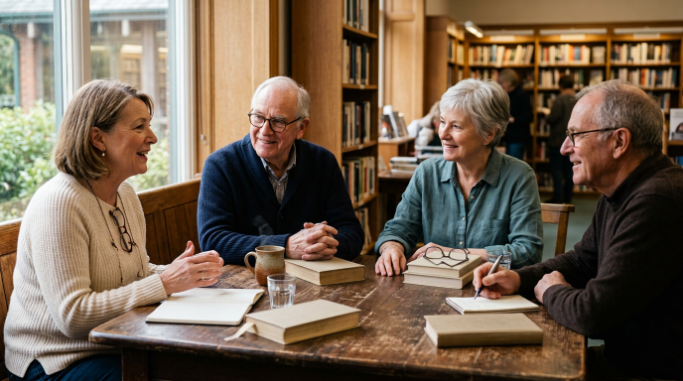
Yes. Reading can remain a quiet solo activity, but it can also create an easy reason to meet and talk with other people.
The Centers for Disease Control and Prevention includes book clubs among activities older adults can use to build social connections. You don’t need a large formal group to get that benefit.
Try a book club
A monthly book club provides a deadline without demanding a packed schedule. It also gives everyone a topic to discuss from the moment they arrive.
If full novels feel too long, use short stories, magazine features, essays, or even selected chapters. The format can fit the group.
Create a two-person reading habit
You don’t need ten people. Pick a book with a friend, sibling, neighbor, or grandchild and talk about it once a week.
This works especially well by phone or video call when you live far apart. The book provides a natural conversation starter.
Read across generations
Grandparents and grandchildren can share age-appropriate stories, family history, comics, poetry, or illustrated books. Older grandchildren may enjoy reading the same mystery or fantasy novel and comparing opinions.
I like this approach because the book isn’t the whole point. It gives two people something new to share.
Use your local library
- Ask about book clubs.
- Look for author talks.
- Check large-print collections.
- Ask about digital lending.
- Explore audiobook options.
- Look for history or discussion groups.
A library can turn a home-based hobby into a community activity without requiring expensive equipment or membership fees.
Frequently Asked Questions
Can reading help seniors keep their minds active?
Reading is a mentally engaging activity that involves attention, language, memory, imagination, and learning. It can be one enjoyable part of an active lifestyle, but it shouldn’t be presented as a guaranteed way to prevent dementia or other cognitive conditions.
Is reading good for seniors with limited mobility?
Yes. Reading can be done from a chair, bed, porch, or other comfortable location, making it adaptable when mobility is limited.
Audiobooks and e-readers can provide more options when handling heavy printed books is difficult.
Do audiobooks count as a reading hobby?
Yes, if your goal is enjoyment, stories, learning, or discussion. Audiobooks can make books accessible when eyesight, hand comfort, fatigue, or personal preference makes printed reading less appealing.
What type of books are best for seniors?
There is no senior-specific genre everyone should read. Mysteries, biographies, history, romance, travel, humor, short stories, hobby guides, and literary fiction can all be good choices when they match the reader’s interests.
What if a senior says reading is boring?
Try changing the subject or format before abandoning the hobby. A person who dislikes novels may enjoy local history, sports biographies, magazines, humor, audiobooks, or practical books about something they already love.
Can reading replace exercise and social activities?
No. Reading can add mental engagement and enjoyment, but it doesn’t provide the physical activity of walking or swimming.
Solo reading also offers less social contact than a club, class, volunteer role, or regular gathering.
Final Takeaway
So, is reading a good hobby for seniors? For many older adults, I think it’s one of the most practical hobbies to try because it’s flexible, affordable, adaptable, and almost endlessly varied.
You don’t need an ambitious reading list. Start with one book, magazine, short story, or audiobook that sounds interesting.
Give it 15 minutes and see whether you want another chapter. That’s a much better test than forcing yourself to become the kind of reader you think you should be.
If reading becomes something you look forward to, you’ve already found the most important quality in any retirement hobby: a reason to come back tomorrow.
