
What Are the Best Artistic Hobbies for Seniors?


Non-Slip Bathroom Mat

Audiobook Player
Orthopedic Pillow
Quick Answer
The best artistic hobbies for seniors include watercolor painting, drawing, photography, pottery, collage, knitting, crochet, creative writing, music, and simple digital art. The best choice is one that feels enjoyable, physically comfortable, affordable, and easy to repeat; the National Institute on Aging also encourages older adults to stay involved in meaningful activities they enjoy.
Good artistic hobbies to try
- Watercolor painting: Affordable, forgiving, and easy to practice at a table.
- Drawing: Needs little equipment and works well for short creative sessions.
- Photography: A smartphone is enough to start exploring light, color, and composition.
- Collage and crafts: Flexible choices for people who enjoy working with their hands.
- Creative writing: Journals, poems, stories, and family memories need almost no special supplies.
- Music: Singing or learning an instrument combines creativity with a skill you can develop gradually.
An easy way to begin
- Pick one hobby, buy only basic supplies, and try it for two weeks before investing more.
Art doesn’t have an age limit. A blank page, camera, lump of clay, or box of paints can offer a fresh challenge at almost any stage of life.
As of 2026, I like artistic hobbies for seniors because they can be adapted so easily. You can create alone at home, learn in a class, or turn the activity into a regular social event.
In This Guide
- What makes an artistic hobby good for seniors?
- Which artistic hobbies are best for seniors?
- Are painting and drawing good hobbies for seniors?
- Which hands-on art and craft hobbies are worth trying?
- What other creative hobbies can seniors enjoy?
- How can artistic hobbies be adapted for limited mobility?
- Should an artistic hobby be social or solo?
- How do you choose the right artistic hobby?
- Frequently asked questions
- Final takeaway
What Makes an Artistic Hobby Good for Seniors?
A good artistic hobby should make you want to return to it. It shouldn’t depend on talent, expensive equipment, or hours of uninterrupted free time.
An artistic hobby is a creative activity practiced mainly for enjoyment, expression, learning, or personal satisfaction. Painting is an obvious example, but photography, writing, music, textiles, and ceramics also fit.
- Comfort: The activity should match your vision, hand strength, mobility, and usual energy.
- Low pressure: You should be able to experiment without worrying about producing a perfect result.
- Affordable entry: Beginners usually need basic supplies rather than professional equipment.
- Flexible sessions: A hobby that works for 15 minutes or two hours is easier to keep.
- Room to grow: There should be new techniques or projects to explore when you want more challenge.
- Personal meaning: The subject or process should connect with something you enjoy.
I wouldn’t choose a hobby only because somebody calls it “good for seniors.” Interest matters more than the label.
The National Institute on Aging notes that research into participatory arts such as music, theater, writing, and visual arts shows promise for older adults‘ well-being. However, these hobbies shouldn’t be treated as guaranteed medical or cognitive therapies.
You can read more about the research around participating in the arts and healthy aging.
Which Artistic Hobbies Are Best for Seniors?
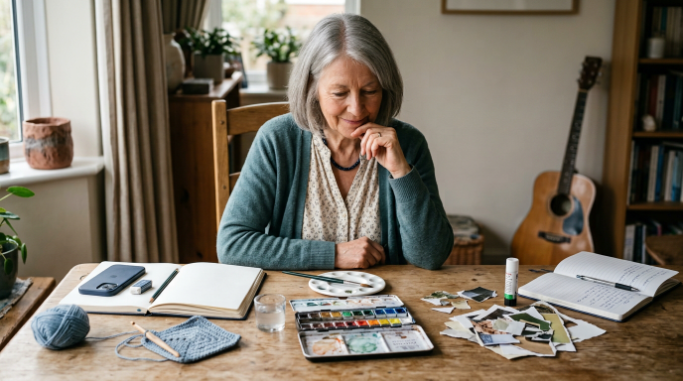
The best artistic hobbies are usually those with a simple starting point and plenty of room for personal expression. Watercolor, drawing, photography, collage, crafts, writing, and music meet those requirements well.
Use this comparison as a starting point rather than a ranking.
| Hobby | Typical Starter Cost | Hand Dexterity | Setup | Solo or Social |
|---|---|---|---|---|
| Watercolor painting | Low | Low to moderate | Easy | Both |
| Drawing | Very low | Low to moderate | Very easy | Both |
| Phone photography | Very low if you own a phone | Low | Very easy | Both |
| Collage | Low | Moderate | Easy | Both |
| Knitting or crochet | Low | Moderate | Easy | Both |
| Creative writing | Very low | Low | Very easy | Mostly solo |
| Pottery or ceramics | Moderate | Moderate | Class or workspace helpful | Often social |
| Singing or music | Low to variable | Varies | Easy to moderate | Both |
The cost descriptions assume beginner-level supplies rather than professional equipment. Pottery can cost more because kiln access or studio time may be needed.
Photography can be inexpensive when you start with a phone you already use. You can explore shadows, architecture, plants, pets, food, or family moments without buying a camera.
Section Takeaway: The strongest beginner choice is usually the hobby you can start cheaply and comfortably this week. You can always upgrade your tools after the interest becomes a habit.
Are Painting and Drawing Good Hobbies for Seniors?
Yes. Painting and drawing are flexible because you can change the tools, subject, difficulty, and session length to suit yourself.
Watercolor painting
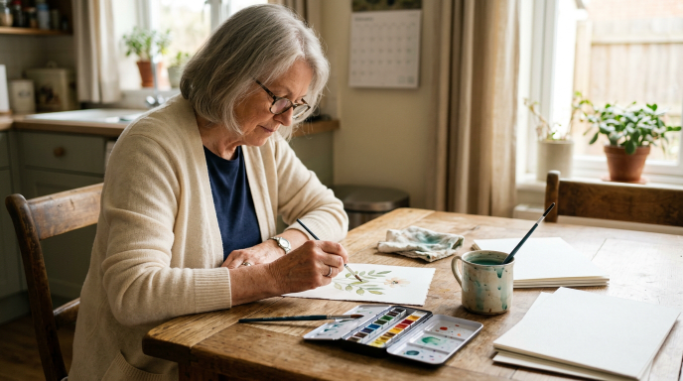
Watercolor is one of my favorite starting points because a small kit doesn’t take over a room. A brush, paint set, water cup, and watercolor paper can be enough.
- Paint one leaf or flower.
- Copy the colors in a sunset photograph.
- Practice circles, lines, and washes.
- Paint a simple greeting card.
- Try a loose landscape without adding tiny details.
Colored pencils and sketching
Pencil drawing is even simpler. A sketchbook and a few pencils let you start almost anywhere.
Don’t begin by attempting a detailed portrait unless that excites you. Cups, leaves, windows, fruit, shoes, and household objects are easier subjects.
Adult coloring
Coloring gives you structure when a blank page feels intimidating. Larger patterns can also be easier to see and fill than intricate designs.
The goal isn’t to produce something impressive. The goal is to spend enjoyable time making choices about line, color, and composition.
Which Hands-On Art and Craft Hobbies Are Worth Trying?
Craft hobbies are good choices when you enjoy producing something tangible. Many can also become gifts, decorations, keepsakes, or useful household objects.
Collage and scrapbooking
Collage lets you work with photographs, colored papers, printed images, fabric, and other flat materials. There is no complicated drawing technique to learn first.
Scrapbooking adds a personal angle. Family photographs, recipes, tickets, letters, and short captions can turn the project into a visual record.
Knitting and crochet
Knitting and crochet combine color, texture, pattern, and repetition. A small square, scarf, or dishcloth makes more sense for a beginner than a complicated sweater.
Learn one stitch first. Repeating it helps you decide whether you enjoy the process before buying a large collection of yarn.
Clay and pottery
Air-dry clay is an easy home option because it doesn’t require a kiln. You can make small dishes, ornaments, textured tiles, or simple sculptures.
A community pottery class gives you access to equipment and instruction. It also removes the problem of storing bulky supplies at home.
Textile and fabric art
- Simple embroidery
- Quilting
- Fabric collage
- Decorative mending
- Weaving
- Felt crafts
Choose projects with larger materials when fine details become frustrating. Creative work should be challenging enough to stay interesting, not uncomfortable.
What Other Creative Hobbies Can Seniors Enjoy?
Artistic hobbies aren’t limited to paint and yarn. Photography, creative writing, music, storytelling, and digital art can be equally rewarding forms of expression.
Photography
Photography changes the way you look at ordinary surroundings. You begin noticing reflections, textures, colors, patterns, and small details that are easy to miss.
- Photograph one interesting object each day.
- Create a collection based on one color.
- Document flowers through the seasons.
- Make a family photo project.
- Photograph architecture in your neighborhood.
Creative writing and memoirs
You don’t need to write a book. A paragraph about a childhood memory, first job, favorite holiday, or family tradition is enough.
Voice-to-text software can replace long periods of typing or handwriting. That can make storytelling more accessible when hand fatigue becomes a barrier.
Music and singing
Music can mean singing familiar songs, joining a choir, learning keyboard, returning to guitar, or exploring percussion. There is no requirement to perform publicly.
The National Endowment for the Arts’ creativity and aging resources describe arts participation and lifelong learning as important parts of the creative-aging field.
Digital art
A tablet can become a sketchbook without paper, paint, water, or cleanup. Digital tools also let you undo mistakes, enlarge details, and experiment with colors quickly.
Start with a basic drawing app rather than buying advanced software. The principles of shape, line, color, and composition are more important than the app.
How Can Artistic Hobbies Be Adapted for Limited Mobility or Hand Pain?
Many artistic hobbies can be adapted by changing the tools, working position, project size, or session length. The hobby doesn’t have to be abandoned because the original method becomes uncomfortable.
- Use thicker tools: Wide brushes, chunky pencils, and grip sleeves can be easier to hold.
- Work seated: Position supplies within comfortable reach rather than repeatedly standing.
- Raise the work: A tabletop easel can reduce the need to bend over a flat surface.
- Choose larger projects: Larger shapes may require less fine precision.
- Use good lighting: Direct, adjustable lighting can make details easier to see.
- Shorten sessions: Twenty comfortable minutes may be better than forcing a long session.
- Try digital tools: Zoom controls can make details easier to work with.
For needlework, the Arthritis Foundation discusses practical changes to tools and techniques for people with hand arthritis. Their guidance also emphasizes paying attention when an activity causes pain.
Health note: Persistent pain, swelling, numbness, new weakness, or major changes in hand function are good reasons to speak with your own healthcare professional rather than simply pushing through an activity.
Mobility limits can also change where you create. Painting, writing, photography from a window, digital drawing, music, collage, and many crafts can all be done while seated.
Should an Artistic Hobby Be Social or Solo?
Either choice can work. The better option depends on whether you want quiet personal time, more regular contact with people, or a mixture of both.
If you prefer creating alone
- Watercolor painting
- Sketching
- Photography
- Journaling
- Memoir writing
- Digital art
- Knitting or crochet
Solo hobbies give you complete control over timing and pace. They also work well when energy varies from day to day.
If you want more social contact
- Community art classes
- Pottery workshops
- Knitting circles
- Choirs
- Photography clubs
- Writing groups
- Community theater
The CDC’s guidance for older adults includes painting, ceramics, knitting, woodworking, and other shared hobbies among ways people can build social connections.
I like a hybrid approach. You might paint quietly at home during the week and attend one monthly art group to share ideas.
How Do You Choose the Right Artistic Hobby?
Choose backward from the experience you want. Don’t begin with a long list of hobbies and ask which one you are supposed to enjoy.
- Decide what sounds enjoyable. Think about activities you liked earlier in life as well as things you’ve always wanted to try.
- Check the physical demands. Consider vision, hand comfort, sitting position, standing time, and transportation.
- Set a small starter budget. Avoid professional equipment until you know you enjoy the activity.
- Choose one tiny project. Finishing something simple gives you a clear first experience.
- Try the hobby for two weeks. Give yourself several sessions instead of judging it after ten minutes.
- Keep, adapt, or replace it. A hobby is optional. Changing your mind is allowed.
Use a simple two-week experiment
Suppose watercolor interests you. Buy a small beginner set and spend 20 to 30 minutes painting twice each week.
At the end of two weeks, ask whether you looked forward to the sessions. That question tells you more than whether the paintings looked professional.
Don’t confuse equipment with progress
Beginners often think better supplies will make a hobby more enjoyable. Sometimes they help, but expensive tools can’t create interest.
- Use your current phone before buying a camera.
- Buy a few pencils before a complete art chest.
- Try inexpensive yarn before ordering a large collection.
- Borrow an instrument if that option is available.
- Take a trial pottery class before buying clay tools.
The first purchase should answer one question: Do I enjoy doing this?
Frequently Asked Questions About Artistic Hobbies for Seniors
What is the easiest artistic hobby for seniors to start?
Drawing and watercolor are among the easiest because they need little space and relatively few supplies. Phone photography is another simple choice because many people already have the main tool they need.
What are good artistic hobbies for seniors at home?
Good at-home choices include painting, drawing, adult coloring, collage, scrapbooking, knitting, crochet, writing, digital art, photography, and music. Choose an activity that fits your available space, lighting, hand comfort, and preferred session length.
What creative hobby is inexpensive?
Sketching can be extremely inexpensive because a pencil and paper are enough to begin. Writing and phone photography can also cost almost nothing when you use supplies or technology you already own.
Can someone start painting later in life?
Yes. Beginners can start painting at any age, and you don’t need previous art training. Watercolor or acrylic exercises based on simple subjects can make the first sessions less intimidating than attempting a complex portrait.
What artistic hobbies are suitable for seniors with limited mobility?
Seated painting, drawing, digital art, collage, photography from home, writing, music, knitting, and many crafts can be adapted for limited mobility. Adjust the workspace, tools, project size, and session length to match the person’s abilities and comfort.
Are artistic hobbies good for the brain?
Creative activities can challenge attention, learning, memory, problem-solving, and other skills, and research in older adults is promising. However, the National Institute on Aging notes that evidence for lasting cognitive benefits from many leisure activities is not yet definitive.
How often should seniors practice an artistic hobby?
There is no required schedule for a hobby. Two or three short sessions each week can be an easy starting routine, but enjoyment and comfort matter more than hitting a specific number of hours.
Final Takeaway
The best artistic hobbies for seniors are the ones that make creativity feel inviting rather than demanding. Watercolor, drawing, photography, collage, crafts, writing, pottery, and music all offer approachable starting points.
You don’t need expensive supplies or natural talent. Begin with one small project and enough basic equipment to discover whether you enjoy the process.
- Pick one activity that genuinely interests you.
- Keep the first project simple.
- Spend modestly while you’re learning.
- Adapt tools and sessions for comfort.
- Try both solo and social versions if you aren’t sure which you prefer.
- Keep the hobby that makes you want to come back.
That last point matters most. A hobby becomes valuable when it earns a comfortable place in your life, not when somebody else says it’s the perfect activity for your age.
