
Offset Cane Handle Explained: Benefits & Proper Use

Medical Alert System
Spill-Proof Adult Cup

Folding Walking Stick with Seat
Quick Answer
An offset cane handle is a walking cane grip connected to a bent or curved upper shaft that positions the user’s hand closer to the line above the cane’s tip. This alignment helps distribute downward pressure through the shaft and can make the cane more comfortable and supportive for people who need limited assistance with walking.
What Is an Offset Cane Handle?
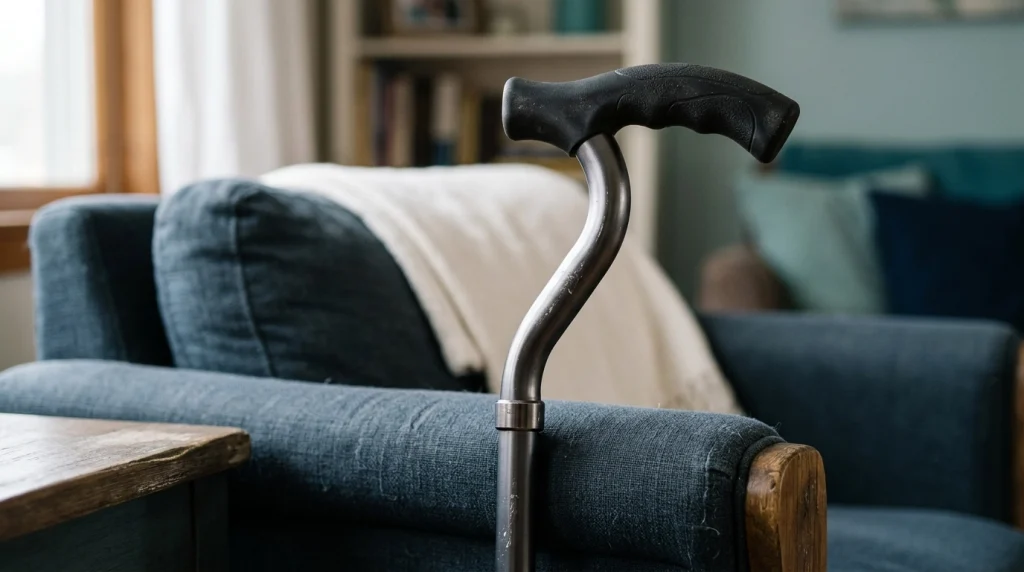
An offset cane handle is a grip designed with a noticeable bend in the upper part of the cane. The shaft curves away from the grip and then returns toward the vertical line of the cane’s lower section, creating a shape that often resembles a swan’s neck.
This design differs from a traditional crook handle, which curves into a hook, and from some straight-shaft canes with a grip that sits directly above the shaft. With an offset cane, the grip is positioned so the user’s hand is more nearly aligned over the shaft and ground-contact point.
The purpose is functional rather than decorative. When a person presses down through the handle, the offset design helps direct force along the cane instead of placing the hand noticeably forward or behind its supporting shaft.
Offset canes are generally single-point walking aids. They can help people who need additional balance or limited support for one painful or weaker leg, provided they have enough balance, grip, and upper-body control to use a cane safely.
How Does an Offset Handle Work?
The main principle is weight alignment. When the hand presses down on a cane, the position of the grip relative to the shaft affects how the load travels through the device.
On a properly designed offset cane, the grip sits closer to the vertical load path through the shaft and tip. This arrangement can make downward pressure feel more controlled when the cane is planted firmly on a suitable surface.
Consider someone who experiences knee discomfort while walking. When that person places an appropriately fitted cane beside the body and transfers some pressure through the grip, the cane can help reduce the load on the affected leg. The offset shape supports this function by improving the alignment between the hand and shaft.
However, handle geometry alone does not determine how much support a cane provides. The user’s technique, the cane’s height, its construction, the rubber tip, and the person’s physical abilities all affect its usefulness.
What Are the Main Benefits of an Offset Cane Handle?
1. More direct weight alignment
The grip’s position helps direct pressure toward the shaft. This can make the cane feel more stable when the user applies moderate downward force during walking.
That benefit is particularly relevant for people who need occasional support for a painful or weaker lower limb. An offset handle does not, however, make a single-point cane suitable for every weight-bearing requirement.
2. A practical grip for everyday walking
Many offset canes use a relatively straight, horizontal grip that allows the hand to rest across the handle. Depending on its shape and padding, this arrangement may feel more natural than a narrow, curved hook.
Comfort varies by hand size, wrist position, grip strength, and handle material. A basic offset grip may still cause discomfort for someone with arthritis or sensitive finger joints, so the shape should be assessed in addition to the shaft design.
3. Better control when the cane is planted
Correct alignment can help the user feel more confident applying pressure through the cane. A secure rubber tip and an appropriate cane height are essential to this benefit.
The handle cannot prevent slipping on its own. A worn tip, loose adjustment mechanism, wet floor, or uneven surface can compromise stability regardless of the handle design.
4. A familiar, relatively simple cane design
Many offset canes have a conventional single-point base and an adjustable shaft. This makes them relatively straightforward to position, carry, and use compared with some larger mobility aids.
The trade-off is that a single-point cane offers less overall support than a walker or some multi-point devices. Simplicity should not be confused with suitability for every mobility problem.
How Does an Offset Handle Compare With Other Cane Handles?
The main differences involve grip shape, hand comfort, and how the hand aligns with the cane’s shaft. The following comparison can help clarify which features matter.
| Handle type | Main feature | Practical consideration |
|---|---|---|
| Offset | Bent upper shaft positions grip closer to the shaft’s load path | Useful for limited support and everyday walking |
| Crook | Hook-shaped handle | Can hang over an arm or hook, but may be less comfortable for some hands |
| Derby | Curved, relatively broad traditional grip | Offers a conventional grip shape that some users find comfortable |
| Ergonomic or contoured | Grip molded to support the palm and fingers | May suit users who need a different hand or wrist position |
These categories can overlap. An offset cane may also have a padded or contoured ergonomic grip, so the handle’s shape and its alignment with the shaft should be considered separately.
There is no single handle design that is best for everyone. Comfort, secure control, appropriate support, and correct fit matter more than choosing a particular style by name.
Who Can Benefit From an Offset Cane?
An offset cane may suit someone who needs one-handed walking support and can safely manage a single-point mobility aid. Examples include people experiencing mild balance difficulties or discomfort in one knee or hip.
It may also be worth considering when a traditional cane grip feels awkward, provided the offset model offers a comfortable grip and fits the user’s hand.
The design is not automatically appropriate for someone with substantial weakness, frequent falls, severe balance problems, or difficulty controlling a cane. People who need significant support through both arms may require a walker or another mobility aid instead.
A healthcare professional or physical therapist can assess walking ability, strength, balance, and the level of support needed. This is especially useful after surgery, an injury, a stroke, or a change in mobility.
How Can You Check Whether an Offset Cane Fits Correctly?
Even a well-designed handle can be uncomfortable or unsafe if the cane is too tall or too short. Check the fit while standing upright in your usual walking shoes, with someone nearby if you need help balancing.
- Check wrist height. Let your arm hang naturally at your side. The top of the handle should generally line up with the crease of your wrist.
- Check elbow bend. Hold the handle with the cane standing on the floor. Your elbow should remain slightly bent rather than locked straight or sharply flexed.
- Check shoulder position. Your shoulder should remain relaxed. If you must lift it to hold the cane or lean down to reach the handle, the height may be incorrect.
- Check the grip. Hold the handle comfortably without excessive finger strain, wrist twisting, or slipping.
- Check the tip and adjustment lock. Make sure the rubber tip is secure and the shaft’s adjustment mechanism is fully locked before walking.
The MedlinePlus guide to using a cane explains basic fitting and walking technique. If the correct height is unclear or the cane feels unstable, ask a qualified healthcare professional to check it.
How Should You Use an Offset Cane While Walking?

For a person using a cane to support one weaker or painful leg, the usual technique is to hold it in the hand opposite that leg. Move the cane forward at the same time as the affected leg, then step through with the stronger leg.
- Stand upright and establish a secure grip before taking your first step.
- Move the cane a comfortable distance forward while advancing the weaker or painful leg.
- Plant the cane tip securely on the ground before transferring pressure through the handle.
- Step forward with the stronger leg, allowing the cane to provide support as needed.
- Repeat at a controlled pace, looking ahead and avoiding sudden turns.
Do not place the cane so far forward that you have to stretch or lean to reach it. On stairs, use a secure handrail when available and follow the technique recommended for your condition. Ask for instruction before attempting stairs if you are uncertain about your balance.
Warning
Do not use an offset handle as a substitute for the correct level of mobility support. If you repeatedly lose balance, cannot control the cane, or need more support than one hand can safely provide, have your walking aid reassessed.
What Should You Look for When Choosing an Offset Cane?
Start with function and fit rather than appearance. A useful offset cane should have a comfortable handle, an appropriate height range, a secure adjustment mechanism, and a tip that grips the intended walking surfaces.
- Grip shape: Choose a handle that fits your palm without forcing your wrist into an uncomfortable angle.
- Grip material: Foam or other cushioned materials may feel more comfortable for some users, but the surface must remain secure when held.
- Adjustability: Confirm that the cane can be set to your required height and locks firmly in place.
- Weight rating: Check the manufacturer’s stated user-weight limit. Never assume all canes have the same capacity.
- Rubber tip: Look for a secure, undamaged tip and confirm that replacements are available when needed.
- Hand compatibility: If the grip is anatomically contoured or designed for a particular hand, check whether it suits your intended use.
Inspect the cane regularly for loose handles, bent shafts, worn rubber tips, and faulty adjustment locks. Replace damaged components according to the manufacturer’s instructions rather than continuing to rely on an unstable cane.
If you are still comparing mobility aids, our guide to walking cane types, uses, and safety explains how single-point, quad, folding, and other designs differ. For broader assistance considerations, see our guide to senior mobility equipment and safer living.
Frequently Asked Questions
Is an offset cane handle better than a regular cane handle?
It can be better for some users because its design places the hand closer to the shaft’s load path. However, comfort and support depend on the individual, the cane’s fit, and the amount of assistance needed.
Does an offset cane reduce pressure on the wrist?
Its alignment may make pressure feel more controlled, but it does not guarantee less wrist discomfort. Grip shape, hand position, cane height, and how much weight you transfer through the cane also matter.
Can an offset cane support my full body weight?
Do not assume it can. An offset cane is generally intended for limited support, and its safe use depends on the manufacturer’s rating and your mobility needs. Ask a healthcare professional if you need substantial weight-bearing assistance.
Can I use an offset cane on either side?
Many standard offset canes can be held in either hand, but contoured grips may be designed for a particular hand. When supporting one weaker or painful leg, the cane is usually held on the opposite side unless your healthcare professional advises otherwise.
Is an offset cane suitable for someone with arthritis?
It may be suitable if the handle is comfortable to grip and the person can control the cane safely. People with painful fingers, limited grip strength, or wrist problems may benefit from trying different grip shapes with professional guidance.
When should I consider a walker instead of an offset cane?
A walker may be more appropriate if you need support from both arms, have significant balance difficulties, or cannot safely control a single-point cane. A physical therapist can assess which aid matches your strength and walking ability.
Conclusion
An offset cane handle uses a bent upper shaft to position the grip closer to the cane’s supporting shaft. This design can help direct pressure more naturally and provide practical support for people who need limited assistance while walking.
The right choice still depends on your hand comfort, balance, strength, cane height, and required level of support. Check the grip, adjustment lock, and rubber tip before use, and seek professional guidance if you are unsteady or unsure whether a cane provides enough support. A correctly fitted mobility aid should make walking more manageable without introducing new balance or control problems.