
Foam Cane Grip Explained: Benefits, Fit & Safety


Electric Recliner Lift Chair

Weighted Blanket

Toilet Safety Rails
Quick Answer
A foam cane grip is a soft, cushioned covering or handle made from foam that provides a more comfortable surface to hold on a walking cane. It may reduce pressure and improve grip comfort, particularly during regular use, but the right size, secure attachment, and overall cane fit are essential for safe support.
What Is a Foam Cane Grip?
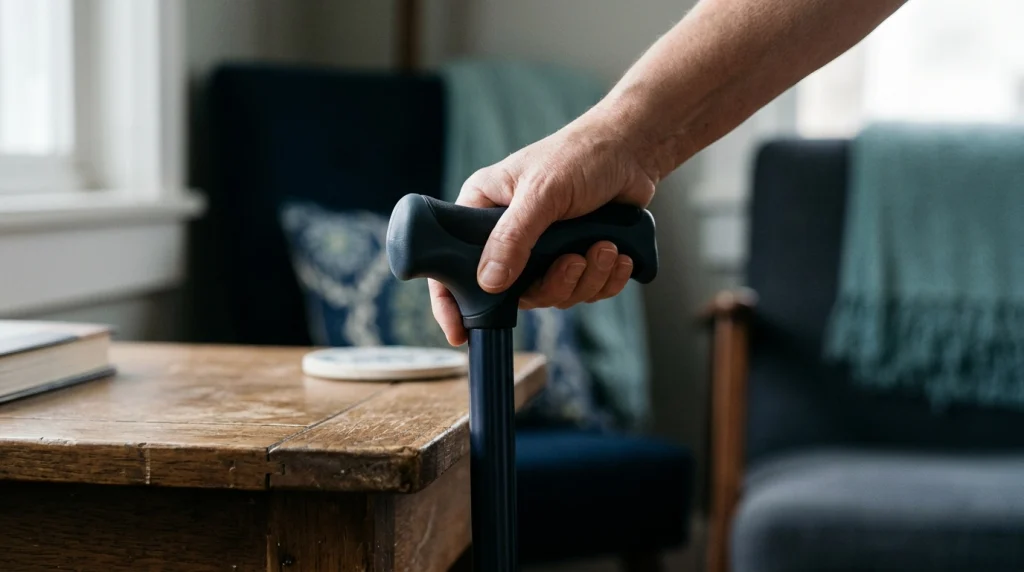
A foam cane grip is the part of a walking cane that your hand holds, made with a soft, compressible foam material. Depending on the design, the foam may form the entire handle or fit over an existing handle as a sleeve or replacement grip.
Unlike a rigid plastic or wooden handle, foam can compress slightly under your hand. This cushioning can make the contact surface feel less hard and may improve comfort for someone who finds a narrow, rigid handle uncomfortable.
Foam grips are available on different cane styles, including some straight-handle and offset-handle models. The material describes the gripping surface, not necessarily the shape of the handle.
That distinction matters when choosing a cane. A foam-covered handle can have a straight, curved, or contoured shape, and each shape affects how your hand rests on it.
How Does a Foam Cane Grip Work?
A foam grip creates a cushioned contact layer between your hand and the cane. When you close your fingers around it, the material may compress slightly, changing how pressure is distributed across your palm and fingers.
The practical benefits depend on the foam’s firmness, thickness, texture, and the shape of the handle underneath it.
- Cushioning: The softer surface can feel more comfortable than a hard handle during repeated gripping.
- Contact area: A suitably sized grip may allow more of the hand to contact the handle instead of concentrating pressure in a small area.
- Grip feel: Foam texture can affect how securely the handle feels in the hand, although performance varies by material and surface condition.
- Vibration and impact: Some foam materials can dampen small vibrations transmitted through the handle, but the degree of cushioning varies.
Foam does not automatically make a cane more stable. Stability also depends on the user’s balance, correct cane height, handle design, walking technique, and the condition of the cane’s ground-contact tip.
What Are the Benefits of a Foam Cane Grip?
The main advantage of a foam grip is the possibility of greater hand comfort. Whether it is a meaningful improvement depends on your hand size, grip strength, sensitivity, and how the cane feels during use.
A softer surface for everyday use
Repeatedly holding a hard handle can feel uncomfortable for some people. A cushioned grip offers a softer contact surface, which may make everyday walking more pleasant when the cane is otherwise correctly fitted.
However, foam cannot eliminate all hand discomfort. If the handle shape is unsuitable or you are putting excessive pressure through your hand, changing the material alone may not solve the problem.
Potentially less concentrated pressure
A grip that fits your hand well can help distribute contact across a useful area of the palm. Foam may add cushioning to that contact, particularly compared with a small, rigid handle.
The shape and diameter remain important. A very thick grip may force someone with small hands to stretch their fingers, while an overly narrow grip may fail to provide the comfortable contact they need.
A more comfortable grip for some sensitive hands
People who dislike the feel of hard plastic or wood may prefer a softer surface. This is a comfort preference rather than a guarantee of pain relief, and individual results vary.
If gripping a cane causes persistent pain, tingling, numbness, or unusual weakness, do not assume that more padding is the answer. The handle’s fit and the amount of pressure placed through the cane may need reassessment.
Who May Benefit From a Foam Cane Grip?
A foam grip may suit someone who finds a hard handle uncomfortable but can still hold the cane securely and control it during walking.
- Everyday cane users: A cushioned surface may feel more comfortable during repeated use.
- People who dislike rigid handles: Foam offers a softer alternative to many hard plastic or wooden grips.
- Users seeking a different handle feel: A compatible foam covering may change the surface texture without requiring a completely different cane.
- People with limited hand comfort: The cushioning may help, provided the grip’s size and shape suit their hands.
A foam grip is not necessarily the best choice for everyone. Someone with substantial finger weakness, reduced sensation, severe hand pain, or difficulty maintaining a secure grasp may need a differently shaped or larger handle, or another mobility aid.
For a broader overview of grip shapes, see the SeniorsProTalk guide to walking cane handle types. It helps distinguish handle shape from the material used on its surface.
What Are the Limitations of a Foam Cane Grip?
Foam can improve comfort, but softness alone does not establish whether a handle is safe, durable, or appropriate for a particular user.
- Wear and compression: Foam can become flattened, torn, or less comfortable with repeated use.
- Moisture and cleanliness: Some foam surfaces absorb moisture or are harder to clean thoroughly than smooth, nonporous materials.
- Grip security: Sweat, moisture, surface deterioration, or a loose sleeve can affect how securely the handle feels in the hand.
- Fit limitations: Extra thickness can make the handle too large for comfortable finger closure.
- Material variation: Foam density, texture, durability, and cushioning differ among products.
Foam is also not a substitute for a properly constructed handle. A worn or loose handle connection can be unsafe regardless of how soft its covering feels.
For more information about the structure of a cane, read the guide to walking cane shafts and their construction. The shaft, handle connection, and ground tip each contribute to the complete device’s function.
How Do You Know If a Foam Grip Fits Properly?
A suitable foam grip should feel comfortable without forcing your fingers into an awkward position. You should be able to hold the handle securely and control the cane without excessive squeezing.
Use these checks when evaluating a cane grip:
- Check the diameter. Close your fingers around the grip naturally. The handle should not feel so thick that your fingers cannot wrap around it comfortably.
- Assess the contact surface. Your palm and fingers should rest on the handle without an obvious sharp edge, uncomfortable seam, or pressure point.
- Check the attachment. If the foam is a sleeve, make sure it fits the intended handle securely and does not rotate or slide during normal handling.
- Hold the cane in a relaxed position. Notice whether you can maintain a secure grasp without continually tightening your fingers.
- Check the complete cane fit. The handle should generally reach the crease of your wrist when you stand upright with your arms relaxed. With your hand on the handle, your elbow should bend comfortably.
Mayo Clinic’s guidance on choosing and using canes explains that grip comfort and correct cane height both matter. A comfortable grip cannot compensate for a cane that is too tall, too short, or otherwise unsuitable.
Tip
If possible, assess the grip while standing on a level, uncluttered surface with assistance available when needed. Comfort should be judged alongside secure handling and proper cane fit, not by squeezing the foam while the cane is unused.
How Should You Clean and Maintain a Foam Cane Grip?
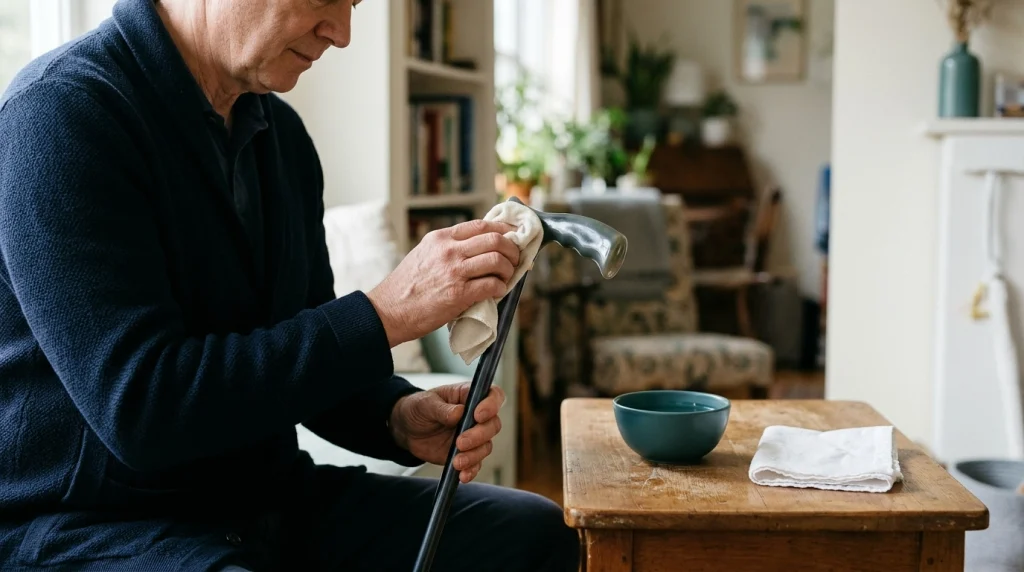
Care depends on the foam material and the cane manufacturer’s instructions. Some grips can be wiped clean, while others may be damaged by soaking, harsh cleaners, or excessive heat.
- Check the care instructions. Use only a cleaning method compatible with the specific grip material.
- Clean surface dirt promptly. If the manufacturer permits it, wipe the grip with a lightly dampened cloth and an appropriate mild cleaner.
- Allow it to dry. Avoid using the cane with a wet, slippery grip. Follow the manufacturer’s drying guidance.
- Inspect for damage. Look for cracks, tears, flattening, sticky patches, loose sections, or areas that have become difficult to clean.
- Replace a deteriorated grip. If the surface no longer offers a comfortable, secure hold, use a compatible replacement rather than relying on worn foam.
Do not soak a foam grip or apply disinfectants, solvents, or strong cleaning chemicals unless the manufacturer confirms that they are suitable. These treatments may damage the material or leave the surface less comfortable to hold.
Inspect the rest of the cane as well. A secure handle, intact shaft, functioning adjustment mechanism, and unworn rubber tip are all important parts of routine maintenance.
When Should You Replace or Change a Foam Cane Grip?
Consider replacing the grip when it becomes loose, torn, permanently flattened, slippery, or difficult to keep clean. A replacement should match the cane’s handle design and fit securely without interfering with its structural components.
If the grip is an add-on sleeve, verify that it is specifically compatible with the existing handle. Do not assume that a universal-looking foam tube will fit securely or remain stable under repeated pressure.
Stop using the cane and address any loose handle, cracked component, or unexpected movement before relying on it for support. If you cannot find a secure compatible replacement, ask the manufacturer or a mobility-aid supplier about suitable options.
Persistent discomfort also deserves attention. The MedlinePlus guide to using a cane emphasizes comfortable handles and correct fitting. A healthcare professional or physical therapist can help assess whether a different grip shape, cane adjustment, or mobility aid would better meet your needs.
Frequently Asked Questions
Is a foam cane grip better than a hard plastic grip?
Not for everyone. Foam provides a softer contact surface, while hard plastic is often easier to wipe clean. The better option depends on hand comfort, grip security, handle shape, and maintenance needs.
Can a foam cane grip help with hand pain?
It may improve comfort for some users by cushioning the contact surface. However, it does not treat the cause of hand pain, and persistent pain, tingling, or numbness warrants reassessment of the grip and cane fit.
Does a foam grip make a walking cane safer?
Not automatically. It may improve comfort, but safe use also depends on proper cane height, secure handle attachment, suitable walking technique, and a tip that maintains reliable contact with the floor.
Can I put a foam sleeve over my existing cane handle?
Only if the sleeve is compatible with that handle and can be attached securely. A loose or rotating sleeve can interfere with control, so avoid improvised coverings that shift during use.
How often should I replace a foam cane grip?
There is no universal replacement interval for every foam material. Inspect it regularly and replace it when it becomes loose, torn, flattened, slippery, or otherwise unsuitable for a secure hold.
Is a foam cane grip suitable for someone with weak hands?
Possibly, but softness alone does not determine suitability. Someone with limited grip strength may need a larger or specially shaped handle, and a physical therapist can help assess which design offers appropriate comfort and control.
Conclusion
A foam cane grip is a cushioned handle surface designed to make holding a walking cane more comfortable. It may help reduce the hard feel of a rigid handle and improve the user’s experience during everyday walking, but the benefits depend on the material, handle size, and individual needs.
Choose a grip that allows your fingers to close comfortably and gives you secure control without excessive squeezing. Keep the surface clean according to the manufacturer’s instructions, inspect it for wear, and replace it when it becomes loose or damaged.
Most importantly, evaluate the grip as one part of the complete cane. Correct height, a secure handle connection, an intact shaft, and a suitable ground tip remain essential for safe mobility.