
What Are Easy Hobbies for Seniors to Learn? 15 Simple Ideas to Try


Sock Aid for Seniors

Memory Foam Seat Cushion

Rollator Walker with Seat
Quick Answer: Easy hobbies for seniors to learn include gardening, painting, birdwatching, puzzles, walking, photography, reading, journaling, music, knitting, simple cooking, card games, chair yoga, volunteering, and beginner technology classes. The best hobby is one that feels enjoyable, safe, affordable, and easy to repeat; the National Institute on Aging also encourages older adults to stay involved in meaningful activities they enjoy.
- Low-cost: Reading, walking, journaling, birdwatching, and puzzles.
- Creative: Painting, knitting, photography, music, and simple crafts.
- Social: Card games, group classes, volunteering, and book clubs.
- Active: Walking, gardening, chair yoga, and gentle dancing.
- At home: Puzzles, cooking, journaling, reading, and digital learning.
I’ve learned that the easiest hobby to keep is rarely the fanciest one. For many seniors, a simple activity that fits daily life brings more satisfaction than an expensive hobby that feels like work.
If you’re choosing for yourself, a parent, or another older adult, start with interest first and difficulty second. A hobby should give you something to look forward to, not another task to manage.
Table of Contents
- What makes a hobby easy for seniors to learn?
- What are the best easy hobbies for seniors?
- Which creative hobbies are easiest to start?
- What active hobbies work well for older adults?
- What are easy social hobbies for seniors?
- What hobbies can seniors do at home?
- How do you choose the right hobby?
- Frequently asked questions
What Makes a Hobby Easy for Seniors to Learn?
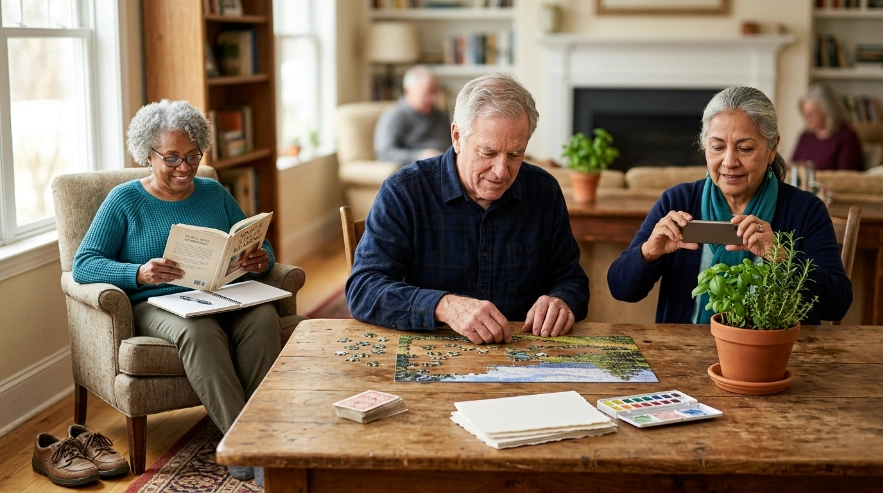
An easy hobby has a short learning curve, flexible pace, low pressure, and a clear way to enjoy progress. It should also fit a person’s mobility, eyesight, hearing, budget, and available space.
Definition: An easy senior hobby is a repeatable leisure activity that can be learned in small steps and adjusted to the person’s ability, comfort, and interests.
In my experience, the best beginner hobbies share a few practical qualities:
- Simple setup: You can begin with basic supplies or equipment.
- Flexible timing: Ten or twenty minutes can still feel worthwhile.
- Adjustable difficulty: The hobby can stay simple or become more challenging later.
- Low pressure: There is no need to perform, compete, or finish quickly.
- Visible enjoyment: You can see progress, feel calmer, or connect with other people.
The National Institute on Aging notes that hobbies, social activities, and leisure activities can support healthy aging and may contribute to better well-being. That makes enjoyment a practical health consideration, not a luxury.
What Are the Best Easy Hobbies for Seniors?
The easiest hobbies are usually familiar, inexpensive, and forgiving. I’d start with one activity from the list below rather than trying five things at once.
| Hobby | Basic starter needs | Good first session | Best fit |
|---|---|---|---|
| Reading | Book, e-reader, or audiobook | 15-30 minutes | Quiet learning |
| Gardening | Pot, soil, easy plant | 15-20 minutes | Hands-on activity |
| Walking | Supportive shoes, safe route | 10-20 minutes | Gentle movement |
| Journaling | Notebook and pen | 5-10 minutes | Reflection |
| Puzzles | Puzzle book or jigsaw | 15-30 minutes | Mental stimulation |
| Painting | Paper, brush, watercolor set | 20-30 minutes | Creativity |
| Card games | Deck of cards | 20-40 minutes | Social fun |
| Photography | Phone or simple camera | 15-30 minutes | Creative observation |
If you want more broad ideas before choosing, my guide to activities to do with seniors gives a wider mix of creative, physical, cognitive, and social options.
1. Reading
Reading is one of the easiest hobbies because you can start with almost any topic. Large-print books, e-readers, and audiobooks also make it easier to adapt when vision or hand comfort is a concern.
2. Gardening
You do not need a yard to garden. A windowsill herb pot, a few flowers, or a raised planter can turn gardening into a manageable routine.
3. Puzzles and Word Games
Crosswords, word searches, Sudoku, and jigsaw puzzles give structure without pressure. Start with a difficulty level that feels satisfying instead of frustrating.
4. Journaling
Journaling can be as simple as writing three sentences about the day. Some seniors enjoy gratitude notes, family memories, travel memories, or short stories.
Which Creative Hobbies Are Easiest to Start?
Creative hobbies work best when the goal is enjoyment rather than perfection. I encourage beginners to choose projects that can be finished in one sitting, because early completion builds confidence.
5. Watercolor Painting
A basic watercolor set, paper, and one brush are enough to begin. Try painting leaves, simple landscapes, flowers, or color patterns instead of starting with a detailed portrait.
6. Knitting or Crochet
These crafts take a little practice, but the first goal can be simple: learn one stitch and repeat it. A small scarf, dishcloth, or square is easier than a complicated pattern.
7. Phone Photography
Photography is especially accessible because many people already own a phone with a camera. A daily challenge such as “photograph one interesting thing” turns ordinary surroundings into a creative project.
8. Music
Music can mean listening closely, singing, joining a choir, or learning a simple instrument. The NIA has highlighted music and other participatory arts as promising activities for quality of life, social interaction, and well-being in older adults.
Senior centers and community classes can make creative hobbies easier to learn. A free senior center calendar of events can help you spot beginner art, music, craft, and learning sessions nearby.
What Active Hobbies Work Well for Older Adults?
Active hobbies do not have to feel like formal exercise. Walking, gardening, gentle dancing, and chair-based movement can all add activity to the day while still feeling enjoyable.
The CDC recommends that adults age 65 and older include aerobic, muscle-strengthening, and balance activities each week, while adjusting activity to health and ability.
9. Walking
Walking is simple because the routine can start small. A short indoor loop, a trip around the block, or a walk with a friend can be enough for a beginner session.
10. Chair Yoga or Gentle Stretching
Chair-based movement can be a useful option for someone who wants a more supported starting point. If you need a structured routine, see this guide to senior exercise at home for mobility.
11. Gentle Dancing
Dancing can be as simple as moving to two favorite songs in the living room. It can also become a social hobby through beginner dance classes or community events.
If someone has chest pain, dizziness, a recent fall, recent surgery, or a condition that limits movement, I would ask a healthcare professional what level of activity is appropriate before starting.
What Are Easy Social Hobbies for Seniors?
Social hobbies are often easier to continue because another person creates a natural reason to show up. They can also turn an ordinary pastime into a source of routine and connection.
12. Card and Board Games
Cards, dominoes, checkers, and simple board games need little equipment and work well at home or in community groups. AARP research has found that many adults age 50-plus view game play as a way to support social connection and mental engagement.
For more group-friendly ideas, explore these group games for senior citizens.
13. Volunteering
Volunteering can be built around skills a senior already has. Possibilities include helping at a library, faith community, food pantry, school, animal organization, or neighborhood project.
14. Book Clubs or Discussion Groups
A book club gives reading a social layer without demanding physical effort. It can also be adapted with audiobooks, short stories, or articles when a full novel feels like too much.
As of 2026, AARP continues to emphasize the importance of social connection and meaningful activities in later life. That matches what I see in practice: hobbies tend to stick when they create both enjoyment and a reason to connect.
What Hobbies Can Seniors Do at Home?
Home-based hobbies are useful when transportation, weather, fatigue, caregiving duties, or limited mobility make outings difficult. The key is choosing something that does not require a complicated setup.
15. Beginner Technology Learning
Learning to use a smartphone, video calling, photo editing, online library apps, or a new digital tool can become a practical hobby. A class is often easier than trying to solve every problem alone.
If local continuing-education programs are available, this overview of classes for senior citizens shows the kinds of technology, creative, and wellness topics older adults may encounter.
Other easy at-home options include:
- Listening to audiobooks or podcasts.
- Starting a family photo album.
- Trying simple recipes.
- Learning basic drawing.
- Doing large-print puzzles.
- Watching educational lectures and taking notes.
- Starting a small indoor herb garden.
Mayo Clinic advises staying mentally active, staying social, and taking up new hobbies as part of healthy aging. Its broader healthy aging guidance also encourages regular physical activity and continued engagement.
How Do You Choose the Right Hobby?
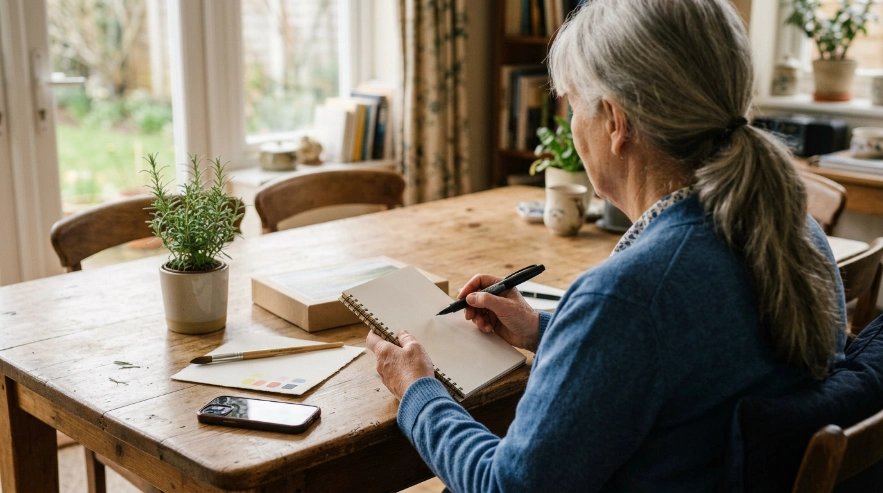
I use a simple rule: choose the hobby that is easiest to begin this week. Interest matters, but convenience often determines whether a new activity becomes a routine.
Start With Five Questions
- Do I enjoy the idea? Curiosity is enough; passion can come later.
- Can I do it safely? Adapt for balance, vision, hearing, hand strength, and fatigue.
- Can I afford the starter supplies? Borrow, rent, or buy basic materials first.
- Can I practice for 10-30 minutes? Short sessions make starting easier.
- Can I make it social if I want to? A friend, class, or club can help with consistency.
Make the Setup Comfortable
A hobby becomes easier when the environment does some of the work. I like to set up a stable chair, good lighting, frequently used supplies within reach, and a clear surface before the first session starts.
For hand stiffness, larger pens, thicker crochet hooks, or lightweight tools may feel more comfortable. For vision changes, large-print instructions, stronger contrast, magnification, or audio directions can remove unnecessary frustration.
It also helps to stop before fatigue turns the hobby into a chore. A pleasant 15-minute session is more likely to be repeated than an hour that leaves someone sore, tired, or discouraged.
Try a Two-Week Experiment
Pick one hobby and try it three or four times over two weeks. After each session, ask whether you felt interested, calmer, energized, connected, or proud of what you did.
If the answer is mostly no, switch hobbies without guilt. The goal is not to prove discipline; it is to find an activity you genuinely want to repeat.
Adapt Before You Quit
Sometimes the hobby is right but the setup is wrong. Better lighting, a larger grip, a raised work surface, a seated version, an audiobook, or a shorter session can make the same hobby far easier.
Frequently Asked Questions About Easy Hobbies for Seniors
What is the easiest hobby for an older adult to start?
Reading, walking, journaling, puzzles, and birdwatching are among the easiest because they require little equipment and can be started in short sessions. The best choice depends on interest, mobility, vision, hearing, and whether the person prefers quiet or social activities.
What are good hobbies for seniors with limited mobility?
Good options include audiobooks, puzzles, painting, card games, music, journaling, knitting, photography from home, online classes, and container gardening at a comfortable height. Choose activities that reduce unnecessary bending, reaching, standing, or carrying.
What hobby is good for keeping the mind active?
Reading, puzzles, learning a language, playing cards, photography, music, and taking classes can all provide mental stimulation. NIA guidance supports staying engaged in meaningful and mentally stimulating activities as part of healthy aging.
What are inexpensive hobbies for seniors?
Walking, journaling, library reading, birdwatching, drawing, free online classes, puzzles, volunteering, and simple gardening can all be low-cost. Libraries, community centers, and senior centers may also provide free or inexpensive programs and shared supplies.
How can a caregiver encourage a senior to try a hobby?
Offer two or three choices instead of pushing one activity. Make the first session short, help with setup, and focus on enjoyment rather than results. Joining the activity together can make a new hobby feel less intimidating and more social.
Is it too late to learn a new hobby after age 70 or 80?
No. Older adults can continue learning new skills throughout life, although the best pace and method may differ from person to person. Start with clear instructions, short practice sessions, comfortable tools, and a hobby that matches the person’s interests and abilities.
Final Takeaway
Easy hobbies for seniors do not need to be complicated, expensive, or impressive. The strongest choices are simple enough to start, flexible enough to adapt, and enjoyable enough to repeat.
If I were choosing today, I would pick one hobby, gather only the basic supplies, and try it for two weeks. A small start can lead to a routine that adds creativity, movement, learning, purpose, or connection to everyday life.
