
What Are the Most Popular Hobbies for Retirees? 15 Great Ideas


Smart Plug with Alexa

Automatic Jar Opener

Adjustable Bed Wedge Pillow
Quick Answer: The most popular hobbies for retirees include gardening, walking, reading, arts and crafts, volunteering, photography, cooking, card games, travel, music, and lifelong learning. The best choices combine enjoyment with movement, creativity, learning, or social connection, which the National Institute on Aging encourages as part of healthy aging.
- For relaxation: Reading, gardening, puzzles, and crafts.
- For staying active: Walking, swimming, dancing, and gentle fitness.
- For social connection: Clubs, volunteering, cards, and group classes.
- For creativity: Painting, photography, woodworking, and music.
- For lifelong learning: Languages, technology, history, and online courses.
- For adventure: Travel, birdwatching, fishing, and local day trips.
When people ask me, “What are the most popular hobbies for retirees?” I rarely recommend choosing something simply because other retirees enjoy it. The best retirement hobby is one that gives you a reason to look forward to tomorrow.
For many older adults, retirement finally creates room for interests that work, commuting, and family responsibilities pushed aside. As of 2026, there are more ways than ever to enjoy hobbies at home, outdoors, online, or through local community programs.
Table of Contents
- What hobbies are most popular with retirees?
- What creative hobbies are good for retirees?
- What active hobbies are good after retirement?
- What social hobbies help retirees stay connected?
- What hobbies keep your mind engaged?
- What are inexpensive retirement hobbies?
- How do you choose the right retirement hobby?
- Frequently asked questions
What Hobbies Are Most Popular With Retirees?
The most common retirement hobbies tend to be activities that are flexible, enjoyable, and easy to fit around a changing schedule. Gardening, reading, walking, crafts, games, travel, volunteering, photography, cooking, and learning new skills all fit that description.
I also find that retirees often enjoy hobbies more when they provide more than one benefit. Gardening, for example, combines gentle movement, time outdoors, creativity, and the satisfaction of watching something grow.
15 popular hobbies worth considering
- Gardening and container gardening
- Walking and nature walks
- Reading and book clubs
- Painting and drawing
- Knitting, crochet, and sewing
- Photography
- Cooking and baking
- Card games and board games
- Volunteering
- Fishing and birdwatching
- Travel and local sightseeing
- Music and learning an instrument
- Dancing
- Woodworking and DIY projects
- Classes and lifelong learning
There isn’t one universal ranking because retirement looks different for everyone. Someone living in an apartment may prefer photography or reading, while another person may spend hours gardening or woodworking.
If you’d like a wider selection, these activities to do with seniors can provide additional ideas for different interests and ability levels.
What Creative Hobbies Are Good for Retirees?
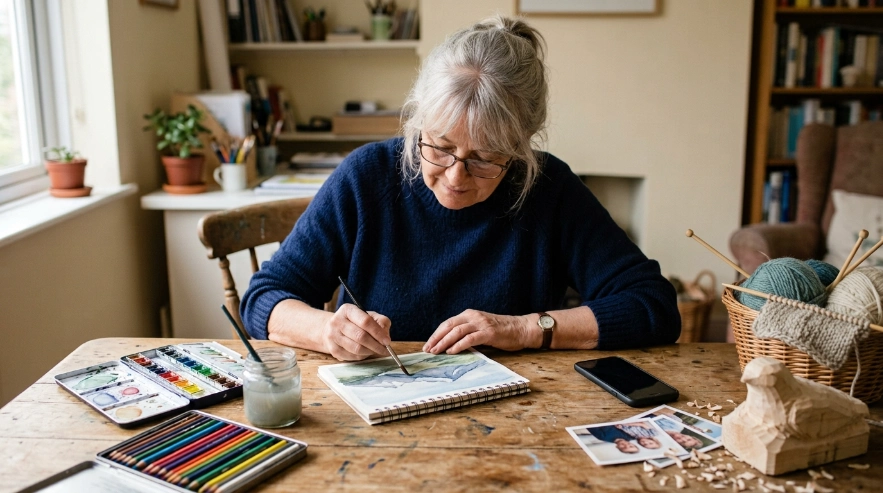
Creative hobbies are especially appealing in retirement because they provide something tangible to work toward. You don’t need artistic experience, expensive equipment, or formal lessons to start.
Painting and drawing
Watercolor, acrylic painting, colored pencils, and sketching can all be started at a kitchen table. I like these hobbies because beginners can progress at their own pace without needing to compete with anyone.
A simple sketchbook and pencil can be enough. If you enjoy structure, community centers and libraries often offer beginner-friendly classes.
Knitting, crochet, and sewing
These traditional hobbies remain popular because they combine concentration with creativity. Projects can range from simple scarves and small repairs to quilts, clothing, or gifts for family members.
They can also become social hobbies when you join a sewing circle or craft group.
Photography
Photography is one of my favorite retirement hobby suggestions because you may already own the equipment you need. A modern smartphone can be enough to start photographing flowers, architecture, family gatherings, wildlife, or travel.
Photography also encourages you to notice details in everyday places that you may have overlooked before.
Woodworking and hands-on projects
Woodworking, model building, home projects, and furniture restoration appeal to retirees who enjoy making practical things. Start with small projects instead of buying an entire workshop on day one.
For anyone interested in organized learning, local programs and senior-oriented classes can provide both instruction and companionship.
What Active Hobbies Are Good After Retirement?
Walking is one of the simplest active hobbies because it requires little equipment and can be adjusted to your comfort level. Some retirees make it more interesting by exploring parks, historic neighborhoods, botanical gardens, or walking clubs.
The Centers for Disease Control and Prevention encourages regular physical activity for older adults, including activities that support aerobic fitness, strength, and balance.
Walking and hiking
Start with comfortable routes and manageable distances. A regular walking partner can turn exercise into a social appointment rather than another item on a fitness checklist.
Gardening
Gardening can involve planting flowers, vegetables, herbs, or simply caring for containers on a patio. Raised beds and containers can make the hobby easier for people who prefer less bending or kneeling.
Dancing
Ballroom dancing, line dancing, folk dancing, and casual dance classes combine movement with music and conversation. You don’t need to become an expert for dancing to become an enjoyable weekly routine.
Swimming and gentle exercise
Some retirees prefer swimming, water exercise, yoga, or tai chi because these activities can be adapted to different fitness levels. If you have significant mobility limitations or medical concerns, discuss a new exercise routine with your healthcare professional first.
Older readers looking for additional ideas can also explore these exercises for seniors over 70.
What Social Hobbies Help Retirees Stay Connected?
A hobby doesn’t need to be done alone. In fact, retirement can be an excellent time to replace some of the regular social contact that previously came from work.
The National Institute on Aging discusses meaningful social activities as part of healthy aging. The AARP also provides resources covering leisure, volunteering, games, learning, and social engagement for older adults.
Card and board games
Bridge, rummy, chess, dominoes, bingo, trivia, and modern board games give people an easy reason to meet regularly. The game matters less than having an activity that brings everyone back together.
For more options, see these group games for senior citizens.
Volunteering
Volunteering can be particularly meaningful after retirement because it allows you to use skills gained over decades. Libraries, schools, hospitals, museums, community gardens, food programs, and animal organizations may all need volunteers.
I suggest starting with one regular commitment rather than filling your calendar immediately. A hobby should give you purpose without making retirement feel like another full-time job.
Senior centers and community groups
Local senior centers often host craft sessions, exercise programs, educational talks, games, trips, lunches, and seasonal events. You can use a senior center calendar of events to see what kinds of opportunities may be available.
What Hobbies Keep Your Mind Engaged?
Retirement doesn’t mean learning has to stop. Reading, music, language study, photography, puzzles, classes, and technology can all give you new skills to practice.
The National Institute on Aging notes that meaningful and mentally engaging activities show promise for supporting quality of life and cognitive health, while also cautioning against exaggerated claims about commercial “brain training.”
Reading and book clubs
Reading is inexpensive, flexible, and easy to adapt to almost any interest. Fiction, biographies, history, science, gardening, travel, and mysteries can all lead you into entirely new subjects.
A book club adds discussion and social connection. Audiobooks are another useful option if long reading sessions become uncomfortable.
Learn a language
Learning another language gives you an ongoing challenge with clear milestones. You might learn for travel, family connections, cultural interest, or simply because you enjoy the process.
Learn technology
Photography editing, video calls, online research, digital art, and basic computer skills can become hobbies themselves. They can also make other hobbies easier by connecting you to classes and communities.
Structured programs such as classes for senior citizens may be useful for retirees who enjoy learning alongside others.
Music
Retirement is a fine time to return to an old instrument or learn one for the first time. Piano, guitar, ukulele, singing, and community choir participation can all provide achievable goals.
You don’t need professional ambitions. Learning one favorite song can be enough to make the hobby rewarding.
What Are Inexpensive Retirement Hobbies?
A fulfilling hobby doesn’t need a large retirement budget. Many of the best hobbies can be started with things you already have or resources available through libraries and community organizations.
| Hobby | Typical Starter Needs | Activity Level | Social Potential |
|---|---|---|---|
| Walking | Comfortable shoes | Moderate | High with a group |
| Reading | Library card or books | Low | Medium with a book club |
| Gardening | Pots, soil, seeds, basic tools | Low to moderate | Medium |
| Photography | Smartphone or camera | Low to moderate | Medium |
| Card games | Deck of cards | Low | High |
| Volunteering | Time and transportation | Varies | High |
| Drawing | Paper and pencils | Low | Low to medium |
| Birdwatching | Notebook; binoculars optional | Low to moderate | Medium |
Libraries are one of the first places I recommend checking. Beyond books, many offer clubs, lectures, technology help, workshops, and community events.
Community recreation programs can also provide inexpensive ways to try an activity before buying equipment. That approach helps prevent spending hundreds of dollars on a hobby that loses its appeal after two weeks.
How Do You Choose the Right Retirement Hobby?

The right hobby matches your interests, energy, budget, physical ability, and preferred amount of social interaction. I recommend testing hobbies rather than trying to identify the “perfect” one in advance.
Use this simple five-question test
- Would I enjoy doing this even if I weren’t especially good at it?
- Can I comfortably afford the basic equipment or fees?
- Does the physical demand match my current ability?
- Do I want to do this alone, with other people, or both?
- Would I still be interested enough to try it for one month?
If you answer yes to most of those questions, give the hobby a trial period. Borrow equipment, take one class, attend one club meeting, or try a beginner version at home.
Don’t turn every hobby into another obligation
One mistake I’ve seen is treating retirement hobbies like productivity projects. Suddenly the garden has to be perfect, every painting has to be impressive, or every walk has to hit a target.
You are allowed to garden badly, play average chess, take imperfect photos, and learn guitar slowly. Enjoyment matters more than performance.
Consider your health and accessibility
Physical hobbies should fit your current health, balance, mobility, vision, and stamina. The Mayo Clinic provides general health information, while your own healthcare professional can give advice based on your circumstances.
If a new hobby leads you to schedule medical services or check health coverage, Medicare.gov is the official federal resource for Medicare information.
Frequently Asked Questions About Retirement Hobbies
What is the number one hobby for retirees?
There isn’t a single hobby that ranks first for every retiree. Gardening, reading, walking, traveling, crafts, volunteering, photography, and games are consistently practical choices because they can fit different budgets, schedules, and ability levels.
What are good hobbies for a 65-year-old?
Good hobbies at 65 include walking, gardening, photography, swimming, cooking, reading, volunteering, painting, dancing, and learning an instrument or language. Choose according to your interests and health rather than assuming certain activities are only appropriate for a particular age.
What hobbies can retirees do at home?
Home-friendly hobbies include reading, puzzles, knitting, crochet, sewing, painting, drawing, cooking, baking, genealogy, music, indoor gardening, writing, online learning, and photography editing. Many can also become social through online groups, classes, or occasional local meetups.
What are good hobbies for retirees with limited mobility?
Consider reading, audiobooks, card games, puzzles, painting, photography, knitting, music, genealogy, indoor gardening, writing, and online classes. Adapt the workspace for comfort, good lighting, and easy access rather than abandoning an interesting hobby because the traditional version requires more movement.
What hobbies help retirees meet people?
Book clubs, walking groups, volunteer programs, card clubs, community gardens, choir groups, dance classes, craft groups, and adult education courses all create natural opportunities for conversation. A recurring activity often makes building friendships easier because you see the same people regularly.
Is it too late to start a new hobby after retirement?
No. Retirement can be an excellent time to become a beginner again because you may finally have more control over your schedule. Start with a small commitment, allow yourself to learn slowly, and judge success by whether you enjoy returning to the activity.
How many hobbies should a retiree have?
There is no ideal number. Some people enjoy one absorbing hobby, while others prefer several activities that provide different experiences, such as one physical hobby, one social activity, and one quiet creative interest.
A Good Retirement Hobby Should Make Life More Interesting
When I’m asked what the most popular hobbies for retirees are, my answer is gardening, walking, reading, creative arts, games, volunteering, travel, photography, music, cooking, and lifelong learning. Popularity is useful for generating ideas, but it shouldn’t make the final decision for you.
Choose something that fits the life you want now. Start small, give yourself permission to be a beginner, and keep the hobbies that make you want to do them again next week.
My simplest recommendation: Pick one hobby that moves your body, challenges your mind, creates something, or connects you with other people. If it accomplishes two of those at once, you’ve probably found an excellent place to start.
