
What Are the Best Hobbies for Creative People?


Automatic Jar Opener

Big Button Mobile Phone

Compression Socks
Quick Answer
The best hobbies for creative people include painting, drawing, photography, writing, pottery, woodworking, knitting, cooking, gardening, music, digital design, and crafts. For older adults, the best choice is usually an activity that matches your interests, comfort, space, and budget. You can also explore these best hobbies for seniors for more ideas.
Creative hobbies worth trying
- Painting and drawing: Ideal for people who enjoy color, observation, and making something visual.
- Writing: Journaling, memoirs, poetry, and stories turn memories and ideas into something lasting.
- Photography: A phone or simple camera can turn everyday walks and family moments into creative projects.
- Hands-on crafts: Knitting, pottery, woodworking, sewing, and paper crafts create useful or decorative objects.
- Music: Singing or learning an instrument offers creativity without needing visual-art skills.
- Cooking and gardening: Both combine experimentation, practical skills, and room for personal style.
Simple way to begin
- Choose one hobby, spend 20 to 30 minutes trying it, and avoid buying expensive supplies until you know you enjoy it.
Creativity doesn’t disappear when you retire or get older. In many cases, having more control over your time finally gives you room to explore interests that work once pushed aside.
I prefer hobbies that make starting easy and perfection unnecessary. This guide focuses on creative activities you can adapt to different budgets, abilities, homes, and energy levels.
In This Guide
- What are the best hobbies for creative people?
- How do you choose the right creative hobby?
- What visual art hobbies are easiest to start?
- Is writing a good creative hobby?
- What hands-on hobbies are good for creative people?
- Can music be a creative hobby for beginners?
- What digital hobbies are good for creative adults?
- Which creative hobbies work with limited mobility?
- Frequently asked questions
What Are the Best Hobbies for Creative People?
The best creative hobbies give you freedom to experiment and make something personal. You don’t need professional talent, expensive equipment, or years of training.
A creative hobby is a leisure activity where you make, design, interpret, arrange, or express something in your own way. The final result might be a painting, garden, photograph, meal, song, story, quilt, or handmade object.
Here are 15 strong choices for adults and seniors who enjoy creating:
- Watercolor painting — inexpensive, portable, and forgiving for beginners.
- Drawing and sketching — requires little more than paper and pencils.
- Photography — combines observation, storytelling, and exploration.
- Journaling — turns thoughts and daily experiences into a personal record.
- Memoir writing — preserves stories, lessons, recipes, and family history.
- Creative writing — includes poetry, short stories, essays, and fiction.
- Knitting or crochet — combines color, pattern, repetition, and useful results.
- Sewing or quilting — lets you design practical and decorative pieces.
- Woodworking — suits people who enjoy planning, measuring, and building.
- Pottery or clay work — encourages experimentation with shape and texture.
- Cooking and baking — provide constant opportunities to change flavors and presentation.
- Gardening — uses color, shape, timing, and space as creative tools.
- Playing an instrument — combines learning, interpretation, and self-expression.
- Singing — requires little equipment and can be solo or social.
- Digital design — includes photo editing, digital drawing, layouts, and simple video creation.
| Hobby | Starter Cost | Space Needed | Social Level | Good First Session |
|---|---|---|---|---|
| Drawing | Low | Very little | Mostly solo | 15–20 minutes |
| Watercolor | Low | Small table | Solo or class | 20–30 minutes |
| Photography | Low with a phone | None | Solo or social | 10-photo project |
| Writing | Very low | Very little | Mostly solo | 15 minutes |
| Knitting | Low | Very little | Solo or group | 20 minutes |
| Woodworking | Medium to high | Workshop area | Mostly solo | Small beginner project |
If you’d like a wider list before deciding, these fun hobbies to start after retirement cover creative, active, social, and relaxing options.
How Do You Choose the Right Creative Hobby?
Choose a creative hobby by matching it to your curiosity and everyday life. A fascinating activity that is difficult to set up may be harder to maintain than a simple one you can start anytime.
I use five practical questions when comparing hobbies:
- What do you enjoy noticing? Colors may point toward painting, while stories may point toward writing.
- Do you want a finished object? Sewing, woodworking, pottery, and crafts provide something tangible.
- Do you prefer structure or freedom? Knitting follows patterns, while painting can be completely open-ended.
- How much space can you use? Writing needs almost none, while woodworking needs much more.
- Do you want company? Choirs, art classes, craft groups, and community workshops add social contact.
Don’t buy a large supply collection first. Test an activity for two or three sessions before making a bigger commitment.
If you’re still comparing possibilities, this guide on how to choose a hobby after retirement provides a simple way to match activities to your energy, budget, and personality.
What Visual Art Hobbies Are Easiest to Start?
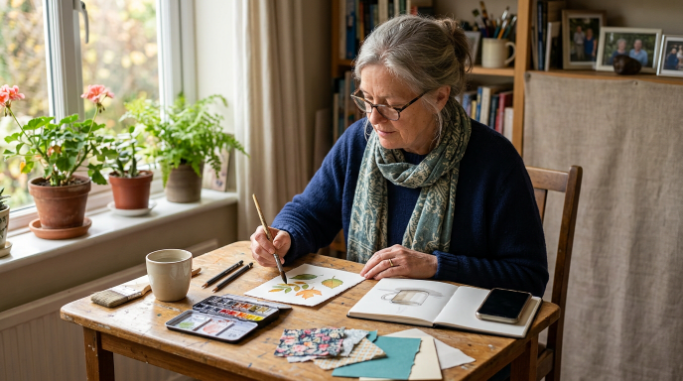
Drawing, watercolor painting, collage, and photography are among the easiest visual hobbies to begin. Each can start with inexpensive materials and short sessions.
Drawing and sketching
A pencil and inexpensive sketchbook are enough. Start by drawing familiar objects instead of trying to create a finished work of art.
A coffee mug, plant, shoe, or window view gives you a manageable subject. Ten minutes of observation can be more useful than an hour spent worrying about technique.
Watercolor painting
Watercolor is especially convenient when space is limited. A small palette, two brushes, paper, and a cup of water can fit on a kitchen table.
Begin with shapes, leaves, skies, or simple landscapes. Letting the paint behave imperfectly is part of the appeal.
Collage and mixed-media crafts
Collage works well if drawing feels intimidating. Magazine pages, photographs, patterned paper, fabric scraps, and printed words can become the raw material.
You can make greeting cards, memory pages, seasonal artwork, or framed pieces. The activity rewards arranging and experimenting rather than technical drawing skill.
The National Endowment for the Arts’ creativity and aging resources also highlight lifelong participation in arts and creative learning.
Is Writing a Good Creative Hobby?
Yes. Writing is one of the most flexible creative hobbies because you can begin with almost no equipment and work for five minutes or several hours.
You don’t have to write a novel. Short, personal forms often make better starting projects.
- Daily journal: Record one event, thought, or observation each day.
- Memoir: Write individual stories from different periods of your life.
- Family history: Record relatives, traditions, places, and important events.
- Recipe stories: Pair favorite recipes with memories about the people who made them.
- Poetry: Experiment with rhythm and imagery without worrying about length.
- Short fiction: Invent a character, place, or situation and see where it leads.
A useful beginner rule is to write for 15 minutes without editing. Separating creating from correcting makes the blank page much less intimidating.
The National Institute on Aging notes that research on meaningful activities, including creative writing and other arts, shows promise for supporting well-being, although researchers continue studying the long-term effects. You can read its overview of cognitive health and meaningful activities.
What Hands-On Hobbies Are Good for Creative People?
Knitting, sewing, woodworking, clay work, cooking, and gardening are strong options when you enjoy making something with your hands. They combine creativity with visible progress.
Knitting, crochet, and sewing
Fiber hobbies give you choices about color, texture, pattern, and purpose. A scarf, cushion cover, simple bag, or dishcloth makes a better first project than something complicated.
Choose comfortable tools and work in short sessions if your hands tire. There is no prize for finishing quickly.
Woodworking and model building
Woodworking suits people who enjoy both design and precision. Start with a small kit or beginner project before collecting power tools.
Model building offers a similar sense of construction on a smaller scale. It can work well when a full workshop isn’t practical.
Cooking and baking
Cooking becomes creative when you move beyond following instructions exactly. You can experiment with seasoning, presentation, family recipes, or unfamiliar cuisines.
Try choosing one theme each week. Homemade bread, soups, regional dishes, cakes, or family favorites can each become a small creative project.
Gardening
A garden is partly a living design project. Color combinations, container arrangements, herbs, seasonal flowers, and plant placement all involve creative decisions.
You don’t need a large yard. A windowsill, balcony, patio, or raised container can be enough.
Can Music Be a Creative Hobby for Beginners?
Absolutely. Singing and learning an instrument can begin at almost any skill level, and you don’t need ambitions to perform publicly.
A beginner can start with familiar songs and short practice sessions. Fifteen focused minutes several times a week may feel more manageable than one long session.
Good beginner choices
- Ukulele: Small, portable, and commonly used for beginner chord playing.
- Keyboard: Notes are visually organized, which can make basic melodies easier to understand.
- Hand percussion: Useful for exploring rhythm without learning complicated finger positions.
- Singing: Requires no purchased instrument and can be practiced privately or with a group.
A community choir can also turn music into a social hobby. The goal can simply be enjoying the weekly routine and making music with other people.
The National Institute on Aging discusses music, theater, dance, and other meaningful activities in its guidance on participating in activities you enjoy as you age.
What Digital Hobbies Are Good for Creative Adults?
Photography, photo editing, digital drawing, video making, and simple graphic design are useful choices when you enjoy technology. Many can begin with devices you already own.
Smartphone photography
Your phone can become a creative tool instead of just a communication device. Try photographing one theme for a week, such as doors, flowers, shadows, pets, meals, or neighborhood details.
Limiting the subject makes you notice differences in light and composition. It also creates a clear project instead of hundreds of random pictures.
Digital photo editing
Editing teaches you to make choices about cropping, brightness, contrast, and visual emphasis. Start by improving your own photographs rather than trying complicated effects.
Digital drawing and design
Tablet drawing can appeal to people who dislike storing physical supplies. Mistakes are also easy to undo, which removes some pressure from experimentation.
Simple design projects might include greeting cards, family-photo layouts, recipe cards, calendars, or invitations. They give you a practical reason to learn new tools.
Which Creative Hobbies Work With Limited Mobility?
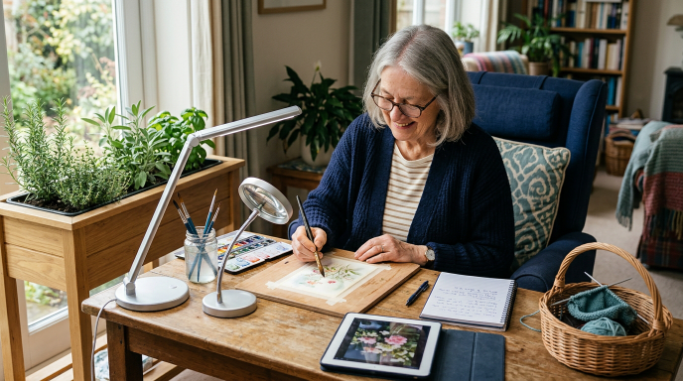
Many creative hobbies can be done while seated or at home. The key is changing the setup rather than abandoning the interest.
- Writing: Use a notebook, computer, tablet, or voice-to-text tool.
- Watercolor: Keep a compact supply tray within easy reach.
- Drawing: Work from a table, lap desk, or adjustable easel.
- Knitting and crochet: Choose comfortable seating and lightweight projects.
- Photography: Photograph views, household objects, food, flowers, or visitors from home.
- Music: Singing, keyboard, and many small instruments can be enjoyed while seated.
- Container gardening: Raise plants to a comfortable working height.
- Digital art: Create on a tablet or computer without storing physical materials.
Make comfort part of the hobby setup. Better lighting, a supportive chair, larger handles, magnification, or shorter sessions can make a significant practical difference.
The CDC encourages older adults to stay socially connected through enjoyable activities such as crafts, gardening, cooking, painting, games, and group activities. Its information for older adults also recommends adapting activities to physical ability.
If you want easier beginner options, see these easy hobbies for seniors to learn.
Health note: If an activity causes new pain, dizziness, unusual shortness of breath, or other concerning symptoms, stop and discuss appropriate activity with your healthcare professional.
Frequently Asked Questions About Creative Hobbies
What is the easiest creative hobby to start?
Drawing, journaling, smartphone photography, and simple watercolor painting are among the easiest options. They require little space, modest supplies, and no previous experience. Pick one activity and try it for 15 to 30 minutes before deciding whether you want to continue.
What creative hobbies are inexpensive?
Writing, sketching, photography with a phone, collage, singing, paper crafts, and simple cooking projects can all be inexpensive. Using supplies you already own is the best way to explore an interest before spending money on specialized equipment.
What hobbies are good for people who aren’t artistic?
Cooking, gardening, photography, woodworking, knitting, model building, decorating, and creative writing don’t require traditional drawing skills. Creativity is broader than fine art. It involves making choices, solving problems, experimenting, and expressing your own ideas.
Can you become creative later in life?
Yes. You can learn a creative hobby at any age. Start with beginner projects, allow yourself to make imperfect work, and judge the activity by whether you enjoy returning to it rather than whether your first results look professional.
What creative hobbies can seniors do at home?
Good at-home choices include journaling, memoir writing, watercolor, drawing, knitting, crochet, sewing, digital photography, music, baking, container gardening, scrapbooking, and digital design. Many can be adapted for seated use and short sessions.
Are creative hobbies good for meeting people?
They can be. Art classes, choirs, writing groups, quilting circles, community gardens, photography clubs, pottery workshops, and cooking classes create regular opportunities to meet people around a shared interest. Choose a recurring group if social connection is one of your goals.
How many creative hobbies should I try?
Start with one. Give it several sessions before adding another activity. If you enjoy variety, you might eventually keep one quiet hobby, such as writing, and one more social or hands-on hobby, such as choir, gardening, or a craft group.
The best creative hobby isn’t the one that looks most impressive. It’s the one that makes you curious enough to return tomorrow.
As of 2026, there are more ways than ever to create at home, online, or in your community. Pick one small project, keep the first session simple, and give yourself permission to be a beginner.
