
How Do You Choose a Hobby After Retirement?


Smart Health Watch for Seniors

Jar Opener for Weak Hands

Leg Massager for Circulation
Quick Answer
To choose a hobby after retirement, start with activities that match your interests, energy, budget, mobility, and preferred level of social contact. Try a few low-commitment options before investing heavily, and choose something you enjoy enough to repeat. The National Institute on Aging also encourages older adults to stay involved in meaningful activities they enjoy.
Use these five criteria
- Personal interest: Pick something that makes you curious, not something you feel you should enjoy.
- Physical comfort: Match the activity to your current energy, balance, mobility, and stamina.
- Social preference: Decide whether you want quiet personal time, regular company, or a mixture of both.
- Affordable commitment: Start cheaply before buying equipment, memberships, or large amounts of supplies.
- Repeatability: Choose something that fits naturally into your weekly routine.
A simple way to start
- Write down five possibilities, test two or three, and keep the activity you genuinely look forward to doing again.
Retirement gives you more control over your time, but that freedom can make choosing a hobby surprisingly difficult. Suddenly, there are hundreds of possibilities and no work schedule deciding how your week looks.
I think the best retirement hobbies aren’t simply ways to fill empty hours. They give you something enjoyable to anticipate and can add rhythm, connection, movement, creativity, or learning to your week.
In This Guide
- Why can choosing a hobby after retirement feel difficult?
- How do you choose a hobby after retirement?
- What kind of hobby fits your personality and energy?
- Should your hobby be social, active, creative, or relaxing?
- How can you try hobbies without wasting money?
- What hobbies work with limited mobility or energy?
- How many hobbies should you have in retirement?
- Frequently asked questions
- Final takeaway
Why Can Choosing a Hobby After Retirement Feel Difficult?
Choosing a retirement hobby can feel difficult because retirement changes more than your calendar. Work may have provided structure, social contact, challenges, deadlines, and a regular feeling of accomplishment.
Once those routines disappear, you may know you want something meaningful to do without knowing exactly what that should be.
A retirement hobby is an activity you choose to do regularly for enjoyment, interest, learning, creativity, movement, connection, or personal satisfaction during your leisure time.
Don’t pressure yourself to find a passion immediately
A hobby doesn’t need to become a new identity. It only needs to make part of your day or week more enjoyable.
I prefer thinking of retirement hobbies as experiments. You can try something, enjoy it for six months, and later move on without considering that a failure.
- Restart an old interest: Return to something you enjoyed before work or family responsibilities took over.
- Explore a curiosity: Try something you’ve wondered about but never had time to learn.
- Solve a retirement need: Choose an activity that adds movement, social contact, quiet time, or structure.
- Share a skill: Teach, volunteer, mentor, or create something using knowledge you already have.
The National Institute on Aging notes that meaningful social and productive activities can support healthy aging and well-being. That includes hobbies, volunteering, classes, arts, exercise, and community activities. Its healthy aging guidance provides additional examples.
How Do You Choose a Hobby After Retirement?
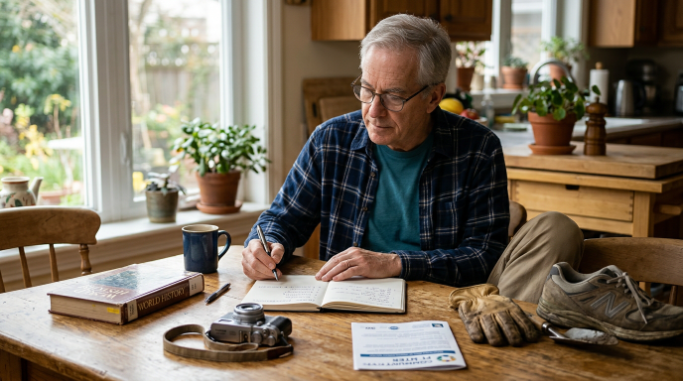
Choose a hobby by working backward from the life you want now. Instead of asking, “What hobbies do retirees do?” ask, “What would make my week more enjoyable?”
That small change makes the decision much easier.
1. Decide what you want the hobby to give you
Start with the result you want. Different hobbies serve different needs.
- More movement: Walking, gardening, swimming, dancing, cycling, or tai chi.
- More people: Volunteering, book clubs, choirs, community classes, or card groups.
- More creativity: Painting, photography, woodworking, knitting, music, or writing.
- More learning: Languages, genealogy, history, technology, cooking, or online courses.
- More calm: Birdwatching, reading, puzzles, journaling, fishing, or container gardening.
2. Look backward before looking outward
Think about what you enjoyed at ages 15, 25, or 40. Old interests often reveal more than a random internet list.
Maybe you stopped playing guitar, sketching, fishing, baking, repairing things, or taking photographs because life became busy.
Try this: Write down three activities you loved, three things you’ve always wanted to learn, and three things you enjoy doing with other people.
3. Match the activity to your life today
Your current lifestyle matters more than your past ability. A hobby should fit your energy, transportation, available space, budget, eyesight, hearing, balance, and mobility.
Adaptation is normal. Someone who once maintained a large garden might enjoy raised beds, herbs, or container gardening today.
4. Decide how social you want to be
Some people leave work and miss everyday conversations. Others retire feeling delighted that nobody expects them at another meeting.
Both reactions are normal.
- Mostly solo: Reading, woodworking, painting, gardening, genealogy, writing, puzzles.
- Lightly social: Library classes, walking with one friend, online groups, photography outings.
- Highly social: Choirs, volunteering, clubs, group fitness, theater, dance, team games.
5. Test before committing
Give an interesting hobby a short trial. Two to four weeks is usually enough to learn whether you want another month.
Borrow equipment, attend one class, rent supplies, or buy the simplest beginner materials first.
6. Judge the hobby by one question
After several sessions, ask yourself, “Do I want to do this again?” That question matters more than whether you’re talented at it.
A hobby is leisure, not another performance review.
Section Takeaway: Choose for enjoyment, fit, and repeatability. The best retirement hobby is one you want to return to without forcing yourself.
What Kind of Hobby Fits Your Personality and Energy?
The best hobby often matches your natural pace. An activity that constantly fights your personality can become another obligation.
If you enjoy quiet and concentration
- Reading
- Model building
- Genealogy
- Painting or drawing
- Knitting or crochet
- Jigsaw puzzles
- Woodworking
- Writing memoirs
If you gain energy from people
- Volunteering
- Community theater
- Choir
- Book clubs
- Walking groups
- Dance classes
- Card or board-game groups
- Community gardening
The CDC describes social connectedness as feeling supported, valued, and connected through relationships. Its guidance for older adults suggests shared hobbies such as gardening, crafts, group exercise, games, and book clubs.
If your energy changes from day to day
Choose something flexible. Reading, photography, container gardening, birdwatching, music, crafts, and online learning can often expand or shrink with your energy.
You don’t need a hobby that demands the same effort every session.
Should Your Retirement Hobby Be Social, Active, Creative, or Relaxing?
There isn’t one ideal category. A useful retirement routine often combines two or three different types.
| Hobby Type | Good Examples | Social Level | Physical Demand | Simple Starter Routine |
|---|---|---|---|---|
| Creative | Painting, photography, writing | Low to medium | Low | 30 minutes, 2–3 times weekly |
| Social | Clubs, volunteering, choir | High | Low to medium | One recurring weekly activity |
| Active | Walking, swimming, dancing | Low to high | Medium to high | Start with comfortable short sessions |
| Learning | Language, music, genealogy | Low to medium | Low | 20–30 minutes most days |
| Relaxing | Reading, birdwatching, puzzles | Low | Low | Use whenever you want quiet time |
The starter routines above are flexible suggestions, not health targets. Adjust them to your preferences and abilities.
If physical activity is one goal, the CDC recommends that adults 65 and older work toward at least 150 minutes of moderate aerobic activity weekly, plus muscle-strengthening activity on two days and balance activity. People who can’t meet those levels should be as active as their abilities allow.
You can review the CDC recommendations for older adults before building exercise-focused hobbies into your routine.
Health note: If you have a medical condition, recent surgery, balance problems, chest symptoms, or major mobility limitations, ask your healthcare professional what level of activity is appropriate for you.
How Can You Try Hobbies Without Wasting Money?
A common mistake is buying the hobby before trying the hobby. Expensive tools can create pressure to continue something you don’t enjoy.
Keep your first experiment simple.
- Borrow: Ask friends or family whether they have unused equipment.
- Use libraries: Look for books, clubs, digital courses, workshops, and community events.
- Rent first: Rent specialized equipment before buying your own.
- Take one class: Avoid long memberships until you’ve tried the activity.
- Buy beginner supplies: Start with only what you need for your first few sessions.
- Try free versions: Walking, journaling, birdwatching, photography with a phone, and volunteering can require little new equipment.
Use the 30-day hobby test
Choose two activities and test each several times over one month. Keep brief notes about enjoyment, cost, effort, convenience, and whether you look forward to the next session.
At the end, continue the activity that naturally pulls you back.
Remember: Quitting a hobby you tested isn’t wasted time. You learned something useful about how you want to spend your retirement.
What Hobbies Work With Limited Mobility or Energy?
Limited mobility doesn’t mean limited interests. Look for activities you can adjust for seating, location, session length, or transportation.
- Reading or audiobooks
- Journaling and memoir writing
- Genealogy
- Drawing and watercolor painting
- Knitting, crochet, or simple crafts
- Photography from home or nearby locations
- Container gardening
- Birdwatching from a window, porch, or accessible park
- Online courses
- Language learning
- Music appreciation or learning an instrument
- Online book, chess, or discussion groups
Remove the barrier instead of abandoning the interest
If standing is difficult, try a seated version. If transportation is the problem, look for online or neighborhood alternatives.
If long sessions cause fatigue, use 15-minute blocks. A hobby still counts when you adapt it.
Health note: New pain, dizziness, shortness of breath, or sudden changes in mobility deserve medical attention rather than simply modifying an activity on your own.
How Many Hobbies Should You Have in Retirement?
There is no ideal number of retirement hobbies. One deeply satisfying hobby may be enough, while another person may enjoy several.
I like the idea of having two or three activities that serve different purposes.
- One for your body: Walking, swimming, gardening, or dancing.
- One for your mind or creativity: Reading, painting, music, writing, or learning.
- One for connection: Volunteering, clubs, classes, faith groups, or games.
You don’t need all three categories every week. Think of them as options that help retirement stay varied.
Avoid turning retirement into another packed schedule
A hobby should support your life, not take over your calendar. Leave room for rest, family, appointments, travel, and spontaneous days.
As of 2026, my favorite approach is still the simplest one: start with one activity and let your routine grow naturally.
Frequently Asked Questions
What is the best hobby to start after retirement?
There is no single best hobby for every retiree. Good choices include walking, gardening, reading, painting, photography, volunteering, music, crafts, clubs, and learning classes. Choose according to your interests, energy, budget, mobility, and preferred amount of social contact.
How do I find a hobby if nothing interests me?
Stop looking for a perfect passion and run small experiments instead. Try an old interest, one new skill, one social activity, and one outdoor activity. After several sessions, notice which one makes you curious enough to return.
What are inexpensive hobbies for retirees?
Walking, reading through a library, journaling, birdwatching, volunteering, phone photography, puzzles, drawing, gardening from cuttings, and free online learning can all be inexpensive starting points. Avoid buying specialized equipment until you know you enjoy the activity.
Is it too late to learn a new hobby at 65 or 70?
No. Retirement can offer more time to learn at your own pace. Music, painting, languages, photography, gardening, cooking, technology, writing, crafts, and many other activities can be started later in life and adapted to your current abilities.
What hobbies help retirees meet new people?
Volunteering, walking groups, book clubs, choirs, community gardening, dance classes, group exercise, card clubs, faith-based activities, and adult education classes naturally create repeated contact. Recurring activities usually provide more opportunities to build relationships than one-time events.
Should I turn my retirement hobby into a business?
Only if earning money makes the activity more enjoyable for you. Selling crafts, teaching, photography, consulting, or gardening services can generate income, but deadlines and customers can also change a relaxing hobby into work.
What if I lose interest in my hobby?
Change it. Your hobbies can evolve as your health, finances, friendships, location, and interests change. You don’t owe lifelong loyalty to an activity simply because you spent time learning it.
Final Takeaway
You choose a hobby after retirement by choosing for the person you are now, not the person you think a retiree should become. Start with your interests, decide what you want more of, and match the activity to your everyday life.
Then test it without pressure. If you enjoy doing it and want to return, you’ve found a good hobby.
Start with one small experiment this week. Borrow a book, attend a class, take a walk with a friend, plant something, volunteer once, or pick up a skill you left behind years ago.