
What Are the Best Group Hobbies for Older Adults?


Folding Walking Cane

Electric Food Chopper

Sudoku Puzzle Book
Quick Answer
The best group hobbies for older adults include walking clubs, book clubs, gardening groups, card and board games, arts and crafts, dancing, choirs, volunteering, cooking groups, and lifelong-learning classes. The right choice combines enjoyment, comfortable participation, and regular social contact, which fits the National Institute on Aging’s guidance on enjoyable activities for healthy aging.
Great group hobbies to try
- Walking clubs: Combine conversation, fresh air, and adaptable physical activity.
- Book clubs: Create regular conversation around books, stories, and shared ideas.
- Game groups: Cards, chess, bingo, and board games provide fun mental engagement.
- Creative groups: Painting, knitting, quilting, and crafts encourage expression while people socialize.
- Volunteering: Adds social contact while giving participants a shared purpose.
- Classes: Cooking, languages, photography, dance, and technology make learning social.
An easy way to start
- Choose one activity that already sounds enjoyable and attend two or three sessions before deciding whether the group feels right.
Group hobbies can make an ordinary week feel more interesting. They give older adults something enjoyable to do while creating natural opportunities to meet people.
I like group hobbies because the activity removes much of the pressure from socializing. You don’t have to walk into a room wondering what to talk about because everyone already shares a reason for being there.
In This Guide
- Why Are Group Hobbies Good for Older Adults?
- What Are the Best Group Hobbies for Older Adults?
- How Do Popular Group Hobbies Compare?
- What Are the Best Active Group Hobbies?
- Which Group Hobbies Work With Limited Mobility?
- Which Group Hobbies Keep the Mind Engaged?
- How Do You Choose the Right Group Hobby?
- How Can an Older Adult Get Started?
- Frequently Asked Questions
Why Are Group Hobbies Good for Older Adults?
Group hobbies combine an enjoyable activity with repeated social contact. That combination can make maintaining relationships feel easier and more natural.
Definition: A group hobby is a leisure activity that people practice together because they share an interest, such as walking, gardening, reading, singing, crafting, learning, or playing games.
They create regular social contact
A weekly club gives people a predictable reason to leave home and see familiar faces. Repeated meetings also give new friendships time to develop.
The National Institute on Aging notes that staying active and connected can help address social isolation and loneliness among older adults. Its tips for staying connected include joining activities, restarting hobbies, and taking classes.
They add structure without feeling like work
Retirement can remove routines that once came automatically through work or family responsibilities. A Tuesday walking club or Friday card game creates a small, enjoyable anchor in the week.
That structure doesn’t need to fill the calendar. One dependable activity can be enough to create anticipation and connection.
Shared interests make conversation easier
Starting conversations with strangers can feel awkward at any age. Group hobbies provide an immediate topic.
- Gardeners can compare plants and growing techniques.
- Readers can discuss characters and stories.
- Walkers can chat while moving.
- Crafters can exchange materials and techniques.
- Volunteers can work together toward the same goal.
The social part grows around the hobby rather than being forced. That’s one reason activity-based groups can feel comfortable even for quieter people.
What Are the Best Group Hobbies for Older Adults?
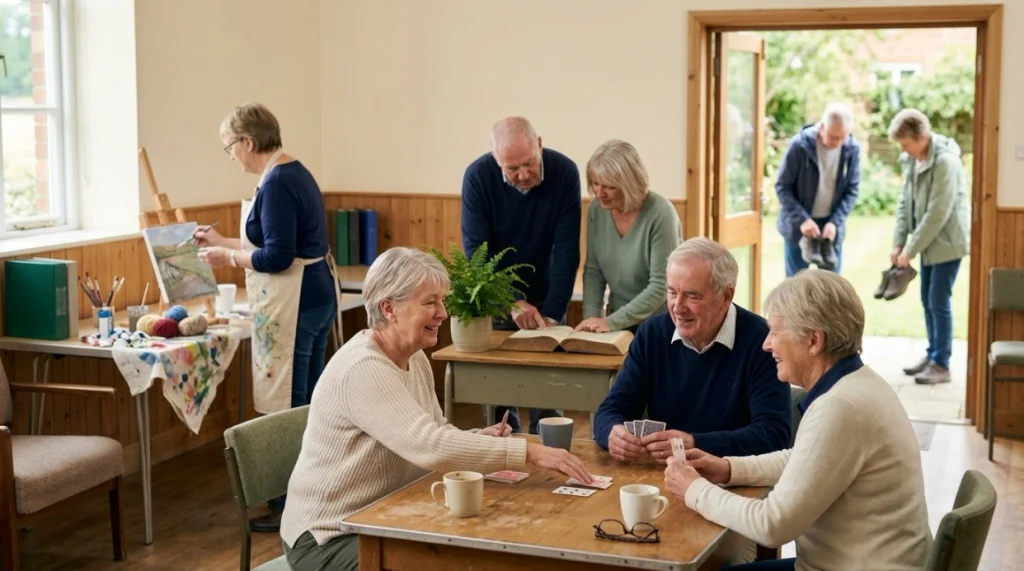
The best group hobby depends on interests, mobility, budget, transportation, and preferred social setting. There isn’t one activity that fits everyone.
As of 2026, these options offer a useful starting point because most can be adapted for different abilities and experience levels.
1. Walking clubs
Walking groups are simple because participants need little equipment beyond comfortable clothing and suitable shoes. Groups can meet at parks, shopping centers, community tracks, or quiet neighborhoods.
A beginner group might walk for 15 to 30 minutes. More experienced members can choose longer routes while still keeping the pace conversational.
2. Book and discussion clubs
Book clubs work well for people who enjoy ideas, stories, history, or current topics. Audiobooks and large-print editions can make participation more accessible.
The group also doesn’t need to read long novels. Short stories, biographies, magazines, films, or local history can provide equally good discussion.
3. Card and board-game groups
Bridge, rummy, hearts, chess, Scrabble, dominoes, and other games create a clear activity while leaving room for conversation. Sessions can last 30 minutes or an entire afternoon.
I especially like games for new groups because nobody has to carry the conversation. The game itself keeps everyone involved.
4. Gardening clubs
Gardening groups can meet in community gardens, neighborhoods, senior communities, or local horticultural clubs. Members can exchange plants, seeds, advice, and seasonal projects.
Container gardening offers an alternative when bending, kneeling, or maintaining a large plot isn’t comfortable.
5. Arts and crafts groups
- Watercolor painting
- Drawing
- Knitting and crochet
- Quilting
- Pottery
- Scrapbooking
- Card making
- Wood carving or simple woodworking
Creative groups work well because participants can talk while their hands stay occupied. Beginners can also work beside more experienced members without needing identical skill levels.
6. Choirs and music groups
Community choirs, sing-alongs, drumming groups, and beginner instrument circles combine practice with teamwork. Many groups welcome members without formal musical training.
7. Volunteering groups
Volunteering creates a hobby-like routine around contribution. Libraries, food programs, museums, schools, gardens, community organizations, and animal shelters may offer group opportunities.
Participants can choose roles that match their stamina, skills, and preferred amount of interaction.
8. Cooking or baking clubs
Cooking groups offer a practical reason to gather. Members can prepare recipes together, exchange family dishes, or explore cuisines from different cultures.
Even a monthly potluck built around one theme can become a satisfying group tradition.
9. Lifelong-learning classes
Libraries, community centers, senior centers, colleges, museums, and online programs may offer classes in languages, history, computers, art, photography, and other subjects.
The goal doesn’t need to be earning a qualification. Learning something interesting together is enough.
How Do Popular Group Hobbies Compare?
Compare hobbies by more than popularity. Think about movement, cost, social interaction, accessibility, and how often you realistically want to participate.
| Group hobby | Typical session | Movement level | Typical starter cost | Good fit for |
|---|---|---|---|---|
| Walking club | 30–60 minutes | Moderate, adjustable | Low | Movement and conversation |
| Book club | 60–90 minutes | Low | Low | Reading and discussion |
| Card/game group | 60–120 minutes | Low | Low | Fun and mental challenge |
| Gardening club | 45–120 minutes | Light to moderate | Low to medium | Outdoor and hands-on interests |
| Craft group | 60–120 minutes | Low | Low to medium | Creativity and relaxed conversation |
| Dance group | 30–60 minutes | Moderate, adjustable | Low to medium | Music, movement, and socializing |
| Volunteering | 1–3 hours | Varies | Usually low | Purpose and teamwork |
These times and costs are practical examples rather than rules. Local organizations may structure the same hobby differently.
What Are the Best Active Group Hobbies?
Walking, dancing, swimming, gardening, tai chi, gentle cycling, and recreational sports can combine physical activity with social time. Choose an intensity that matches current ability and health needs.
For adults 65 and older, the CDC’s older-adult physical activity guidance recommends a weekly mix of aerobic, muscle-strengthening, and balance activities.
- Walking groups: Easy to adjust by pace, route, and distance.
- Dance classes: Combine music, learning, coordination, and movement.
- Tai chi groups: Use controlled, deliberate movements and can be beginner-friendly.
- Water exercise: Offers a group environment for people who enjoy pool-based activity.
- Bowling or bocce: Mix light movement with conversation and friendly competition.
- Gardening: Adds practical movement while participants work on a shared project.
Don’t choose an activity simply because it seems healthy. The activity you enjoy enough to attend regularly is often the more practical choice.
Health note: Anyone with medical conditions, recent surgery, balance concerns, or major changes in activity level should ask their healthcare professional what types of exercise are appropriate.
Which Group Hobbies Work With Limited Mobility?
Limited mobility doesn’t rule out meaningful group hobbies. Many activities can be enjoyed while seated or adapted around an individual’s comfort.
- Book clubs: Meet in person, by phone, or through video calls.
- Card groups: Require little physical movement and simple equipment.
- Knitting or crochet circles: Allow conversation at a comfortable pace.
- Painting groups: Can use tabletop materials and adapted brushes.
- Choirs: Many rehearsals can be completed while seated.
- Genealogy groups: Combine research, storytelling, and shared discoveries.
- Film clubs: Watch a film and meet afterward for discussion.
- Online classes: Bring group learning into the home.
Accessibility includes more than walking. Lighting, hearing, seating, bathroom access, transportation, hand comfort, and session length can all affect participation.
Ask about those details before committing to a group. A welcoming activity becomes much less enjoyable if the setting itself creates unnecessary difficulty.
Which Group Hobbies Keep the Mind Engaged?
Hobbies involving learning, problem-solving, creativity, memory, or conversation can provide meaningful mental engagement. No hobby should be promoted as a guaranteed way to prevent dementia.
The National Institute on Aging’s cognitive health guidance notes that meaningful activities may offer cognitive benefits, while research on their long-term effects continues.
Try hobbies that require active participation
- Chess and strategy games
- Bridge and other card games
- Language classes
- Music lessons or group practice
- Photography clubs
- Creative writing groups
- Book discussions
- Quilting and complex crafts
- Local history or genealogy groups
A useful hobby doesn’t need to feel like a brain exercise. Enjoyable activities often involve planning, remembering, discussing, creating, and solving small problems naturally.
Health note: New or worsening memory problems should be discussed with a qualified healthcare professional rather than treated through hobbies alone.
How Do You Choose the Right Group Hobby?

Start with enjoyment, then check whether the activity fits your everyday life. A hobby isn’t useful if attending it becomes a burden.
Ask these seven questions
- Does it sound enjoyable? Interest matters more than choosing the hobby other people recommend.
- Can I participate comfortably? Consider stamina, mobility, eyesight, hearing, and hand strength.
- Do I like the group size? Some people enjoy ten participants while others prefer three or four.
- Can I get there easily? Check transportation, parking, distance, and meeting times.
- Can I afford it? Include membership fees, supplies, lessons, travel, and equipment.
- Is the schedule realistic? Weekly attendance may suit one person while monthly meetings fit another.
- Do I like the people? A good activity with an uncomfortable group is rarely worth forcing.
Give yourself permission to leave a group that doesn’t fit. Trying something and deciding against it is still useful information.
How Can an Older Adult Get Started?
The easiest approach is to start small instead of building an entirely new social calendar. One recurring hobby is enough.
- Write down three interests. Include both old hobbies and activities you’ve always wanted to try.
- Find local options. Check libraries, community centers, recreation departments, senior centers, colleges, museums, and places of worship.
- Contact the organizer. Ask about experience level, accessibility, cost, supplies, and group size.
- Attend once without pressure. Treat the first visit as a trial rather than a commitment.
- Try two or three sessions. A group often feels more comfortable after familiar faces appear.
- Keep what feels worthwhile. Continue if you leave interested, connected, energized, or pleasantly challenged.
You can also invite a friend to attend the first session. Familiar company can make entering a new group easier.
After that, try speaking with one new person rather than everyone. Small interactions often build into a genuine social circle over time.
Frequently Asked Questions
What is the best social hobby for seniors?
There isn’t one best choice for everyone. Walking clubs, book clubs, card groups, gardening clubs, choirs, crafts, volunteering, and classes are strong options because they create repeated contact around a shared activity.
What are inexpensive group hobbies for older adults?
Walking groups, book clubs using library books, card games, discussion groups, community volunteering, and some library programs can cost little or nothing. Ask about fees before joining because local costs vary.
What hobbies are good for seniors who live alone?
Activities with regular meetings can be useful for someone seeking more social contact. Consider a weekly walking club, volunteer group, craft circle, choir, class, faith-community activity, or game group.
What group hobbies are suitable for people over 70?
Age alone doesn’t determine the right hobby. People over 70 may enjoy anything from hiking and dancing to bridge, painting, choir, gardening, cooking, language learning, or volunteering depending on interests and abilities.
Can shy older adults enjoy group hobbies?
Yes. Activity-focused groups can suit shy people because conversation doesn’t need to be the main event. Craft circles, walking groups, gardening, volunteering, and games give participants something specific to do while relationships develop naturally.
How often should seniors attend group activities?
There is no required schedule. A weekly activity offers regular contact, while a monthly group may suit someone with a busy calendar or limited energy. The best frequency feels enjoyable rather than exhausting.
Where can older adults find hobby groups?
Good places to check include public libraries, senior centers, community centers, parks and recreation departments, local colleges, museums, volunteer organizations, hobby shops, faith communities, and neighborhood organizations.
Finding a Group Hobby That Feels Right
The best group hobbies for older adults are the ones people genuinely want to return to. Walking, games, books, crafts, gardening, music, volunteering, dancing, cooking, and classes all offer different ways to connect.
Start with one interest and give it a fair trial. A good hobby should make the week feel richer, not busier.
If the first group isn’t a match, try another. The activity matters, but finding people and a setting where you feel comfortable matters just as much.