
What Are Good Hobbies for Socially Isolated Seniors?


Large Display Clock with Date

Leg Massager for Circulation

Smart Plug with Alexa
Quick Answer
Good hobbies for socially isolated seniors include walking groups, book clubs, gardening, volunteering, crafts, card games, photography, music groups, community classes, and online hobby groups. The best options create regular, low-pressure contact around a shared activity, which matches National Institute on Aging guidance on staying connected.
Good places to start
- Walking groups: Combine gentle activity with easy, side-by-side conversation.
- Book clubs: Give everyone a ready-made topic to discuss.
- Volunteering: Adds purpose while creating repeated contact with other people.
- Craft groups: Make conversation easier because your hands stay busy.
- Community classes: Create structure and recurring meetings with familiar faces.
- Online groups: Offer connection when transportation or mobility is difficult.
The easiest first step
- Choose one hobby with a recurring weekly activity and try it two or three times before deciding whether it fits.
Social isolation can make days feel repetitive, especially after retirement, bereavement, health changes, or losing regular contact with friends. A good hobby can create something enjoyable to anticipate without making socializing feel forced.
I’d choose the activity based on the person, not their age. The best hobby is one that fits their interests, mobility, energy, transportation, budget, and preferred amount of social contact.
In This Guide
- What makes a hobby good for a socially isolated senior?
- What hobbies are best for meeting people?
- What hobbies work for seniors who cannot leave home easily?
- How do you choose the right hobby without feeling overwhelmed?
- Which hobbies combine social contact with physical activity?
- How can family help a socially isolated senior start a hobby?
- When is a hobby not enough for loneliness or isolation?
- Frequently asked questions
What Makes a Hobby Good for a Socially Isolated Senior?
A good hobby gives an older adult a comfortable reason to interact with other people repeatedly. Shared activity usually feels less awkward than attending an event whose only purpose is socializing.
Social isolation means having limited social contact or relatively few regular interactions. It is different from loneliness, which describes the distressing feeling of being alone or disconnected.
- Repeated contact: Weekly activities make it possible to recognize people and gradually build familiarity.
- Shared purpose: A book, garden, game, craft, or project provides an easy conversation starter.
- Low pressure: The senior can participate without needing to entertain strangers or talk constantly.
- Accessible setup: Transportation, cost, hearing, eyesight, stamina, and mobility should not create major barriers.
- Personal interest: The hobby needs to be enjoyable enough to continue after the novelty fades.
The distinction between isolation and loneliness matters. Someone may live alone and feel content, while another person may feel lonely despite seeing people regularly.
As of 2026, organizations including the World Health Organization continue to describe social isolation and loneliness as important healthy-aging concerns. The WHO also discusses community groups, digital approaches, and improved access to transportation and communication as potential ways to strengthen connection.
That is why I would not choose a hobby merely because it keeps someone busy. A stronger choice creates enjoyment first and opportunities for connection second.
Section Takeaway: The most useful hobby is repeatable, personally interesting, accessible, and social enough to create familiar contact over time.
What Hobbies Are Best for Meeting People?
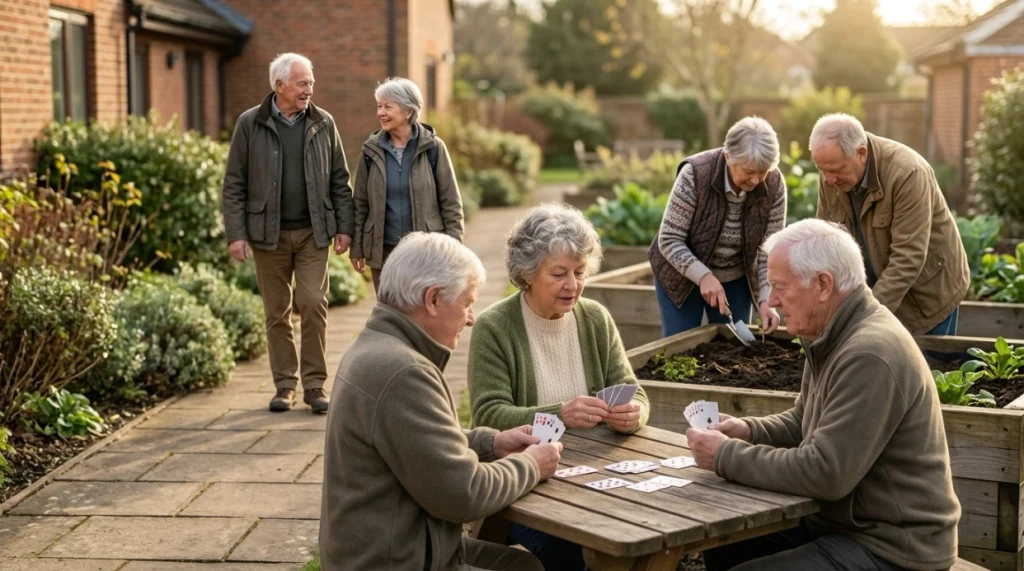
Walking groups, volunteering, clubs, classes, games, gardening, crafts, and music groups are strong choices because interaction develops naturally. They give people something specific to do while conversation grows around it.
| Hobby | Social contact | Typical starter session | Good fit for |
|---|---|---|---|
| Walking group | High | 20–30 minutes | Gentle activity and conversation |
| Book club | High | 45–90 minutes | Readers and quieter personalities |
| Volunteering | High | 1–2 hours | Purpose and community involvement |
| Craft group | Medium to high | 45–60 minutes | Creative, hands-on seniors |
| Card or board games | High | 30–90 minutes | Structured social interaction |
| Community gardening | Medium | 20–45 minutes | Outdoor activity and shared projects |
| Choir or music group | High | 45–90 minutes | Music lovers who enjoy group activity |
| Adult education class | Medium to high | 45–90 minutes | Curious lifelong learners |
Walking groups
Walking beside someone often makes conversation easier than sitting face-to-face. A short neighborhood or community-center walk can become a predictable weekly social event.
Start with a route that matches the person’s balance, stamina, and comfort. Ten or twenty minutes is enough for a first outing.
Volunteering
Volunteering can be especially helpful for someone who misses the sense of usefulness that work once provided. Food programs, libraries, community groups, museums, schools, and animal organizations may have roles suited to different abilities.
A recurring role is usually more socially useful than an occasional event. Seeing the same volunteers creates more chances for relationships to develop.
Book clubs, games, and classes
These activities solve a common problem: not knowing what to say. The book, game, lesson, or project gives the group an immediate shared topic.
- Try a library book club for a quiet setting.
- Look for bridge, chess, dominoes, or card groups.
- Take a beginner art, language, cooking, or computer class.
- Join a local history or genealogy group.
- Try a choir or casual music circle.
I would favor activities that meet on a regular schedule. Familiarity matters more than meeting many different people once.
Section Takeaway: Hobbies with repeated meetings and a shared task often make social connection easier than unstructured social events.
What Hobbies Work for Seniors Who Cannot Leave Home Easily?
Homebound seniors can still choose hobbies that create genuine interaction. Video groups, telephone-based programs, online classes, shared crafts, multiplayer games, and collaborative family-history projects can all add regular contact.
Technology should support the hobby rather than become the hobby itself. A simple tablet setup can be more useful than learning several complicated apps.
- Virtual book club: Read the same book and meet by video or telephone each week.
- Online classes: Try art, history, language, music, or technology lessons with live discussion.
- Remote volunteering: Some organizations need phone callers, mentors, writers, or administrative help.
- Family history: Interview relatives, organize photographs, and build a shared family record.
- Craft-along sessions: Knit, crochet, paint, or make cards while talking with another person by video.
- Online games: Play chess, cards, trivia, or word games with known friends or moderated communities.
- Indoor gardening: Grow herbs or houseplants and exchange progress photos with a gardening group.
Hearing or eyesight limitations may require adjustments. Larger screens, headphones, captions, brighter lighting, and large-print instructions can make participation easier.
Do not overlook telephone contact. Video is useful, but a scheduled phone conversation tied to a shared hobby can still create routine and companionship.
The Eldercare Locator, operated as a public service of the U.S. Administration for Community Living, can also help U.S. families locate community resources for older adults.
Transportation may be the real barrier rather than lack of interest. Solving that one problem can reopen access to senior centers, libraries, faith communities, classes, and recreational programs.
Section Takeaway: Limited mobility does not require solitary hobbies. Choose activities that bring another person into the routine by phone, video, shared projects, or accessible community services.
How Do You Choose the Right Hobby Without Feeling Overwhelmed?
Start with one hobby rather than filling the calendar. The goal is to create an enjoyable routine, not another list of obligations.
Use the interest-access-connection test
I like a simple three-part filter because it removes dozens of unsuitable choices quickly.
- Interest: Would the person enjoy this activity even if nobody praised them for doing it?
- Access: Can they realistically reach, afford, and physically manage the activity?
- Connection: Does it create repeated opportunities to interact with people?
A hobby that passes all three tests deserves a trial. It does not need to be a lifelong commitment.
Try it three times
The first visit to a new group can feel awkward. That does not automatically mean the hobby is a poor fit.
Unless the experience is clearly unpleasant or unsafe, try attending two or three sessions. Familiar faces often make the second visit easier.
Reconnect with an old interest
Starting something completely new is not always necessary. Former hobbies can often be adapted to current circumstances.
- A former gardener might try container gardening.
- A former traveler might join a local photography club.
- A former teacher might volunteer as a tutor.
- A former musician might join a community choir.
- A former carpenter might try small woodworking projects with a group.
Past interests also provide ready-made conversation. Someone who already knows the basics may feel more confident walking into a group.
Which Hobbies Combine Social Contact With Physical Activity?
Walking, gardening, dancing, swimming, tai chi, bowling, and gentle group exercise can combine movement with regular interaction. The activity level should match the person’s health, balance, and current fitness.
The National Institute on Aging’s exercise guidance emphasizes that physical activity remains important as people age and can be adapted to individual ability.
- Walking: Easy to scale by changing distance, pace, and terrain.
- Gardening: Combines movement, planning, outdoor time, and visible progress.
- Dancing: Adds music, memory, coordination, and social contact.
- Water exercise: Provides a group setting and can suit people who prefer lower-impact movement.
- Tai chi: Offers structured movement in a calm group environment.
- Bowling: Creates natural breaks for conversation between turns.
A senior who has been inactive should start modestly. Ten comfortable minutes can be a more sustainable beginning than an exhausting hour.
Health note: Anyone with significant heart, balance, breathing, joint, or other medical concerns should discuss a new exercise routine with their own health professional.
How Can Family Help a Socially Isolated Senior Start a Hobby?
Family can remove practical barriers without controlling the choice. Help works best when the older adult keeps ownership of the activity.
Offer specific choices
“You should get out more” can feel like criticism. Two practical choices are easier to consider.
- “Would you rather try the library book club or the gardening group?”
- “Would you like me to drive you the first time?”
- “Should we look for an online class you can join from home?”
Make the first visit easier
The largest obstacle may be walking through the door alone. A family member can provide transportation, attend the first session, or introduce the senior to the organizer.
Then allow the relationship with the group to develop independently. The aim is wider social connection, not dependence on one relative.
Look for routine, not constant activity
One dependable weekly activity can be more useful than five occasional outings. Predictability gives someone something concrete to anticipate.
Keep the schedule manageable. A hobby should reduce empty time without making every day feel booked.
For broader information on the health importance of connection, the CDC explains social isolation and loneliness risk factors and the groups that may be especially vulnerable.
When Is a Hobby Not Enough for Loneliness or Isolation?

A hobby can create purpose and contact, but it is not a substitute for medical or mental health care when someone is struggling significantly. Persistent withdrawal, hopelessness, major sleep or appetite changes, or loss of interest in nearly everything deserves more attention.
The World Health Organization describes social isolation and loneliness as important concerns for physical and mental well-being. Social activities can help, but some people need broader support.
- Talk with a doctor or other qualified health professional about major mood or behavior changes.
- Check whether hearing or vision problems are making social situations frustrating.
- Look for transportation assistance if getting out is the main barrier.
- Consider grief support after the loss of a spouse, relative, or close friend.
- Ask local aging services about home visits, community programs, or support groups.
A hobby also should not be presented as a cure. Social isolation can involve transportation, disability, bereavement, finances, health, family circumstances, or limited local services.
Sometimes the most helpful step is solving one practical obstacle first. Once that barrier is smaller, hobbies become much easier to maintain.
Health note: Persistent depression, severe anxiety, major cognitive changes, or thoughts of self-harm require professional help rather than relying on hobbies alone.
Section Takeaway: Hobbies are useful tools for connection, purpose, and routine, but significant emotional or health changes deserve appropriate professional support.
Frequently Asked Questions
What is the best hobby for a lonely senior?
There is no single best hobby. Walking groups, volunteering, book clubs, games, crafts, gardening, and classes are strong options because they create repeated contact while giving everyone a shared activity to focus on.
What are good hobbies for seniors who live alone?
Good choices include gardening, photography, reading groups, volunteering, walking clubs, crafts, music, cooking classes, and card games. A mix of one home hobby and one regular social hobby can work especially well.
What hobbies are good for shy or introverted seniors?
Book clubs, crafts, gardening groups, photography, volunteering, and walking groups can suit quieter personalities. These activities allow conversation to develop around a task instead of requiring constant small talk.
What can an elderly person do when they cannot get out?
Try virtual book clubs, online classes, telephone groups, family-history projects, remote volunteering, craft sessions, online games, music lessons, or indoor gardening. The strongest choices include regular interaction with another person.
Can hobbies help seniors make friends?
They can create good conditions for friendship because people meet repeatedly around a shared interest. Friendship is not guaranteed, but regular clubs, classes, volunteering, games, and group activities provide natural opportunities for relationships to develop.
How often should a socially isolated senior attend a hobby group?
A weekly activity is a practical starting point because it provides consistency without overwhelming the schedule. Someone who enjoys it can gradually add another activity or informal contact later.
How can I encourage an isolated parent to try a hobby?
Offer two or three specific choices, help with transportation or technology, and make the first session easier. Avoid forcing participation, because a hobby is more likely to last when the older adult chooses it.
A Simple Way to Start
For a socially isolated senior, I would begin with one activity that feels interesting and includes recurring contact. A weekly walking group, volunteer shift, class, game, or book club is enough to test whether the routine feels worthwhile.
Keep the first goal small: choose one hobby, attend a few times, and notice whether the person looks forward to returning. Connection often grows through repeated ordinary moments rather than one big social event.