
What Are Good Hobbies for People Over 80? 25 Enjoyable Ideas


Folding Walking Stick with Seat

Memory Foam Seat Cushion

Lap Desk for Reading
Quick Answer
Good hobbies for people over 80 include reading, gardening, painting, puzzles, birdwatching, music, card games, memoir writing, gentle walking, crafts, photography, and volunteering. The best choice is enjoyable, easy to repeat, and suited to the person’s current energy and abilities; the National Institute on Aging also encourages older adults to stay involved in meaningful activities they enjoy.
Good options to consider
- For creativity: Try watercolor painting, knitting, photography, crafts, or memoir writing.
- For mental activity: Choose reading, puzzles, cards, genealogy, or learning a new subject.
- For gentle movement: Consider walking, gardening, tai chi, dancing, or water exercise when appropriate.
- For connection: Try book clubs, games, volunteering, singing groups, or community classes.
- For home: Audiobooks, indoor gardening, music, puzzles, journaling, and crafts work well without regular travel.
Best way to start
- Choose one activity that already sounds enjoyable and try it for 10 to 20 minutes without worrying about becoming good at it.
Finding good hobbies after 80 isn’t about filling empty hours. It’s about finding activities that make the day more enjoyable, interesting, social, or meaningful.
I like to start with the person rather than the hobby. Someone who loves quiet mornings may enjoy birdwatching, while someone who misses company may get much more from a weekly card group.
In This Guide
- What makes a good hobby for someone over 80?
- What are the best hobbies for people over 80?
- What hobbies work for seniors with limited mobility?
- What active hobbies can people over 80 enjoy?
- Which hobbies help older adults stay socially connected?
- Which hobbies keep the mind engaged?
- How can hobbies be adapted after age 80?
- How do you choose the right hobby?
- Frequently asked questions
What Makes a Good Hobby for Someone Over 80?
A good hobby after 80 should match the person’s interests, abilities, energy, and surroundings. Enjoyment matters more than difficulty or productivity.
A hobby for an older adult is a repeatable leisure activity that provides enjoyment, purpose, stimulation, movement, creativity, or social connection.
The activity should also be easy to adjust. A person may enjoy gardening from a raised planter instead of kneeling, or switch from printed novels to audiobooks when reading becomes tiring.
Look for these five qualities
- Enjoyable: The person wants to do it rather than feeling obligated.
- Accessible: Supplies, transportation, and setup are manageable.
- Adaptable: Difficulty can change with energy or mobility.
- Repeatable: The activity can become part of a comfortable routine.
- Meaningful: It creates pleasure, curiosity, connection, or accomplishment.
Age alone doesn’t tell you what someone can enjoy. Two people who are both 82 can have completely different interests and physical abilities.
As of 2026, healthy-aging guidance continues to emphasize staying engaged within your abilities. The goal is participation that fits your life, not keeping up with somebody else’s routine.
What Are the Best Hobbies for People Over 80?
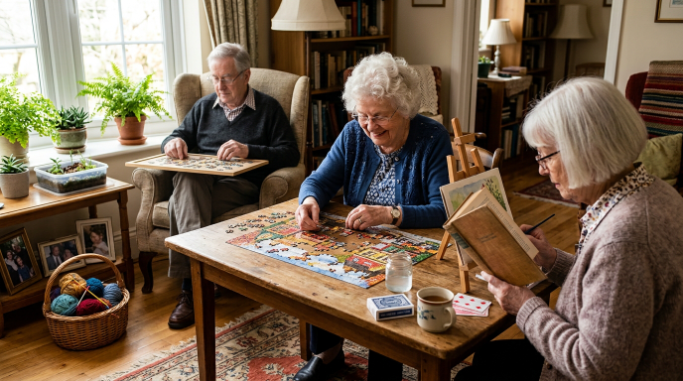
The best hobbies for people over 80 range from quiet home activities to creative projects, social groups, and gentle outdoor pursuits. Having several categories makes it easier to find something that fits.
Creative hobbies
- Watercolor painting: Requires only a few supplies and can be enjoyed at a table.
- Drawing: Pencils and a sketchbook make this one of the simplest creative hobbies to start.
- Knitting or crochet: These familiar crafts can produce gifts, blankets, scarves, and decorations.
- Scrapbooking: Photos, letters, and keepsakes can become a personal family-history project.
- Photography: A phone or simple camera can turn everyday walks and family gatherings into creative opportunities.
Quiet hobbies at home
- Reading: Large-print books, e-readers, and good lighting can make reading more comfortable.
- Audiobooks: These are useful when holding a book or reading small print becomes tiring.
- Jigsaw puzzles: Choose piece size and puzzle complexity based on vision and dexterity.
- Crosswords and word games: Short puzzles are easy to fit into a daily routine.
- Listening to music: Building playlists around favorite decades, artists, or memories makes this hobby highly personal.
Nature-based hobbies
- Container gardening: Herbs, flowers, and small vegetables can grow on a patio or windowsill.
- Birdwatching: A feeder near a comfortable chair can bring the hobby indoors.
- Nature journaling: Record birds, weather, flowers, and seasonal changes.
- Indoor plants: A small collection can provide a pleasant routine without strenuous yard work.
Meaningful hobbies
- Memoir writing: Record childhood memories, family traditions, careers, travel, and lessons learned.
- Genealogy: Researching relatives can combine history, storytelling, photographs, and family conversations.
- Teaching a skill: An older adult can share sewing, cooking, music, woodworking knowledge, or another familiar craft.
- Volunteering: Opportunities may include telephone support, community projects, libraries, faith groups, or mentoring.
Social hobbies
- Card games: Bridge, rummy, hearts, and other familiar games combine conversation with play.
- Book clubs: Audiobooks can make participation possible even when reading print is difficult.
- Choir or singing groups: Music creates a shared activity without requiring competitive skills.
- Community classes: Art, history, technology, gardening, and local-interest courses offer structure and new conversation.
- Cooking with family: Preparing a familiar recipe can turn practical knowledge into an intergenerational hobby.
| Hobby | Good For | Movement | Social Option | Easy Starter Session |
|---|---|---|---|---|
| Reading | Relaxation, learning | Minimal | Book club | 15–30 minutes |
| Container gardening | Nature, routine | Light | Garden group | 10–20 minutes |
| Painting | Creativity | Minimal | Art class | 20–30 minutes |
| Walking | Movement, outdoors | Moderate, adjustable | Walking partner | 5–15 minutes |
| Cards | Conversation, strategy | Minimal | High | 20–45 minutes |
| Memoir writing | Reflection, family history | Minimal | Can involve family | 10–20 minutes |
Section Takeaway: Don’t search for one universally “best” hobby. Choose an activity that matches the person’s interests today and can be adjusted tomorrow.
What Hobbies Work for Seniors With Limited Mobility?
Limited mobility doesn’t eliminate hobbies. It changes how an activity is set up.
Many enjoyable hobbies can be done from a supportive chair, bedside table, patio, or living-room space.
Good seated and low-mobility options
- Audiobooks and podcasts
- Large-piece jigsaw puzzles
- Large-print card games
- Painting and adult coloring
- Knitting or crochet
- Memoir writing or voice recording
- Genealogy research
- Indoor gardening
- Birdwatching from a window
- Music appreciation
- Video calls with hobby groups
- Online classes
Think about setup as carefully as the hobby itself. A stable table, supportive chair, brighter lamp, or supplies placed within reach can remove unnecessary frustration.
Voice tools can also help. Someone who has difficulty handwriting can dictate family stories, journal entries, emails, or even a book.
What Active Hobbies Can People Over 80 Enjoy?
Walking, gardening, gentle dancing, tai chi, and water-based activities can all be enjoyable for some people over 80. The appropriate type and intensity depend on health, balance, mobility, and previous activity level.
The CDC’s physical activity guidance for older adults recommends combining aerobic activity with muscle-strengthening and balance work, while people who cannot meet general targets should be as active as their abilities allow.
Walking
A walk doesn’t have to be long to become a hobby. Some people enjoy photographing flowers, watching birds, or walking with a neighbor rather than tracking distance.
Gardening
Gardening combines light movement with a visible goal. Raised beds, containers, long-handled tools, and lightweight watering cans can reduce bending and lifting.
Tai chi and gentle movement classes
Slow, controlled movement can be more appealing than traditional exercise. A beginner class designed for older adults also provides instruction and social contact.
Water activities
A supervised pool program may suit people who enjoy being active without prolonged weight-bearing. Accessibility of the pool entrance matters as much as the activity itself.
Health note: A new active hobby may need adjustment for heart conditions, arthritis, osteoporosis, balance problems, recent surgery, or other medical concerns. The National Institute on Aging recommends discussing physical activity with a doctor when a health condition may affect what’s appropriate.
Which Hobbies Help Older Adults Stay Socially Connected?
The best social hobbies create regular, low-pressure opportunities to see or talk with other people. Consistency often matters more than the size of the group.
The CDC describes social connection as an important part of physical and emotional well-being. A hobby can make that connection easier because people already have something to do and discuss together.
Try hobbies built around recurring contact
- Weekly card or board-game groups
- Book clubs
- Choirs and music groups
- Community gardening
- Faith-community activities
- Senior-center classes
- Walking groups
- Volunteering
- Cooking groups
- Regular family craft or game nights
A hobby doesn’t need to involve leaving home. A scheduled telephone call, online book club, shared family-history project, or video-based class can create regular contact.
For someone who has lost a spouse or close friends, structured activities may also make meeting people feel less awkward. The shared activity provides a natural starting point for conversation.
Which Hobbies Keep the Mind Engaged?
Hobbies that involve learning, planning, remembering, creating, or solving problems can keep daily life mentally interesting. The activity should still feel enjoyable rather than becoming a test.
Good choices include
- Reading: Explore fiction, biographies, history, science, or another favorite subject.
- Genealogy: Search records, identify photographs, and create a family tree.
- Puzzles: Try crosswords, Sudoku, word searches, or jigsaws at a comfortable difficulty.
- Music: Relearn an instrument, practice familiar songs, or explore a new genre.
- Language learning: Practice a few words daily rather than aiming for rapid fluency.
- Technology: Learn photography, video calling, digital drawing, or another useful digital skill.
- Writing: Record memories, family recipes, personal stories, or letters.
Variety can help prevent boredom. Someone might read on Monday, work on family history on Wednesday, and play cards on Friday.
Don’t turn hobbies into cognitive performance checks. Enjoyment and curiosity are better reasons to continue.
How Can Hobbies Be Adapted After Age 80?
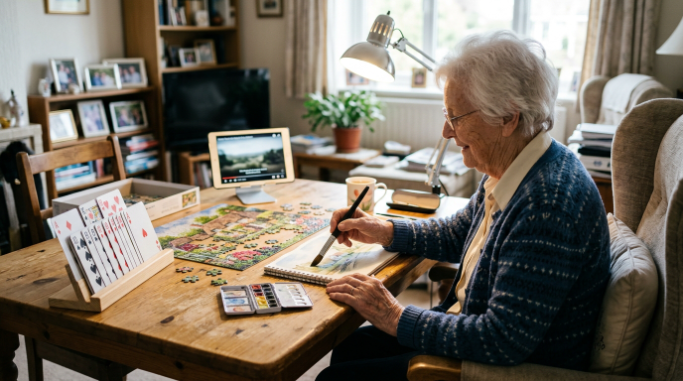
A small adjustment can keep a favorite hobby enjoyable long after its original setup becomes difficult. Start with the barrier, then change the activity around it.
If eyesight has changed
- Use large-print books, cards, instructions, and puzzles.
- Add brighter, glare-controlled task lighting.
- Choose high-contrast materials.
- Try audiobooks or voice-controlled technology.
If hands become stiff or painful
- Choose larger puzzle pieces and playing cards.
- Try thicker pens, brushes, or crochet hooks.
- Use card holders and lightweight tools.
- Work in shorter sessions with comfortable breaks.
If hearing is difficult
- Choose quieter meeting spaces.
- Sit where faces are easy to see.
- Use captions for online classes and videos.
- Favor smaller groups when large gatherings become tiring.
If energy changes from day to day
Have both high-energy and low-energy versions of the hobby. Gardening outside might become tending two indoor plants on a tired day.
This flexibility matters. Missing a session shouldn’t feel like failing at the hobby.
How Do You Choose the Right Hobby for Someone Over 80?
Start with past interests and current curiosity. Don’t assume an older person needs a completely new activity simply because their abilities have changed.
Ask five practical questions
- What did you used to enjoy? Old interests often have adaptable versions.
- Do you want company or quiet time? This quickly separates social and solo options.
- Would you rather create, learn, move, or relax? Pick the category before choosing a specific hobby.
- What makes activities difficult now? Consider transportation, eyesight, hearing, fatigue, hand strength, and balance.
- What sounds enjoyable enough to try this week? Immediate curiosity is more useful than a perfect long-term plan.
Start smaller than you think
Buying expensive equipment can make a new hobby feel like a commitment. Borrow, rent, or start with basic supplies whenever possible.
A 15-minute experiment is enough for the first attempt. Continue only if the activity creates interest rather than obligation.
Let the hobby evolve
The same interest can take several forms. A lifelong gardener might move from a large yard to raised beds, containers, indoor herbs, flower arranging, or gardening photography.
That principle applies to almost everything. Adaptation lets the interest continue even when the original method no longer fits.
Section Takeaway: Choose hobbies around interest first, then adapt the setup to the person’s present abilities, environment, and energy.
Frequently Asked Questions
What are easy hobbies for an 80-year-old?
Easy options include reading, audiobooks, birdwatching, indoor gardening, puzzles, card games, music, journaling, painting, and simple crafts. Start with an activity that needs little equipment and can be enjoyed for 10 to 20 minutes at a time.
What hobbies are good for an 80-year-old woman?
Choose by personal interest rather than gender. Gardening, painting, photography, cards, reading, genealogy, knitting, music, walking groups, volunteering, cooking, and lifelong-learning classes can all work well when they match the person’s preferences and abilities.
What hobbies are good for an 80-year-old man?
Good choices may include gardening, woodworking with appropriate safety adjustments, photography, genealogy, reading, puzzles, cards, music, model building, birdwatching, walking, volunteering, and learning technology. Previous interests are often the best starting point.
What hobbies can someone over 80 do at home?
Reading, audiobooks, puzzles, indoor plants, painting, knitting, genealogy, memoir writing, music, online courses, photography, cooking, and video-based hobby groups can all work at home. Many can also be adapted for seated participation.
What are good hobbies for an elderly person living alone?
Combine enjoyable solo hobbies with at least one activity that creates regular contact. Reading, gardening, crafts, and puzzles can pair well with a weekly book club, telephone group, community class, volunteer role, or scheduled family activity.
Can someone start a completely new hobby after 80?
Yes. There’s no requirement to already have experience, and many hobbies can be learned in small steps. Beginner art, photography, technology, music, gardening, genealogy, and community classes can all provide manageable ways to explore something new.
How many hobbies should a person over 80 have?
There is no ideal number. One enjoyable hobby may be enough, while someone else may like several activities covering different needs, such as one social hobby, one quiet hobby, and one form of gentle movement.
The best hobby after 80 is one you look forward to doing again. Start with something familiar or interesting, keep the first attempt simple, and change the activity whenever your comfort or abilities change.
Whether it’s painting for 20 minutes, tending a windowsill garden, playing cards every Friday, or recording family memories, a good hobby can give ordinary days more structure, pleasure, connection, and purpose.