
Multi-Point Walking Cane Explained: Types & Safety

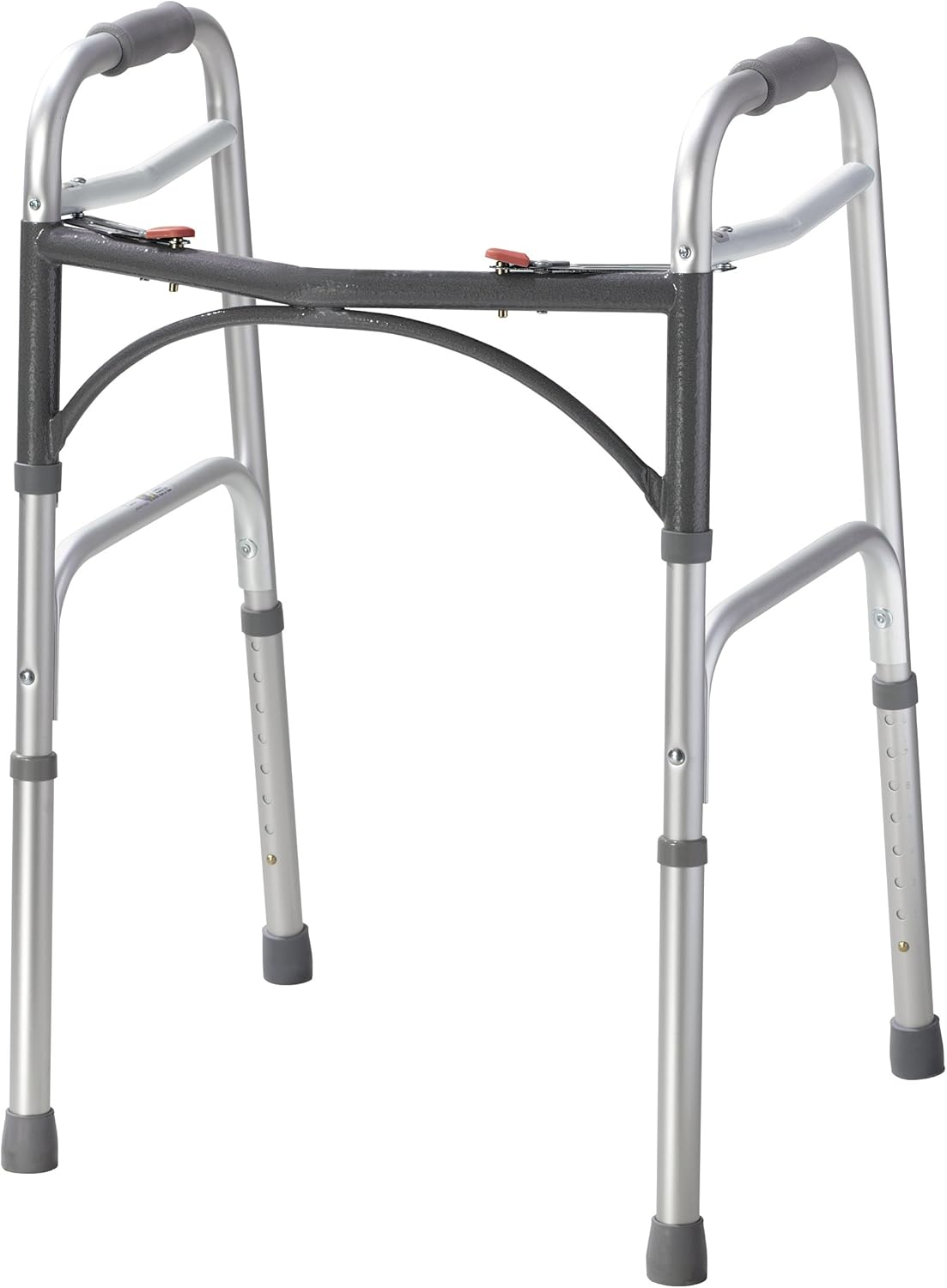
Drive Medical Folding Walker

HOMLAND Shower Chair with Padded Armrests and Back
RMS Deluxe Sock Aid with Foam Handles
Quick Answer
A multi-point walking cane is a mobility aid with three or four ground-contact points instead of one. Its wider base can provide additional stability for some people with balance difficulties, but it may be heavier and harder to maneuver than a standard cane. Correct sizing, technique, and choosing the right mobility aid are essential for safe use.
A multi-point walking cane is designed to provide a broader base of support than a conventional single-tip cane. It can be useful for people who need extra stability while walking, particularly when a single-point cane does not feel sufficiently steady.
However, the number of contact points is only one part of the decision. Your balance, strength, walking pattern, hand control, and need for weight-bearing support all affect whether a multi-point cane is appropriate.
What Is a Multi-Point Walking Cane?
A multi-point walking cane is a handheld mobility aid with multiple feet or contact points at its base. Common designs include tripod canes with three feet and quad canes with four feet. Each contact point helps form a wider base where the cane meets the ground.
Like a conventional cane, a multi-point model has a handle and shaft. Many models also have adjustable height settings and rubber feet intended to improve traction on suitable surfaces.
The defining difference is the base. A standard cane has one contact point, while a multi-point cane spreads its ground contact across several points. This can make the cane feel more stable when positioned correctly, although it does not eliminate the risk of falling.
How does the wider base help?
The feet create a broader support area around the cane shaft. When the base is placed securely on a level surface, it can offer more resistance to tipping in some directions than a single-tip cane.
That benefit depends on the design and how the cane is used. If one or more feet remain off the ground, the base is damaged, or the cane is placed at an awkward angle, the expected support may be reduced.
What Are the Different Types of Multi-Point Canes?
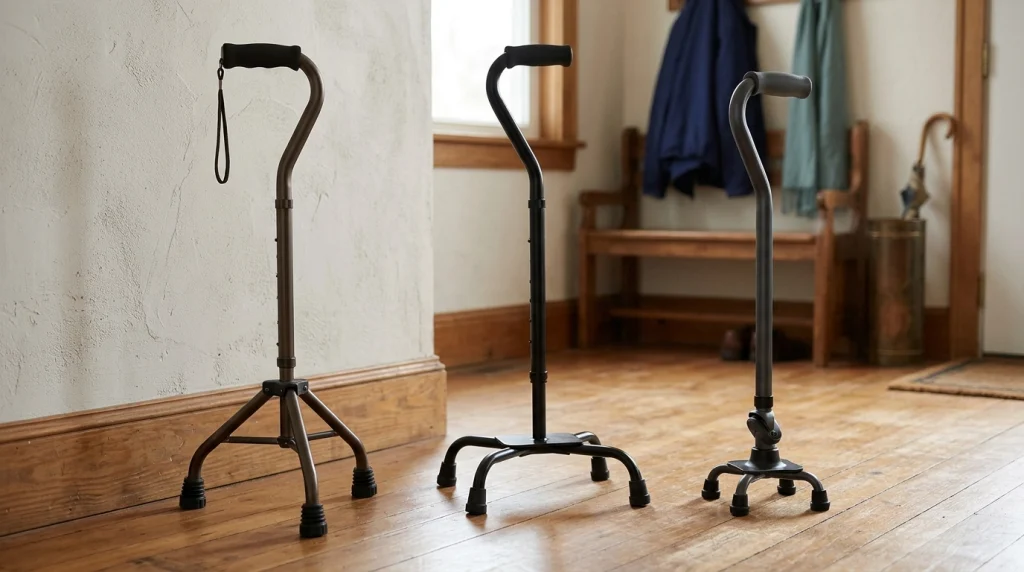
Multi-point canes are not all built the same way. The number of feet, the width of the base, and whether the base pivots can affect how the cane handles during everyday movement.
Three-point or tripod cane
A tripod cane has three ground-contact feet. Its base may be narrower or lighter than some four-point designs, depending on the model. It can suit someone who needs a multi-point base but wants to keep the cane relatively manageable.
Three feet do not automatically make a cane better for walking or turning. The specific base design and the user’s mobility needs matter more than the number alone.
Four-point or quad cane
A quad cane has four feet arranged around the lower shaft. The base usually provides a broader footprint than a single-tip cane, and some models can stand upright without being held when placed correctly on a suitable surface.
Quad canes are available with small or large bases. A narrow base may be easier to maneuver in tight spaces, while a wider base may provide a larger support area but require more room to place and lift.
Fixed-base versus pivoting-base cane
A fixed-base cane has feet that maintain a set orientation. A pivoting or flexible-base design allows the base to adjust its angle as the cane moves, depending on the manufacturer’s construction.
These designs should not be treated as interchangeable. Follow the model’s instructions, and do not assume that a pivoting base can safely support weight in every position.
What Are the Benefits and Limitations of a Multi-Point Cane?
The main benefit is the wider base of support. It may help some users feel steadier during routine walking, especially when they need more balance assistance than a single-point cane provides.
- Broader ground contact: Multiple feet create a wider base than a standard cane.
- Potentially greater standing convenience: Some models can remain upright when correctly positioned.
- Adjustable options: Many models offer height adjustment and different handle designs.
- Everyday mobility support: A suitable cane may help a person maintain independence when walking assistance is appropriate.
There are tradeoffs, too. A multi-point cane can be heavier, take more room to position, and catch on furniture or obstacles. Its feet may also be awkward on narrow steps or in crowded spaces.
Most importantly, a wider base does not mean the cane is suitable for someone who needs substantial body-weight support. A cane remains a one-sided walking aid. Someone who frequently loses balance or cannot walk safely with one hand supporting the cane may need a walker or another device instead.
Multi-Point Cane vs. Standard Cane: Which Is Different?
Both designs can help with balance and limited support, but they differ in ground contact and maneuverability. The following comparison highlights the practical differences to consider.
| Feature | Standard cane | Multi-point cane |
|---|---|---|
| Ground contact | One tip | Usually three or four feet |
| Base width | Narrow | Generally wider |
| Maneuverability | Usually easier in tight spaces | May need more room |
| Handling | Often lighter and easier to move | Can be heavier and require careful placement |
| Potential use | Mild balance or one-sided support needs | Some users who need additional base stability |
Neither design is best for everyone. A standard cane may suit someone who walks confidently but needs modest support. A multi-point cane may be worth assessing when a broader base is useful, provided the user can place and control it correctly.
For a broader introduction to cane types and their everyday uses, see the existing guide to what a walking cane is.
Who May Benefit From a Multi-Point Walking Cane?
A multi-point cane may be considered by someone who needs additional balance assistance but can still walk with a one-handed mobility aid. The right choice depends on an individual assessment rather than age alone.
It may be considered during recovery from certain injuries or procedures, or when weakness, joint discomfort, or balance changes make walking less steady. A healthcare professional or physical therapist can assess whether the wider base is appropriate for the person’s gait and support needs.
A multi-point cane may be unsuitable if the user has significant weakness on both sides, cannot control the cane, has difficulty gripping the handle, or needs extensive weight-bearing support. In these situations, a walker or a different mobility aid may provide more appropriate support.
New or worsening balance problems should not automatically be treated by purchasing a different cane. A sudden change in walking, new weakness, dizziness, or a recent fall may warrant medical assessment to identify the underlying problem.
How Should a Multi-Point Cane Be Fitted?
Correct height and secure ground contact are essential. A cane that is too tall or too short can encourage poor posture and make it harder to control the device.
- Stand upright safely. Wear your usual walking shoes and stand on a level surface, using support from another person if needed.
- Check the handle height. With your arms relaxed at your sides, the handle should generally line up near the crease of your wrist.
- Check your elbow. When you hold the handle, your elbow should remain slightly bent rather than locked straight.
- Secure the adjustment. If the cane is adjustable, make sure the push button engages fully and any locking collar is tightened as instructed.
- Inspect the base. Check that the feet are secure, undamaged, and making proper contact with the floor when the cane is positioned for use.
These are general fitting guidelines, not a substitute for individual instruction. If you have a changed walking pattern, difficulty standing upright, or uncertainty about the correct height, ask a physical therapist or healthcare professional to check the fit.
How Do You Walk Safely With a Multi-Point Cane?
Use the cane on the side opposite your weaker or painful leg unless a healthcare professional has given you different instructions. This is the usual technique for people who need one-sided support, but the correct method may vary with their condition and prescribed weight-bearing limits.
- Start from a stable position. Stand upright, hold the handle securely, and place the cane at a comfortable distance beside you.
- Move the cane and affected leg forward. Advance them together by a short, manageable distance.
- Place the base fully on the floor. Make sure all feet of a quad cane, or all contact points of the particular model, are securely positioned before transferring pressure through the handle.
- Step through with the stronger leg. Move forward only as far as you can while maintaining control and balance.
- Repeat slowly. Keep your posture as upright as comfortable, look ahead, and avoid reaching the cane too far in front of you.
Practice in a clear, level area with another person nearby if you are new to the device or feel unsteady. A physical therapist can demonstrate the sequence and help you adapt it to your walking ability.
What about stairs, curbs, and tight spaces?
Stairs require particular care because the base of a multi-point cane may not sit flat on a step. Use a handrail when available and follow the technique taught for your specific device. The usual stair guidance for a cane is to lead with the stronger leg going up and place the cane and weaker leg first when going down, but the sequence should be confirmed with a therapist if your balance or weight-bearing ability is limited.
Do not assume all the feet of a wide-base cane will fit securely on a narrow step. If you cannot position the cane safely, stop and seek an alternative method or assistance rather than forcing the movement.
What Safety Checks Help Prevent Problems?
Even a well-fitted cane needs regular inspection. Worn rubber feet, loose adjustments, and damaged shafts can compromise reliable support.
- Inspect the rubber feet: Replace feet that are cracked, loose, hardened, or badly worn.
- Check the shaft and handle: Stop using the cane if parts are bent, loose, or damaged.
- Keep walking routes clear: Secure loose rugs and cords, remove clutter, and clean up spills.
- Wear suitable footwear: Choose stable shoes with nonslip soles.
- Be careful on wet or uneven surfaces: A multi-point base does not make slippery ground safe.
- Avoid using the cane to stand up: Use stable armrests or another recommended support when sitting down or rising.
The MedlinePlus guide to using a cane explains general fitting, walking technique, stair use, and maintenance. The National Institute on Aging’s fall-prevention guidance also recommends using an appropriately fitted mobility aid and addressing hazards around the home.
When Is a Walker a Better Choice?

A walker may be more suitable when a person needs a larger support base, has substantial weakness, or cannot walk safely with support from one hand. A multi-point cane provides additional contact at the cane’s base, but it does not offer the same two-sided support as a walker.
Consider asking a healthcare professional to reassess the mobility aid if you repeatedly lose balance, need to hold furniture while walking, fall despite using the cane, or cannot place the base securely with each step.
For readers comparing options for greater stability, the site’s heavy-duty walking cane guide explains an important distinction: a cane’s weight-capacity rating is not the same as the amount of balance support its design provides. A higher weight rating does not automatically make a cane the right choice when walker-level support is needed.
Warning
Do not rely on a multi-point cane to compensate for severe instability or an inability to bear weight safely. Stop using a damaged or unstable cane, and seek appropriate guidance before walking with it again.
Related Product
Multi-Point Walking Cane
Compare three-point and four-point cane designs, base dimensions, handle comfort, height adjustment, and replacement feet. Confirm that the chosen model suits your mobility needs before using it for support.
As an Amazon Associate, we earn from qualifying purchases.
Frequently Asked Questions
1. Is a multi-point walking cane better than a regular cane?
Not for everyone. A multi-point cane provides a wider base that may help some users feel steadier, while a standard cane is often lighter and easier to maneuver. The best option depends on balance, strength, walking ability, and professional guidance.
2. Can a quad cane stand on its own?
Some quad canes can stand upright when placed correctly on a suitable level surface. This depends on the base design and positioning, so do not assume every model will remain upright on uneven floors or slopes.
3. Should a multi-point cane be used on the weaker side?
Usually, the cane is held on the side opposite the weaker or painful leg. The cane and affected leg move forward together. Follow your therapist’s instructions if your condition or prescribed walking technique requires a different approach.
4. Can I use a quad cane on stairs?
Stairs can be difficult because the feet may not all fit securely on a narrow step. Use a handrail when available and learn the correct technique for your specific cane from a healthcare professional before attempting stairs independently.
5. How often should I replace a multi-point cane’s rubber feet?
Replace them whenever they become cracked, loose, hardened, or noticeably worn. There is no single replacement interval for every user because wear depends on frequency of use, surfaces, and the specific tip material.
6. What should I do if a multi-point cane still feels unstable?
Stop and check the cane’s height, adjustment locks, and base condition. If the cane is correctly fitted but you still feel unsteady, ask a healthcare professional or physical therapist to reassess your mobility aid rather than trying to compensate by leaning harder on it.
Conclusion
A multi-point walking cane offers three or four ground-contact points to create a broader base than a conventional single-tip cane. That design may help some people who need extra balance support, but the added stability comes with tradeoffs in weight, maneuverability, and use in tight spaces.
Choose a cane based on your actual mobility needs, not simply the number of feet. Check its height, adjustment locks, and rubber tips, and learn the correct walking technique. If you continue to feel unstable, experience repeated falls, or need substantial support, ask a healthcare professional whether a walker or another mobility aid would be safer.