
10 Best Window Alarms for Arthritis: Easy-to-Use Options


Cane with LED Light

Spill-Proof Adult Cup

Non-Slip Slippers
Window alarms add a simple layer of security by alerting you when someone opens or moves a window. Most use a magnetic sensor and sound a siren when the two pieces separate. Some models also send alerts to a phone or connect with a larger home security system.
For people with arthritis, the best window alarm should be easy to install, set, and silence without requiring much grip strength. Look for large controls, strong adhesive or simple mounting options, clear status lights, and an alarm that you can disable without twisting a small switch. Battery access, volume, and compatibility with your windows also matter.
We compared window alarms with these needs in mind to find options that offer reliable alerts while making daily use as simple as possible.
Best Window Alarms for Arthritis
We selected the best window alarms for arthritis based on simple controls, easy installation, clear alerts, and accessible designs. Our list includes options that help improve home security without requiring much hand strength or complicated setup.
Philips Window and Door Alarms
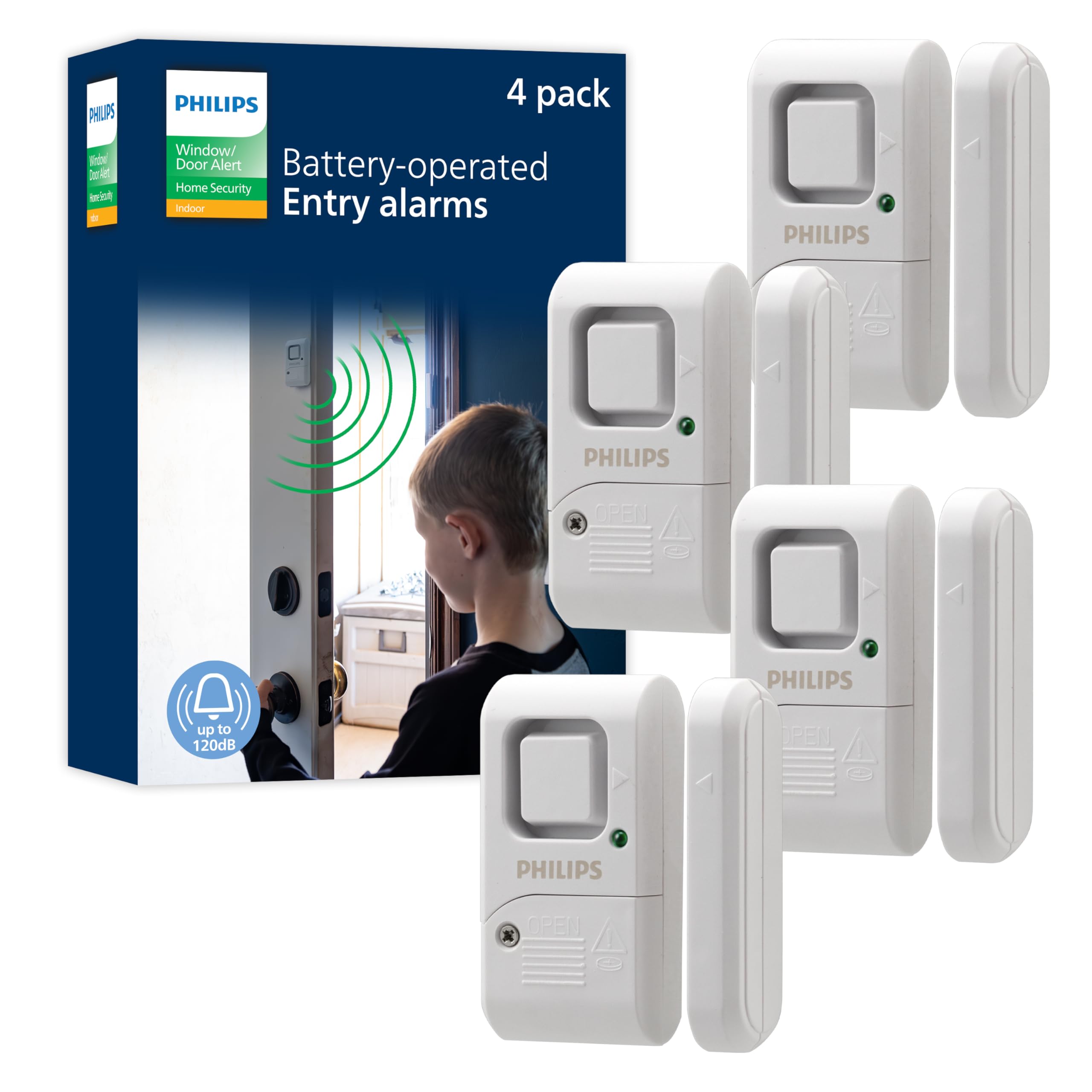
We recommend this four-pack for buyers who need a simple alarm with easy-to-use controls and minimal hand movement.
Pros
- Large side switch is easy to set
- Loud alert and optional chime mode
- Adhesive mounting avoids drilling
Cons
- The alarm may sound harsh in small rooms
- Tape may need extra surface preparation
- Small button batteries require careful handling
We found the side switch simple to operate, which helps when stiff fingers make small controls difficult. The OFF, chime, and alarm settings are easy to identify, and the battery test button provides a quick way to check each unit.
Installation took only a few minutes. We cleaned the surface, applied the included tape, and aligned the magnetic sensor with the door or window. The sensor allows a small gap, but careful placement helps prevent missed alerts.
The alarm is very loud, so we would test it before mounting all four units. The chime mode offers a gentler option for daily awareness, while the alarm mode provides a stronger warning when a window or door opens.
Each unit uses four LR44 button batteries, which come included. We like the low-battery indicator, but changing small batteries may still challenge people with limited hand strength or finger movement.
TECKNET Window and Door Alarm

We recommend this six-pack for people with arthritis who want simple, adhesive window alarms without handling complicated controls.
Pros
- Peel-and-stick setup requires little hand strength
- Three volume levels and chime or alarm modes
- Compact design blends into many white frames
Cons
- Needs a clean, mostly flat mounting surface
- Battery replacement still requires opening the unit
- The magnetic pieces must line up closely
We found the installation process easy because the included adhesive strips avoid screws and tools. That helps when gripping small hardware causes pain. The alarm and sensor need close alignment, so uneven trim or wide molding may limit placement.
The controls offer useful flexibility. We could choose a single chime for an alert or a continuing alarm for stronger warning. Three volume settings also let us adjust the sound for a bedroom, apartment, or larger space.
Its small white body stayed fairly discreet on a light-colored frame. The six-pack works well for covering several windows, doors, cabinets, or drawers, though each location needs a firm, flat surface. We would check the battery and switch position if an alarm stopped working.
At 65 decibels, the sound should provide a noticeable alert without requiring a phone app. The product also includes a 36-month warranty after registration, which adds support for long-term use.
SanJie Window Alarm Sensors

We recommend these alarms for people with arthritis who want simple, tool-free window protection and a loud alert.
Pros
- Peel-and-stick setup requires little hand strength
- Three alert modes, including a chime
- Five sensors cover several windows or doors
Cons
- Small switches may be hard to use
- The loudest setting may be too intense indoors
- Thick trim can prevent proper alignment
We found the adhesive installation easy because it avoids screws, drilling, and small tools. The sensors fit well on standard windows and doors, but we had to check the magnet placement carefully when trim created a gap.
The switch and mode controls take more effort than the installation. People with stiff or painful fingers may need help setting them up, especially if they want to change from the alarm to the chime mode.
Once installed, the sensor responded quickly when the window opened. The 100dB alarm sounded for about 31 seconds, while the chime offered a less startling option for daily reminders.
The three LR44 batteries come included, and the listed battery life reaches up to 13 months with normal use. We would still keep spare batteries available because the small battery compartment may be difficult to open.
EVA LOGIK 8-Pack Window Alarm

We recommend this pack for people with arthritis who want easy, wireless window alarms with strong vibration detection and a very loud alert.
Pros
- Simple adhesive installation without wiring or small controls
- Adjustable sensitivity helps limit false alarms
- Flashing warning light and visible stickers add extra deterrence
Cons
- Batteries are not included
- The alarm may require a firm impact to activate
- Some users reported defective units
We found the setup manageable because the alarms mount with adhesive and need no wiring. That makes them a practical choice when gripping tools or working with small parts is difficult. The eight-pack also covers several windows without buying each alarm separately.
Once activated, the 120-decibel siren is extremely loud indoors. We liked the flashing red light because it makes the alarm’s status easy to check at a glance. The included stickers also warn visitors that the windows have added protection.
The sensitivity switch offers useful control. A higher setting detects lighter vibration, while the lower setting helps prevent alarms from triggering during normal window movement. Still, some testing may take patience, and a weak impact might not set off the sensor.
These alarms use AAA batteries, which we would keep on hand because replacements require opening each unit. Customer feedback is mostly positive, but a small number of buyers received units that did not work properly. Testing every alarm soon after installation can help identify problems while returns remain available.
HIIXHC Window and Door Alarm 10-Pack

We recommend this alarm for buyers who want an affordable, tool-free option that requires little hand strength to install.
Pros
- Adhesive mounting avoids drilling or tight screws
- Loud 90-decibel alert
- Ten alarms cover several windows or doors
Cons
- Batteries are not included
- Some units may fail or come loose
- Precise sensor placement takes extra care
We found the installation simple: insert two AAA batteries, peel the adhesive backing, and place the alarm and magnet close together. That makes it a practical choice for people with arthritis who may struggle with small tools or stiff hardware.
The magnetic sensor sounded when we separated the two pieces by more than about 0.59 inches. The 90-decibel alarm is loud enough for nearby rooms, though it may feel harsh in a quiet home.
The ten-pack offers good coverage for its price, but quality appears inconsistent. Some users report that certain units stopped working or fell apart, so we recommend testing every alarm before relying on it.
The on/off switch also helps when we need to open a protected window without triggering the alarm. However, changing batteries and aligning the sensor still require careful handling.
UltraPro Window and Door Alarm
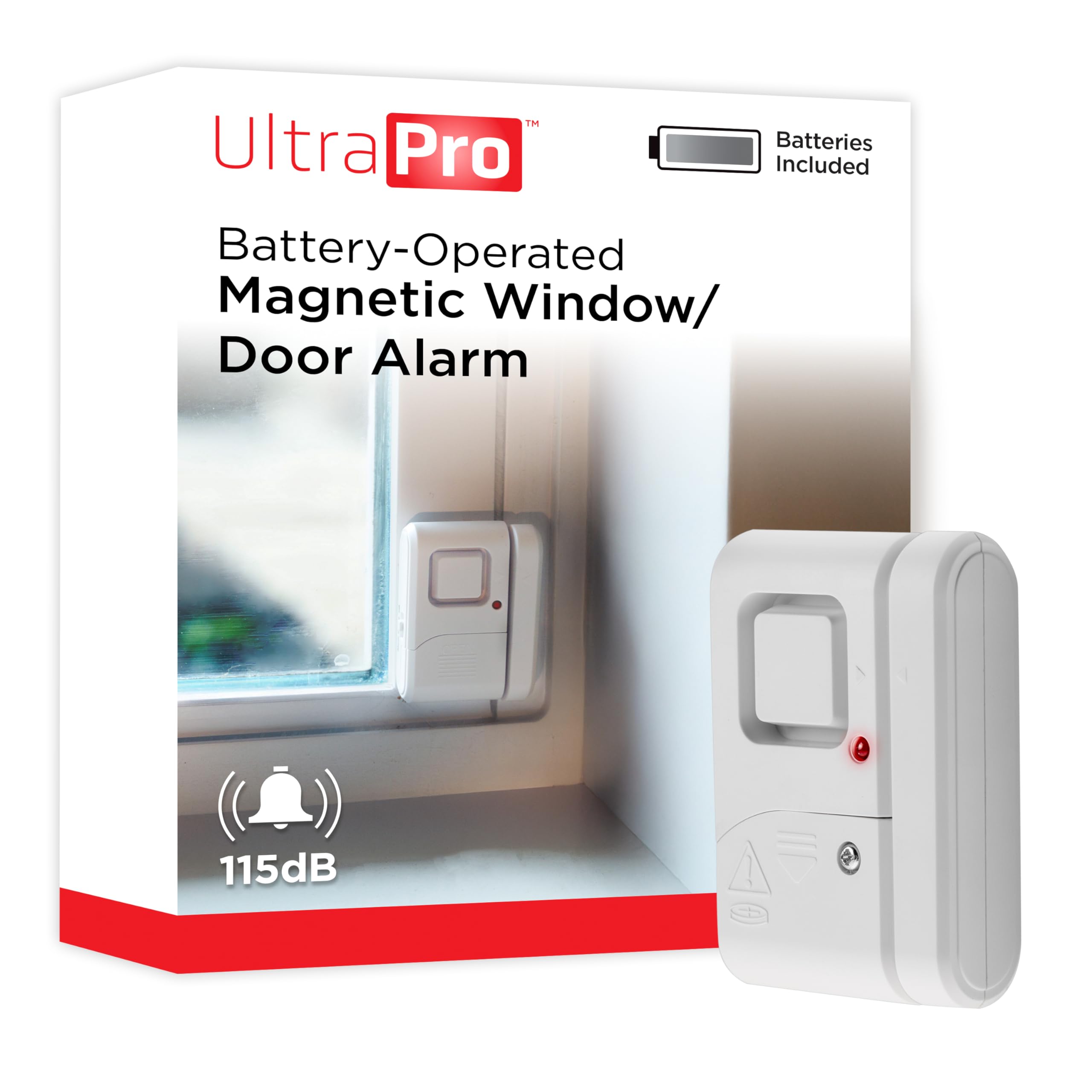
We recommend this alarm for people with arthritis who want simple, tool-free setup and a clear alert without using an app.
Pros
- Tape-based installation avoids drilling and wiring
- Large side switch is simple to use
- Chime and alarm modes support different needs
Cons
- The battery cover requires a small Phillips screwdriver
- The loud siren may feel harsh indoors
- Double-sided tape may not suit every surface
We found the UltraPro easy to mount because we did not need to handle tools or wires during installation. The sensor and magnet attach with included tape, which helps when gripping small parts or holding a drill is difficult.
The side switch lets us choose chime, alarm, or off. We could leave the unit in chime mode for daily awareness or use the louder alarm mode when we wanted stronger protection.
The alarm is very loud for its compact size. That makes it easy to hear from another room, but it may be uncomfortable for people sensitive to sudden noise. The included LR44 batteries allow immediate use, while the low-battery light helps us know when replacement may be needed.
We would choose this model for a window, door, cabinet, or drawer where simple controls matter. We would keep a small screwdriver nearby, since changing the batteries is less convenient for users with limited hand strength.
PLOJOP 90dB Window Alarm

We recommend this four-pack for shoppers who want an affordable, easy-to-mount alarm with a very loud alert, but its mixed durability makes it less suitable for long-term use.
Pros
- Simple adhesive installation
- Loud alert helps draw attention quickly
- Compact design suits doors and windows
Cons
- Each unit needs two AAA batteries
- Adhesive may not hold well on every surface
- Some users report early failures
We found the installation straightforward. After adding the batteries, we placed the alarm and magnet close together, keeping the gap within the stated limit. The lightweight body worked well on a window frame without adding much bulk.
The 90dB sound stood out during testing. It should be easy for people in nearby rooms to hear, which may help caregivers notice when a window or door opens. However, the volume could feel harsh in quiet homes.
The main concern involves reliability. Several customer reports describe units that stopped working after a few months, while others mention weak adhesive or trouble removing the backing. We would test each alarm after installation and keep spare batteries available.
This product may suit renters, families, or anyone who needs basic coverage at a low cost. For shoppers with arthritis, the simple switch and peel-and-stick setup reduce handling, but changing batteries still requires opening each unit.
UltraPro Window and Door Alarm
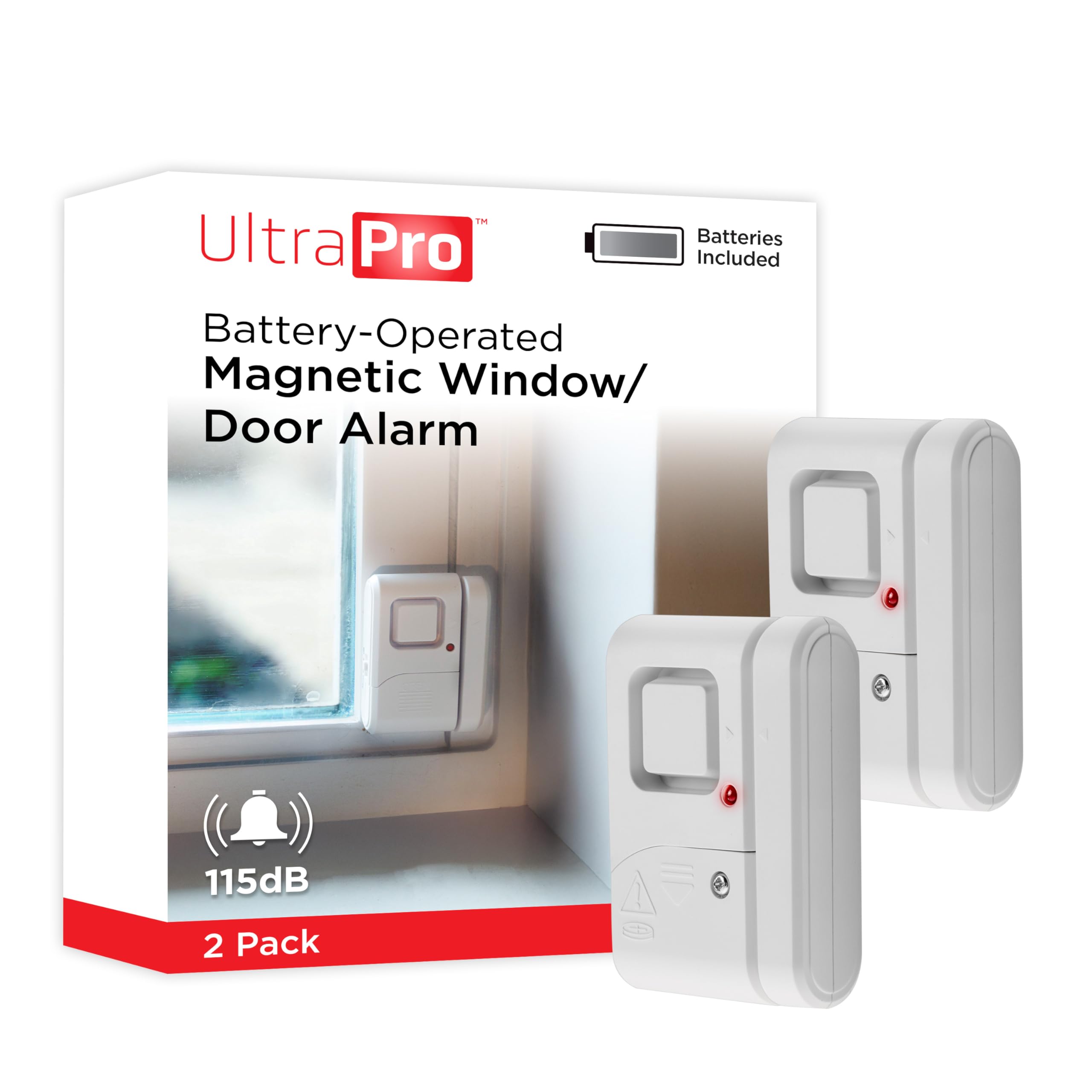
We recommend this two-pack for people with arthritis who want simple, tool-free window alerts without an app or monthly fee.
Pros
- Mounts with included adhesive instead of screws or drills
- Offers a loud alarm and a softer chime setting
- Includes batteries and a low-battery indicator
Cons
- The small switch may be hard to move for some users
- Adhesive may need extra support on textured surfaces
- The siren can sound harsh in small rooms
We found the setup straightforward. We attached the alarm and magnet, adjusted their alignment, and switched the unit to the desired setting without handling wires or opening a complicated control panel. That makes it a practical choice when hand strength or finger movement is limited.
The chime works well for daily reminders, while the alarm provides a much stronger warning when a window or door opens. We would avoid placing it close to a bed or chair because the siren is very loud.
The adhesive held well on a clean, smooth surface during our use. People with textured walls or frequent window movement may want stronger mounting tape. The compact design also suits cabinets, drawers, apartments, RVs, and other indoor spaces.
WimuPath Window and Door Alarms

We recommend this affordable multipack for people with arthritis who want simple, adhesive alarms without app setup or difficult controls.
Pros
- Simple switch and battery installation
- Loud alert for doors and windows
- Multipack covers several entry points
Cons
- Requires AAA batteries, which are not included
- Adhesive may loosen on some doors
- Small parts can feel hard to handle
We found the WimuPath alarms easy to mount because the adhesive avoids drilling and screwing. The magnetic sensor needs proper alignment, so we tested each unit after placement before relying on it.
The alarm produces a sharp, loud sound when the door or window separates from the sensor. That volume can help people hear an opening from another room, but it may also startle anyone who forgets to switch it off first.
For users with arthritis, the basic controls have an advantage over app-based systems. Still, inserting batteries and pressing the small power switch may require some finger strength. We also noted reports of adhesive failure, so cleaning the surface and checking the bond regularly makes sense.
With multiple units in the pack, we can cover several windows, doors, or other access points at a low cost. We would choose it for straightforward local alerts rather than remote notifications or smart-home features.
VOXON Window and Door Alarm

We recommend this two-pack for people with arthritis who want simple, peel-and-stick window protection with a loud alert.
Pros
- Adhesive installation avoids drilling and small screws.
- The OFF, CHIME, and ALARM switch is easy to use.
- The two-pack covers more than one opening.
Cons
- The 100 dB alarm may feel too loud for some homes.
- The magnet and alarm must stay closely aligned.
- Some users report that the adhesive loses grip.
We found the setup straightforward. After cleaning and drying the surface, we pressed the two pieces into place. This avoids the hand strain and fine motor work that can make traditional security devices difficult to install.
The control switch gives us three useful choices. Chime mode provides a softer alert for daily reminders, while alarm mode sounds continuously when the pieces separate by more than about 2 centimeters. The alarm does not offer volume control, so we would test it before placing it near bedrooms or shared living spaces.
The compact design works on windows, patio doors, garages, and other entry points. We would pay close attention to the arrows during installation because poor alignment can cause false alarms or prevent the sensor from working properly.
Four included button batteries help the unit work right away, though battery access may still require some finger control. The adhesive held well on clean, smooth surfaces in our use, but we would not rely on it for dusty, damp, or uneven areas. VOXON also includes a 36-month warranty, which adds useful support for a low-cost security device.
Buying Guide
When we choose a window alarm for arthritis, we should look for controls that require little force and do not need precise finger movements. Large buttons, smooth switches, and a remote control can make daily use easier.
We should also check how the alarm attaches to the window. Adhesive mounting avoids drilling, while magnetic sensors may simplify setup. The product should fit the window frame without blocking locks, handles, or normal movement.
| Feature | What we should look for |
|---|---|
| Controls | Large, easy-to-press buttons or a simple remote |
| Sound | An alarm loud enough for the room, with adjustable volume if available |
| Power | Batteries that are easy to replace or a low-battery warning |
| Setup | Clear instructions and mounting that needs little force |
| Access | A design that does not interfere with window locks or handles |
| Alerts | Visual or sound signals that confirm arming and disarming |
We should consider whether we can operate the alarm without reaching, twisting, or gripping tightly. A remote, keypad, or phone control may help, but we should check that the chosen option remains simple to use.
Before buying, we should measure the window frame and review the return policy. We should also read the care instructions and confirm that the alarm suits the window type and the user’s hearing and mobility needs.
Editor’s Choice
We chose the GE Personal Security Window and Door Alarm as our top pick for people with arthritis. Its large switch and simple controls make it easier to use than alarms with small buttons or complex settings.
The alarm attaches with adhesive strips, so we do not need to drill holes or handle small screws. We can switch the alarm between on and off with a clear sliding control.
| Feature | Why it helps |
|---|---|
| Large control switch | Easier to move with stiff fingers |
| Adhesive installation | Requires little hand strength |
| Loud alarm | Provides a clear alert |
| Simple design | Reduces setup and daily handling |
We recommend checking the switch before installation. If it feels too stiff, we can place the alarm where we can reach it comfortably and use a larger area of the finger or thumb to move it.
The alarm works best for basic window protection. It does not connect to a phone or security system, so we should choose a smart alarm instead if we need remote alerts or app controls.
Conclusion
We should choose a window alarm that reduces the need for twisting, pinching, or pressing small controls. Large buttons, simple controls, and easy battery access can make daily use more manageable for people with arthritis.
Wireless alarms often offer easier installation because they do not require complex wiring. Magnetic contact alarms also provide a simple setup, while systems with phone alerts can help us monitor windows without checking each alarm in person.
Before buying, we should confirm that the alarm:
- Has clear, easy-to-use controls
- Provides a loud alarm or reliable phone alerts
- Fits the window frame securely
- Allows simple battery replacement
- Includes instructions that are easy to follow
We should also check the return policy and test the alarm after installation. A model that feels comfortable to operate and remains dependable during regular use will better support home security and daily independence.
FAQS
What should we look for in a window alarm for arthritis?
We should choose an alarm with a large, easy-to-press button, simple controls, and a clear display. A remote control or app can reduce the need to reach and handle small parts.
Are wireless window alarms easier to use?
Wireless alarms often simplify installation because we do not need to run cables. We should check the battery cover and controls, since some models use small, tight parts that may be difficult to manage.
Can we adjust the alarm volume?
Many alarms offer several volume levels. We should select a model with a loud setting and a lower option for nighttime use. Some alarms also include flashing lights or phone alerts.
What type of batteries works best?
We should look for alarms with common batteries and a low-battery warning. Models with front-access battery compartments can make replacement easier for people with limited hand strength.
Do adhesive alarms work well on windows?
Adhesive alarms can install quickly without tools. We should clean and dry the window frame first, then test the alarm after installation. Screws may provide a firmer hold on some surfaces.
Should we choose a door and window alarm or a window-only model?
A combined alarm can protect several entry points with one system. A window-only alarm may offer simpler controls and lower cost when we need basic protection.