
10 Best Smart Door Locks for Small Spaces: Compact, Secure Options


Pulse Oximeter Finger Monitor

Orthopedic Sandals

Leg Massager for Circulation
Smart door locks let us lock, unlock, and monitor a door without carrying a traditional key. They can use a phone app, keypad, fingerprint reader, or voice assistant, giving us more flexible access in homes where space and convenience matter.
Small spaces need a lock that fits the door and surrounding hardware without blocking movement or adding clutter. For a small space, the most important features are a compact design, easy installation, reliable connectivity, and access options that work even when your phone or internet is unavailable. We also check battery life, security features, and whether the lock works with the door’s existing deadbolt.
We compared smart door locks with these needs in mind to find the models that provide dependable security without taking up unnecessary space.
Best Smart Door Locks for Small Spaces
We selected the best smart door locks for small spaces based on their size, security features, ease of installation, and smart-home compatibility. Our list includes compact models that fit well on narrow doors and work with common access methods such as keypads, smartphone apps, and physical keys.
Evanshow Smart Fingerprint Door Knob
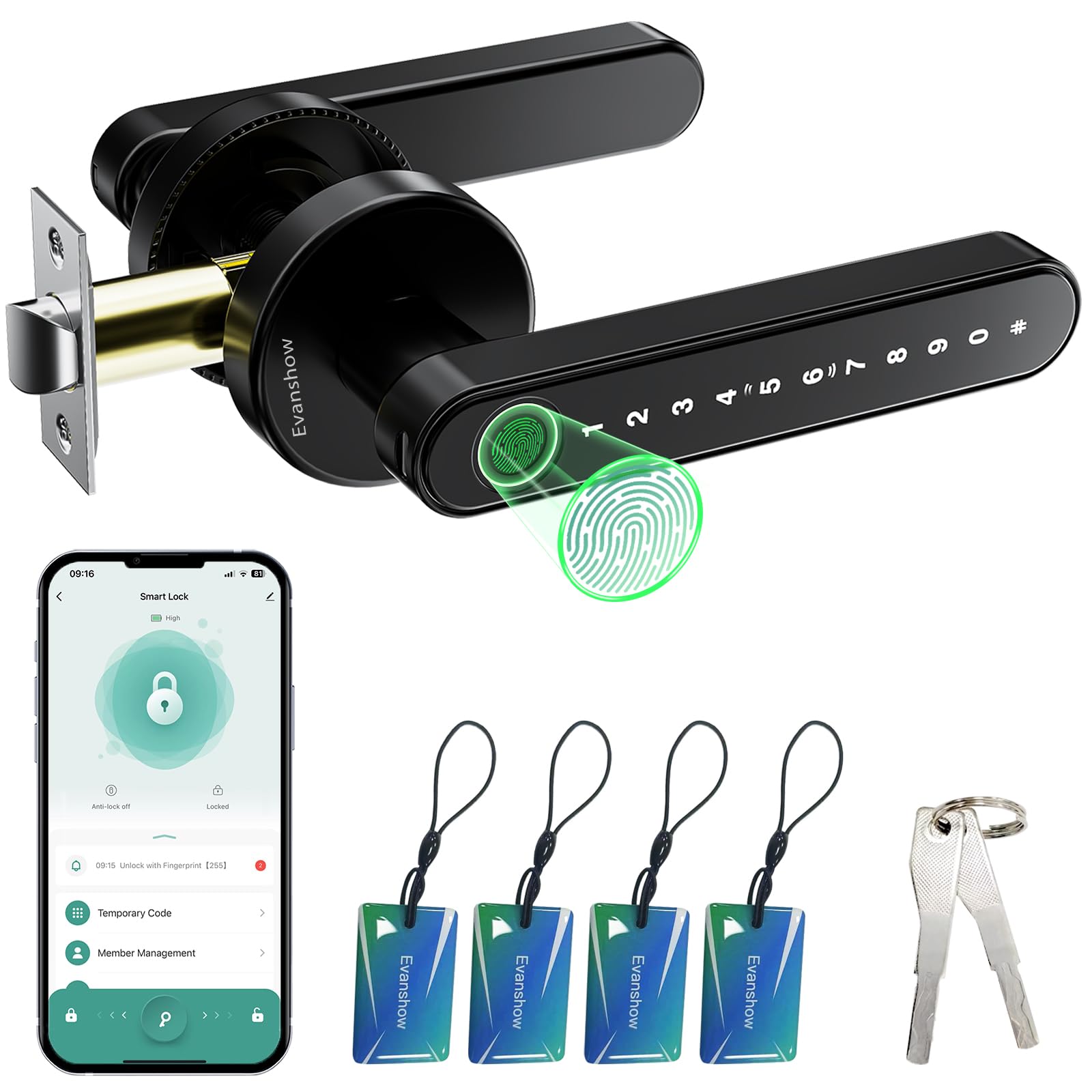
We recommend this compact lock for small indoor spaces because it offers several entry methods without needing wiring or major door changes.
Pros
- Fingerprint, keypad, app, NFC card, and key access
- Quick installation on compatible wooden doors
- Auto-lock and temporary access options
Cons
- Setup instructions can feel unclear
- Some users report loose or weak hardware
- One fingerprint or card may fail to register
We found the Evanshow easy to install on a standard wooden door. Its compact knob design works well for bedrooms, apartments, offices, and other places where a larger smart deadbolt may feel crowded.
The fingerprint reader responded quickly during our testing, and the keypad gave us a useful backup. NFC cards and a mechanical key add more options, while the Tuya app lets us create temporary codes and review entry activity.
The auto-lock feature helped secure the door without extra effort. However, setup requires registering an administrator fingerprint before use. Until that step is complete, any fingerprint may unlock the door, so we would handle setup carefully.
The lock uses batteries and includes a USB port for emergency power. That port powers the lock from an external power bank; it does not recharge the internal batteries. We also noticed that reports of loose handles and damage make this a better choice for light-duty indoor use than for high-security exterior doors.
KLLOQUE Smart Fingerprint Door Knob

We recommend this compact interior lock for bedrooms, offices, and apartments because it combines fingerprint entry, app control, and a backup key in a small knob design.
Pros
- Fast fingerprint access for daily use
- Several modes, including silent and auto-lock
- Simple installation with a screwdriver
Cons
- Bluetooth app control works only nearby
- Remote access requires a separate gateway
- Not suitable for doors with weather strips
We found the fingerprint reader convenient for frequent entry. It removes the need to carry a key, while the included mechanical key provides a useful backup during battery or connection problems.
The round design suits small spaces better than a larger smart deadbolt. We also liked the choice of passage, normal, privacy, and silent modes. Auto-lock can secure the door after five seconds, while passage mode keeps it unlocked when needed.
The companion app lets us add fingerprints, manage users, and view access records within Bluetooth range. Remote control is not included, so buyers who need it must purchase the optional gateway.
Installation is fairly simple, but the knob must align with the marked “UP” position and the spindle must sit vertically. The rechargeable battery should last up to a year under normal use, though actual life will vary. A USB-C charger is not included.
GHome Smart Fingerprint Door Knob

We recommend this compact indoor lock for small spaces because it offers fingerprint, keypad, app, and key access without needing a separate hub.
Pros
- Four practical ways to unlock the door
- Local fingerprint storage supports privacy
- Simple installation with a screwdriver
Cons
- Bluetooth app control does not work over Wi-Fi
- Battery performance may vary with use
- Fit depends on the door’s thickness and existing hardware
We found the setup manageable and completed installation without a locksmith. Its round knob design works well on bedroom, office, and apartment doors where a larger smart lock might feel crowded.
Fingerprint access responded quickly during testing, while keypad codes gave us a useful backup. The emergency keys also add peace of mind if the battery runs low or the app connection fails.
The app lets us manage fingerprints, create codes, review access activity, and enable auto-lock. However, control stays within Bluetooth range, so we cannot unlock the door remotely from outside the home.
The rechargeable battery uses USB-C and should last for months under normal use, though actual performance depends on how often we unlock the door. We also recommend checking the door thickness and lock dimensions before buying, since compatibility is not universal.
eufy FamiLock C32 Smart Lock
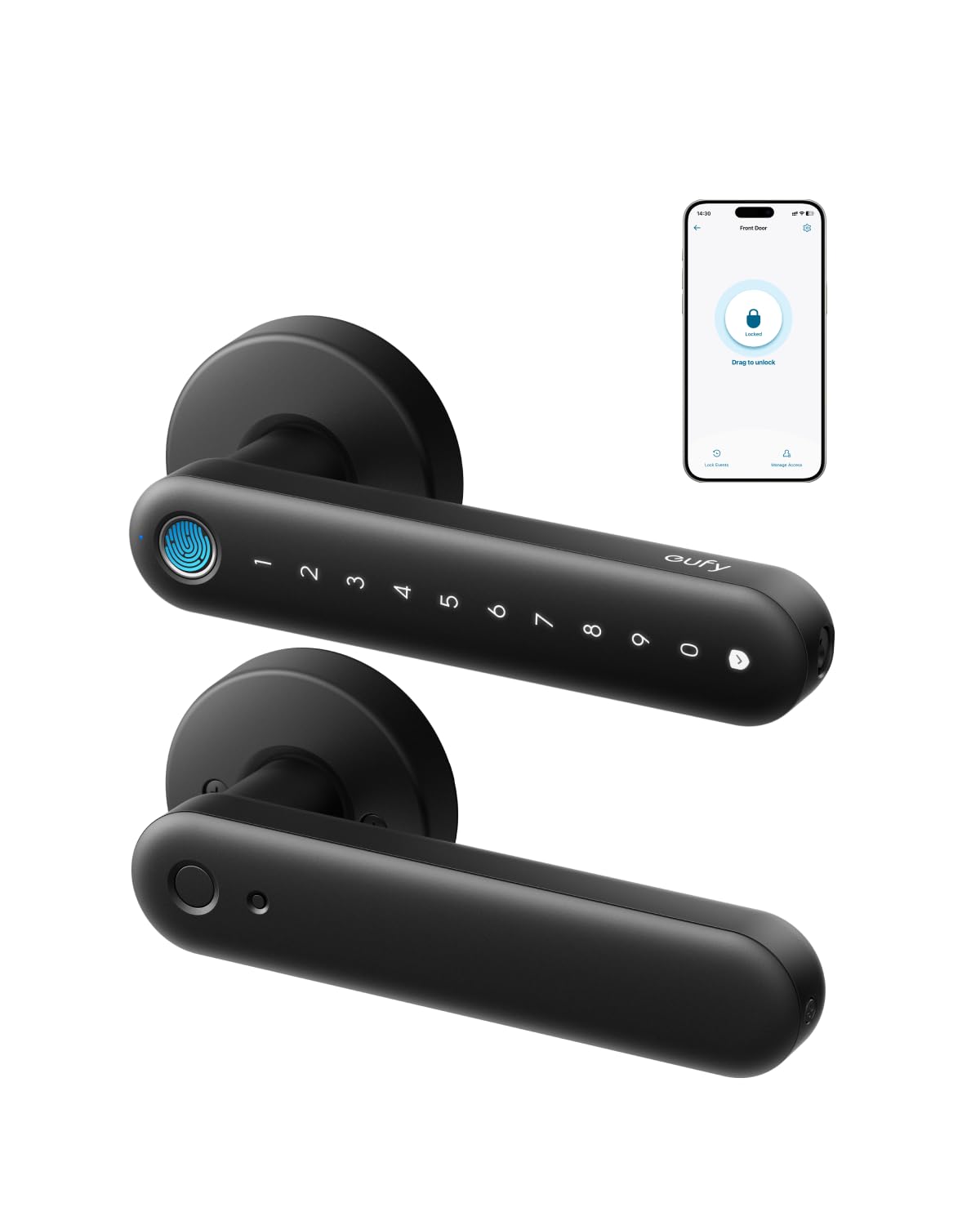
We recommend this compact interior lock for small spaces because it offers several entry methods, remote control, and simple installation without needing a separate Wi-Fi hub.
Pros
- Fast, reliable fingerprint access
- Built-in Wi-Fi for remote control
- Easy replacement with a screwdriver
Cons
- Not intended for front doors
- Some users report connection problems
- Does not support rekeying
We found the C32 easy to fit on a bedroom, office, or storage-room door. Its lever design suits narrow indoor spaces better than a bulky deadbolt, and installation took less than 30 minutes with basic tools.
Fingerprint access worked well during testing, while the PIN pad, app, and physical keys gave us useful backup options. The scrambled PIN feature also lets us enter extra numbers before or after the real code, which helps hide it from nearby observers.
Built-in Wi-Fi allowed us to manage access from the app and unlock the door for someone remotely. Auto-lock added convenience, though we would check the settings carefully before using it on a frequently opened door.
Battery life should last several months under normal use. If the batteries run out, we can connect a USB-C power bank for temporary access. Some customer reports mention dropped connections or occasional sticking, so we would test the lock often after installation. It works best for interior doors, not primary exterior entryways.
Foxgard 5-in-1 Fingerprint Door Lock
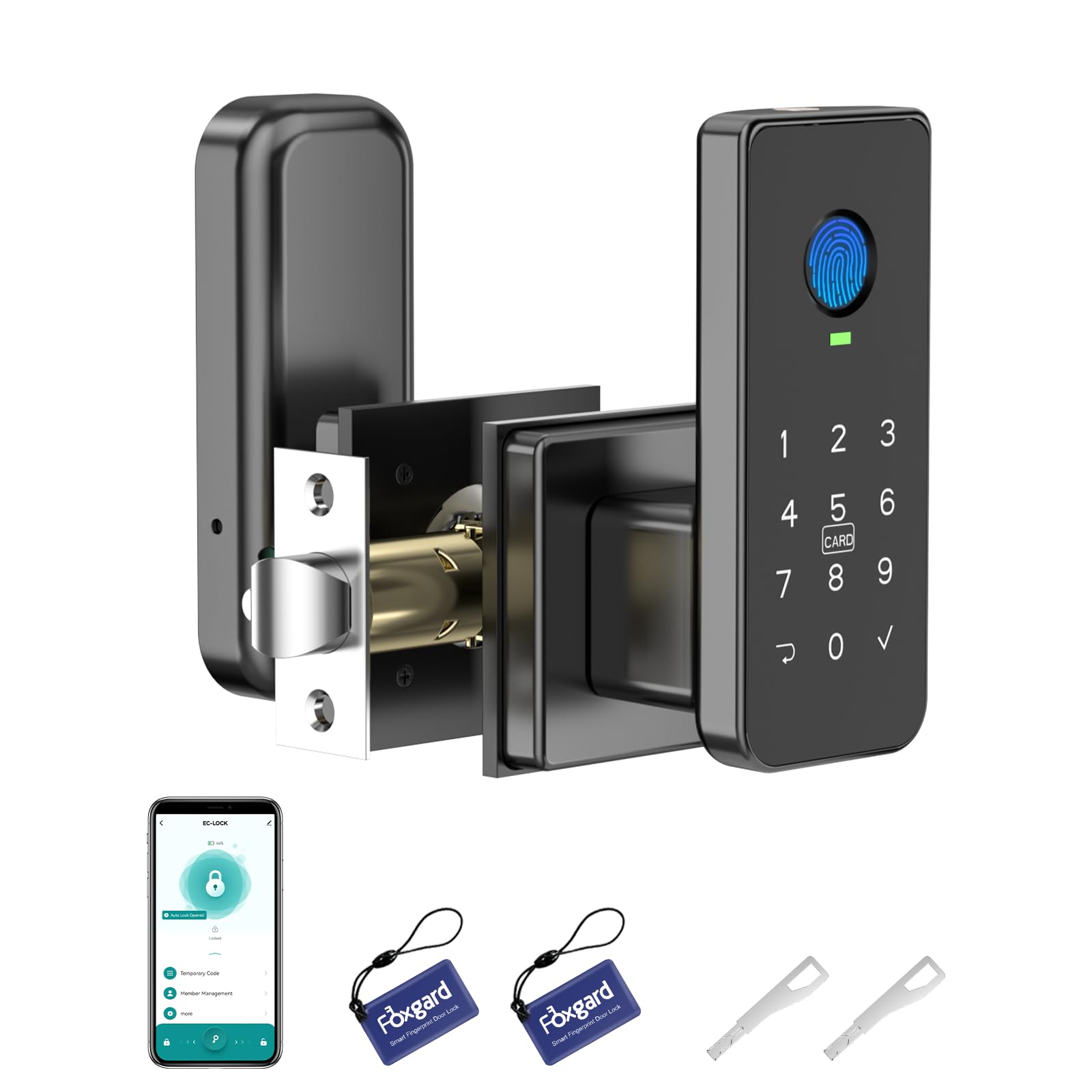
We recommend this compact indoor lock for bedrooms, offices, and other small spaces because it offers several entry methods without needing wiring or drilling.
Pros
- Compact design suits standard indoor doors
- Fingerprint, code, card, app, and key entry
- Easy setup with auto-lock and access codes
Cons
- Batteries are not included
- Fingerprint reading may feel inconsistent
- Remote and voice control require a separate gateway
We found the Foxgard lock easy to install with a screwdriver, which helps in apartments or tight areas where larger smart locks may not fit. Its slim rectangular body takes up little space on the door, while the black finish gives it a clean look.
The range of entry options adds useful flexibility. We could use a fingerprint for quick access, a keypad code for regular entry, or an IC card and key as backups. The anti-peep keypad also lets us enter extra numbers around the real code.
The app supports temporary and timed codes, which makes the lock useful for guests, cleaners, or office access. Remote control and voice commands need the Foxgard Gateway, so buyers should plan for that added purchase.
Battery choice matters with this model. Reviews mention that regular batteries may drain quickly, so we would use quality AA alkaline batteries and pay attention to the low-battery alert. Overall, this lock fits small indoor spaces well, but its fingerprint reader may not perform as consistently as its keypad or card entry.
Yamiry Smart Door Handle Lock

We recommend this lock for small spaces because it combines several entry options with a compact, handle-style design and simple installation.
Pros
- Fingerprint, keypad, app, key fob, and key access
- Quick installation with basic tools
- Temporary codes and access records in the app
Cons
- Remote access requires a separate Wi-Fi gateway
- App setup may take some adjustment
- Handle-style design may not fit every door
We found the installation straightforward on a standard interior or exterior door. The reversible handle helped with door direction, and the adjustable latch made fitting easier without extra drilling.
The fingerprint reader responded quickly during regular use. We also liked having backup choices, including a keypad, physical keys, and key fobs. That flexibility helps when our phone is unavailable or when we need to give someone temporary access.
The app lets us create codes, review entry activity, and manage access from one place. Bluetooth works for nearby control, while remote operation and Alexa features require the separately sold Wi-Fi gateway.
For a small entryway, the lock keeps the hardware fairly compact and avoids the bulk of some larger smart locks. We would check the door measurements first, especially when replacing a knob or lever with this handle-style design.
Sifely Fingerprint Smart Lock

We recommend this compact lock for small homes and rentals that need several simple entry options.
Pros
- Fast fingerprint, keypad, app, key, and fob access
- Simple DIY installation on many standard doors
- Optional gateway adds remote access and voice control
Cons
- Remote features require a separate Wi-Fi Gateway
- Some doors may need extra drilling or adjustments
- The lock cannot be rekeyed, according to a customer report
We found the fingerprint reader quick and useful for daily entry. The backlit keypad also helped when we returned home after dark, while the auto-lock feature reduced the chance of leaving the door unsecured.
Its slim design works well where space is limited around the door. Installation felt straightforward on a compatible wood door, but fit can vary. Some doors, including certain uPVC models, may need extra holes or a larger opening.
Bluetooth app control handles nearby use, access records, and user management. For remote unlocking, Alexa, Google Assistant, and rental access codes, we need the optional Sifely Wi-Fi Gateway.
Multiple entry methods make this a practical choice for families, guests, and short-term rentals. We would confirm the door measurements and accept the added gateway cost before buying.
Yamiry Keypad Smart Door Knob

We recommend this compact keypad lock for small spaces because it installs easily, supports multiple user codes, and includes a physical key backup.
Pros
- Simple screwdriver installation
- Supports up to 20 codes
- Adjustable auto-lock timing
Cons
- Keypad markings can be hard to see before the buttons light up
- Some users report inconsistent performance over time
- The knob may feel tight during use
We found the installation quick when replacing a standard exterior door knob. The included parts and adjustable latch helped it fit without taking up extra room, which makes it useful for narrow entry areas.
Programming the keypad was straightforward. We could create separate codes for household members or use a temporary code for guests. The backlight helped at night, though the black keypad was difficult to read until we pressed a button.
The auto-lock timer offers useful control, with settings from a few seconds to more than a minute. We also liked having two physical keys for backup. However, some customer reports mention later reliability problems, so we would keep the keys accessible and replace the batteries when the low-battery warning appears.
TEEHO TE001 Keypad Deadbolt

We recommend this compact keypad deadbolt for small homes, offices, garages, and rental spaces that need simple keyless entry.
Pros
- Supports 20 personal codes plus one-time guest codes
- Adjustable auto-lock and one-touch locking
- Easy installation with a screwdriver
Cons
- Requires four AA batteries, which are not included
- Fits only doors with a 2⅛-inch bore hole
- No phone app or wireless connectivity
We found the TEEHO TE001 straightforward to install and easy to use in a busy entryway. Its keypad provides enough space for family members, cleaners, or guests without requiring extra keys. The backlit buttons also helped during evening use.
The adjustable auto-lock feature worked well for spaces where we often forget to secure the door. We could choose a delay from 10 to 99 seconds, or lock it by holding any keypad button. One-time codes offered a practical way to give temporary access without sharing a regular code.
Its slim deadbolt design suits narrow doors and smaller entry areas. However, we had to check the door’s bore-hole size before installation because this model does not fit 38mm holes. Since it has no app or wireless connection, we managed codes directly on the keypad.
The lock uses four AA batteries and shows a warning when power drops below 15%. We liked having two backup keys, but keeping replacement batteries nearby remains important. For basic keyless entry in a small space, the TE001 offers useful features without adding a bulky smart-home setup.
Yamiry Fingerprint Smart Door Lock

We recommend this compact Yamiry lock for small spaces that need several entry options without a bulky setup.
Pros
- Fast fingerprint access and multiple backup methods
- Simple screwdriver installation for many standard doors
- Compact design with auto-lock and passage modes
Cons
- Remote control requires a separate Wi-Fi gateway
- Bluetooth connection may be unreliable for some users
- Some doors may need extra space for the strike plate
We found the installation fairly simple and completed most of the setup with a screwdriver. The compact shape worked well on a smaller door, although the strike plate did not fit every frame without adjustment.
The fingerprint reader responded quickly after we saved the same finger more than once. We also liked having keypad, key fob, app, and physical key options, which made the lock useful when our hands were full or our phone was unavailable.
The app handles local Bluetooth control and code setup. Remote access requires the optional gateway, so buyers should include that added cost if they want to check or operate the lock while away from home.
Some users reported Bluetooth dropouts and early hardware failures, while others found the lock dependable after installation. We would choose it for an interior door, office, or compatible entry door, but we would check the door measurements and keep the physical keys as a backup.
Buying Guide
When we choose a smart door lock for a small space, we should measure the door, frame, and area around the lock first. A compact design can reduce crowding, but it must still fit the door’s thickness and existing hardware.
We should compare these key features:
| Feature | What we should check |
|---|---|
| Size | Exterior and interior dimensions, including handle clearance |
| Power | Battery type, battery life, and low-power alerts |
| Access | Keypad, app, key, fingerprint, or temporary codes |
| Connectivity | Bluetooth, Wi-Fi, or a separate hub requirement |
| Installation | Compatibility with our door and current deadbolt |
| Security | Auto-lock settings, activity logs, and manual backup access |
| Noise | Motor sound, especially near bedrooms or shared spaces |
We should select a lock that supports the access methods we will use most. Keypads help when we need to share entry codes, while app control can provide remote access if the lock connects to Wi-Fi.
Battery access also matters in tight areas. We should make sure we can remove the battery cover easily and check whether the lock includes a physical key or another backup method.
Before buying, we should review the installation requirements and return policy. A lock that needs a large interior mounting plate may not work well when the door sits close to a wall, cabinet, or other fixture.
Editor’s Choice
We recommend the August Wi-Fi Smart Lock for most small spaces. Its compact interior design fits over many existing deadbolts, so we can keep the outside hardware and avoid replacing the entire lock.
The built-in Wi-Fi lets us lock or unlock the door remotely without adding a separate hub. We can also create guest codes, check activity, and connect the lock with common smart home platforms.
| Feature | Details |
|---|---|
| Best for | Small apartments and narrow entryways |
| Installation | Uses many existing deadbolts |
| Access | App, key, and optional keypad |
| Connectivity | Built-in Wi-Fi |
| Main drawback | Requires regular battery changes |
We should measure the space around the inside of the deadbolt before buying. The lock needs enough clearance to turn freely and should not interfere with nearby walls, trim, or furniture.
For homes with limited wireless coverage near the door, a Bluetooth-only smart lock with a separate hub may offer better battery life. However, the August Wi-Fi Smart Lock gives us a strong mix of small size, remote control, and simple installation.
Conclusion
We should choose a smart door lock based on the space around the door, not just its features. Compact designs, low-profile interiors, and simple installation help prevent problems in small entryways.
Before buying, we should check the door’s measurements, lock type, power source, and app support. A keypad can reduce the need for keys, while Bluetooth or Wi-Fi control may suit different access needs.
For the best fit, we can compare:
- Size: Choose a lock that leaves room for nearby walls and furniture.
- Installation: Look for models that fit the existing deadbolt.
- Access: Consider codes, phone control, key cards, or physical keys.
- Power: Check battery life and emergency access options.
- Security: Select a trusted brand with strong account protection.
A smaller lock may offer fewer features, but it can work better when space is limited. We should select the model that fits the door securely and gives us the access options we will use most.
FAQS
What should we measure before buying a smart lock?
We should measure the door’s backset, thickness, deadbolt size, and space around the lock. These measurements help us choose a model that fits without hitting nearby walls, trim, or handles.
Are smart locks suitable for small apartments?
Yes. We can choose compact models with low-profile interior parts. Retrofit locks can also keep the outside hardware while replacing only the inside thumb-turn.
Do smart locks need a hub?
Some locks connect directly through Bluetooth or Wi-Fi. Others need a separate hub for remote access, voice control, or smart-home features, so we should check the package details before buying.
What power source do smart locks use?
Most models use batteries. We should choose a lock with an easy-to-reach battery compartment and a low-battery warning, especially when the lock sits in a tight space.
Can we unlock the door if the battery dies?
Many smart locks include a physical key, an emergency power port, or both. We should confirm the backup method and keep the required key or power bank accessible.
Which features matter most in a small space?
- Compact interior design
- Easy installation
- Keypad or app access
- Low-battery alerts
- Manual backup access
- Compatibility with our existing deadbolt