
8 Best Window Alarms for Elderly: Simple Home Security Options


Electric Heating Pad

Electric Jar Opener

Shower Chair for Elderly
Window alarms can add a simple layer of security by alerting someone when a window opens. They may help older adults feel safer at home, while also giving family members or caregivers a clear warning about an unexpected entry or exit.
The best window alarms for elderly users should be loud enough to hear, simple to operate, and easy to install without tools. We recommend prioritizing clear controls, reliable sensors, strong battery life, and an alarm sound that the user can hear from nearby rooms. We compared leading options and considered these features to identify window alarms that provide dependable protection without adding unnecessary complexity.
Best Window Alarms for Elderly
We selected the best window alarms for elderly users based on sound levels, ease of use, installation, and reliability. Our list includes simple options that can help alert residents and caregivers when a window opens.
SanJie 5-Pack Window Alarms

We recommend these alarms for older adults who want a simple, loud alert without a complicated security system.
Pros
- Strong sound with two alarm levels and a chime mode
- Peel-and-stick setup takes only a few minutes
- Five sensors cover several windows, doors, or cabinets
Cons
- The alarm may be too loud for some users
- Thick trim can make sensor placement difficult
- Button batteries may need regular replacement
We found the adhesive installation quick and practical. After placing the sensor and magnet close together, we could switch between the alarm and chime settings without using an app.
The loud setting should help family members notice an opened window or door from another room. For elderly users, the chime offers a less startling option during the day, while the alarm provides a stronger warning when needed.
Placement matters. The two pieces must line up correctly, and raised trim can prevent a proper fit. We would install these indoors on clean, flat surfaces and test each sensor before relying on it for safety.
METAK 5-Pack Window and Door Alarms
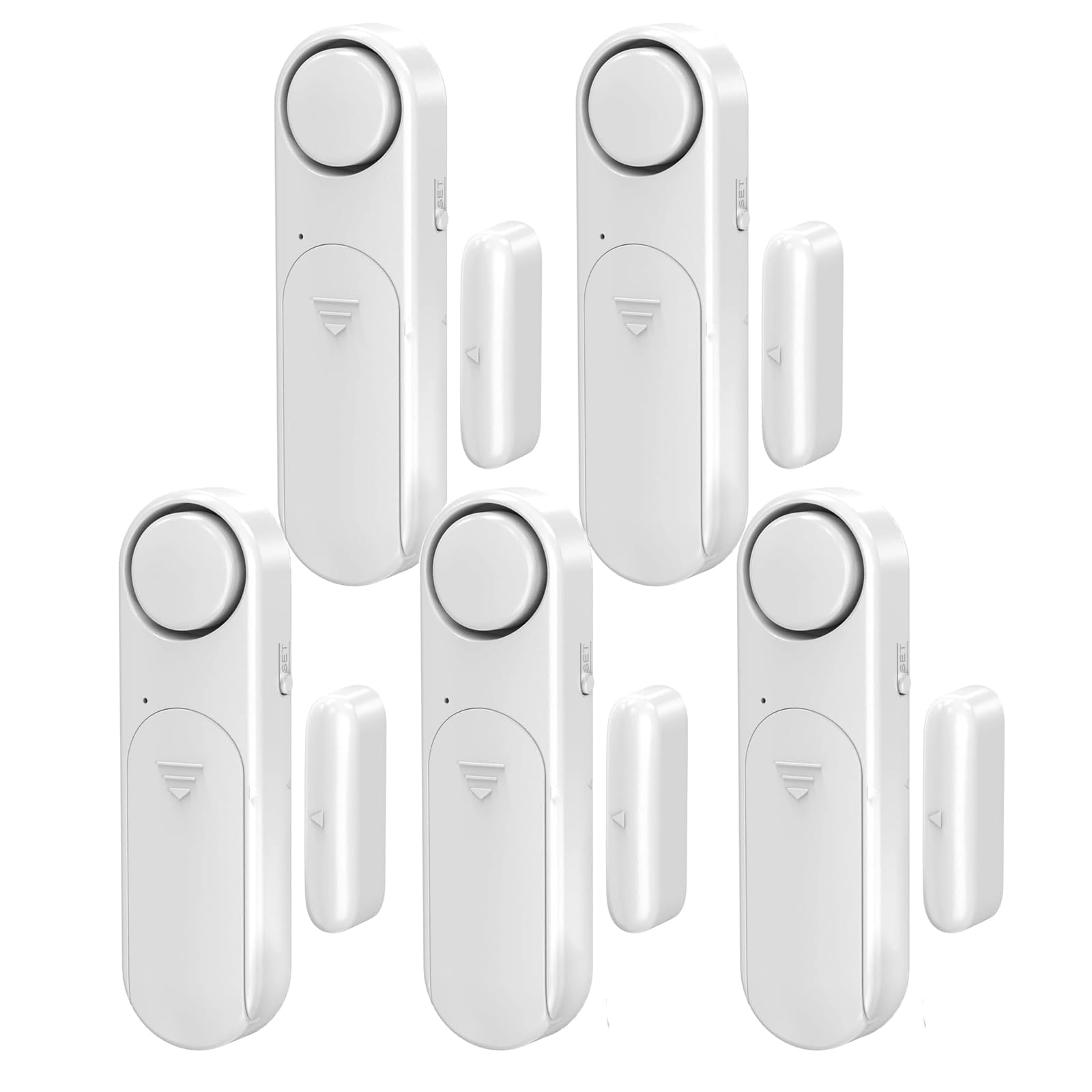
We recommend this five-pack for older adults who need simple, loud alerts on several windows or doors without wiring.
Pros
- Easy adhesive installation
- Adjustable 90dB or 120dB alarm
- Useful for monitoring multiple entry points
Cons
- Requires two AAA batteries per alarm
- No remote control support
- The loud alert may disturb some users
We found the slim alarms quick to place on doors and windows. The adhesive backing avoids drilling, which helps when installing them in several rooms or rental homes.
The 90dB and 120dB settings let us choose between a lower alert and a stronger warning. The louder setting can help household members notice an opened entry point from another room, while the flashing red light adds a visual signal.
For seniors with memory loss, these alarms can provide an added layer of awareness around exits. We would still pair them with regular check-ins because the units only sound when the sensor detects an opening.
The alarms use two AAA batteries each, and the batteries are not included. We also noted that this model does not work with the listed remote control, so users must arm, disarm, and adjust each unit with its buttons.
UltraPro Window and Door Alarms
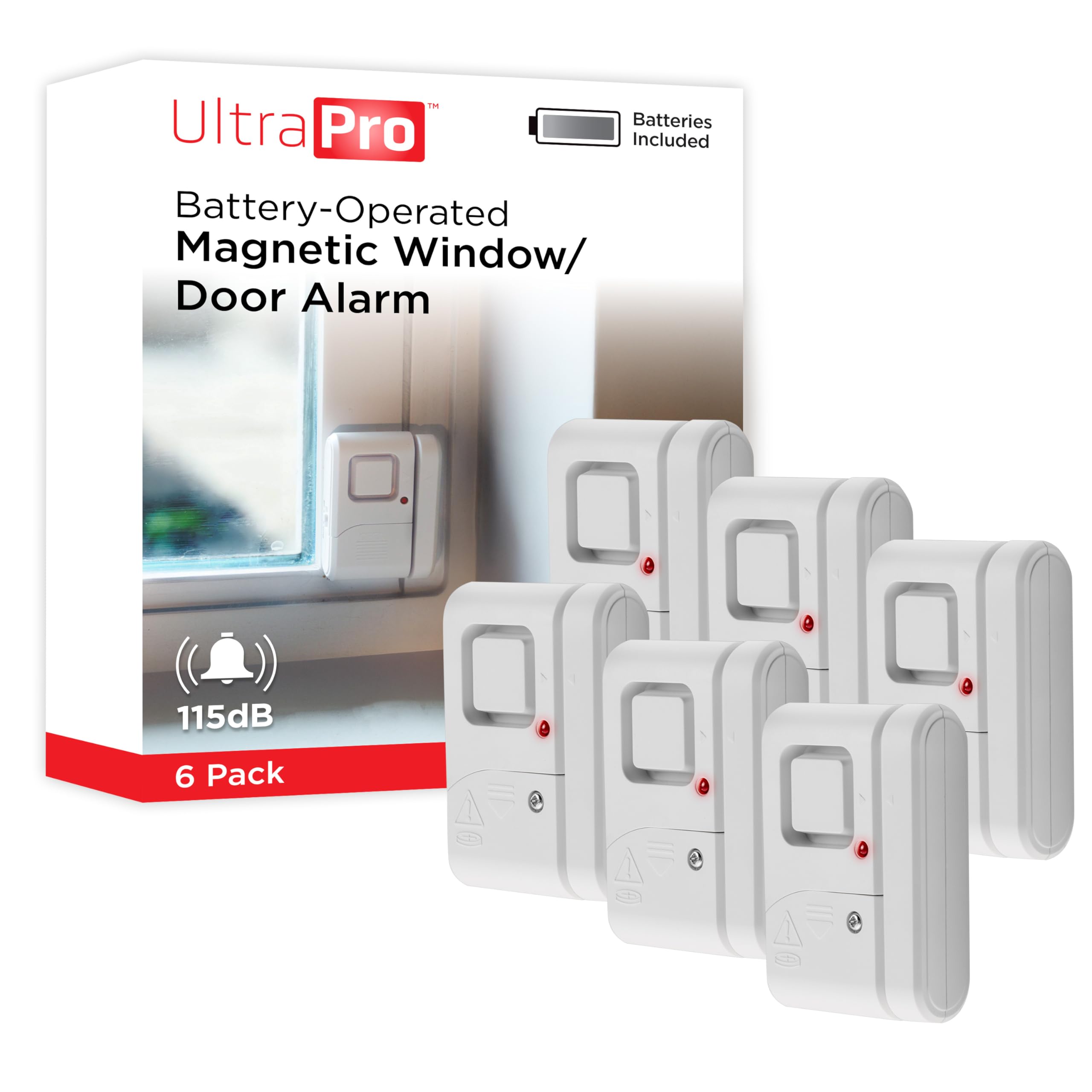
We recommend this six-pack for elderly users who need a simple, loud alert for doors, windows, or indoor wandering.
Pros
- Loud siren and optional chime
- Fast, wireless setup
- Six alarms cover several entry points
Cons
- The siren may feel harsh indoors
- Tape placement must be precise
- Battery access requires a small screwdriver
We found the setup straightforward. We attached each alarm and magnet indoors with the included adhesive, then selected either chime or alarm mode. This makes the system useful for bedrooms, exterior doors, windows, cabinets, and drawers.
The chime gives us a less stressful way to monitor movement during the day. The alarm mode creates a stronger warning when someone opens a door or window unexpectedly. Its volume should help caregivers hear activity from nearby rooms, but it may be too startling for some older adults.
The alarms require no app, wiring, or monthly service. A front light helps us notice low battery power, while the compact design keeps the units fairly unobtrusive. We would check the adhesive regularly, especially on dusty or uneven surfaces.
This product works best as a basic alert system rather than a complete security setup. It can help caregivers notice nighttime wandering or open windows, but it does not contact emergency services or provide remote notifications.
TECKNET Window and Door Alarm

We recommend this six-pack for older adults who want a simple alert for doors, windows, or cabinets without installing a full security system.
Pros
- Simple adhesive installation
- Adjustable volume and chime settings
- Compact design with a long warranty
Cons
- Needs a flat mounting surface
- Requires regular battery checks
- The alarm may be too sharp for some users
We found the TECKNET alarm easy to place and operate. Its white housing blends with light-colored frames, while the small size keeps it from drawing much attention. The adhesive backing avoids drilling, but both parts must line up closely for reliable operation.
The three volume levels help us adjust the sound for different rooms. We also like the choice between a single chime and a continuing alarm, which makes the unit useful for routine reminders or urgent alerts.
This model works well for monitoring entry doors, windows, cabinets, and similar openings. However, molding or uneven surfaces can make installation difficult. We would also keep spare batteries nearby and test each unit regularly, especially when using it to help monitor a vulnerable adult.
Satisure WiFi Door and Window Alarm

We recommend this alarm for older adults who need clear alerts at home and family members who want phone notifications without monthly fees.
Pros
- Sends quick alerts through the Smart Life or Tuya app
- Offers adjustable volume and distinct tones for each sensor
- Installs without wiring and supports up to 20 sensors
Cons
- The adhesive may not hold well on every surface
- Some alert tones sound unpleasant
- The receiver needs a nearby power outlet
We found the setup simple: plug in the receiver, attach the sensors, and connect the system to the app. The loud chime made it easy to hear an opened door from another room, while the volume controls helped us choose a less startling setting.
The three included sensors work well for key doors, windows, or appliances such as a freezer. We also liked assigning different tones to each sensor, since the sound helped us identify the entry point without checking our phones.
App sharing adds value for families who help monitor an older adult. Several people can receive alerts, and the system keeps its settings after a power outage. However, we would test the adhesive first because some users report that the sensors fell off. For a more secure fit, we would use stronger mounting tape.
Philips Window and Door Alarms
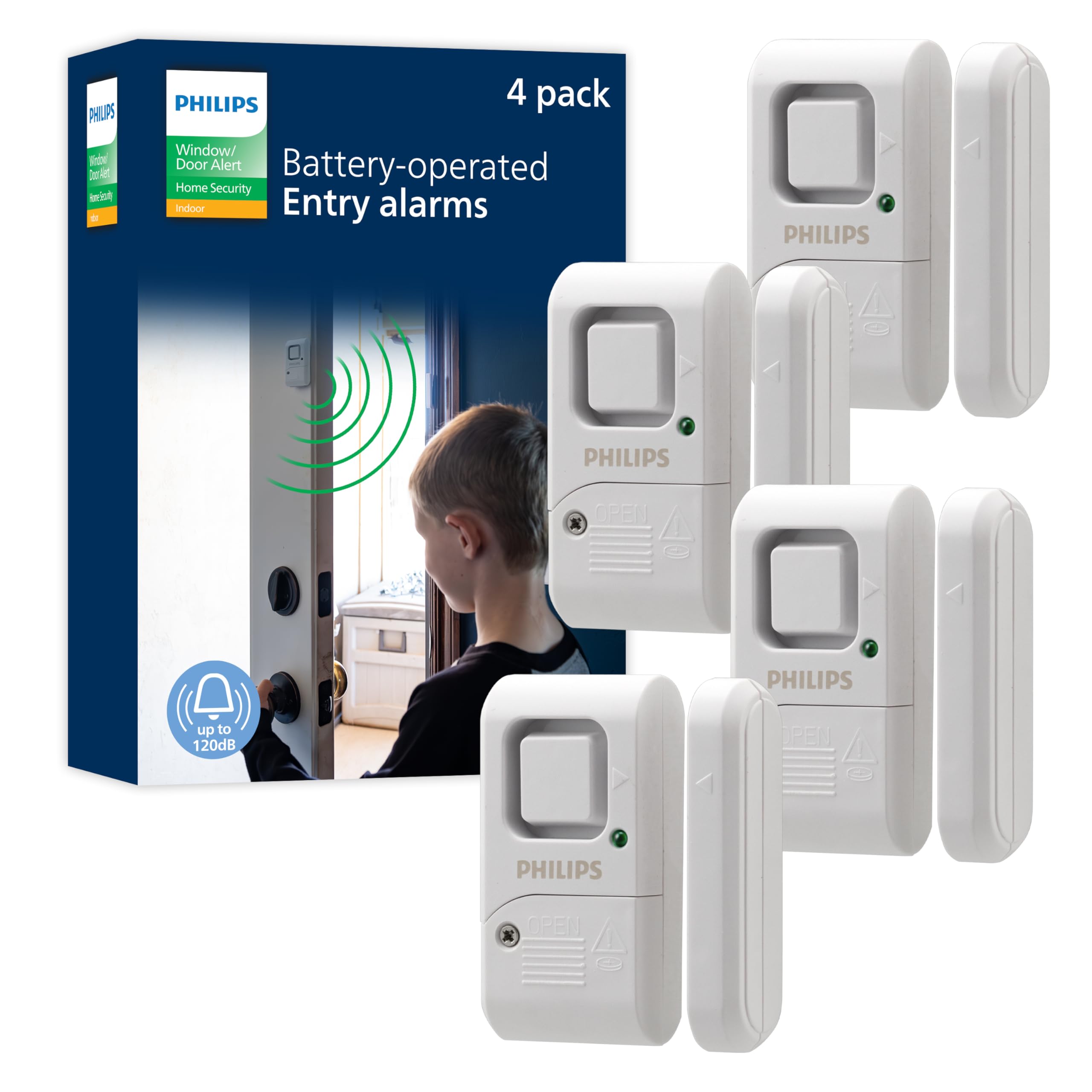
We recommend this four-pack for older adults who want an affordable, simple way to monitor doors and windows without a full security system.
Pros
- Loud alert and optional chime mode
- Simple wireless setup
- Four alarms provide broad coverage
Cons
- Button batteries need regular checks
- Adhesive may need extra support on some surfaces
- The alarm may sound too loud for sensitive users
We found the Philips alarms easy to place on doors, windows, and other entry points. The included mounting tape keeps installation simple, while the magnetic sensor activates when the door or window opens.
The side switch lets us choose between off, chime, and alarm settings. Chime mode works well for daily awareness, while the loud alarm can alert caregivers from another room. Users with hearing loss may still need another alert method.
Each unit includes batteries and has a test button with a low-battery indicator. We would check the batteries and test every alarm regularly, especially when using them to monitor an older adult living alone.
The adhesive worked well on clean, smooth surfaces, but some users may need stronger mounting material. The compact design suits apartments, homes, garages, and RVs without adding wires or a complicated control panel.
YisTech Wireless Caregiver Door Alarm

We recommend this set for caregivers who want a simple way to know when an elderly person opens a door or window.
Pros
- Loud chime with adjustable volume and many tone choices
- Bright light alert helps people with hearing loss
- Multiple sensors and receivers support larger homes
Cons
- Adhesive strips may not hold well on every surface
- Changing the tone or volume can take some practice
- The loudest setting may feel harsh in smaller rooms
We found the system easy to set up. We plugged in the receivers, attached the sensors to doors and windows, and tested each opening. The wireless range worked well across rooms, giving us time to respond when someone left a bedroom or approached an outside door.
The chime offers several volume levels, so we could choose a quieter alert for daytime and a stronger one when we needed to hear it from another room. The flashing light added a useful visual signal, especially for anyone who may not hear the sound clearly.
The set includes three sensors and two receivers, which helps cover several entry points. We would replace the included adhesive with stronger mounting tape if a sensor sits on a textured or frequently used surface. Overall, this YisTech alarm offers practical monitoring for homes caring for elderly adults with memory or wandering concerns.
PILSAMAS Caregiver Door and Window Alarm
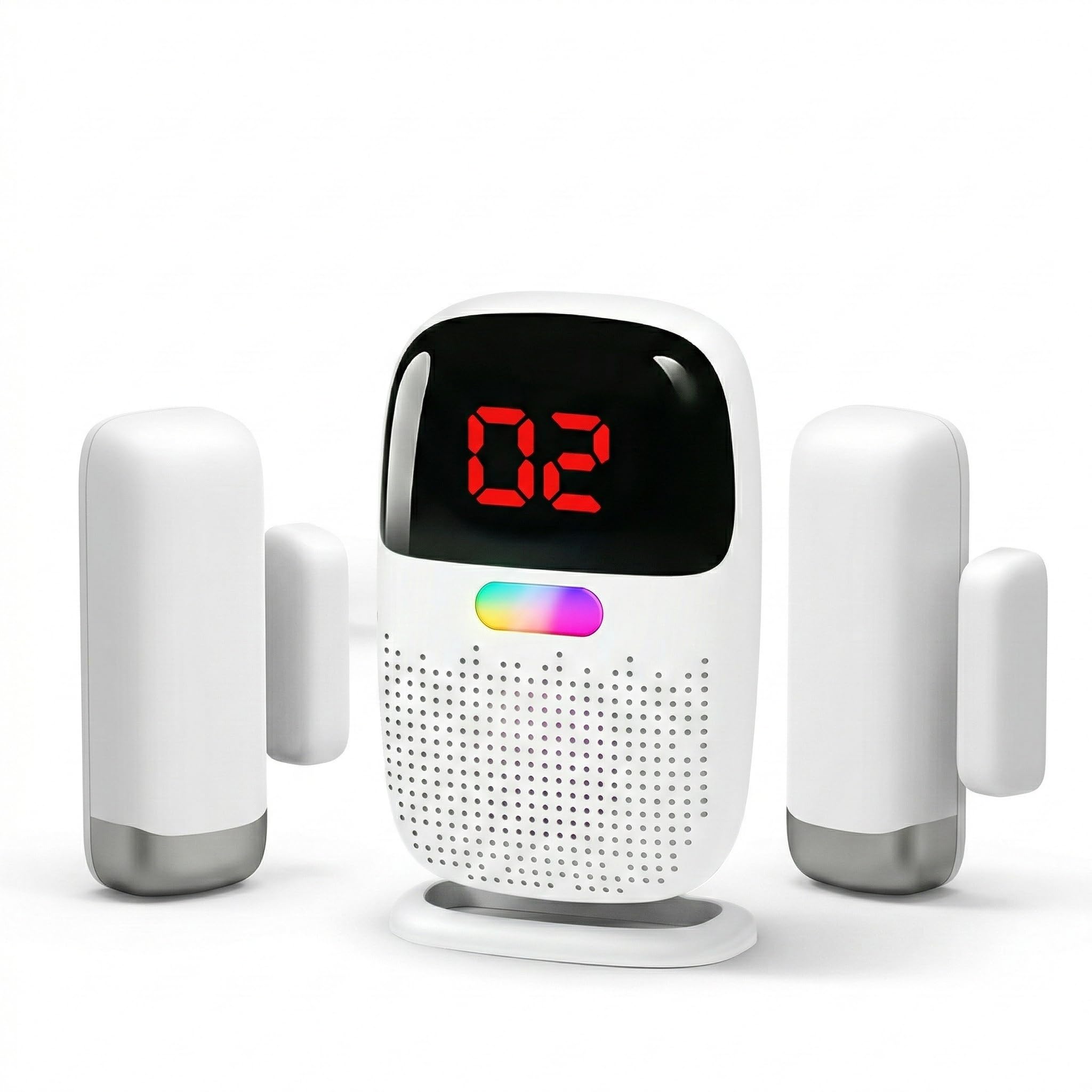
We recommend this system for caregivers who want portable alerts, adjustable sounds, and no monthly fee.
Pros
- Portable receiver supports sound and vibration alerts
- Rechargeable sensors and pager reduce battery changes
- Sensor IDs help us identify which entry opened
Cons
- Pairing may take patience for some users
- Indoor range depends on walls and placement
- The system does not provide camera or audio monitoring
We found the receiver easy to carry with its belt clip, while the recessed controls helped prevent accidental changes. The display showed which sensor triggered, making it easier for us to check the right door or window.
The alert choices worked well for different situations. We could use a loud sound for daytime monitoring or vibration when we wanted quieter alerts at night. Testing the system throughout the home remains important because walls and building materials can reduce its range.
Setup was generally simple, but some door frames needed careful sensor placement. We also noted that a few users had trouble pairing the pager, so we recommend testing both sensors before relying on the system.
Both the receiver and sensors recharge by USB, which reduces the need for disposable batteries. With two sensors included, this starter kit suits homes that need to monitor a limited number of doors or windows.
Editor’s Choice
Our Editor’s Choice is the Satisure WiFi Door and Window Alarm for elderly users and families who want simple window monitoring with the added convenience of phone notifications. It provides adjustable volume, different alert tones, and app-based alerts without requiring a monthly service. Family members can also share access to help monitor important doors and windows remotely.
For seniors who prefer a completely simple setup without apps, the SanJie 5-Pack Window Alarms is another strong choice. Its peel-and-stick installation, loud alarm, and chime mode make it practical for everyday home use. For caregivers who need visual and audible alerts, the YisTech Wireless Caregiver Door Alarm stands out with adjustable sound and a flashing light alert.
Overall, the best option depends on the senior’s needs. Choose a basic alarm for simplicity, a WiFi model for remote notifications, or a caregiver-focused system when monitoring multiple entry points is important.
Conclusion
The best window alarms for elderly users should be simple to install, easy to operate, and loud enough to provide a clear warning when a window or door opens. The models in this guide offer different approaches, from basic adhesive alarms to caregiver systems and WiFi-connected options.
For straightforward protection, models such as SanJie, METAK, UltraPro, TECKNET, and Philips provide simple alerts without complicated setup. Families who want remote notifications may prefer the Satisure WiFi system, while caregivers looking for visual and portable alerts may find YisTech or PILSAMAS more suitable.
Before choosing a window alarm, consider the user’s hearing ability, preferred alert volume, number of windows or doors that need monitoring, installation surface, and willingness to manage batteries or rechargeable devices. Whatever model you choose, test each sensor regularly and remember that a window alarm is an additional safety layer rather than a complete home security or emergency-response system.
FAQs
Are window alarms good for elderly people?
Yes. Window alarms can provide a simple warning when a window or door opens unexpectedly. They may be especially useful for seniors who want basic home awareness or for caregivers monitoring entry and exit points.
What should I look for in a window alarm for elderly users?
Look for easy installation, simple controls, reliable sensors, suitable alarm volume, good battery life, and an alert that the user can hear or see clearly. For caregivers, multiple sensors or remote notifications can also be useful.
Do window alarms require professional installation?
Most of the alarms covered in this guide use adhesive installation and do not require wiring or professional installation. However, proper alignment of the sensor and magnet is important for reliable operation.
Can window alarms help caregivers monitor seniors?
Yes. Window and door alarms can alert caregivers when a monitored opening is used. Some systems also provide visual alerts, multiple receivers, or phone notifications, which can make monitoring easier.
Are loud window alarms safe for elderly users?
A loud alarm can make an opened window or door easier to notice, but very loud sounds may be uncomfortable or startling for some seniors. Models with adjustable volume or chime settings can provide more flexibility.
Do window alarms work without WiFi?
Yes. Many basic window alarms work without WiFi, apps, or monthly subscriptions. They simply activate when the magnetic sensor detects that the window or door has opened.
How often should elderly users test window alarms?
It is a good idea to test each alarm regularly and check the batteries or rechargeable power. Proper sensor alignment and secure adhesive placement should also be checked periodically to help ensure reliable operation.
Can a window alarm replace a home security system?
No. A window alarm is best viewed as an additional alert layer. Basic models generally do not contact emergency services, provide cameras, or offer comprehensive remote security monitoring. Your article also notes that these alarms are basic alert systems rather than complete security setups. :contentReference[oaicite:1]{index=1}