
10 Best Window Alarms for Arthritis: Easy-to-Use Options


Long Handle Shoe Horn

Portable Wheelchair

Memory Foam Seat Cushion
Window alarms can add a simple layer of security by alerting you when someone opens a window. For people with arthritis, the best models should also be easy to install, set, and silence without requiring much grip strength or fine finger movement.
The most important features are large controls, a simple setup, a clear alarm, and an easy-to-reach battery compartment. Adhesive alarms can avoid drilling, while remote controls or app controls may help users who find small buttons painful. We should also consider alarm volume, sensor reliability, battery life, and whether the unit can be turned off quickly.
We compared window alarms with arthritis-friendly features to find options that provide dependable alerts without adding unnecessary effort.
Best Window Alarms for Arthritis
We selected the best window alarms for arthritis based on simple controls, easy installation, clear alerts, and accessible designs. Our list includes options that help improve home security without requiring complex steps or strong hand movements.
Philips Window and Door Alarms
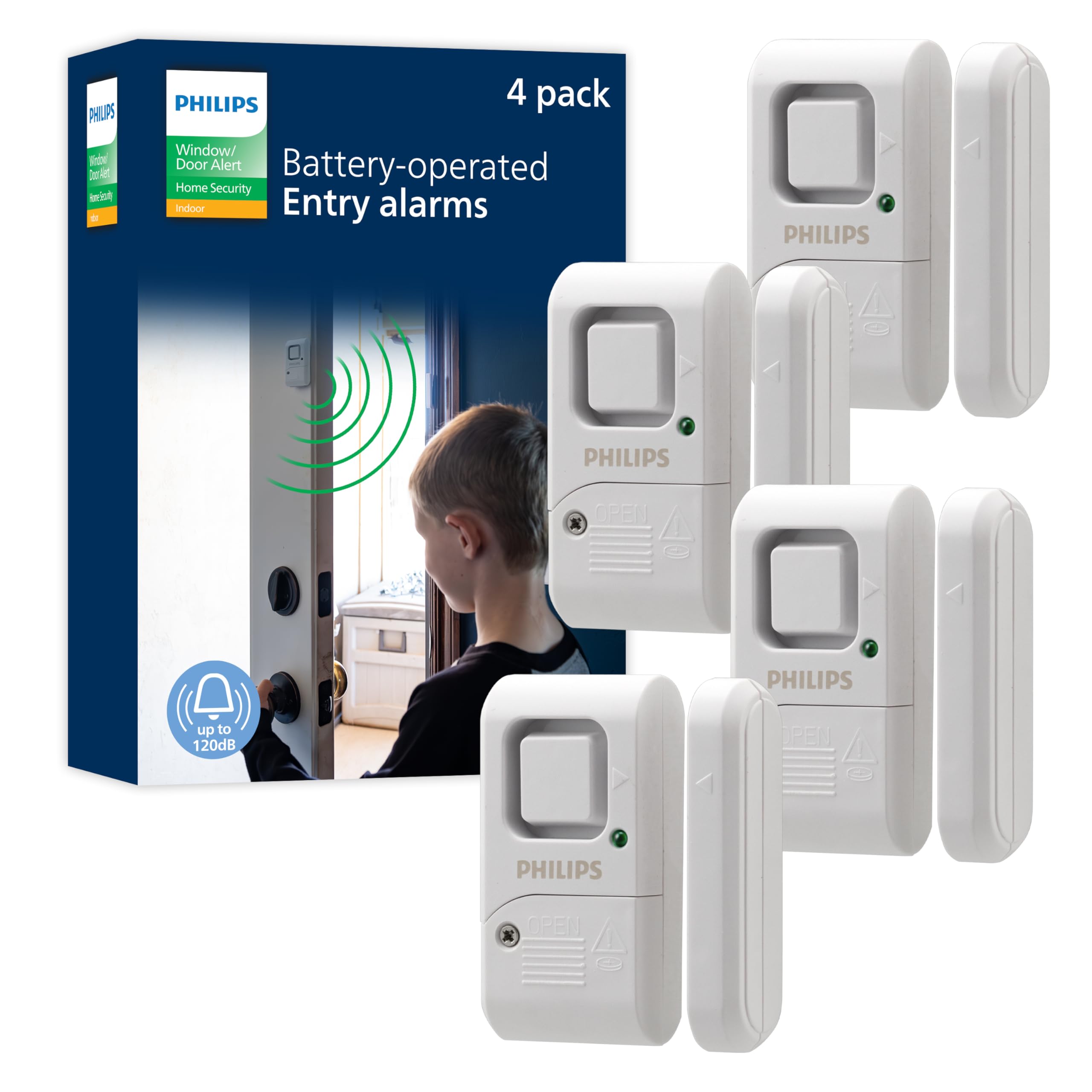
We recommend this four-pack for people with arthritis who want a loud, simple alarm without a difficult setup.
Pros
- Lightweight units and peel-and-stick mounting
- Clear switch for off, chime, or alarm modes
- Includes batteries and covers several openings
Cons
- Small side switch may be hard for some users to move
- Adhesive may need extra support on some surfaces
- The alarm can sound harsh in small rooms
We found the Philips alarms easy to place because they do not require wires, screws, or tools. The included tape handles basic mounting, while the lightweight design makes positioning less demanding on stiff or painful hands.
The side switch controls the three modes, but its small size may challenge people with limited finger movement. We suggest choosing the mode before mounting each unit, so daily adjustments remain minimal.
The alarm is very loud, which helps people who may not hear a softer alert. Chime mode offers a less urgent option for tracking doors or windows, though it may still sound sharp indoors.
Each unit uses four LR44 button batteries, and the package includes them. We would test every alarm after installation and check the low-battery indicator regularly, especially on doors or windows used for safety monitoring.
SanJie 5-Pack Window Alarms

We recommend these alarms for people with arthritis because the adhesive setup and simple switch reduce the need to handle small hardware.
Pros
- Adhesive mounting avoids drilling or twisting screws
- Multiple sound settings suit different needs
- Five sensors cover several windows or doors
Cons
- Small switches and batteries may be hard to handle
- The alarm can sound very loud indoors
- Thick trim may prevent proper sensor alignment
We found the installation straightforward: peel the backing, place the alarm and magnet, then select a mode. This makes the set useful for anyone who wants to avoid tools, though positioning takes care around raised window trim.
The 100dB chime offers a gentler alert for daily use, while the louder alarm provides stronger protection when a window opens. We liked having options, but the highest setting may feel excessive in a small room.
The sensors use three LR44 batteries each and include a low-battery light. Replacing those small button cells could challenge people with stiff fingers, so we would plan to ask for help when needed. The 31-second alarm continues until the window or door closes, which helps ensure we notice an opening.
TECKNET Window and Door Alarm

We recommend this six-pack for people with arthritis who want simple installation, adjustable volume, and an easy-to-use door or window alert.
Pros
- Peel-and-stick setup avoids drilling or complex tools.
- Three volume levels and chime or alarm modes offer useful control.
- Lightweight units work on doors, windows, cabinets, and drawers.
Cons
- The adhesive needs a clean, mostly flat surface.
- Correct sensor alignment matters during installation.
- Battery replacement requires opening the alarm unit.
We found the setup comfortable to handle because it uses adhesive strips instead of screws. The small size also made it easy to place without adding bulk around a window or door frame.
The controls offer practical flexibility. We could choose a single chime for a gentle alert or a repeating alarm for a stronger warning. Three volume settings help us avoid an overly loud sound while still hearing it from another room.
Placement takes some care. The alarm and magnetic sensor must sit close together and align correctly, so uneven trim or molding may limit where we can mount them. We would clean the surface first and test each unit before relying on it.
The six-pack suits homes with several entry points, and we could also use the alarms on cabinets or drawers. We should keep spare batteries available, since the system runs on battery power.
EVA LOGIK 120dB Window Alarm

We recommend this eight-pack for people with arthritis who want loud, easy-to-install window alarms without needing to handle small switches often.
Pros
- Strong 120dB alarm is easy to hear.
- Adjustable sensitivity helps limit false alarms.
- Wire-free setup works across many windows.
Cons
- The alarm may need a firm vibration to trigger.
- Batteries are not included.
- Some units may arrive defective.
We found the adhesive installation simple because it avoids drilling and wiring. The compact design also leaves the window area fairly neat, while the flashing red light provides a quick visual status check.
The sensitivity settings gave us useful control. Lower sensitivity helped reduce alerts from normal bumps, while the higher setting responded more readily to movement. However, people should test each unit after installation because reports suggest that some alarms may not react to lighter disturbances.
The siren sounds very loud indoors, which can help alert people nearby and discourage entry. That volume may feel harsh during testing, so we recommend warning others before activating it.
Each alarm uses two AAA batteries, and the low-battery light offers a helpful reminder. We also liked the included warning stickers, although the units do not connect to a phone despite the product listing mentioning app control.
HIIXHC 10-Pack Window and Door Alarms

We recommend this pack for shoppers who want several simple alarms with easy adhesive installation and minimal handling.
Pros
- Adhesive mounting avoids drilling or complex setup.
- The 90 dB alarm provides a noticeable alert.
- Ten units cover several windows and doors.
Cons
- Batteries are not included.
- Small switches may be difficult for some users with arthritis.
- The alarm may sound if the magnetic parts separate by more than about 0.59 inches.
We found the basic setup manageable: insert two AAA batteries, switch the unit on, and press it onto the chosen surface. The adhesive design helps us avoid tools and repeated twisting, which can be useful when hand movement causes discomfort.
Once installed, the magnetic sensor responds when the window or door opens. The alarm sounds loudly enough to draw attention, but we would test the volume before placing it near a bedroom or shared wall.
The ten-pack gives us flexibility for multiple entry points, including windows, doors, garages, and apartments. However, the small power switch may still require careful finger pressure, so we would install the alarms in accessible spots and keep replacement batteries available.
WimuPath Window Alarm 15-Pack

We recommend this pack for buyers who want simple, loud window alarms that require little handling.
Pros
- Adhesive setup avoids drilling or complex controls.
- Loud alarm helps alert household members quickly.
- Multiple units cover several windows or doors.
Cons
- Batteries are not included.
- Adhesive may loosen on some doors.
- The units can feel stiff when opening or closing.
We found the magnetic sensors easy to place on windows and doors. The adhesive backing made installation simple, which helps when arthritis makes drilling or handling small tools difficult. We still needed to press the power switch and fit four AAA batteries in each alarm, so that step may require assistance.
The alarm sounds at about 92 decibels when the two parts separate. We liked the clear warning from nearby rooms, but the volume may feel unpleasant during testing. We recommend checking the sensor position before relying on it.
The 15-pack works well for larger homes, offices, or care settings. Some users report that the adhesive falls off, especially on certain surfaces, so we would clean and dry the area first and check each unit regularly.
UltraPro Window and Door Alarm
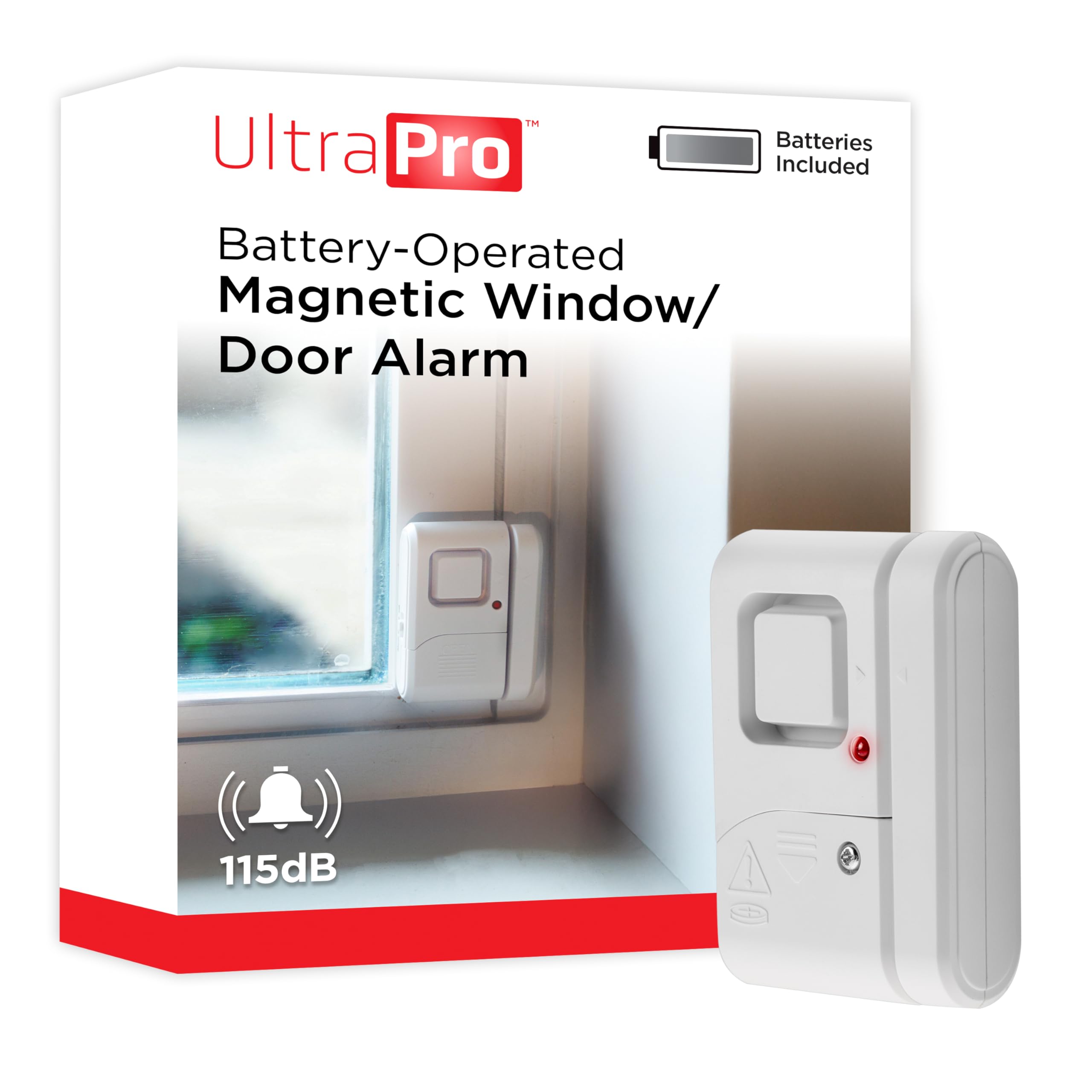
We recommend this alarm for anyone who wants a loud, simple window alert with controls that are easy to use.
Pros
- Tool-free setup with adhesive mounting
- Large, clear chime and alarm sounds
- Simple switch and low-battery indicator
Cons
- Battery access requires a small Phillips screwdriver
- Adhesive may not suit every surface
- The 120-decibel alarm can feel too loud indoors
We found the UltraPro easy to mount because it does not require wiring or small screw adjustments during installation. The contact sensor fits well on windows, doors, cabinets, and drawers, which gives us flexibility when monitoring several areas.
The side switch is useful for people with arthritis because we can select off, chime, or alarm without navigating an app. The switch still requires some finger movement, but it feels simpler than using a phone or a connected security system.
When we tested the alert, the chime was easy to hear from another room, while the alarm was much louder. That volume can help with awareness, but it may be uncomfortable for sensitive users. We also found that changing the included batteries requires a small screwdriver, which could be difficult for some people with limited hand strength.
Overall, this UltraPro model suits buyers who value clear alerts, basic controls, and quick installation over advanced features.
UltraPro Window and Door Alarms
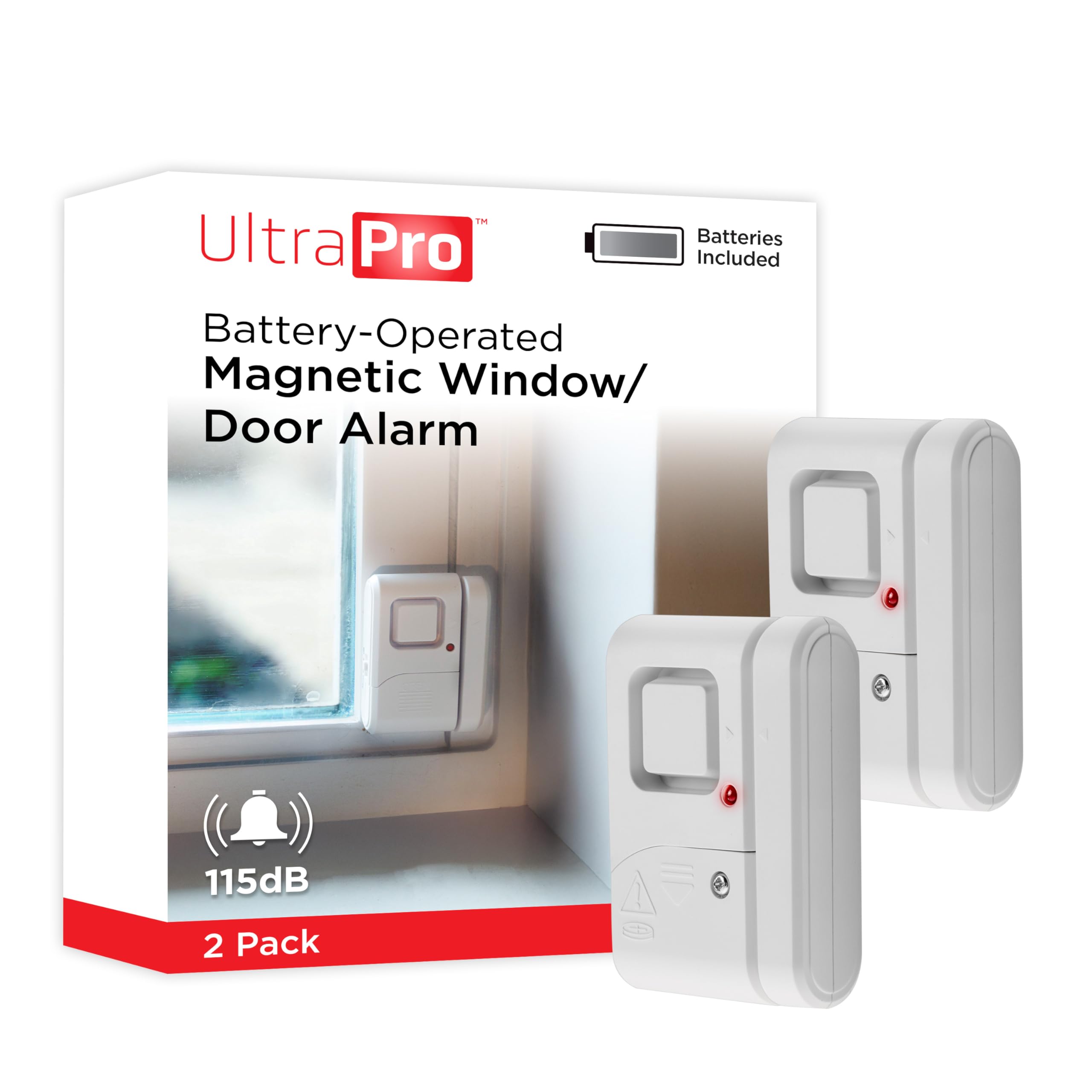
We recommend this two-pack for a simple, low-effort alert system that works well for people with arthritis.
Pros
- Tool-free setup with adhesive mounting
- Clear choice between chime and alarm modes
- Loud alert helps us hear an opened window
Cons
- Adhesive may need extra support on some surfaces
- Small controls can be hard to handle
- Battery replacement adds regular upkeep
We found the installation straightforward because the alarm and magnet attach with double-sided tape. That makes it easier for us to avoid drills, screws, and tight hand movements. We would still check that the surface feels clean and secure before mounting.
The side switch lets us choose a chime, a loud alarm, or the off setting. We liked having a quieter option for daily use, while the alarm mode provides a strong warning when a window or door opens.
The compact design fits doors, windows, cabinets, and drawers. However, the switch and battery compartment may feel small for users with limited finger strength or joint movement. We suggest placing each unit where it remains easy to reach.
The included batteries allow immediate setup, and the low-battery light helps us know when maintenance may be needed. This model does not require an app, wiring, or a monthly fee, but it offers only local sound alerts rather than phone notifications.
PLOJOP 90dB Window Alarm 4-Pack

We recommend this pack for shoppers who want a low-cost window alarm with simple setup and a very loud alert, but its long-term durability appears inconsistent.
Pros
- Simple peel-and-stick installation
- Loud 90dB siren
- Lightweight design works on doors or windows
Cons
- Batteries are not included
- Adhesive may not hold well on every surface
- Some units may stop working after several months
We found the alarm easy to mount because it uses adhesive pads instead of screws. That makes it a practical choice for people with arthritis who may have trouble gripping tools or turning small fasteners. Each unit needs two AAA batteries, so we recommend keeping spares nearby.
The siren is the main strength. It produces a sharp, loud alert when the window or door separates from the magnetic sensor. We liked that the compact units fit on many frames without taking up much space.
Correct alignment matters during installation. The magnet and alarm must stay within about 0.6 inches, which can take some care when placing them on uneven frames. The adhesive also received mixed feedback, so cleaning and drying the surface first should improve the hold.
Our main concern is reliability over time. Several users reported failures after a few months, while others found the alarms worked well. With its 3.9-star rating from 807 reviews, we see this as a budget-friendly option for basic alerts rather than a long-term security system.
EVA LOGIK Window Alarm 4-Pack

We recommend this four-pack for people with arthritis who want loud, peel-and-stick window alarms without handling complex controls.
Pros
- Simple adhesive installation with no wiring
- Adjustable vibration sensitivity
- Bright warning light and loud alert
Cons
- AAA batteries are not included
- Sensitive settings may cause false alarms
- The alarm can be difficult to silence after activation
We found the installation easy because the alarms attach directly to glass with adhesive. The lightweight design also avoids the need to drill or tighten screws, which helps when hand strength or finger movement is limited.
The vibration sensor offers high and low settings. We could adjust it for different windows, but it may still react to strong bumps or pets hitting the glass. Testing each unit after installation helped us find a suitable setting.
When triggered, the alarm sounds for up to 60 seconds and the flashing red light remains visible. The warning sticker adds another useful deterrent, especially on patio doors and windows that face outside.
The main drawback involves battery setup and maintenance. Each alarm needs two AAA batteries, which are not included, and the flashing indicator can require regular checks. Overall, this pack suits buyers who want a basic, independent alarm with easier installation and no app or hub.
Buying Guide
When we choose a window alarm for arthritis, we should focus on controls that require little force and are easy to reach. Look for large buttons, smooth switches, clear labels, and simple setup steps.
We should also check how the alarm attaches to the window. Adhesive mounts avoid drilling, while magnetic sensors may need careful alignment. A product with adjustable placement can help us install it without repeated repositioning.
| Feature | What we should look for |
|---|---|
| Controls | Large buttons or a remote control |
| Sound | An adjustable volume level |
| Power | Easy-to-replace batteries or a simple charging port |
| Setup | Tool-free mounting and clear instructions |
| Alerts | A sound we can hear from nearby rooms |
| Access | A design that is easy to turn off or reset |
We should consider the alarm’s daily use, not just its security features. A remote control, keypad, or automatic shutoff may reduce painful gripping and twisting.
We also need to check battery access. A sliding battery door or a compartment with a large latch can be easier to open than a small screw-secured cover.
Before buying, we should measure the available space around the window frame and review the installation requirements. If we have limited hand strength, we should choose the simplest design that meets our alert and security needs.
Editor’s Choice
We chose the GE Personal Security Window and Door Alarm as our editor’s pick for arthritis-friendly use. Its simple design needs little hand strength, and users can attach it to a window with adhesive backing instead of screws.
The alarm uses a loud siren to alert us when someone opens the window. A small switch controls the alarm, so we can turn it on or off without handling a key or pressing a tiny button.
| Feature | Why it helps |
|---|---|
| Adhesive installation | Avoids drilling and tight screws |
| Large control switch | Easier to operate with stiff fingers |
| Loud alarm | Provides a clear alert |
| Compact design | Fits most windows without blocking use |
We recommend checking the control size before buying. People with limited finger movement may prefer an alarm with a wide switch or remote control. We should also test the adhesive on the window frame and replace the batteries when needed.
Conclusion
We should choose a window alarm that matches our comfort, strength, and daily routine. Large buttons, simple controls, and loud or adjustable alerts can make the system easier to use when arthritis affects our hands.
Wireless alarms often reduce installation work because they do not need complex wiring. Magnetic contact sensors also offer a simple design: when the window opens, the sensor triggers the alarm.
Before buying, we can check these key features:
- Large, easy-to-press controls
- Tool-free or low-effort installation
- Adjustable alarm volume
- Long battery life
- Clear low-battery alerts
- Remote control or app access, if useful
We should also place the alarm where we can reach it without bending, stretching, or using a tight grip. Testing the alarm after installation helps us confirm that the sensor, batteries, and alert settings work properly.
The best choice gives us reliable window monitoring without adding strain to our hands or wrists.
FAQS
What should we look for in a window alarm for arthritis?
We should choose an alarm with a large button, simple controls, and a loud but adjustable siren. A remote control or app can reduce the need to reach and press small switches.
Are wireless window alarms easier to use?
They can be. Wireless models usually install without tools or wiring, which may make setup easier for people with limited hand strength. We should check battery access, since some covers require a firm grip or twisting motion.
Can we use a window alarm without arming it by hand?
Some models offer remote controls, key fobs, or smartphone apps. These features let us arm and disarm the alarm from a short distance. We should confirm that the app works with our phone and that the remote has large, clear buttons.
What type of alarm is easiest to install?
Adhesive contact alarms often provide the simplest installation. We can attach one part to the window and the other to the frame, but we should clean and dry the surface first.
How loud should a window alarm be?
We should select a model with an adjustable volume. A loud setting may help alert us in another room, while a lower setting can reduce noise during testing or daily use.
Do window alarms work on sliding windows?
Many do, but we should check the product’s spacing limits. The sensor and magnet must stay close together when the window remains closed.