
Interview Questions for Senior Managers


Indoor Security Camera
Bed Rail for Seniors

Leg Massager for Circulation
Senior managers shape organizational success through vision, strategy, and team leadership. This article provides a comprehensive guide to interview questions for senior managers, covering behavioral, strategic, and leadership-focused inquiries. Whether you’re hiring or preparing for an interview, these questions help uncover real-world experience, problem-solving abilities, and cultural fit. With practical examples and actionable tips, you’ll be equipped to evaluate candidates who can drive results and inspire teams.
Hiring a senior manager isn’t just about checking boxes on a resume—it’s about finding someone who can steer your organization toward growth, inspire teams, and navigate complex challenges. These roles demand more than technical expertise; they require emotional intelligence, strategic foresight, and the ability to influence at every level of the company. That’s why crafting the right interview questions for senior managers is essential. You need tools that go beyond surface-level qualifications and dig into real-world leadership capabilities.
In today’s fast-paced business environment, organizations are looking for leaders who can adapt quickly, think critically, and deliver results even when resources are tight. A senior manager often sits at the intersection of strategy, operations, and people—so your interview process must reflect that balance. Whether you’re evaluating a candidate for a department head role, VP position, or executive-level hire, the questions you ask will determine whether they’re truly ready to lead at scale.
This guide dives deep into the most effective interview questions for senior managers. We’ll cover behavioral, strategic, leadership, and situational topics, each designed to reveal different facets of a candidate’s experience and mindset. You’ll also find practical tips on how to structure your conversations, what red flags to watch for, and how to use follow-up questions to clarify responses. By the end, you’ll have a robust framework to identify senior leaders who not only meet expectations but exceed them.
Key Takeaways
- Behavioral questions reveal past performance: Use situational examples like “Tell me about a time you led a major change initiative” to assess how senior managers handle complexity.
- Strategic thinking is key: Questions about market positioning, innovation, and long-term planning help gauge a candidate’s ability to align with company goals.
- Leadership style matters: Inquire about management philosophies and team development to understand their approach to people and performance.
- Crisis management is critical: Scenarios involving budget cuts, restructurings, or PR issues test resilience and decision-making under pressure.
- Cultural fit drives retention: Include questions about values, collaboration, and diversity to ensure alignment with your organization’s environment.
- Use multi-stage assessments: Combine interviews with case studies, presentations, or reference checks for a holistic evaluation.
- Prepare follow-up probes: Dig deeper with “What was the outcome?” or “What would you do differently?” to validate answers.
📑 Table of Contents
- Why Interview Questions for Senior Managers Matter
- Top Behavioral Interview Questions for Senior Managers
- Strategic Thinking and Vision Questions
- Leadership Style and People Development
- Situational and Hypothetical Questions
- Practical Tips for Conducting Senior Manager Interviews
- Common Mistakes to Avoid
- Conclusion: Building a Leadership Pipeline
Why Interview Questions for Senior Managers Matter
When you’re interviewing someone for a senior management role, you’re not just filling a position—you’re investing in your organization’s future. The decisions this person makes will ripple across departments, influence company culture, and directly impact profitability. That’s why the quality of your interview questions for senior managers sets the tone for the entire selection process.
Most hiring managers rely on standard HR checklists, but those don’t tell the full story. A senior manager’s success hinges on soft skills like communication, empathy, and conflict resolution, which don’t always show up on a resume. For example, how did they handle a failed product launch? Did they take blame, or shift responsibility? These nuances matter more than years of experience alone.
Moreover, senior leaders often inherit underperforming teams or outdated processes. Your interview should assess whether they can diagnose problems, build trust, and implement sustainable solutions. As we explore the types of questions below, keep in mind that depth and follow-up are just as important as the initial inquiry.
Beyond Technical Skills: Assessing Leadership Depth
While technical knowledge is important, it’s secondary to leadership competence. Ask yourself: Can this person motivate others? Are they comfortable making tough calls? Do they foster innovation? These aren’t just buzzwords—they translate into measurable outcomes like employee engagement, turnover rates, and project success.
For instance, instead of asking, “How many people report to you?” try, “Describe your approach to developing high-potential team members.” This opens the door to discussing mentorship, feedback loops, and succession planning—all critical for long-term stability.
The Role of Behavioral Questions
Behavioral questions are the gold standard for assessing how someone has handled real situations. They force candidates to reflect on past experiences, providing concrete evidence of their abilities. When crafting interview questions for senior managers, prioritize stories over theory.
A well-structured behavioral question follows the STAR method: Situation, Task, Action, Result. For example:
– “Tell me about a time you had to manage a major organizational restructuring. What steps did you take, and what was the outcome?”
This format encourages detailed responses and reveals problem-solving, communication, and resilience.
Red Flags to Watch For
Even the most experienced candidates can have blind spots. During interviews, listen for vague answers, defensiveness, or a lack of accountability. If a candidate blames external factors for failures without taking ownership, that’s a warning sign. Similarly, if they talk about themselves excessively without referencing team contributions, it may indicate poor collaboration skills.
Also, avoid candidates who dismiss feedback or resist new ideas. A senior manager should be open to learning, not just enforcing their own methods. Use your interview questions for senior managers to probe their adaptability and humility.
Top Behavioral Interview Questions for Senior Managers
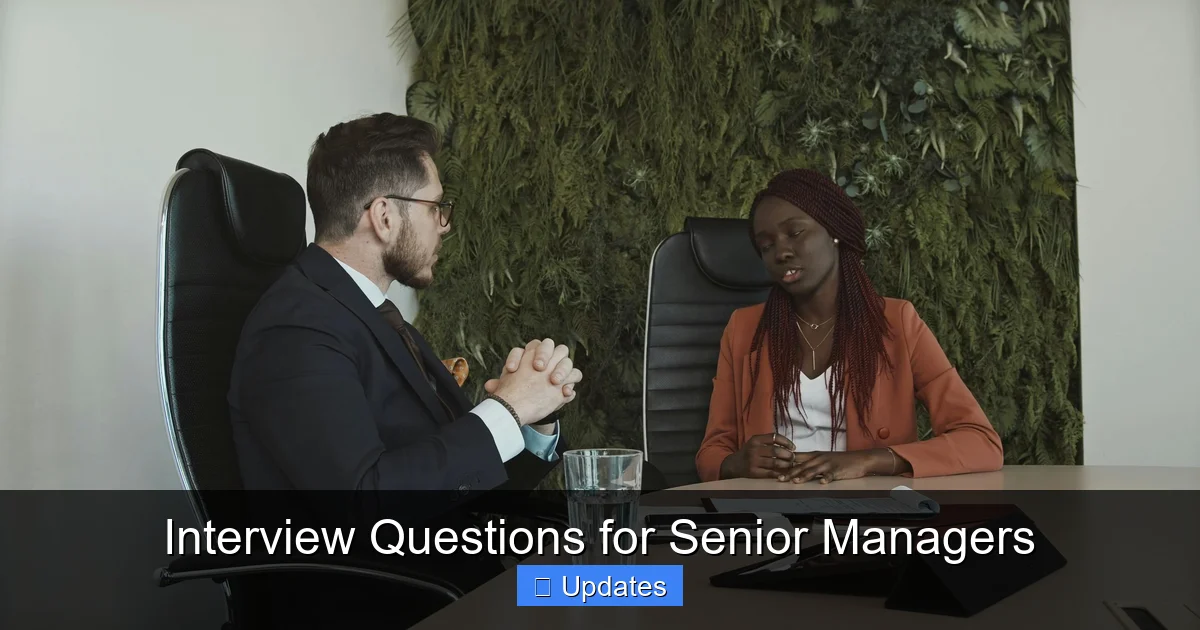
Visual guide about Interview Questions for Senior Managers
Image source: images.pexels.com
Behavioral questions form the backbone of any strong interview process for senior roles. They allow you to see how a candidate’s past actions predict future performance. Below are some of the most effective questions, grouped by theme.
Leading Through Change
Change is inevitable, but not everyone thrives under it. This question helps you understand how a candidate navigates transitions:
– “Walk me through a time when you led a significant change initiative—like a merger, digital transformation, or new product rollout. What obstacles did you face, and how did you overcome them?”
Look for evidence of clear communication, stakeholder buy-in, and adaptive leadership. A strong answer might mention creating a change management plan, addressing employee concerns proactively, and measuring progress against KPIs.
Handling Conflict and Difficult Conversations
Conflict is unavoidable in any team. How a senior manager handles it says a lot about their emotional intelligence.
– “Describe a situation where you had to address performance issues with a key team member. How did you approach the conversation, and what was the result?”
Pay attention to whether they focus on solutions rather than blame. Ideal responses include setting clear expectations, offering support, and documenting improvements.
Making Tough Decisions Under Pressure
High-stakes decisions define senior leadership. This question tests judgment and decisiveness:
– “Give me an example of a time you had to make a difficult decision with limited information. What factors did you consider, and how did you justify your choice?”
A good answer should highlight data analysis, risk assessment, and consultation with relevant stakeholders. Avoid candidates who claim to act alone or ignore input from others.
Driving Performance and Accountability
Senior managers must hold teams accountable without demotivating them. This question explores their performance management style:
– “How do you set goals for your team, and how do you ensure accountability? Can you share a specific example where you turned around underperforming results?”
Strong answers include regular check-ins, transparent metrics, and coaching rather than punitive measures. Look for examples where they empowered individuals to improve rather than simply enforcing discipline.
Strategic Thinking and Vision Questions
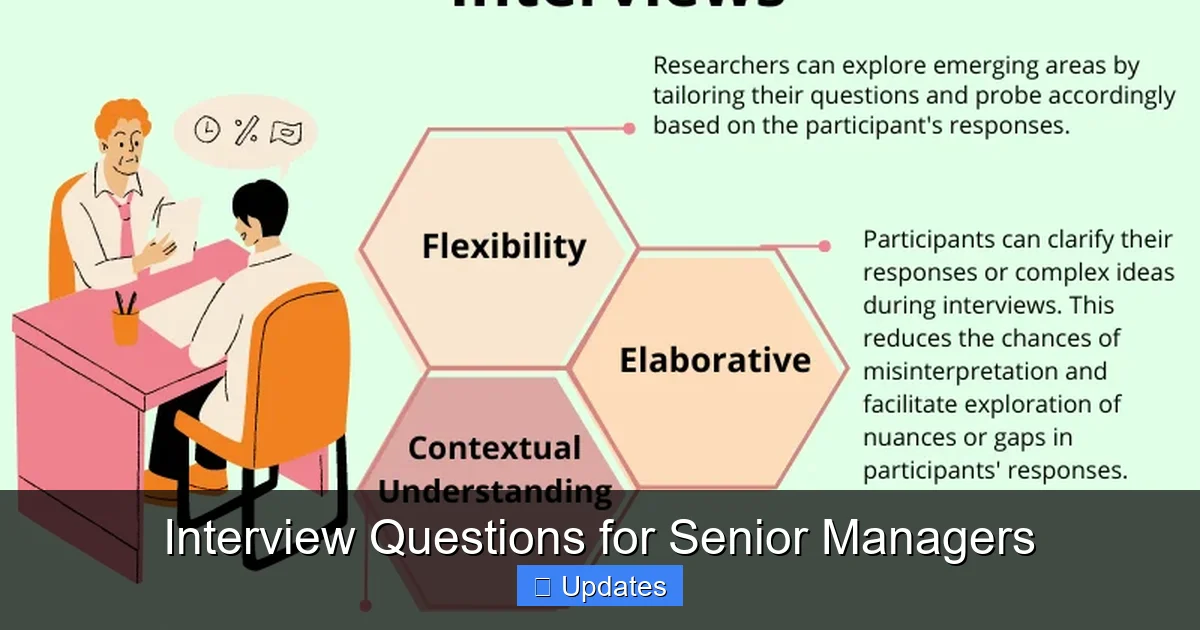
Visual guide about Interview Questions for Senior Managers
Image source: enago.com
Strategy separates good leaders from great ones. Senior managers must think beyond day-to-day operations and envision where the organization is heading. Use these questions to assess their strategic mindset.
Long-Term Planning and Market Awareness
This question evaluates a candidate’s ability to anticipate trends and position the organization for future success:
– “Where do you see our industry in five years, and how would you prepare our team to stay ahead of the curve?”
A thoughtful response should reference market research, competitor analysis, and innovation strategies. It’s okay if they don’t know all the details—what matters is their curiosity and analytical approach.
Innovation and Problem Solving
Innovation drives growth. Ask how a candidate fosters creativity within their team:
– “How do you encourage innovation in your department, and what mechanisms do you use to capture and implement new ideas?”
Look for systems like idea boards, hackathons, or cross-functional workshops. Also, assess whether they reward experimentation—even when it fails.
Budget and Resource Management
Financial acumen is crucial. This question reveals how a candidate allocates resources wisely:
– “Describe how you prioritize spending when budgets are tight. Give me an example of a time you had to cut costs without hurting team morale or productivity.”
Effective answers include cost-benefit analysis, stakeholder alignment, and creative resource-sharing. Avoid those who advocate for across-the-board cuts without justification.
Leadership Style and People Development

Visual guide about Interview Questions for Senior Managers
Image source: higheredjobs.com
Great leaders build great teams. Your interview should uncover how a senior manager develops talent and fosters a positive work environment.
Coaching and Mentoring
Mentorship is a hallmark of strong leadership. This question highlights a candidate’s commitment to growth:
– “Tell me about a time you mentored a direct report who later took on a higher role. What did you do to support their development?”
Ideal responses include personalized development plans, regular feedback sessions, and opportunities for stretch assignments. Look for evidence of patience and investment in others’ careers.
Building High-Performance Teams
Team dynamics affect everything from morale to productivity. Ask how a candidate cultivates excellence:
– “How do you identify and nurture high-performing team members? Can you give an example of how you helped someone excel?”
Strong answers involve recognition programs, skill-building workshops, and tailored career paths. Avoid candidates who hoard top talent or discourage internal promotions.
Promoting Diversity and Inclusion
Diverse teams drive better decisions. This question assesses a candidate’s commitment to equity:
– “How do you ensure your team reflects the diversity of the communities we serve? Share a specific initiative you’ve implemented.”
Look for concrete actions like bias training, inclusive hiring practices, or ERGs (Employee Resource Groups). Even better if they’ve measured the impact of such efforts.
Situational and Hypothetical Questions
These questions challenge candidates to think on their feet—a valuable skill in dynamic environments.
Crisis Management
Crises test leadership under pressure. Pose this scenario:
– “Imagine our company faces a sudden PR crisis due to a product defect. Walk me through your first 72 hours.”
Evaluate their prioritization: Do they communicate transparently? Engage legal and PR early? Protect customers while safeguarding the brand? A strong answer shows calmness, decisiveness, and empathy.
Stakeholder Alignment
Senior managers juggle multiple stakeholders. This question reveals their diplomacy skills:
– “How would you handle a disagreement between the sales and engineering teams over a feature launch timeline?”
Look for collaborative solutions, active listening, and win-win framing. Avoid those who take sides or escalate conflicts unnecessarily.
Scaling Operations
Growth brings complexity. Ask how a candidate scales efficiently:
– “If our team doubled in size next quarter, what three things would you focus on to maintain performance and culture?”
Ideal responses include process automation, delegation strategies, and onboarding enhancements. Pay attention to whether they value consistency alongside growth.
Practical Tips for Conducting Senior Manager Interviews
Interviews for senior roles require more than one-off conversations. Consider these best practices:
Use a Multi-Round Process
Don’t rush the decision. Schedule multiple rounds—technical, behavioral, and panel interviews—to get diverse perspectives. Involve peers, subordinates (if possible), and executives to assess cultural fit.
Leverage Case Studies or Presentations
Ask candidates to solve a real business problem or present a strategy for a hypothetical scenario. This reveals analytical depth and presentation skills. For example, “Propose a go-to-market strategy for a new SaaS product.”
Check References Thoroughly
Past employers and reports provide invaluable insights. Ask about the candidate’s leadership style, strengths, and areas for improvement. Don’t hesitate to contact former subordinates—they often share candid feedback.
Assess Emotional Intelligence
Observe body language, tone, and how they respond to challenging questions. Do they remain composed? Listen actively? Show genuine interest in others’ viewpoints?
Involve the Team Early
Let potential team members sit in on parts of the interview. Their impressions of chemistry and compatibility are crucial.
Document Everything
Keep detailed notes after each session. Compare candidates objectively using a scoring rubric based on predefined criteria like strategic thinking, communication, and results orientation.
Common Mistakes to Avoid
Even seasoned recruiters make errors when interviewing senior managers. Steer clear of these pitfalls:
– **Relying solely on resume keywords:** Experience counts, but behavior trumps credentials.
– **Asking generic questions:** Vague prompts yield vague answers. Be specific and probing.
– **Neglecting cultural fit:** A technically perfect candidate won’t succeed if they clash with your values.
– **Overlooking humility:** Arrogant candidates may undermine teamwork and collaboration.
– **Failing to validate claims:** If they say “I increased revenue by 40%,” ask for supporting data or testimonials.
By focusing on substance over style, you’ll attract and retain leaders who elevate your organization.
Conclusion: Building a Leadership Pipeline
Crafting effective interview questions for senior managers is both an art and a science. It requires curiosity, preparation, and a willingness to dig beneath the surface. When done right, your process doesn’t just fill a vacancy—it strengthens your leadership pipeline for years to come.
Remember, the best senior managers aren’t just decision-makers—they’re coaches, strategists, and culture carriers. Your questions should reflect that multifaceted role. Use the frameworks and examples above to design interviews that uncover true potential, not just past achievements.
And don’t forget: hiring is a two-way street. While you’re evaluating candidates, they’re assessing you too. Make sure your organization shines as much as your questions do.
For more insights into leadership assessment, check out our related articles on interview questions for senior leadership and questions to ask senior managers. These resources complement this guide and help you build a comprehensive evaluation strategy.
Ultimately, the right senior manager can transform your team, accelerate innovation, and drive lasting success. With the right interview questions, you’re not just selecting a leader—you’re shaping the future of your organization.
Frequently Asked Questions
What are the most important qualities to look for in a senior manager during an interview?
Focus on strategic thinking, emotional intelligence, accountability, and the ability to inspire teams. Strong senior managers demonstrate clear communication, adaptability, and a track record of delivering results under pressure. Look for evidence of mentorship, crisis management, and alignment with organizational values.
How can I differentiate interview questions for senior managers from those for junior roles?
Senior manager questions emphasize leadership, long-term strategy, stakeholder management, and organizational impact. Unlike entry-level interviews that focus on task execution, senior-level questions assess vision, decision-making, and cross-functional influence. Use scenarios involving ambiguity, change, and high-stakes choices.
Should I ask all interview questions for senior managers in one session?
No. Break interviews into multiple rounds—behavioral, strategic, and panel discussions—to reduce fatigue and allow deeper exploration. Senior roles deserve thorough evaluation; rushing risks missing critical insights.
How do I handle a candidate who dominates the conversation?
Gently redirect by saying, “That’s great—now let’s hear from others on the panel,” or ask follow-ups like, “What challenges did your team face during that project?” Balance ensures you gather diverse perspectives and assess collaboration skills.
Can I use AI tools to generate interview questions for senior managers?
Yes, but supplement with human judgment. AI can suggest frameworks and examples, but real-world experience and nuanced responses require live interaction. Always tailor questions to your industry and role specifics.
What follow-up questions should I ask after a senior manager answers?
Use probes like “What was the outcome?” “What would you do differently?” or “How did you measure success?” These validate honesty, reveal learning agility, and uncover hidden complexities in their stories.