
Questions to Ask Senior Managers


LED Magnifying Glass

Anti-Glare Reading Glasses

Fall Detection Smart Watch
Asking the right questions to senior managers can transform your career trajectory and deepen your understanding of organizational dynamics. These conversations open doors to mentorship, strategic thinking, and valuable feedback that junior employees often miss. Well-crafted questions demonstrate initiative, critical thinking, and genuine interest in growth, making them powerful tools for professional development.
When you think about approaching senior managers in your organization, it might feel intimidating. After all, these are the people who make high-level decisions, set company strategy, and often hold significant influence over your career path. But here’s the truth: senior managers want to help ambitious, curious professionals succeed. They’ve been where you are—once they were junior employees asking their own version of these same questions.
The key isn’t just about asking any question—it’s about asking the right questions at the right time with genuine curiosity. When done well, these conversations become powerful catalysts for your professional development, offering insights that aren’t found in employee handbooks or company websites.
Think of senior managers as walking repositories of institutional knowledge. They’ve navigated company changes, survived economic downturns, built teams from scratch, and made tough decisions that affected thousands of people. Their perspectives can save you years of trial and error. The challenge? Knowing which questions will unlock the most valuable information without coming across as unprepared or overly self-serving.
This comprehensive guide will walk you through exactly what questions to ask senior managers—from basic relationship-building inquiries to complex strategic discussions. You’ll learn how to approach these conversations naturally, what types of questions yield the best results, and how to follow up effectively to turn these interactions into lasting professional relationships.
Whether you’re a recent graduate trying to break into management, a mid-level professional looking to accelerate your promotion, or someone seeking to transition into executive roles, the questions you ask can dramatically impact your career trajectory. Let’s explore how to master this essential skill.
Key Takeaways
- Strategic questioning builds trust: Thoughtful questions show you’re serious about learning and growing within the organization.
- Career advancement opportunities: Asking about growth paths helps you understand what’s needed to move up the ladder.
- Industry insights: Senior managers have years of experience—tap into their wisdom about market trends and challenges.
- Mentorship potential: Many executives are open to mentoring when approached with respect and preparation.
- Communication effectiveness: Practice asking questions in different formats (one-on-one meetings, group sessions) to improve your skills.
- Follow-up matters: Always send thank-you notes and implement feedback—this shows professionalism and follow-through.
- Research beforehand: Know your company’s goals and the manager’s background before asking questions to make conversations more productive.
📑 Table of Contents
- Why Questions Matter More Than Answers
- Types of Questions That Build Strong Relationships
- Career Development Questions That Get Results
- Strategic Thinking Questions for Tomorrow’s Leaders
- Handling Different Manager Personalities
- Practical Tips for Asking Questions Effectively
- Following Up Like a Pro
- Common Mistakes to Avoid
- Real-World Examples of Successful Question Conversations
- The Future of Professional Questioning
Why Questions Matter More Than Answers
Before diving into specific questions, it’s important to understand why this whole concept works. Think about it: when was the last time you learned something truly valuable by simply receiving information? Most breakthroughs happen through active inquiry—asking thoughtful questions that lead to deeper understanding.
Senior managers spend their days making decisions based on incomplete information. They’re constantly weighing risks, considering multiple perspectives, and balancing competing priorities. When you ask them questions, you’re not just getting answers—you’re engaging them in meaningful dialogue that benefits both parties.
For you, the junior employee, this means gaining access to decision-making frameworks, industry insights, and strategic thinking patterns that would take years to develop independently. For the senior manager, these conversations provide fresh perspectives, challenge assumptions, and sometimes reveal blind spots in their own thinking.
The beauty of asking senior managers questions is that each interaction becomes a mini-mentoring session. You’re not just collecting data points—you’re building relationships and establishing yourself as someone worth investing time and attention.
The Psychology Behind Effective Questioning
Research shows that people remember 70% of what they learn through discussion compared to only 10% of what they read. This isn’t surprising when you consider that conversation engages multiple parts of our brains simultaneously—verbal processing, emotional response, and memory formation all work together during meaningful dialogue.
When you ask senior managers questions, you’re triggering this multi-sensory learning experience. The manager remembers having the conversation with you because it stood out from routine interactions. You retain the information better because it wasn’t just delivered—it was discovered together.
Additionally, asking questions demonstrates several valuable traits:
– Curiosity: Shows you’re genuinely interested in learning
– Humility:: Acknowledges that there’s always more to know
– Critical thinking:: Indicates you’re not just accepting information at face value
– Professionalism:: Suggests you respect others’ expertise
These qualities are exactly what senior leaders look for when considering candidates for advancement, special projects, or leadership roles.
Types of Questions That Build Strong Relationships
Visual guide about Questions to Ask Senior Managers
Image source: blog.hubspot.com
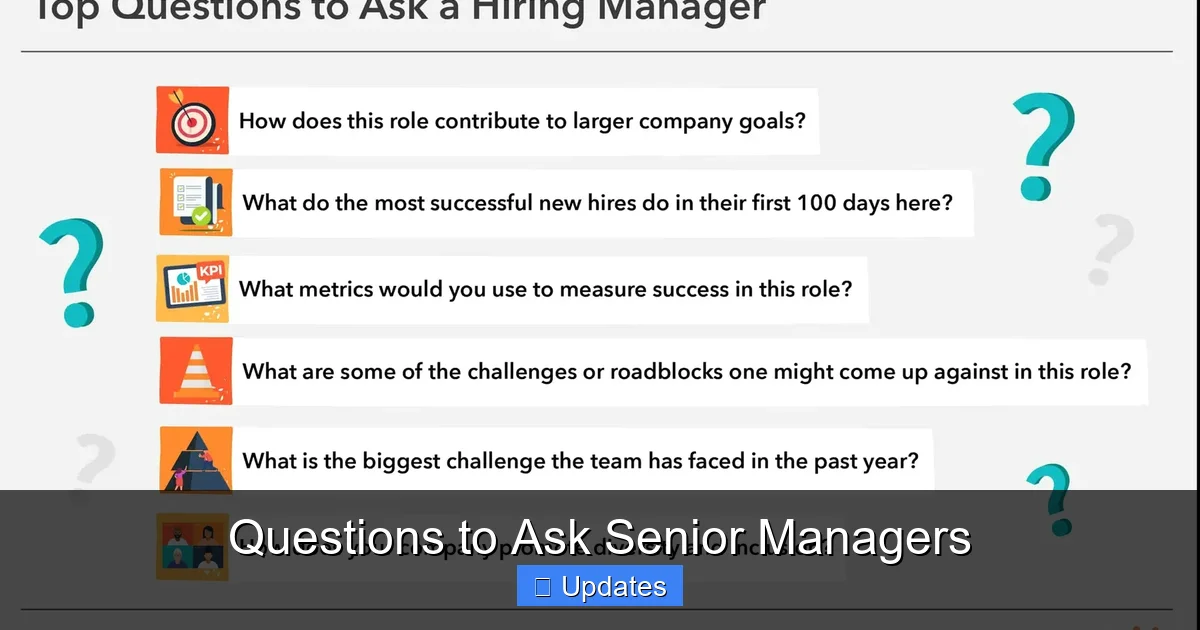
Not all questions are created equal. Some serve immediate needs like career advice, while others focus on long-term relationship building. Here’s how to categorize the most effective questions:
Relationship-Building Questions
These questions focus on understanding the person behind the title. They help establish rapport and create foundation for future conversations.
What brought you to this company, and what keeps you here?
This question opens up personal stories and reveals what motivates the manager beyond salary. It’s particularly effective early in your relationship because it’s non-threatening and shows genuine interest in their journey.
How did you get started in this industry/role?
People love talking about how they arrived at their current position. This question often leads to valuable lessons about early career mistakes, lucky breaks, and hard-earned successes.
What’s your biggest challenge right now in your role?
This demonstrates empathy and awareness of current business pressures. Senior managers appreciate being asked about real challenges rather than just achievements.
Process-Oriented Questions
These dive into how things actually work within the organization—decision-making processes, communication flows, and operational realities.
How does your team typically make big decisions?
Understanding decision-making processes gives you insight into organizational culture and helps you navigate internal politics more effectively.
What’s the most important thing you look for when evaluating new ideas or proposals?
This reveals the criteria senior leaders use, which you can then align your work with going forward.
How do you stay updated on industry trends and competitive threats?
Managers who share their information-gathering strategies teach you valuable habits for continuous learning.
Career Development Questions That Get Results
Visual guide about Questions to Ask Senior Managers
Image source: mentorloft.com
When you’re serious about advancing your career, certain questions become essential. These aren’t generic “how do I get promoted?” inquiries—they’re specific, actionable questions that demonstrate strategic thinking.
Growth Path Questions
What does success look like in the next role up from mine?
This question shifts the conversation from vague aspirations to concrete expectations. It shows you’re thinking ahead and willing to meet specific standards.
If I wanted to move into [specific role] in the next 18 months, what steps should I start taking immediately?
Specific timeframes and clear goals make this type of question irresistible to busy executives. They appreciate specificity because it saves them time.
What skills or experiences do people typically lack when they try to advance to your level?
This question reveals hidden requirements and potential obstacles you need to address proactively.
Feedback-Seeking Questions
What’s one area where I could improve that would have the biggest impact on my development?
Focused improvement areas show you’re committed to growth rather than just seeking general praise.
Can you give me an example of a time when someone made significant progress by addressing a weakness I currently have?
Real-world examples make feedback much more actionable and memorable.
How do you measure whether someone has “made it” to the next level in this organization?
This question helps you understand the invisible rules of advancement that aren’t written anywhere.
Strategic Thinking Questions for Tomorrow’s Leaders

Visual guide about Questions to Ask Senior Managers
Image source: greatsenioryears.com
As you prepare for higher responsibilities, you need to think strategically. These questions help you develop the mindset of someone who belongs at the executive table.
Company Vision Questions
Where do you see this company in five years, and what’s the biggest risk to reaching that vision?
This shows you’re thinking about the big picture and concerned about sustainability—not just short-term wins.
What’s the most important change you’d like to see happen within the next two years?
Leaders love discussing what they want to change because it reveals their priorities and values.
How do you balance short-term performance with long-term investments?
This question demonstrates sophisticated thinking about trade-offs and priorities that executives constantly face.
Industry Insight Questions
What emerging trend in our industry concerns you most right now?
Showing concern about industry risks demonstrates foresight and strategic thinking.
How do you see technology changing our business model in the next decade?
Technology questions reveal how forward-thinking the manager is and give you insight into future planning.
What’s the biggest misconception people have about our industry?
This question often leads to fascinating insights about how the company is perceived versus reality.
Handling Different Manager Personalities
Different senior managers respond to different approaches. Understanding their communication style can significantly improve your question effectiveness.
The Data-Driven Executive
Some managers thrive on metrics, charts, and concrete evidence. For them, frame questions around numbers and analysis:
What KPIs do you track most closely when evaluating team performance?
How do you prioritize projects when resources are limited?
What percentage of your time is spent on strategic versus operational activities?
The Storyteller Leader
Many executives love sharing anecdotes and personal experiences. Engage them with narrative-focused questions:
What’s the most challenging decision you’ve ever had to make?
Tell me about a time when your initial plan didn’t work and how you adapted.
Who was the most influential mentor in your career, and what did they teach you?
The Process-Oriented Manager
Some leaders excel at explaining systems and procedures. These managers appreciate questions about structure:
How does your department’s budget allocation process work?
What’s your approach to managing cross-functional teams?
How do you ensure alignment between different parts of the organization?
Practical Tips for Asking Questions Effectively
Mastering the art of asking senior managers questions requires both preparation and execution. Here are proven strategies that consistently yield better results:
Prepare Thoroughly Beforehand
Research the manager’s background: Read their LinkedIn profile, check if they’ve given interviews or written articles. Understanding their career path helps you ask relevant questions.
Know your company’s current initiatives:: Stay updated on quarterly reports, press releases, and major announcements so your questions are timely and relevant.
Practice your delivery:: Rehearse difficult questions with a colleague or mentor to ensure you sound confident and natural.
Choose the Right Timing
Avoid peak stress periods: Don’t ask complex questions right before major deadlines or company announcements.
Leverage scheduled meetings:: Use formal review sessions, project updates, or networking events as natural opportunities.
Be persistent but respectful:: If your first attempt doesn’t work, wait a few weeks and try again—don’t push too hard.
Structure Your Approach
Start small:: Begin with relationship-building questions before moving to career-specific inquiries.
Group related questions:: Cluster similar topics together so conversations flow naturally.
End with thanks:: Always express appreciation for their time and insights—this reinforces positive feelings.
Following Up Like a Pro
The conversation doesn’t end when you leave the meeting room. Following up effectively transforms one-time interactions into ongoing relationships.
Immediate Follow-Up (Within 24 Hours)
Send a brief thank-you email referencing specific points discussed. This shows you paid attention and valued their input.
Example: “Thank you for taking the time to discuss career development with me yesterday. I particularly appreciated your insight about the importance of cross-functional experience—I’m already looking for opportunities to collaborate with other departments.”
Long-Term Relationship Building
Implement suggested actions:: If they recommend reading a book or developing a particular skill, complete these tasks and report back.
Share relevant updates:: Keep them informed about progress you’ve made based on their advice.
Invite them to observe your work:: Ask if they’d be willing to review a presentation or provide feedback on a project.
Common Mistakes to Avoid
Even with good intentions, many people make avoidable errors when asking senior managers questions. Learning from these mistakes can significantly improve your outcomes.
Asking Too Many Basic Questions
Problem: Focusing on trivial details wastes both your time and theirs.
Solution: Demonstrate you’ve done your homework by asking insightful questions rather than repeating obvious information.
Being Overly Vague
Problem: Questions like “How can I improve?” don’t provide enough context for useful guidance.
Solution: Be specific about what you want to improve and why you’re asking.
Not Listening Actively
Problem: Interrupting with more questions instead of processing the answer.
Solution: Practice active listening by summarizing what they said before asking follow-up questions.
Focusing Only on Yourself
Problem:: Only asking questions about your career advancement.
Solution: Show interest in their challenges and perspectives—this makes conversations more balanced and enjoyable.
Real-World Examples of Successful Question Conversations
Let’s examine some actual scenarios where asking the right questions led to significant career opportunities:
Case Study: The Intern Who Asked About Leadership
Sarah, a summer intern at a Fortune 500 company, noticed her manager seemed stressed about an upcoming merger. Instead of waiting for formal opportunities, she asked: “I’ve been reading about integration challenges during mergers. What do you think will be the trickiest part of this transition, and how can I learn from your experience?”
Her manager was impressed by her initiative and invited her to sit in on key merger meetings. Within six months, Sarah was offered a full-time position with a fast-track promotion program because she demonstrated strategic thinking far beyond her internship level.
Case Study: The Mid-Level Manager Seeking Mentorship
David had been working at his company for three years without seeing advancement. He scheduled a meeting with his director and asked: “I’m interested in moving toward senior management roles. What do you wish you had known when you were my age, and what specific skills should I focus on developing over the next two years?”
The director was so impressed by David’s clarity and ambition that he became his official mentor. Within eighteen months, David was promoted to senior manager, partly because he had clearly articulated his goals and shown commitment to growth.
These examples demonstrate that asking thoughtful questions isn’t just about getting answers—it’s about creating opportunities through genuine engagement.
The Future of Professional Questioning
As workplaces evolve, the ability to ask great questions will become even more valuable. Remote work, artificial intelligence, and changing organizational structures all demand new forms of inquiry.
Virtual Meeting Adaptation
In today’s hybrid work environment, you need to adapt your questioning techniques for video calls and virtual settings:
Use chat features strategically:: In virtual meetings, typed questions can be less intimidating than speaking up.
Ask questions during natural pauses:: Wait for moments when speakers finish talking rather than interrupting.
Follow up via email after virtual meetings:: Virtual interactions often require more documentation than in-person conversations.
The AI Era of Questioning
With AI assistants becoming commonplace, the human element of questioning becomes more distinctive:
Focus on judgment-based questions:: AI can provide facts, but humans excel at asking nuanced, value-based questions.
Emphasize ethical considerations:: As AI handles routine analysis, questions about ethics and values become more important.
Develop interpersonal intelligence:: The ability to read situations and ask contextually appropriate questions remains uniquely human.
Looking ahead, professionals who master the art of asking senior managers questions will have a distinct advantage. They won’t just be information seekers—they’ll be relationship builders, strategic thinkers, and trusted advisors who understand that great leadership begins with great questions.
The conversations you have today with senior managers will echo throughout your career. Each question asked thoughtfully creates ripples of opportunity, trust, and mutual respect that compound over time. Start with these questions, practice them consistently, and watch your professional world expand in ways you never imagined.
Remember: the best time to ask great questions was yesterday, and the second-best time is right now. Don’t let another opportunity pass you by—start asking those questions today and begin building the relationships that will define your future success.
Frequently Asked Questions
What are the most important questions to ask senior managers?
The most important questions focus on career growth, strategic thinking, and relationship building. Ask about success criteria in higher roles, industry trends, decision-making processes, and mentorship opportunities. These questions show initiative and strategic thinking.
When is the best time to ask senior managers questions?
The best times are during scheduled meetings, after company presentations, or during networking events. Avoid asking when they’re stressed or overloaded. Early morning meetings often work well since executives tend to be more receptive at the start of their day.
How should I approach senior managers for the first time?
Start with relationship-building questions about their career journey and current challenges. Be brief, respectful of their time, and focused on learning rather than asking for favors. A simple introduction followed by a thoughtful question often works better than lengthy explanations.
Should I send follow-up emails after asking questions?
Yes, always send follow-up emails within 24 hours. Thank them for their time, reference specific points discussed, and mention any actions you’ll take based on their advice. This demonstrates professionalism and follow-through.
How many questions should I ask in one conversation?
Limit yourself to 3-5 quality questions per conversation. Quality trumps quantity—it’s better to have deep, thoughtful exchanges than superficial ones. If you have more questions, schedule follow-up conversations rather than overwhelming them with multiple inquiries at once.
What if my question seems too basic or obvious?
Don’t worry about asking “basic” questions—what matters is asking them at the right time. If you’re unsure, preface your question with context: “Given [situation], I’m wondering…” This shows you’ve thought about the issue rather than just asking random questions.