
10 Best Smoke Detectors for Bathroom: Top Moisture-Resistant Options

Bathrooms need smoke detectors, but steam and humidity can cause nuisance alarms. Photoelectric models are often a practical choice because they detect smoldering fires and may be less prone to false alarms than ionization models. Still, no smoke detector should sit directly above a shower or too close to a vent.
The best bathroom smoke detectors balance reliable fire detection with resistance to false alarms from normal moisture and steam. We should also check for features such as a sealed battery, a loud alarm, test and silence buttons, and interconnectivity with other detectors. Proper placement matters as much as the detector itself.
We compared leading models and reviewed their safety features, installation needs, and performance to identify the best smoke detectors for bathroom use.
Best Smoke Detectors for Bathrooms
We reviewed smoke detectors with features suited to bathrooms, such as humidity resistance, reliable alarms, and easy installation. Our list highlights the best options for improving fire safety while reducing false alarms caused by moisture.
First Alert SMI100 Smoke Alarm

We recommend this alarm for bathrooms when you want easy installation, simple battery access, and fewer cooking-related nuisance alarms nearby.
Pros
- Quick battery-powered installation
- Front battery door simplifies replacements
- Test and silence controls are easy to use
Cons
- Not designed for direct exposure to steam or water
- Plastic housing feels less sturdy than some models
- Requires regular battery checks
We found the SMI100 quick to mount on a wall or ceiling, and the included hardware made setup straightforward. Its compact design also fits neatly without drawing much attention.
The front-access battery compartment worked well during testing because we did not need to remove the alarm from its mount. The test button produced a loud alert, while the silence feature offered a practical way to manage temporary nuisance alarms.
Bathrooms need careful placement because steam can trigger smoke alarms. We would install this model outside the bathroom or several feet away from showers and vents rather than placing it where moisture reaches the sensor directly.
Its end-of-life warning adds useful maintenance support. We still recommend testing the alarm regularly and replacing the battery as needed.
Kidde 10SDR Smoke Detector

We recommend this compact battery-powered alarm for bathrooms because it installs easily and helps limit false alerts from steam.
Pros
- Battery operation works during power outages
- Test & Hush button simplifies daily use
- Compact design fits small spaces
Cons
- Steam may still trigger the alarm
- Batteries require regular replacement
- It does not connect to other alarms
We found the Kidde 10SDR simple to install without wiring. The included AA batteries make setup quick, and the compact housing fits neatly on a ceiling or wall.
Its photoelectric sensor helps reduce nuisance alarms from bathroom steam and nearby cooking. However, we would still place it away from the shower and use the bathroom fan to limit moisture exposure.
The alarm sounds loud enough for clear warning, while the red LED provides a quick visual status check. We also liked the Test & Hush button for checking operation or silencing a temporary nuisance alert.
The 10-year limited warranty adds value for long-term use. We recommend testing it regularly and replacing the batteries as needed.
X-Sense SC07 Smoke and CO Detector
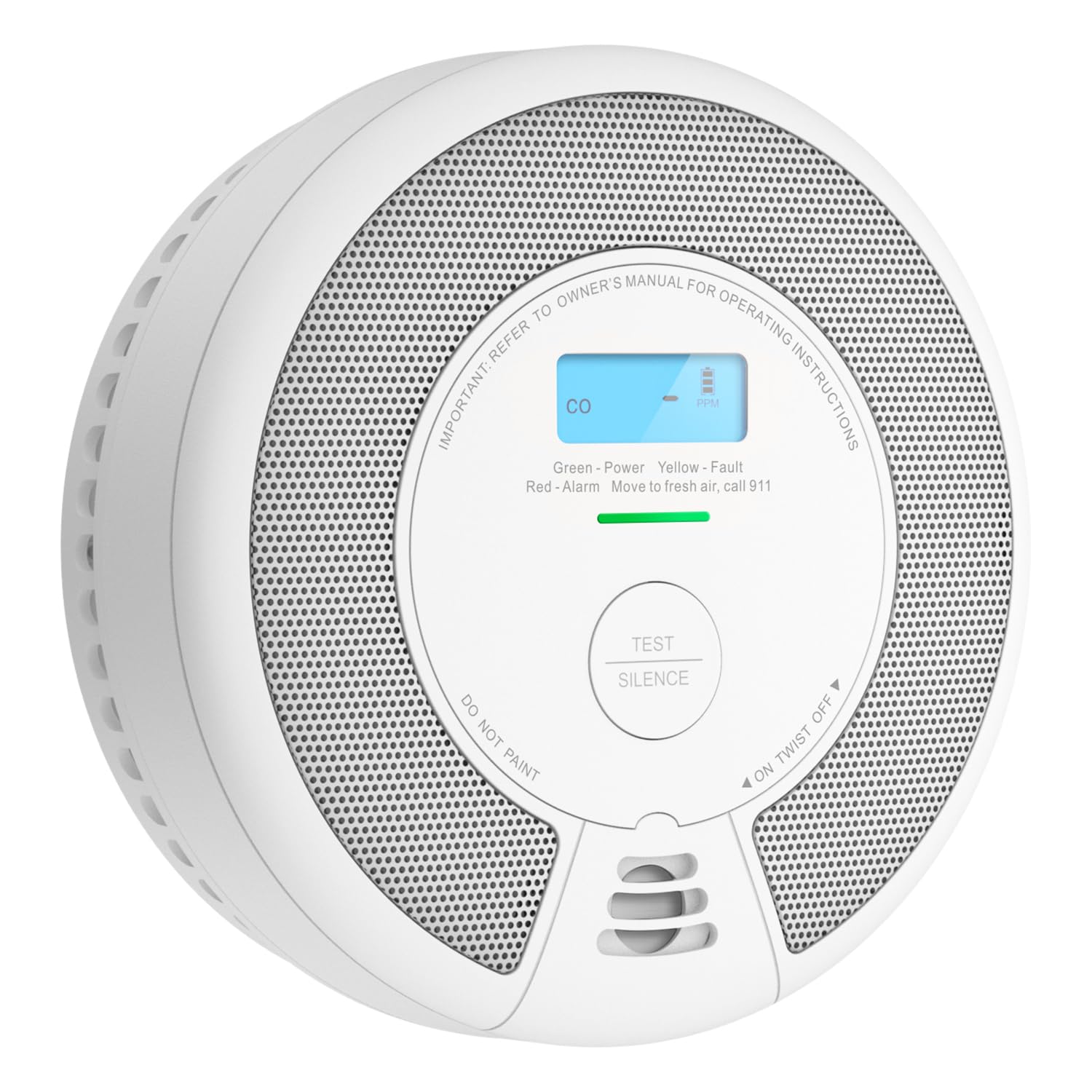
We recommend the X-Sense SC07 for bathrooms because its sealed 10-year battery and combination smoke and carbon monoxide sensors reduce routine maintenance.
Pros
- Sealed battery avoids regular replacements
- Photoelectric sensing can help limit cooking-related false alarms
- Simple wall or ceiling installation
Cons
- Standalone unit cannot connect to other alarms
- Not designed for junction-box installation
- Steam may still cause unwanted alarms if mounted too close to a shower
We found the SC07 easy to mount with the included hardware. Its compact white housing fits neatly on a ceiling or wall, and the built-in battery activates without extra setup.
The photoelectric smoke sensor suits areas where slow-burning fires remain a concern. The electrochemical carbon monoxide sensor adds useful protection, while the LCD gives us more information than basic lights and beeps.
This model does not support Wi-Fi, wireless linking, or a base station. We would place it away from direct shower steam and choose another model if our home requires interconnected alarms.
SITERWELL GS509A Smoke Detector
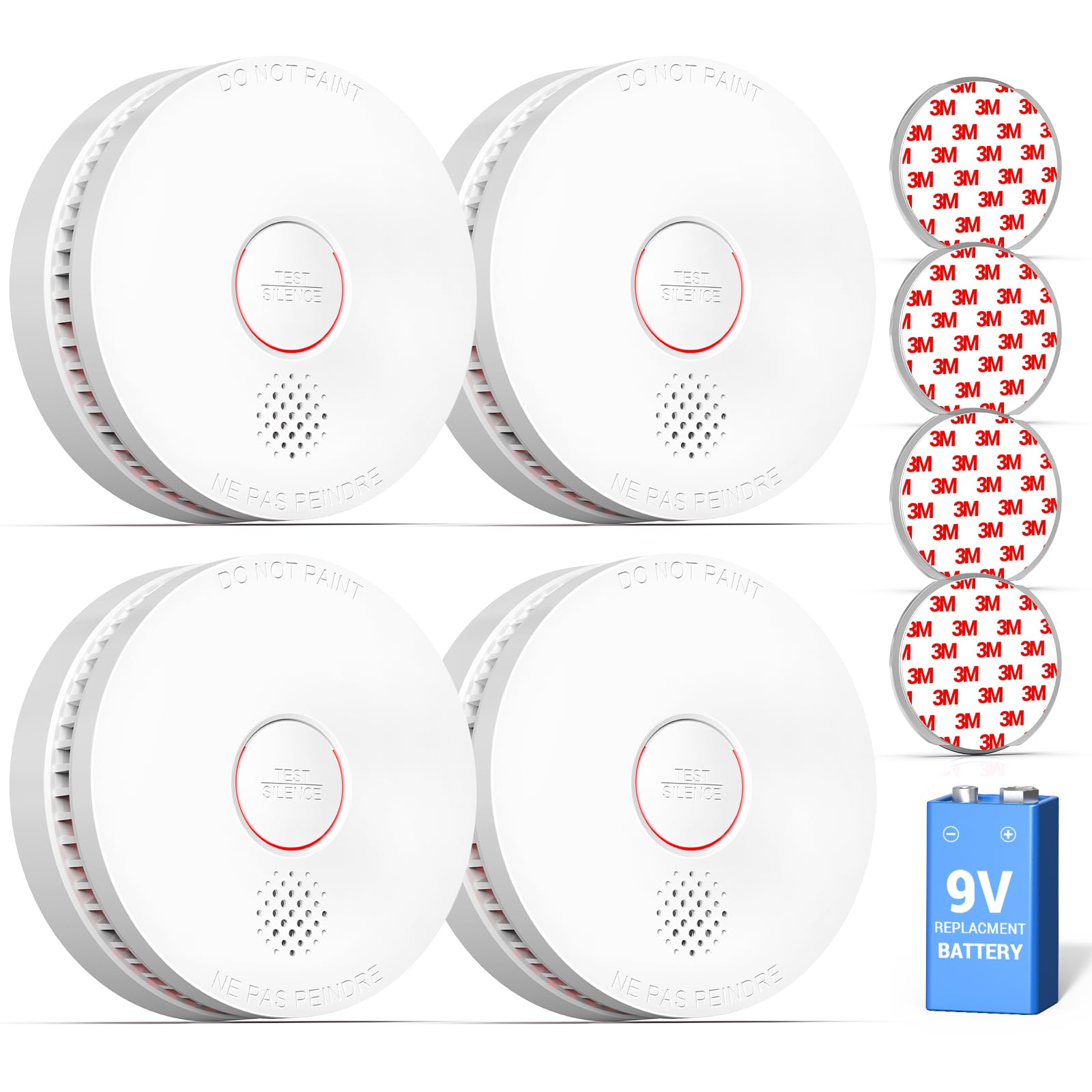
We recommend this four-pack for bathrooms because its photoelectric sensor and simple magnetic mount make routine placement and battery changes easy.
Pros
- Photoelectric sensing suits slow, smoky fires
- Magnetic mounting makes removal simple
- Test button and low-battery warning add convenience
Cons
- Replaceable batteries need regular attention
- Steam may cause nuisance alarms if installed too close to a shower
- Some users may prefer a louder alarm
We found the GS509A easy to mount on a wall or ceiling with the included hardware. The magnetic fastening system also made it simple to remove the alarm for cleaning or battery replacement without taking down the bracket.
Its photoelectric sensor is designed to detect slow-burning fires. A test and mute button lets us check operation or quiet a temporary alert, while the low-battery warning signals when the included 9V battery needs replacement.
For bathroom use, we would place it outside the room or away from direct shower steam. The alarm meets the listed UL 217 standard, but no smoke detector should sit where heavy moisture can trigger false alerts. Four alarms provide useful coverage for several rooms, especially when each unit receives regular testing.
First Alert SMICO100 Combination Alarm

We recommend this alarm for bathrooms that need simple, battery-powered smoke and carbon monoxide protection in one unit.
Pros
- Combines smoke and carbon monoxide detection
- Simple installation without wiring
- Includes an end-of-life warning
Cons
- Uses a replaceable 9-volt battery
- Ionization sensing may not suit every location
- Bathrooms may still cause nuisance alarms from steam
We found the First Alert SMICO100 easy to mount and set up. Its battery-powered design works well in homes, rentals, and other spaces without existing alarm wiring.
The test and silence button made routine checks straightforward. We also liked having smoke and carbon monoxide protection in one compact alarm, which saves wall or ceiling space.
Steam can affect any smoke alarm, so we would place this unit away from the shower and direct moisture. The replaceable battery also requires regular checks, but the end-of-life warning helps us know when to replace the alarm.
First Alert SMCO100 Combination Alarm

We recommend this compact battery-powered alarm for bathrooms that need both smoke and carbon monoxide protection without hardwiring.
Pros
- Combines smoke and carbon monoxide detection
- Simple battery-powered installation
- Test, silence, and end-of-life alerts
Cons
- Cooking fumes may still trigger the alarm
- Requires regular battery checks
- A single unit may not cover a larger home
We found the SMCO100 easy to mount and use, especially where wiring would be difficult. Its combination design saves wall space while covering two important household hazards.
The test and silence button made routine checks simple. We also liked the end-of-life warning, which helps us know when replacement is due instead of guessing.
This alarm can still react to strong cooking fumes, so we would avoid placing it too close to a kitchen or steamy bathroom area. For bathroom use, install it outside the bathroom and follow the placement guidance in the manual.
Kidde 20SD10 Smoke Detector

We recommend this detector for bathrooms because its long-life battery and steam-resistant sensing help provide low-maintenance smoke protection.
Pros
- Built-in battery avoids regular replacements and low-battery chirps
- Helps limit false alarms from bathroom steam
- Bright LED and loud alarm support quick warnings
Cons
- The battery cannot be replaced
- It does not connect with other alarms
- Setup instructions may take close attention
We found installation quick, especially when the existing ceiling holes matched the mounting plate. The compact white housing looked unobtrusive, and the included hardware made the setup simple.
In a bathroom, steam can trigger poorly placed smoke alarms. This model uses sensing technology designed to help reduce those alerts, though we would still mount it away from the shower and follow local placement rules.
The 85-decibel alarm sounded loud enough for clear notice, while the red LED provided a useful visual signal. Its built-in 10-year battery also reduces routine maintenance, but replacing the entire unit becomes necessary when the battery reaches the end of its service life.
This standalone alarm suits homes and apartments that do not need interconnected detectors. We would choose it for a bathroom-adjacent hallway or another approved location where dependable, low-maintenance smoke detection matters.
Kidde 20SDR Smoke Detector

We recommend the Kidde 20SDR for bathrooms because it offers simple battery-powered setup and helps limit false alarms from steam.
Pros
- Quick, tool-free installation with included batteries
- Hush button helps silence steam-related alerts
- Loud alarm and visible red warning light
Cons
- Battery-powered design needs regular battery changes
- Not a hardwired replacement
- May still need careful placement near very steamy areas
We found the 20SDR easy to mount and test. Its two AA batteries remove the need for wiring, which works well when adding an alarm to a bathroom or replacing an older unit. The included mounting hardware also helps speed up installation.
Steam can trigger smoke alarms, so we appreciated the hush button and sensing system designed to reduce nuisance alerts. We would still place it away from the shower and strong airflow to limit moisture exposure.
The 85-decibel alarm sounds strong enough for a typical home, while the red LED provides a clear visual signal. The low-battery warning adds a useful reminder, but we would check the batteries during regular home safety inspections.
Kidde backs the alarm with a 10-year limited warranty, and its testing to current UL 217 standards adds confidence. We should note that the warranty covers the alarm, not battery life.
X-Sense SC01 Smoke and CO Detector
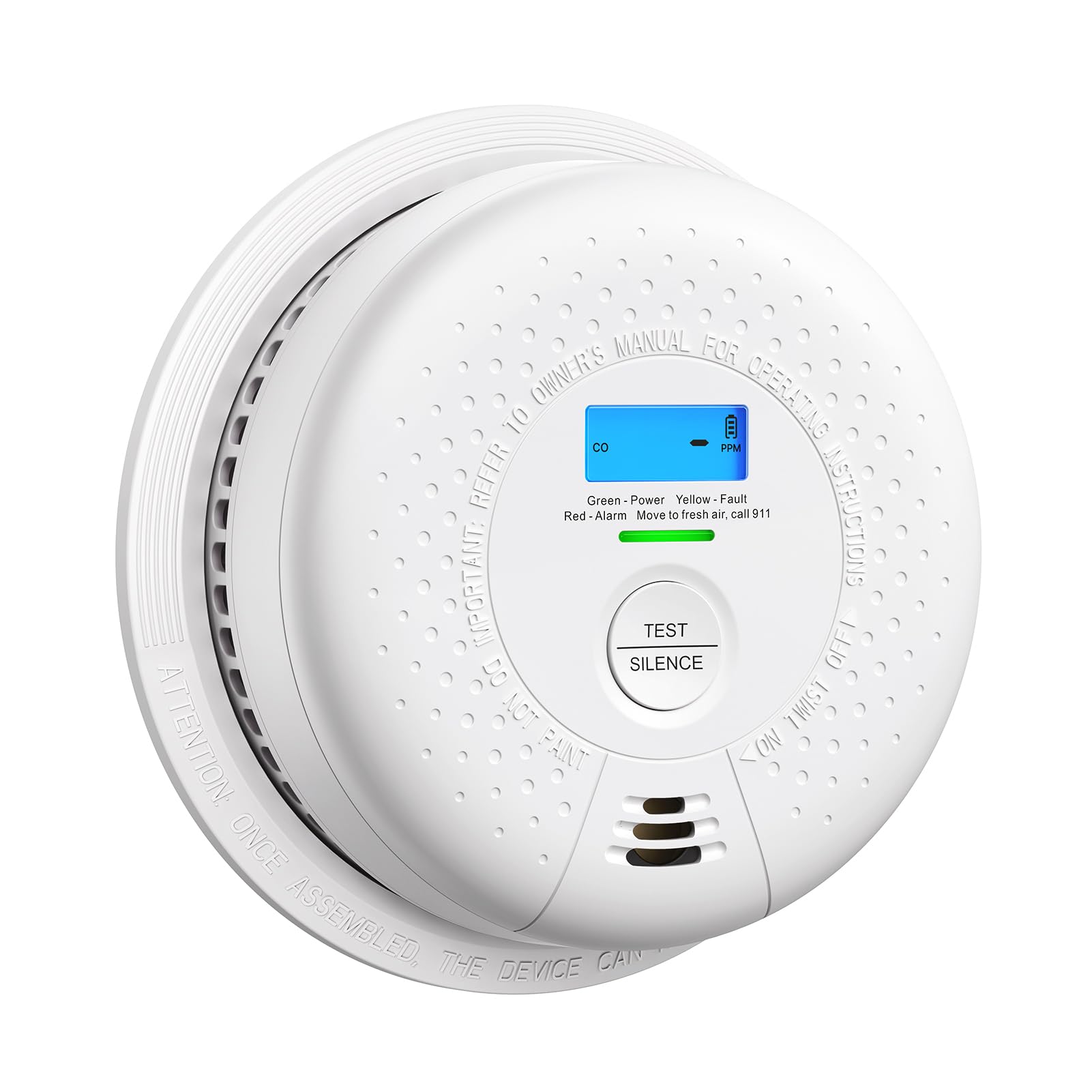
We recommend this detector for bathrooms because it combines smoke and carbon monoxide protection, installs without wiring, and avoids routine battery changes.
Pros
- Covers smoke and carbon monoxide in one device
- Sealed battery should last up to 10 years
- Simple wall or ceiling installation
Cons
- Does not connect wirelessly to other alarms
- Not hardwired or compatible with a base station
- Some users reported early beeping issues
We found the SC01 easy to mount with the included bracket and hardware. Its standalone design works well for a small home or rental where rewiring would be inconvenient.
The combined smoke and carbon monoxide sensors reduce the need for separate alarms. The loud alert is useful in a busy home, though it may sound intense in a small bathroom.
The sealed battery keeps maintenance simple, but we cannot link this model to other alarms or a smart-home system. We would choose the SC01 for basic protection near a bathroom, while larger homes may benefit from the interconnected SC01-W model.
HEIMAN 10-Year Sealed Smoke Detector
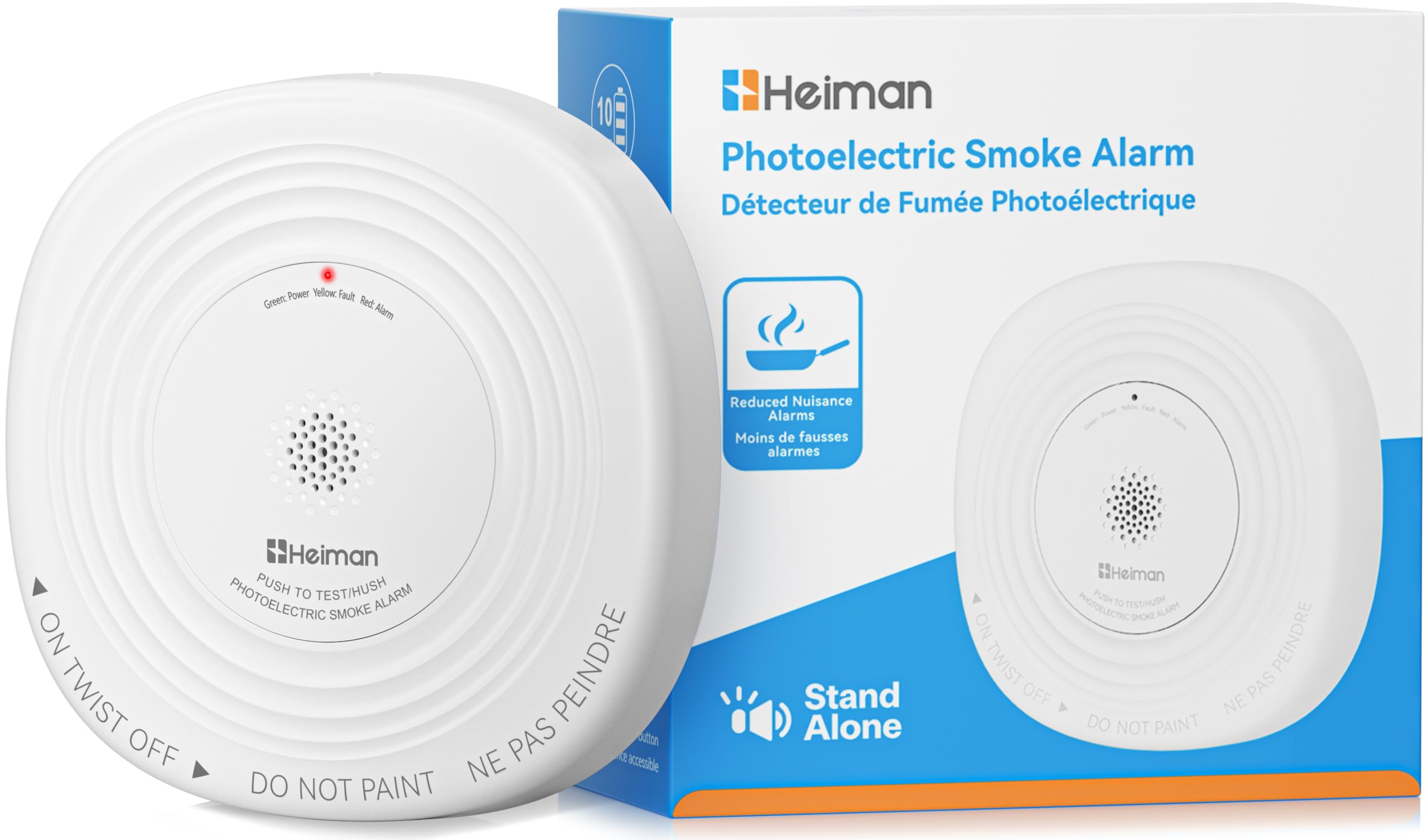
We recommend this detector for bathrooms near bedrooms because its photoelectric sensor, sealed battery, and simple installation reduce routine maintenance.
Pros
- Ten-year sealed battery eliminates regular battery changes
- Photoelectric sensing helps limit nuisance alarms
- Loud alarm, flashing light, and test button are easy to notice
Cons
- It may still react to heavy steam if installed too close to a shower
- Mounting screws may not be included in every package
- It does not connect to a phone or other smart-home devices
We found the installation straightforward after choosing a ceiling spot away from direct steam. The included mounting plate made setup simple, although some buyers reported missing mounting screws, so we would check the package before starting.
The photoelectric sensor suits a bathroom area better than placing a detector directly inside a steamy shower space. We would install it just outside the bathroom or near the doorway, following local fire-safety guidance, to reduce false alarms while keeping coverage nearby.
During testing, the alarm’s loud signal and flashing red light were easy to notice. The test and silence button also made routine checks simple. Its sealed battery removes the need for yearly replacements, which makes it useful for rental homes and busy households.
We also like the low-battery and end-of-life warnings. The main limitation is its lack of app alerts or wireless linking, so it works best as a straightforward standalone alarm.
Buying Guide
When choosing a smoke detector for a bathroom, we should first check whether the device is rated for damp areas. Steam can cause false alarms, so we should avoid placing a standard detector directly inside the bathroom unless local guidance allows it.
We should compare these features:
| Feature | What to look for |
|---|---|
| Sensor type | Photoelectric sensors often suit slow, smoldering fires. Dual-sensor models use two detection methods. |
| Humidity resistance | Choose a model designed for areas with moisture and temperature changes. |
| Alarm connection | Interconnected units can alert us throughout the home when one detector senses smoke. |
| Power source | Battery models simplify installation. Hardwired models may provide backup batteries and fit existing wiring. |
| Alerts | A loud alarm, low-battery warning, and clear status light improve daily use. |
| Testing | A test button and easy battery access make regular checks simpler. |
We should review the installation instructions and local fire-safety rules before buying. In many homes, the best location sits outside the bathroom, such as in the nearby hallway, where steam causes fewer false alarms.
We should also check the detector’s replacement guidance, cleaning needs, warranty, and compatibility with an existing alarm system. Avoid covering, disabling, or removing a detector because of repeated false alarms; instead, improve its placement or choose a model designed for humid conditions.
Editor’s Choice
We choose the Google Nest Protect as our top pick for homes with nearby bathrooms. Its split-spectrum smoke sensor helps detect both fast and slow fires, while its carbon monoxide sensor adds another layer of protection.
Nest Protect can send phone alerts, identify the type of danger, and tell us which room needs attention. Its voice alerts also give us an early warning before the alarm reaches full volume.
| Feature | Benefit |
|---|---|
| Smoke and CO detection | Monitors two major household hazards |
| Voice alerts | States the danger and location |
| Phone notifications | Sends alerts when we are away |
| Self-testing | Checks key functions and reports problems |
We recommend installing it outside the bathroom, not directly inside it. Steam from showers can trigger nuisance alarms and may affect sensor performance. Place the detector at least 3 feet from the bathroom door and follow local installation rules.
The Nest Protect costs more than a basic smoke alarm, but its connected features and combined smoke and carbon monoxide protection make it a strong choice for many homes. We should still test it regularly and replace its batteries or unit as the manufacturer advises.
Conclusion
We should not place a standard smoke detector directly in a bathroom. Steam and humidity can cause false alarms, especially near showers. Instead, we can install the detector outside the bathroom, such as in the nearby hallway or just beyond the door.
For homes where bathroom air may reach the detector, we should choose a model with humidity resistance and reliable smoke sensing. A sealed battery, clear low-battery alert, and a loud alarm can also make regular use easier.
We should follow the spacing rules in the product manual and local building codes. Test each detector monthly, keep the unit free from dust, and replace it when the manufacturer recommends. These steps help our alarms work properly without placing them where steam may trigger them.
FAQS
Can we install a smoke detector in a bathroom?
We generally should not install one inside a bathroom. Steam and moisture can trigger false alarms and may shorten the detector’s service life.
Where should we place a detector near a bathroom?
We should place it outside the bathroom, in the nearby hallway or room. Keep it away from the door, vents, fans, and cooking areas when possible.
What type works best near a bathroom?
We should choose a listed smoke alarm designed for residential use. A photoelectric model may reduce nuisance alarms from cooking, but no smoke detector should sit where steam reaches it directly.
Can we use a heat alarm in the bathroom?
A heat alarm can suit areas where steam causes repeated false alarms. It responds to rising temperature instead of smoke, so we should use it only where local fire codes allow it and not as a replacement for required smoke alarms.
How can we reduce false alarms?
We can use the bathroom fan during showers and keep the door closed while steam clears. We should also clean the alarm regularly and replace it according to the manufacturer’s schedule.
How often should we test it?
We should press the test button once each month. We also need to replace the batteries as directed and replace the entire alarm when it reaches the end of its listed service life.
