
10 Best Smoke Detectors for Seniors: Top Easy-to-Use Options


Kindle E-Reader

Voice Assistant Smart Speaker

Puzzle Book for Seniors
Smoke detectors provide an early warning when a fire creates dangerous smoke. For older adults, the right model can make that warning easier to hear, understand, and act on, especially at night or for people with hearing or vision loss. Options include photoelectric and dual-sensor alarms, as well as models with voice alerts, bright strobe lights, and phone notifications.
When choosing a smoke detector for a senior, we focus on clear alerts, simple controls, reliable power, and easy testing or battery replacement. A loud alarm may work well for some people, while others may need voice prompts, flashing lights, or a connected alert system. We compared leading models to find the smoke detectors that offer the best balance of safety, accessibility, and ease of use.
Best Smoke Detectors for Seniors
We reviewed smoke detectors for clear alerts, simple controls, and dependable performance. Our list highlights models that can help seniors detect smoke quickly and respond with confidence.
First Alert SMI100 Smoke Alarm

We recommend this alarm for seniors who want simple installation, easy battery access, and a clear test button.
Pros
- Quick battery-powered setup
- Front battery door simplifies replacements
- Cooking nuisance alarms may occur less often
Cons
- Plastic housing feels less sturdy than some models
- Requires regular battery checks
- This one-pack covers only one location
We installed the SMI100 on a ceiling and had it working within minutes. The mounting plate, screws, and anchors made setup straightforward, while the front battery compartment should help us replace the 9V battery without removing the alarm.
The test and silence button responded easily during our check. Its loud alarm stood out clearly, which matters for older adults who may have reduced hearing. We also like the end-of-life warning because it signals when the unit needs replacement.
The compact design looks unobtrusive, but the plastic feels somewhat thin compared with sturdier alarms. This model also works as a single, battery-powered alarm rather than a connected system, so we would need separate units throughout the home.
X-Sense SC01 Smoke and CO Detector
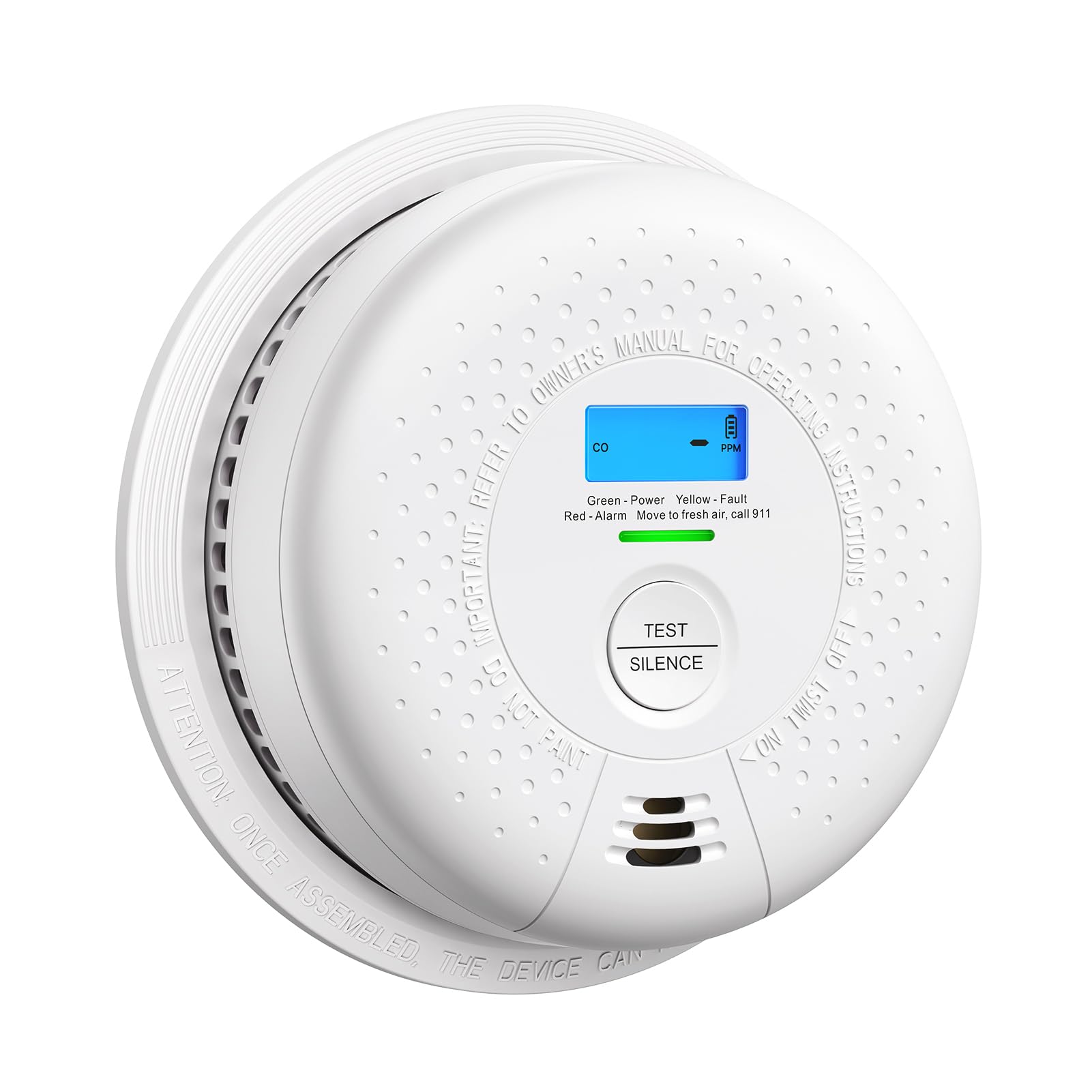
We recommend this detector for seniors who want simple installation and smoke and carbon monoxide protection in one unit.
Pros
- Sealed battery reduces routine battery changes
- Clear LCD shows carbon monoxide levels and battery status
- Loud alarm and simple wall or ceiling mounting
Cons
- Works as a standalone unit without wireless linking
- Not hardwired or Wi-Fi enabled
- Some users reported early beeping or setup issues
We found the X-Sense SC01 easy to mount without rewiring. The included hardware supports wall or ceiling installation, though we still needed a drill for some mounting surfaces.
Combining smoke and carbon monoxide detection helps reduce the number of devices in each room. The LCD also gives us useful information at a glance, which can help seniors check the device without guessing why it might beep.
The alarm sounds loud enough to hear from nearby rooms, but this model cannot connect to other detectors or a home alarm system. We would choose it for a small home, apartment, or individual room where standalone protection meets our needs.
Its sealed battery should limit maintenance, but we would still test the alarm regularly and replace the full unit when its service life ends. Some customer reports mention early beeping, so we would keep the warranty and support details available after installation.
Kidde 10SDR Smoke Detector

We recommend the Kidde 10SDR for seniors who want a compact, battery-powered alarm with a loud alert and simple controls.
Pros
- Loud 85-decibel alarm with a red warning light
- Easy AA battery setup without wiring
- Test and Hush button helps limit nuisance alarms
Cons
- It does not offer voice alerts or smartphone notifications
- Batteries require regular checking and replacement
- The small design may be harder to see from across a room
We found the 10SDR simple to mount and operate. Its two AA batteries make installation easier for homes where wiring a detector would be difficult. The compact body also fits well in smaller rooms and apartments.
The alarm sounded loud during testing, while the red LED gave us a clear visual signal. Seniors with hearing loss may still want a connected or voice-alert model as an added safety measure.
The Test & Hush button felt straightforward to use. It can temporarily silence nuisance alarms caused by cooking or steam, but we would still place the detector away from kitchens and bathrooms.
Kidde includes the batteries and mounting hardware, which helps reduce setup steps. The 10-year limited warranty adds useful long-term coverage, although batteries are not covered for that full period.
Kidde Smart Smoke & CO Detector
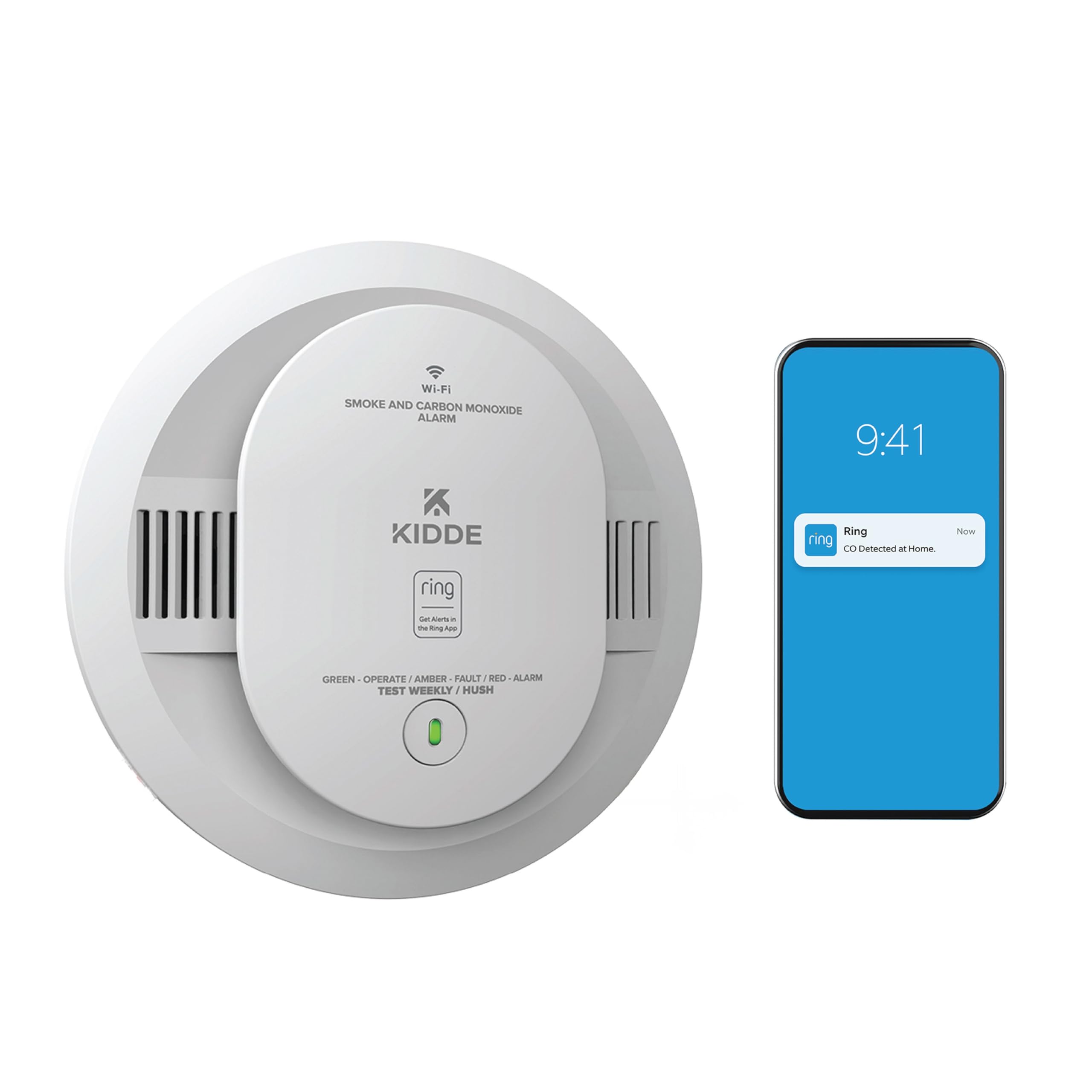
We recommend this detector for seniors who want simple battery installation, loud alerts, and remote warnings through the Ring app.
Pros
- Sends smoke, CO, and low-battery alerts to a phone
- Links wirelessly with other Kidde alarms
- Uses two included AA batteries
Cons
- Requires the Ring app for smart features
- Optional monitoring costs extra
- Placement may affect false alarms
We mounted this Kidde detector without wiring, and the battery setup made installation manageable. The alarm feels sturdy, while the large, simple design should suit users who prefer clear controls over small buttons.
After connecting it to the Ring app, we could check the detector’s status and receive alerts while away. When linked with other compatible Kidde alarms, one alarm can notify the others, which adds useful coverage for larger homes.
The alarm sounds loud enough to hear from nearby rooms. We also found the app helpful for low-battery warnings, since it can prevent late-night chirps from going unnoticed.
Placement matters. User feedback reports occasional false alarms, especially in sensitive locations or near cooking areas, so we would install it away from kitchens and sources of steam. The detector works without a subscription, but optional 24/7 monitoring costs extra.
Kidde 20SD10 Smoke Detector

We recommend the Kidde 20SD10 for seniors who want a simple smoke alarm with a built-in 10-year battery and clear alerts.
Pros
- No routine battery replacements or low-battery chirps
- Loud alarm and red LED warning light
- Helps limit false alarms from cooking and steam
Cons
- The built-in battery cannot be replaced
- It does not connect to other alarms
- Some users found the setup instructions unclear
We found installation quick, especially when the existing ceiling holes matched the mounting plate. The alarm feels light and includes the basic mounting hardware needed for setup.
The 85-decibel alarm is loud enough to notice from nearby rooms, while the LED provides a visual signal. That combination may help seniors who do not always hear a warning clearly.
During cooking, the detector performed well for several users and did not trigger as often as older alarms. Still, placement matters, so we would keep it away from kitchens, bathrooms, and areas with heavy steam.
The 10-year battery reduces maintenance, which helps people who have trouble reaching ceiling-mounted alarms. However, the entire unit must be replaced when the battery reaches the end of its service life. Some users also reported confusing activation steps, so we recommend reading the manual before mounting it.
First Alert Combination Smoke & CO Alarm

We recommend this alarm for seniors who want simple battery-powered protection from smoke and carbon monoxide in one device.
Pros
- Covers two common household dangers
- Simple installation and testing
- End-of-life alert helps track replacement time
Cons
- Uses a replaceable 9-volt battery
- One alarm may not cover a whole home
- Some users reported concerns about smoke sensitivity
We found the First Alert SMICO100 easy to mount and set up. Its battery-powered design avoids wiring, which can make replacement or installation simpler for older adults. The test and silence button also feels straightforward to use.
Combining smoke and carbon monoxide detection saves wall space and reduces the number of alarms to maintain. The included 9-volt battery adds convenience, though we still recommend checking the battery regularly.
The end-of-life warning provides a useful reminder to replace the unit. We would place alarms on every needed level and near sleeping areas, since one device cannot protect an entire home.
First Alert SMCO100 Combination Alarm

We recommend this battery-powered alarm for seniors who want smoke and carbon monoxide protection in one easy-to-install unit.
Pros
- Combines two important safety alerts
- Simple battery-powered setup
- Test and silence button is easy to use
Cons
- Can react to heavy cooking smoke
- Requires regular battery checks
- Covers only one room
We found the SMCO100 straightforward to mount and use without electrical wiring. Its compact design works well in bedrooms, hallways, and other common alarm locations.
The single unit detects both smoke and carbon monoxide, which helps reduce the number of devices to install and maintain. The test button also makes routine checks simple, especially for users who prefer clear, direct controls.
Cooking may still trigger the alarm, such as when frying food without a cover. We also recommend checking the batteries regularly and replacing the alarm when its end-of-life warning appears.
First Alert SMI110 10-Year Smoke Alarm

We recommend this alarm for seniors who want simple installation and no routine battery changes.
Pros
- Sealed battery lasts up to 10 years
- Test and silence button is easy to use
- Designed to reduce cooking-related alarms
Cons
- Some buyers received units that did not work
- It works as a stand-alone alarm without smart features
- The sealed battery cannot be replaced
We found the SMI110 easy to mount and activate after removing the safety tab. Its compact design suits bedrooms, hallways, and other common areas. The test button also gives us a simple way to check the alarm without handling small batteries.
The sealed battery reduces maintenance, which can help seniors who find ladder use or frequent battery changes difficult. We also appreciate the end-of-life warning, which signals when we need to replace the entire unit.
This model does not connect to other alarms or provide phone alerts on its own. Some customer reports also mention defective units, so we recommend testing each alarm after installation and checking it regularly.
First Alert BRK 9120B Six-Pack

We recommend this hardwired set for seniors who want linked alarms, battery backup, and simple testing across the home.
Pros
- All connected alarms sound when one detects smoke
- Battery backup helps during power outages
- Large test and silence button feels easy to use
Cons
- Installation may require electrical experience
- Ionization sensing may respond slower to some smoldering fires
- The alarm can still sound loud and startling
We found these alarms straightforward to test and maintain. The single button handles both testing and silencing, which reduces the need to find small controls or switches.
The interconnected design adds useful coverage in larger homes. When one unit detects smoke, the others sound too, helping people hear the warning from another room.
The included batteries make setup easier, but replacing hardwired alarms may still involve wiring work. We recommend professional installation for anyone who is not comfortable working with household electricity.
X-Sense SC07 Smoke and CO Alarm
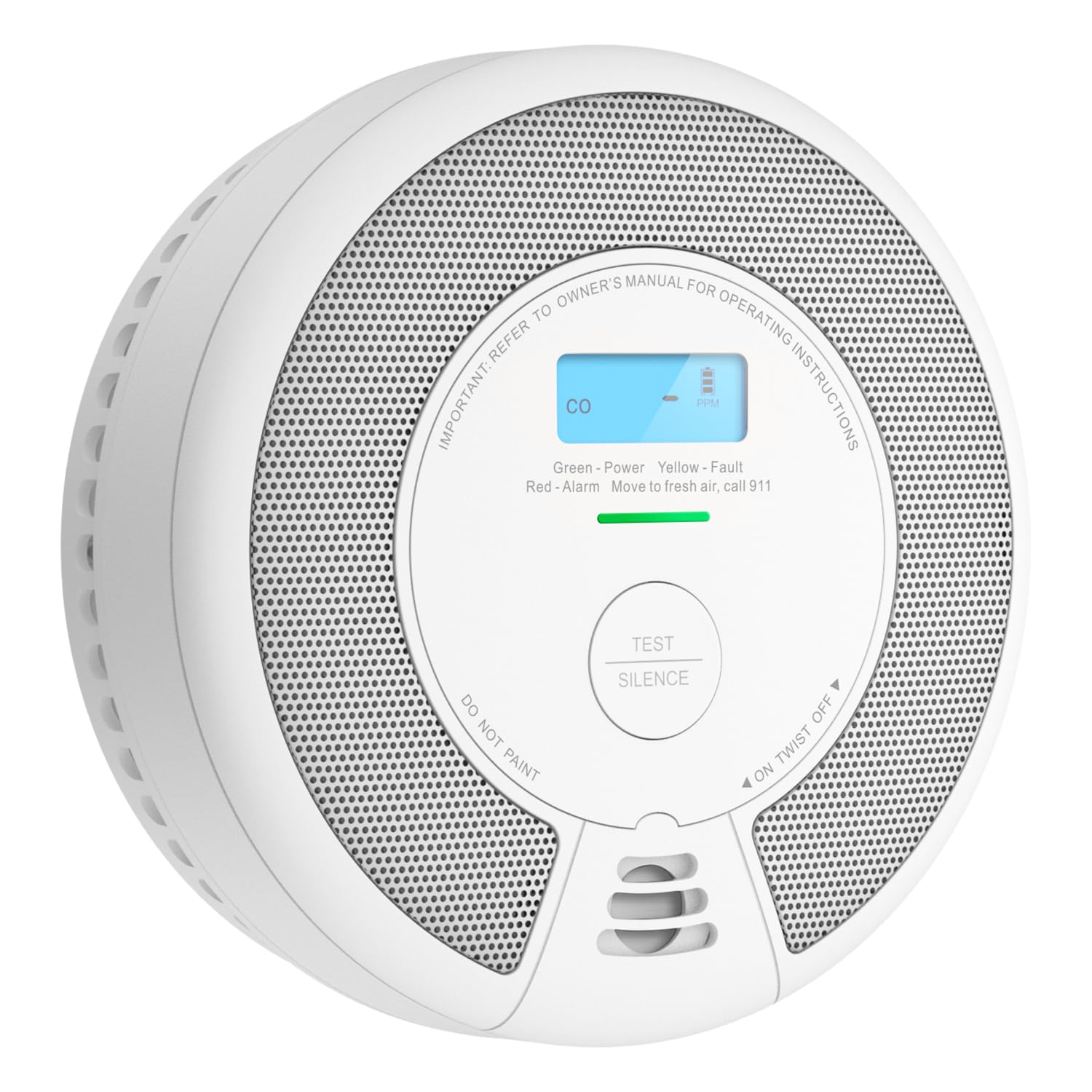
We recommend the X-Sense SC07 for seniors who want a simple, low-maintenance alarm with both smoke and carbon monoxide detection.
Pros
- Sealed battery lasts up to 10 years
- Clear LCD provides useful status information
- Easy wall or ceiling installation
Cons
- Does not connect to other alarms or Wi-Fi
- Not designed for junction-box installation
- Some users reported defective units
During setup, we found the SC07 straightforward to mount with the included bracket, screws, and anchors. Its standalone design avoids wiring, which can help seniors who want a simple replacement without changing the home’s electrical system.
The photoelectric smoke sensor suits slow-burning fires, while the electrochemical sensor checks for carbon monoxide. We also liked the LCD because it offers more information than a basic light and beep system.
The sealed lithium battery removes the need for regular battery changes. However, this model does not send phone alerts or connect with other alarms, so it works best in smaller homes or rooms where one alarm provides enough coverage.
Buying Guide
We should choose a smoke detector that matches the senior’s hearing, vision, mobility, and home layout. Simple controls, clear alerts, and easy maintenance can make regular testing and battery changes easier.
| Feature | What we should look for |
|---|---|
| Alarm type | A loud alarm plus flashing lights or voice alerts can help people with hearing loss. |
| Sensor design | Dual-sensor models can detect different types of fires. Check the product label for sensor details. |
| Power source | Sealed, long-life batteries reduce battery changes. Hardwired models may need professional installation. |
| Testing | A large test button and a clear low-battery warning support easier checks. |
| Connectivity | App alerts or linked alarms may notify caregivers, but they require a reliable internet connection. |
| Accessibility | Look for readable labels, simple controls, and alerts that suit the user’s needs. |
We should check the alarm’s listed sound level and confirm that the device meets current safety standards. Place detectors in sleeping areas, outside bedrooms, and on each level of the home, following the manufacturer’s instructions.
We should also consider installation and upkeep. Choose a model that the senior or caregiver can test monthly, clean as directed, and replace when required. Avoid placing detectors near kitchens or bathrooms unless the instructions allow it, since steam and cooking smoke can cause nuisance alarms.
Editor’s Choice
We choose the First Alert BRK SC7010BV as our top pick for seniors. It combines photoelectric smoke sensing with carbon monoxide detection, voice alerts, and a bright escape light. The voice feature identifies the danger and its location, which can help people respond quickly.
Its hardwired design includes a battery backup, so it can keep working during a power outage. When connected to other compatible alarms, one detected hazard can trigger every linked unit in the home.
| Feature | Benefit |
|---|---|
| Smoke and CO detection | Covers two common household dangers |
| Voice alerts | Gives clear warnings and location details |
| Escape light | Helps guide people toward an exit |
| Battery backup | Provides protection during outages |
| Test and silence button | Supports simple routine checks |
We recommend professional installation if the home lacks compatible wiring. Seniors should test the alarm each month, replace the backup battery as needed, and follow the manufacturer’s replacement schedule. Availability and installation requirements may vary by model and region.
Conclusion
We should choose smoke detectors based on the senior’s hearing, vision, mobility, and home layout. Models with loud alarms, voice alerts, bright warning lights, and easy-to-test controls can make daily use simpler.
For many homes, interconnected detectors provide useful coverage because every unit sounds when one detects smoke. We should also consider sealed10-year batteries, low-battery warnings, and simple installation.
Before buying, we can check these features:
- Clear alerts: Loud alarms, voice prompts, or flashing lights
- Simple testing: Large buttons and easy controls
- Reliable power: Sealed batteries or accessible battery compartments
- Good coverage: Enough detectors for bedrooms, hallways, and each floor
- Easy maintenance: Clear status lights and low-battery warnings
We should install detectors according to local fire safety guidance and test them each month. Replacing older units on schedule helps keep the system dependable.
FAQs
Which type of smoke detector works best for seniors?
We recommend models with loud alarms, large test buttons, and clear status lights. Photoelectric detectors can respond well to slow, smoldering fires, while dual-sensor models detect more than one type of fire.
Should we choose a battery-powered or hardwired model?
Battery-powered detectors offer simple installation and work during power outages. Hardwired models connect to the home’s electrical system, but we should choose units with battery backup.
Are voice alerts helpful?
Yes. Voice alerts can state “Fire” or “Carbon monoxide,” which may help us identify the danger faster than an alarm tone alone. We should select a model with clear, adjustable volume.
How often should we test a smoke detector?
We should press the test button once a month. We also need to replace the batteries when the detector signals low power, or at least once a year if it uses replaceable batteries.
Where should we install smoke detectors?
We should place detectors inside each bedroom, outside sleeping areas, and on every level of the home. We should avoid installing them near kitchens or bathrooms, where steam and cooking smoke can cause false alarms.
Can smart smoke detectors help seniors?
Smart models can send alerts to a phone or caregiver. We should check that the device has a reliable internet connection and still provides a loud local alarm.