
10 Best Handrails for Home Safety, Style, and Durability


Bed Exit Alarm Sensor

Large Print Keyboard

Digital Blood Pressure Monitor
A handrail gives people a steady point to hold while using stairs, ramps, porches, and other areas with a fall risk. It can improve balance, support safer movement, and make a home easier to use for people of different ages and abilities.
Home handrails come in many materials, lengths, shapes, and mounting styles. The best handrail should fit the space, support the intended user, and attach securely to the wall or posts. We also look for a comfortable grip, durable materials, suitable clearance, and hardware that matches the mounting surface.
We compared handrails for common home settings to find options that offer dependable support, simple installation, and good long-term value.
Best Handrails for Home
We selected the best handrails for home use based on strength, design, installation, and overall value. Our list includes options for stairs, porches, hallways, and other areas where added support can improve safety.
Dovov 3-Step Outdoor Handrail

We recommend this handrail for homeowners who want a sturdy, weather-resistant rail for outdoor stairs and can match the included anchors to their step material.
Pros
- Solid iron frame with a grippy oval handhold
- Works on vertical steps or horizontal platforms
- Includes mounting hardware and a wrench
Cons
- Concrete anchors may not suit every installation
- The metal feels thinner than some heavy-duty rails
- Drilling requires an 8 mm bit and enough depth
We found the rail comfortable to grip and steady once mounted. Its curved edges felt smooth in use, while the black finish gave the steps a clean, simple look.
The adjustable angle helped us position the rail for a short staircase. We could also use it on a horizontal surface, which adds flexibility for porches and raised platforms.
Installation was straightforward with a suitable drill, but the included anchors are better suited to concrete. For wood steps, we would use sturdy wood screws from a local hardware store instead.
The rail handles outdoor exposure well, thanks to its coated and galvanized iron construction. Before buying, we would confirm the three-step size and measure the mounting area carefully.
CHR Outdoor and Indoor Handrail Kit
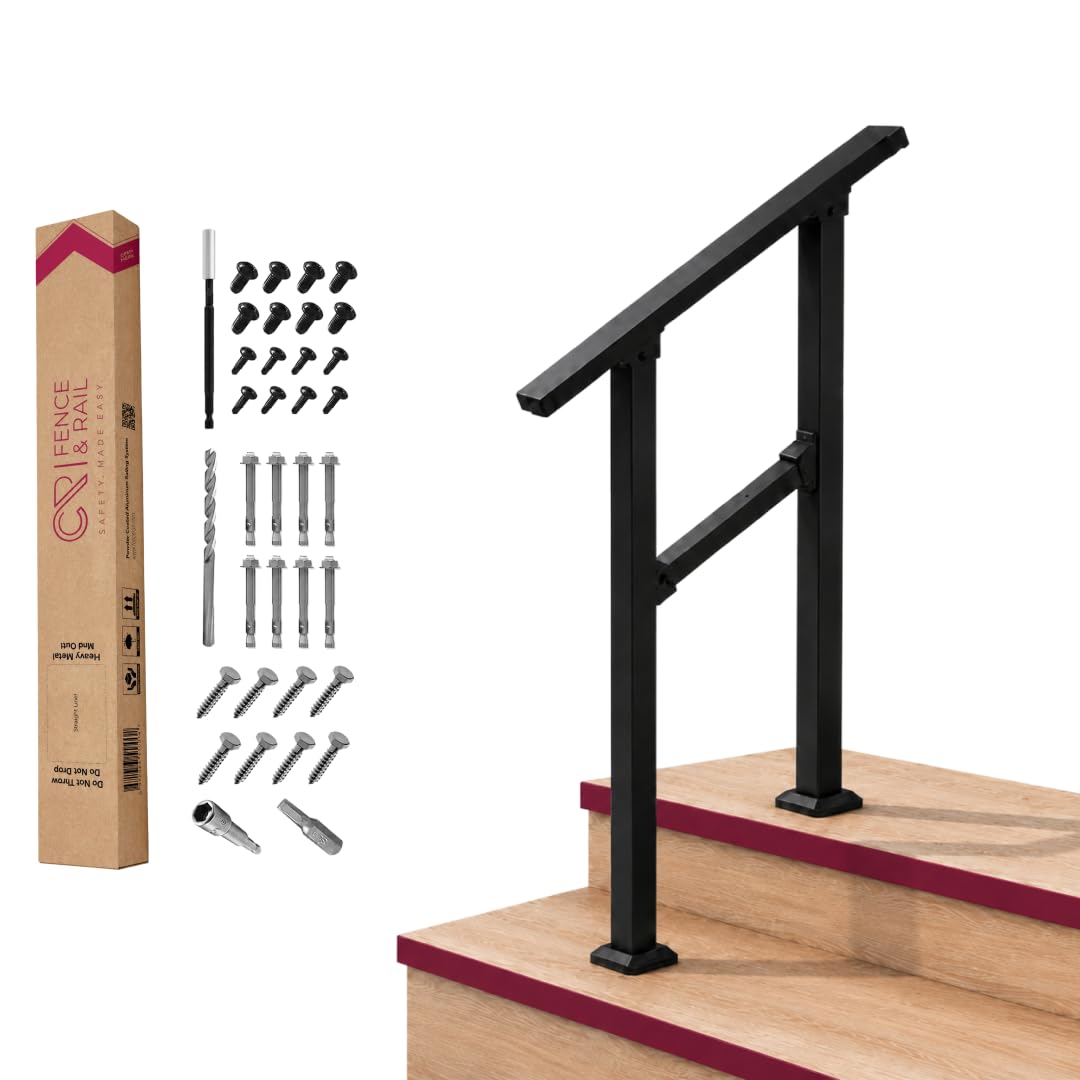
We recommend this CHR handrail for people who need a sturdy, attractive rail for one or two steps without cutting or welding.
Pros
- Strong feel with fully welded joints
- Enclosed brackets and matte black finish suit indoor or outdoor use
- Includes mounting hardware, drill bits, and a 10-year warranty
Cons
- Best suited to short runs of one or two steps
- Longer stairways need connectors sold separately
- Concrete installation may require extra tools or help
We found the assembly straightforward, with clear instructions and helpful diagrams. The included parts made setup easier, although we still needed to choose the correct anchors for the mounting surface.
Once installed, the rail felt stable during firm pulls and provided a comfortable grip near a garage, porch, or deck step. Its enclosed brackets also gave the finished setup a cleaner look than many basic rails.
The black coating wiped clean easily and should work well in changing weather. We would measure the step area carefully before ordering, since the 26-inch top rail limits how much space it covers.
VZNEK Industrial Pipe Handrail
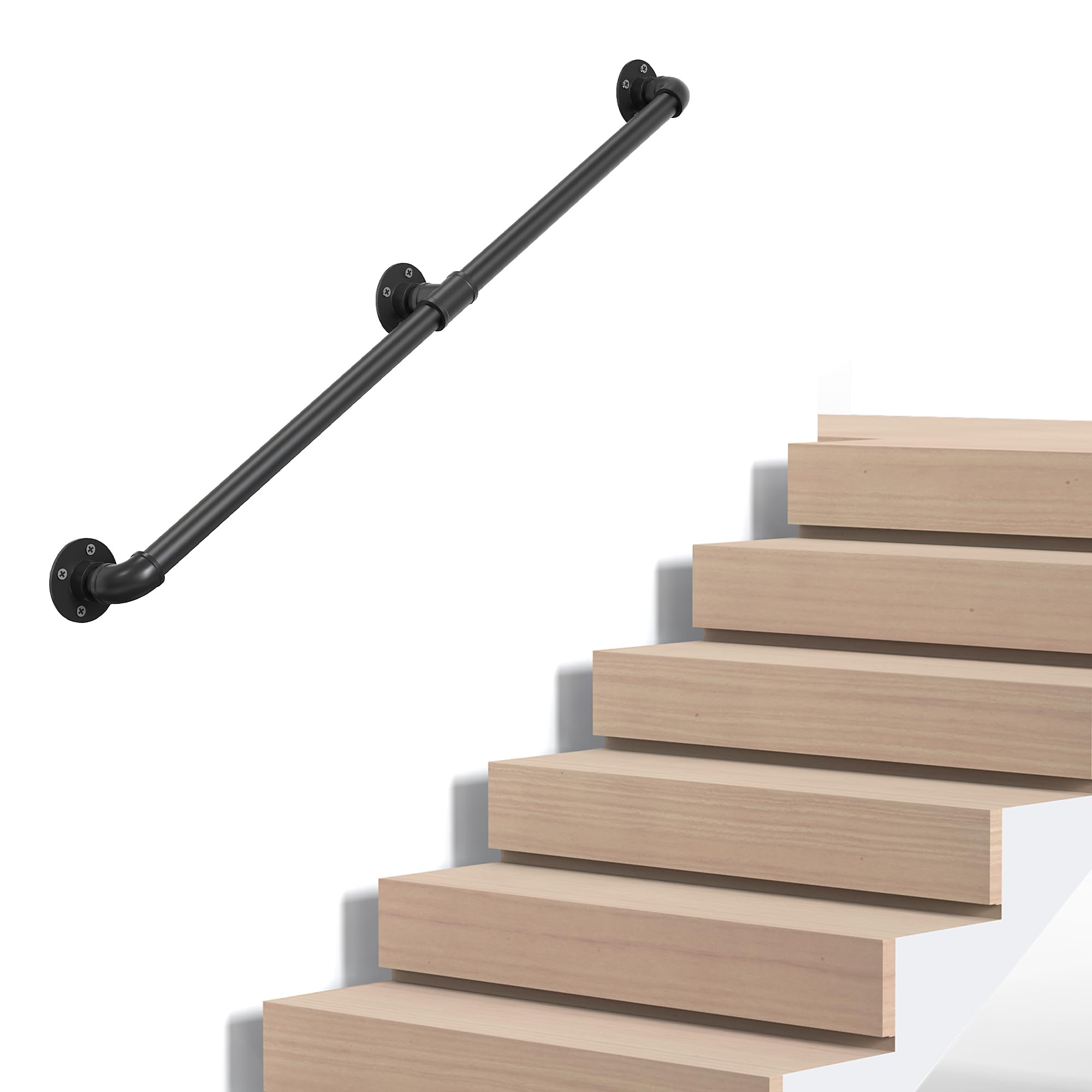
We recommend this handrail for homeowners who want sturdy support, simple installation, and an industrial farmhouse look.
Pros
- Sturdy iron construction with a smooth grip
- Works indoors and outdoors
- Includes mounting hardware
Cons
- The industrial style may not suit every home
- Installation requires careful wall anchoring
- The metal may feel hot or cold outdoors
We found the VZNEK handrail solid and comfortable to hold. Its black finish gave our stairs a clean, rugged appearance, while the rounded pipe design provided a reliable grip.
The kit includes flanges, elbows, anchors, and screws, which helped us install it without sourcing extra parts. We would still check the wall material and use suitable anchors, especially on brick, concrete, or stucco.
At 35 inches long, it works well for a short stairway, porch, ramp, or basement entrance. The powder-coated iron should need little upkeep, though outdoor installations may require occasional checks for wear or loose hardware.
MSUMPTU U-Shape Outdoor Handrail
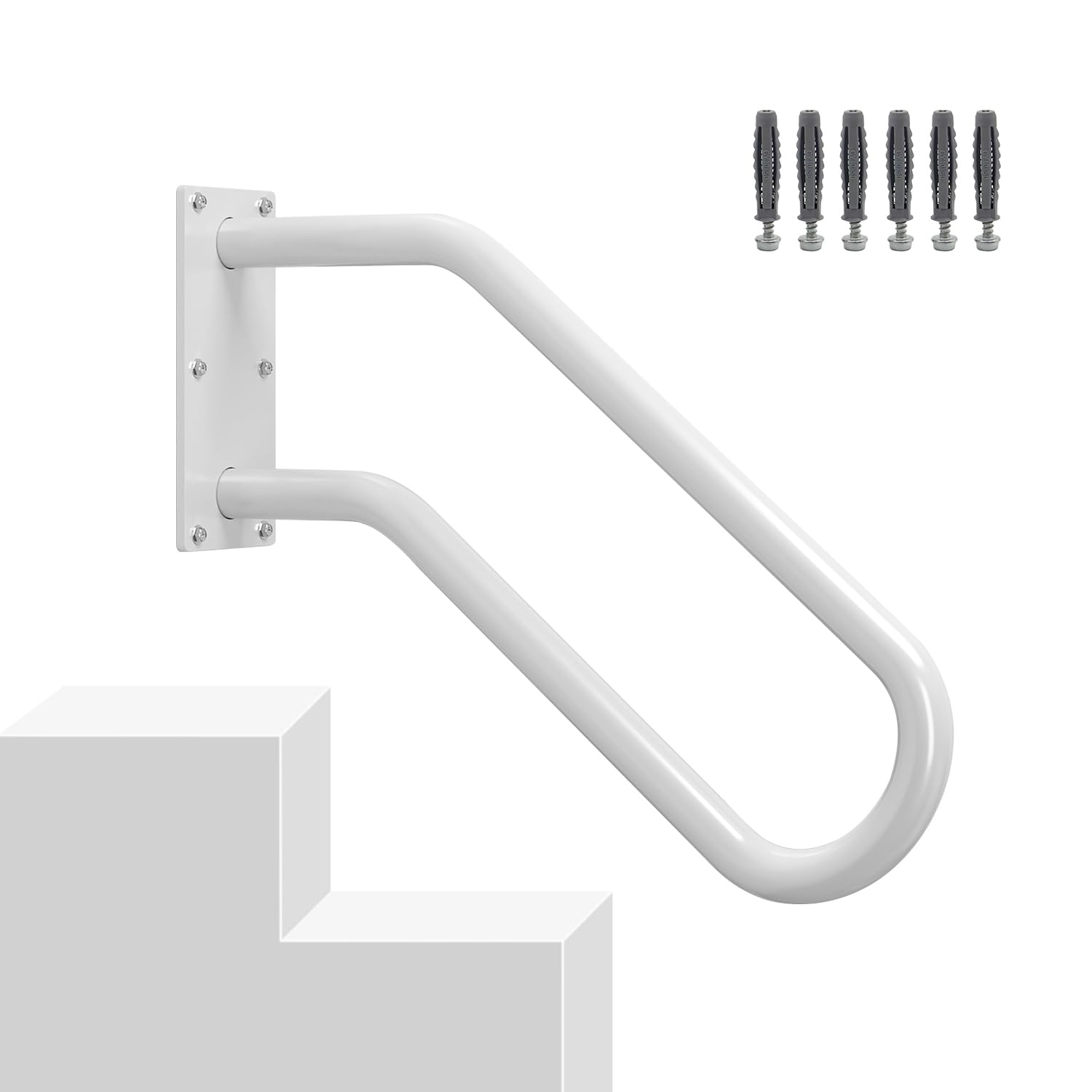
We recommend this handrail for anyone who needs firm support beside one or two steps without installing a long railing.
Pros
- Solid iron frame with a comfortable, non-slip grip
- Dual-height design helps both children and adults
- Mounting hardware supports concrete and brick surfaces
Cons
- Installation instructions are not included
- Some users reported uneven welding on the white version
- The short length may not suit taller stairways
When we handled this rail, the U-shaped design gave us two practical grip heights. The tubes felt comfortable in hand, and the 45-degree angle matched the movement needed for stepping up or down.
The rail worked well beside a doorway and did not extend too far from the wall. That kept the entry clear when we carried bags or other items. Its smooth white finish also wiped clean with little effort.
Installation was simple once we identified the right wall anchors. The package includes screws and concrete or brick mounting pieces, but the lack of instructions means we had to plan the placement ourselves.
This MSUMPTU rail feels best suited to front steps, garage entries, bathrooms, and other areas with limited elevation. We would choose a longer railing for a full staircase or any location that needs support across several steps.
Sahans Wall-Mount Handrail
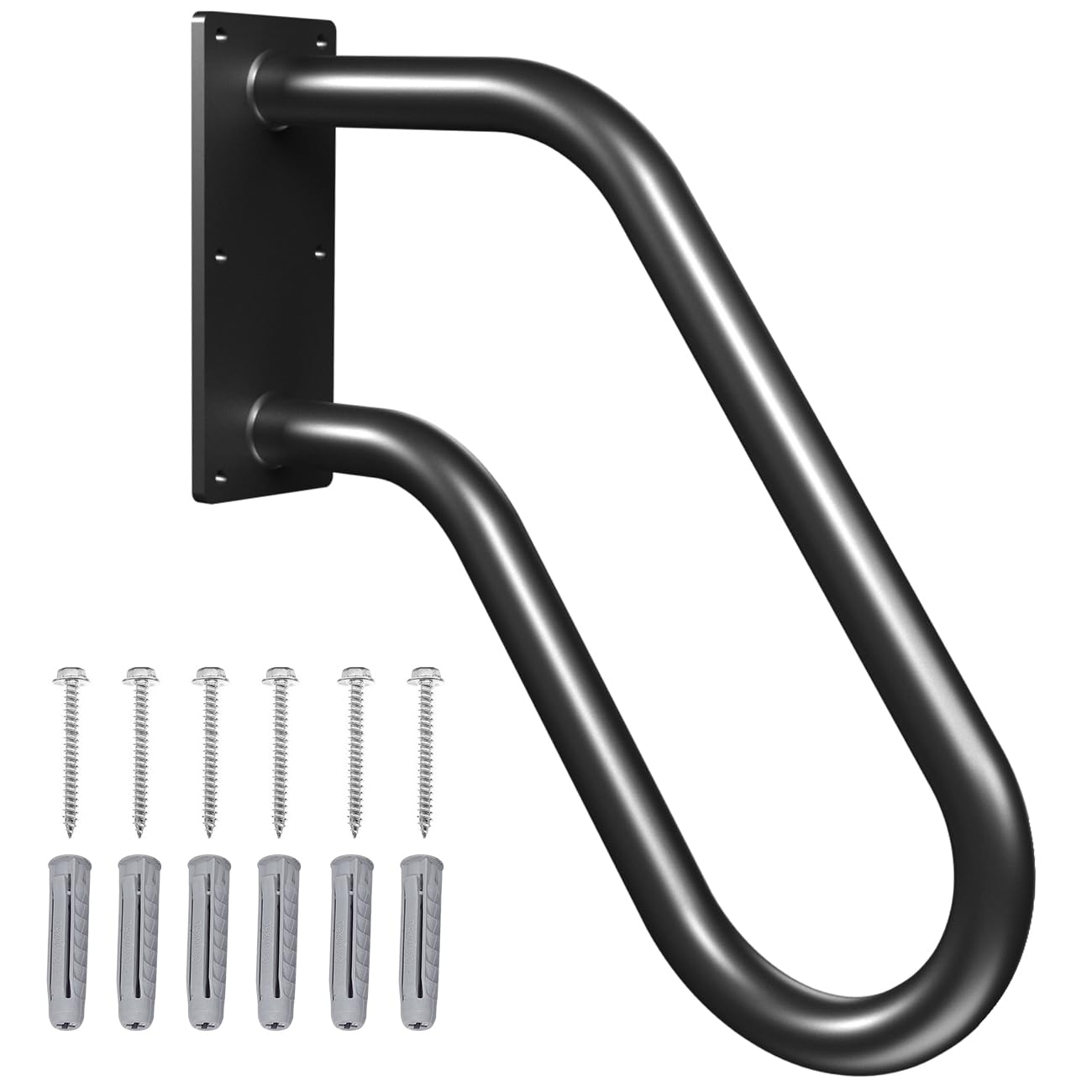
We recommend this compact metal rail for adding support beside one to three indoor or outdoor steps.
Pros
- Solid feel with clean welds
- Comfortable, slip-resistant grip
- Compact design suits garages and porches
Cons
- Included anchors may not fit every wall type
- Short length limits coverage
- Requires secure mounting into suitable material
We found the U-shaped design easy to hold while stepping up and down. Its 16-inch length worked well beside a garage entry with two steps, without taking up much wall space.
The black powder-coated finish gives the rail a simple, low-profile look. It also suits outdoor locations such as porches and garden steps, though proper installation remains important for long-term use.
Installation was straightforward with the included screws and expansion tubes in masonry. For wood or framed walls, we would choose mounting hardware that matches the structure and attach the rail securely to studs when possible.
At about two pounds, the rail was easy to handle during installation but still felt sturdy after mounting. We would choose it for a small step area, not for a long staircase that needs continuous support.
Sahans 12-Inch Matte Black Handrail

We recommend this compact handrail for narrow stairs, hallways, and other areas that need added support without taking up much space.
Pros
- Sturdy metal construction with a smooth powder-coated finish
- Compact design fits narrow spaces
- Installation hardware and instructions are included
Cons
- Supplied screws may not suit every wall type
- Attachment covers can fit loosely
- A 12-inch rail offers limited gripping space
We found the Sahans handrail easy to handle and quick to install. Its compact size worked well at the top of a narrow staircase, where a longer rail would have felt crowded. The black finish also gave it a clean, simple appearance.
The metal rail felt solid during use and provided dependable support. Its powder coating should help protect it from moisture, making it suitable for indoor stairs, bathrooms, porches, and covered outdoor areas.
We would check the wall material before installing it and choose stronger screws when needed. The included attachment covers may not fit tightly, but that issue does not affect the rail’s basic function.
VEVOR Black Retro Arch Handrail

We recommend this handrail for outdoor steps when we need a sturdy, attractive rail with an adjustable angle.
Pros
- Strong carbon-steel construction
- Adjustable fit for two to three steps
- Includes mounting hardware
Cons
- Installation hardware may not suit every surface
- Instructions can feel unclear
- Assembly takes time
The VEVOR handrail felt solid once we installed it, and the wide top rail gave us a steady grip. Its black finish also looked neat on porch, patio, and garden steps.
We appreciated the adjustable angle, which helped us align the rail with the slope. The kit includes anchors, screws, nuts, and other hardware, but we still needed the right drill and tools for the surface.
Before buying, we measured the distance between the mounting points and checked the height of the steps. The included expansion bolts worked for solid surfaces, though we would choose different anchors if the mounting area had unusual thickness or weak material.
Assembly was manageable, but a second person made the process easier. The rail supports up to 220 pounds and earned a 4.2-star rating from more than 450 customers, making it a practical choice for many outdoor stairways.
UOKRR Metal Wood Grain Handrail

We recommend this sturdy, adjustable rail for three-step outdoor stairs, porches, and garden paths.
Pros
- Solid steel construction with a wood-grain finish
- Adjustable angle for different step heights
- Includes hardware for several mounting surfaces
Cons
- Fits only three-step layouts
- Installation may require two people
- Concrete mounting takes more time and effort
We found the rail easy to assemble, with clear instructions and useful hardware included. The aluminum connectors adjust to match the stair angle, which helped us create a better fit during installation.
The metal feels strong and stable once secured. Its sealed end caps avoid sharp edges, while the powder-coated finish should help protect it from weather and rust. The wood-grain design also looks less industrial than plain black metal.
Before ordering, we would measure the stairs carefully. This model fits step heights from 0 to 18 inches and widths from 17.6 to 26.7 inches. Mounting concrete may require a masonry bit, and the rail can take two people to hold and anchor safely.
Linatikou U-Shaped Wall-Mount Handrail
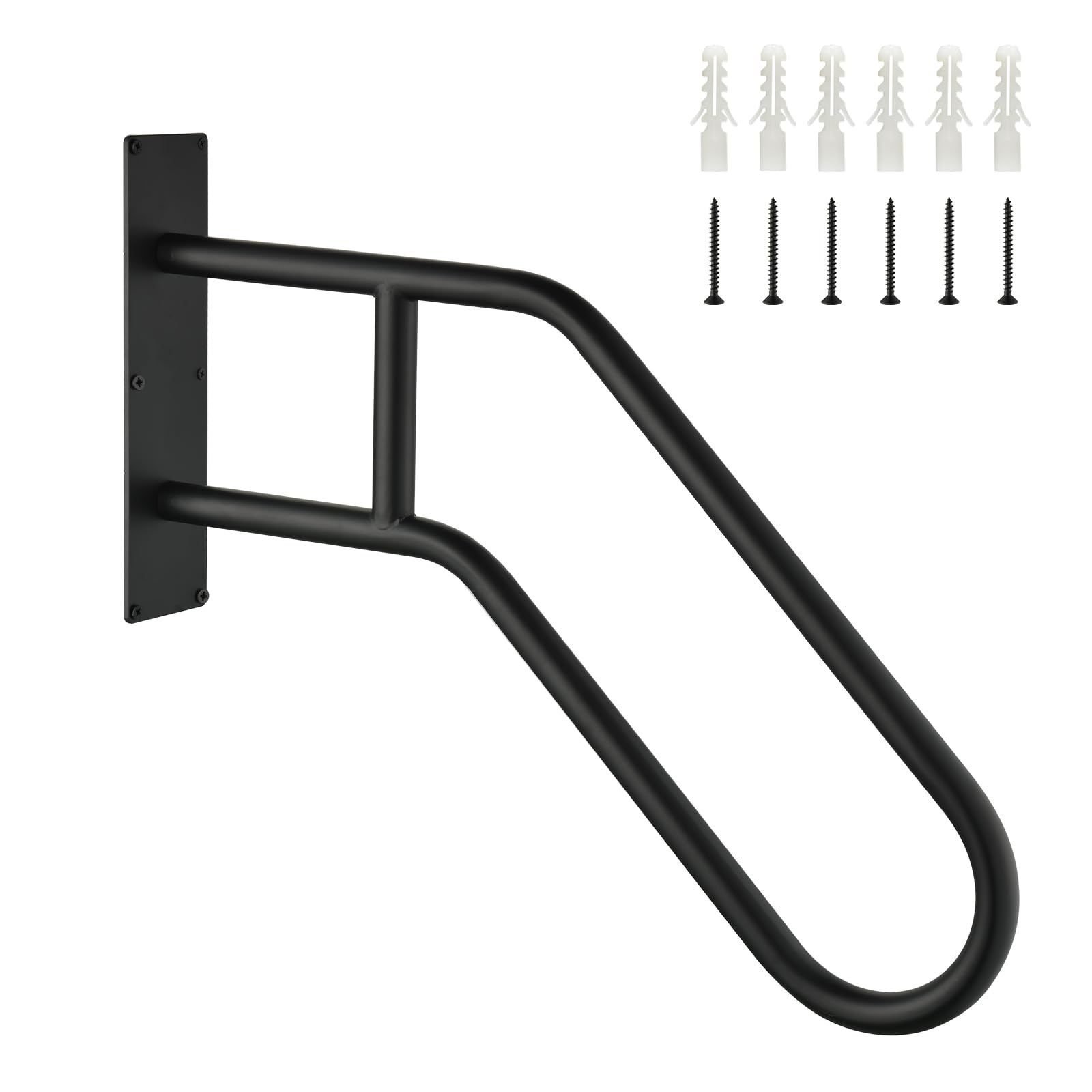
We recommend this handrail for anyone who needs a sturdy grip on a short indoor or outdoor staircase.
Pros
- Strong metal construction with a textured black finish
- Comfortable U-shaped grip
- Includes mounting screws and wall anchors
Cons
- Installation may require different hardware for brick
- The 24-inch length may not fit wider stair areas
- Drilling is needed for installation
We found the rounded U-shaped design comfortable to hold while using a few steps. The surface felt smooth, while the matte finish added grip without feeling rough against the hand.
The rail felt solid once mounted and did not flex during use. Its black coating also suited both indoor spaces and outdoor areas such as porches, decks, and garden paths.
Installation was simple on a suitable wall with a drill. However, brick or other masonry may need a specialized drill bit and stronger anchors than those included.
At 24 inches long, this rail works best beside a small staircase or entryway. We would choose a longer railing for a broad stair run, but this model offers useful support in a compact space.
WIPHANY U-Shaped Grab Handrail
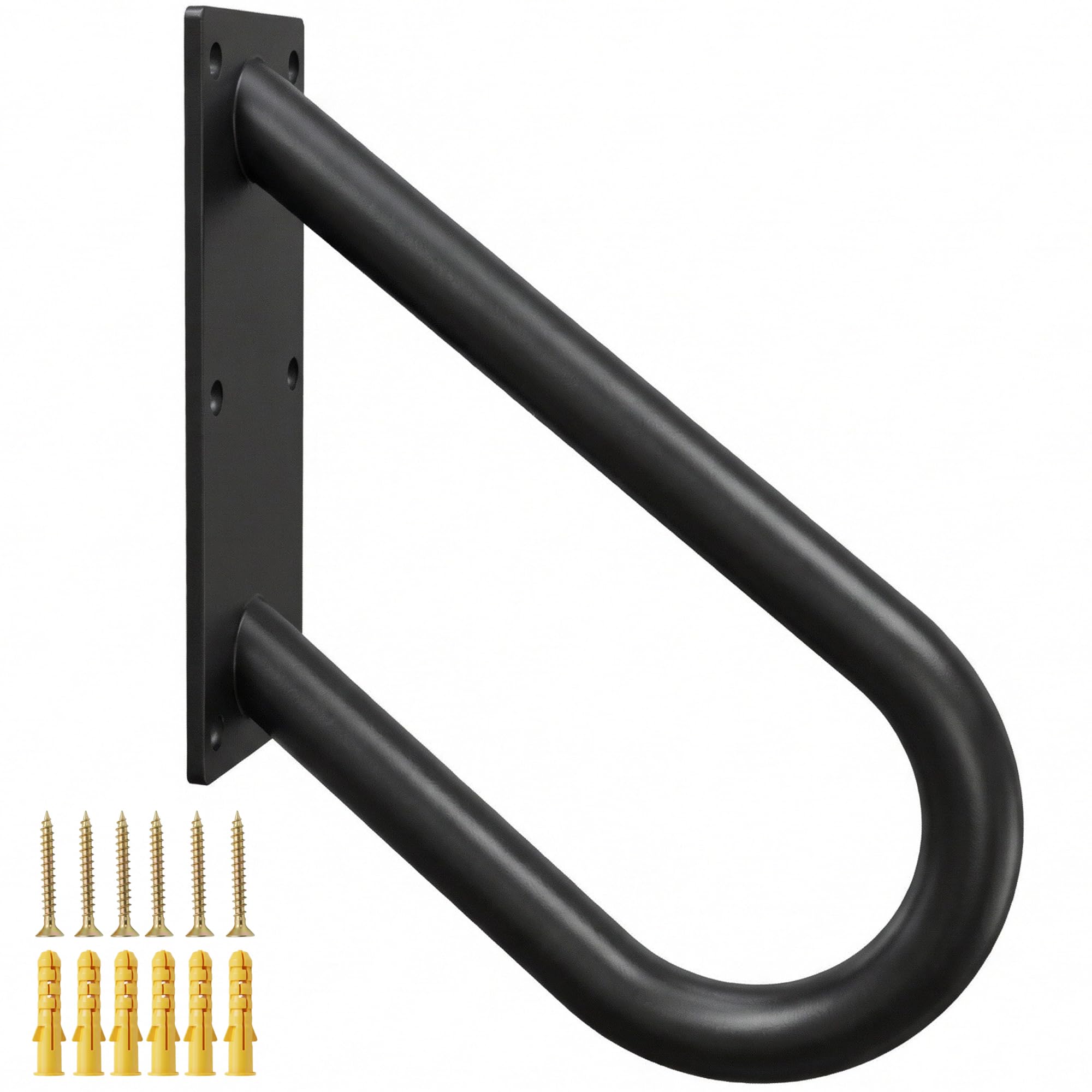
We recommend this compact handrail for one or two steps because it offers a firm grip without taking up much wall space.
Pros
- Comfortable rounded handle
- Sturdy metal construction
- Works indoors and outdoors
Cons
- Included screws may break during installation
- Short design does not fit full stairways
- Wall anchors may not suit every surface
We found the 15.7-inch length useful beside a garage door, porch, or basement entrance. It gives us a clear place to hold while stepping up or down, without extending too far across the wall.
The round handle feels comfortable in the hand, and the curved shape avoids sharp edges. Its matte black finish also fits well with wood, brick, concrete, and painted walls.
Installation was simple after marking the holes and checking the wall structure. We would replace the included screws with stronger fasteners when mounting into studs or other demanding surfaces, since several users reported that the supplied screws broke.
This rail works best as a short-step support, not as a complete staircase railing. We would check the wall material, use suitable hardware, and confirm the compact size before buying.
Buying Guide
We should choose a handrail based on safety, fit, and installation needs. Measure the space first, including the rail length, mounting area, and distance from nearby walls or steps.
Key features to check include:
- Strong materials: Look for metal, hardwood, or another durable material suited to indoor or outdoor use.
- Secure grip: A rounded or shaped rail should feel comfortable and easy to hold.
- Reliable brackets: Choose sturdy brackets that match the rail and support the expected load.
- Weather resistance: For outdoor use, select materials and finishes that resist moisture, rust, and temperature changes.
- Suitable length: The rail should cover the full area where support is needed without blocking doors or walkways.
- Easy maintenance: Smooth, sealed surfaces are easier to clean and inspect.
| Feature | What we should check |
|---|---|
| Location | Indoor, outdoor, stairs, steps, or ramp |
| Mounting surface | Wood, drywall, brick, concrete, or another material |
| Installation | Included hardware, required tools, and mounting method |
| Comfort | Grip size, shape, and surface texture |
| Safety | Stable brackets and no sharp edges |
We should confirm that the mounting hardware suits the wall or post material. If the rail will support significant weight, we should attach it to structural framing or use suitable anchors rather than relying only on surface coverings.
Editor’s Choice
We choose the AmeriHome 1.5-Inch Wall-Mounted Handrail for most homes. Its rounded profile gives us a secure grip, while the wood finish suits hallways, stairways, and entry areas.
The handrail comes in several lengths, which helps us match it to different wall spaces. We should still check the mounting hardware and attach the brackets to wall studs or use suitable anchors.
| Feature | Why it matters |
|---|---|
| Rounded grip | Supports a comfortable, secure hold |
| Multiple lengths | Fits short and long stairways |
| Wall-mounted design | Works well in narrow spaces |
| Wood construction | Adds a traditional indoor look |
We recommend measuring the full stair or walkway before ordering. We should also confirm that the rail meets local building rules, especially for stair height, bracket spacing, and load support.
For homes that need extra support, we would select a rail with sturdy metal brackets and a textured surface. A smooth, polished rail may look attractive, but it can feel less secure with wet or dusty hands.
Conclusion
We should choose a handrail that fits the stair layout, supports safe movement, and matches the needs of everyone using it. A secure grip, strong brackets, and suitable height matter more than style alone.
Before buying, we should check the rail’s length, weight capacity, mounting surface, and installation requirements. Wood, metal, and adjustable rails can all work well when they suit the space and receive proper support.
We should also inspect the handrail regularly. Tightening loose hardware and replacing damaged parts helps keep our stairs safer over time.
FAQs
What makes a handrail safe for home use?
We look for a firm grip, strong mounting hardware, and a surface that resists slipping. The rail should also extend past the top and bottom of the stairs when space allows.
Which material should we choose?
Wood offers a warm look and works well indoors. Metal provides a modern style and often needs less maintenance. For outdoor use, we recommend materials that resist rust, moisture, and sunlight.
How high should we install a handrail?
We usually install stair handrails about 34 to 38 inches above the stair nosings. Local building codes may set different requirements, so we check them before installation.
How far should a handrail extend?
We aim to extend the rail at least 12 inches beyond the top riser and about 12 inches past the bottom riser. This gives us support before stepping onto or off the stairs.
Can we install a handrail on drywall?
We should attach the brackets to wall studs or use anchors rated for the rail’s weight and expected use. Standard drywall anchors may not provide enough strength for frequent support.
What should we check before buying?
We compare the rail’s length, diameter, material, weight rating, mounting hardware, and indoor or outdoor rating. We also measure the staircase and check local safety rules.
