
8 Best Stair Treads for Arthritis: Safer, More Comfortable Options

Stair treads can make stairs safer and more comfortable, especially for people with arthritis. They add traction underfoot and may soften the impact on painful joints. Options include rubber, carpet, foam, and textured vinyl, with designs that fit indoor or outdoor steps.
The best stair treads for arthritis should provide steady grip, cushioning, a secure fit, and a surface that feels comfortable underfoot. We also look for easy installation, simple cleaning, and materials that hold up to regular use. Treads should not curl, slide, or create a raised edge that could cause someone to trip.
We compared stair treads for traction, comfort, durability, and ease of use to find the options that make climbing stairs safer and less painful.
Best Stair Treads for Arthritis
We selected the best stair treads for arthritis based on traction, cushioning, comfort, and ease of installation. Our list includes options that can help reduce foot strain and make stairs safer to use.
KOOTETA Non-Slip Stair Treads

We recommend these treads for people with arthritis who want a softer, more secure surface on smooth indoor stairs.
Pros
- Strong grip on clean wood, tile, marble, and glass
- Soft surface helps reduce foot strain and stair noise
- Easy to remove, wash, and reposition
Cons
- The low profile may feel too thin for some users
- Edges can ripple without careful pressing or extra tape
- The adhesive may work less well on dusty or uneven stairs
We found the 8-by-30-inch treads simple to install. After cleaning each step, we peeled off the backing and pressed the mats into place. The TPR backing held firmly on smooth stairs without leaving noticeable residue when removed.
The fabric adds a warmer, quieter surface than bare wood or tile. For arthritis, that extra comfort can make each step feel less harsh, while the textured top provides useful traction. We still recommend using the handrail, since these mats do not replace secure stair support.
Cleaning was practical during regular use. We could vacuum the surface and wash the treads when needed. The dark gray color hides small marks well, but the mats should air-dry rather than go in a dryer.
We liked that the treads can be cut with scissors for unusual steps. However, users should press the edges carefully during installation. Some buyers reported slight rippling, especially when they skipped extra tape or did not smooth the edges.
COSY HOMEER Non-Slip Stair Treads

We recommend these treads for people with arthritis who want softer footing and better traction on indoor stairs without permanent adhesive.
Pros
- Cushioned polyester surface feels comfortable underfoot
- Grippy backing helps limit movement on clean, dry steps
- Easy to remove, reposition, vacuum, or machine wash
Cons
- The four-piece pack covers only four steps
- The low pile may feel less plush than some users expect
- Installation needs careful alignment and firm pressing
We found the 0.4-inch polyester surface more comfortable than bare wood, especially when climbing in socks. It also softens footstep noise and adds a warmer feel to cold stairs, which can make daily use easier on sore feet and joints.
The TPE backing and anti-slip strips held the treads in place on wooden steps during normal use. We liked that they did not require glue, carpet tacks, or double-sided tape, so we could lift and reposition them without leaving residue.
Before installing, we would clean and dry each step carefully. The backing grips best on a smooth, clean surface, and the tread should sit flat with its edges pressed down. The 9-by-28-inch size fits many standard steps, but we would measure first.
Cleaning is simple with regular vacuuming, and the treads can go in a washing machine. We would air-dry them in the shade because the care instructions advise against using a dryer or placing them in direct sun. The pack includes four treads, so larger staircases require additional sets.
BEQHAUSE Soft Floral Stair Treads
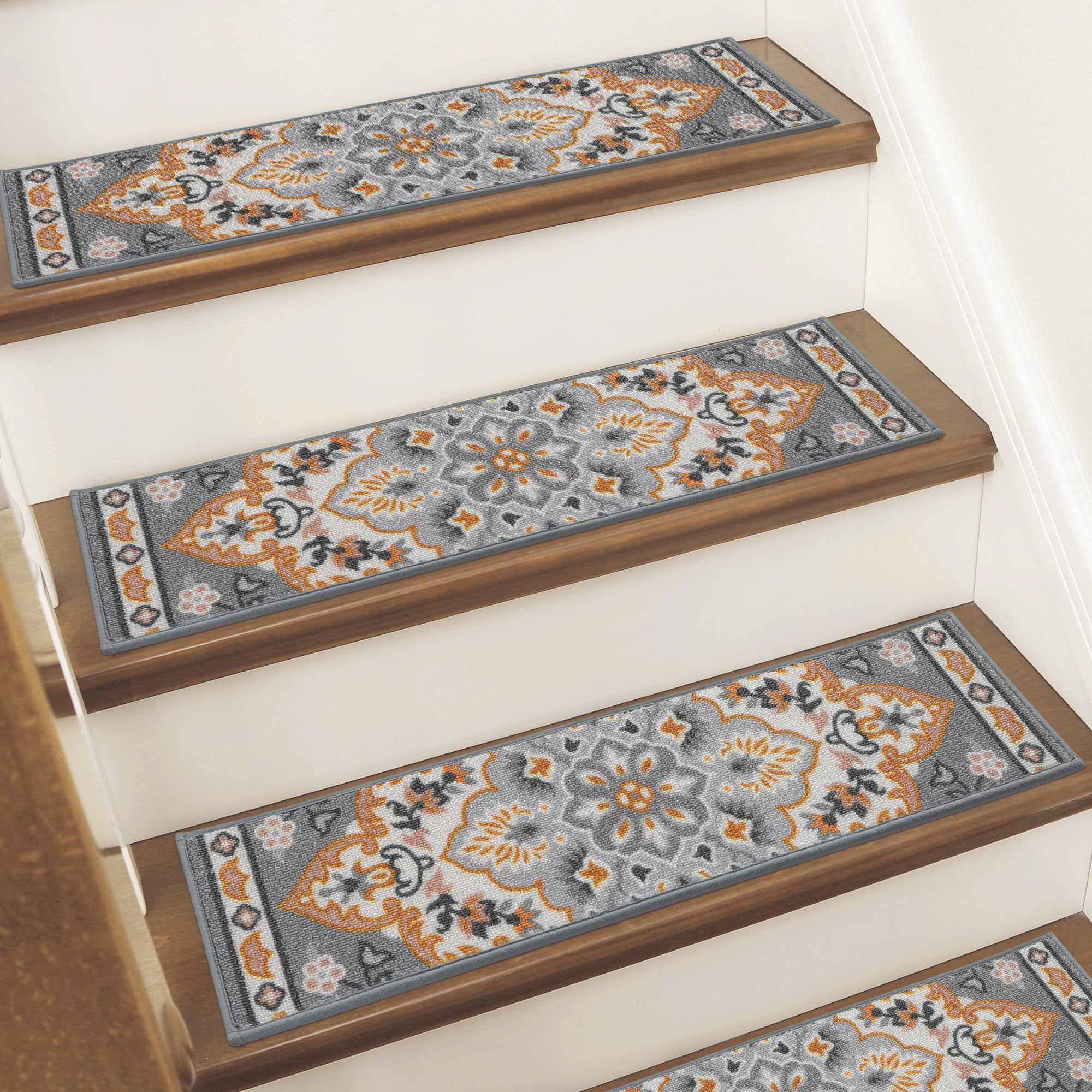
We recommend these treads for households that want a softer, quieter surface with added grip on indoor stairs.
Pros
- Soft polyester surface cushions each step
- Non-slip backing stays firmly in place
- Easy to remove and machine wash
Cons
- Removing the backing film takes time
- The floral pattern may not suit every home
- They are not designed for outdoor stairs
After placing these on wooden steps, we noticed less noise and a more comfortable feel underfoot. The low profile also kept the stairs easy to use without creating a bulky edge.
The TPE backing held the mats securely during normal use, which can help older adults and people with arthritis feel more confident on slippery stairs. We still recommend cleaning and drying each step before installation so the treads adhere properly.
The 8-by-30-inch size covered most of each step while leaving the edges visible. Vacuuming removed everyday dust and pet hair, and machine washing offered a practical way to handle deeper cleaning. We would choose these for indoor wood, laminate, tile, or similar stairs.
BEQHAUSE Non-Slip Stair Treads
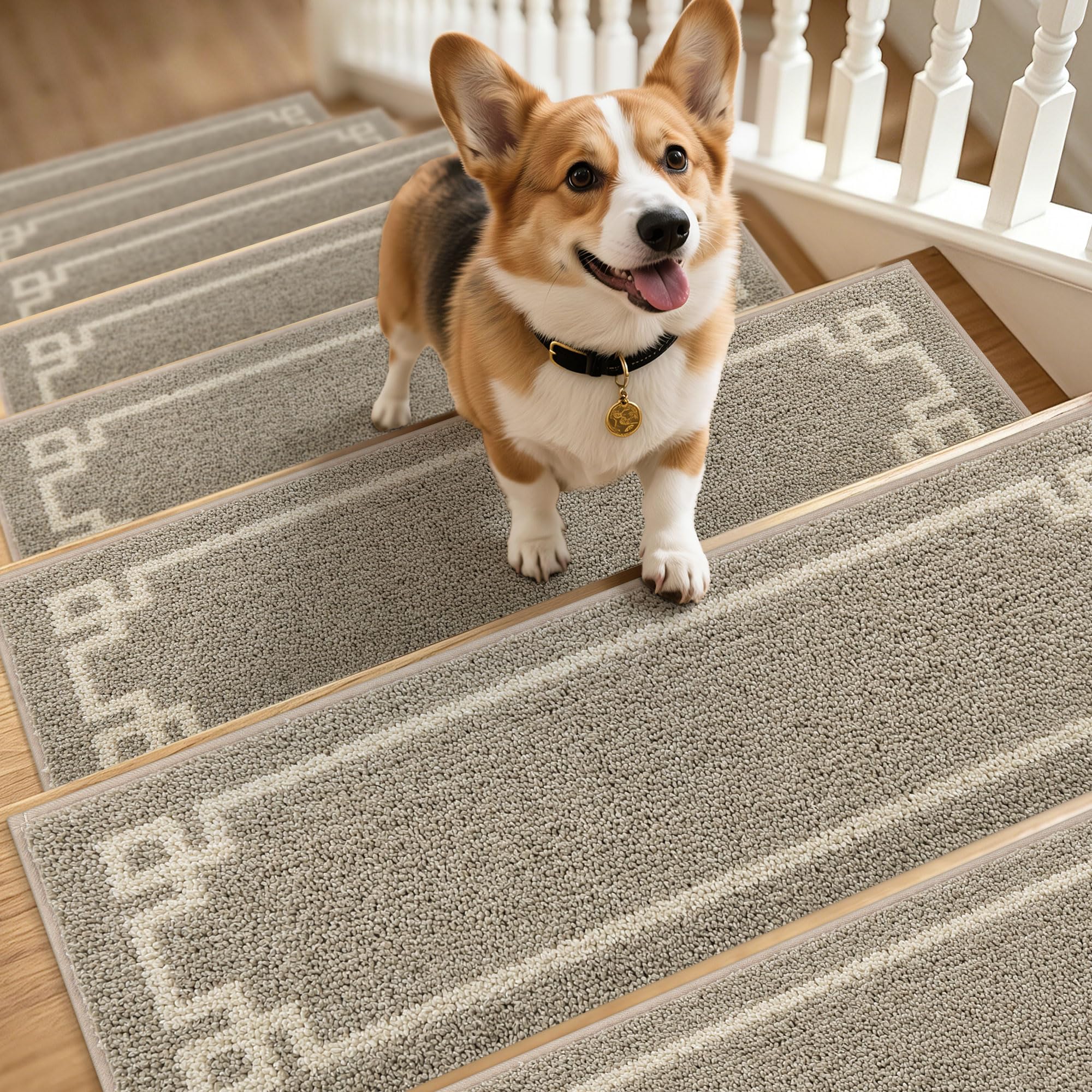
We recommend these treads for people with arthritis who want added grip, softer footing, and quieter steps on indoor wooden stairs.
Pros
- Strong grip without glue or tape
- Soft surface helps reduce foot strain
- Washable and easy to reposition
Cons
- Low pile may collect dirt quickly
- The 9-inch depth may feel narrow for some users
- Requires a clean, dry surface for proper grip
We found the TPE backing held the treads firmly during regular use. That stability can help people with arthritis feel more secure while placing each foot, especially on smooth or polished stairs.
The polyester surface feels softer than bare wood and reduces stair noise. Its low profile also avoids creating a bulky edge, which may make each step easier to approach.
Installation took little effort. We cleaned and dried the stairs, removed the backing film, and pressed each tread flat. We could lift and reposition them without leaving residue, though the surface must stay clean for the best hold.
Cleaning is practical because the treads can go into a washing machine. We would air-dry them in the shade as directed. The taupe pattern looks pleasant and may hide light dust, but the shallow pile can show dirt and pet hair between cleanings.
MBIGM Carpet Stair Treads

We recommend these treads for indoor wooden stairs because they add grip, cushioning, and a softer surface without permanent glue.
Pros
- Soft, quieter footing for sore joints
- Easy to place, remove, and clean
- Strong grip with no sticky residue
Cons
- Brown stripes may show dirt
- Folded packaging can leave temporary creases
- Adhesion may weaken after years of use
We found the polyester surface more comfortable underfoot than bare wood. The added padding also reduced stair noise, which can make daily trips up and down feel less harsh on aching knees and feet.
Each tread covers a broad section of the step, and we could trim it with scissors when needed. The backing held the pieces in place during regular use, while still allowing removal without damaging the stairs.
Installation took little effort: peel the backing, position the tread, and press it down. We would smooth the edges carefully and weigh each piece briefly if the stair surface feels uneven.
The brown fabric has a practical look, but it can reveal dust and pet hair. Vacuuming should handle routine cleaning, and machine washing offers a deeper clean when needed. After extended use, the backing may eventually lose strength, though buyers report that it does not leave a sticky film.
ComfyInLove Stair Treads
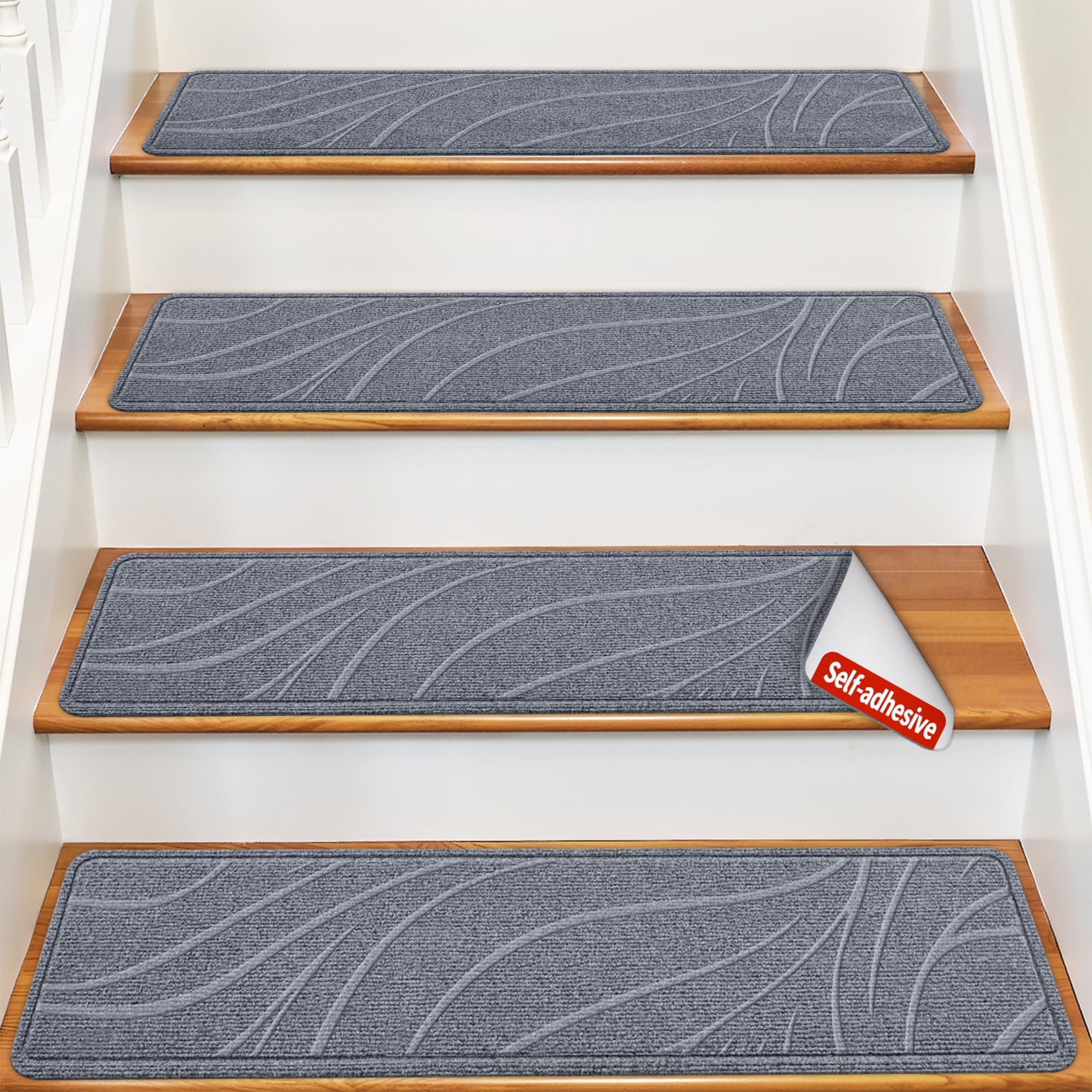
We recommend these indoor treads for people with arthritis who want softer footing and better traction on smooth stairs.
Pros
- Grippy backing helps limit sliding and curling
- Soft surface reduces foot noise and feels comfortable
- Peel-and-stick design is easy to trim and install
Cons
- Pet hair can become caught in the fabric
- Fabric may wear under heavy pet traffic
- Not suitable for outdoor or wet stairs
We found the textured surface more comfortable than bare wood, especially when stepping down slowly. The added traction can help us feel more secure, though users should still keep stairways well lit and use handrails.
Installation took little effort. We peeled off the backing, placed each tread, and used the included tape where extra hold seemed helpful. The treads stayed in place during regular household traffic and did not leave noticeable residue when removed from smooth surfaces.
The gray polyester looks simple and blends with many interiors. We could vacuum the surface for routine cleaning, while machine washing offered a deeper clean. Pet hair may need extra attention because it can work into the fabric.
These treads fit standard indoor steps and can be cut when needed. We would choose them for smooth wood, tile, marble, or metal stairs, but we would avoid using them where water could weaken the grip.
Sarben Taupe Floral Stair Treads

We recommend these treads for indoor wood stairs when we want added grip, light cushioning, and a decorative finish without using tools.
Pros
- Peel-and-stick setup takes only a few minutes.
- Low-profile fabric adds grip without feeling bulky.
- Washable material helps simplify routine cleaning.
Cons
- Some edges may lift if the stairs are not cleaned well.
- The woven surface feels more textured than plush.
- The taupe color may look different under indoor lighting.
We found the installation simple after cleaning and drying each step. The adhesive held well during normal use, including foot traffic from adults and a dog. We pressed the corners firmly, which helped keep the edges flat.
The textured fabric gave us more confidence on smooth wooden stairs, especially when stepping carefully. It also reduced some stair noise without creating a thick surface that could interfere with footing.
These treads look attractive, but they are not as soft as the product photos may suggest. Their low profile suits people who want cushioning without a raised edge, while the floral pattern may not match every staircase.
A few users reported peeling edges, so surface preparation matters. We also recommend checking the fit on each step before removing the backing. For homes with older adults, these treads can add useful traction, but they should not replace handrails or other safety measures.
TranquilMoments Beige Stair Treads
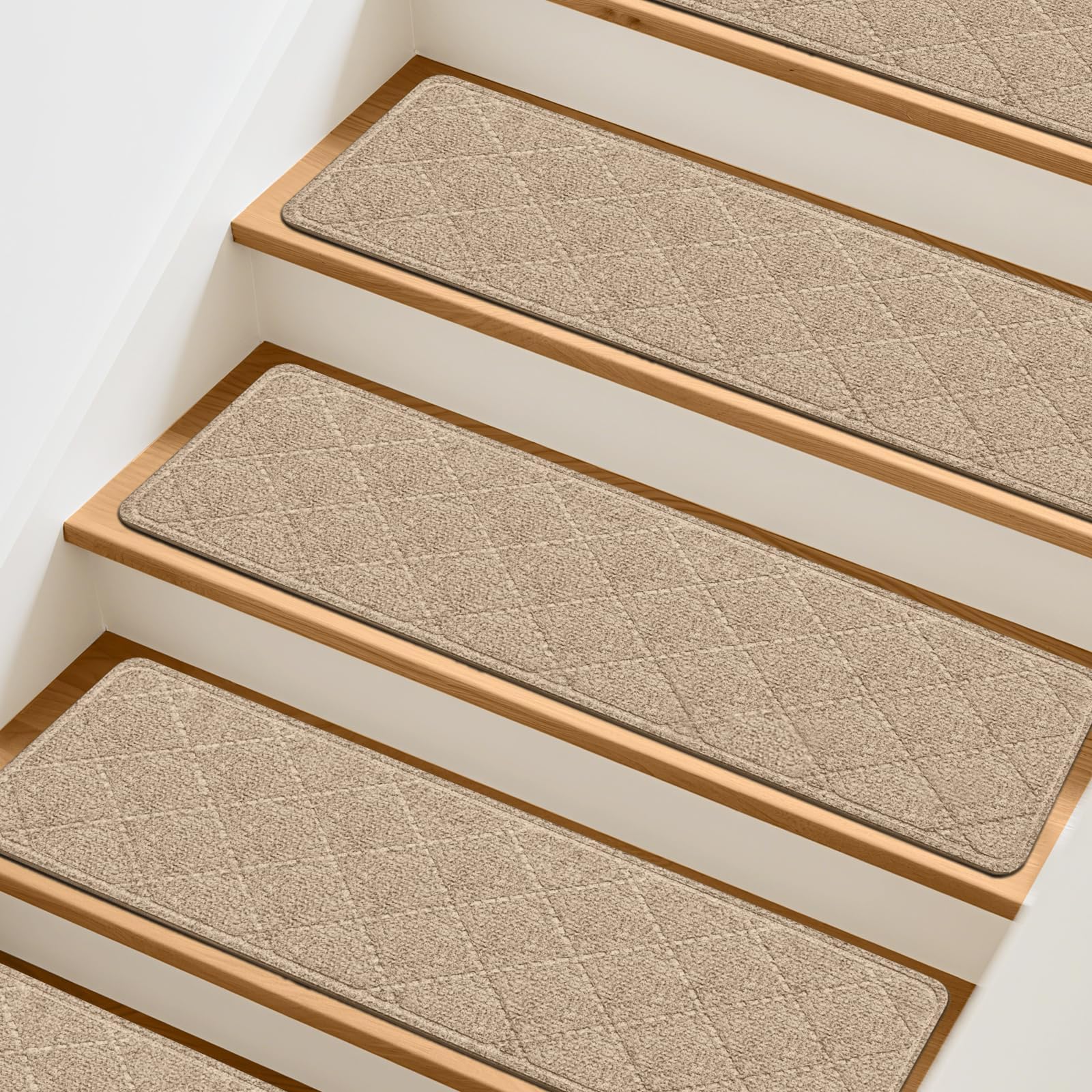
We recommend these treads for households that want softer, quieter steps with added traction for people with arthritis.
Pros
- Secure backing helps limit movement on smooth stairs
- Cushioned surface feels more comfortable underfoot
- Peel-and-press setup leaves no sticky residue
Cons
- Beige may show dirt and stains
- Not designed for outdoor use
- Adhesion depends on a clean, dry stair surface
After placing the TranquilMoments stair treads, we found that they stayed in place on hardwood without extra tape or glue. That stable footing can help reduce hesitation when arthritis makes each step feel less secure.
The polyester surface adds light cushioning and cuts down on footstep noise. We also liked the low-profile design, which did not create a bulky edge under our shoes. The 8-by-30-inch size suited standard stairs, while the flexible material allowed easy trimming when needed.
Installation took only a few minutes after we cleaned and dried the steps. We could lift a tread without leaving residue, which made repositioning simple. Regular vacuuming should handle dust, while deeper cleaning requires hand washing or machine washing followed by air drying.
These treads are intended for indoor stairs and are not water resistant. We would choose them for smooth household steps where comfort, quiet movement, and reliable traction matter more than heavy outdoor durability.
Editor’s Choice: KOOTETA Non-Slip Stair Treads
Our Editor’s Choice is the KOOTETA Non-Slip Stair Treads. We like them because they offer a good balance of grip, comfort, easy installation, and simple cleaning.
The soft fabric feels better underfoot than bare wood or tile. This can be helpful when arthritis makes the feet, knees, or other joints feel sore while using stairs. The textured surface also adds useful traction, while the low-profile design does not create a thick edge that may feel awkward underfoot.
We also liked how easy they were to install. After cleaning and drying the stairs, we could peel off the backing, position each tread, and press it firmly into place. The backing stayed secure on smooth steps, yet the treads could still be removed or repositioned when needed.
They are also practical for daily use. We could vacuum them for light cleaning and wash them when they became dirty. For most indoor homes, we think the KOOTETA treads offer the best mix of comfort, grip, and convenience for people with arthritis.
That said, no stair tread can make stairs completely risk-free. We would still use a sturdy handrail, keep the staircase well lit, and check the tread edges often to make sure they stay flat.
Conclusion
The best stair treads for arthritis should make each step feel more stable and comfortable without creating a new tripping risk.
After comparing the options, we found that soft carpet-style treads with a secure non-slip backing work well for many indoor stairs. They add traction, reduce the harsh feel of bare steps, and may make daily stair use feel more comfortable on sore feet and joints.
Our top choice is the KOOTETA Non-Slip Stair Treads because they combine good grip, a soft surface, easy cleaning, and simple installation. However, the best choice for your home will depend on the size and material of your stairs.
Before buying, measure each step carefully. Look for treads that lie flat, stay firmly in place, and do not curl at the edges. We also recommend checking them from time to time, especially after washing or repositioning them.
Stair treads can be a useful safety aid, but they should be part of a wider approach. Good lighting, clear stairs, supportive footwear, and a strong handrail are still important when arthritis makes climbing stairs difficult.
FAQs About Stair Treads for Arthritis
Are stair treads good for people with arthritis?
They can be. Stair treads add grip and can provide a softer surface than bare wood, tile, or metal. This may make stairs feel more comfortable when arthritis causes pain or stiffness. They can also help the feet feel more secure on smooth steps.
What type of stair tread is best for arthritis?
We usually prefer a low-profile carpet tread with a secure non-slip backing. A soft surface can add light cushioning, while the textured fabric helps improve traction. The tread should also stay flat and should not slide or curl.
Are thick stair treads better for painful joints?
Not always. Extra padding can feel comfortable, but a very thick tread may create a raised edge. That can make foot placement harder for some people. We prefer enough cushioning to soften the step without making the tread bulky.
Are non-slip stair treads safe for elderly people with arthritis?
They may improve traction, but they must be installed correctly. The stair should be clean and dry, and every tread should lie completely flat. Loose corners, curling edges, or sliding mats can become a trip hazard. A handrail and good lighting are still important.
Do stair treads damage wooden stairs?
Many removable treads are designed to grip smooth wooden stairs without permanent glue. Some can be lifted and repositioned without leaving much residue. However, the result can depend on the backing material and the finish on the stairs. We would test one tread in a small area first if the wood has a delicate finish.
Should stair treads be glued down?
Not always. Many modern indoor stair treads use TPE, TPR, or similar non-slip backing and do not need permanent glue. If a tread moves or its edges lift, extra carpet-safe tape may help. The most important point is that the tread stays flat and secure.
How do I stop stair treads from sliding?
Start by cleaning and drying the stairs well. Dust can reduce the grip of the backing. Place each tread carefully, press the full surface down, and pay extra attention to the corners and edges. If the manufacturer allows it, non-slip carpet tape can provide extra hold.
Can stair treads reduce knee pain?
Stair treads cannot treat arthritis or knee pain. However, a softer surface may reduce some of the harsh impact felt when stepping on hard stairs. Better traction may also help you move with more confidence and avoid sudden slips.
Are carpet or rubber stair treads better for arthritis?
For indoor stairs, we often prefer carpet treads because they feel warmer and softer underfoot. Rubber can provide strong traction and may work better in damp or outdoor areas. The right option depends on where the stairs are located and how much cushioning you want.
How often should I check stair treads?
We would check them regularly and after every wash or repositioning. Look for lifted corners, curled edges, loose backing, worn fabric, or movement underfoot. If a tread no longer stays flat and secure, it is safer to repair or replace it.
