
10 Best Stair Treads for Bathroom Safety and Style


Easy Grip Kitchen Utensils

Hearing Aid Cleaning Kit

Quad Cane for Seniors
Bathroom stairs and steps can become slippery when water, soap, and humidity build up on their surfaces. Stair treads add traction and can help make each step more stable, whether you use them on indoor stairs leading to a bathroom, a step stool, or a raised platform.
For bathroom use, we look for treads made from water-resistant materials with strong, durable backing. The right size, texture, adhesive, and ease of cleaning also matter, since a tread that shifts, traps moisture, or peels at the edges can create a safety risk. The best bathroom stair treads provide reliable grip, stay secure in damp conditions, and remain easy to clean.
We compared options for traction, water resistance, comfort, installation, and long-term durability to identify the stair treads that work best in and around bathrooms.
Best Stair Treads for Bathrooms
We selected the best stair treads for bathrooms based on grip, water resistance, comfort, and ease of cleaning. Our list includes options that can help reduce slips while matching common bathroom styles.
LifeGrip Stay on Track Clear Stair Treads
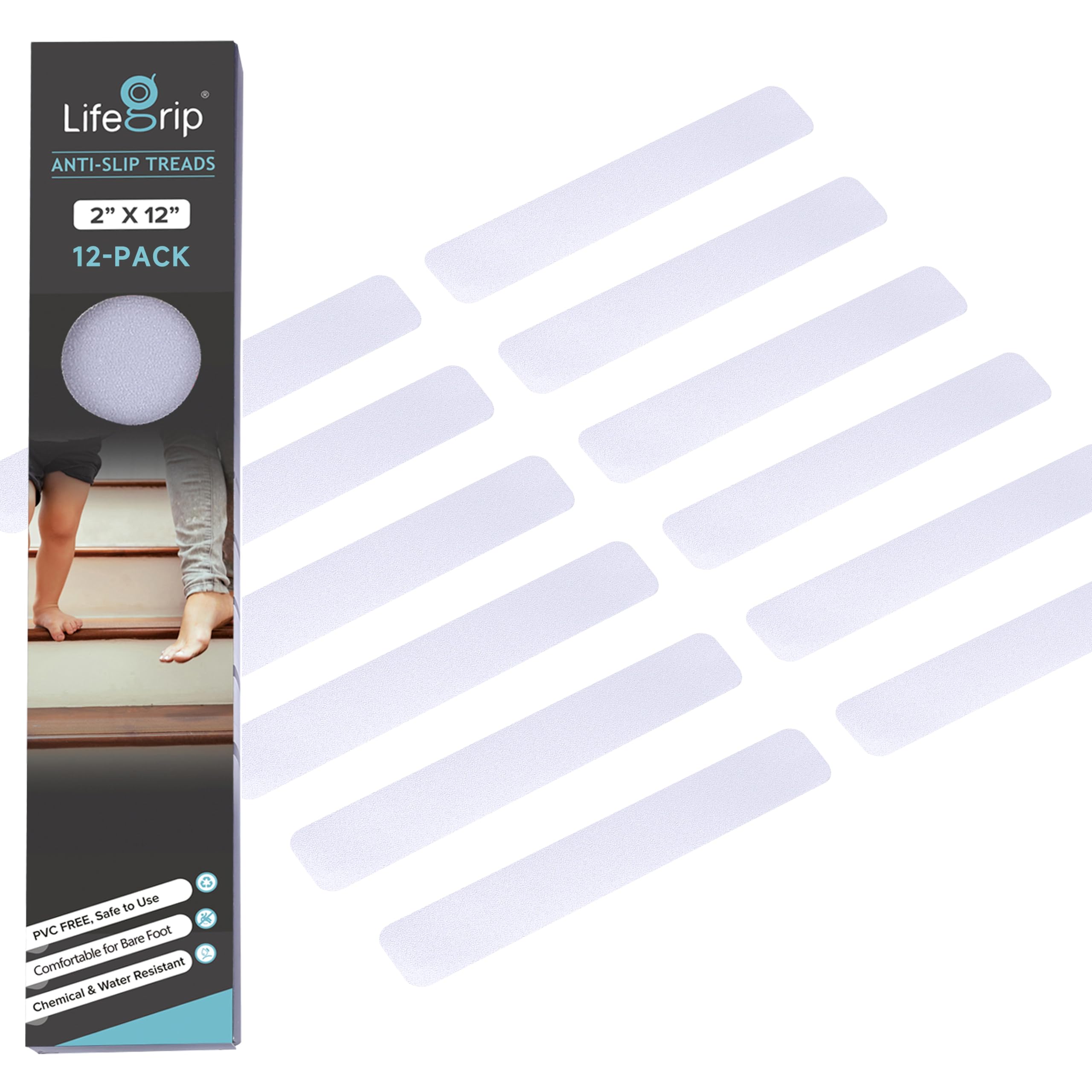
We recommend these clear adhesive treads for smooth bathroom steps because they add steady traction without covering the surface.
Pros
- Clear design keeps tile or wood visible
- Strong grip works well in damp areas
- Pre-cut strips make placement simple
Cons
- Backing can be difficult to peel
- Gritty surface may feel rough under bare feet
- Removal may take patience on delicate finishes
We found the 2-by-12-inch strips easy to position on clean, dry steps. Their slim profile kept the bathroom looking neat, while the textured surface helped provide more confidence on wet flooring.
The adhesive held firmly after application, but careful preparation mattered. We cleaned and dried the steps before pressing each strip down, then smoothed the edges to limit lifting.
These treads are comfortable enough for brief barefoot contact, though the texture feels more noticeable than a soft rubber mat. We also recommend testing one strip first, especially on painted wood or other sensitive surfaces.
The clear finish suits bathrooms where appearance matters. However, the hard-to-remove backing and strong adhesive may frustrate us during installation, so we would keep a fingernail tool or plastic scraper nearby.
Meoarcx Clear Non-Slip Stair Treads

We recommend these treads for bathrooms because they add grip to smooth, wet surfaces while keeping the floor’s original look visible.
Pros
- Clear design blends with tile, wood, and other smooth floors
- Soft textured surface feels comfortable under bare feet
- Pre-cut strips and included roller make installation simple
Cons
- Careful surface preparation is needed for strong adhesion
- Air bubbles may require extra smoothing during installation
- Strong adhesive may make removal less convenient
We found the transparent finish easy to overlook once the strips were applied. The textured surface gave us steady footing near wet areas without adding the bulky look of rubber mats.
Installation worked best after we cleaned and fully dried the surface. We used the included roller to press out air and secure the edges. Taking time during this step helped the strips sit flat.
The waterproof material suits bathroom use, including steps near tubs and other slippery areas. We also liked that the strips can be cut for smaller spaces, though cutting them may leave less uniform edges.
The adhesive held firmly on smooth surfaces during use. Because that bond feels strong, we would test one strip in an unseen spot before covering finished tile, stone, or painted surfaces.
COSY HOMEER Non-Slip Stair Treads
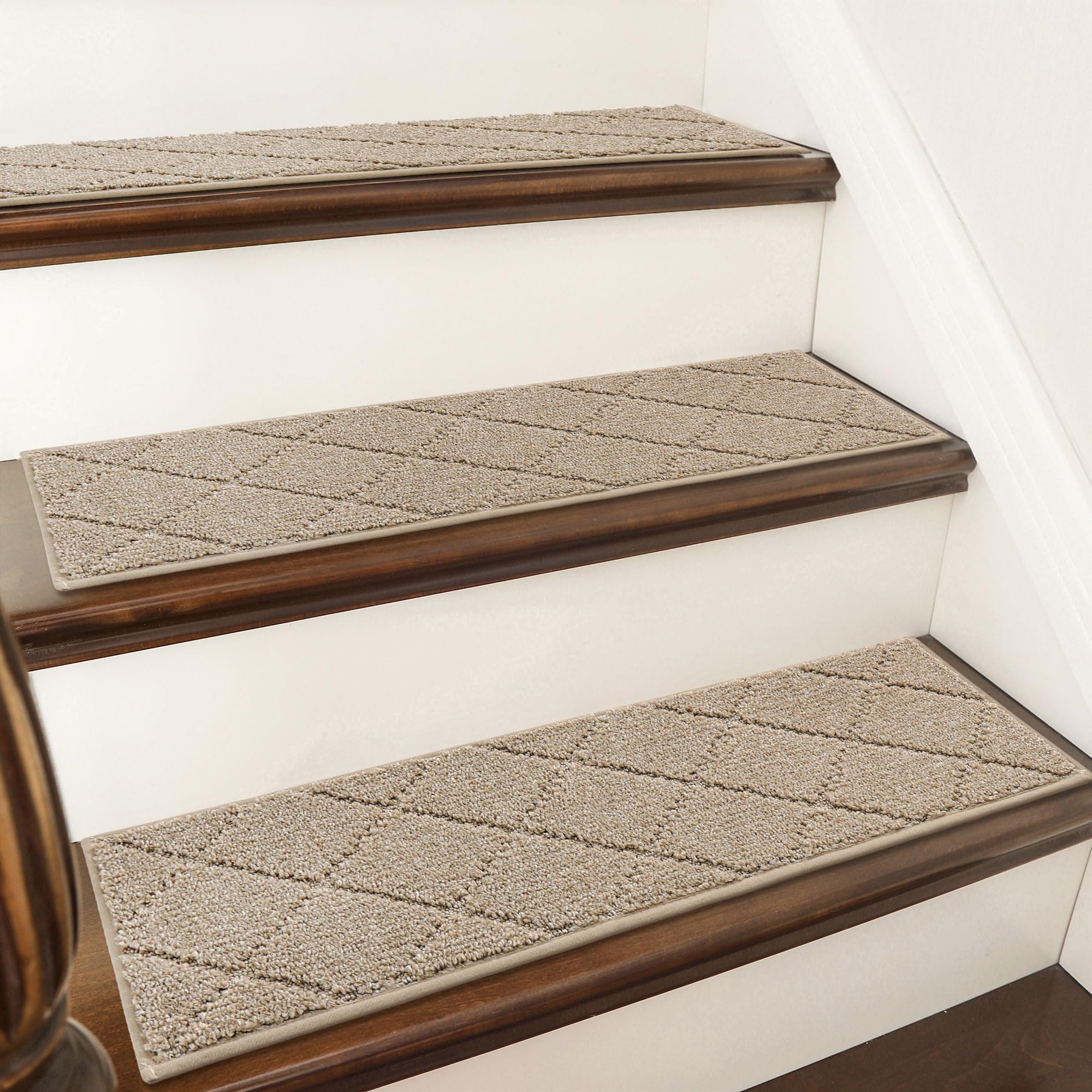
We recommend these treads for bathroom steps because they add a soft, water-resistant surface and stay in place on clean, dry floors.
Pros
- Grippy backing helps prevent sliding
- Easy to remove and reposition
- Machine washable and comfortable underfoot
Cons
- Works best when installed on a dry surface
- Beige may show stains over time
- The low-pile fabric offers limited cushioning
We found these mats simple to install. After cleaning and drying the steps, we placed each tread without using permanent adhesive. The backing held firmly on smooth wood and did not leave a sticky residue when we lifted a mat.
The polyester surface feels comfortable with bare feet, which suits a bathroom near a tub or shower. It also gives pets and children more traction on slippery steps. However, we would dry wet stairs first because the grip performs best on a clean, dry surface.
The 28-by-9-inch size covers most standard steps, while the low profile keeps doors from catching. We also like that the treads can be vacuumed or machine washed. The beige color looks neutral, but busy households may need regular cleaning to keep it fresh.
LifeGrip Clear Bathroom Stair Treads
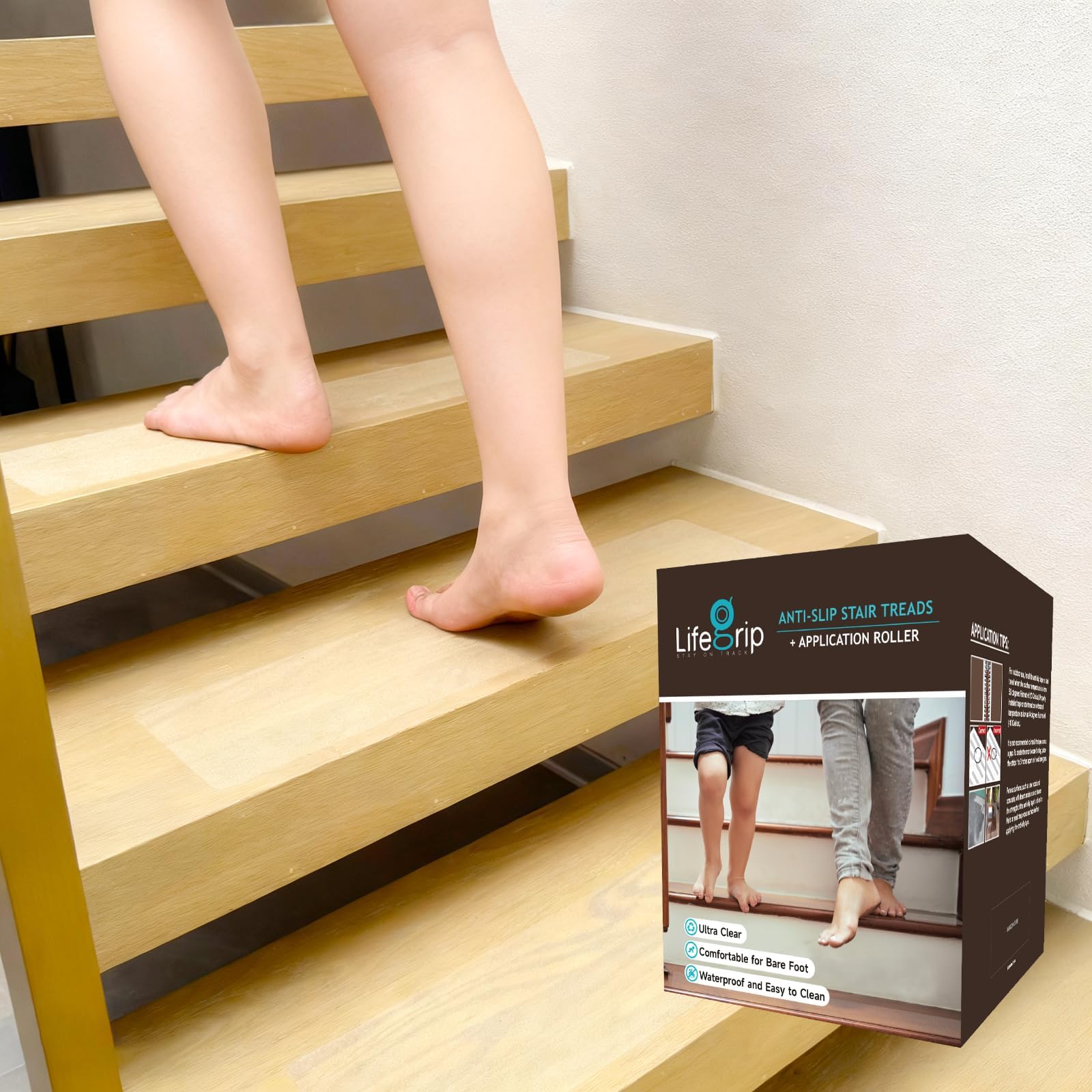
We recommend these treads for smooth bathroom steps because they add grip without hiding the surface underneath.
Pros
- Clear design keeps tile and wood visible
- Soft texture feels comfortable under bare feet
- Waterproof surface wipes clean easily
Cons
- Adhesion depends on careful surface preparation
- Works best on smooth, dry surfaces
- The narrow width may not cover wider steps
We found these treads simple to install after cleaning and drying the steps. The adhesive bonded well to smooth surfaces, while the clear finish kept the stairs looking neat.
The textured surface gave us steady footing without feeling overly rough. It also felt more comfortable than coarse grip tape when used barefoot.
For bathroom use, the waterproof material is useful because water and soap can make steps slick. We could wipe the surface with a damp cloth, but we would avoid applying it over dusty, damp, or uneven areas.
ComfyInLove Grey Stair Treads
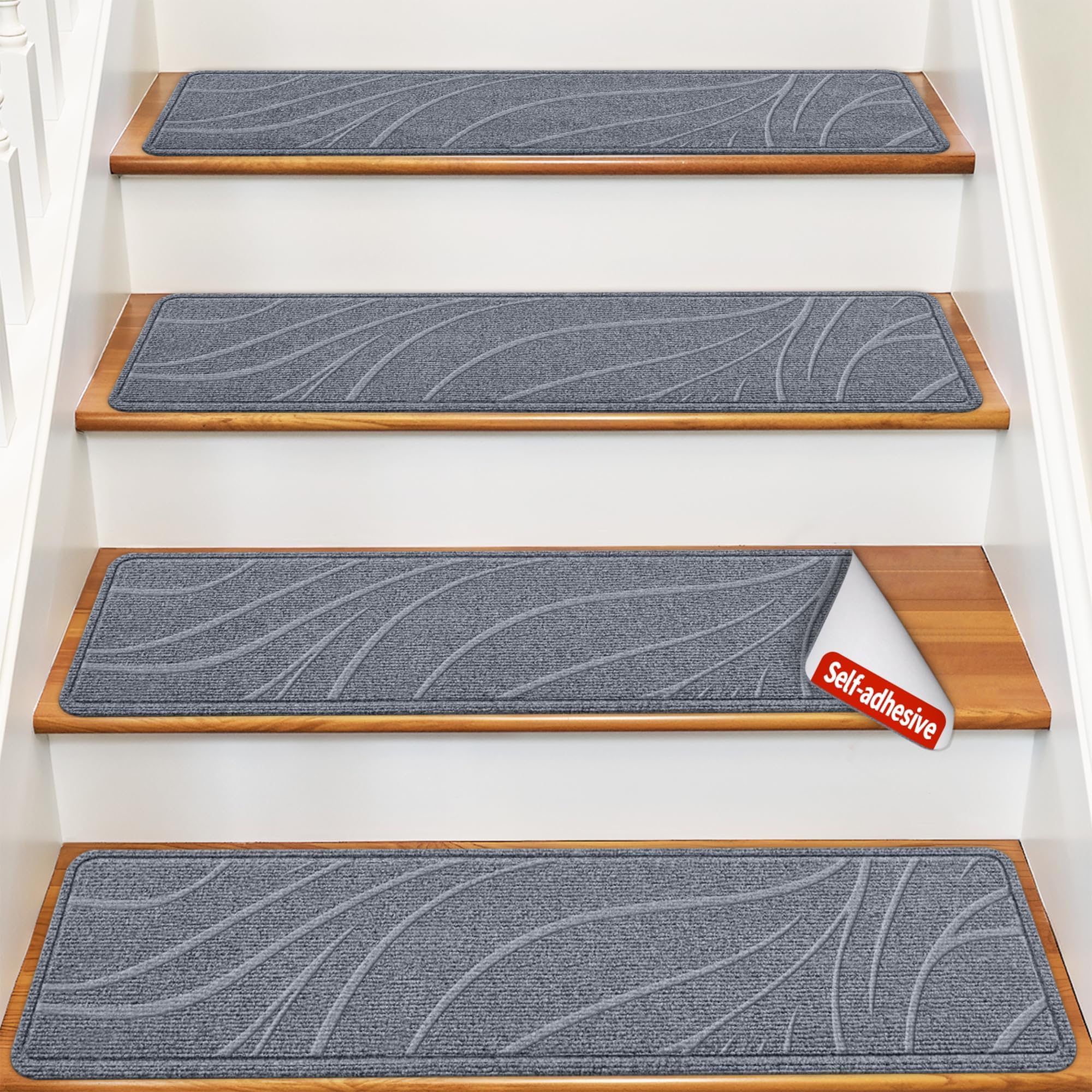
We recommend these treads for indoor bathroom steps because they add grip, soften each step, and install without tools.
Pros
- Textured tops and TPE backing help reduce sliding.
- Peel-and-stick design installs quickly and removes cleanly.
- Washable polyester helps simplify routine cleaning.
Cons
- The fabric can hold pet hair and dirt.
- They are not water resistant.
- The included tape may be useful on heavily used stairs.
We found the treads easy to place on smooth wood, tile, and other indoor surfaces. Their gray color looks simple, while the 30-by-7.8-inch shape gives most steps broad coverage. We could trim them when a step needed a closer fit.
The soft polyester felt more comfortable than bare wood or tile and helped reduce foot noise. The textured surface also gave us better footing, which matters near a bathroom where damp feet can make steps slippery.
Cleaning should stay manageable with regular vacuuming. For deeper cleaning, we can machine wash and air dry the treads, but bathroom moisture still requires care because the material is not water resistant.
The backing held well during daily use, and removal did not leave much residue. For older or high-traffic stairs, we would consider using the included tape for extra stability.
Gisafai Glow-in-the-Dark Bathroom Stair Treads
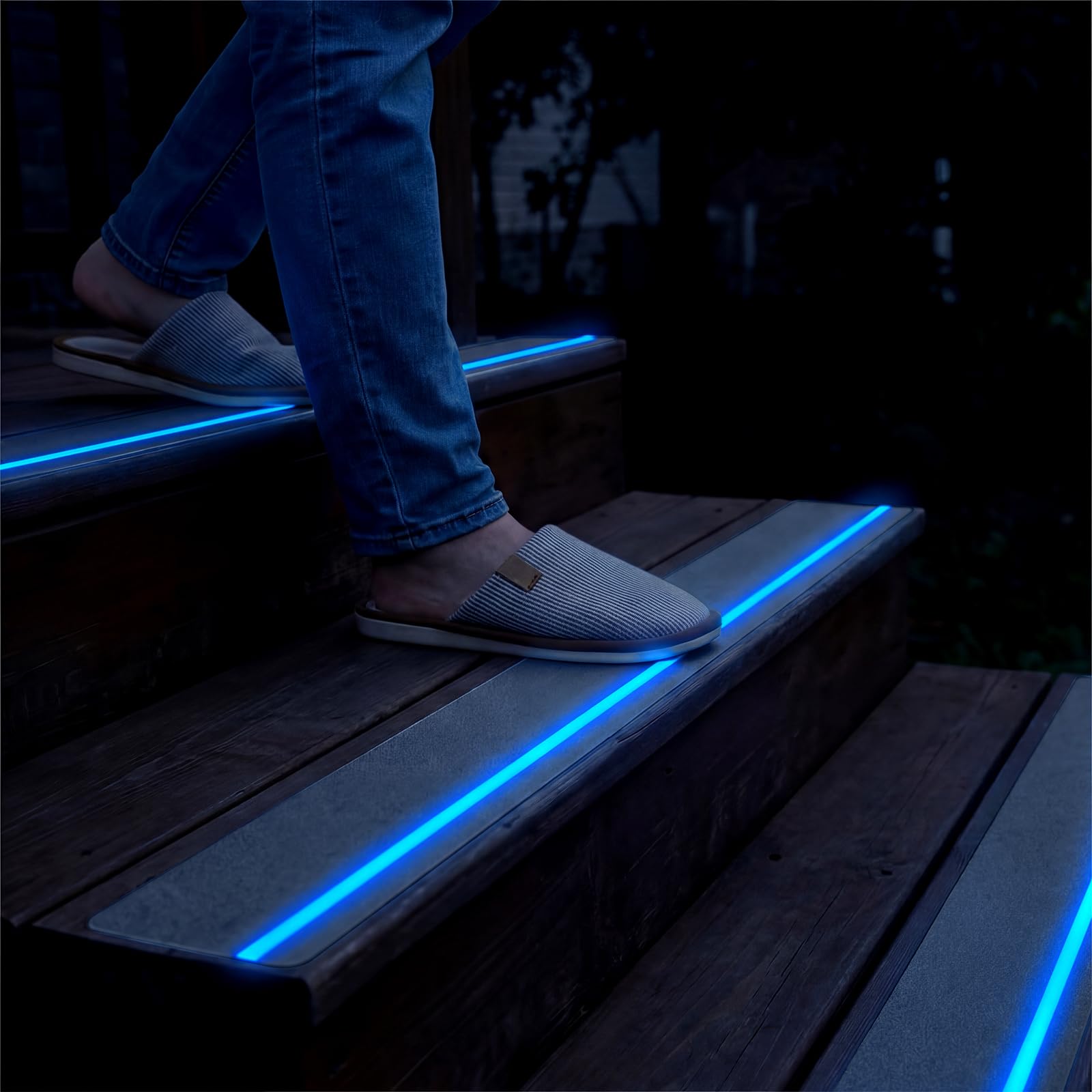
We would consider these treads only if we could confirm strong adhesion and reliable glow performance before installation.
Pros
- Soft, textured surface feels comfortable under bare feet.
- Clear design keeps the stair surface visible.
- Waterproof material wipes clean easily.
Cons
- Several buyers reported weak adhesion.
- Air bubbles may remain after installation.
- Glow performance appears inconsistent.
We found the textured PEVA surface helpful on damp bathroom steps and around bathtubs. It added grip without feeling rough, and the clear finish kept the original surface visible.
The pre-cut strips were simple to trim for smaller areas. We would apply them slowly to a clean, completely dry surface, because trapped air can create bubbles that remain visible.
The blue glow stripe sounds useful for nighttime guidance, but buyer feedback was mixed. Some users said the strips did not glow, while another reported good traction in wet conditions. With a 2.3-star rating from five reviews, we would choose these only after testing one tread first.
LifeGrip Clear Bathroom Stair Treads
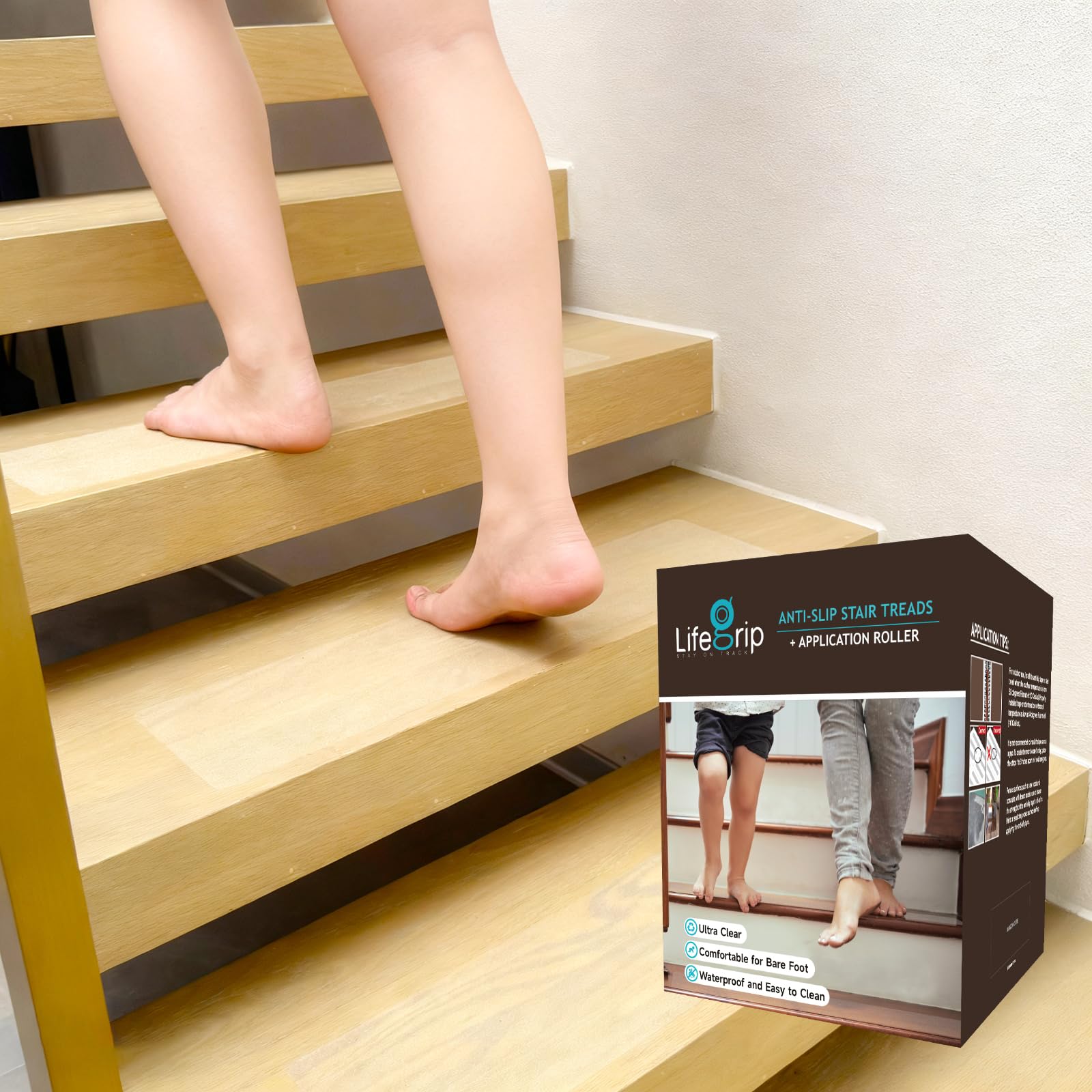
We recommend these clear treads for smooth bathroom steps because they add barefoot-friendly traction without hiding the surface below.
Pros
- Clear design keeps wood, tile, or stone visible
- Textured surface feels comfortable under bare feet
- Waterproof material wipes clean easily
Cons
- Adhesion depends on a clean, dry, smooth surface
- Heat or moisture may cause lifting over time
- Some steps may need trimming for a better fit
We found these treads simple to install after cleaning and drying the steps. The peel-and-stick backing went on smoothly, and the clear finish kept the stairs looking neat rather than covered.
The textured EVA surface gave us more confidence on wet bathroom steps, especially when walking barefoot. It also felt less harsh than heavily abrasive grip tape.
Cleaning took little effort with a damp cloth. However, we would avoid applying them to dusty, uneven, or damp surfaces, since the adhesive may not bond well. We would also press the edges firmly during installation and check them regularly for lifting.
Livoccur Clear Bathroom Stair Treads

We recommend these strips for wet bathroom steps because they add grip while keeping the surface mostly visible.
Pros
- Clear design works well on tile and finished wood
- Soft texture feels comfortable under bare feet
- Easy to cut, clean, and apply
Cons
- Adhesion may vary by surface and installation
- Clear material can show dirt over time
- Removal may take effort in some cases
We found the 4-by-32-inch strips easy to position on bathroom steps. The included roller helped us press them firmly into place, and the material trimmed cleanly with scissors when we needed a shorter piece.
The textured PEVA surface gave us better traction near wet areas without making the steps look covered. We also liked that the strips felt less harsh under bare feet than some rigid anti-slip products.
Cleaning was simple with a damp towel. Still, we would clean and dry the surface fully before installation, since dust, moisture, or uneven tile can affect the adhesive.
Most users report easy installation and good grip, though some experienced peeling or difficult removal. We would choose these for smooth, clean surfaces and test one strip first on delicate flooring.
Meoarcx Clear Glow-in-the-Dark Bathroom Treads
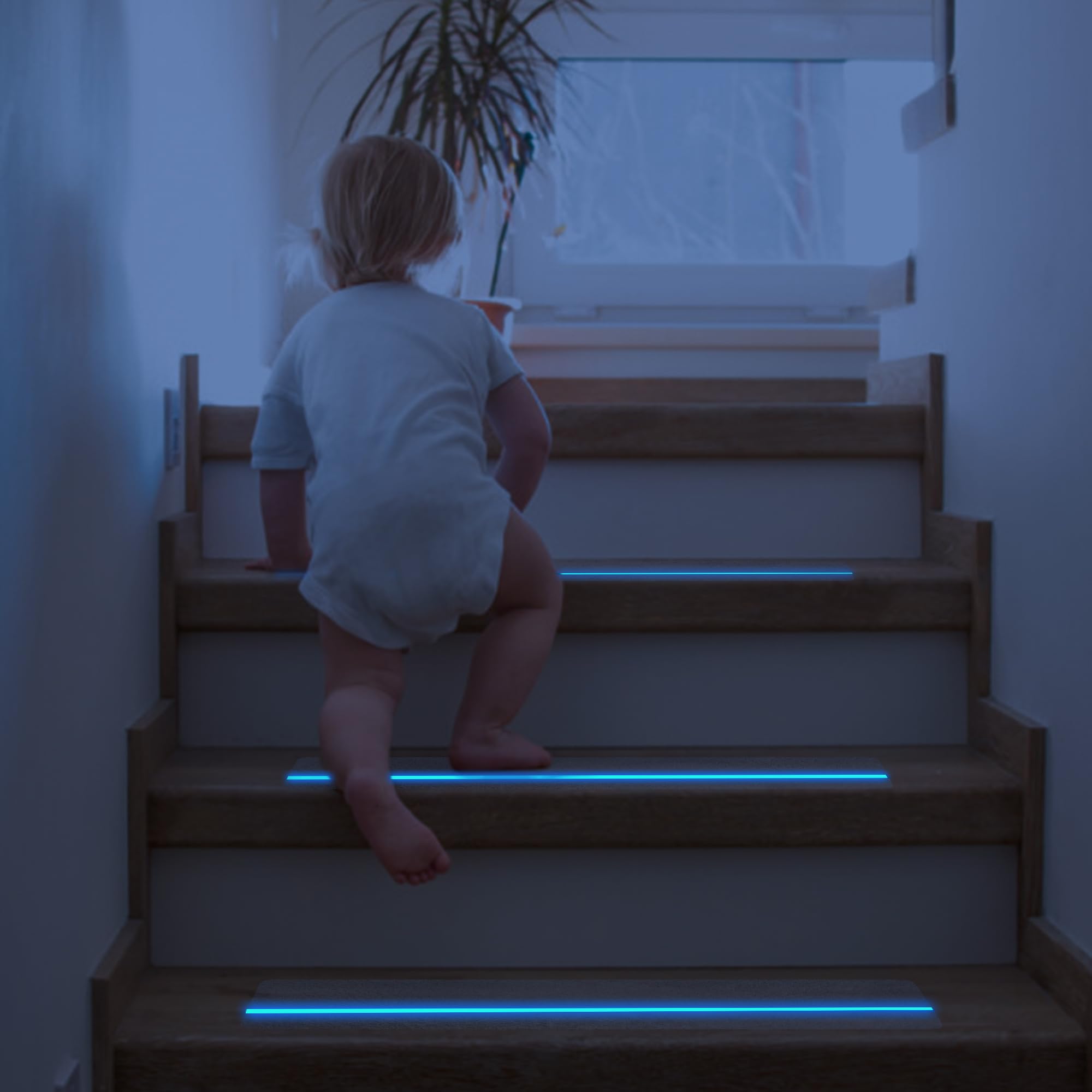
We recommend these treads for smooth bathroom floors and tub areas because they add grip without hiding the surface beneath them.
Pros
- Clear design blends with tile, wood, and other smooth surfaces
- Textured PEVA surface feels comfortable under bare feet
- Blue stripe improves step visibility in low light
Cons
- Thin strips may not cover wider steps fully
- Glow can appear faint or short-lived
- Adhesion depends on careful surface preparation
We found the 4-by-24-inch strips easy to position on a clean, dry surface. The included roller helped press out air and improve contact, which matters in damp bathroom areas. Their clear finish kept the underlying surface visible.
The raised texture provided useful traction for bare feet, including on wet steps. We also liked the soft feel compared with rougher abrasive tape. However, the narrow shape may leave parts of a wide tread uncovered, so we would check the measurements before buying.
The blue stripe stood out during the day and helped mark step edges at night. Its glow worked best after exposure to bright indoor light or sunlight, but it was not especially strong or long-lasting. Overall, these treads suit buyers who want light coverage, a low-profile look, and added grip on smooth bathroom surfaces.
GORILLA GRIP Peel-and-Stick Stair Treads
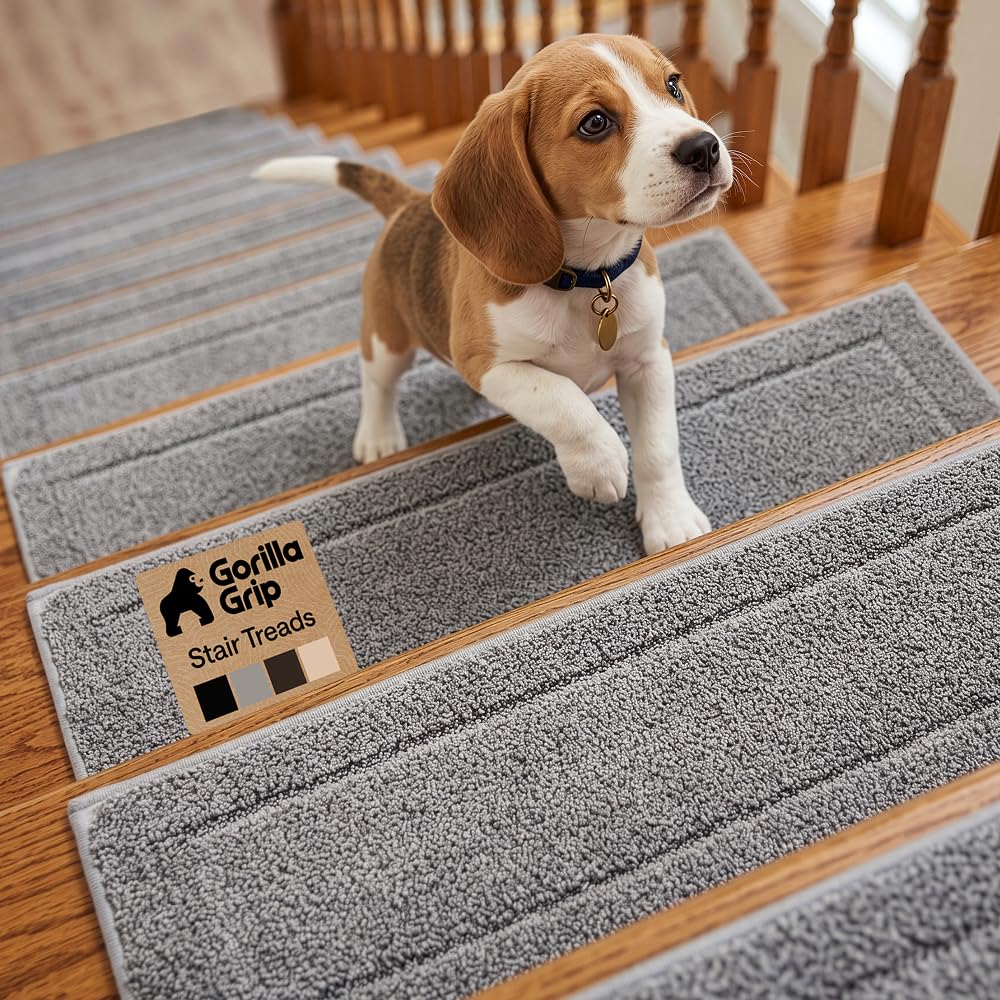
We recommend these treads for bathroom stairs because they add a soft, stable surface and install without tools, but they should stay dry.
Pros
- Strong grip helps keep each tread in place
- Soft surface reduces footstep noise
- Washable and removable design
Cons
- Not water-resistant
- Backing film can take patience to remove
- Dust or moisture may weaken the bond
We found the plush top comfortable underfoot, especially on hard wood, tile, or vinyl steps. The gray finish looks simple and works well in most homes.
The peel-and-stick backing made installation quick. We had to clean and dry the steps carefully first, since dust or moisture can prevent a firm hold. Taking time with the backing film also helped avoid tearing it.
These treads stayed put during regular use and softened the sound of footsteps. They can also help protect bathroom stair surfaces from scuffs, though we would not use them in areas that stay wet or receive direct water.
Cleaning is fairly simple, and the treads can be removed without leaving much residue when handled carefully. We would choose them for indoor bathroom stairs with good ventilation, not for open showers or damp outdoor steps.
Buying Guide
We should choose stair treads made for wet areas, with a surface that helps reduce slipping. Look for water-resistant materials, strong grip, and edges that stay secure when exposed to moisture.
Measure each step before buying. We should check the tread’s length, width, and thickness, then compare those measurements with our stairs. A close fit helps prevent movement and reduces exposed edges.
| Feature | What we should look for |
|---|---|
| Grip | Textured or slip-resistant surface |
| Material | Water-resistant and easy to clean |
| Backing | Non-slip backing or secure attachment method |
| Size | Fits the full step without curling |
| Maintenance | Resists mold, stains, and soap buildup |
| Comfort | A surface that feels stable underfoot |
We should also consider how the tread attaches. Adhesive, rubber backing, and mechanical fasteners each work differently, so we need to follow the manufacturer’s installation instructions and confirm that the method suits our stair surface.
Choose a tread that is easy to remove or clean if the bathroom has high moisture. Avoid loose fabric, damaged edges, and materials that absorb water unless they include suitable protection and care instructions.
Editor’s Choice
We choose rubber stair treads with textured, open-grid surfaces for most bathrooms. They provide steady footing when wet, resist common cleaning products, and feel more comfortable under bare feet than metal or hard plastic.
| Feature | What we look for |
|---|---|
| Material | Mold-resistant rubber or vinyl |
| Surface | Raised texture with drainage openings |
| Fit | Full coverage with a secure edge |
| Installation | Waterproof adhesive or non-slip backing |
| Cleaning | Easy to lift, wash, and dry |
We prefer treads that allow water to drain instead of trapping it beneath the surface. A snug fit matters because loose edges can create a trip hazard and let moisture collect underneath.
For stone, tile, or fiberglass steps, we recommend checking the manufacturer’s instructions before using adhesive. Some products bond well only to clean, dry surfaces, while removable mats may work better in rented homes.
Choose a tread with a low profile so it does not interfere with doors or create an uneven step. We also look for products that can be trimmed without exposing sharp edges.
Conclusion
We should choose bathroom stair treads that provide strong traction, resist water, and fit the surface well. Rubber, vinyl, and textured adhesive treads can each work when we match the material to the location and level of moisture.
Before buying, we should check these features:
- Non-slip texture for safer footing
- Water resistance for damp areas
- Strong adhesive or secure fasteners to prevent movement
- Easy cleaning to limit mold and buildup
- Proper size and fit for each stair
We should also prepare the steps before installation. Clean, dry, and smooth surfaces help treads stay in place. We need to follow the product’s care instructions and replace any tread that starts to peel, crack, or lose its grip.
FAQs
What type of stair tread works best in a bathroom?
We recommend water-resistant, slip-resistant treads made from rubber, vinyl, or sealed composite materials. These options handle moisture better than unfinished wood or fabric.
Are rubber stair treads safe for wet areas?
Yes, rubber treads can provide strong traction when wet. We should choose a product with a textured surface and confirm that the manufacturer approves it for bathroom use.
Can we use bath mats as stair treads?
We should avoid using loose bath mats on stairs. They can shift underfoot and create a trip hazard. Stair treads should fit securely and include adhesive backing, fasteners, or another approved installation method.
How do we prevent mold and mildew?
We should select nonporous materials, wipe away standing water, and clean the treads regularly with a mild bathroom cleaner. Good ventilation also helps reduce moisture buildup.
Do adhesive stair treads work on tile?
They can work on clean, dry, smooth tile. We should remove soap residue, follow the installation instructions, and allow the adhesive to cure for the stated time before use.
Should bathroom stair treads cover the full step?
We should use treads that cover most of the walking surface without extending over the stair edge. A close fit improves stability and reduces the chance of catching a toe.
