
Sonos vs Bose Smart Speaker for Seniors: Which?


Large Print Keyboard

Toilet Safety Rails

Weekly Pill Organizer
Sonos vs Bose smart speaker for seniors is mainly a choice between two easy ways to enjoy music, podcasts, radio, and voice control at home. Both brands offer smart speakers with app control, Wi-Fi, Bluetooth, and voice assistant support.
For this comparison, the current Sonos Era 100 is compared with the Bose Home Speaker 300. Sonos focuses strongly on multi-room audio and app-based control, while Bose offers 360-degree sound, voice assistants, and simple physical controls.

Quick Comparison
For most seniors who want a simple speaker for everyday music, Bose Home Speaker 300 is the easier choice. Its 360-degree sound can work well without worrying too much about speaker placement, and it supports both Amazon Alexa and Google Assistant.
Sonos Era 100 is the better choice for seniors who want stronger stereo sound, more advanced room tuning, and a broader Sonos multi-room system. It also supports Sonos Voice Control, Alexa, Bluetooth, AirPlay 2, and Trueplay tuning.
Sonos vs Bose At a Glance
Both speakers offer smart features, but their strengths are different.
| Feature | Sonos Era 100 | Bose Home Speaker 300 |
|---|---|---|
| Ease of use | Very good | Excellent |
| Voice control | Sonos Voice Control, Alexa | Alexa, Google Assistant |
| Bluetooth | Yes | Yes |
| Wi-Fi | Yes | Yes |
| AirPlay 2 | Yes | Yes |
| Sound design | Stereo-focused | 360-degree |
| App | Sonos app | Bose app |
| Room tuning | Trueplay | No equivalent on this model |
| Portability | No | No |
| Current listed price | $219 | $199 |
Sonos lists the Era 100 with Wi-Fi, Bluetooth 5.3, AirPlay 2, touch controls, voice control, and Trueplay. Bose lists the Home Speaker 300 with Bluetooth, Wi-Fi, Alexa, and Google Assistant. Bose documentation also confirms AirPlay 2 support.
Sonos Era 100 Review for Seniors
The Sonos Era 100 is a compact smart speaker designed around detailed stereo sound and a strong app-based ecosystem. Its physical controls are placed on top, while the Sonos app handles setup and deeper settings.
Ease of Use
The Era 100 uses touch controls for play, pause, skipping, replay, volume, voice-assistant muting, and grouping speakers. A physical switch on the rear can disconnect power to the microphones.
Setup is fairly simple. Sonos says users can connect the speaker to Wi-Fi, open the Sonos app, and complete setup from a phone or tablet.
For a senior who already uses a smartphone comfortably, this can be a very convenient setup.
Key Strengths
- Detailed stereo sound from a compact speaker
- Touch controls on top
- Sonos Voice Control and Amazon Alexa
- Bluetooth 5.3
- Apple AirPlay 2
- Trueplay room tuning
- Works well as part of a larger Sonos system
- Microphone hardware can be disconnected with the rear switch
Potential Drawbacks
- Requires a phone or tablet for full setup and control
- Some advanced features depend on the Sonos app
- The speaker is not battery powered
- The touch controls may be less familiar than traditional physical buttons
- A larger Sonos system can become more expensive over time
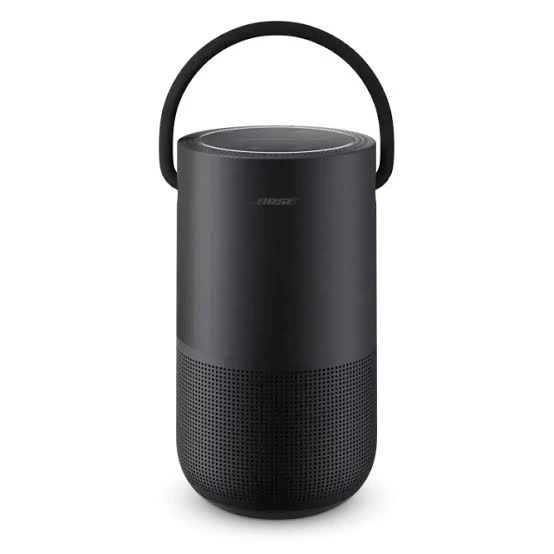
Bose Home Speaker 300 Review for Seniors
The Bose Home Speaker 300 takes a slightly different approach. It is designed to spread sound around the room, making speaker placement less demanding.
Ease of Use
Bose supports control through its app, physical controls, and voice assistants. The Home Speaker 300 supports both Amazon Alexa and Google Assistant, giving users more choice in voice control.
That flexibility can be useful for a senior who already uses Google Assistant or Alexa on other devices.
Key Strengths
- 360-degree sound
- Amazon Alexa support
- Google Assistant support
- Bluetooth and Wi-Fi
- AirPlay 2 support
- Bose app control
- Multi-room grouping with compatible Bose products
- Compact design
Bose describes the Home Speaker 300 and its portable smart speaker as having comparable 360-degree sound and rich bass, while its smart-speaker ecosystem can group compatible products through the Bose app.
Potential Drawbacks
- It does not have a battery
- Full setup still requires an app and network connection
- Bose’s smart-speaker lineup can be confusing because several models share similar features
- The sound presentation is different from the stereo-focused Era 100
Which Is Easier for Seniors to Use?
For basic everyday use, Bose has a slight advantage.
The Home Speaker 300’s 360-degree design means the listener does not need to think as much about where the speaker faces. Its support for both Alexa and Google Assistant also gives users more flexibility.
Sonos is still very easy for people who are comfortable with smartphones. Its app provides extensive control, and the Era 100 has straightforward touch controls.
Best for simple everyday control: Bose Home Speaker 300
For seniors who already use Apple devices or want to build a multi-room audio system, Sonos may be the more appealing option.
Performance Comparison
The two speakers take different approaches to sound.
The Sonos Era 100 uses two angled tweeters and a mid-woofer. Sonos says this design provides stereo separation and deep bass. Trueplay can also analyze the room and adjust the speaker’s EQ.
The Bose Home Speaker 300 uses a 360-degree sound design. Bose describes it as providing comparable performance to its Portable Smart Speaker, with rich bass from a compact enclosure.
| Performance Area | Sonos Era 100 | Bose Home Speaker 300 |
|---|---|---|
| Sound direction | Stereo-focused | 360-degree |
| Bass | Strong | Rich |
| Stereo separation | Stronger | More room-filling |
| Room placement | More important | More flexible |
| Room tuning | Trueplay | Not available |
| Multi-room audio | Excellent | Excellent within Bose ecosystem |
For music listening where stereo separation matters, Sonos gets the edge. For casual listening around a room, Bose’s 360-degree approach is very practical.
Comfort, Accessibility, and Senior-Friendly Design
Smart speakers do not require much physical effort, which is one reason they can be useful for older adults.
Voice control can reduce the need to reach for a phone or walk across the room. Both brands offer voice-assistant support, although the available assistant can depend on the product and region.
The bigger accessibility difference is control style.
| Senior Need | Sonos Era 100 | Bose Home Speaker 300 |
|---|---|---|
| Hands-free control | Yes | Yes |
| Physical controls | Touch | Physical/touch controls |
| Smartphone control | Yes | Yes |
| Easy room placement | Good | Better |
| Voice assistant choice | Sonos Voice Control/Alexa | Alexa/Google Assistant |
| Microphone control | Physical switch | Voice-assistant controls |
For someone who dislikes complicated apps, Bose may feel simpler. For someone who enjoys smartphone control and wants a larger connected audio system, Sonos has an advantage.
Features Comparison
Both speakers cover the basics well, but Sonos offers stronger room-tuning and ecosystem features.
| Feature | Sonos Era 100 | Bose Home Speaker 300 |
|---|---|---|
| Voice control | Sonos Voice Control, Alexa | Alexa, Google Assistant |
| AirPlay 2 | Yes | Yes |
| Bluetooth | Yes | Yes |
| App control | Sonos app | Bose app |
| Room tuning | Trueplay | No |
| Multi-room | Sonos ecosystem | Bose ecosystem |
| Microphone switch | Yes | Not the same physical design |
Sonos says Trueplay measures room acoustics and adjusts EQ, while Bose supports AirPlay 2 and multi-room grouping through compatible products.
Price, Maintenance, and Long-Term Value
At the time of this comparison, Sonos lists the Era 100 at $219, while Bose lists the Home Speaker 300 at $199 on its U.S. website. Prices can change, so the difference should not be treated as permanent.
Neither speaker uses a rechargeable battery, so there is no battery replacement to plan for. Both rely on a power outlet and Wi-Fi for their main smart-speaker functions.
The bigger long-term decision is the ecosystem.
| Cost Factor | Sonos Era 100 | Bose Home Speaker 300 |
|---|---|---|
| Initial price | Higher | Lower |
| Battery replacement | Not applicable | Not applicable |
| App | Required for full control | Required for setup/control |
| Extra speakers | Sonos ecosystem | Bose ecosystem |
| Long-term value | Strong for Sonos users | Strong for Bose users |
If a household already owns compatible Bose speakers, adding another Bose speaker may make more sense. The same is true for Sonos.
Who Should Choose Sonos Era 100?
Choose the Sonos Era 100 if:
- You want stronger stereo separation.
- You already use Sonos products.
- You want Trueplay room tuning.
- You use Apple devices and want AirPlay 2.
- You want a larger multi-room audio system.
- You are comfortable using a smartphone app.
- You want both Sonos Voice Control and Alexa support.
Who Should Choose Bose Home Speaker 300?
Choose the Bose Home Speaker 300 if:
- You want a simpler room-filling sound design.
- You prefer 360-degree audio.
- You already use Bose speakers.
- You want a choice between Alexa and Google Assistant.
- You want to spend slightly less initially.
- You prefer a speaker that does not require careful directional placement.
Sonos vs Bose Smart Speaker — Final Verdict
Best for most seniors: Bose Home Speaker 300
Best for stereo sound: Sonos Era 100
Best for simple room placement: Bose Home Speaker 300
Best for room tuning: Sonos Era 100
Best for a Sonos multi-room system: Sonos Era 100
Best for Alexa or Google Assistant choice: Bose Home Speaker 300
There is no universal winner. Bose makes more sense for seniors who want straightforward, room-filling sound and flexible voice-assistant options. Sonos is the better fit for someone who values stereo sound, room tuning, and a larger Sonos system.
Scoring Summary
These scores are editorial assessments based on the features and usability differences discussed above, not laboratory test results.
| Category | Sonos Era 100 | Bose Home Speaker 300 |
|---|---|---|
| Ease of Use | 8.5/10 | 9/10 |
| Senior-Friendly Design | 8.5/10 | 9/10 |
| Performance | 9/10 | 8.5/10 |
| Features | 9.5/10 | 9/10 |
| Maintenance | 9/10 | 9/10 |
| Value | 8.5/10 | 9/10 |
How We Evaluate Products
This comparison focuses on factors that can make a smart speaker more practical for older adults.
We consider:
- Ease of setup
- Control options
- Voice assistance
- Sound performance
- Accessibility
- Physical effort
- App usability
- Maintenance
- Connectivity
- Price and long-term value
No hands-on testing is claimed here. Product information is based on current manufacturer information and documentation.
Senior-Specific Buying Considerations
Physical Effort
A smart speaker should reduce the need to reach for controls. Voice control can be especially useful when the speaker is across the room.
Controls
Check whether the user prefers touch controls, physical controls, an app, or voice commands.
Setup
Both speakers require some initial setup through a smartphone and Wi-Fi. A family member or caregiver may be able to help with the initial configuration if needed.
Maintenance
These are relatively low-maintenance devices. The main practical concerns are keeping the speaker connected to power, maintaining Wi-Fi access, and keeping the companion app updated.
Privacy
Both products use microphones for voice-related features. Seniors who prefer more privacy should check the microphone controls and voice-assistant settings before enabling hands-free features.
Common Buying Mistakes
- Choosing only by brand name
- Ignoring the user’s preferred voice assistant
- Assuming more features always mean easier use
- Forgetting that both speakers need household power
- Buying into an ecosystem without checking existing devices
- Ignoring the importance of smartphone comfort
Safety
Smart speakers have few major physical hazards during normal use. The main practical concern is power and cable placement.
Keep power cables away from walking paths to reduce trip risks. Place the speaker on a stable surface where it is unlikely to be knocked over.
For older adults who have difficulty reaching or moving around, voice control may reduce unnecessary movement, but it should not be treated as a substitute for appropriate assistance when safety is a concern.
Conclusion
Sonos vs Bose smart speaker for seniors is less about finding one perfect winner and more about matching the speaker to the user’s habits. The Bose Home Speaker 300 is the simpler choice for room-filling sound, flexible voice assistants, and easy placement.
The Sonos Era 100 is the stronger choice for stereo sound, room tuning, and a broader Sonos setup. For a senior who already enjoys Sonos products or wants a more advanced multi-room system, it may be worth the higher starting price.