
Resident Assistant Senior Living Job Description


Non-Slip Slippers

Bathroom Grab Bar Set

Indoor Security Camera
A resident assistant in senior living plays a vital role in enhancing the quality of life for elderly residents. They provide daily care, emotional support, and help maintain a safe, engaging environment. This role blends healthcare, hospitality, and personal connection.
Have you ever thought about a career where every day brings a chance to make a real difference in someone’s life? A role where your kindness, patience, and attention to detail can transform the daily experience of an elderly person? That’s exactly what being a resident assistant in senior living is all about.
This job goes far beyond basic caregiving. It’s about creating a warm, safe, and dignified environment where seniors feel valued, heard, and supported. Whether it’s helping a resident get dressed in the morning, joining them for a game of cards, or simply listening to their stories, resident assistants are the heart of senior living communities. They’re the friendly faces residents look forward to seeing, the calm presence during difficult moments, and often, the bridge between medical staff and families.
What makes this role so unique is its blend of healthcare, hospitality, and human connection. You’re not just performing tasks—you’re building relationships. And while the job comes with its challenges, the emotional rewards are profound. Many resident assistants describe their work as one of the most meaningful experiences of their lives. If you’re compassionate, dependable, and passionate about helping others, this could be the perfect career path for you.
Key Takeaways
- Core Responsibilities: Resident assistants assist with daily living activities like bathing, dressing, and medication reminders while promoting independence.
- Required Skills: Compassion, communication, patience, and basic medical knowledge are essential for success in this role.
- Work Environment: These professionals work in assisted living facilities, memory care units, and continuing care retirement communities.
- Education & Certification: Most positions require a high school diploma and state-specific certification, such as a CNA or HHA license.
- Career Growth: With experience, resident assistants can advance to supervisory roles or transition into nursing or healthcare administration.
- Emotional Rewards: Building meaningful relationships with seniors and their families offers deep personal fulfillment.
- Challenges: The job can be physically demanding and emotionally taxing, requiring resilience and strong coping strategies.
📑 Table of Contents
- What Is a Resident Assistant in Senior Living?
- Core Responsibilities and Daily Duties
- Required Skills and Qualities
- Education, Certification, and Training
- Work Environment and Schedule
- Career Advancement and Opportunities
- Challenges and Rewards of the Job
- Tips for Success as a Resident Assistant
- Conclusion
What Is a Resident Assistant in Senior Living?
A resident assistant in senior living is a frontline caregiver who supports elderly individuals in assisted living facilities, memory care units, independent living communities, and continuing care retirement communities (CCRCs). Their primary goal is to help residents maintain their independence, dignity, and quality of life while ensuring their safety and well-being.
Unlike nurses or medical professionals, resident assistants typically do not perform clinical procedures like administering injections or managing complex medical equipment. Instead, they focus on activities of daily living (ADLs), emotional support, and fostering a positive community atmosphere. Think of them as a hybrid between a personal aide, a companion, and a hospitality professional—all rolled into one.
For example, a resident assistant might start their day by helping a resident with mobility issues get out of bed and get dressed. Later, they might assist with meal preparation or accompany a resident to physical therapy. In the afternoon, they could lead a group activity like bingo or a craft session. Throughout the day, they’re also checking in on residents, monitoring changes in behavior or health, and reporting concerns to nursing staff.
Common Job Titles and Variations
While “resident assistant” is a common title, this role may go by several other names depending on the facility or region. Some of the most frequent variations include:
- Caregiver
- Personal Care Assistant (PCA)
- Direct Support Professional (DSP)
- Home Health Aide (HHA)
- Certified Nursing Assistant (CNA) – in some settings
- Medication Technician – if certified to assist with medications
Despite the different titles, the core responsibilities remain largely the same. The key difference often lies in the level of certification required and the specific duties permitted under state regulations. For instance, a CNA may be allowed to take vital signs or assist with medical equipment, while a non-certified resident assistant may focus more on companionship and daily living support.
Who Do Resident Assistants Serve?
Resident assistants work with a diverse population of older adults, each with unique needs, backgrounds, and abilities. Some residents may be relatively independent but need help with housekeeping or transportation. Others may have chronic health conditions, mobility limitations, or cognitive impairments like dementia or Alzheimer’s disease.
In memory care units, for example, resident assistants often work with individuals who experience confusion, memory loss, or behavioral changes. These environments require specialized training in dementia care, including techniques for de-escalating agitation, redirecting attention, and creating calming routines.
No matter the setting, the resident assistant’s role is to meet each person where they are—physically, emotionally, and mentally—and to support them with empathy and respect.
Core Responsibilities and Daily Duties

Visual guide about Resident Assistant Senior Living Job Description
Image source: images.sampletemplates.com
The resident assistant senior living job description includes a wide range of responsibilities that vary slightly depending on the facility and the needs of the residents. However, most roles share a common set of core duties centered around personal care, safety, and engagement.
Assisting with Activities of Daily Living (ADLs)
One of the primary responsibilities of a resident assistant is helping residents with ADLs. These are the basic tasks that people typically do for themselves when they’re healthy, but may struggle with as they age or face health challenges. Common ADLs include:
- Bathing and showering
- Dressing and grooming
- Toileting and incontinence care
- Brushing teeth and oral hygiene
- Hair care and shaving
- Mobility assistance (e.g., walking, transferring from bed to wheelchair)
For example, a resident assistant might help a resident with arthritis put on their socks and shoes in the morning. They might also assist someone with limited mobility in getting in and out of the shower using a safety bench and grab bars. These tasks require patience, physical strength, and a respectful approach to maintain the resident’s dignity.
Medication Reminders and Monitoring
While resident assistants are not typically licensed to administer medications, they often play a key role in medication management. This may include:
- Reminding residents to take their pills at the right time
- Observing residents as they self-administer medication
- Reporting any missed doses or side effects to nursing staff
- Ensuring medications are stored safely and securely
In some states and facilities, resident assistants with additional certification (such as a Medication Technician license) may be allowed to assist with certain medications under supervision. This is especially common in memory care settings, where residents may forget to take their pills or become confused about dosages.
Meal Preparation and Nutrition Support
Proper nutrition is critical for seniors, especially those with chronic conditions like diabetes or heart disease. Resident assistants help ensure residents eat balanced meals by:
- Preparing simple meals or snacks according to dietary guidelines
- Assisting residents who have difficulty feeding themselves
- Encouraging fluid intake to prevent dehydration
- Monitoring appetite and reporting changes to supervisors
For instance, a resident with Parkinson’s disease might have tremors that make it hard to use utensils. A resident assistant might cut their food into smaller pieces or use adaptive utensils to make eating easier. They might also sit with the resident during meals to provide encouragement and companionship.
Housekeeping and Environmental Safety
A clean, safe, and comfortable living environment is essential for resident well-being. Resident assistants contribute to this by:
- Making beds and changing linens
- Cleaning bathrooms and common areas
- Doing light laundry (e.g., towels, washcloths)
- Organizing personal belongings
- Checking for hazards like loose rugs or cluttered walkways
They also help maintain infection control standards by following proper hand hygiene, wearing gloves when needed, and disinfecting surfaces regularly. This is especially important in group living settings where illnesses can spread quickly.
Emotional Support and Social Engagement
Perhaps one of the most important—and often overlooked—aspects of the job is emotional support. Many seniors in assisted living feel lonely, isolated, or anxious about their health. Resident assistants help combat these feelings by:
- Engaging in conversation and active listening
- Encouraging participation in group activities
- Celebrating birthdays and holidays
- Providing reassurance during difficult times
- Being a consistent, friendly presence
For example, a resident assistant might notice that a resident has been quiet and withdrawn for a few days. They might sit down with them, ask how they’re feeling, and gently encourage them to join a music therapy session or a walking group. These small gestures can have a big impact on mental health and overall happiness.
Documentation and Communication
Accurate record-keeping is a crucial part of the job. Resident assistants are often required to:
- Document care provided each shift
- Note changes in behavior, appetite, or mood
- Report concerns to nurses or supervisors
- Update resident care plans as needed
This information helps the entire care team stay informed and make timely decisions. For instance, if a resident assistant notices that a resident is having trouble sleeping or seems more confused than usual, they can alert the nurse, who may then consult with a doctor.
Required Skills and Qualities

Visual guide about Resident Assistant Senior Living Job Description
Image source: cynamed.com
Success as a resident assistant in senior living depends on a mix of hard skills, soft skills, and personal qualities. While technical knowledge can be taught, the right mindset and attitude are essential from day one.
Compassion and Empathy
At the heart of this role is the ability to care deeply about others. Resident assistants must be able to put themselves in the shoes of their residents—understanding their fears, frustrations, and joys. This empathy allows them to respond with kindness, even in challenging situations.
For example, a resident with dementia might accuse a caregiver of stealing their belongings. Instead of reacting defensively, a compassionate resident assistant would remain calm, validate the resident’s feelings, and gently redirect their attention.
Strong Communication Skills
Clear, respectful communication is vital—both with residents and with coworkers. Resident assistants must be able to:
- Listen actively and respond thoughtfully
- Explain procedures in simple, reassuring terms
- Communicate concerns to supervisors promptly
- Work as part of a team with nurses, therapists, and family members
They also need to be culturally sensitive and respectful of diverse backgrounds, beliefs, and communication styles.
Patience and Emotional Resilience
Working with seniors—especially those with cognitive impairments—can be emotionally and physically demanding. Tasks may take longer than expected, and residents may repeat questions or become agitated. Resident assistants must remain patient, calm, and composed under pressure.
They also need emotional resilience to cope with the realities of aging and loss. It’s not uncommon for resident assistants to form close bonds with residents, making it difficult when someone passes away. Having healthy coping strategies—like talking to a supervisor, journaling, or practicing self-care—is essential.
Physical Stamina and Dexterity
The job involves a lot of movement: lifting, bending, walking, and assisting with transfers. Resident assistants need to be physically fit and follow proper body mechanics to avoid injury. They should also be comfortable using assistive devices like gait belts or mechanical lifts.
Attention to Detail
Small changes in a resident’s condition can signal a larger health issue. A resident assistant who notices that someone is eating less, sleeping more, or seems unusually tired can help catch problems early. This vigilance can make a real difference in outcomes.
Problem-Solving and Adaptability
Every day brings new challenges. A resident might refuse to take a shower, a family member might have concerns, or a staffing shortage might require extra duties. Resident assistants need to think on their feet, stay flexible, and find creative solutions.
Education, Certification, and Training
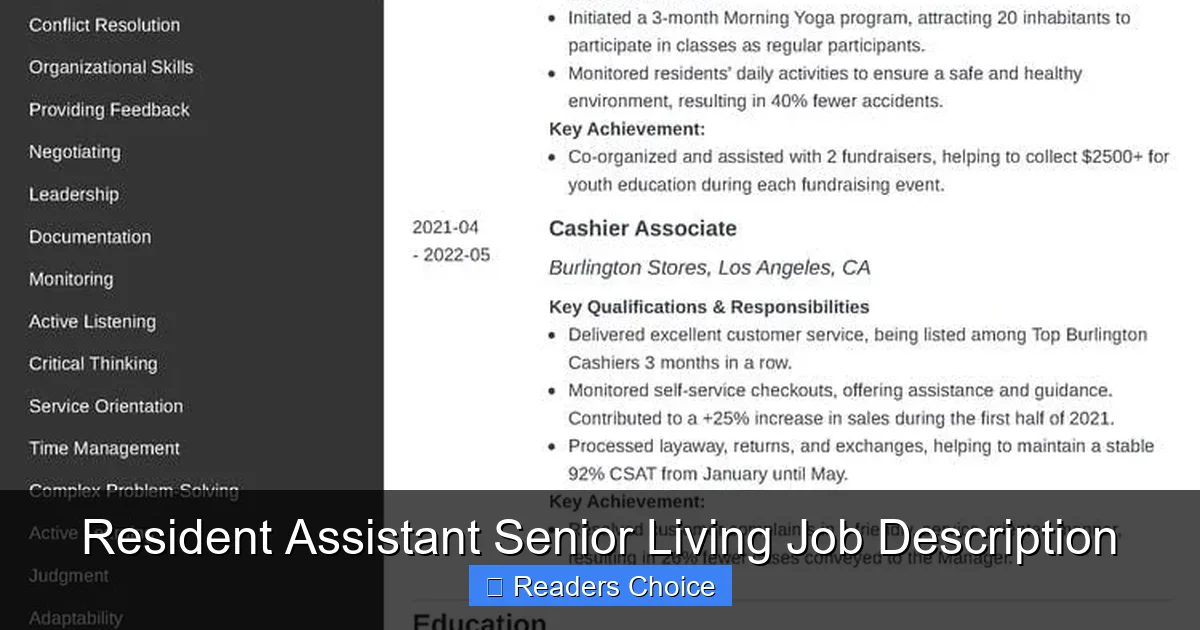
Visual guide about Resident Assistant Senior Living Job Description
Image source: cdn-images.resumelab.com
While the specific requirements vary by state and employer, most resident assistant positions have similar educational and certification standards.
Minimum Education Requirements
A high school diploma or GED is typically the minimum requirement. Some facilities may accept candidates who are still in high school but are close to graduation, especially for part-time or weekend roles.
Certification and Licensing
Many states require resident assistants to hold a certification such as:
- Certified Nursing Assistant (CNA)
- Home Health Aide (HHA)
- Personal Care Aide (PCA)
These programs usually take 4–12 weeks to complete and include both classroom instruction and hands-on clinical training. Topics covered may include:
- Basic anatomy and physiology
- Infection control
- Communication techniques
- Emergency procedures (e.g., CPR, first aid)
- Dementia care
- Ethics and resident rights
After completing the program, candidates must pass a state competency exam to become certified. Some employers may sponsor training or offer tuition reimbursement.
On-the-Job Training
Even with certification, new resident assistants usually go through a period of orientation and on-the-job training. This may last a few days to several weeks, depending on the facility. During this time, they shadow experienced staff, learn facility policies, and become familiar with resident care plans.
Continuing Education
To maintain certification, resident assistants are often required to complete continuing education units (CEUs) each year. These courses help them stay up to date on best practices, new regulations, and emerging trends in senior care.
Work Environment and Schedule
Resident assistants work in a variety of senior living settings, each with its own culture and pace.
Types of Facilities
- Assisted Living Facilities: Provide housing, meals, and personal care for seniors who need help with daily tasks but don’t require intensive medical care.
- Memory Care Units: Specialized environments for individuals with Alzheimer’s or other forms of dementia. These units often have secure entrances, structured routines, and staff trained in dementia care.
- Independent Living Communities: Offer minimal assistance, focusing more on housekeeping, transportation, and social activities.
- Continuing Care Retirement Communities (CCRCs): Provide a range of services from independent living to skilled nursing, allowing residents to “age in place.”
- Skilled Nursing Facilities (Nursing Homes): Offer 24/7 medical care and rehabilitation services. Resident assistants here may work alongside nurses and therapists.
Typical Work Schedule
Resident assistants often work in shifts, including:
- Day shifts (7 a.m. to 3 p.m.)
- Evening shifts (3 p.m. to 11 p.m.)
- Night shifts (11 p.m. to 7 a.m.)
Many facilities operate 24/7, so weekend, holiday, and overnight shifts are common. Full-time positions usually require 36–40 hours per week, while part-time roles may be available for students or those seeking flexible schedules.
Workplace Culture
Senior living communities often foster a family-like atmosphere. Staff members get to know residents personally, celebrate milestones together, and support one another through challenges. However, the work can also be stressful, especially during staffing shortages or when dealing with difficult behaviors.
Career Advancement and Opportunities
While many people start as resident assistants, this role can be a stepping stone to a long and rewarding career in healthcare.
Potential Career Paths
With additional education and experience, resident assistants can advance to roles such as:
- Lead Resident Assistant or Shift Supervisor
- Medication Technician
- Activities Director
- Case Manager
- Licensed Practical Nurse (LPN) or Registered Nurse (RN)
- Healthcare Administrator
Some resident assistants use their experience to transition into home health care, hospice, or social work. Others pursue degrees in gerontology, nursing, or public health.
Professional Development
Many employers support career growth by offering:
- Tuition reimbursement
- Certification bonuses
- Mentorship programs
- Leadership training
Joining professional organizations like the National Association of Health Care Assistants (NAHCA) can also provide networking opportunities, resources, and recognition.
Challenges and Rewards of the Job
Like any caregiving role, being a resident assistant comes with both challenges and rewards.
Common Challenges
- Physical Demands: Lifting, bending, and long hours on your feet can lead to fatigue or injury.
- Emotional Stress: Watching residents decline or pass away can be heartbreaking.
- Behavioral Issues: Some residents may become aggressive, confused, or uncooperative.
- Staffing Shortages: High workloads and burnout are common in the industry.
- Family Dynamics: Dealing with concerned or demanding family members can be challenging.
Emotional and Professional Rewards
Despite the challenges, many resident assistants find the job deeply fulfilling.
- Meaningful Relationships: Building trust and friendship with residents is incredibly rewarding.
- Making a Difference: Knowing you’ve improved someone’s day—or even their life—is powerful.
- Job Stability: The demand for senior care is growing, offering strong job security.
- Personal Growth: The role builds empathy, patience, and resilience.
- Team Camaraderie: Working alongside passionate, caring professionals creates a strong support system.
Tips for Success as a Resident Assistant
If you’re considering this career or are already in the role, here are some practical tips to thrive:
- Stay Organized: Use checklists and care plans to keep track of tasks and resident needs.
- Practice Self-Care: Take breaks, eat well, and seek support when needed.
- Ask Questions: Don’t hesitate to ask supervisors or experienced coworkers for help.
- Be Observant: Notice small changes in residents—they could be important.
- Show Respect: Always treat residents with dignity, even during difficult moments.
- Keep Learning: Take advantage of training and seek feedback to improve.
Conclusion
The resident assistant senior living job description encompasses a role that is both challenging and deeply meaningful. These caregivers are the backbone of senior living communities, providing essential support, companionship, and advocacy for some of the most vulnerable members of our society.
While the job requires physical stamina, emotional strength, and a commitment to ongoing learning, the rewards are immeasurable. From helping a resident regain confidence after a fall to sharing a laugh over a favorite song, every day offers opportunities to make a positive impact.
If you’re compassionate, dependable, and passionate about helping others age with dignity, this career could be a perfect fit. With growing demand for senior care and numerous paths for advancement, now is a great time to explore this fulfilling profession.
Frequently Asked Questions
What does a resident assistant do in senior living?
A resident assistant helps elderly individuals with daily living activities like bathing, dressing, eating, and mobility. They also provide emotional support, assist with medication reminders, and help maintain a safe, clean environment.
Do you need a degree to be a resident assistant?
No, a college degree is not required. Most positions require a high school diploma and state-specific certification, such as a CNA or HHA license.
Can resident assistants give medications?
Generally, no—resident assistants do not administer medications. However, they may remind residents to take their pills and report concerns to nursing staff. Some certified roles, like Medication Technicians, can assist with medications under supervision.
Is being a resident assistant a stressful job?
Yes, the job can be physically and emotionally demanding due to long hours, heavy workloads, and the emotional toll of caring for aging individuals. However, many find the work deeply rewarding and meaningful.
What is the average salary for a resident assistant?
Salaries vary by location and facility, but the average hourly wage in the U.S. ranges from $14 to $18. Certified roles and supervisory positions typically pay more.
How can I advance from a resident assistant role?
With experience and additional education, you can move into roles like supervisor, medication technician, or nurse. Many community colleges offer pathways from CNA to LPN or RN programs.