
Is Photography a Good Hobby for Seniors?


Bedside Commode Chair

Upright Walker

Reacher Grabber Tool
Quick Answer
Yes, photography is a good hobby for seniors because it combines creativity, learning, gentle activity, and meaningful social connection. You can start with a smartphone, work at your own pace, and photograph subjects almost anywhere. The National Institute on Aging encourages enjoyable and meaningful activities as part of healthy aging.
Why photography works well for older adults
- Easy to start: A smartphone or simple camera is enough for your first photo outing.
- Flexible pace: You can photograph for ten minutes or spend an afternoon exploring.
- Creative challenge: Light, color, patterns, people, and nature provide endless subjects.
- Gentle movement: Photo walks can add comfortable outdoor activity without turning the hobby into exercise.
- Meaningful memories: Photos can preserve family stories, trips, celebrations, gardens, and everyday life.
- Social options: Photography can be enjoyed alone, with family, or through clubs and classes.
Best way to begin
- Use the camera you already own, choose one simple subject, and take 10 photos before buying extra equipment.
Photography is one of those hobbies that can grow with you. You don’t need technical knowledge, expensive equipment, or perfect eyesight to enjoy taking meaningful pictures.
I especially like photography as a retirement hobby because ordinary places become interesting again. A neighborhood walk feels different when you’re looking for light, color, faces, reflections, and small details.
In This Guide
- Why is photography a good hobby for seniors?
- What are the main benefits of photography for seniors?
- Should seniors use a smartphone or a camera?
- How can a senior start photography as a hobby?
- How can photography be made comfortable and accessible?
- Is photography better as a solo or social hobby?
- Is photography an expensive hobby for seniors?
- What beginner photography mistakes should seniors avoid?
- Frequently asked questions
Why Is Photography a Good Hobby for Seniors?
Photography suits seniors because it has a low barrier to entry and almost unlimited room to grow. You can begin at home with a phone and still find new challenges years later.
Photography as a hobby means intentionally creating pictures for enjoyment, learning, memory keeping, or personal expression rather than for paid professional work.
It gives everyday life a purpose
A camera encourages you to notice things you might normally pass. Morning light on a window, a bird on a fence, or a grandchild laughing can become today’s project.
- At home: Photograph flowers, food, pets, crafts, or family keepsakes.
- Outdoors: Look for trees, architecture, clouds, reflections, and wildlife.
- With family: Document birthdays, visits, recipes, and traditions.
- While traveling: Build a visual record of places and experiences.
There isn’t a finish line. That makes photography easy to adapt around energy, weather, mobility, and available time.
You can measure your progress
Improvement becomes easy to see. Compare the photos you took this month with those from six months earlier.
You may notice straighter horizons, cleaner backgrounds, better timing, or more interesting light. Small improvements make the hobby satisfying without requiring competition.
Simple goal: Take one photo you like each day for 30 days. Don’t worry about producing 30 masterpieces.
What Are the Main Benefits of Photography for Seniors?
The strongest appeal is variety. Photography can involve creativity, observation, learning, movement, memory keeping, and interaction with other people.
Photography keeps you learning
There is always another small skill to practice. You might learn framing one week and experiment with shadows the next.
- Composition and framing
- Natural light
- Focus and exposure
- Portraits
- Nature photography
- Simple photo editing
- Organizing digital photos
Learning doesn’t need to become technical. One new idea at a time is enough.
It can encourage gentle activity
Photography gives walking a destination. Instead of walking simply to cover distance, you can search for five interesting subjects along the route.
The National Institute on Aging notes that enjoyable activities can create opportunities to move more during daily life. Its guidance on staying active as you age also emphasizes choosing activities that fit your abilities.
Safety tip: A photo walk doesn’t need to be long. Choose a familiar, level location and stop whenever you feel tired.
Photos can preserve personal history
Photography becomes especially meaningful when pictures are connected with names and stories. A simple family photo collection can become a personal archive.
- Photograph old family objects and write their stories.
- Record favorite recipes step by step.
- Document a garden through the seasons.
- Create portraits of children and grandchildren.
- Photograph meaningful places in your neighborhood.
Those projects provide a reason to take pictures beyond collecting attractive images.
Photography can support social connection
A camera creates easy conversation. People can share photos, compare locations, attend classes, or plan outings together.
The CDC’s social connection guidance explains that supportive relationships contribute to well-being. Photography offers one enjoyable way to build activities around those relationships.
Should Seniors Use a Smartphone or a Camera?

Most beginners should start with a smartphone. A dedicated camera becomes worthwhile when you want more zoom, manual control, image quality, or a different shooting experience.
| Feature | Smartphone | Simple Digital Camera | Mirrorless/DSLR Camera |
|---|---|---|---|
| Learning curve | Low | Low to moderate | Moderate to high |
| Weight | Very light | Light | Varies by body and lens |
| Extra cost | None if already owned | Moderate | Higher |
| Sharing photos | Very easy | May require transfer | May require app or transfer |
| Best for | Beginners and casual photography | Travel and simple zoom | Serious long-term learning |
Start with what you already own
I wouldn’t buy a large camera kit before knowing whether photography will stick. Use your phone for several weeks first.
If you begin wanting a longer zoom or more physical controls, visit a camera store and hold several models. Comfort matters more than impressive specifications.
How Can a Senior Start Photography as a Hobby?
The easiest approach is to learn one skill at a time. Your first goal should be taking pictures, not mastering every camera setting.
- Clean the lens. A fingerprint can make phone photos look hazy.
- Learn how to focus. On most phones, tap the important subject on the screen.
- Practice simple framing. Keep distracting objects away from the edges.
- Use good light. Begin near a window or outdoors in softer morning or evening light.
- Take several versions. Move closer, step back, and change your angle.
- Review your pictures. Decide which image you prefer and why.
Try a seven-day beginner challenge
A short challenge gives you direction without creating pressure. Spend about 10 to 20 minutes each day.
- Day 1: Photograph something red.
- Day 2: Photograph a favorite object.
- Day 3: Look for an interesting shadow.
- Day 4: Photograph a person or pet.
- Day 5: Find a repeating pattern.
- Day 6: Photograph something outdoors.
- Day 7: Choose your three favorite images.
After one week, you’ll already know which subjects attract you. That information is more useful than reading a long camera manual before taking pictures.
Learn composition before complicated settings
Composition means deciding what appears inside the frame and where you place it. Good composition can improve a photo even when everything is shot automatically.
- Move closer when the background feels cluttered.
- Keep the horizon straight.
- Leave space in front of a person who is looking sideways.
- Try placing the subject away from the exact center.
- Check the corners before pressing the shutter.
Section takeaway: Start by making pictures, not collecting equipment. A week of simple practice teaches more than hours spent comparing camera specifications.
How Can Photography Be Made Comfortable and Accessible?
Photography should fit your body rather than forcing you to adapt to uncomfortable equipment. Small changes can make the hobby easier on your eyes, hands, neck, and shoulders.
Choose equipment you can comfortably hold
- Use a light phone or camera.
- Add a wrist strap for extra security.
- Choose larger buttons if small controls are difficult.
- Use a small tripod when holding the camera steady becomes tiring.
- Sit while photographing flowers, tabletop objects, or family portraits.
A heavier camera isn’t automatically better. If equipment stays in a closet because it hurts to carry, it isn’t serving you.
Make screens easier to see
Increase text size or screen magnification when your device allows it. Raising brightness may also help outdoors, although it uses more battery power.
The National Eye Institute’s accessibility information highlights tools such as larger text and higher contrast for people who have difficulty viewing screens.
Health note: If changes in vision, hand strength, dizziness, or balance make photography difficult, discuss those changes with your own healthcare professional.
Plan comfortable photo outings
- Choose familiar locations with benches or rest areas.
- Carry water when spending time outdoors.
- Avoid rushing across uneven ground to get a picture.
- Wear supportive footwear for walking outings.
- Use a small bag rather than carrying unnecessary equipment.
No photograph is worth a fall or injury. A missed picture is simply a missed picture.
Is Photography Better as a Solo or Social Hobby?
It works equally well both ways. Quiet photographers can enjoy independent projects, while social photographers can use the hobby to meet people and spend time with family.
Solo photography can feel peaceful
There is something enjoyable about walking slowly without needing to match another person’s pace. You decide when to stop and what deserves attention.
- Nature photography
- Bird and garden photography
- Still life at home
- Architecture
- Street details
- Family-history projects
Group photography creates connection
A photography club gives everyone an immediate topic to discuss. Beginner classes can provide the same benefit without requiring advanced skills.
- Join a local camera or photography club.
- Attend community-center classes.
- Plan photo walks with friends.
- Ask grandchildren to teach you phone-camera features.
- Create a monthly family photo challenge.
- Visit botanical gardens, parks, or museums together.
As of 2026, phones also make sharing easy. A small private family group can turn a daily photo into an ongoing conversation.
Is Photography an Expensive Hobby for Seniors?
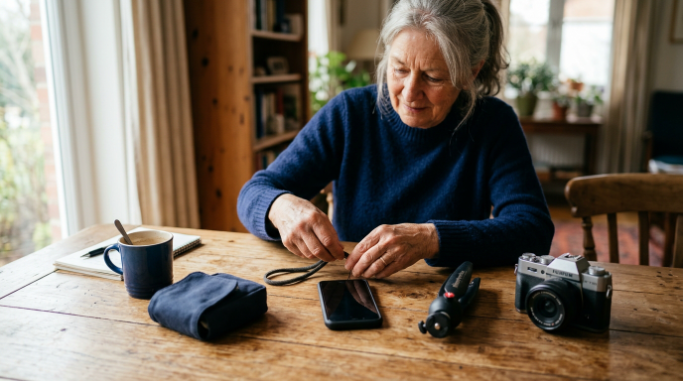
Photography can be expensive, but it doesn’t need to be. A senior who already owns a smartphone can begin without buying another camera.
A practical beginner budget
| Item | Need it immediately? | Reason |
|---|---|---|
| Existing smartphone | Yes | Enough for learning basic photography |
| Wrist strap | Optional | Can make handling more secure |
| Small tripod | Optional | Useful for steady shots and family photos |
| Editing app | Usually no | Built-in phone tools are enough at first |
| Dedicated camera | No | Buy only after identifying a real limitation |
The biggest beginner mistake is buying for the photographer you imagine becoming. Buy for the photography you’re doing now.
If you eventually photograph birds, sports, or distant wildlife, better zoom may become useful. Portraits or landscapes may lead you toward different equipment.
Money-saving rule: Don’t upgrade until you can clearly explain what your current camera prevents you from doing.
What Beginner Photography Mistakes Should Seniors Avoid?
The most common mistakes aren’t technical. They usually involve buying too much, learning too much at once, or becoming discouraged by imperfect photos.
- Buying expensive gear immediately: Start with your phone or an existing camera.
- Reading instead of shooting: Learn one concept, then practice it.
- Keeping every photo: Delete obvious duplicates and mistakes.
- Using digital zoom too much: Move closer when it is safe and practical.
- Ignoring backgrounds: Look behind the subject before taking the picture.
- Comparing yourself with professionals: Their experience and equipment may represent decades of work.
- Carrying too much: One camera is often enough for a relaxing outing.
- Forgetting backups: Important family photographs deserve a second copy.
Don’t let editing become the entire hobby
Simple editing can help with brightness, cropping, and color. It shouldn’t make every photograph feel like a repair project.
I prefer spending more time looking for a good picture than fixing a weak one afterward. That keeps photography connected to observation rather than software.
Give yourself permission to take bad pictures
Every photographer produces images that don’t work. Blurred faces, awkward backgrounds, missed focus, and poor timing are part of learning.
Keep shooting. Your mistakes show you what to try differently next time.
Frequently Asked Questions
Is 70 too old to start photography?
No. Photography has no required starting age. A phone camera provides an easy entry point, and the hobby can be adapted around mobility, vision, energy, and personal interests.
Is 80 too old to learn photography?
No. An 80-year-old can learn photography in small steps, just like any beginner. Starting with automatic settings and familiar subjects keeps the learning process manageable and enjoyable.
What is the easiest type of photography for seniors?
Phone photography, family photography, flowers, gardens, pets, and simple landscapes are easy places to start. They require little equipment and allow you to practice close to home.
Do seniors need a special camera?
No. There is no special camera required for older photographers. Comfort matters most, so look for manageable weight, easy-to-see controls, a clear screen, and simple operation.
Can photography help seniors stay socially active?
Yes, photography can create opportunities for clubs, classes, family projects, and group outings. Sharing photographs also gives friends and relatives an easy reason to stay in contact.
Can seniors learn photography using only a smartphone?
Yes. Modern smartphones are more than capable of teaching composition, lighting, portraits, landscapes, and basic editing. A separate camera is optional rather than necessary for beginners.
How often should a senior practice photography?
There is no required schedule. Two or three short sessions each week can provide steady practice, while a daily photo challenge may suit someone who enjoys more structure.
The Bottom Line
Photography is a strong hobby choice for seniors because it can remain simple or become as challenging as you want. It works at home, outdoors, alone, with friends, and during travel.
Start with the camera already in your pocket. Pick one subject today, take ten photographs, choose your favorite, and let the hobby grow from there.
