
Philips Sonicare vs Quip Electric Toothbrush for Seniors: 2026


Big Button Mobile Phone

Shiatsu Neck Massager

Smart Health Watch for Seniors
Philips Sonicare vs Quip electric toothbrush for seniors is a useful comparison if you want a brush that is easy to handle and simple to use each day. Both brands offer timers and gentle brushing options, but their designs and feature sets are quite different.
Sonicare has a wider range of models. Some focus on simple daily brushing, while higher models add pressure feedback, more modes, and smart features. quip focuses more on simple controls, slim designs, easy travel, and timed brushing.
Quick Comparison
For most seniors, Philips Sonicare is the stronger choice when cleaning control and pressure feedback are the top priorities. Many Sonicare models include pressure sensing, and some offer several brushing modes and intensities.
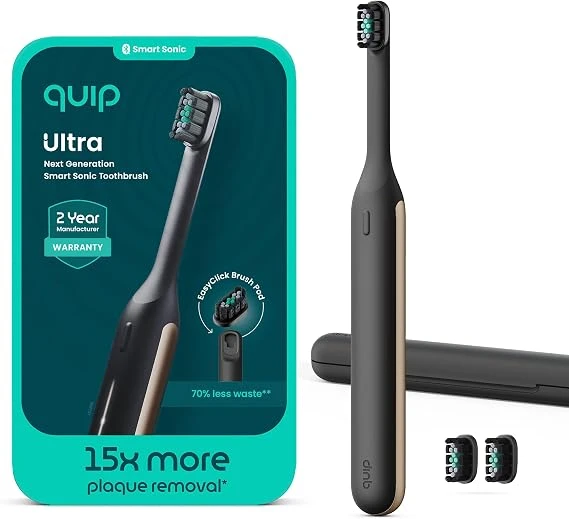
quip may be better for seniors who value simplicity, portability, and long battery life. Its original Sonic brush uses a replaceable AAA battery, while newer rechargeable models such as Ultra and Rev can last up to 30 days per charge.
The best choice depends on the model. A basic Sonicare and a premium quip Ultra are very different brushes.
Philips Sonicare vs Quip At a Glance
The table below focuses on features that can make everyday brushing easier for older adults.
| Feature | Philips Sonicare | quip |
|---|---|---|
| Ease of use | Simple models available | Very simple options available |
| Pressure feedback | Available on many models | Available on selected models |
| Timer | Yes | Yes |
| Battery | Varies by model | Up to 3 months on original Sonic; up to 30 days on some rechargeable models |
| Brushing options | Varies widely by model | Varies by model |
| Travel use | Good | Strong |
| Smart features | Available on selected models | Available on selected models |
| Best fit | More choice and control | Simplicity and portability |
Philips lists Sonicare models with features such as SmarTimer, QuadPacer, pressure sensors, and ergonomic designs. quip offers everything from its basic Sonic brush to Ultra and Rev models with more advanced controls.
Philips Sonicare Review for Seniors
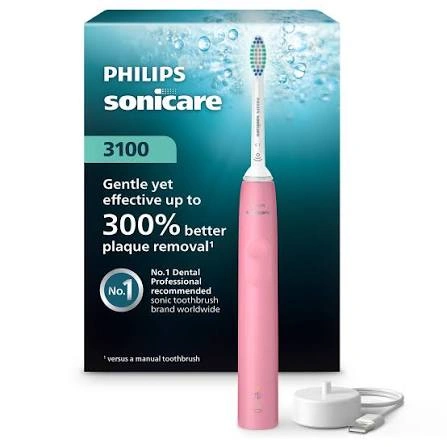
Philips Sonicare offers a broad range of electric toothbrushes. That is one of its biggest advantages for seniors because you can choose a simple model or move to a more advanced brush.
Ease of Use
Sonicare models can be quite simple to operate. Basic models may have only the main power control and a small number of settings.
Many current models also use a 2-minute timer and 30-second pacing. This can help users keep a steady brushing routine without watching a clock.
Pressure feedback is another useful feature. Depending on the model, Sonicare can signal excessive brushing pressure through changes in vibration, lights, or sounds.
Key Strengths
- Wide choice of models
- Pressure-sensing options
- Useful brushing timers
- Ergonomic designs on many models
- Different cleaning modes on selected brushes
- Rechargeable models are widely available
- Some models connect with an app
Potential Drawbacks
- The large model range can make choosing harder
- Advanced models may have more features than some users need
- Battery life varies by model
- Replacement heads add to long-term cost
Quip Review for Seniors
quip takes a different approach. Its original Sonic toothbrush keeps things simple, while Ultra and Rev add more advanced functions.
Ease of Use
The original quip Sonic has one main brushing mode, soft bristles, a 2-minute timer, and 30-second pulses. It also uses a slim, lightweight design and a replaceable AAA battery.
That simple design can be useful for someone who does not want several buttons or complicated settings.
The newer quip Ultra adds more control. It has a touch bar, 10+ intensity settings, a pressure sensor, and a countdown timer.
Key Strengths
- Slim and lightweight designs
- Simple original Sonic model
- Long battery life
- Travel-friendly options
- Timed brushing
- Pressure feedback on selected models
- Smart app features on selected models
Potential Drawbacks
- Features vary greatly between quip models
- Advanced models may be less simple than the original Sonic
- Some users may not want app features
- Replacement heads are an ongoing cost
Which Is Easier for Seniors to Use?
Both can be easy to use, but they suit different preferences.
A senior who wants simple operation may prefer the original quip Sonic. It has a straightforward design, one main brushing mode, and a timer. Its AAA battery also means there is no charging dock to manage.
A senior who wants more guidance while brushing may prefer a suitable Sonicare model. Pressure feedback and timed brushing can provide useful reminders during daily use.
Grip also matters. A slim handle can be helpful for someone who prefers a lighter toothbrush, while a person with reduced hand strength may prefer whichever model feels easier to hold securely.
The easiest toothbrush is not always the one with the most features. It is the one the user can operate comfortably every day.
Performance Comparison
Electric toothbrush performance depends heavily on the exact model and brush head. It would be misleading to treat every Sonicare or every quip brush as identical.
Sonicare uses sonic brushing technology across its electric toothbrush range. Current models include options with pressure sensing and different modes or intensities.
quip offers both sonic and oscillating designs. Its Rev line, for example, uses an oscillating round brush head, while the original quip Sonic uses sonic vibrations.
| Performance Area | Philips Sonicare | quip |
|---|---|---|
| Cleaning technology | Sonic | Sonic or oscillating, depending on model |
| Timer | Yes | Yes |
| Pressure guidance | Available on many models | Available on selected models |
| Intensity choices | Model dependent | Model dependent |
| Smart tracking | Selected models | Selected models |
For a senior who wants more choice in cleaning settings, Sonicare has an advantage because its range includes models with multiple modes and intensities.
Comfort, Accessibility, and Senior-Friendly Design
Comfort is more than brush performance. The handle, controls, charging system, and brush head all affect daily use.
Sonicare offers slim ergonomic designs on several models. Some also provide pressure feedback, which can help users recognize when they are pressing too hard.
quip is especially focused on a slim, lightweight form. Its original Sonic is designed to feel familiar to people moving from a manual toothbrush.
| Senior Need | Philips Sonicare | quip |
|---|---|---|
| Simple brushing | Good on basic models | Strong on original Sonic |
| Lightweight feel | Model dependent | Strong |
| Pressure guidance | Strong on supported models | Available on selected models |
| Travel | Good | Very good |
| Charging simplicity | Model dependent | Strong on battery models |
If hand comfort is a concern, compare the actual model and handle before buying. Brand-level comparisons cannot tell you exactly how every model will feel in the hand.
Features Comparison
The biggest difference is choice.
Sonicare gives shoppers a broad range of brushes. Some have basic controls, while others add pressure sensing, several modes, intensities, and app-based features.
quip also has a broadening range. The original Sonic is intentionally simple, Ultra adds smart sonic controls, and Rev uses oscillating cleaning with additional settings.
| Feature | Philips Sonicare | quip |
|---|---|---|
| Basic option | Yes | Yes |
| Pressure sensor | Many models | Selected models |
| App | Selected models | Selected models |
| Multiple modes | Selected models | Selected models |
| Long battery option | Model dependent | Up to 3 months on original Sonic |
| Smart controls | Selected models | Ultra and selected models |
This makes Sonicare a better fit for shoppers who want to compare many feature levels. quip may appeal more to shoppers who prefer a simple design.
Price, Maintenance, and Long-Term Value
Prices vary by model, retailer, and promotions, so a fixed brand-wide price would not be reliable.
Both brands require replacement brush heads. quip promotes automatic replacement-head delivery every three months through its subscription system.
Sonicare also has a wide range of replacement heads and brush models. The long-term cost therefore depends on the specific brush and head selected.
For value, think beyond the initial purchase price.
| Cost Factor | Philips Sonicare | quip |
|---|---|---|
| Brush heads | Ongoing cost | Ongoing cost |
| Battery/charging | Model dependent | Battery or rechargeable, model dependent |
| Subscription | Not required for basic use | Optional refill subscription available |
| Long-term value | Strong with the right model | Strong for simple routines |
| Best value approach | Match features to needs | Avoid paying for features you will not use |
A senior who wants only basic brushing help may get better value from a simple model. Paying more for smart tracking makes less sense if those features will never be used.
Who Should Choose Philips Sonicare?
Choose Philips Sonicare if:
- You want more model choices.
- Pressure feedback is important.
- You want different brushing modes or intensities.
- You prefer a rechargeable toothbrush.
- You want the option of app-based brushing features.
- You want to choose a brush based on specific needs.
Who Should Choose Quip?
Choose quip if:
- You prefer a slim, simple toothbrush.
- You travel often.
- You want long battery life.
- You dislike complicated controls.
- You like automatic replacement-head delivery.
- You want a basic brush or a newer smart model depending on your needs.
Philips Sonicare vs Quip — Final Verdict
Best for most seniors: Philips Sonicare, when a suitable model with simple controls and useful pressure feedback is selected.
Best for simplicity: quip, especially the original Sonic.
Best for feature choice: Philips Sonicare.
Best for portability: quip.
Best for pressure guidance: Philips Sonicare on models equipped with pressure sensing.
Best for smart brushing: A higher-end model from either brand can work well, but the specific model matters more than the brand.
There is no single winner for every senior. A person who wants a simple, lightweight brush may prefer quip. Someone who wants more cleaning options and pressure guidance may find Sonicare the better fit.
Scoring Summary
These scores are a practical comparison of the product lines, not laboratory test results. Individual models can score differently.
| Category | Philips Sonicare | quip |
|---|---|---|
| Ease of Use | 9/10 | 9/10 |
| Senior-Friendly Design | 9/10 | 9/10 |
| Performance Options | 9/10 | 8/10 |
| Maintenance | 8/10 | 9/10 |
| Value | 8/10 | 8/10 |
Sonicare gets the edge for its broad range and pressure-sensing options. quip scores well for simplicity, portability, and battery convenience.
How We Evaluate Products
This comparison focuses on practical factors that can affect daily use by older adults.
We consider:
- Ease of use
- Handle and control design
- Brushing guidance
- Comfort
- Pressure feedback
- Battery convenience
- Maintenance
- Replacement heads
- Portability
- Long-term value
The comparison does not claim hands-on testing or laboratory testing. Product features can also vary by model and generation.
Senior-Specific Buying Considerations
Physical Effort
Look for a handle that feels secure without requiring a strong grip. If hand strength is limited, a comfortable shape may matter more than extra features.
Controls
Simple controls can reduce confusion. If several modes are included, make sure the user actually wants them.
Maintenance
Check how often the brush head needs replacement and how easy it is to obtain compatible heads.
Charging
Think about whether the user prefers a rechargeable brush or a battery-powered model.
Storage
A travel case, holder, or charging stand can make storage easier and keep the brush in a predictable place.
Safety
Electric toothbrushes should be used according to the manufacturer’s instructions. Avoid applying excessive pressure. Sonicare models with pressure feedback can provide a useful warning when too much force is detected.
If a person has a dental condition, significant gum problems, or special oral-care needs, it is sensible to ask a dentist which type of brush and brush head would be appropriate.
Common Buying Mistakes
Avoid these mistakes when choosing between Sonicare and quip:
- Choosing the brand instead of the right model
- Paying for smart features that will not be used
- Ignoring handle comfort
- Forgetting the cost of replacement heads
- Assuming every model has a pressure sensor
- Comparing battery claims without checking the exact model
- Choosing based only on the initial purchase price
The last point is especially important. A toothbrush can be inexpensive at first but cost more over time if replacement heads are expensive or difficult to obtain.
Conclusion
Philips Sonicare and quip both offer senior-friendly electric toothbrush options, but they take different approaches. Sonicare stands out for its wide model range, pressure-sensing options, and cleaning controls. quip stands out for slim designs, simple operation, portability, and long battery options.
For a senior who wants more control and brushing guidance, Philips Sonicare is the stronger choice. For someone who wants a simple and travel-friendly routine, quip may be the better fit. The key is to compare the exact model rather than choosing based on the brand name alone.
