
Low Income Senior Housing St Paul Mn


Heated Blanket

Fall Detection Smart Watch

Digital Thermometer
Navigating low income senior housing in St Paul, MN can feel overwhelming, but it’s a vital resource for many. This guide breaks down the types of affordable housing available, from subsidized apartments to income-restricted communities, and explains the strict eligibility requirements based on age and income. We provide a clear roadmap for the application process, highlight key local properties and agencies, and share practical tips to improve your chances of securing a spot. You’ll learn about waiting lists, required documentation, and additional financial assistance programs to make your senior years secure and comfortable without breaking the bank.
Key Takeaways
- Eligibility is strict: You must be 62+ (or 55+ in some buildings) and meet low-income limits set by HUD for the Twin Cities area, typically 50-60% of Area Median Income.
- Types of housing vary: Options include HUD-subsidized apartments, Low-Income Housing Tax Credit (LIHTC) buildings, and Section 202 Supportive Housing, each with different application processes.
- Waiting lists are long: Popular properties in St. Paul often have multi-year waitlists. Apply to multiple buildings and update your information annually.
- Documentation is key: Be prepared to provide proof of age, income (tax returns, award letters), assets, and citizenship for every household member.
- Local resources can help: The St. Paul Senior Center, MinnesotaHelp.info, and the local Public Housing Agency (PHA) offer free guidance and application assistance.
- Financial assistance may be available: Beyond rent subsidies, look into energy assistance, property tax deferrals for seniors, and SNAP benefits to free up income for other costs.
- Community matters: Consider the location’s access to healthcare, grocery stores, and public transit when choosing a community to maintain independence.
📑 Table of Contents
- Understanding the Need for Affordable Senior Housing in St. Paul
- Types of Low Income Senior Housing Available
- Eligibility Requirements: Do You Qualify?
- The Application Process: A Step-by-Step Guide
- Key Resources and Properties in St. Paul
- Tips for Success and Common Pitfalls to Avoid
- Conclusion: A Journey Worth Taking
Understanding the Need for Affordable Senior Housing in St. Paul
St. Paul, Minnesota, is a vibrant city with a strong sense of community, but like many urban areas, it faces a significant challenge: providing low income senior housing St Paul MN residents can actually afford. For seniors living on fixed incomes—whether from Social Security, a modest pension, or disability payments—the rising cost of rent can force difficult choices between housing, healthcare, food, and other necessities. Finding safe, comfortable, and affordable housing isn’t just a convenience; it’s a cornerstone of health, dignity, and quality of life in one’s later years.
The landscape of affordable senior housing is complex. It’s not a single program but a patchwork of federal, state, and local initiatives, each with its own rules, application processes, and waiting lists. This guide is designed to cut through that complexity. We will walk you through exactly what “affordable” means in St. Paul, the different types of housing you might qualify for, where to find openings, and the step-by-step process of applying. Our goal is to empower you with knowledge, so you can approach this journey with confidence and find a stable, welcoming place to call home.
Types of Low Income Senior Housing Available
When you start your search, you’ll encounter several different categories of low income senior housing in St. Paul. Understanding the differences between them is the first step toward targeting your search effectively.

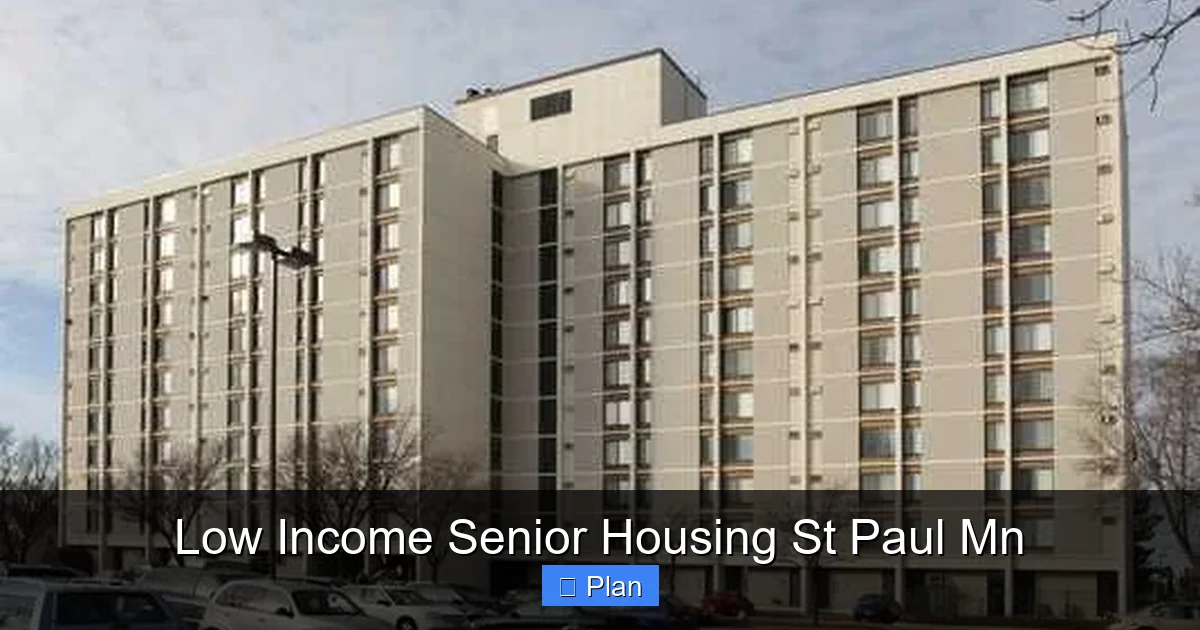
Visual guide about Low Income Senior Housing St Paul Mn
Image source: lowincomehousing.us
HUD-Subsidized Apartments (Section 202 & 811)
These are some of the most sought-after options. The U.S. Department of Housing and Urban Development (HUD) provides subsidies directly to building owners, allowing them to charge rents based on a tenant’s income. Typically, tenants pay no more than 30% of their adjusted gross income for rent and utilities.
- Section 202 Supportive Housing for the Elderly: Specifically for very low-income seniors (62+). These buildings often include supportive services like housekeeping, transportation, or meal programs.
- Section 811 Supportive Housing for Persons with Disabilities: While not age-specific, many residents are seniors with disabilities. Eligibility requires a disability as defined by HUD.
Properties in St. Paul receiving these subsidies include places like the Trout Brook Senior Housing and Ravine Senior Apartments. They are managed by non-profit or for-profit developers who contract with HUD.
Low-Income Housing Tax Credit (LIHTC) Properties
This is the most common source of new affordable housing in the country. Developers receive tax credits for building or rehabilitating apartments and agree to keep rents affordable for a set period (usually 30 years). Rents are set at a percentage of the Area Median Income (AMI), often 30%, 40%, 50%, or 60% AMI. Many LIHTC buildings are age-restricted (55+ or 62+) and are not directly subsidized by HUD, but their rents are still significantly below market rate. Examples in St. Paul include various properties developed by organizations like CommonBond Communities and Project for Pride in Living (PPL).
Public Housing for Seniors
The St. Paul Public Housing Agency (PHA) manages some buildings designated for senior households. These are part of the traditional public housing program, where rents are based on income (typically 30%). The application is made directly through the St. Paul PHA, and waitlists can be extremely long. You can learn more about general qualification standards on sites like SeniorsProTalk’s guide on qualifying for low-income senior housing.
Housing Choice Vouchers (Section 8) for Seniors
While the classic Section 8 voucher is a tenant-based program allowing you to rent any private apartment that meets program standards, there is often a long waitlist for these vouchers administered by the St. Paul PHA. Some PHAs also have preferences for elderly households. If you receive a voucher, you pay 30% of your income, and the voucher covers the rest up to a payment standard. This offers maximum choice but depends on finding a landlord who accepts the voucher.
Eligibility Requirements: Do You Qualify?
This is the gatekeeper step. If you don’t meet the basic criteria, your application won’t move forward. The core requirements for low income senior housing in St Paul MN are universal, but the specific income limits can vary slightly by property and household size.
Visual guide about Low Income Senior Housing St Paul Mn
Image source: lowincomehousing.us
Age Requirements
The standard is that the head of household, co-head, or spouse must be 62 years of age or older. Some properties marketed as “senior” or “active adult” may have a lower age threshold of 55+ (per the Housing for Older Persons Act). Always check the specific building’s policy. Households with a younger head of household generally cannot apply for senior-specific buildings.
Income Limits
This is the most critical and rigid rule. Your household’s total annual income must fall below a certain percentage of the Area Median Income (AMI), adjusted for household size. The Minneapolis/St. Paul metropolitan area has its own AMI, which is updated yearly by HUD.
For Fiscal Year 2024, the income limits for a one-person household in the Twin Cities area are approximately:
- Extremely Low Income: $29,350 (30% of AMI)
- Very Low Income: $48,900 (50% of AMI)
- Low Income (for some LIHTC units): $58,700 (60% of AMI)
These numbers increase with each additional household member. Most subsidized and affordable senior housing targets households at 50% or 60% AMI. You must provide documentation (tax returns, W-2s, Social Security award letters) for all income sources.
Citizenship and Screening
At least one household member must be a U.S. citizen or have eligible immigration status. All adult household members will undergo a criminal background check. While not an automatic disqualifier, certain criminal histories (especially violent crimes or recent drug-related activity) can prevent admission. Rental history will also be checked.
For a deep dive into proving your eligibility and understanding all the nuances, the article on how to qualify for low-income senior housing is an excellent companion resource.
The Application Process: A Step-by-Step Guide
Applying for low income senior housing in St Paul is not a one-time event. It’s a process that requires patience, organization, and persistence. Here is a realistic roadmap.

Visual guide about Low Income Senior Housing St Paul Mn
Image source: housingstpaul.com
Step 1: Research and Create a Target List
Don’t just apply to one place. Start by compiling a list of all eligible properties in St. Paul. Use these key resources:
- Minnesota Housing: The state agency’s website has a searchable directory of affordable housing properties.
- MinnesotaHelp.info: A comprehensive community resource database. Search for “senior housing” in Ramsey County.
- Local Non-Profits: Contact CommonBond, PPL, Model Cities, and Mercy Housing directly for their St. Paul properties.
- The St. Paul Senior Center: Their staff maintains lists and can provide personalized guidance.
For each property, note: the exact age requirement, income limit (as a % of AMI), whether utilities are included, pet policies, and contact information.
Step 2: Gather Your Documentation
Before you even pick up the phone or fill out a form, assemble a complete application packet. Missing documents are the #1 reason for delays or disqualification. You will need:
- Proof of Age (Driver’s License, State ID, or Birth Certificate) for all household members.
- Proof of Income for the last 12 months for all sources (Social Security, pension, part-time work, etc.). This includes award letters, bank statements showing deposits, and most recent tax returns.
- Proof of Assets (bank statements, retirement account statements).
- Proof of Citizenship/Eligible Immigration Status.
- Current landlord contact information and rental history for the past 5-7 years.
- Photo IDs for all adult household members.
Make certified copies. You will submit these repeatedly.
Step 3: Submit Applications and Get on Waitlists
This is the most time-consuming part. You must contact each property individually. Some have online portals; others require mailing or dropping off a paper application. When you apply, ask:
- “What is the current estimated wait time for a one-bedroom unit?” (Answers can range from 6 months to 5+ years).
- “Do you have any preferences or priorities?” (Some give preference to veterans, those currently homeless, or people with local ties).
- “How do I update my information or check my status on the waitlist?” Get a specific contact name/email/phone.
Apply to at least 5-10 properties to maximize your chances. The wait is long, but the clock starts ticking the day your *complete* application is accepted. Do not skip any steps or submit incomplete forms.
Step 4: The Waiting Period
This is the hardest part. You must be proactive. Mark your calendar to call and confirm your application is still active and to update your contact information every 6-12 months. If your income changes significantly (up or down), report it. If you move, you MUST update your address. Failure to do so can result in being removed from the waitlist after a property tries to contact you about an available unit and gets no response.
Step 5: Unit Offer and Move-In
When a unit becomes available, you will be contacted. You will then go through a final verification process, providing updated income and asset documentation. You will sign a lease, typically for one year. Before move-in, you may need to pay a security deposit (often capped at one month’s rent) and first month’s rent. Be prepared to move quickly once an offer is made—you usually have 5-10 business days to accept or decline.
Key Resources and Properties in St. Paul
Knowing where to look is half the battle. Here is a non-exhaustive list to start your search. Always verify current availability and eligibility directly with the property.
Major Property Management Companies & Non-Profits
- CommonBond Communities: One of the largest non-profit developers and managers of affordable housing in the Twin Cities. They have numerous senior properties in St. Paul, such as Glen Park Senior Housing and West 7th Senior Housing.
- Project for Pride in Living (PPL):strong> Develops and manages affordable housing across the metro. Check their listings for St. Paul senior apartments.
- Mercy Housing: A national non-profit with properties in Minnesota, including senior communities.
- Volunteers of America (VOA): Manages several senior housing facilities in the region.
Specific St. Paul Properties (Examples)
- Trout Brook Senior Housing (HUD-subsidized)
- Ravine Senior Apartments (HUD-subsidized)
- Maplewood Senior Apartments (LIHTC, 55+)
- Dellwood Gardens (Senior community, check income restrictions)
- Cesar Chavez Apartments (Senior floors, affordable units)
Note: Building names and availability change. Use these as starting points for your research, not as a definitive list.
Essential Local Agencies for Help
- St. Paul Senior Center: Located at 110 E. Kellogg Blvd. They are an invaluable hub for information, activities, and housing navigation assistance. Their staff knows the local landscape intimately.
- St. Paul Public Housing Agency (PHA): Manages the public housing waitlist and Section 8 voucher program for the city. Apply for the waitlist online when it opens (note: waitlists often close quickly).
- Ramsey County Adult Services: Can provide information on financial assistance programs that can help seniors remain housed, such as emergency assistance or general assistance.
- Minnesota Housing Finance Agency: Provides the statewide directory and information on state-funded programs.
For seniors in other parts of the country, similar state-specific guides exist. For instance, you can explore affordable senior housing in Georgia to see how programs differ by state.
Tips for Success and Common Pitfalls to Avoid
Based on common experiences, here is actionable advice to improve your odds.
Apply Everywhere, Strategically
Do not put all your eggs in one basket. Apply to a mix of properties with different wait times—some with notoriously long waits (5+ years) and some with potentially shorter ones (1-3 years). This creates a staggered timeline for offers. Also, apply in neighboring suburbs like Maplewood, Roseville, or Lauderdale if you have transportation options, as their wait times might be shorter.
Be Meticulous and Proactive with Your Application
An incomplete application is a dead application. Use a checklist. Keep copies of everything you send. When you move, send a certified letter with your new address to every property waitlist you are on. Call every 6 months to confirm you are still on the list and your contact info is correct. This simple step prevents the heartbreaking scenario of missing a unit offer because a letter was sent to an old address.
Understand All Costs Beyond Rent
Ask if the advertised rent includes utilities (heat, water, electricity). A “low income” rent that doesn’t include a $200/month heat bill in a Minnesota winter may not be as affordable as it seems. Also ask about other fees: parking, pet rent, trash removal, and cable/internet.
Plan for the Move-In Costs
Even with low rent, the upfront costs can be a hurdle. Security deposits (often $500-$1,000), first month’s rent, and moving expenses require cash. Explore local charities, church assistance programs, or the St. Paul Senior Center for potential help with these initial costs. The help for low-income seniors article covers various aid programs that might assist with move-in expenses or other needs.
Consider Your Long-Term Needs
Think about accessibility. Do you need a unit with no steps? Grab bars in the bathroom? Are the doorways wide enough for a walker? While not all affordable buildings are fully accessible, it’s worth asking about modifications. Also, consider the building’s location relative to pharmacies, grocery stores, and your healthcare providers. Access to reliable public transit is a huge plus in St. Paul.
Conclusion: A Journey Worth Taking
The search for low income senior housing in St Paul MN is a marathon, not a sprint. It demands organization, patience, and a willingness to navigate bureaucracy. But the reward—a safe, stable, and affordable home in a great city—is immense. It provides peace of mind, frees up limited income for healthcare and food, and connects you to a community of peers.
Start today. Gather your documents, make your list, and submit those first few applications. Use the St. Paul Senior Center as your advocate and guide. Remember, getting on the waitlist is the most important first step. The clock is ticking, and the sooner you start, the sooner you might find your way to a more secure and comfortable future in the city you love.
Frequently Asked Questions
What is the maximum income to qualify for low income senior housing in St. Paul?
It varies by household size and the specific building’s income limit (e.g., 50% or 60% of Area Median Income). For a one-person household in 2024, the limit is roughly $48,900 for 50% AMI. Always check the specific property’s requirements, as they must meet HUD guidelines for the Twin Cities metro area.
How long are the waiting lists for affordable senior apartments?
Waiting lists are typically very long, often ranging from 1 to 5 years for the most desirable locations and properties. The only way to know for sure is to apply and ask the management for their current estimated wait time. Applying to multiple properties is essential.
Can I have a roommate or live with my family in low income senior housing?
Generally, senior housing is for households where the head or spouse is 62+ (or 55+ in some buildings). You can live with a spouse or a live-in aide if medically necessary. Having unrelated adult roommates who do not meet the age requirement is usually not permitted in these age-restricted communities.
Are pets allowed in low income senior housing?
Policies vary by property. Many allow small pets (cats, dogs under a certain weight) with a pet deposit and possibly a monthly pet rent. Some have “no pet” policies. Service animals are always allowed as a reasonable accommodation for a disability. You must ask about the specific pet policy before applying.
What if my income is too high for “low income” but I still can’t afford market rent?
You may qualify for “moderate income” units (often set at 80% AMI) in some LIHTC buildings, which have higher income limits but rents still below market. Additionally, if your income is too high for subsidized rent, you might still benefit from the low income senior housing St Paul MN search by finding an unsubsidized but income-restricted apartment that is cheaper than the open market.
Is transportation provided to these senior housing communities?
Most affordable senior buildings do not provide scheduled transportation like a private shuttle. However, many are located on or near public transit routes (bus, light rail). Some may partner with local services or the St. Paul Senior Center for occasional group trips. It’s crucial to investigate the specific location’s transit access during your search.