
Low Income Senior Housing Meridian Idaho


Toilet Seat Bidet Attachment

Indoor Security Camera

Electric Heating Pad
Finding affordable senior housing in Meridian, Idaho, is a critical need for many on fixed incomes. This guide navigates the landscape of subsidized and income-restricted communities, detailing programs like Section 8 and Low-Income Housing Tax Credits. You’ll learn clear eligibility requirements, step-by-step application processes, and practical tips to secure a spot in a welcoming, safe community.
If you’re a senior living on a fixed income in Meridian, Idaho, the quest for safe, comfortable, and truly affordable housing can feel overwhelming. Meridian, one of Idaho’s fastest-growing cities, offers excellent amenities and a vibrant community, but its rising cost of living puts pressure on seniors with limited resources. The good news is that there are dedicated pathways to low income senior housing in Meridian, Idaho. These aren’t just apartments; they are gateways to stability, community, and peace of mind. This guide is designed to cut through the confusion, providing you with a clear, actionable roadmap to find and secure the affordable senior living option you deserve.
Understanding this landscape means learning a new language of terms like “income-restricted,” “subsidized,” and “Area Median Income (AMI).” It means knowing which agencies hold the keys to applications and how to present your financial story in the best light. Most importantly, it requires a strategy. This article will walk you through every step, from figuring out if you qualify to submitting a winning application and navigating the wait. We’ll explore the specific properties in Meridian, break down complex programs like Section 8, and share insider tips to improve your chances. Let’s begin this journey together.
Key Takeaways
- Meridian has specific income-restricted senior housing: Options exist but are limited, requiring proactive research and patience due to often lengthy waitlists.
- Eligibility is primarily based on age and income: Most programs require residents to be 62+ and have an annual income below a certain percentage of the Area Median Income (AMI).
- Multiple subsidy programs help lower costs: Key programs include Section 8 Housing Choice Vouchers, project-based subsidies, and Low-Income Housing Tax Credit (LIHTC) properties.
- The application process is thorough and document-heavy: Be prepared to provide proof of age, income, assets, and household composition for all applicants.
- Waiting lists are common and can be long: Apply to multiple properties immediately and keep your application information updated to maintain your spot.
- Utilize local resources for support: The Idaho Housing and Finance Association (IHFA) and Meridian city services are invaluable for finding listings and understanding programs.
📑 Table of Contents
- Understanding the Low-Income Senior Housing Landscape in Meridian
- Eligibility Requirements: Are You Qualified?
- Types of Low-Income Senior Housing Available in Meridian
- Navigating the Application Process: A Step-by-Step Guide
- Financial Strategies Beyond Rent: Making It Work
- Specifics for Meridian: Properties and Local Resources
- Overcoming Common Challenges and Next Steps
- Conclusion: Your Path Forward
Understanding the Low-Income Senior Housing Landscape in Meridian
The term “low-income senior housing” in Meridian encompasses several different models, each with its own rules and funding sources. It’s crucial to understand these distinctions because they determine your eligibility, your monthly rent, and how you apply. The common thread is that these properties limit who can live there based on age (typically 62 or older, though some are 55+) and household income, which must fall below a set threshold relative to the local AMI.
Project-Based Subsidies vs. Tenant-Based Vouchers
This is the most important distinction. Project-based subsidies are attached directly to an apartment unit. If you live in a unit with this subsidy, your rent is calculated as a percentage of your income (usually 30%). The subsidy stays with the apartment, not you. Examples include properties developed with Low-Income Housing Tax Credits (LIHTC) or those with USDA Rural Development loans. If you move, you lose the subsidy and must reapply elsewhere.
Tenant-based subsidies, like the federal Section 8 Housing Choice Voucher, move with the tenant. You find a unit that meets program standards and the housing authority pays a portion of the rent directly to the landlord. This offers more choice but is notoriously difficult to obtain due to massive waitlists. The Idaho Housing and Finance Association (IHFA) administers the Section 8 program for many parts of Idaho, including the Meridian area.
The Role of the Area Median Income (AMI)
All income limits are based on the Area Median Income for the Boise-Nampa metropolitan area, which includes Meridian. The U.S. Department of Housing and Urban Development (HUD) calculates this annually. For a one-person household in 2024, 50% of AMI is approximately $36,300. Most low-income senior housing targets households earning 50% or 60% of AMI. A property funded with 9% LIHTC credits, for instance, must set aside at least 40% of its units for households earning 60% AMI or less. Your specific income limit will depend on the property and your household size. You can find the current AMI charts on the IHFA website.
Eligibility Requirements: Are You Qualified?
Before you start filling out applications, you must ensure you meet the basic criteria. While specifics vary by property and funding source, the core requirements are consistent.
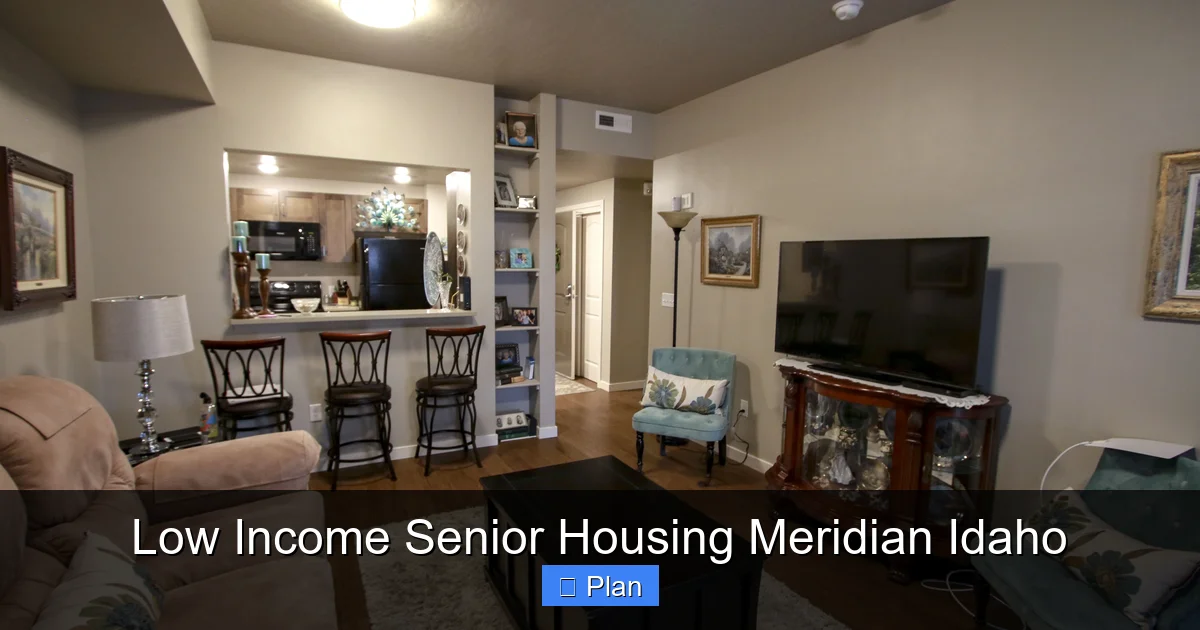
Visual guide about Low Income Senior Housing Meridian Idaho
Image source: idahohousing.com
Age and Household Composition
The primary resident must meet the age requirement. Most properties are for persons aged 62 or older. Some “55+” communities follow different rules under the Housing for Older Persons Act (HOPA), which allows them to limit residency to older adults but may permit a small percentage of younger residents (e.g., a spouse under 55). You will need to provide a government-issued ID (driver’s license, passport) as proof of age. The application will also ask for the full names, dates of birth, and relationships of all people who will live in the unit, including a live-in aide if applicable.
Income and Asset Tests
This is the financial gatekeeper. You must document that your household’s total annual gross income is at or below the specified limit for that property (e.g., 50% or 60% AMI). Income includes wages, Social Security, pensions, IRA distributions, and some types of public assistance. Assets like bank accounts, stocks, and bonds are also considered for some programs, though primary residences and personal property are often excluded. You will need recent pay stubs, benefit award letters (from Social Security or the VA), and bank statements. If you’re applying with a Section 8 voucher, your tenant-paid portion of rent is capped at 40% of your adjusted monthly income.
For a deeper dive into the universal qualification process, including how assets are treated and special considerations for medical expenses, the guide on how to qualify for low-income senior housing is an essential companion to this Meridian-specific information.
Types of Low-Income Senior Housing Available in Meridian
Meridian offers a mix of housing types, from apartment-style complexes to smaller, home-like settings. Here are the most common models you’ll encounter in your search.
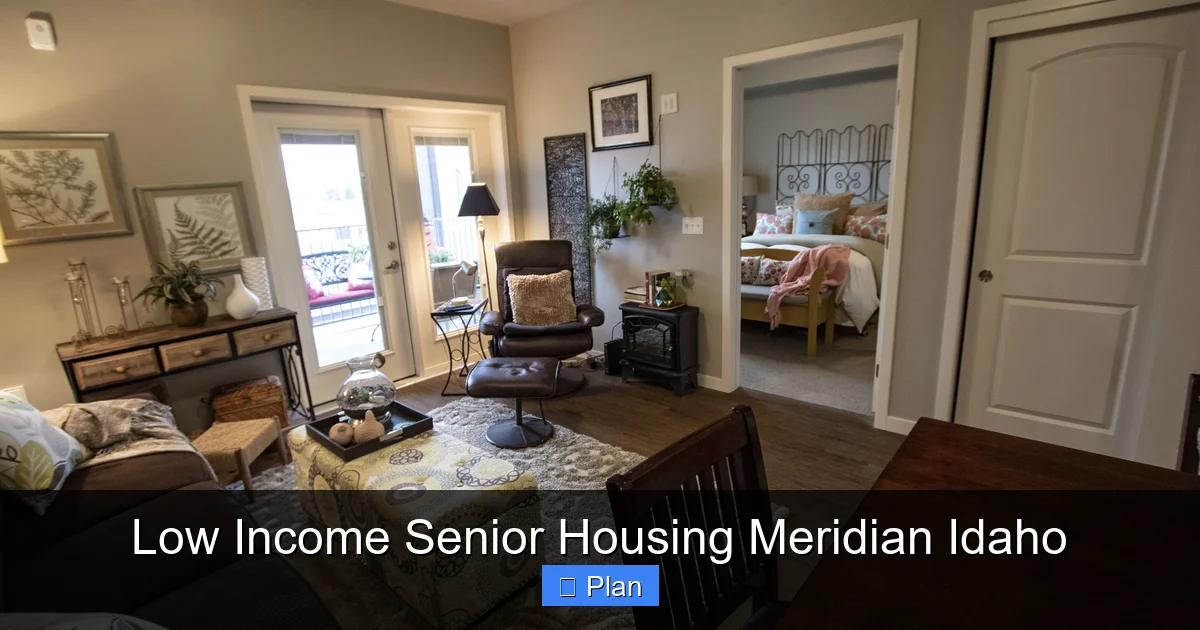
Visual guide about Low Income Senior Housing Meridian Idaho
Image source: idahohousing.com
Income-Restricted Apartment Communities
These are large, multi-unit buildings where rents are set below market rate for qualifying seniors. They are often the most visible option. Examples in the Meridian area include properties like The Reserve at Meridian (which has income-restricted units) and Sage Senior Living (which offers affordable units based on AMI). These communities typically offer amenities like a community room, laundry facilities, and sometimes transportation. Rents are calculated using a standard formula (often 30% of monthly income) and are significantly lower than market-rate apartments in the same area.
Section 8 Senior Housing
Some apartment complexes in Meridian have a certain number of units that are “project-based Section 8.” This means the subsidy is tied to the unit, and the rent is affordable for the tenant. You apply directly to the property management for these specific units. These are highly sought after. Additionally, if you are lucky enough to receive a tenant-based Section 8 voucher from the IHFA waitlist, you can search the entire private rental market in Meridian for a landlord willing to accept the voucher. Finding a landlord who accepts vouchers requires persistence, but it provides maximum flexibility.
Supportive Housing Models
Some properties integrate housing with optional supportive services like case management, medication assistance, or meal programs. These may be funded through grants or partnerships with local agencies. While not all are “low-income” by strict definition, they often have sliding fee scales based on income. They are ideal for seniors who need a little extra help to age in place independently. Exploring these options can provide a more holistic living solution.
Navigating the Application Process: A Step-by-Step Guide
The application for subsidized housing is a formal, detailed process. Think of it as a job application for your home. Completing it correctly and completely is non-negotiable.
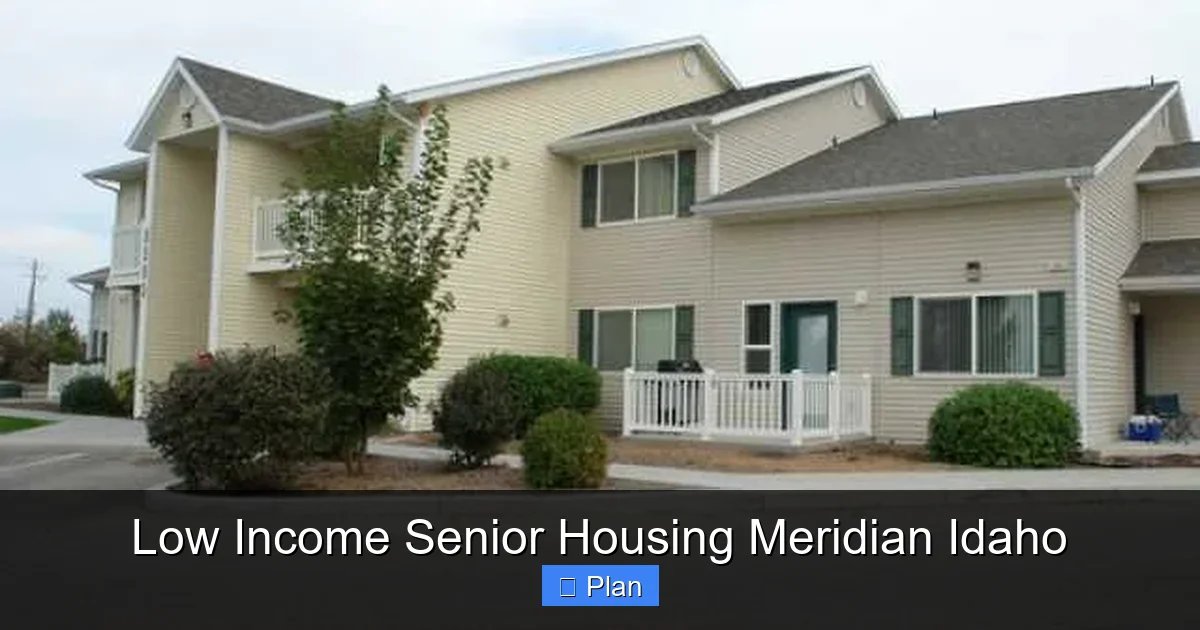
Visual guide about Low Income Senior Housing Meridian Idaho
Image source: lowincomehousing.us
Step 1: Gather Your Documentation
Before you even find an application, create a folder with copies of everything you’ll need. This includes:
- Proof of Age: Driver’s license, state ID, or birth certificate for all household members.
- Proof of Income: Most recent award letter from Social Security, VA benefits, pension statements, and/or last 3 pay stubs for any working household member.
- Proof of Assets: Recent bank statements (checking and savings), statements from stocks/bonds/retirement accounts.
- Proof of Citizenship/Immigration Status: Birth certificate, passport, or eligible non-citizen documentation.
- Tax Returns: Most recent federal tax return (if filed).
Having these ready will prevent delays.
Step 2: Find Open Waitlists and Apply
This is the active hunting phase. Properties open their waitlists at unpredictable times, often for a short window (a few days or weeks). You must apply during that window to get on the list. Do not wait until you find the perfect community. Apply to every single property in Meridian and the surrounding area that you could realistically see yourself living in. The more applications you have out, the higher your chances. Bookmark property management company websites (like those for Idaho Housing and Finance Association properties, or companies like Boise Classic Homes or Pangea Properties that manage affordable units). Sign up for email alerts if they offer them.
Step 3: The Interview and Verification
If your application is pulled from the waitlist, you will be scheduled for an interview. This is a formal meeting to verify all your information. Bring your original documents (not just copies). The interviewer will review your income, household composition, and eligibility. Be honest and thorough. After the interview, they will run a formal verification of income and employment through a third-party service called The Work Number. It is critical that your information in that system matches what you provided. Discrepancies can lead to denial.
Applying for housing that serves low-income seniors often involves multiple steps and agencies. To understand the broader context of support available, including potential help with food, utilities, and healthcare that can free up income for housing costs, research resources dedicated to help for low-income seniors. This can be a vital part of your overall financial stability plan.
Financial Strategies Beyond Rent: Making It Work
Securing a spot is only half the battle. Making the budget work long-term requires savvy financial planning and knowledge of additional assistance programs.
Understanding Rent Calculation
In an income-restricted unit, your rent is not arbitrary. It is calculated as a percentage of your “adjusted gross income.” Typically, this is 30%. For example, if your monthly adjusted income is $1,000, your rent would be $300. The remaining 70% is intended to cover utilities, food, transportation, and other necessities. When you first apply, you’ll estimate your income. Once you’re approved and move in, you’ll go through an annual recertification where you must again prove your income, and your rent may adjust up or down accordingly.
Utility Allowances
Many properties provide a “utility allowance” that is factored into your rent calculation. This is an estimate of the cost of electricity, gas, water, and trash for your unit size. If your actual utility bills are lower than the allowance, you keep the savings. If they are higher, you must pay the difference. Always ask what the utility allowance is for your specific unit type and factor that into your budgeting.
Supplemental Assistance Programs
Stretching a fixed income means tapping into every available resource. Consider these programs:
- LIHEAP (Low Income Home Energy Assistance Program): Helps pay heating and cooling bills. Apply through the Idaho Department of Health and Welfare.
- SNAP (Supplemental Nutrition Assistance Program): Formerly food stamps, this can significantly reduce your grocery bill.
- Medicare Savings Programs: Can help pay Medicare premiums and costs, freeing up cash. Idaho has specific programs for this.
- Property Tax Deferral or Circuit Breaker: Idaho offers programs for seniors to defer or reduce property taxes if you own your home.
Winning a housing lottery is one thing; building a sustainable life on a fixed income is another. Leveraging these programs is key to long-term security.
Specifics for Meridian: Properties and Local Resources
Now, let’s get specific. What does the market actually look like in Meridian?
Known Income-Restricted Senior Communities (Examples)
This list is not exhaustive and availability changes constantly. Always verify current status and waitlist openings directly.
- The Reserve at Meridian: This large community has a section of units designated as affordable for qualifying seniors. It offers a range of floor plans and amenities like a clubhouse and fitness center.
- Sage Senior Living: Located near the boundaries of Meridian, this property offers income-restricted apartments for seniors 62 and older. They often have a mix of studio, one-bedroom, and two-bedroom units.
- Various LIHTC Properties: Smaller complexes and duplexes scattered throughout Meridian are funded with Low-Income Housing Tax Credits. These are often managed by local property management companies. Searching the IHFA’s “Find Housing” tool and filtering for Ada County and senior housing is the best way to locate these.
Critical Tip: When you call a property, ask specifically: “Do you have a waitlist for income-restricted units for seniors 62 and over?” Be polite but persistent. Get the manager’s name and the best time to call back.
Key Local Agencies to Contact
You are not alone in this search. These organizations are your allies:
- Idaho Housing and Finance Association (IHFA): The state’s primary housing finance agency. They administer the Section 8 program for the region, manage LIHTC properties, and have a comprehensive website with a housing search tool and contact information for regional offices. This is your #1 resource.
- Meridian City Community Development Department: While the city doesn’t build or manage housing directly, they can provide information on local developments, zoning, and may have partnerships or referrals to local non-profits.
- Area Agency on Aging (AAA) – Southwest Idaho: The AAA (often called “Idaho Commission on Aging” at the state level) is a powerhouse of information. They can provide counseling on housing options, benefits screening, and connect you to services like Meals on Wheels and transportation. Call 2-1-1 or search for “Idaho Commission on Aging” to find your local office.
Overcoming Common Challenges and Next Steps
The path is rarely straight. Let’s address the biggest hurdles.
The Long Waitlist: Patience and Persistence
This is the single biggest challenge. Waitlists for popular properties can be 2-5 years long. Do not let this discourage you from applying. Apply everywhere. Once you are on a waitlist, keep your contact information updated with every property. If you move, call them immediately to give your new address. A lost letter is the #1 reason people get dropped from waitlists. Mark your calendar to call and confirm your status every 6-12 months.
Understanding “Household” for Application Purposes
Who counts as part of your household? Generally, anyone who lives with you and shares finances. This includes a spouse, domestic partner, and sometimes adult children who are financially dependent. An “essential caregiver” or “live-in aide” who is paid may also be considered, but rules are strict. Only include people who truly reside with you. Misrepresenting your household can lead to denial or eviction later.
What to Do If You’re Denied
Denials happen. You have the right to an explanation in writing. Read it carefully. Common reasons include: income over the limit, incomplete application, failure to verify information, or simply that the waitlist was closed when you applied. If you believe the denial was in error, you can appeal. The denial letter will explain the appeal process. Often, a simple oversight like a missing bank statement can be corrected. Don’t give up after one denial; fix the issue and reapply as soon as the waitlist reopens.
For seniors considering their long-term living arrangements, understanding the full spectrum of senior living options is beneficial. While this guide focuses on low-income apartments, other models like senior housing 55 and older communities (which may have different age and income rules) exist and could be an alternative if your income is slightly above the strict low-income thresholds.
Conclusion: Your Path Forward
The search for low-income senior housing in Meridian, Idaho, is a marathon, not a sprint. It demands organization, patience, and a willingness to navigate bureaucracy. But the destination—a secure, affordable, and community-oriented home—is worth the effort. Start today by gathering your financial documents, visiting the IHFA website, and making a list of every potential property in Meridian and Ada County. Apply to as many as possible, even if the waitlist seems long. Keep your information current. Connect with the Area Agency on Aging for support. By taking these structured steps, you transform an overwhelming challenge into a manageable project. You have earned the right to live comfortably and with dignity in your community. Use this guide as your map, and take the first step now.
Frequently Asked Questions
What is the maximum income to qualify for low-income senior housing in Meridian?
It varies by property and household size, but most target households earning 50% or 60% of the Area Median Income (AMI). For a one-person household in 2024, 60% AMI is about $43,550. Always check the specific income limits for each property you apply to.
How long are the waitlists for subsidized senior apartments in Meridian?
Waitlists can be very long, often ranging from 1 to 5 years depending on the popularity of the property and the specific subsidy program. This is why applying to multiple properties is essential to improve your chances.
Can I have a roommate in low-income senior housing?
Generally, yes, but the roommate must also be part of the qualified household and their income will be included in the total household income calculation. The unit size must also accommodate the number of occupants according to the property’s occupancy standards.
What documents do I absolutely need to apply?
You will need proof of age (ID), proof of all household income (Social Security award letter, pension statements), proof of assets (bank statements), and proof of citizenship/eligible immigration status. Having these ready before you apply is crucial.
What is the difference between a Section 8 voucher and project-based housing?
A project-based subsidy is tied to a specific apartment unit; you must live in that unit to use it. A tenant-based Section 8 voucher moves with you; you can use it at any landlord in the area who accepts vouchers, giving you more housing choice but also requiring you to find a willing landlord.
Who should I contact for help with my application?
Contact the property management company directly for questions about their specific application. For general guidance on programs like Section 8 or LIHTC, call the Idaho Housing and Finance Association (IHFA). The local Area Agency on Aging can also provide counseling and referrals.