
Low Income Senior Housing Macomb County


Page Magnifier Sheet

Compression Socks

Smart Plug with Alexa
Navigating low income senior housing in Macomb County can feel overwhelming, but it doesn’t have to be. This guide breaks down everything you need, from income limits and eligibility to specific programs and step-by-step application advice. We provide clear, actionable information to help Macomb County seniors and their families find and secure safe, affordable housing that fits their budget and needs.
Key Takeaways
- Eligibility is primarily based on income and age: Most programs require you to be 62+ (or 55+ in some communities) and your household income must fall below 50-80% of the Area Median Income (AMI) for Macomb County.
- Multiple housing types exist: Options range from government-subsidized apartments (Section 202, Section 8) and tax-credit properties to modest market-rate rentals with income-based rents.
- Waitlists are long and common: Popular properties and vouchers often have multi-year waitlists. Apply to multiple places and get on lists as early as possible.
- Local resources are crucial: The Macomb County Office on Aging and the Michigan State Housing Development Authority (MSHDA) are your primary guides for information and applications.
- Documentation is key: Be prepared to provide extensive proof of income, assets, age, citizenship, and residency. Having these ready speeds up the process.
- Financial assistance goes beyond rent: Explore programs like Michigan’s Medicaid Home and Community-Based Services (HCBS) waivers for help with utilities, meals, and in-home care to maintain independence.
- Visit properties and ask questions: Always tour a potential home, meet management, and ask about policies, services, and community feel before applying or accepting an offer.
[FEATURED_IMAGE_PLACEHOLDER]
📑 Table of Contents
- Finding Your Place: A Guide to Low Income Senior Housing in Macomb County
- Understanding the Basics: What “Low Income” and “Senior” Mean
- Types of Low Income Senior Housing Available in Macomb County
- Step-by-Step: How to Apply and What to Expect
- Financial Assistance Beyond the Rent: Maximizing Your Budget
- Local Resources: Your Support Team in Macomb County
- Overcoming Common Challenges and Pro Tips
- Conclusion: Your Next Steps Start Now
Finding Your Place: A Guide to Low Income Senior Housing in Macomb County
Finding a safe, comfortable, and affordable place to live is a fundamental need for everyone, especially for seniors on a fixed income. In Macomb County, Michigan, the cost of housing can be a significant burden. But there is hope. A network of programs and properties specifically designed for low-income seniors exists to provide stability, community, and peace of mind. This guide is your roadmap. We’ll walk through the landscape of options, break down the often-confusing eligibility rules, and give you practical, step-by-step advice to start your search with confidence. Think of this as a conversation with a friendly local expert who wants to see you settled in a good home.
Why This Search Matters
Housing is more than just a roof over your head. For seniors, it’s tied directly to health, social connection, and financial security. Spending too much of a limited income on rent can force difficult choices between medication, food, and other necessities. Securing affordable senior housing frees up that income for other essentials, reduces stress, and allows you to age in a supportive environment. Macomb County, with its diverse communities from Warren to Sterling Heights to the rural townships, has a growing senior population. Recognizing this need, local and federal agencies have collaborated to create housing solutions. Your journey starts with understanding what’s available and whether you qualify.
Understanding the Basics: What “Low Income” and “Senior” Mean
Before diving into listings, we need to clarify two key terms that define the entire landscape: “low income” and “senior.” These definitions are not arbitrary; they are set by federal and state agencies and determine your eligibility for every program.
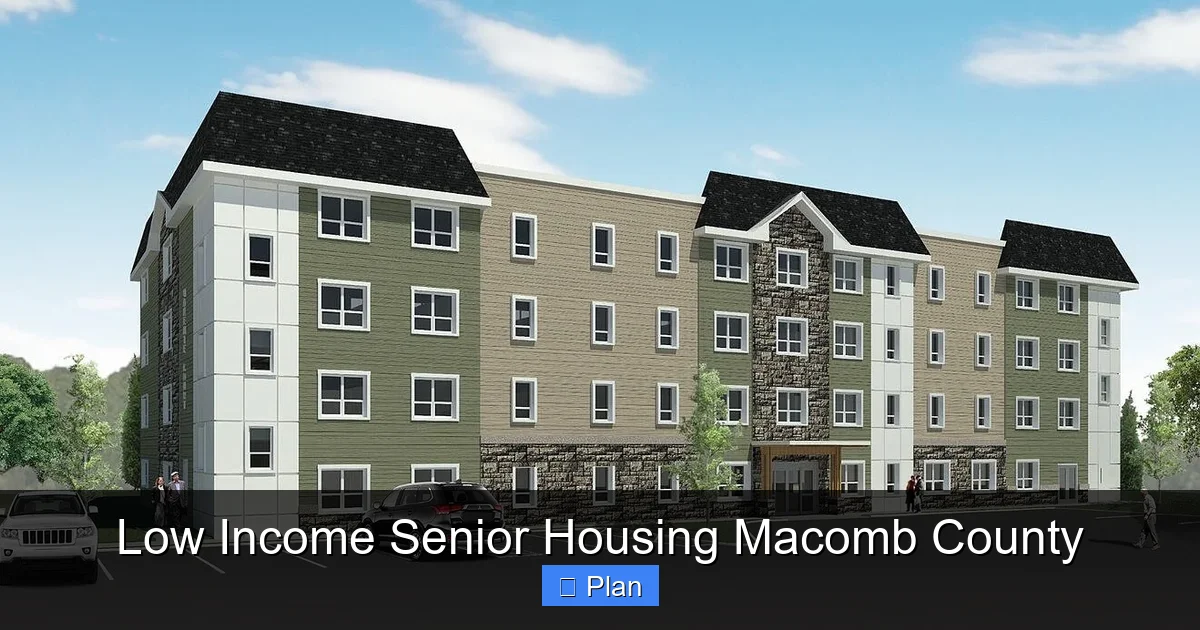
Visual guide about Low Income Senior Housing Macomb County
Image source: lowincomehousing.us
Defining “Senior” for Housing
In the context of senior housing, “senior” typically means 62 years of age or older. This is the standard for the vast majority of federally-funded programs like Section 202 Supportive Housing for the Elderly. However, some properties marketed as “senior” or “55+” communities may set their own age minimums, often 55 or even 50, as long as at least 80% of the units are occupied by someone 55+ (per the Housing for Older Persons Act). Always check a specific property’s age policy. For this guide, we focus primarily on communities targeting those 62+.
Defining “Low Income” in Macomb County
“Low income” is not a single number. It’s a percentage of the Area Median Income (AMI), which is calculated annually by HUD for each metropolitan area. For the Detroit-Warren-Livonia, MI Metropolitan Statistical Area (which includes Macomb County), the AMI changes yearly. As a general rule:
- Extremely Low Income: At or below 30% of AMI.
- Very Low Income: 31-50% of AMI.
- Low Income: 51-80% of AMI.
Most subsidized senior apartments (like Section 202) have income limits at 50% or 60% of AMI. Some tax-credit properties may allow up to 80%. You must check the specific limits for the property you’re interested in. The Macomb County Office on Aging can provide the current year’s exact income limits based on your household size. Your total household income from all sources (Social Security, pensions, part-time wages, etc.) is considered.
Types of Low Income Senior Housing Available in Macomb County
Macomb County offers several distinct models of affordable senior housing. Each has its own funding source, rules, and application process. Understanding the differences helps you target your search effectively.
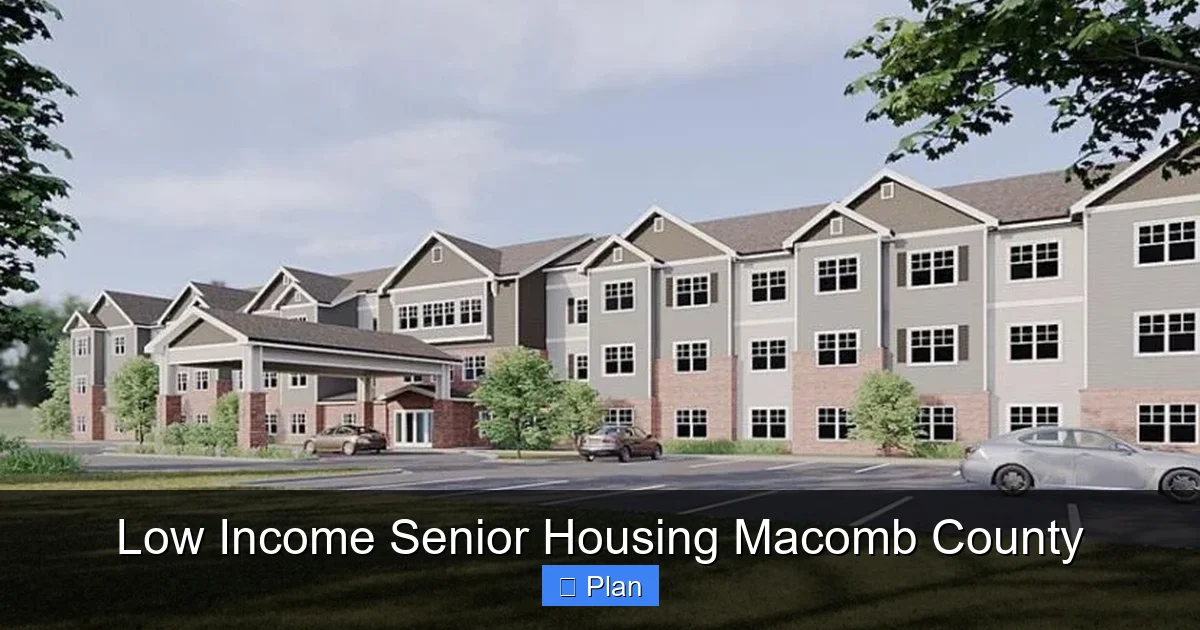
Visual guide about Low Income Senior Housing Macomb County
Image source: ecsi.org
1. HUD-Subsidized Apartments (Section 202 & Section 8)
These are the cornerstone of affordable senior housing. Section 202 properties are specifically designed for seniors 62+ and are funded by HUD to keep rents affordable. Rents are typically set at 30% of a resident’s adjusted gross income. Section 8, while not senior-specific, can be used by eligible seniors through the Housing Choice Voucher program, allowing them to rent from a private landlord who accepts the voucher, with the tenant paying about 30% of their income. Both have long waitlists. You apply directly to the property management for a Section 202 building, or to the local Public Housing Authority (PHA) for a Section 8 voucher. The Macomb County Housing Commission is the local PHA.
2. Low-Income Housing Tax Credit (LIHTC) Properties
These are privately developed and managed apartment buildings that receive federal tax credits in exchange for keeping a certain number of units affordable for a set period (often 30 years). They often have “income-restricted” units. Rents are not tied directly to income like Section 202 but are set below market rate (e.g., $600-$900/month for a 1-bedroom). Eligibility is based on the AMI percentages mentioned above. These properties can be excellent options as they are often newer and may include amenities. You apply directly to the property manager. Many newer senior communities in Macomb County use this model.
3. Public Housing for Seniors
Some local housing authorities own and manage specific buildings or units dedicated to seniors. These are similar to Section 202 but are managed by the local PHA. The Macomb County Housing Commission manages some senior-specific public housing units. Rents are based on income, usually around 30%. Application is through the PHA.
4. Non-Profit and Faith-Based Senior Housing
Organizations like Lutheran Social Services, Catholic Charities, or local church-affiliated groups sometimes own and operate affordable senior apartment buildings. These often have a community-focused atmosphere and may offer additional supportive services or meals. Their funding varies, so rent structures and eligibility can differ. Searching for “non-profit senior housing Macomb County” can uncover these valuable gems.
5. Shared or Co-Housing Models
While less common, some innovative models exist where seniors share a house or apartment to split costs. These are typically arranged privately and require careful agreements but can be a solution for very low budgets. Local senior centers or the Office on Aging might have bulletin boards with such opportunities.
Step-by-Step: How to Apply and What to Expect
So you’ve identified a few potential properties. Now what? The application process is rigorous but straightforward if you’re prepared. Here is the typical journey.

Visual guide about Low Income Senior Housing Macomb County
Image source: seniorsite.org
Step 1: Gather Your Documentation
This is the most critical preparatory step. Having everything ready will prevent delays. Create a folder with copies of:
- Proof of Age: Driver’s license, state ID, or birth certificate.
- Proof of Income: Recent award letters from Social Security/SSI, pension statements, bank statements showing deposits, recent pay stubs if employed part-time.
- Proof of Assets: Bank statements (checking, savings), statements from any investments, retirement account (IRA/401k) summaries. Some programs look at assets to ensure you truly need the subsidy.
- Proof of Citizenship/Residency: Social Security card, birth certificate, or green card.
- Current Lease or Mortgage Statement: To verify your current housing situation and costs.
- Tax Returns: Often requested for the last 2-3 years.
Step 2: Contact Properties and Get on Waitlists
There is no central portal for all senior housing in Macomb County. You must contact each property individually. Call the leasing office, explain your situation, and ask:
- “Do you have any income-restricted units for seniors?”
- “What is the current waitlist status and estimated wait time?”
- “What are your specific income limits for a 1-bedroom unit for a single person?”
- “What documentation do you require for the application?”
- “Is there an application fee?” (Legitimate programs should not charge large fees).
If they have an open waitlist, ask to be added. Get the name of the person you spoke with, the date, and any reference number. Follow up with a written letter or email confirming your request. Apply to as many qualifying properties as possible. For a Section 8 voucher, you must apply to the Macomb County Housing Commission. Their waitlist is often closed for years at a time, but you should check their website for any openings.
Step 3: The Formal Application and Verification
When the property or PHA contacts you indicating a unit may be available, you will complete a formal, detailed application. They will verify every piece of information you provided. This is called “third-party verification.” They may contact Social Security, your bank, and your pension provider directly. This process can take 30-60 days. Be patient and respond immediately to any requests for additional information. Any discrepancies can cause delays or denial.
Step 4: The Interview and Unit Selection
Once your income and eligibility are verified, you may be called for an interview. This is a chance for them to meet you and for you to ask final questions. If everything checks out, you will be offered a specific apartment. You will have a short period (often 48-72 hours) to accept or decline. At this point, you will sign a lease, pay a security deposit (often capped at one month’s rent, which is low), and schedule a move-in date.
Financial Assistance Beyond the Rent: Maximizing Your Budget
Securing an affordable rent is the biggest hurdle, but it’s not the only cost. Utilities, groceries, medications, and transportation can strain a tight budget. The good news is that Macomb County and the state of Michigan offer additional programs that can be combined with your housing to create a truly sustainable living situation.
Michigan Medicaid and HCBS Waivers
If you qualify for Medicaid, you may be eligible for Home and Community-Based Services (HCBS) waivers. These programs can pay for services that help you live independently, potentially delaying or avoiding the need for more expensive assisted living. Services can include in-home personal care, home modifications (like grab bars and ramps), meal delivery (like Meals on Wheels), and adult day programs. This financial help directly supports your ability to stay in your low-income apartment safely. You can apply for Medicaid through the Michigan Department of Health and Human Services (MDHHS).
Utility Assistance
Programs like the Low-Income Home Energy Assistance Program (LIHEAP) and the Weatherization Assistance Program can help pay heating and cooling bills and make your home more energy-efficient. The Macomb County Office on Aging administers these funds locally. Calling them should be one of your first steps after securing housing.
Property Tax and Rent Reimbursement
Michigan offers a Homestead Property Tax Credit for both homeowners and renters. For renters, the credit is based on a portion of your rent that is considered to be property taxes. It can provide a significant refund, especially for those with low income. You claim this when filing your Michigan state income tax return (Form MI-1040).
Food and Nutrition Support
Don’t forget about food. The Supplemental Nutrition Assistance Program (SNAP) (formerly food stamps) provides monthly benefits for groceries. Many seniors qualify but don’t apply. The monthly benefit can be $200 or more, which makes a huge difference. The Macomb County Office on Aging also runs or connects seniors to congregate meal sites and senior food pantries.
Local Resources: Your Support Team in Macomb County
You don’t have to do this alone. Several key organizations in Macomb County are dedicated to helping seniors navigate housing and services. Bookmark their websites and call their main numbers.
Macomb County Office on Aging
This is your number one resource. They are the central hub for senior services in the county. Their staff can provide:
- Current lists and information on affordable senior housing properties.
- Help with applications for Medicaid, SNAP, and utility assistance.
- Information on transportation services (like SMART Flex or senior ride programs).
- Referrals to other support services like counseling, caregiver support, and legal aid.
- They often know which properties have shorter waitlists or are about to open new units.
Website: macombcountymi.gov/officeonaging | Phone: (586) 469-5228
Michigan State Housing Development Authority (MSHDA)
MSHDA is the state agency that oversees many affordable housing programs, including the Low-Income Housing Tax Credit program. Their website has a searchable database of all income-restricted properties in Michigan. You can filter by county, city, and target population (senior/elderly). This is an excellent tool for finding properties you might not know about. They also administer some utility assistance programs.
Macomb County Housing Commission
This is the local Public Housing Authority (PHA). They manage the Section 8 Housing Choice Voucher program for the county (outside of specific cities that have their own PHAs) and own some public housing units, including senior-designated buildings. All inquiries about Section 8 vouchers and public housing waitlists go through them. Check their website for waitlist status, which is often closed.
211 Connect
By dialing 211 or visiting 211connect.org, you can speak to a specialist who can provide referrals to thousands of human services in Macomb County, including housing search assistance, food pantries, and utility help. It’s a great catch-all resource if you’re unsure where to start.
Overcoming Common Challenges and Pro Tips
The path to affordable senior housing is rarely a straight line. Here are common hurdles and how to overcome them, plus insider advice to improve your chances.
Challenge: The Waitlist is Years Long
Reality: For the most desirable, centrally located, or well-maintained properties, waitlists of 2-5 years are not uncommon. This is the single biggest frustration.
Pro Tips:
- Apply EVERYWHERE. Don’t put all your hopes on one list. Apply to 10-15 properties if you meet their criteria. This increases your chances of getting an offer sooner.
- Be geographically flexible. Expanding your search to include all of Macomb County, from Utica to Mount Clemens to New Baltimore, dramatically increases your options. Consider areas with good bus routes if you don’t drive.
- Keep your information updated. If you move or your phone number changes, you must update every property and the PHA. If they can’t reach you, you lose your spot.
- Consider “under the radar” properties. Smaller, non-profit, or church-owned buildings may have shorter waitlists because they are less well-known. Ask the Office on Aging about these.
Challenge: The Application is Denied
Reality: Denials happen for income being too high, missing documentation, or a past eviction/criminal record that violates policy.
Pro Tips:
- Know the exact income limit. Before applying, get the current 50% or 60% AMI number for your household size from the property or MSHDA. Calculate your total household income accurately. If you’re slightly over, you may not qualify.
- Fix credit/eviction issues proactively. If you have an old eviction, try to pay any outstanding debt and get a written statement of satisfaction. Explain extenuating circumstances (like a medical emergency) in a cover letter with your application.
- Ask for the specific reason for denial. You have the right to know. If it’s a fixable issue (missing document), provide it immediately. If it’s a policy issue (like a criminal conviction), ask if there is an exception or appeal process.
Pro Tips for the Tour and Move-In
When you finally get a tour:
- Visit at different times of day. See how the building feels in the afternoon vs. evening. Is it quiet? Are common areas well-lit?
- Talk to a resident. If you see someone in the hallway or lobby, politely ask how they like living there. Their feedback is invaluable.
- Inspect carefully. Look for signs of pests, water damage, working smoke detectors, and adequate hot water.
- Ask about “extra” fees. Are there separate charges for parking, trash, or water? Get these details in writing before signing the lease.
- Understand the rules. Ask about pet policies, guest policies, and any required “community” fees or participation in activities.
Conclusion: Your Next Steps Start Now
The search for low-income senior housing in Macomb County is a marathon, not a sprint. It demands patience, organization, and persistence. But thousands of seniors in Warren, Fraser, Clinton Township, and across the county have successfully found safe, affordable homes through these very programs. The key is to start now, even if you think you won’t need it for a year or two. Getting on waitlists is the first and most important action. Gather your documents, make a list of properties from the MSHDA database, and start calling. Contact the Macomb County Office on Aging to schedule a consultation—their advisors are there to help you through this process. Remember, securing this housing isn’t just about saving money; it’s about gaining security, community, and the freedom to enjoy your senior years without the constant worry of how to pay the rent. Take that first step today. Your future, stable home is waiting.
Frequently Asked Questions
What is the maximum income to qualify for low-income senior housing in Macomb County?
It varies by program and household size. For most subsidized apartments (Section 202), the limit is 50% or 60% of the Area Median Income (AMI). For a single-person household in 2024, 50% AMI is approximately $29,900. You must check the current year’s limits for each property as they change annually. The Macomb County Office on Aging can provide the most current figures.
How long are the waitlists for these apartments?
Wait times vary dramatically by location and property popularity. For high-demand areas or well-maintained buildings, waits can be 2 to 5 years. For less central or newer properties, it might be 6 months to 2 years. The only way to know is to ask each property directly when you apply. Applying to multiple properties is essential to improve your chances.
Can I have a pet in low-income senior housing?
Policies differ by property. Many allow small pets (cats, dogs under a certain weight) with a pet deposit and possibly a small monthly pet rent. Some have breed or weight restrictions. A few are “no pet” buildings. Always ask about the specific pet policy during your tour or application inquiry. Service animals are always allowed by law, regardless of the policy.
What if my income is too high for subsidized housing but I still can’t afford market rate?
You may qualify for “moderate-income” or “workforce” housing units that use the Low-Income Housing Tax Credit (LIHTC) program. These have higher income limits, often up to 80% of AMI (about $47,850 for one person). The rents are set below market rate but are not income-based. This can be a good option if your income is above the 60% AMI threshold but still makes market-rate rents difficult.
Do I need to be a U.S. citizen to apply?
Generally, yes. To qualify for federally funded programs like Section 202 or Section 8, you must be a U.S. citizen or have eligible immigration status (such as a lawful permanent resident). You will need to provide documentation like a Social Security card, birth certificate, or green card during the application process.
What services are typically offered at these senior communities?
Basic services vary. Most offer community rooms, laundry facilities, and sometimes transportation shuttles. Many have social activities (card games, holiday parties, exercise classes). Some, particularly Section 202 properties, may have on-site service coordinators who can connect residents to external services like Meals on Wheels or in-home care. Do not assume comprehensive care is included. Always ask the property manager for a list of included services and any additional fees for services like transportation or meals.