
Low Income Senior Housing Boston


Glucose Monitor Kit

Reading Light for Bed

Tablet for Seniors
Finding low income senior housing in Boston is challenging but possible. This guide explains key programs like Section 202 and Housing Choice Vouchers, details eligibility based on age and income, and provides a clear roadmap for applying. You’ll learn about specific Boston developments, common wait times, and essential resources to secure affordable senior living.
Let’s be honest. Finding a place to live in Boston is tough for anyone. For seniors on a fixed, limited income, it can feel impossible. The city’s vibrant neighborhoods and rich history are a huge draw, but the high cost of living creates a real barrier. If you’re a senior citizen or helping a parent or grandparent, the search for low income senior housing in Boston is likely at the top of your mind. You need a safe, comfortable, and community-oriented home that doesn’t break the bank. The good news is that options do exist, but the path to finding them is rarely straightforward. It requires patience, organization, and a clear understanding of the systems in place. This guide is your map. We’ll break down the complex world of subsidized senior housing in Boston, from who qualifies to how to apply, and where to find help. Think of this as a conversation with someone who’s been through it—no jargon, just practical steps.
Key Takeaways
- Subsidized Programs Are Primary: Most affordable senior housing in Boston relies on federal programs like Section 202 (project-based) and Section 8 (vouchers), which have strict income limits.
- Eligibility Has Two Pillars: You must be 62+ (or have a disability) and have an income below 50-80% of the Boston Area Median Income (AMI), which changes annually.
- Wait Lists Are Long: Expect multi-year wait times for the most desirable subsidized apartments; apply to multiple properties and programs immediately.
- Location Varies Widely: Options exist in neighborhoods like Dorchester, Roxbury, and South Boston, but availability is scattered; be prepared to consider all areas of the city.
- Documentation Is Crucial: Gather proof of age, income (tax returns, SSA statements), assets, and citizenship/residency status before starting any application.
- Non-Profit Partners Help: Organizations like the Boston Housing Authority and local senior services agencies provide free counseling and application assistance.
- Act Fast on Openings: When a wait list opens, you often have a narrow window (days or weeks) to apply; monitor websites and sign up for alerts.
[FEATURED_IMAGE_PLACEHOLDER]
📑 Table of Contents
- Understanding the Landscape: What “Low Income Senior Housing” Really Means in Boston
- Am I Eligible? Decoding Income and Age Requirements
- Where to Look: Specific Boston Neighborhoods and Developments
- The Application Journey: A Step-by-Step Guide
- Common Challenges and How to Overcome Them
- Beyond the Apartment: Support Services and Community
- Resources and Where to Get Help in Boston
Understanding the Landscape: What “Low Income Senior Housing” Really Means in Boston
When we talk about low income senior housing in Boston, we’re primarily discussing two types of resources: government-subsidized apartments and non-profit/private developments with affordability restrictions. It’s not just one program; it’s a patchwork of federal, state, and local initiatives. The most common and impactful are the federal programs administered through the U.S. Department of Housing and Urban Development (HUD) and managed locally.
The Two Main Federal Pillars: Section 202 & Section 8
Section 202 Supportive Housing for the Elderly is a HUD program that provides capital grants to non-profit developers to build or rehabilitate buildings exclusively for seniors (62+). These apartments are owned and managed by the non-profit. Rent is capped at 30% of the resident’s adjusted gross income. This is often considered the gold standard because the building is designed for seniors, with features like grab bars, no stairs, and community spaces. Boston has many Section 202 buildings, but they are in extremely high demand.
Housing Choice Vouchers (Section 8) are more flexible. The Boston Housing Authority (BHA) issues these vouchers to eligible low-income individuals and families. A voucher holder pays 30% of their income towards rent, and the voucher covers the rest, up to a local payment standard. The key here is that the senior can choose any apartment in the private market that accepts the voucher and meets BHA’s inspection standards. However, landlords are not required to accept vouchers, and many in high-cost Boston are reluctant, making the search harder. The wait for a voucher itself can be 5-10 years.
Other Important Programs
There are also Low-Income Housing Tax Credit (LIHTC) properties. These are privately developed but receive tax credits for setting aside a percentage of units for low-income tenants. They often have income limits similar to HUD programs. Some are specifically for seniors. Additionally, the city of Boston and the state of Massachusetts have their own funding streams and initiatives to create and preserve affordable housing, which sometimes includes senior-targeted units. Understanding these distinctions is the first step. You’re not just looking for “an apartment”; you’re looking for a specific type of subsidy attached to a specific unit or building.
Am I Eligible? Decoding Income and Age Requirements
Before you spend hours on applications, you need a reality check on eligibility. It’s a two-part test: age/disability and income. Miss either, and you won’t qualify.

Visual guide about Low Income Senior Housing Boston
Image source: lowincomehousing.us
Age and Household Composition
For dedicated senior housing, the standard is you must be 62 years of age or older. Some developments may have a lower age threshold, like 55+, but the majority in the HUD portfolio are 62+. If you are younger but have a disability, you may qualify for certain accessible units in senior buildings, but this is less common and highly competitive. Household composition matters too. Typically, only seniors can live in these buildings. If you have a spouse or partner, they must also meet the age requirement (with some exceptions for a younger spouse in a Section 202 unit). Children are generally not permitted to live in senior-specific housing.
Income Limits: The AMI Chart
This is the number that will define your search. Income limits are set as a percentage of the Area Median Income (AMI), which is calculated for the Boston-Cambridge-Quincy metropolitan area by HUD. For 2024, the AMI for a one-person household is around $97,300. Most subsidized senior housing is reserved for households earning 50% or 60% of AMI.
- 50% AMI Limit (Very Low Income): ~$48,650 for 1 person, ~$55,600 for 2 people.
- 60% AMI Limit (Low Income): ~$58,380 for 1 person, ~$66,720 for 2 people.
Important: These numbers change yearly. Always check the latest HUD income limits for the Boston metro area. Your “income” for these programs includes more than just your pension or Social Security. It generally means your Adjusted Gross Income (AGI) from your tax return, which includes wages, benefits, and some asset income. If you’re applying for a Section 8 voucher, the BHA will calculate your total annual income very precisely.
Asset Limits and Citizenship
While income is the primary test, some programs have asset limits (e.g., $50,000-$100,000 in countable assets like bank accounts, stocks, but not your primary home). You must also be a U.S. citizen or have eligible immigration status. Gathering your financial documents—Social Security award letter, bank statements, tax returns—is the first concrete step in determining your eligibility.
Where to Look: Specific Boston Neighborhoods and Developments
Boston’s low income senior housing is not evenly distributed. It’s concentrated in specific neighborhoods, often where land was more available historically or where non-profit developers have focused efforts. Don’t limit your search to just one area; be open to exploring all parts of the city.
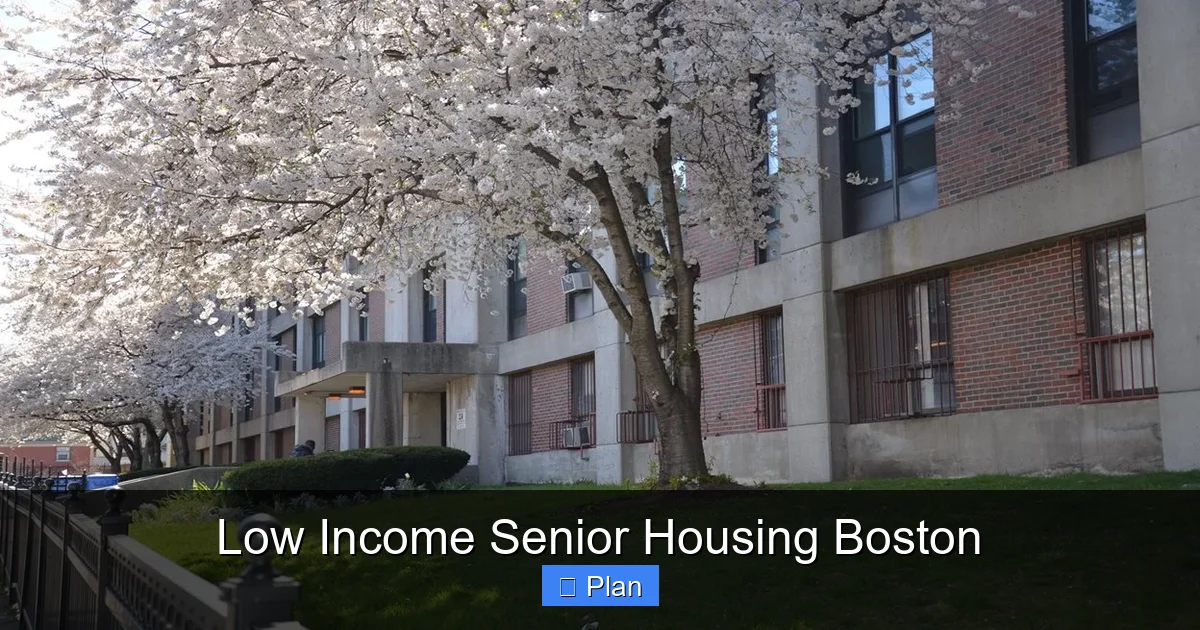
Visual guide about Low Income Senior Housing Boston
Image source: lowincomehousing.us
Neighborhoods with Notable Concentrations
Dorchester has a significant number of senior buildings, both Section 202 and LIHTC. Areas like Fields Corner and Codman Square have several larger complexes. Roxbury and Jamaica Plain also have strong representations, with some newer developments offering excellent amenities. You’ll find properties in South Boston and East Boston as well. The West End and Back Bay have extremely limited subsidized stock due to the high cost of land. Sometimes, the most available units are in neighborhoods undergoing transition, which can present both opportunities and challenges regarding safety and services.
Examples of Specific Properties (Do Your Own Research!)
While I can’t provide a real-time list, here are types of places to research. Look for names like “[Neighborhood] Senior Living” or “Housing for the Elderly.” Some well-known non-profit managers in the area include:
- Boston Private Industry Council (BPIC) – manages several Section 202 buildings.
- Jewish Community Housing for the Elderly (JCHE) – operates multiple high-quality buildings in Boston and nearby.
- South Boston Elderly Housing (SBEH).
- Roxbury Tenants of Harvard (RTH) – has some senior-designated units.
Use the BHA’s affordable housing online portal and filter for “senior” or “elderly.” The Massachusetts Executive Office of Elder Affairs also maintains a housing resource list. Always verify a property’s current status, wait list opening, and specific income/age requirements directly with the management office.
The Application Journey: A Step-by-Step Guide
Applying for low income senior housing in Boston is a marathon, not a sprint. Here is a realistic, phased approach.
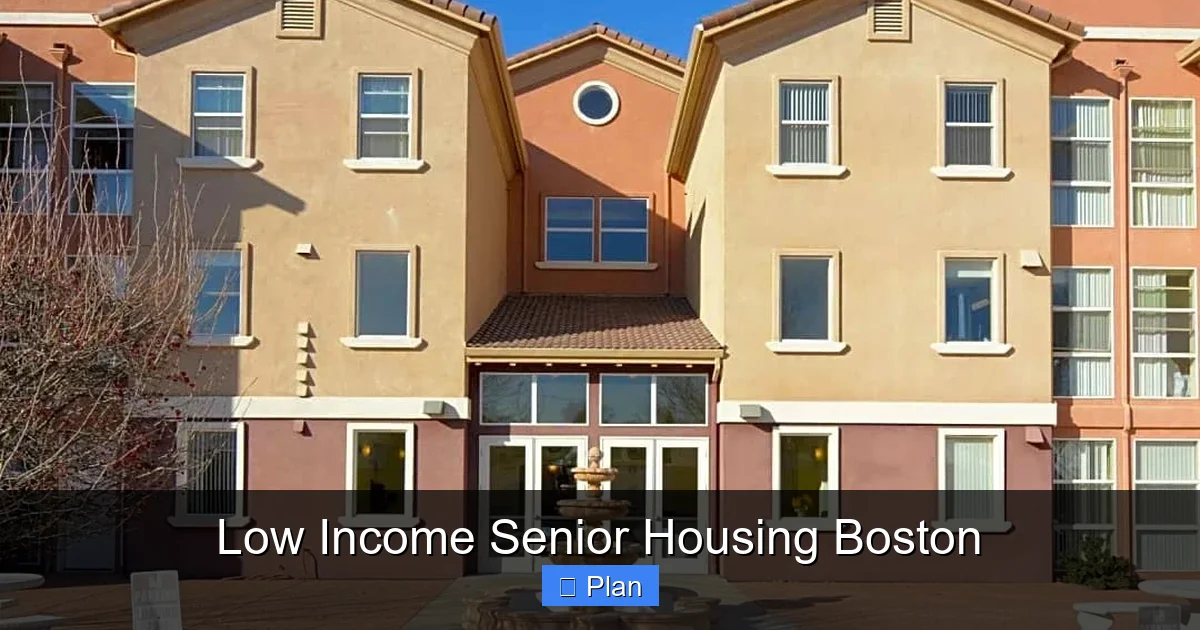
Visual guide about Low Income Senior Housing Boston
Image source: lowincomehousing.us
Phase 1: Preparation and Documentation (Weeks 1-4)
Before you fill out a single form, assemble your “housing packet.” This is your most important tool. You will need:
- Proof of age: Driver’s license, passport, or birth certificate.
- Proof of citizenship/eligible immigration status.
- Complete income documentation for the last 2 years: Federal tax returns, all 1099s, Social Security benefit letter, pension statements.
- Asset documentation: 2-3 months of bank statements for all accounts, statements for stocks/bonds.
- Proof of current residence: Lease or mortgage statement.
- Contact information for references (sometimes required).
Having digital and physical copies ready will allow you to apply the moment a wait list opens. If you need help understanding income calculations, resources on how to qualify for low-income senior housing can clarify what counts as income and assets.
Phase 2: Finding Open Wait Lists and Applying
This is the active search phase. Most subsidized buildings maintain their own wait lists. There is no single city-wide list for Section 202 properties. You must apply to each building individually.
- Monitor Websites: Bookmark the websites of the Boston Housing Authority, the Massachusetts Department of Housing and Community Development (DHCD), and major non-profit managers like JCHE. They post wait list openings.
- Call Buildings Directly: Don’t be shy. Call the management office of any building you’re interested in. Ask: “Is your wait list for senior units currently open? If not, can I be placed on a notification list for when it opens?”
- Use Aggregator Sites: Sites like Socialserve.com or the Boston.gov affordable housing listings can help, but they may not be fully up-to-date.
- Apply Immediately: When a list opens, apply that day. Some lists close in hours due to overwhelming demand. Submit all required documents with your application to avoid delays.
For a Section 8 voucher, you apply directly to the Boston Housing Authority. Their wait list is famously long and often closed for years at a time. Check the BHA website religiously for any brief opening windows.
Phase 3: The Wait and Periodic Updates
Once you’ve applied, you get a confirmation and a wait list position number. This is your lifeline. Keep this information safe. For Section 202 buildings, wait times can range from 1 to 5+ years. During this time:
- Notify the building immediately of any change in address, phone number, income, or household composition.
- Update your income and asset documentation annually if requested. Your eligibility is re-verified when you near the top of the list.
- Continue applying to other buildings to increase your chances. Having multiple applications in is strategic.
When your number comes up, you will be contacted for an interview and to submit updated paperwork. You will then be offered a specific apartment unit. You usually have a short period (e.g., 15-30 days) to accept or decline. If you decline, you may lose your spot and go back to the bottom of the list, so only decline for a truly compelling reason.
Common Challenges and How to Overcome Them
The system is designed to be cumbersome. Knowing the pitfalls helps you navigate them.
Challenge 1: The “Closeted” Wait List
Some buildings never officially “open” their wait lists. They may only accept names from current residents or through a trusted community partner. This is where networking and local senior centers become vital. Talk to a social worker at your local senior center or council on aging. They often have insider knowledge about which buildings have shorter lists or know of upcoming openings. They can sometimes provide a referral.
Challenge 2: Documentation Nightmares
Missing a W-2 or a bank statement can stall your application indefinitely. Be meticulously organized. If you can’t locate a document, start the process of getting a duplicate now (from the IRS, Social Security Administration, your bank). For self-employed seniors, providing two years of profit/loss statements may be necessary. Be prepared to explain any large, one-time deposits in your bank accounts.
Challenge 3: The “Income Too High” Paradox
You might earn just above the 50% AMI limit but below the actual rent of a market-rate apartment. This “missing middle” is a huge problem. Some LIHTC properties have tiers (e.g., 30%, 50%, 60% AMI units). If you qualify for the 60% tier, apply for those specifically. Also, explore “moderate-income” senior housing, which is a newer category in some cities with slightly higher income limits (up to 80% AMI) and rents that are still below market. These are less common but worth asking about. For those with slightly higher incomes, looking into senior apartments for low-income that have income-based rents but not full H subsidies might reveal additional options.
Challenge 4: Health and Mobility Needs
If you have significant mobility or health challenges, you need an accessible unit. These are a tiny fraction of all subsidized apartments. When applying, clearly indicate your need for an accessible unit (wheelchair-accessible bathroom, no stairs, etc.). You may need to provide a doctor’s note. The wait for these specific units is even longer. In the meantime, consider how you might modify a standard unit (with landlord permission) or what support services you could access.
Beyond the Apartment: Support Services and Community
Securing the apartment is the first major hurdle. Thriving there is the next. Many Section 202 and other senior-oriented buildings offer supportive services or have partnerships with local agencies. These can include:
- Service Coordinators: A staff person who helps connect residents to benefits counseling, health management, meal programs, and social activities.
- On-Site or Nearby Services: Some buildings have visiting nurses, meal delivery coordination, or transportation shuttles to grocery stores and medical appointments.
- Community Rooms and Activities: Social isolation is a major risk for seniors. A strong community calendar with events, games, and outings can dramatically improve quality of life.
When you are offered a unit, ask the management: “What supportive services are available? Is there a service coordinator? Are there partnerships with a local senior center?” The building’s culture and community can be just as important as the apartment itself. If the building is isolated with no activities, you might feel lonely even in a beautiful new apartment. Connect with the building’s resident council if one exists to get a feel for the community.
Resources and Where to Get Help in Boston
You do not have to do this alone. Several free, expert resources exist specifically to help Boston seniors navigate housing.
- Boston Housing Authority (BHA): The administrator for Section 8 vouchers and some public housing for seniors. Their website has applications and information. Their customer service can be challenging to navigate, so persistence is key.
- Boston Age-Friendly Commission / Age-Friendly Boston: Part of the city’s initiative to make Boston a great place to grow up and grow old. Their website links to housing resources and other senior services.
- Local Senior Centers & Councils on Aging: Every Boston neighborhood has one. The staff are invaluable. They know the local housing landscape, can help with paperwork, and offer programs that might help you while you wait. Find your nearest center through the City of Boston website.
- Massachusetts Executive Office of Elder Affairs: The state agency. Their website has a comprehensive “Resources for Seniors” section, including a housing search tool and information on benefits like help for low-income seniors beyond housing (SNAP, fuel assistance, Medicare Savings Programs). Applying for these benefits can free up income to help pay your share of rent.
- Legal Aid Societies: If you face discrimination (e.g., refusal to accept a voucher) or have issues with your lease or landlord, organizations like the Greater Boston Legal Services (GBLS) have elder law units that can help.
For a broader view of national trends and state-specific programs outside of Massachusetts, you might look at guides on low-income senior apartments in California or affordable senior housing in Georgia to see how other states structure their programs, though Boston’s specific programs are what matter most for your search.
Frequently Asked Questions
What is the difference between Section 202 and Section 8 housing for seniors?
Section 202 provides apartments in buildings owned by non-profits specifically for seniors, with rent at 30% of income. Section 8 is a rental voucher you can use in the private market, also paying 30% of your income, but finding a landlord who accepts it in Boston is very difficult due to high rents.
How long is the wait list for low-income senior housing in Boston?
Wait times are typically long, often ranging from 2 to 7 years for the most desirable Section 202 buildings. For a Boston Housing Authority Section 8 voucher, the wait can be a decade. Applying to multiple properties is essential to improve your chances.
What income is counted for eligibility?
Eligibility is based on your Adjusted Gross Income (AGI) from your federal tax return. This includes wages, Social Security, pensions, and some investment income. The property manager will ask for your two most recent tax returns and current benefit statements to calculate it.
Can I have a younger spouse live with me in senior housing?
Yes, in most cases. For Section 202 housing, a younger spouse is permitted to live with the eligible senior tenant. However, the household’s combined income must still fall under the income limit, and the younger spouse cannot be the primary leaseholder.
What should I do if my health declines while I’m on a wait list?
Immediately notify the management of any building where you are on a wait list. If you have a sudden need for an accessible unit (e.g., wheelchair use), provide a doctor’s note. You may be able to move up the list for an accessible unit if one becomes available, but it’s not guaranteed.
Are there any application fees?
No. There should never be a fee to apply for subsidized housing or to be placed on a wait list. Be wary of any person or company asking for money to secure an apartment for you. Legitimate applications are free.