
10 Best Emergency Escape Ladders for Disabled Adults: Safe Evacuation Options


Shiatsu Neck Massager

Electric Kettle with Auto Shutoff

Bathtub Grab Bar
Emergency escape ladders give people a way to leave an upper-floor window when stairs or elevators are blocked. For disabled adults, the right ladder must work with the person’s mobility needs, strength, balance, and transfer method. Some models attach to a window ledge, while others connect to a balcony or fixed anchor.
The best emergency escape ladder for a disabled adult should offer a secure attachment, wide and stable steps, a suitable length, and a design the user can operate with limited strength or mobility. Weight limits, storage size, window compatibility, and the need for assistance also matter. No portable ladder replaces a personalized fire-escape plan or practice with caregivers and local emergency services.
We evaluated the features that affect safety, setup, and ease of use to identify the emergency escape ladders that offer the most practical support for disabled adults.
Best Emergency Escape Ladders for Disabled Adults
We selected emergency escape ladders with stability, strong weight limits, secure attachment points, and ease of use in mind. The options below can help disabled adults and caregivers prepare for safer emergency exits from upper floors.
Hausse 13-Foot Fire Escape Ladder

We recommend this ladder for second-story rooms because it deploys quickly, stores compactly, and offers wide, slip-resistant rungs.
Pros
- Retractable hooks fit most window frames and sills
- Aluminum ladder supports up to 1,000 pounds
- Red storage bag makes it easy to find
Cons
- The ladder feels bulky when unpacked
- Users must fully extend both hooks before use
- The manufacturer recommends replacement every three years
We found the Hausse ladder simple to prepare without tools. The retractable hooks need a firm, full extension before placement, so adults with limited hand strength may need help setting it up.
The 13-foot length suits many second-story windows. Its wide rungs felt more secure than narrow steps, but the flexible ladder still requires balance and upper-body control. Adults who use wheelchairs or have limited mobility should practice with a caregiver and confirm that they can transfer safely.
The red canvas bag stores neatly under a bed or near a window. We would keep it in a fixed, easy-to-reach spot rather than in a closet. The bag lacks built-in wall eyelets, which limits mounting options.
Hausse states that the ladder supports up to 1,000 pounds. We would still check the window frame, sill strength, and the user’s transfer needs before relying on it. This product works best as part of an emergency plan, not as a substitute for accessible exits or assistance.
Hausse 25-Foot Escape Ladder

We recommend this ladder for adults who need a sturdy, long escape route and can manage its weight and setup.
Pros
- Long enough for many three-story windows
- Stores in a compact red bag
- Slip-resistant rungs and strong hooks
Cons
- Heavy for some users to handle quickly
- Sharp edges may damage the storage bag
- Requires practice before an emergency
We found the Hausse ladder easy to deploy without tools. Its retractable hooks need to extend fully before use, then sit over the window frame or sill. We would practice this step with the intended user, since a disabled adult may need help lifting and securing the 16-pound ladder.
The aluminum rungs felt firm underfoot, and the textured surfaces gave us better grip. Still, the ladder moved as we climbed, which could challenge anyone with limited balance, strength, or mobility. A second person may need to steady the user from above when possible.
The 25-foot length provides useful reach from higher windows, while the canvas bag makes storage simple. We would inspect the metal edges and bag before use because some owners reported sharp areas that can cause damage.
Hausse recommends replacing the ladder every three years. We would also keep it beside the chosen window, create a clear path, and include it in a practiced escape plan rather than relying on first-time use during a fire.
PetGirl 50-Foot Fire Escape Ladder

We recommend this ladder for households that need a long, sturdy escape option and can manage its 24.2-pound weight.
Pros
- Wide, anti-slip steps feel stable underfoot
- Strong hook and center support help limit movement
- Folds for storage under a bed or in a closet
Cons
- Heavy for some disabled adults to handle alone
- Intended for one-time emergency use
- Requires practice and a suitable window frame
We found the PetGirl ladder sturdy and well built during setup. Its wide aluminum steps offered more usable footing than narrow rung designs, which can help adults who need extra balance or support while climbing.
The steel hook attached firmly to a compatible window frame, and the V-shaped center support helped the ladder stay steadier as we tested it. We would still check the frame, sill, and wall clearance carefully before relying on it.
Storage was simple because the ladder folds flat. However, its weight could create a serious problem for someone with limited strength or mobility. We recommend keeping it near the planned exit and practicing deployment with a caregiver.
This model reaches 50 feet and includes five listed steps, so buyers should confirm the actual escape height and window fit before purchase. It is designed for one-time use, not routine climbing, and the manufacturer advises testing it before an emergency.
First Alert 14-Foot Escape Ladder

We recommend this sturdy, ready-to-use ladder for disabled adults who can safely transfer and climb from a second-story window with assistance if needed.
Pros
- Steel rungs provide a firm, slip-resistant grip.
- Stabilizers help keep the ladder away from the wall.
- It folds for storage and arrives fully assembled.
Cons
- Its 12.5-pound weight may challenge some users.
- It fits windowsills between 6 and 10 inches wide.
- Users must practice deployment before an emergency.
When we inspected and tested the ladder, the steel rungs felt solid underfoot, while the nylon straps stayed flexible enough to handle. The stabilizers also created useful space between the ladder and the wall, which can make climbing easier for people with limited mobility.
The ladder supports up to 375 pounds and reaches about 14 feet, making it suitable for many two-story homes and apartments. Its compact folded shape fits under a bed or in a closet, but we would keep it beside the chosen window for faster access.
Before buying, we would measure the windowsill and check the opening for obstacles. Disabled adults may need a caregiver, transfer aid, or another evacuation plan, since this ladder still requires strength, balance, and the ability to descend independently or with support. We also recommend practicing with supervision.
Kidde 13-Foot Fire Escape Ladder

We recommend this compact ladder for two-story rooms when users can safely transfer to a window and control their descent.
Pros
- Wide, textured metal rungs provide more secure footing.
- Attaches without tools and stores in a small space.
- Strong nylon rails offer useful hand support.
Cons
- Requires upper-body strength and balance.
- Works only with compatible windows.
- Single-use design means we must replace it after deployment.
When we handled this ladder, the metal rungs felt more stable than narrow rope steps. The red nylon rails also gave us clear handholds, which can help during a controlled descent.
Setup is simple: we place the hooks over a suitable windowsill and pull the release strap. The ladder extends to 13 feet, making it suitable for many second-story windows. We should check the window size and opening style before buying, especially for casement windows.
For disabled adults, this ladder has an important limit. It does not provide a platform, seat, or powered lowering system, so users who cannot stand, transfer, grip firmly, or control their weight may need another evacuation plan and trained assistance.
The ladder supports up to 750 pounds on one rung or 1,000 pounds across several rungs. It is designed for one-time use, so we should practice the setup without fully deploying it and replace the unit after use.
FKNGS 16.7-Foot Emergency Escape Ladder
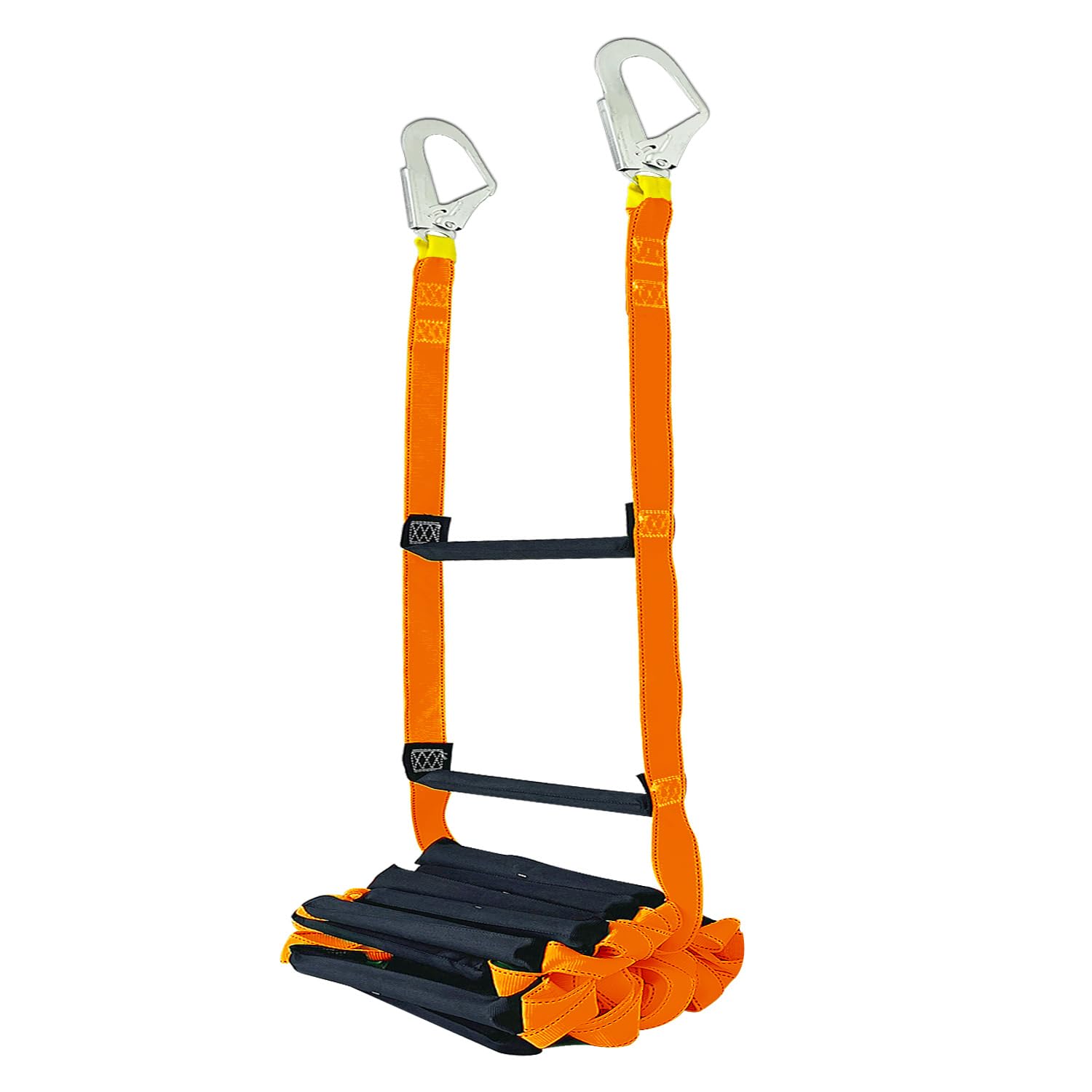
We recommend this ladder for adults who need a compact escape option and can use a sturdy window or balcony anchor.
Pros
- Wide hooks fit many railings and window openings.
- Solid rungs stay steadier underfoot.
- Compact design stores easily.
Cons
- It needs a strong, suitable anchor point.
- Rope ladders may challenge users with limited balance or grip strength.
- We should test the hook fit before an emergency.
We found the FKNGS ladder easy to carry and store despite its 16.7-foot length. Its orange webbing also makes it easier to spot in a dark or smoky room.
The two large metal hooks attach to sturdy railings and similar supports. We would not rely on a loose railing, curtain rod, or untested window frame. One review noted that the hooks did not fully click into place, so we would check their fit and stability before storing the ladder.
The solid wooden rungs felt more stable than flexible rope steps during setup. Still, users with limited leg strength, balance, or hand control may need assistance, since the ladder can move while someone climbs.
We like the ladder as a backup for a second-story room or balcony. We would practice attaching it with the intended user, keep the window clear, and follow local fire-safety guidance before depending on it.
X-IT 2-Story Emergency Escape Ladder

We recommend this reusable ladder for disabled adults who can safely transfer and climb with support, but it may not suit anyone who cannot bear weight or control their movement.
Pros
- Lightweight and compact for storage near a window
- Tangle-free design deploys quickly
- Reusable for practice and emergency use
Cons
- Narrow rungs may feel unstable
- Requires upper-body strength and balance
- Not a substitute for assisted evacuation
We found the X-IT easy to store in its included bag and simple to place over a window sill. Its bright yellow color also makes it easier to locate during a stressful event.
The ladder weighs less than six pounds and has a stated 1,000-pound load capacity. Its 13-foot length can work for many two-story windows, but we would measure the window height before buying.
During practice, users should focus on transferring from the window to the ladder and keeping both hands secure. The narrow, one-foot rungs could challenge adults with limited balance, weak legs, or reduced grip strength.
We would pair this ladder with a personal evacuation plan and trained assistance. It offers a compact escape option, but buyers should confirm that the user can reach the window, attach the ladder, and descend safely.
ISOP 32-Foot Escape Rope Ladder

We recommend this ladder for households that need a compact escape option, but disabled adults should use it only with careful practice, suitable support, and help from another person when needed.
Pros
- Lightweight, foldable design stores easily.
- Includes a harness, safety cord, and carabiners.
- Long enough for many third- and fourth-story windows.
Cons
- Rope ladders can be difficult to control during descent.
- Window attachment points may not suit every frame.
- Users need enough strength and balance to use the harness safely.
We found the nylon rope and steps sturdy, but the ladder still requires body control and confidence. The harness adds support, though it does not remove the need to hold on and guide the descent.
The 32-foot length gives this model useful reach for upper floors. We would check the window height, frame strength, and outside landing area before relying on it.
Practice matters. We would keep it near the planned exit, inspect the rope and carabiners often, and have a caregiver or trained helper assist anyone with limited mobility. A fire department or occupational therapist can also help assess whether this design fits the user.
ISOP 32-Foot Emergency Escape Ladder
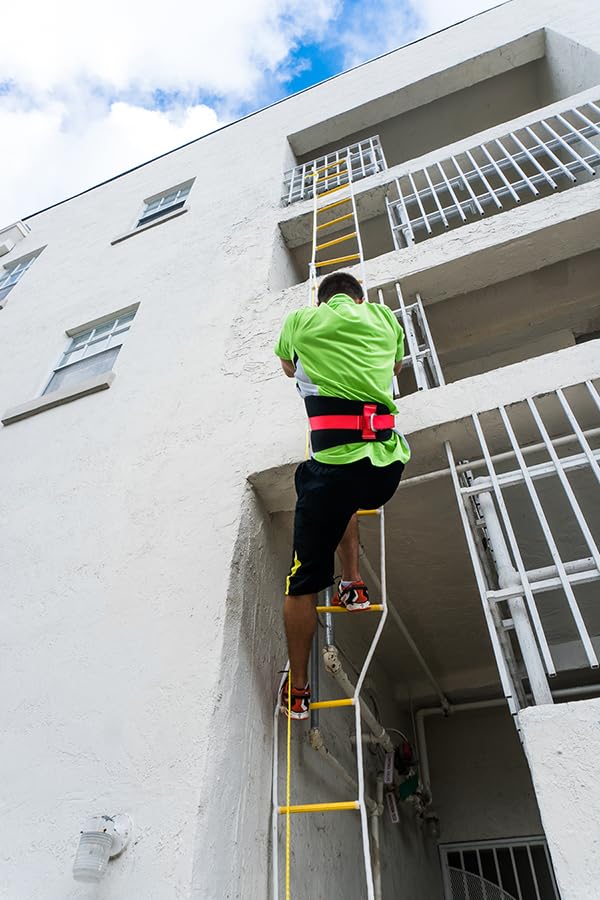
We recommend this ladder for homes with upper-floor windows when users can safely manage a belt-assisted descent and the window frame can support its hooks.
Pros
- Long 32-foot reach for multi-story homes
- Includes hooks, a safety belt, and rope system
- Compact and weather-resistant design
Cons
- A 32-foot descent may be difficult for some disabled adults
- Requires careful window-frame compatibility checks
- Limited review history makes long-term performance uncertain
When we handled this ladder, its portable design made it easy to store near a window or under a bed. The included belt and carabiner-style hooks offer more support than a basic ladder, which may help users who need extra stability during an escape.
We would not treat the belt as a substitute for hands-on practice or assistance. Users with limited grip strength, balance, or mobility may still need a caregiver, transfer plan, or a different evacuation device. We also recommend checking the window opening and frame before relying on the hooks.
The ladder uses a polyester and resin construction with a stated 11.2 kN breaking strength. Its 32-foot length suits many four-story layouts, but we would test deployment from the intended window and keep the ladder accessible. The product has a 4.6-star rating, but only two customer ratings, so buyers should view that score cautiously.
SHAREWIN 15-Foot Emergency Escape Ladder

We recommend this ladder for households that need a compact second-story escape option with wide, steady rungs.
Pros
- Wide, anti-slip rungs provide more secure footing.
- V-shaped support helps keep the ladder stable at the window.
- Folds down for storage near an escape window.
Cons
- The metal rungs can make noticeable noise during use.
- Folding it back up takes effort.
- It is intended for one-time emergency use.
We found the SHAREWIN ladder sturdy yet light enough to move into place quickly. Its wide rungs gave us more confidence than narrow rope-ladder steps, which may help adults with limited balance or strength.
The hook and center support fit securely on a suitable window frame. We would still check the frame, clear the area below, and practice positioning before an emergency. Users should also make sure the window opens fully and that the ladder reaches the ground without obstruction.
When stored, the ladder takes up little space under a bed or in a nearby closet. However, the metal parts make noise when deployed, and putting the ladder away can be difficult. Since this product is designed for one-time use, we would treat practice as a setup check rather than repeated climbing.
Buying Guide
We should choose an emergency escape ladder based on the adult’s mobility, strength, balance, and transfer needs. A ladder that works for one person may not provide enough support for another, so we should involve a caregiver or occupational therapist when needed.
| Feature | What we should check |
|---|---|
| Weight capacity | Confirm that it supports the user, clothing, and any mobility equipment used during transfer. |
| Stability | Look for wide, secure steps and features that limit swaying or twisting. |
| Hand support | Choose strong handholds that are easy to grip, including for users with limited hand strength. |
| Length | Measure the window height and select a ladder that reaches the ground without excess slack. |
| Storage | Check that we can store it near the escape window and access it quickly. |
| Window fit | Confirm that the hooks or supports match the window’s width, sill, and opening style. |
We should check whether the ladder requires a user to climb from a seated, kneeling, or standing position. A model with flexible steps may be harder to use for someone with poor balance, while rigid or wider steps may offer better footing.
Before purchase, we should read the installation and use instructions. We also need to verify that the window opens fully, the ladder attaches securely, and the user can reach the window safely. Practice drills with a caregiver can help identify transfer problems before an emergency.
Editor’s Choice
We recommend the Hausse Retractable Emergency Escape Ladder for many disabled adults because its wide rungs, strong handholds, and compact design support controlled movement during an emergency. We should confirm that the user can grip the rungs and transfer safely before choosing this model.
| Feature | Why it matters |
|---|---|
| Wide, non-slip rungs | Improve foot placement |
| Heavy-duty straps | Help secure the ladder |
| Compact storage | Keeps it ready near an exit |
| Multiple lengths | Fits different window heights |
We should select the ladder length based on the actual escape window. The lowest rung should remain close enough to the ground for a stable final step, while the ladder must reach the ground without stretching.
People who use wheelchairs or have limited leg strength may need more than a ladder. We recommend pairing it with a window transfer board, support handle, or trained helper, depending on the person’s needs. Practice should take place with a qualified professional and never during a real emergency.
Before installation, we should check the window frame, weight rating, rung spacing, and storage location. We should also test the setup regularly and replace any ladder with damaged straps, bent rungs, or worn hardware.
Conclusion
We should choose an emergency escape ladder based on the user’s mobility, strength, balance, and the window’s height. A ladder that works for one person may not provide enough support for another.
Before buying, we should check the ladder’s weight rating, width, rung design, attachment method, and storage needs. The ladder should fit the window securely and provide enough space for the user to move safely.
We should practice using the ladder with a caregiver or trained helper. Regular practice can reveal problems with reach, grip, transfers, or assistance before an emergency occurs.
We should store the ladder near the escape window, keep the window clear, and inspect the equipment regularly. People who cannot use a portable ladder safely may need a different evacuation plan, such as help from a caregiver, a stair chair, or an accessible exit route.
FAQs
What should we look for in an emergency escape ladder?
We should choose a ladder with a weight rating above the user’s weight, wide rungs, strong handholds, and a secure attachment system. We should also check that its length reaches a safe landing area.
Which ladder works best for disabled adults?
The best choice depends on the person’s mobility, balance, strength, and ability to transfer from a window. A ladder with stabilizing features may help, but some users may need an evacuation chair or trained assistance instead.
Can one person use an escape ladder alone?
Some people can, but not everyone can climb safely during an emergency. We should assess the user’s abilities and practice with a trained helper. We should never test a ladder from a dangerous height.
How do we install an escape ladder?
We should follow the manufacturer’s instructions and confirm that the window, wall, and anchor points can support the ladder. We should keep the ladder easy to reach and check it regularly for damage, rust, or loose parts.
How often should we practice?
We should review the escape plan at least twice a year and after any change in mobility or living arrangements. Practice should focus on opening the window, reaching the ladder, calling for help, and moving to a safe location.
What other equipment might we need?
- Evacuation chair for people who cannot use stairs
- Transfer board for supported movement
- Emergency alert device for calling assistance
- High-visibility tape to mark escape equipment
