
What Are Easy Crafts Seniors Can Do at Home?


Button Hook Dressing Aid

Adult Coloring Book

Page Magnifier Sheet
Quick Answer
Easy crafts seniors can do at home include adult coloring, greeting cards, watercolor painting, photo collages, scrapbooking, air-dry clay, paper flowers, simple knitting, decorated picture frames, and no-sew fabric projects. The best choices use manageable supplies, work comfortably at a table, and can be enjoyed in short sessions; the National Institute on Aging also encourages older adults to stay involved in meaningful activities they enjoy.
Good crafts to try first
- Adult coloring: Requires little setup and lets you work for five minutes or an entire afternoon.
- Greeting cards: Use cardstock, stickers, photographs, stamps, and markers to make useful gifts.
- Watercolor painting: A small paint set and heavy paper are enough for simple flowers, scenery, or abstract designs.
- Photo collages: Turn printed family photos into memory pages without needing advanced craft skills.
- Air-dry clay: Make bowls, ornaments, plant labels, and simple decorative shapes without a kiln.
- No-sew crafts: Fabric, felt, ribbon, and fabric glue allow creative projects without needles or machines.
Keep the first project simple
- Choose one project that fits comfortably into a 20- to 45-minute session.
Crafting at home doesn’t require complicated patterns, expensive machines, or professional artistic skills. I prefer projects that are forgiving and still feel satisfying when the finished piece isn’t perfect.
The right project depends more on interest and comfort than age. This guide covers easy options for different budgets, hand abilities, energy levels, and creative interests.
In This Guide
- What Makes a Craft Easy for Seniors?
- What Are the Easiest Crafts for Seniors to Do at Home?
- Which Crafts Work for Seniors With Limited Dexterity?
- What Low-Cost Crafts Can Seniors Make?
- How Do You Choose the Right Craft?
- How Can You Make Crafting More Comfortable?
- How Should a Beginner Start Crafting at Home?
- Frequently Asked Questions
- Choose a Craft You’ll Want to Do Again
What Makes a Craft Easy for Seniors?
An easy senior craft has simple instructions, manageable materials, flexible timing, and room for personal creativity. It shouldn’t require perfect hand control or hours of uninterrupted concentration.
Definition: A senior-friendly craft is a creative activity that can be adapted to a person’s mobility, vision, hand strength, energy, experience, and available space.
I look for a satisfying result without unnecessary pressure. Completing a small bookmark can be more enjoyable than struggling for weeks with an overly ambitious project.
Look for five practical qualities
- Simple setup: Most supplies fit on one table, tray, or lap desk.
- Flexible timing: A 15- or 20-minute session still produces visible progress.
- Adjustable difficulty: Beginners can simplify the design, while experienced crafters can add detail.
- Comfortable materials: Larger tools and lightweight supplies can be easier to manage.
- Personal meaning: The project can become a gift, decoration, keepsake, or enjoyable pastime.
Crafting can also be a shared activity. The CDC’s resources for older adults include crafts, painting, ceramics, cooking, gardening, and other hobbies among activities people can enjoy with others.
A project doesn’t need to be productive to be worthwhile. Enjoying the process is a good enough reason to make something.
What Are the Easiest Crafts for Seniors to Do at Home?

The easiest crafts are usually familiar, forgiving, and inexpensive to try. Coloring, cards, collage, painting, clay, paper crafts, and simple yarn projects are strong starting points.
1. Adult coloring
Adult coloring requires almost no preparation. Choose large, uncluttered designs and use colored pencils, crayons, or broad markers.
A clipboard or non-slip mat can keep pages steady. High-contrast designs may also be easier to follow when small details feel tiring.
2. Handmade greeting cards
Card making turns a short creative session into something useful. Blank cardstock can become birthday cards, thank-you notes, holiday greetings, or simple letters to family.
- Pre-cut paper shapes
- Large stickers
- Rubber stamps
- Printed photographs
- Ribbon
- Broad-tip markers
There is no correct design. A photograph, a border, and a handwritten message may be all a card needs.
3. Watercolor painting
Watercolor works well for beginners because loose shapes can look attractive without precise drawing. Flowers, leaves, sunsets, landscapes, and simple color washes are easy places to begin.
Start with three or four colors rather than a huge set. Fewer choices make the first project feel less complicated.
4. Photo collages
Photo collages combine creativity with family memories. Use printed copies when an original photograph is valuable or irreplaceable.
- Create a page for each grandchild.
- Arrange photos from one memorable vacation.
- Make a wedding or anniversary collage.
- Group family photographs by decade.
- Build a seasonal memory board.
Pre-cutting decorative paper can reduce the amount of scissor work. Torn paper also creates attractive borders without exact cutting.
5. Scrapbooking
Scrapbooking adds short stories, dates, labels, recipes, or keepsakes to photographs. One page can be a complete project, so there’s no need to finish an entire album at once.
A simple scrapbook can also preserve information younger relatives may not know. Names, places, family traditions, and brief memories add meaning without requiring long paragraphs.
6. Air-dry clay
Air-dry clay doesn’t require a pottery wheel or kiln. It can be pressed and shaped into small dishes, ornaments, plant markers, beads, or decorative pieces.
Large shapes are usually easier than detailed miniatures. Work on a washable tray so cleanup stays contained.
7. Paper flowers
Paper flowers can be as simple as layered circles or folded petals. Pre-cut shapes make the activity easier when detailed cutting isn’t enjoyable.
- Use colored construction paper.
- Layer cupcake liners into flowers.
- Attach petals to craft sticks.
- Arrange finished flowers in a lightweight jar.
8. Decorated picture frames
A plain wooden or cardboard frame makes an easy craft base. Add patterned paper, stickers, buttons, painted shapes, or other lightweight decorations.
The finished frame also has an immediate purpose. Add a favorite photograph and it becomes a simple handmade gift.
9. Simple knitting or crochet
Knitting and crochet are better choices for someone who enjoys repetitive handwork. Beginners can start with thick yarn, larger needles or hooks, and a small square rather than a complicated garment.
Short sessions are enough. Stop before hand fatigue turns a relaxing hobby into an uncomfortable task.
10. No-sew fabric crafts
No-sew crafts use fabric glue, felt, fleece, ribbon, and pre-cut fabric instead of a sewing machine. They work well for coasters, simple ornaments, fabric-covered containers, or decorative shapes.
- Felt bookmarks
- Fabric-covered jars
- Simple fleece pillows
- Ribbon decorations
- Felt flowers
Section Takeaway: Easy crafts don’t need to look childish or overly simple. The best beginner project produces an enjoyable result without demanding more time, strength, or precision than feels comfortable.
Which Crafts Work for Seniors With Limited Dexterity?
Crafts for limited dexterity should reduce tiny movements, strong gripping, and difficult cutting. Larger materials and forgiving techniques usually make the activity more comfortable.
Choose larger, easier-to-handle materials
- Broad markers: Easier to hold than thin pens.
- Large brushes: Useful for watercolor, acrylic painting, and glue.
- Thick yarn: Easier to see and manipulate than fine thread.
- Oversized stickers: Reduce detailed cutting and gluing.
- Large beads: Easier to handle than tiny jewelry components.
- Pre-cut shapes: Remove much of the scissor work.
Foam grips can make some pens and brushes easier to hold. A non-slip mat can also keep paper, trays, or lightweight materials from sliding.
Try lower-dexterity projects
- Sponge painting
- Sticker collages
- Large-shape coloring
- Rubber stamping
- Soft air-dry clay
- Torn-paper collage
- Decorating boxes with large shapes
The Arthritis Foundation’s assistive-device guidance explains how larger grips and adaptive tools can make everyday hand tasks easier for some people.
Health note: Arthritis, tremors, weakness, and other conditions affect people differently. Stop an activity that causes pain, and ask a healthcare professional or occupational therapist about suitable adaptations when needed.
What Low-Cost Crafts Can Seniors Make?
Many enjoyable crafts can be made with materials already around the house. Cardboard, magazines, jars, paper bags, yarn scraps, and clean containers can all become useful craft supplies.
Try these inexpensive projects
- Magazine collage: Tear or cut favorite images and arrange them on cardstock.
- Decorated jars: Add paper, ribbon, paint, or fabric to clean containers.
- Cardboard photo frames: Cover a simple cardboard frame with patterned paper.
- Paper bookmarks: Decorate strips of sturdy paper with drawings or stickers.
- Memory boxes: Cover a small box and fill it with photographs or keepsakes.
- Painted plant pots: Add simple stripes, dots, leaves, or geometric patterns.
- Paper-chain decorations: Make seasonal decorations with strips of colored paper.
- Recipe cards: Copy favorite family recipes onto decorated cards for relatives.
Avoid saving every possible craft material. A small, organized collection is easier to use than several boxes of supplies that become difficult to sort.
I would start with paper, glue, markers, scissors, and a few decorative materials. Add specialty supplies only after discovering which crafts you enjoy.
How Do You Choose the Right Craft?
Choose a craft by matching the activity to the person’s interests and comfort, not age alone. Two people who are both 70 may want completely different projects.
As of 2026, at-home choices range from traditional knitting to digital photo projects. The right option is usually one you’ll willingly return to next week.
Compare easy crafts before choosing
| Craft | Basic Supplies | Suggested Starter Session | Hand Detail | Cleanup |
|---|---|---|---|---|
| Adult coloring | Book and pencils | 15–30 minutes | Low to medium | Very low |
| Greeting cards | Cardstock, markers, stickers | 20–40 minutes | Low to medium | Low |
| Watercolor | Paint, brush, paper | 20–45 minutes | Medium | Medium |
| Photo collage | Photos, paper, glue | 30–60 minutes | Low to medium | Low |
| Air-dry clay | Soft clay and tray | 20–40 minutes | Low | Medium |
| Knitting | Yarn and needles | 15–30 minutes | Medium to high | Very low |
Ask four questions first
- Does it sound enjoyable? Interest matters more than picking a stereotypical senior activity.
- Does it feel comfortable? Consider eyesight, posture, hand strength, and energy.
- Is the cleanup manageable? Paper crafts are usually simpler to tidy than painting or clay.
- Do I want a finished object? Some people enjoy making useful gifts, while others prefer process-focused art.
Meaningful activities may support well-being as people age, but crafting shouldn’t become another obligation. The goal is to choose something enjoyable enough to repeat.
How Can You Make Crafting More Comfortable?
A comfortable craft space reduces unnecessary reaching, bending, and searching for supplies. A regular dining table or small desk can work well with a few adjustments.
Set up the workspace before starting
- Use a supportive chair that feels steady.
- Keep the main supplies within comfortable reach.
- Use a tray to contain small materials.
- Make sure the work surface has good lighting.
- Choose contrasting backgrounds for small materials.
- Keep drinks away from paint, glue, and paper projects.
- Store sharp tools safely when the session ends.
Good lighting can make detailed projects far less tiring. A movable lamp is useful when natural light isn’t strong enough.
Adapt instead of abandoning the hobby
A difficult movement doesn’t always mean the entire craft must be given up. Changing the tool, material size, working position, or project length can make a large difference.
- Use torn paper instead of detailed scissor cutting.
- Try stickers instead of small glued decorations.
- Switch from thin pens to thicker markers.
- Work seated instead of standing.
- Break one large project into several short sessions.
- Use printed templates rather than drawing complex outlines.
The National Institute on Aging notes that meaningful activities can take many forms and that individual limits differ. Its cognitive health guidance also cautions against overpromising what any single mentally stimulating activity can accomplish.
Health note: Persistent hand pain, new weakness, significant vision changes, or difficulty using familiar tools deserves individual medical advice rather than simply pushing through the activity.
How Should a Beginner Start Crafting at Home?
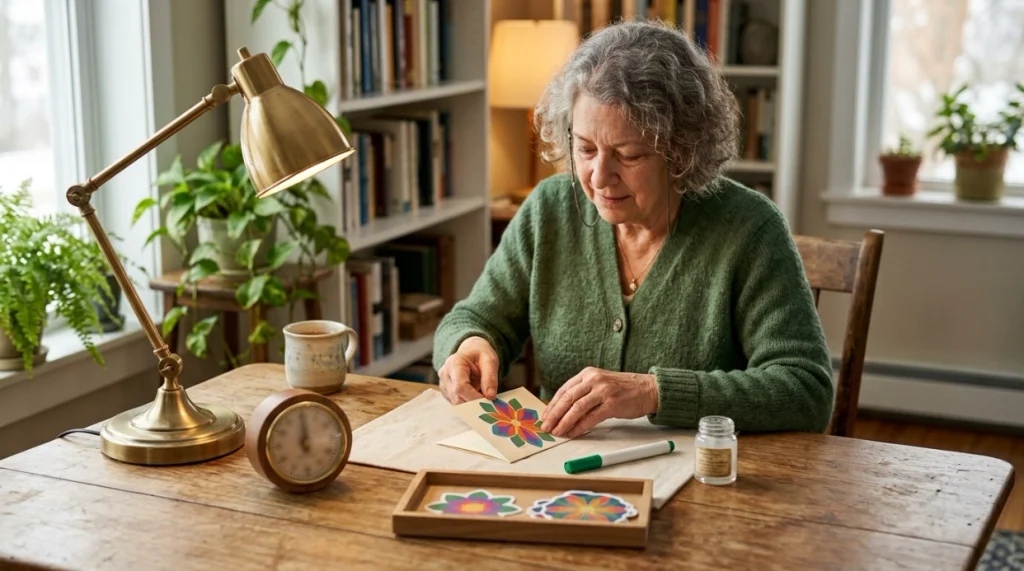
Start with one simple project and a small supply list. A successful first session should feel manageable enough that you want to try again.
Use this five-step starting plan
- Pick one craft. Choose the idea that sounds most enjoyable, not the one that looks most impressive.
- Limit your supplies. Buy or gather only what the first project requires.
- Set a short session. Try 20 to 30 minutes before committing to a long afternoon.
- Make comfort the priority. Adjust the chair, lighting, tool size, or project position as needed.
- Decide whether to repeat it. Keep the craft only if the process was enjoyable enough to do again.
I wouldn’t buy a large craft kit before testing the activity. A basic starter version usually tells you whether the hobby fits your interests.
If the project becomes frustrating, simplify it. Creative hobbies should provide interest and satisfaction, not pressure to make something perfect.
Frequently Asked Questions
What is the easiest craft for seniors?
Adult coloring is among the easiest crafts because setup is minimal and there is no fixed finishing time. Greeting cards, sticker collages, simple watercolor painting, and decorating picture frames are also beginner-friendly choices.
What crafts can seniors do while sitting down?
Most paper, painting, yarn, and memory crafts work while seated. Good options include coloring, card making, scrapbooking, photo collages, knitting, crochet, painting, soft clay, frame decorating, and no-sew fabric projects.
What crafts are good for seniors with arthritis?
Projects using larger, easy-to-grip materials may feel more manageable. Sponge painting, stamping, large-shape coloring, sticker crafts, torn-paper collage, and soft clay can reduce tiny hand movements, although comfort varies from person to person.
What are easy crafts for seniors with limited vision?
Choose projects with strong contrast, simple shapes, and larger materials. Large-print coloring pages, chunky yarn, bold collage pieces, wide ribbons, large stamps, and tactile clay projects may be easier than crafts requiring tiny visual details.
What crafts can seniors make as gifts?
Handmade cards, decorated photo frames, family scrapbooks, bookmarks, small watercolor paintings, ornaments, memory boxes, knitted squares, recipe cards, and decorated jars can all become personal gifts without requiring advanced craft skills.
What crafts require the fewest supplies?
Coloring, drawing, paper bookmarks, greeting cards, magazine collage, and simple watercolor painting require relatively little equipment. Starting with a small supply list also makes storage and cleanup easier.
Are crafts good activities for older adults living alone?
Crafts can give an ordinary afternoon structure and provide a reason to create or learn something new. They can also become social through family projects, craft groups, video calls, classes, or sharing finished work with friends.
Choose a Craft You’ll Want to Do Again
The best easy craft for a senior isn’t necessarily the simplest project on this list. It’s the one that feels interesting, comfortable, affordable, and realistic enough to enjoy regularly.
Start with adult coloring, cards, watercolor, collage, clay, or another project that immediately sounds appealing. Keep the first session short, adapt the tools when needed, and let enjoyment matter more than perfection.
One small project is enough to begin. If you enjoy making it, you’ve already found a craft worth exploring.