
What Are Easy Crafts Seniors Can Do at Home?


Orthopedic Sandals
Electric Mobility Scooter

Sudoku Puzzle Book
Quick Answer
Easy crafts seniors can do at home include watercolor painting, greeting cards, collages, paper flowers, simple knitting, air-dry clay projects, decorating picture frames, scrapbooking, adult coloring, and no-sew fabric crafts. The best choices use simple supplies, allow a comfortable seated position, and can be finished in short sessions. The National Institute on Aging’s healthy aging guidance also encourages older adults to stay involved in meaningful activities they enjoy.
Good crafts to try first
- Adult coloring: Requires little setup and lets you stop whenever your hands become tired.
- Greeting cards: Paper, stickers, markers, and photographs can create useful projects in one sitting.
- Watercolor painting: A basic paint set and heavier paper are enough for simple flowers, landscapes, and abstract designs.
- Photo collages: Family photographs and decorative paper can turn memories into meaningful wall art.
- Air-dry clay: Soft clay can become small dishes, ornaments, plant markers, or decorative shapes without a kiln.
- No-sew crafts: Felt, fabric, ribbon, and fabric glue work well when sewing feels too complicated.
Keep the first project simple
- Choose one project that takes about 20 to 45 minutes and requires only a few supplies.
Crafting at home doesn’t need to mean complicated patterns, expensive tools, or hours of work. I prefer projects that are forgiving, comfortable, and enjoyable even when the finished piece isn’t perfect.
That approach matters for older adults. A good craft should fit the person’s interests, eyesight, hand comfort, energy, and available space.
In This Guide
- What Makes a Craft Easy for Seniors?
- What Are the Easiest Crafts for Seniors to Do at Home?
- Which Crafts Work for Seniors With Limited Dexterity?
- What Low-Cost Crafts Can Seniors Make With Household Items?
- What Crafts Can Seniors Make as Gifts?
- How Do You Set Up a Comfortable Craft Space at Home?
- How Do You Choose the Right Craft for an Older Adult?
- Frequently Asked Questions
- Final Takeaway
What Makes a Craft Easy for Seniors?
An easy senior craft has simple instructions, manageable materials, flexible timing, and room for personal creativity. It shouldn’t depend on perfect hand control or expensive equipment.
Definition: A senior-friendly craft is a creative activity that can be comfortably adapted to a person’s mobility, vision, hand strength, energy, and skill level.
I look for projects that provide a satisfying result without creating pressure. Finishing something small often feels better than struggling through an ambitious project.
Look for five practical qualities
- Simple setup: Supplies can be placed on one table or tray.
- Short sessions: Twenty or thirty minutes can still produce visible progress.
- Adjustable difficulty: The project can become easier or more detailed as needed.
- Comfortable tools: Larger handles and easy-grip materials can reduce frustration.
- Personal meaning: The finished project can decorate a room, preserve a memory, or become a gift.
Crafting can also be social. The CDC includes crafts such as knitting and woodworking among activities older adults can enjoy with other people.
A project doesn’t have to be productive, though. Making something simply because the process feels pleasant is enough.
What Are the Easiest Crafts for Seniors to Do at Home?
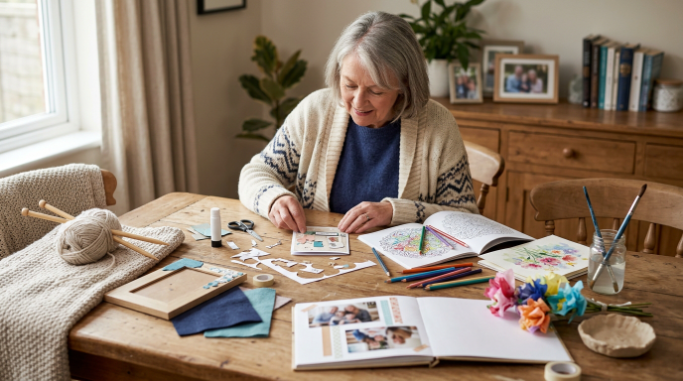
The easiest crafts are usually familiar, forgiving, and inexpensive. Adult coloring, cards, collages, painting, simple yarn projects, and clay crafts are good starting points.
1. Adult coloring
Adult coloring is one of the simplest options because there’s almost no setup. Use colored pencils, crayons, or markers with large, uncluttered designs.
Someone with reduced vision may prefer larger shapes and high-contrast outlines. A clipboard or lap desk can also keep the page stable.
2. Handmade greeting cards
Cards turn a short craft session into something useful. Blank cardstock can be decorated for birthdays, holidays, thank-you notes, or family celebrations.
- Stickers
- Pre-cut paper shapes
- Rubber stamps
- Photographs
- Ribbon
- Large-tip markers
I like this type of project because there isn’t one correct design. A simple photograph and handwritten message can be enough.
3. Watercolor painting
Watercolor is forgiving and doesn’t require detailed drawing skills. Beginners can paint leaves, flowers, sunsets, simple landscapes, or abstract washes.
Start with three or four colors instead of a huge set. Fewer choices make the first session less distracting.
4. Photo collages
Photo collages combine crafting with family memories. Use duplicate photographs or printed copies instead of irreplaceable originals.
- Create a wedding-memory page.
- Make a collage for each grandchild.
- Build a family vacation board.
- Arrange photographs by decade.
- Create a seasonal family display.
Pre-cutting decorative pieces can make the activity easier for someone who finds scissors uncomfortable.
5. Scrapbooking
Scrapbooking goes a little further than a basic collage. Photos can be combined with dates, short stories, ticket stubs, recipes, or handwritten memories.
The project can grow one page at a time. There is no need to finish an entire album at once.
6. Paper flowers
Simple paper flowers work well for spring decorations and handmade gifts. Pre-cut petals make the project much easier.
Use cardstock, tissue paper, or coffee filters. The finished flowers can go in a lightweight vase or gift package.
7. Air-dry clay crafts
Air-dry clay doesn’t require a kiln. Seniors can shape it with their hands and leave it to harden naturally.
- Small trinket dishes
- Plant markers
- Holiday ornaments
- Simple hearts or stars
- Decorative magnets
Choose soft clay that doesn’t require heavy kneading. Keep projects small so they remain easy to handle.
8. Simple knitting or crochet
Knitting and crochet can be enjoyable for someone who already knows the basic movements. Beginners should start with large needles or hooks and light-colored yarn.
Dark yarn can make individual stitches harder to see. A simple scarf or square is usually easier than a fitted garment.
9. No-sew fabric projects
No-sew projects use fabric glue, ties, or pre-cut felt instead of a needle. They can work well for people who like textiles but don’t want detailed sewing.
- Tied fleece pillows
- Felt coasters
- Fabric bookmarks
- Simple sachets
- Decorated tote bags
10. Decorating picture frames
A plain wooden or cardboard frame can become a personal keepsake. Decorate it with paint, paper, buttons, ribbon, or lightweight embellishments.
Add a favorite family photograph when the frame is finished. That gives the craft an immediate purpose.
Section Takeaway: The best first crafts are small enough to finish without fatigue and flexible enough to personalize. Start with easy materials, then increase the challenge only when the activity remains enjoyable.
Which Crafts Work for Seniors With Limited Dexterity?
Crafts for limited dexterity should use larger pieces, comfortable tools, and forgiving techniques. The goal is to reduce tiny movements and strong gripping.
Choose larger materials
Large beads, thick yarn, broad brushes, oversized stickers, and pre-cut shapes are easier to manage than tiny components. Non-slip mats can keep materials from sliding.
Foam grips can also make brushes and pens easier to hold. Frequent breaks matter when repetitive motion becomes uncomfortable.
Good lower-dexterity options
- Sponge painting: Hold a larger sponge instead of a thin brush.
- Sticker collages: Avoid detailed cutting and gluing.
- Large-shape coloring: Use broad markers or crayons.
- Stamping: Create patterns without precise drawing.
- Air-dry clay: Make broad shapes instead of tiny details.
- Torn-paper collage: Tear paper rather than cutting exact shapes.
For someone with arthritis, tremors, significant pain, or another condition affecting the hands, comfort should guide the activity. Stop if a movement causes pain.
Health note: Individual hand, joint, vision, or mobility needs vary. A healthcare professional or occupational therapist can suggest appropriate adaptations when a medical condition affects everyday activities.
What Low-Cost Crafts Can Seniors Make With Household Items?
Many easy crafts require almost no special shopping. Paper bags, jars, cardboard, old magazines, yarn scraps, and clean containers can become craft supplies.
Try these inexpensive projects
- Magazine collage: Cut or tear favorite images and arrange them on cardstock.
- Decorated jars: Add ribbon, paper, or paint to clean glass containers.
- Cardboard photo frames: Cut a simple frame and cover it with patterned paper.
- Paper bookmarks: Decorate strips of sturdy paper with drawings or stickers.
- Memory boxes: Cover a small box and fill it with photographs or keepsakes.
- Painted plant pots: Give an old pot a simple pattern or new color.
Keep saved materials organized rather than collecting everything. One small container of useful supplies is easier to manage than an overflowing craft closet.
AARP’s Create the Good program also offers examples of crafting projects that can be made for other people. That can add a sense of purpose to an inexpensive activity.
What Crafts Can Seniors Make as Gifts?
Simple handmade gifts can feel more personal than complicated projects. Cards, bookmarks, ornaments, photo crafts, and small decorations are manageable choices.
Easy handmade gift ideas
- Personalized birthday cards
- Family photo collages
- Painted bookmarks
- Decorated picture frames
- Air-dry clay ornaments
- Simple knitted scarves
- Painted flowerpots
- Recipe cards written by hand
- Small scrapbook pages
- Decorated gift boxes
A family-recipe project is especially meaningful. Write one favorite recipe on a sturdy card and decorate the border with simple drawings or stickers.
Another option is creating crafts for donation. Community groups may accept handmade cards, blankets, scarves, or other items, but always check what they currently need before making a large batch.
How Do You Set Up a Comfortable Craft Space at Home?
A senior craft area should prioritize comfort, visibility, and easy cleanup. A dining table, card table, or lap desk can work well.
Start with lighting
Place the work surface near good natural light when possible. Add a bright adjustable lamp if shadows make details difficult to see.
Keep supplies within reach
Avoid repeatedly bending, stretching, or getting up for materials. Put the day’s supplies in a shallow tray before beginning.
- Keep scissors capped or closed.
- Use washable, non-toxic materials when practical.
- Choose a stable chair with comfortable back support.
- Protect the table with newspaper or a washable mat.
- Keep drinks away from electrical tools and paper projects.
- Clean spills promptly to avoid slippery floors.
Craft sessions don’t need to be long. Twenty minutes of comfortable activity is better than pushing through an hour after hands, eyes, or shoulders become tired.
How Do You Choose the Right Craft for an Older Adult?
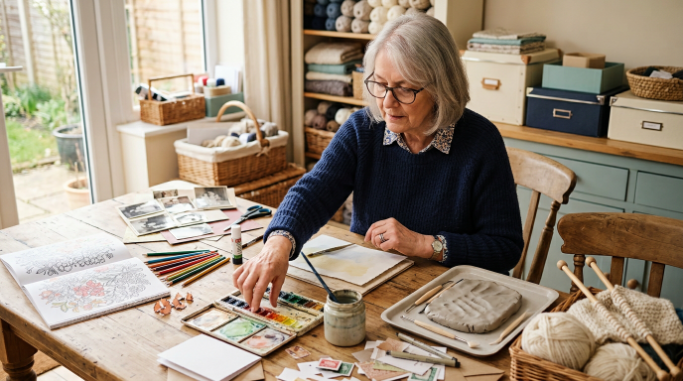
Choose the craft by matching the project to interest and ability, not age alone. Two people of the same age may enjoy completely different activities.
As of 2026, at-home craft choices range from traditional knitting to digital photo projects. The best option is still the one someone wants to repeat.
Compare easy crafts before choosing
| Craft | Basic Supplies | Typical First Session | Hand Detail | Cleanup |
|---|---|---|---|---|
| Adult coloring | Book and pencils | 15–30 minutes | Low to medium | Very low |
| Greeting cards | Cardstock, markers, stickers | 20–40 minutes | Low to medium | Low |
| Watercolor | Paint, brush, paper | 20–45 minutes | Medium | Medium |
| Photo collage | Photos, paper, glue | 30–60 minutes | Low to medium | Low |
| Air-dry clay | Soft clay and tray | 20–40 minutes | Low | Medium |
| Knitting | Yarn and needles | 20–30 minutes | Medium to high | Very low |
Ask four questions first
- What sounds enjoyable? Interest is more important than choosing a stereotypical senior activity.
- What feels comfortable? Consider vision, posture, hand strength, and energy.
- How much cleanup is acceptable? Paper crafts are easier to tidy than paint or clay.
- Is there a purpose? Some people prefer gifts and decorations, while others enjoy creating without a finished goal.
The National Institute on Aging notes that meaningful and enjoyable activities can form part of an active lifestyle as people age. Learning a new craft can also provide something interesting to practice over time.
Section Takeaway: Don’t choose a craft because it appears on a list for seniors. Choose one that matches the person’s curiosity, comfort, and preferred pace.
Frequently Asked Questions
What is the easiest craft for seniors?
Adult coloring is among the easiest crafts for many seniors because setup is simple and there is no fixed finishing time. Greeting cards, sticker collages, watercolor painting, and decorating picture frames are also beginner-friendly choices.
What crafts can elderly people do while sitting down?
Most paper and textile crafts can be done while seated. Good choices include coloring, card making, scrapbooking, photo collages, simple knitting, crochet, painting, clay shaping, decorating frames, and no-sew fabric projects.
What crafts are good for seniors with arthritis?
Projects using larger, easy-to-grip materials may be more comfortable. Sponge painting, stamping, large-shape coloring, torn-paper collages, sticker projects, and soft clay can reduce the need for tiny movements, although individual comfort varies.
What are easy crafts for seniors with limited vision?
Try crafts with strong contrast, larger materials, and simple shapes. Large-bead projects, thick yarn, broad paintbrushes, textured clay, large stickers, and high-contrast coloring pages may be easier than crafts involving tiny details.
What are easy crafts seniors can make for grandchildren?
Handmade cards, decorated picture frames, bookmarks, simple ornaments, family recipe cards, photo collages, and small memory books make meaningful gifts. They are inexpensive and can include photographs, stories, or personal messages.
How long should a senior craft activity last?
There is no required length. For a new craft, 20 to 45 minutes is a practical starting point, with breaks whenever hands, eyes, neck, or shoulders become tired.
Can crafts help seniors stay socially connected?
Crafts can create opportunities to spend time with family, friends, or community groups. The CDC includes crafts and arts among activities older adults can enjoy with others as part of maintaining social connections.
Final Takeaway
Easy crafts seniors can do at home don’t need complicated equipment or advanced artistic skills. Coloring, cards, collages, painting, simple yarn projects, clay, and memory crafts can all provide an enjoyable place to start.
Begin with one small project and a short session. If it feels comfortable and makes you want to return to the table tomorrow, you’ve probably found the right craft.
Most importantly, let personal interest lead the decision. Creativity has no retirement age.
Links to manually verify before publishing:
None of the authoritative links above were guessed; their pages were verified during research.
