
Coway vs Honeywell Air Purifier for Seniors: Which Wins?


Compression Socks

LED Clip Reading Light

Air Fryer for Easy Cooking
Coway vs Honeywell air purifier for seniors is a useful comparison because both brands offer strong air cleaning, but they take different approaches to controls, maintenance, and smart features.
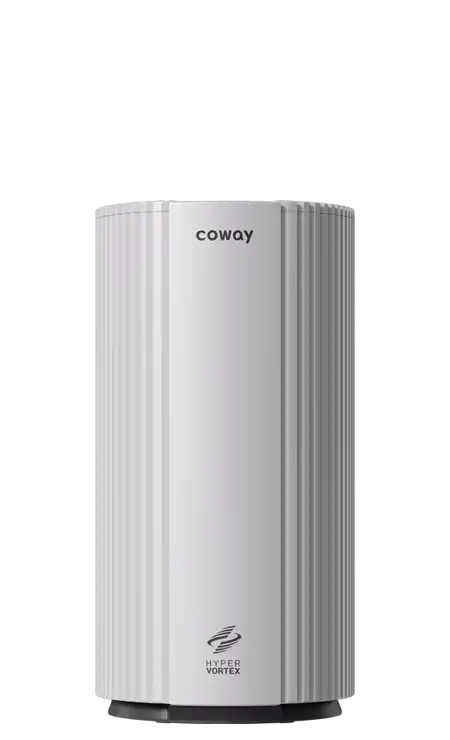
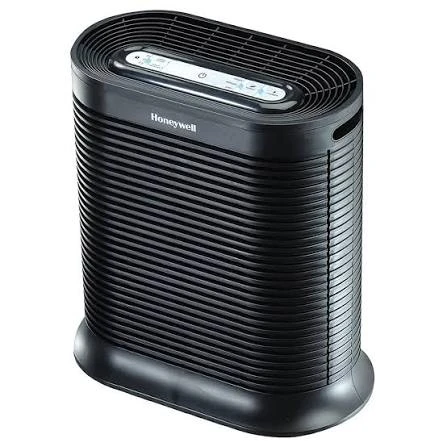
For this comparison, the Coway Airmega 250S and Honeywell HPA5300 are useful current examples of each brand’s large-room models. The Coway focuses on quiet operation, smart controls, and a washable pre-filter. Honeywell puts more emphasis on straightforward controls, visible air-quality feedback, and strong HEPA filtration.
Quick Comparison
For most seniors, Coway is the better overall choice when quiet operation, simple automatic control, and easier filter care matter most.
Honeywell may be the better choice for someone who prefers a large, easy-to-see display and wants a powerful console-style purifier with clear air-quality feedback. The right choice depends more on usability and maintenance than on brand name alone.
Coway vs Honeywell At a Glance
The two brands are close in their main purpose, but their user experience is different.
| Feature | Coway Airmega 250S | Honeywell HPA5300 |
|---|---|---|
| Filtration | HEPA + activated carbon + washable pre-filter | HEPA + odor-reducing pre-filter |
| Large-room use | Up to 930 sq. ft. at 2 air changes/hour | Up to 500 sq. ft. at 4.8 air changes/hour |
| Controls | Touch controls + app | Physical controls + display |
| Auto mode | Yes | Yes |
| Air-quality monitoring | Yes | Yes |
| Smart app | Yes | No app focus |
| Voice control | Yes | Not a primary feature |
| Noise | 22–54 dB(A) | Model-dependent |
| Filter care | Washable pre-filter + filter alert | Pre-filter and HEPA replacement |
| Filter replacement | Max2 filter about 1 year | HEPA about 12 months; pre-filter about 3 months |
Coway lists 22–54 dB(A) noise and a 20.5-pound weight for the Airmega 250S. Honeywell lists the HPA5300 as an extra-large-room model with an at-a-glance display and 4.8 air changes per hour in a 500-square-foot room.
Coway Airmega 250S for Senior-Friendly Use
Coway’s Airmega 250S stands out when convenience and quiet operation are high priorities.
Its washable pre-filter can be removed, rinsed, and hung to dry. It also has filter alerts, automatic modes, sleep mode, and app control.
Ease of Use
The Airmega 250S has three main fan-speed levels plus Smart, Sleep, Eco, and Rapid modes.
That gives users several options without requiring constant manual adjustment. Smart Mode can change airflow according to detected air conditions, which may be helpful for seniors who prefer to set the purifier and leave it running.
The app adds another option. A caregiver or family member can also monitor and control the purifier remotely through Coway’s IoCare+ app.
Key Strengths
- Quiet low-speed operation
- Automatic air-quality adjustment
- Washable pre-filter
- Filter-life indicator
- Sleep mode
- App and voice control on the 250S
- Large-room capability
Potential Drawbacks
- The unit weighs about 20.5 pounds.
- App features may be unnecessary for seniors who prefer physical controls.
- The large body may require planning for placement.
- The higher feature count can add complexity for users who want only basic operation.
Honeywell HPA5300 for Senior-Friendly Use
Honeywell takes a more traditional approach with the HPA5300.
It combines HEPA filtration with a large, visible display that shows cleaning levels, settings, and air-quality information. Honeywell also provides an automatic cleaning mode that uses air-quality readings to adjust operation.
Ease of Use
The HPA5300’s InSight display is one of its strongest senior-friendly features.
The information is designed to be visible from a distance, which can be useful for users who do not want to rely on a phone app. The purifier also offers four cleaning levels and an air-quality indicator.
For a senior who prefers pressing buttons on the machine rather than managing a smartphone app, Honeywell’s approach may feel more familiar.
Key Strengths
- Large, visible status display
- Clear air-quality indicator
- Automatic cleaning mode
- Strong HEPA filtration
- Designed for extra-large rooms
- Straightforward console-style design
Potential Drawbacks
- Pre-filter replacement is more frequent.
- The larger console design may take more floor space.
- It lacks the Coway 250S’s emphasis on app and voice control.
- More frequent filter care may be less convenient for some users.
Which Is Easier for Seniors to Use?
Ease of use depends on what the user finds easier: smart automation or traditional controls.
Coway has an advantage for seniors who want automatic operation. Its Smart Mode adjusts fan speed based on air quality, while Sleep and Eco modes reduce the need for frequent adjustments.
Honeywell may be easier for seniors who prefer seeing information directly on the machine. Its InSight display provides cleaning-level and air-quality information without requiring a smartphone.
Best fit: Coway for automation and remote control; Honeywell for direct, visible controls.
Performance Comparison
Both brands offer strong filtration, but their published room ratings use different testing and coverage descriptions, so those numbers should not be treated as a simple one-to-one performance score.
The Coway Airmega 250S lists CADR figures of 249 for smoke, 261 for dust, and 230 for pollen. It is rated for 930 square feet at two air changes per hour.
Honeywell says the HPA5300 can circulate and filter air 4.8 times per hour in a 500-square-foot room and up to 2,423 square feet at one air change per hour.
| Performance Area | Coway | Honeywell |
|---|---|---|
| Particle filtration | Strong | Strong |
| Automatic adjustment | Yes | Yes |
| Air-quality feedback | Yes | Yes |
| Large-room capability | Strong | Strong |
| Odor filtration | Activated carbon | Odor-reducing pre-filter option |
| Published CADR | 249 smoke / 261 dust / 230 pollen | Not presented in the same format on the product page |
The important point is that both are designed for substantial indoor-air cleaning. Room size, placement, and the desired number of air changes matter when choosing between them.
Comfort, Accessibility, and Senior-Friendly Design
For many older users, comfort means more than physical ergonomics. Noise, visibility, maintenance, and the number of steps needed for daily use can matter just as much.
Coway’s 22–54 dB(A) published noise range gives it a clear advantage for users who place a high value on quiet operation. Its Sleep Mode is also designed for quieter nighttime use.
Honeywell’s biggest accessibility advantage is its visible InSight display. It can make the machine’s operating status easier to understand without opening an app.
| Senior Need | Coway | Honeywell |
|---|---|---|
| Quiet bedroom use | Excellent | Good, depending on setting |
| Visible information | Good | Excellent |
| Remote control | Excellent | Limited |
| Automatic operation | Excellent | Excellent |
| Simple physical operation | Good | Excellent |
| Filter-care convenience | Excellent | Good |
Features Comparison
The biggest difference is not filtration. It is how the two brands make the purifier fit into daily life.
| Feature | Coway Airmega 250S | Honeywell HPA5300 |
|---|---|---|
| Smart Mode | Yes | Yes |
| Sleep Mode | Yes | — |
| Mobile app | Yes | — |
| Voice control | Yes | — |
| Air-quality indicator | Yes | Yes |
| Washable pre-filter | Yes | No |
| Filter alert | Yes | Yes |
| Timer | Yes | — |
Coway’s 250S supports app scheduling, timers, voice control, and remote monitoring. Honeywell instead emphasizes its built-in display and automatic cleaning system.
Price, Maintenance, and Long-Term Value
Price can change, so the better comparison is long-term ownership rather than a temporary sale price.
Coway says the Airmega 250S Max2 filter has an expected life of about one year. Its reusable pre-filter can be washed instead of replaced.
Honeywell recommends replacing its R HEPA filters about every 12 months and its A pre-filter about every three months. These are guidelines and actual replacement needs can vary with air quality and usage.
| Cost Factor | Coway | Honeywell |
|---|---|---|
| Main filter interval | About 1 year | About 12 months |
| Pre-filter | Washable | Replace about every 3 months |
| Smart features | Included on 250S | Less app-focused |
| Maintenance burden | Lower for pre-filter care | Higher due to pre-filter replacement |
| Long-term value | Strong for convenience | Strong for straightforward operation |
For a senior who does not want frequent filter purchases, Coway’s washable pre-filter is a meaningful advantage.
Who Should Choose Coway?
Choose Coway if:
- Quiet operation is a major priority.
- The user wants automatic air cleaning.
- A washable pre-filter sounds more convenient.
- A smartphone app would be useful.
- A caregiver may benefit from remote control.
- Sleep-time noise matters.
- The user wants more smart-home features.
Who Should Choose Honeywell?
Choose Honeywell if:
- The user prefers traditional machine controls.
- A clear display is more useful than a smartphone app.
- The purifier will serve a large room.
- Straightforward air-quality feedback is important.
- The user prefers a familiar console-style purifier.
- Smart-home features are not important.
Coway vs Honeywell — Final Verdict
Best for most seniors: Coway
Best for easy visual controls: Honeywell
Best for quiet operation: Coway
Best for smart features: Coway
Best for traditional operation: Honeywell
Best for easier pre-filter maintenance: Coway
Coway is the stronger overall choice for many seniors because it combines automatic operation, quiet performance, a washable pre-filter, and optional app and voice control. Honeywell remains a strong alternative for seniors who prefer a visible display and straightforward controls over connected features.
Scoring Summary
These scores are editorial judgments based on the documented features above, not laboratory test results.
| Category | Coway | Honeywell |
|---|---|---|
| Ease of Use | 9/10 | 8.5/10 |
| Senior-Friendly Design | 9/10 | 8.5/10 |
| Performance | 9/10 | 9/10 |
| Maintenance | 9/10 | 7.5/10 |
| Features | 9.5/10 | 8/10 |
| Value | 8.5/10 | 8.5/10 |
How We Evaluate Products
This comparison focuses on the things that can make an air purifier practical for an older adult.
The main factors are ease of operation, display visibility, noise, maintenance, filtration, automation, room coverage, and long-term ownership. The comparison does not claim hands-on testing or laboratory testing.
Senior-Specific Buying Considerations
A few simple checks can make the final choice easier.
Physical Effort
Consider where the purifier will sit. A large purifier should not need to be lifted frequently.
Controls
Think about whether the user prefers physical controls or smartphone-based control.
Maintenance
Check how often filters must be cleaned or replaced. Coway’s washable pre-filter may reduce replacement work, while Honeywell’s pre-filter has a recommended three-month replacement interval.
Setup
Place the purifier where airflow is not blocked by furniture or other objects.
Safety
Keep the unit on a stable surface with adequate airflow around it. Follow the manufacturer’s electrical and placement instructions.
Common Buying Mistakes
Avoid these common mistakes when choosing between Coway and Honeywell:
- Choosing only by room-size claims.
- Ignoring filter replacement costs.
- Buying smart features that the user will never use.
- Overlooking noise for bedroom use.
- Forgetting how filters will be cleaned or replaced.
- Placing a large purifier where it is difficult to access.
Frequently Asked Questions
Is Coway better than Honeywell for seniors?
For many seniors, yes. Coway has an advantage in quiet operation, automation, and pre-filter maintenance. Honeywell may be better for someone who prefers traditional controls and a highly visible display.
Which is easier to maintain?
Coway has an advantage because the Airmega 250S uses a washable pre-filter. Honeywell’s recommended pre-filter replacement interval is about three months.
Which is quieter?
The Coway Airmega 250S has a published noise range of 22–54 dB(A), making quiet operation one of its notable strengths.
Is Honeywell better for large rooms?
Honeywell’s HPA5300 is designed for extra-large rooms and is rated for 2,423 square feet at one air change per hour. However, room-size figures should be compared using the same air-change assumptions rather than by square footage alone.
Does Coway have smart features?
Yes. The Airmega 250S supports Wi-Fi, app control, scheduling, timers, and voice control.
Conclusion
Coway and Honeywell are both solid choices, but they suit slightly different users. Coway is the better overall pick for seniors who value quiet operation, automatic control, smart features, and simpler pre-filter care.
Honeywell is a better fit for seniors who want a traditional purifier with a clear built-in display and straightforward operation. The best choice is ultimately the one that matches the user’s room, comfort preferences, control style, and ability to handle regular filter maintenance.