
10 Best Toilet Safety Rails 2026: Expert Picks, Buying Guide, and Top Reviews


Electric Jar Opener

Foot Massager Machine

Adjustable Bed Frame
Toilet safety rails help people sit down and stand up more safely, reduce slips, and add confidence in the bathroom. These rails come in stand-alone grips, clamp-on arms, or frames that fit around the toilet. They serve people with limited mobility, seniors, recovering patients, or anyone who needs extra support.
Choosing the right rail means checking fit, stability, and how it mounts to your toilet or floor. Look at weight capacity, adjustability, padding, and whether it needs tools to install. We tested a range of clamp-on, freestanding, and frame-style rails to find the models that offer the most stable support and easiest setup.
Best Toilet Safety Rails 2026
Below is our full list of the best toilet safety rails for 2026. We tested and compared stability, ease of installation, and adjustability to help you find the right support for daily bathroom use. Use our picks to choose a rail that fits your toilet and boosts safety.
Lianjindun Toilet Safety Rails

We recommend this rail if you want a strong, adjustable, no-drill toilet aid that feels stable for everyday use.
Pros
- Very sturdy and holds weight without wobble.
- Easy to assemble and fold for storage.
- Adjustable height and width fit most toilets.
Cons
- Toilet seat may drop against the frame and feel awkward.
- Suction feet could use stronger grip on some floors.
- Padding can collect moisture if not wiped dry.
We set this up in minutes and found the frame solid right away. The aluminum feels heavy-duty and the handles gave us real support when standing up.
The foam grips are comfortable and the size adjustments made it easy to fit between the toilet and sink in tight bathrooms. We liked folding it flat to store when guests visit.
Foot placement mattered; on smooth tile the suction cups needed extra attention. Overall, the rails gave us confidence that using the toilet would be safer after surgery or for limited mobility.
Pelegon Toilet Safety Rail (350 lb)

We recommend this rail when you want a sturdy, easy-to-adjust support that fits most toilets and helps with transfers after surgery or for seniors.
Pros
- Solid, stable feel under hand pressure
- Tool-free, quick assembly we could manage alone
- Height and width adjust to fit different toilets
Cons
- Back rail sits close to some toilet tanks
- Lightweight frame can shift on slippery floors
- Padded grips wear with heavy daily use
We used this on a low-to-standard toilet after a knee surgery recovery. The frame went together fast and the padded handles felt comfortable when gripping to stand. It gave us clear confidence during transfers.
Adjusting height and width was simple and made the fit snug around our bowl. The aluminum frame feels durable while still being light enough to move for cleaning. Installation without tools saved time and frustration.
One drawback: the rear rail can press near the tank on compact toilets, which limits placement in tight bathrooms. Also, if your floor is slick we recommend a non-slip mat under the feet for extra grip. Overall, it worked well for rehab needs and daily senior use.
HOMLAND Toilet Rails
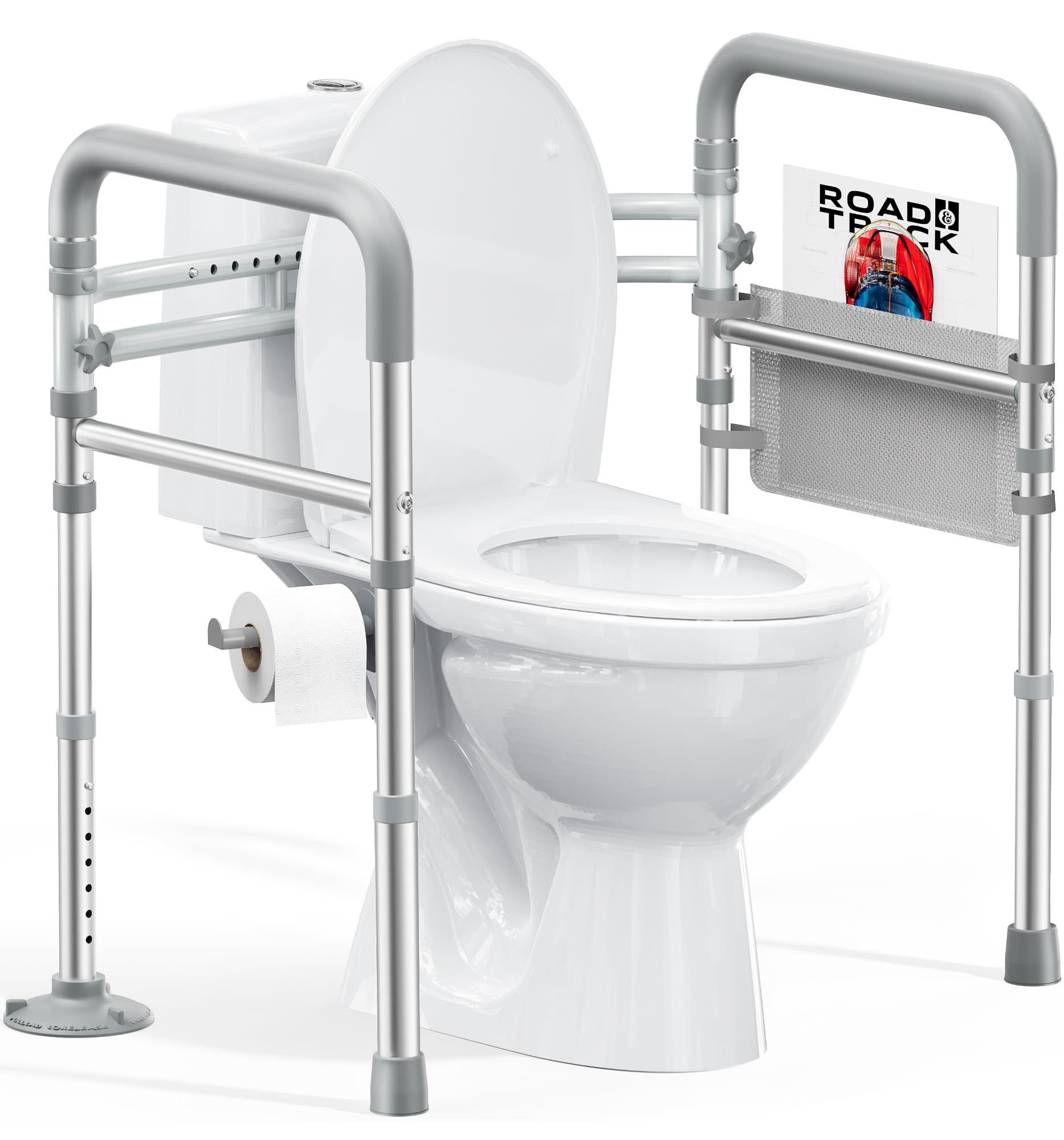
We recommend this rail if you need a sturdy, adjustable aid that helps with sitting and standing after surgery or for everyday use.
Pros
- Solid aluminum frame feels durable and lasts through frequent use.
- Foam armrests give a comfortable, non-slip grip when getting up.
- Folds flat for storage and adjusts to fit most toilets.
Cons
- Slight wobble on uneven tile unless suction cups sit fully on one tile.
- Heavier than plastic options, so moving it up stairs takes effort.
- Not fully wobble-free for people with very poor balance.
We installed the HOMLAND rail after a knee procedure and used it daily. The frame felt strong and the extra C-clamps at the backrest pivot added confidence when we leaned on it. Getting up from the seat needed less effort than without the rails.
Adjusting width and height was quick with the button-lock system. The foam armrests gave a sure grip, even when our hands were wet. Folding it flat made it easy to store when guests visited.
The rubber feet hold well on standard floors, but we had to swap to the suction cups on smooth tile for best stability. Assembly was straightforward and the instructions made setup simple. Overall, this rail balanced sturdiness and convenience for short-term recovery and long-term use.
KMINA Toilet Safety Rails

We recommend this if you want a sturdy, adjustable toilet rail that stays put and feels solid during real use.
Pros
- Very stable during sitting and standing.
- Easy, tool-free setup and quick adjustments.
- Comfortable armrests with clear height markings.
Cons
- Heavier and bulkier than basic rails.
- Needs enough floor and wall space to fit properly.
- Pricier than simple clamp-on options.
We installed this rail in two bathrooms and used it every day for a month. The frame felt heavy and well-made as soon as we lifted it out of the box. The armrests gave a firm, non-wobbly grip when helping someone stand.
Adjusting height and width took seconds with the numbered buttons and thread locks. The suction pads and front rubber centering kept the frame from shifting even when someone leaned hard on one side.
We noticed it needs room around the toilet to sit right, so measure first. The price is higher than cheap models, but the build felt like it will last. Overall, it gave our users confidence and safer transfers.
HOMLAND Toilet Rail
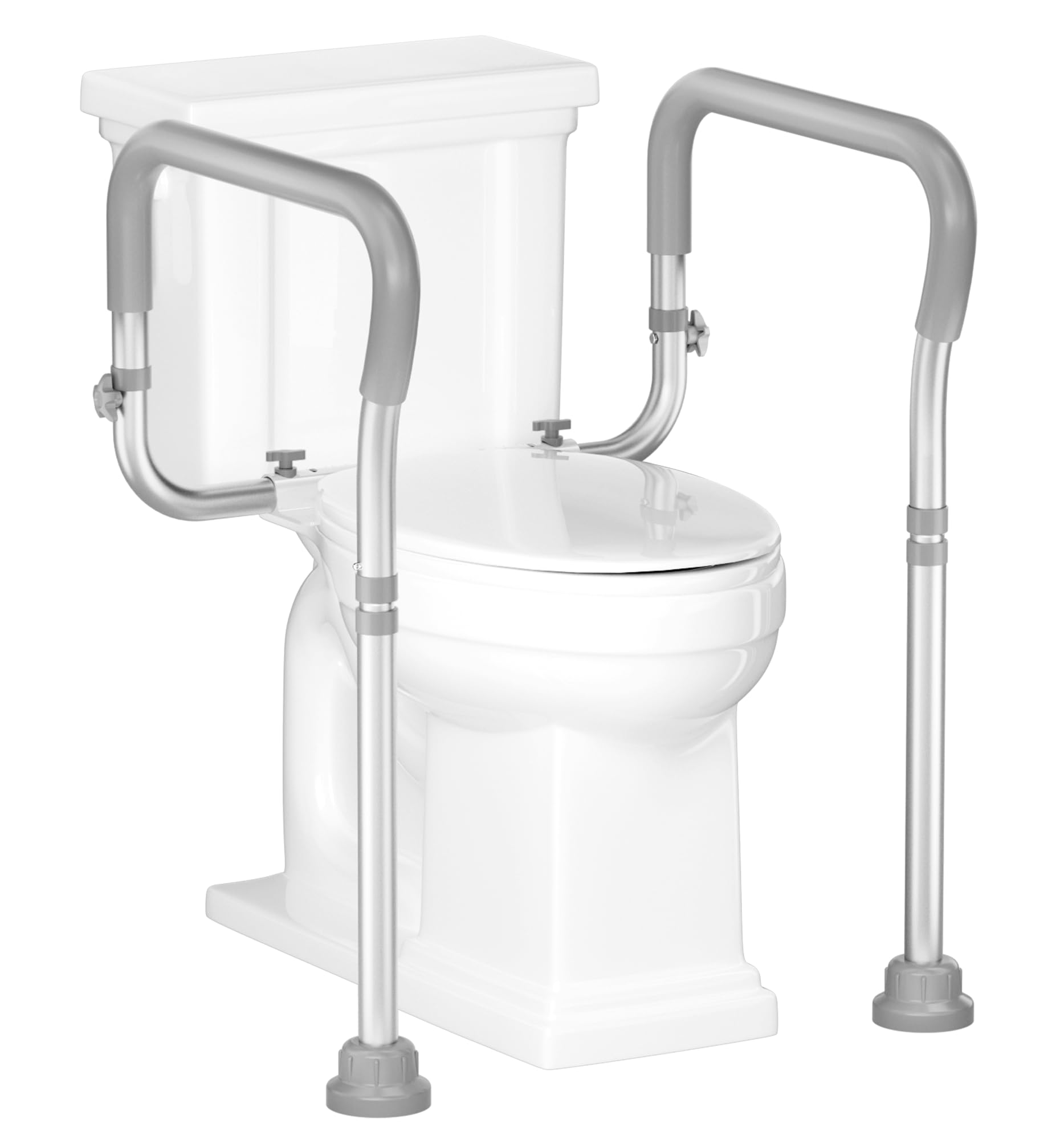
We recommend this if you need a lightweight, bolted toilet rail that helps people sit and stand more safely.
Pros
- Easy to install and remove using existing seat screws.
- Comfortable padded grips with good slip resistance.
- Adjustable height and width for many standard toilets.
Cons
- Only fits two‑bolt toilets with 5.5″ spacing — measure first.
- Not as rock‑solid for heavier users despite 350 lb rating.
- Instructions and small parts can be a little confusing.
We installed the HOMLAND rail at a family member’s house and found the aluminum frame felt light but solid when holding the rail. The padded EVA grips made it easier for them to lean and lift without hand pain.
We liked that it bolts to the toilet seat screws instead of just sitting around the bowl; that cut down on wobble. Still, on a larger person it had a bit of give, so we treated it as an aid rather than full body support.
Adjusting height and width was straightforward after we checked the bolt spacing. If your toilet uses a different bolt pattern you’ll want to confirm compatibility before buying to avoid a return.
Medical King Toilet Rail
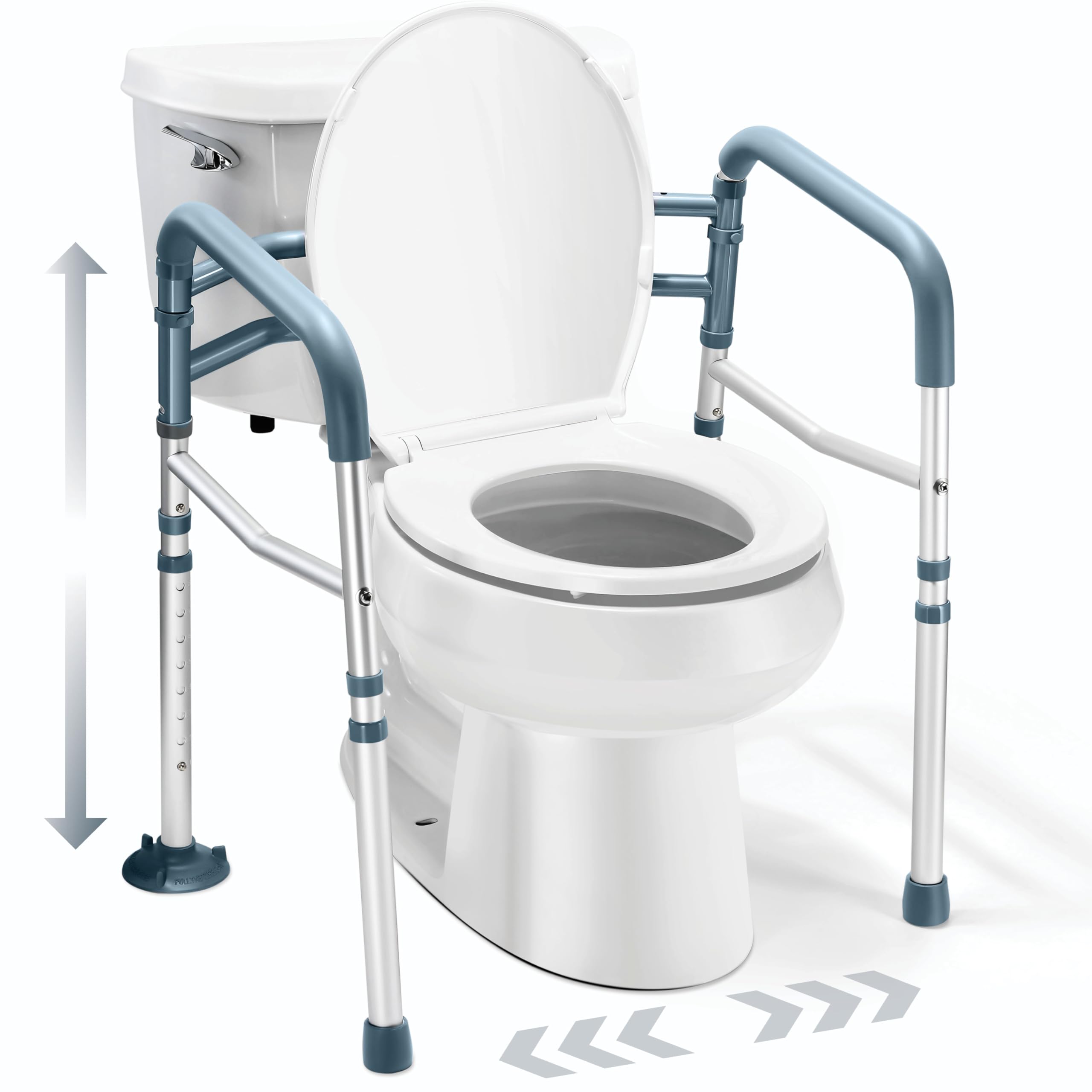
We recommend this rail when you need a sturdy, easy-to-move toilet aid that helps sit-to-stand tasks.
Pros
- Feels solid and stable right away.
- Folds and moves between bathrooms easily.
- Soft, textured grips make holding more comfortable.
Cons
- Back suction cups can lose hold on some floors.
- Some users find it tilts if weight is uneven.
- Not anchored to the toilet, so it can shift if leaned on strongly.
We used this frame during recovery and found the aluminum build gave us confidence getting up from the seat. The handles felt comfortable for daily use, and the height and width adjustments helped fit both round and elongated bowls.
Assembly took just a few minutes with no tools. Moving it from one bathroom to another was simple because it folds and is lightweight, which made travel and storage easy for us.
One drawback showed up on slick tile and grout: the two rear suction cups did not always stay firm. We avoided leaning back on the frame and preferred to use the front legs for primary support to keep things steady.
Overall, this is a practical, well-made safety rail for short-term recovery or everyday help, especially if you want something portable and easy to set up.
HOMENURSE Toilet Safety Rails
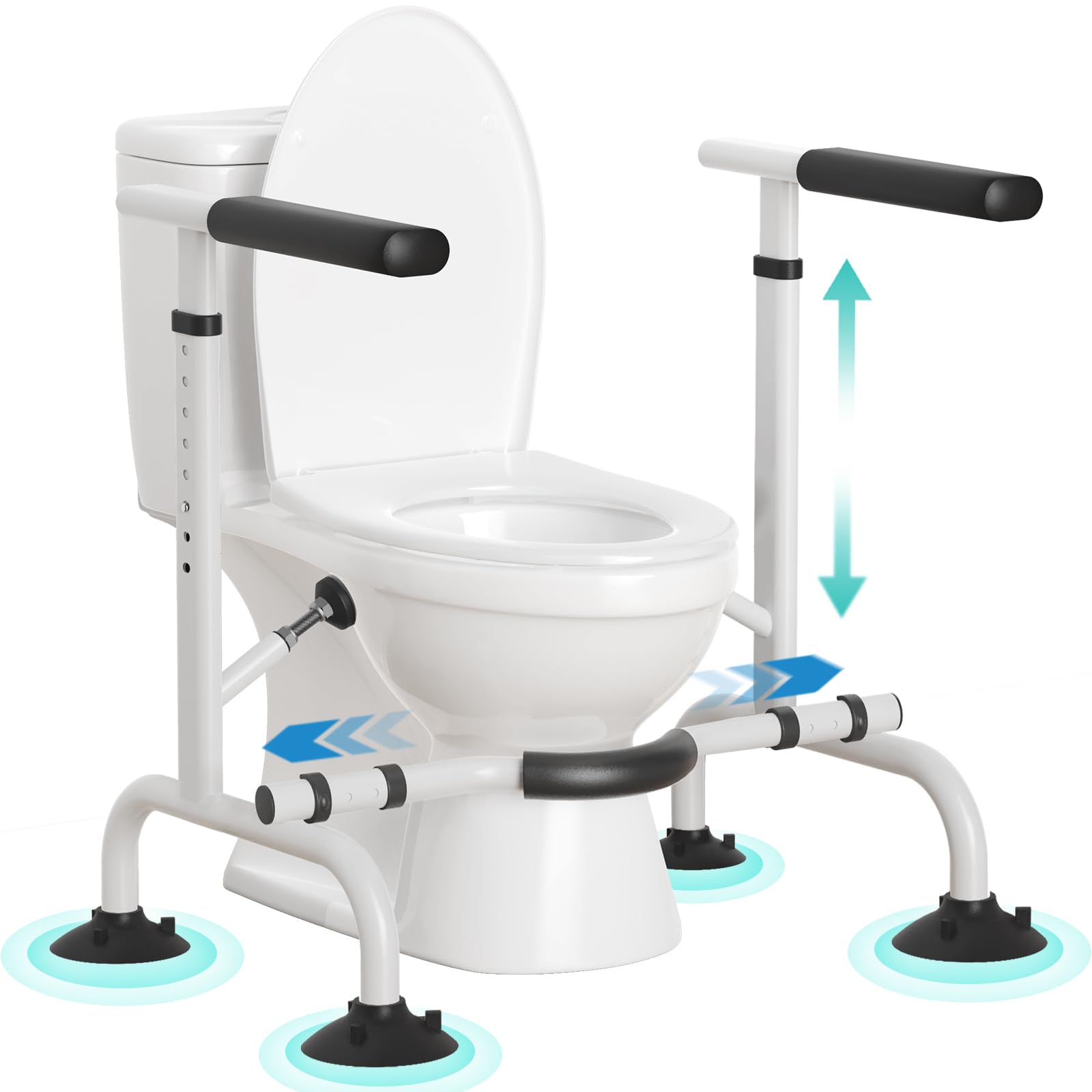
We recommend this if you want a sturdy, adjustable toilet rail that installs without tools and holds up during daily use.
Pros
- Solid, heavy-duty feel that made us confident when standing.
- Easy, tool-free setup — we had it ready in minutes.
- Adjustable height and width fit different toilets and users.
Cons
- One side can wobble under strong pressure if not positioned perfectly.
- Suction cups work best on very clean, flat floors.
- Some parts may need careful handling during assembly.
We used the HOMENURSE frame for a week and found the steel construction reassuring. Getting on and off the toilet felt steadier, and the padded handrails were comfortable to grip.
Installation really is simple. We put it together without a drill, adjusted the height to our comfort, and tested the width. The suction feet held firm after we cleaned the floor well.
On the downside, one reviewer and our own quick tests showed a slight sway if the frame wasn’t aligned exactly. The suction cups do their job, but they demand a smooth, clean surface to stay rock solid.
Overall, this model gave us more confidence for daily transfers and bathroom tasks, as long as you take time to position and secure it carefully.
Medline Toilet Handle Safety Rail

We recommend this rail if you need a sturdy, easy-to-move support that fits most toilets and helps with sitting and standing.
Pros
- Solid aluminum frame feels durable and steady.
- Folds and adjusts so you can move or store it easily.
- Comfortable closed-cell grips give a secure hold.
Cons
- May need toilet seat removal to install.
- One arm can feel a bit loose on some toilets.
- Weight limit and fit need checking for larger users.
We set this up in our bathroom and used it daily for a few weeks during recovery. The frame feels light yet firm when we lean on it, and the grips stayed comfortable even during repeated use.
Adjusting the width and height was simple, and folding it back saved space when we needed room. Moving it between bathrooms or into a car took only a minute.
A few times one side rotated more than we wanted, so we tightened the fittings and that helped. Overall, it gave us real confidence getting on and off the toilet after surgery.
Srora Toilet Safety Rails

We recommend this rail if you want a sturdy, space-saving grab bar that feels solid when you stand and tucks away when you don’t need it.
Pros
- Very strong and stable support when pulling up.
- Arms flip up to clear the seat and save space.
- Feels well made and easy to clean.
Cons
- Installation directions were confusing the first time.
- Arms don’t fold fully upright on some toilets.
- May need careful measuring to fit all toilet types.
We installed this rail and used it for a few weeks around the house. It gave immediate confidence when standing from the toilet. The metal build feels heavy-duty and didn’t wobble, which mattered most for us.
Getting it mounted took patience. The kit includes parts for different toilets, but the instructions mix terms. We figured it out by watching the video and testing the locking method that matched our bowl.
Once in place, the arms felt comfortable under our forearms and held our weight without flex. The flip-up action clears the seat for other users, though on one model it stopped at about 45 degrees instead of folding tight against the tank.
Cleaning is simple because the finish wipes down easily. The rail uses toilet seat mounting points, so measure your seat holes and tank gap before ordering to avoid surprises.
HWAeyem Toilet Safety Rails (520 lbs)
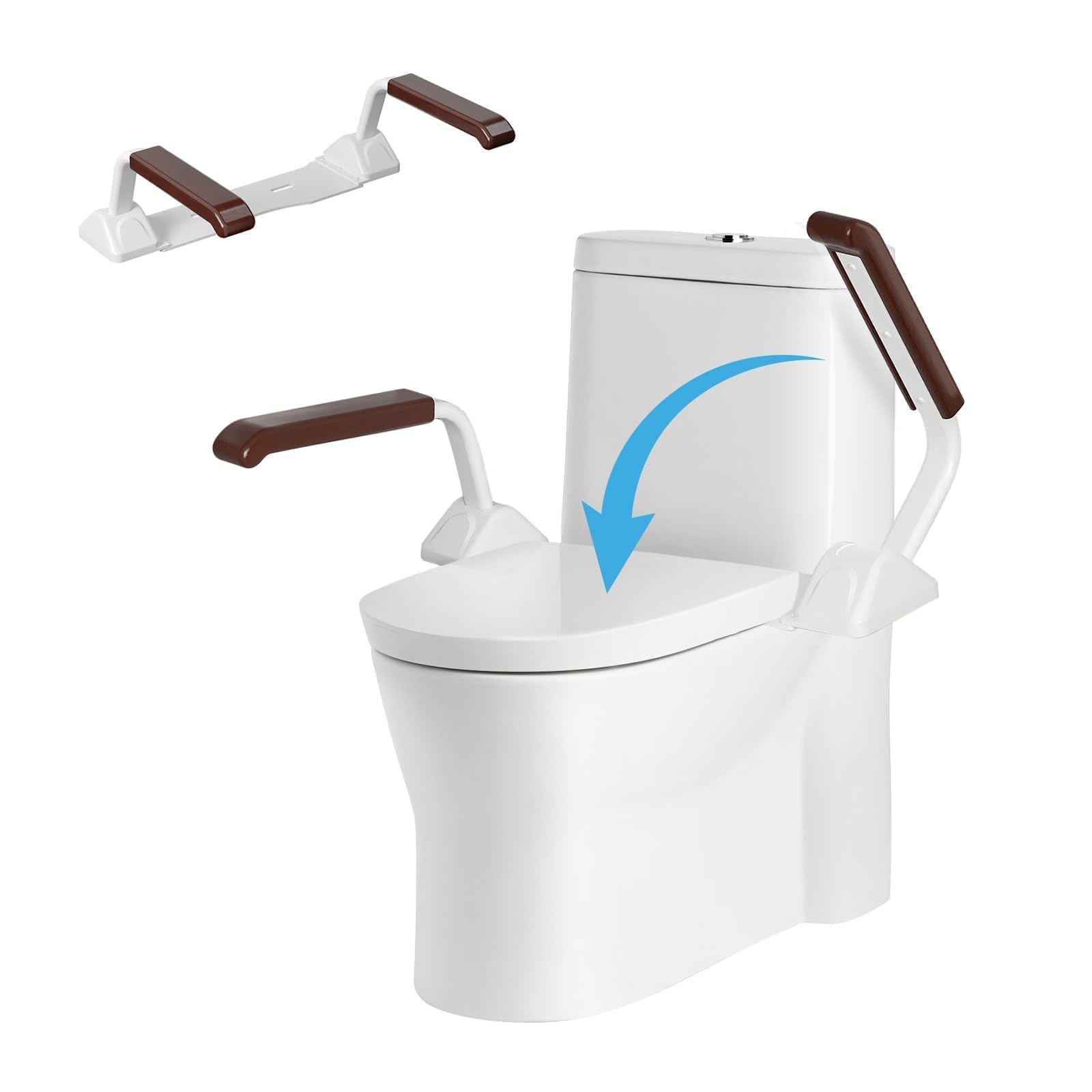
We recommend this if you want a sturdy, space-saving toilet rail that feels secure and folds up when not needed.
Pros
- Very solid and stable under weight.
- Fold-up arms save bathroom space.
- Simple install with common tools.
Cons
- Tight screw holes can be hard to start.
- Not compatible with smart bidet toilets.
- Heavier unit takes two people to move.
We installed this rail in a standard home bathroom and used it for a few days. The steel frame with wooden top feels very solid when leaning or pushing. Getting on and off the toilet felt safer, and the swing-up arms made transfers easier for a caregiver.
Assembly was straightforward with the included hardware and an Allen wrench. One bolt hole was stubborn and needed a light tap to seat the screw, so plan for a small hammer or extra patience. Once mounted, the rails did not wobble and gave reassuring support.
We liked that each arm flips up independently and locks at a slight angle. That made cleaning and caregiver access simpler. The frame is heavy, so set it in place with help and double-check fit on your toilet model since smart bidets are excluded.
Buying Guide
We look for rails that add stability without changing the toilet too much. Check how the rail attaches: clamp, bolt, or floor-mounted. Each method affects strength and installation time.
We inspect material and build quality. Aluminum and steel offer strong support; plastic parts should be thick and reinforced. Look for non-slip grips and rounded edges to reduce injury risk.
We weigh height and adjustability. Rails with multiple height settings fit more users and toilets. Measure seat height and the space beside the toilet before buying.
We test weight capacity and user needs. Choose rails rated above the user’s weight by at least 50 pounds for safety. Consider whether the user needs armrests, a transfer handle, or a wider grip.
We consider installation and tools. Some rails use only hand-tightened clamps. Others require drilling or bolts. Pick the option that matches our DIY skill and the bathroom’s floor and wall type.
We compare portability and storage. Foldable or removable rails suit travel or shared bathrooms. Fixed rails work better for daily, long-term use.
We check maintenance and cleaning. Smooth finishes wipe clean easily. Removable pads and covers should be machine-washable or simple to disinfect.
We review warranty and support. Longer warranties and clear return policies protect our purchase. Make sure instructions are clear and customer service is reachable.
Editor’s Choice
We picked the Best Overall toilet safety rail for stability and ease of use. It has wide, non-slip handles and a sturdy frame that fits most toilets without tools. We found it supports up to 300 pounds and installs in minutes.
Our runner-up balances price and features. It uses adjustable clamps and foam pads to protect the bowl. We liked its quieter grip and the fact it folds down for storage.
We also highlight a lightweight travel model for short-term needs. It packs flat and snaps together quickly. We tested it for simple trips and brief rehab stays.
Key reasons we chose these models:
- Stability: wide base or clamp design for firm support
- Comfort: padded, ergonomic grips that reduce hand strain
- Ease of install: tool-free setup or simple bolts
- Durability: corrosion-resistant finishes and solid joints
We tested each rail on different toilet shapes and heights. We paid attention to hand placement, balance when sitting and standing, and how the rail affects nearby fixtures. Our picks perform well across common scenarios.
Conclusion
We chose rails that balance safety, comfort, and ease of use. Our top picks include models that fit standard toilets, ones with strong weight limits, and options that need no tools for setup.
We value stability most. Rails with wide bases, non-slip pads, and secure clamps reduce fall risk. Adjustable height and padded grips help users feel steady and comfortable.
We also looked at installation and maintenance. Some rails snap on and off in minutes. Others bolt to the floor or the toilet for extra strength.
Cost matters to families and facilities. We included budget-friendly choices and higher-end models for heavy use. Each option we recommend gives clear benefits for different needs.
Use our guide to match a rail to the user’s strength, bathroom layout, and budget. Test the rail before regular use and keep it clean. If mobility changes, pick a model that can adapt or be upgraded.
FAQS
What are toilet safety rails used for?
We use safety rails to add balance and support when sitting or standing from the toilet. They reduce falls and help people with limited strength or mobility stay independent.
How do we choose the right rail?
Look at toilet type, weight capacity, and installation style. Grab rails that clamp to the bowl suit renters, while floor-mounted rails give extra stability for heavier users.
Are rails hard to install?
Many rails install in 10–30 minutes with basic tools. Some models need drilling; others use clamps or straps. We recommend checking instructions and measuring before buying.
Will rails fit my toilet?
Most rails fit standard toilets, but elongated or wall-hung toilets may need special models. Check the manufacturer’s fit guide and your toilet measurements.
Do rails damage the toilet?
Clamped rails rarely damage porcelain when used correctly. Floor-mounted rails avoid bowl contact but need secure anchoring. We advise following installation directions to prevent harm.
How do we clean and maintain rails?
Wipe rails weekly with mild soap and water. Tighten bolts monthly and inspect grips for wear. Replace parts if they become loose or cracked.
Are rails covered by insurance?
Some insurers or Medicare may cover rails as durable medical equipment with a doctor’s order. We suggest contacting your provider to confirm coverage and requirements.