
Is Cooking a Good Retirement Hobby?


Hands-Free Neck Magnifier

Electric Recliner Lift Chair

Book Holder Stand
Quick Answer
Yes, cooking can be an excellent retirement hobby because it combines creativity, learning, useful daily skills, and opportunities to connect with other people. It can also give your week a comfortable routine without requiring an expensive membership or complicated equipment. The National Institute on Aging encourages enjoyable and meaningful activities as part of staying engaged in later life.
Why cooking works well in retirement
- Creative freedom: You can experiment with recipes, flavors, cuisines, and presentation at your own pace.
- Useful results: Your hobby produces meals you can enjoy instead of objects you need to store.
- Flexible cost: You can begin with the pans, knives, and ingredients already in your kitchen.
- Social potential: Cooking can become a shared activity with a spouse, grandchildren, friends, or a community class.
- Constant learning: New techniques and recipes give you an endless supply of small challenges.
Best way to start
- Choose one meal or technique each week instead of turning cooking into another demanding schedule.
Retirement can finally give you time to cook without watching the clock. That alone can turn an ordinary household task into something surprisingly enjoyable.
I think cooking works best as a retirement hobby when you treat it as exploration, not another responsibility. You can learn slowly, make mistakes, repeat favorites, and share what you create.
In This Guide
- Why is cooking a good retirement hobby?
- What can cooking add to your retirement?
- Is cooking a good hobby for beginners?
- Is cooking an expensive retirement hobby?
- Can cooking help retirees stay socially connected?
- How can seniors make cooking safer and easier?
- How does cooking compare with other retirement hobbies?
- How do you start cooking as a retirement hobby?
- Frequently asked questions
- Final takeaway
Why Is Cooking a Good Retirement Hobby?
Cooking is a good retirement hobby because it blends creativity with something practical. You can enjoy the process and still end up with something useful at the end.
It also scales easily. One day you might prepare soup, while another week you may spend an afternoon learning homemade bread.
Cooking gives you a reason to experiment
A cooking hobby is regular food preparation done partly for enjoyment, curiosity, creativity, or learning rather than only because you need a meal.
That distinction matters. When cooking becomes a hobby, the process becomes part of the reward.
- Try another cuisine: Explore Thai curries, Italian pasta, Mexican salsas, Japanese rice dishes, or regional American recipes.
- Learn one technique: Practice roasting vegetables, baking bread, making sauces, or using fresh herbs.
- Revisit family recipes: Recreate meals connected to childhood, holidays, or family traditions.
- Create your own version: Adjust sweetness, spice, texture, or ingredients until a recipe suits you.
You can progress without pressure
Retirement cooking doesn’t need tests, deadlines, or professional standards. A slightly uneven loaf of bread can still taste excellent.
I like that freedom. You can repeat the same recipe three Saturdays in a row simply because you want to improve it.
As of 2026, cooking also remains unusually accessible compared with hobbies requiring specialized facilities. Most people can begin in their existing kitchen.
What Can Cooking Add to Your Retirement?
Cooking can add structure, learning, creativity, and personal satisfaction to retirement. Those qualities can make otherwise unstructured days feel more interesting.
The goal isn’t to keep yourself constantly busy. It’s to have something enjoyable waiting when you want it.
It creates a gentle routine
Retirement sometimes removes the schedule that work once provided. Meal projects can create small anchors during the week.
- Monday can become soup-making day.
- Wednesday might be a new-recipe evening.
- Saturday could mean bread or dessert.
- Sunday might involve cooking for family.
A routine like this gives you structure without making your calendar feel crowded.
It keeps you learning
Cooking contains hundreds of small skills. Even experienced home cooks can find something new to practice.
- Knife techniques
- Baking
- Seasoning
- Meal planning
- Sauce making
- Food preservation
- International recipes
- Ingredient substitutions
The National Institute on Aging includes learning new skills and participating in enjoyable activities among ways older adults can stay engaged.
It gives you visible results
Some hobbies take months before progress feels noticeable. Cooking gives you feedback within an hour.
You taste the result, decide what worked, and make a change next time. That simple cycle can be satisfying.
Section Takeaway: Cooking offers retirement structure without demanding a rigid schedule. It can keep curiosity alive while producing something useful every time you practice.
Is Cooking a Good Hobby for Beginners?

Yes. Cooking is especially beginner-friendly because you can start with simple meals and increase the challenge gradually.
You don’t need to master complicated recipes first. Five dependable dishes are a better starting point.
Start with forgiving recipes
Choose dishes that don’t depend on perfect timing or advanced techniques. This makes early sessions more relaxed.
- Vegetable or chicken soup
- Sheet-pan roasted vegetables
- Pasta with a simple homemade sauce
- Scrambled eggs or omelets
- Rice bowls
- Slow-cooked stews
- Simple muffins or quick breads
Learn one skill at a time
A common beginner mistake is choosing a recipe with six unfamiliar techniques. That can turn a relaxing hobby into an exhausting project.
Instead, choose one thing to learn each week.
- Learn how to chop an onion comfortably.
- Practice roasting vegetables evenly.
- Learn how herbs change flavor.
- Try one basic sauce.
- Practice one simple baked recipe.
I would rather cook one basic dish confidently than struggle through five complicated ones. Confidence makes experimentation easier later.
Is Cooking an Expensive Retirement Hobby?
Cooking can be inexpensive when you start with what you already own. You don’t need premium cookware or specialty appliances to enjoy it.
Your biggest ongoing cost is usually ingredients, which may already be part of your household budget.
What do you really need?
- One comfortable knife: It matters more than owning a large knife block.
- Cutting board: Choose one that stays stable while you work.
- Skillet: A medium or large pan covers many everyday meals.
- Saucepan: Useful for grains, sauces, vegetables, and smaller portions.
- Large pot: Helpful for soups, pasta, and batch cooking.
- Baking sheet: Useful for roasting vegetables, fish, chicken, and simple baked foods.
Keep ingredient experiments small
Buying ten unusual spices for one recipe can become expensive. Begin with ingredients you can use repeatedly.
A small collection of herbs and spices gives you plenty of room to experiment. Add specialty ingredients only when you know you’ll use them.
Cooking can support practical meal planning
Learning to cook smaller portions can be useful after retirement, especially when household size changes. Batch cooking can also reduce how often you need to prepare a complete meal.
The USDA’s MyPlate resources offer general guidance on balanced food choices and meal planning.
Can Cooking Help Retirees Stay Socially Connected?
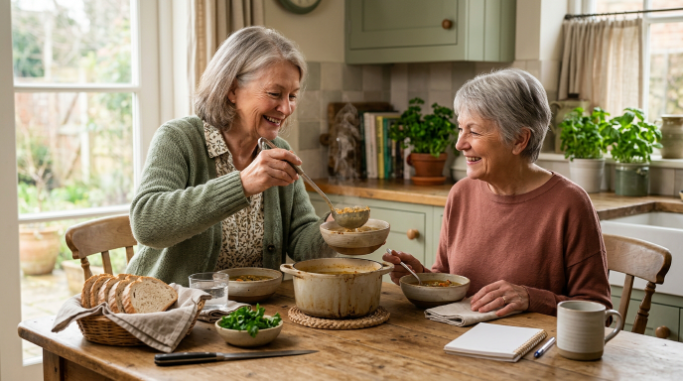
Yes. Cooking can become a naturally social hobby when you prepare food with others, exchange recipes, attend classes, or invite people to share meals.
Food gives people an easy reason to gather. Conversation often happens naturally around preparation and eating.
Turn cooking into a shared activity
- Cook with grandchildren: Choose simple mixing, measuring, or decorating tasks.
- Invite a friend: Try one unfamiliar recipe together.
- Swap recipes: Exchange favorite dishes with neighbors or relatives.
- Join a class: Community centers and adult education programs may offer beginner cooking sessions.
- Host a small meal: A casual lunch can feel easier than planning a large dinner party.
The CDC’s social connection guidance emphasizes the importance of supportive relationships for overall well-being.
Cooking alone can still feel connected
A social cooking hobby doesn’t always require someone beside you. You can prepare a family recipe and send photos to relatives.
You might also trade recipes online or cook the same meal as a distant friend. Then compare results afterward.
Section Takeaway: Cooking can be either a quiet personal hobby or a social one. You control how much interaction you want.
How Can Seniors Make Cooking Safer and Easier?
A comfortable kitchen matters more as mobility, grip strength, vision, or stamina changes. Small adjustments can keep cooking enjoyable instead of tiring.
You don’t need to redesign the entire kitchen. Start by removing the problems that repeatedly slow you down.
Reduce unnecessary reaching and lifting
- Keep frequently used pans between waist and shoulder height.
- Store heavy appliances on the counter when space allows.
- Use lighter cookware if large pots become difficult to handle.
- Place everyday ingredients within easy reach.
- Avoid climbing on chairs or unstable stools.
Make preparation more comfortable
A stable work surface can make chopping and mixing easier. Good lighting also matters when reading measurements or checking food.
If standing becomes tiring, complete safe preparation tasks while seated at a suitable table.
Pay extra attention to food safety
Food safety deserves attention at every age. Older adults can face greater consequences from some foodborne infections.
- Wash hands before and during food preparation as needed.
- Keep raw meat separate from ready-to-eat foods.
- Use safe cooking and storage temperatures.
- Refrigerate perishable leftovers promptly.
- Discard questionable food rather than tasting it to test safety.
The FDA provides food-safety guidance for older adults and people at increased risk from foodborne illness.
Health note: If a medical condition affects your diet, balance, vision, hand strength, or safe food choices, ask your healthcare professional about appropriate adjustments.
How Does Cooking Compare With Other Retirement Hobbies?
Cooking compares well with many retirement hobbies because it offers creativity and practical value at the same time. However, it isn’t the best choice for every goal.
If you mainly want outdoor exercise, walking or gardening may suit you better. If you want quiet relaxation, reading may require less setup.
| Hobby | Typical Session | Starting Cost | Social Potential | Best For |
|---|---|---|---|---|
| Cooking | 30–90 minutes | Low if kitchen is equipped | High | Creativity plus practical results |
| Walking | 20–60 minutes | Low | Medium to high | Movement and outdoor time |
| Gardening | 30–120 minutes | Low to moderate | Medium | Outdoor activity and growing things |
| Reading | 20–90 minutes | Low | Low unless joining a group | Quiet relaxation and learning |
| Painting | 45–120 minutes | Moderate | Medium | Creative expression |
The times and costs above are practical examples rather than requirements. Your own pace may be completely different.
How Do You Start Cooking as a Retirement Hobby?
Start small and make the first month easy. Your goal is to discover whether you enjoy the process, not prove how ambitious you can be.
A simple four-week experiment works well.
Week 1: Improve one familiar meal
Choose something you already cook. Change one ingredient, seasoning, sauce, or cooking method.
This gives you room to experiment without starting from zero.
Week 2: Try one new cuisine
Choose an approachable recipe with familiar ingredients. Avoid buying fifteen specialty items for your first attempt.
Week 3: Learn one technique
Try bread making, roasting, soup building, sauce making, or another skill that interests you.
Week 4: Cook for someone
Prepare a meal for a spouse, neighbor, relative, or friend. Sharing the result can make the hobby feel more rewarding.
Keep a simple cooking notebook
You don’t need a formal recipe journal. A few short notes after each experiment are enough.
- What did I make?
- What worked?
- What would I change?
- Would I cook it again?
I find that the final question matters most. A recipe isn’t useful just because it looks impressive.
If you want to make it again, you’ve probably found something worth keeping.
Section Takeaway: Give yourself one month before deciding whether cooking suits you as a hobby. Keep the experiments small, affordable, and enjoyable.
Frequently Asked Questions About Cooking as a Retirement Hobby
Is cooking a good hobby after retirement?
Yes. Cooking is practical, creative, flexible, and easy to adjust to your schedule. It can also encourage learning and social interaction because you can take classes, exchange recipes, cook with family, or share meals with friends.
Am I too old to learn how to cook?
No. You can begin with simple recipes and learn one skill at a time at any age. Retirement may even make learning easier because you can practice without rushing around a work schedule.
What should a retired beginner learn to cook first?
Start with forgiving everyday meals such as soups, roasted vegetables, pasta, eggs, rice dishes, stews, and simple baked foods. Once those feel comfortable, add new techniques and cuisines gradually.
Is cooking a cheap hobby for retirees?
It can be. Most beginners already own enough basic kitchen equipment to start. Control costs by using familiar ingredients, borrowing cookbooks from the library, and avoiding specialty gadgets until you know you’ll use them regularly.
Can cooking be a social retirement hobby?
Yes. You can cook with a partner, grandchildren, friends, or neighbors. Cooking classes, recipe exchanges, community meals, and informal dinner gatherings can also create recurring opportunities for conversation and connection.
What if I live alone?
Cooking can still work well for one person. Learn recipes that freeze well, divide larger dishes into portions, and plan ingredients across several meals. You can also invite someone occasionally or exchange prepared dishes with a friend.
What if standing in the kitchen is difficult?
Adapt the hobby around your comfort and abilities. Use lighter cookware, keep supplies within reach, prepare suitable ingredients while seated, and choose shorter recipes. Ask a healthcare professional for guidance when a health or mobility issue affects kitchen safety.
Final Takeaway
Cooking is one of the most flexible hobbies you can bring into retirement. It can be creative on Monday, practical on Tuesday, and social by the weekend.
You also don’t need to become an expert. A retirement hobby succeeds when you look forward to doing it again.
Start with one recipe that interests you this week. Cook it slowly, notice what you enjoy, and decide what you’d like to try next.
