
10 Best Stair Treads for Small Spaces: Compact, Safe, and Stylish Options


Large Button TV Remote

Bathtub Grab Bar

Adult Coloring Book
Stair treads add traction and help protect steps from daily wear. They come in materials such as rubber, carpet, vinyl, and wood, with options for indoor and outdoor use. For small spaces, the right tread can improve safety without making a narrow staircase feel crowded.
For small staircases, we recommend prioritizing a slim profile, accurate dimensions, secure backing, and easy cleaning. Treads that are too thick can reduce available space, while loose edges can create a tripping hazard. We also consider surface grip, moisture resistance, installation method, and whether the tread can be trimmed without fraying.
We compared stair treads suited to compact stairs to find options that balance safety, fit, durability, and appearance. Next, we highlight the models that performed best and explain what to consider before buying.
Best Stair Treads for Small Spaces
We selected the best stair treads for small spaces based on fit, grip, comfort, and ease of installation. Our list includes options that help improve stair safety without making narrow steps feel crowded.
ComfyInLove Grey Stair Treads
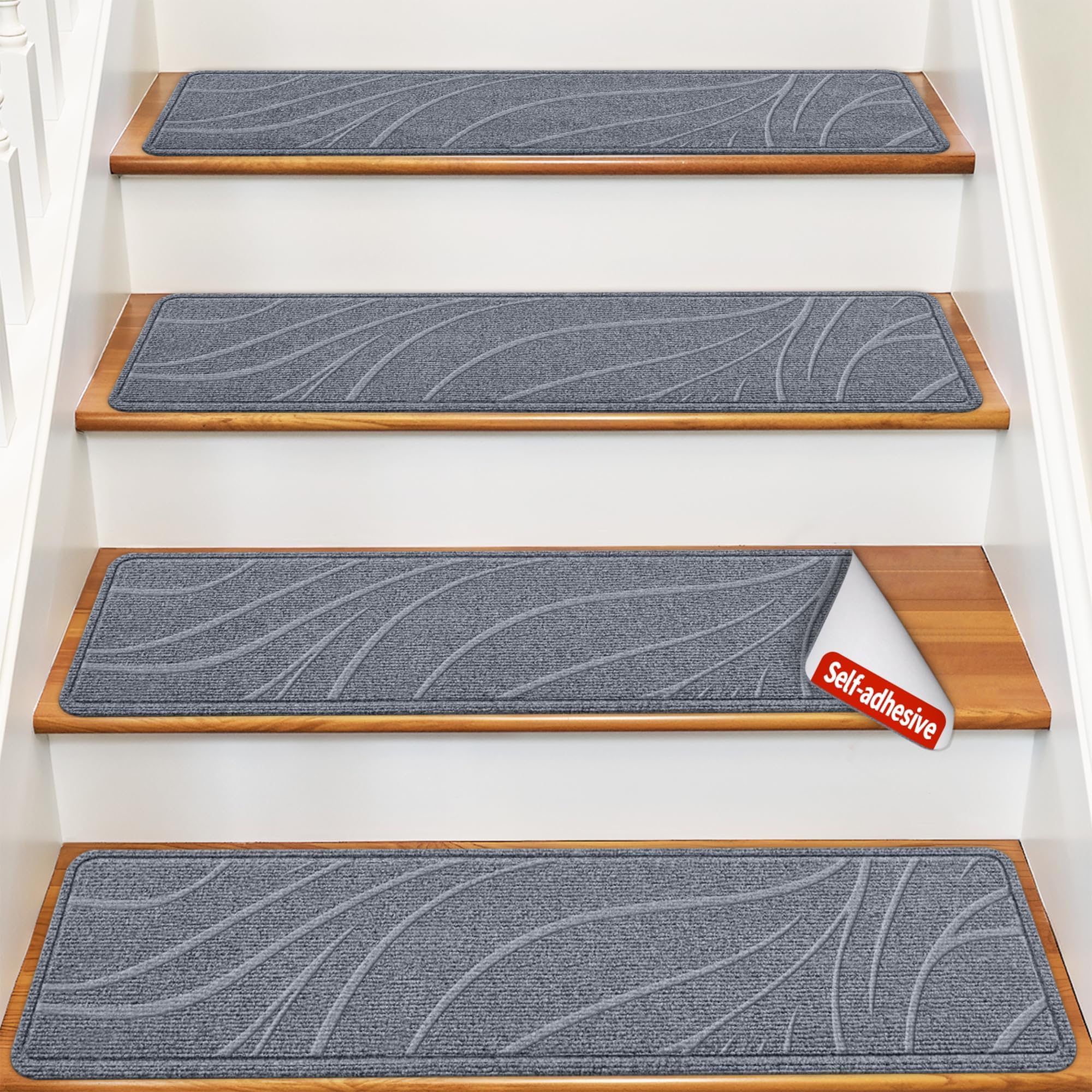
We recommend these treads for small indoor staircases because they add grip, reduce noise, and can be trimmed for a closer fit.
Pros
- Textured surface and backing help limit sliding.
- Soft polyester feels comfortable underfoot.
- Peel-and-stick design installs without tools.
Cons
- Pet hair can work into the fabric.
- The material may wear under heavy pet traffic.
- They are not water resistant.
We found the 8-by-30-inch size useful for narrow wooden steps, and the rectangular shape left a clean, simple look. The grey color also blended well with most indoor stair areas.
Installation was quick. We peeled off the backing, placed each tread, and used the included tape where extra hold seemed useful. The treads stayed flat during regular use, including frequent trips by children and pets.
The polyester surface softened foot noise and gave stairs a more secure feel. We could vacuum away loose dirt, while the washable design offered an easier way to handle deeper cleaning.
Pet owners should watch for hair becoming caught in the fabric. We also would not use these outdoors or on stairs that often get wet, since the material lacks water resistance.
TranquilMoments Beige Stair Treads
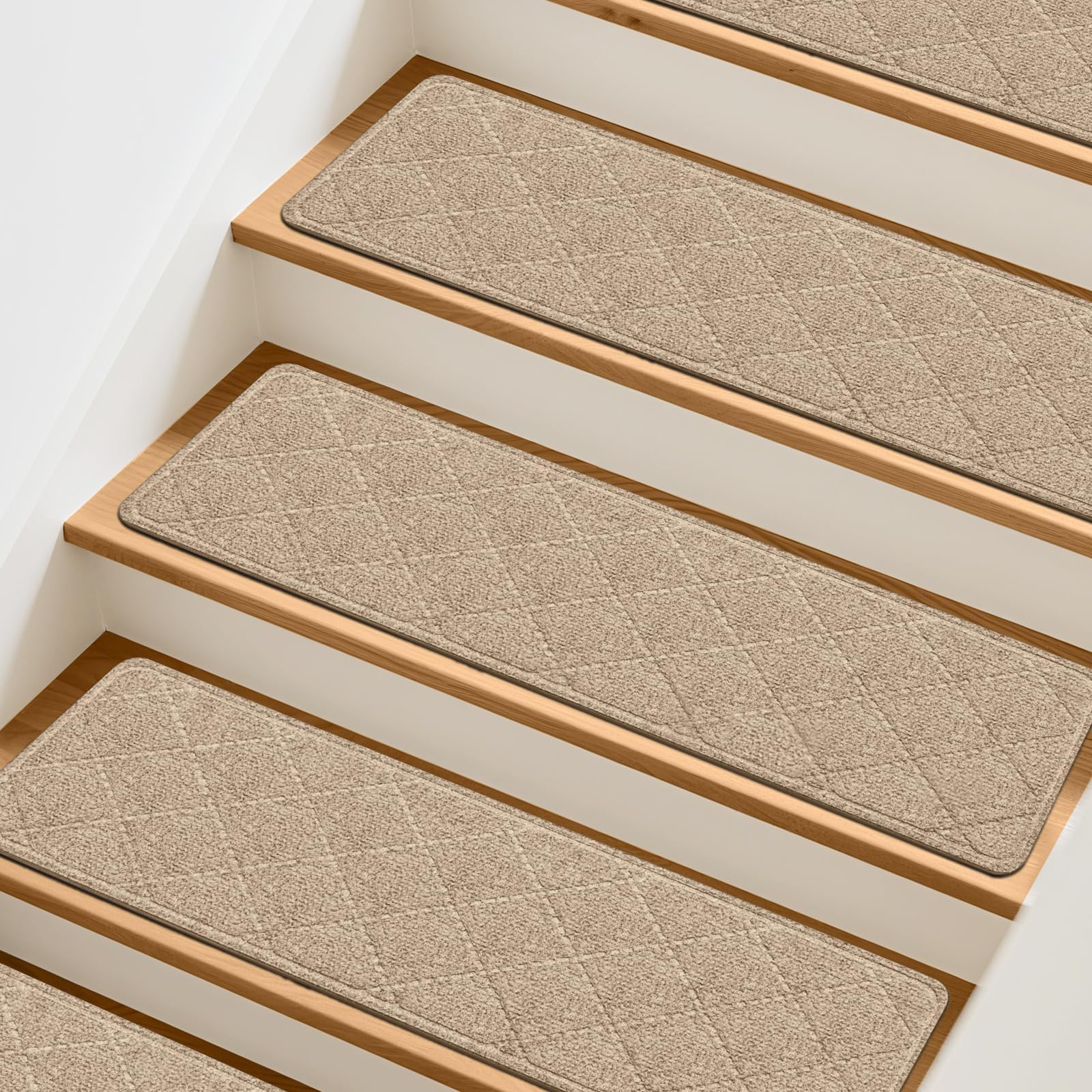
We recommend these treads for small indoor stairways because they add grip, reduce footstep noise, and fit most standard steps without bulky overhang.
Pros
- Strong grip on wood, tile, marble, and glass
- Peel-and-press setup leaves no sticky residue
- Washable surface helps with routine cleaning
Cons
- Beige may show dark marks quickly
- Not designed for outdoor use or wet stairs
- The 8-inch width may not cover wider steps fully
We found the slim 8-by-30-inch shape well suited to compact staircases. The low-profile design adds traction without making narrow steps feel crowded, and the beige color gives the stairs a softer, cleaner look.
Installation took only a few minutes. After cleaning and drying the steps, we peeled away the backing, aligned each tread, and pressed it into place. The TPE backing held firmly during use, and we could remove the pieces without leaving glue behind.
The polyester surface helped soften footstep sounds, which worked well in a quiet hallway. We also liked the flexible material for small adjustments or careful trimming around unusual steps.
For upkeep, we vacuumed the treads and wiped away small spills with a damp cloth. Machine or hand washing provides a deeper clean, but the material needs air-drying. These treads work best indoors, where dry conditions help preserve their grip.
THUNDER GRIP Clear Stair Treads

We recommend these treads for small stairways because their clear, narrow design adds traction without hiding the wood or taking up extra space.
Pros
- Clear finish keeps the stair surface visible
- Peel-and-stick setup feels quick and simple
- Helps pets and people get better footing
Cons
- Adhesion may weaken within a year
- Stairs need careful cleaning before installation
- The narrow shape may not cover each step fully
We found the 4-inch width useful for compact stairs, decks, and laminate steps. The strips add grip while leaving most of the original surface exposed, which keeps a small stairway from looking crowded.
Application was straightforward after we cleaned and dried each step. The adhesive held well for several users, including on tile and in damp areas, though we would press the strips down firmly and check the edges from time to time.
The textured surface helped with socks and gave an older dog more confidence on the stairs. We also liked that the clear PEVA material did not collect pet hair like carpet can. Still, some users needed replacements within a year, so these work best when we treat them as practical, replaceable safety aids rather than permanent flooring.
BAGAIL BASICS Stair Treads
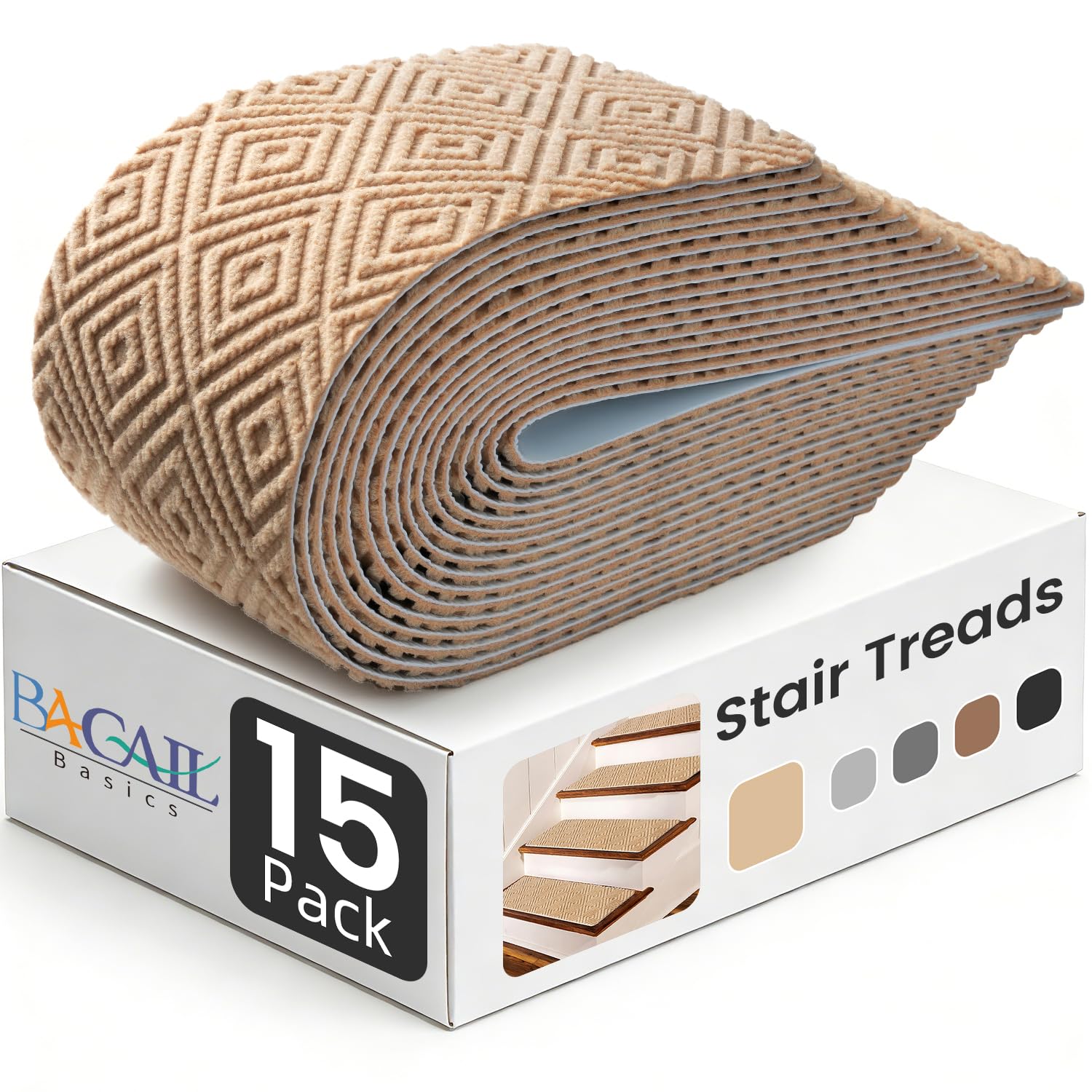
We recommend these treads for small stairways because they add grip, reduce noise, and can be trimmed to fit unusual steps.
Pros
- Peel-and-stick setup needs no tools
- Soft felt helps reduce footstep noise
- Trimmable design fits narrow or curved stairs
Cons
- Adhesion may be weak on some surfaces
- Thin padding offers limited cushioning
- Fold lines may need time to flatten
We found the 8-by-30-inch size useful for compact stairs, especially when each step has a different shape. The felt was easy to cut with household scissors, and the beige color blended well with light wood and painted steps.
Installation took only a few minutes. After cleaning the stairs, we peeled off the backing and pressed each tread into place. Most pieces stayed secure, though we would press the edges firmly and test the surface before relying on them in a busy home.
The textured fabric gave our feet and paws better traction than bare wood. It also softened the sound of walking, which helped on stairs near living areas. The low profile kept the steps from feeling crowded.
Routine cleaning was simple with a vacuum. The treads can also be machine washed, but we would air-dry them to help protect the backing. If a stair surface has dust, grease, or a very slick finish, the adhesive may need extra support.
COSY HOMEER Non-Slip Stair Treads
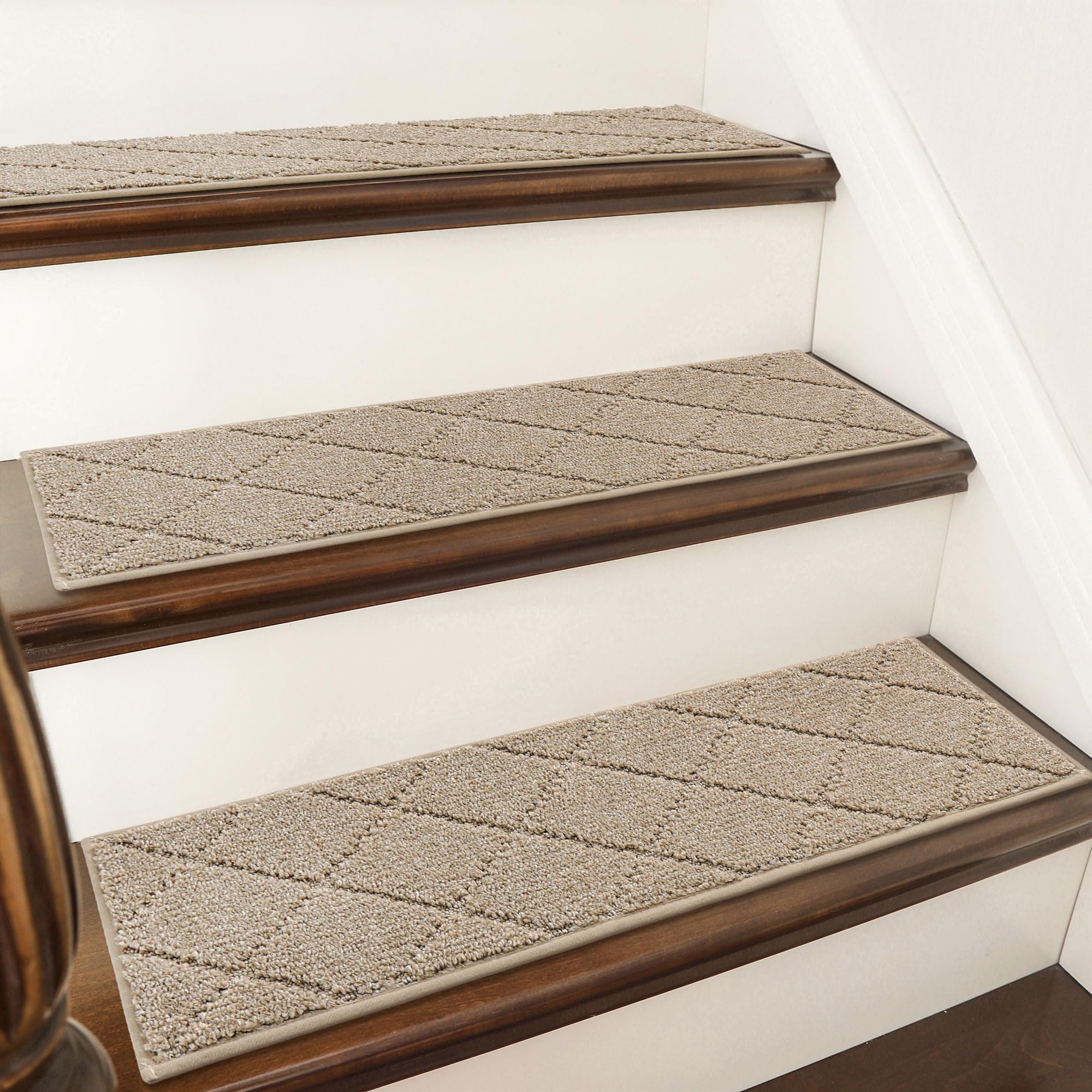
We recommend these treads for small indoor stairways because they are low profile, easy to place, and provide a comfortable, grippy surface.
Pros
- Stay in place without leaving much residue
- Soft, low-profile carpet feels comfortable underfoot
- Easy to clean and reposition
Cons
- The carpet feels less plush than some buyers may expect
- Beige may show dirt on busy stairs
- The backing needs a clean, dry surface for the best grip
We found the 28-by-9-inch size well suited to narrow stairs. The low profile also helped keep the steps clear and did not interfere with nearby doors.
Installation was simple. After cleaning the steps, we placed each tread and pressed it down. The TPE backing gripped our wood stairs well, while still allowing us to lift and adjust a tread when needed.
The polyester surface added comfort and reduced footstep noise. It also gave our dog better traction on the stairs. The material is not deeply padded, but it offers enough softness for everyday use.
Cleaning should be manageable with a vacuum, lint roller, or machine wash. We would still check the backing after washing and let each tread dry fully before putting it back. Overall, this set works well for small spaces where safe footing and a neat appearance matter.
sarben Taupe Floral Stair Treads

We recommend these treads for small indoor staircases because their narrow 8-inch width adds traction without covering the full step.
Pros
- Peel-and-stick setup needs no tools
- Low profile suits compact stairs
- Washable fabric helps with routine cleaning
Cons
- Some users report lifting edges
- Fabric feels woven rather than plush
- Color may look different indoors
The taupe floral design gave our staircase a softer look without making the narrow steps feel crowded. The low profile also made it easy to place our feet without catching the tread edge.
Installation took only a few minutes after we cleaned and dried the steps. The adhesive held well during regular use, but we pressed the corners firmly and checked them often. Results may vary if the stairs have dust, texture, or moisture.
The fabric reduced foot noise and added light cushioning. We found the surface more textured than soft, which helped with grip but may not suit shoppers seeking a plush feel.
These treads worked well with wood and should also fit several other indoor surfaces. We would choose them for homes with pets or children, while keeping in mind that they are not water-resistant and may need extra attention at the edges.
SUMLANS Non-Slip Stair Treads
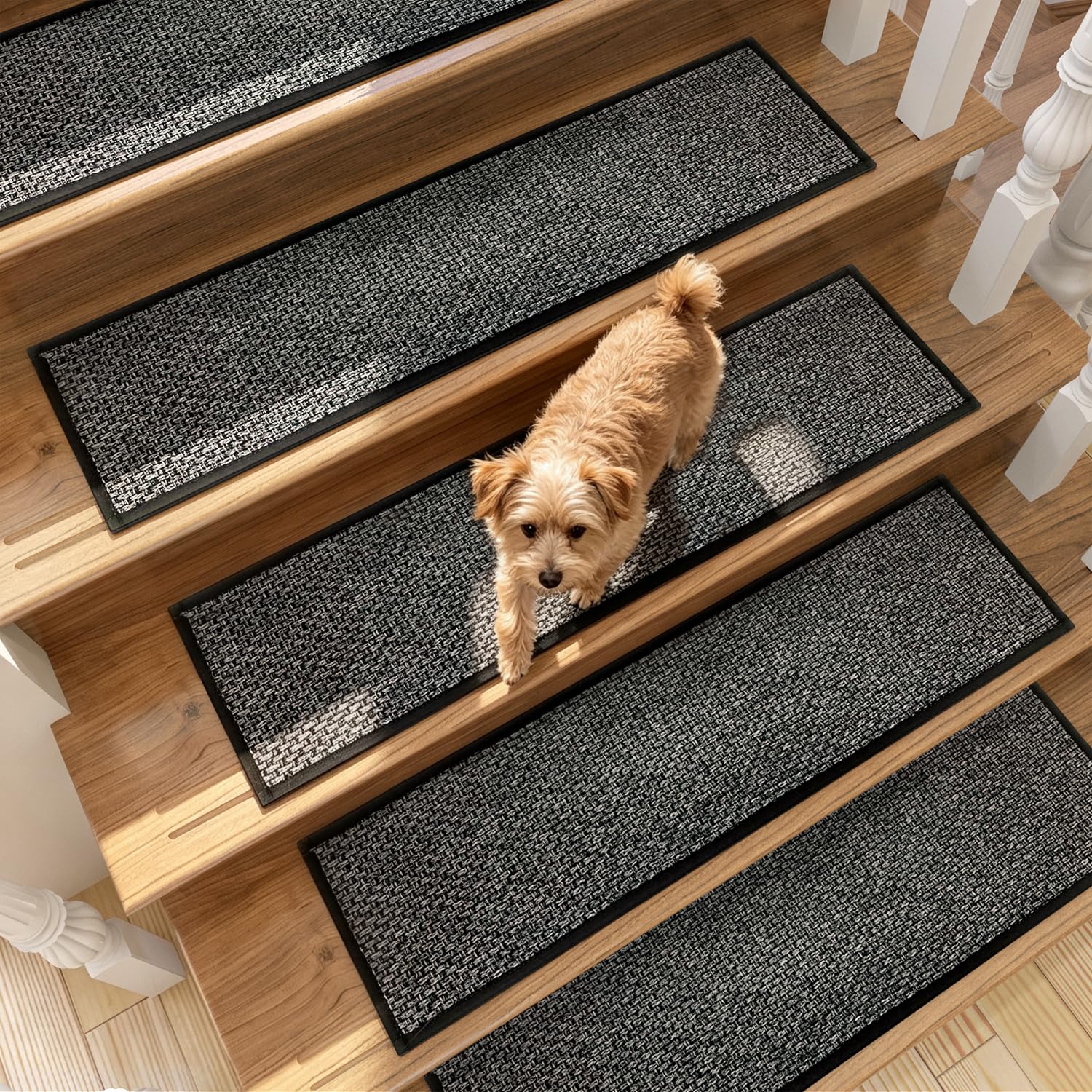
We recommend these treads for small indoor staircases because their slim 8-by-30-inch size adds grip and comfort without covering too much of each step.
Pros
- Soft, cushioned polyester surface
- Easy to place and remove
- Helps reduce footstep noise
Cons
- May shift on some smooth wooden stairs
- Not designed for outdoor use
- Requires air drying after washing
We found the dark gray color simple to match with most interiors, and the compact shape worked well on narrower steps. The 0.2-inch thickness added a little comfort without making the stairs feel crowded.
The rubber backing made placement quick because we did not need glue or tape. However, we would test each tread on the stair material first. Some users report movement on smooth wood, so extra rug-safe grip may help if the pieces do not stay firmly in place.
The carpet felt comfortable underfoot and softened stair noise. We also liked that the treads can be vacuumed, swept, mopped, or machine washed. After washing, we would let them air-dry instead of using a dryer.
These treads suit homes with children, pets, or older adults who need more traction indoors. We would avoid using them outside or on stairs that regularly get wet, since they are not water resistant.
Gmonby 15-Piece Cube Black Stair Treads

We recommend these treads for small staircases because their slim design adds comfort and traction without making the steps feel crowded.
Pros
- Soft surface helps reduce foot noise
- Washable and easy to vacuum
- Simple peel-and-stick installation
Cons
- Adhesive may need help on some stairs
- Pattern may not suit every space
- Requires a clean, smooth surface
We found the polyester surface comfortable under bare feet and less harsh than walking directly on wood. The low profile also worked well on narrower stairs, where thicker mats can make each step feel smaller.
Installation took little time after we cleaned and dried the steps. The treads stayed in place during regular use, but we noticed that the edges could lift when the surface had dust or an uneven finish. Stronger double-sided tape may help in that situation.
The Cube Black pattern gives plain wooden stairs a finished look without adding much visual bulk. We also liked how easily the mats handled pet hair and everyday dust with a vacuum.
These treads can be washed and reused, which makes them practical for busy homes. However, we would avoid them on older, rough stairs or any surface that does not allow the adhesive backing to bond well.
DK177 Non-Slip Stair Treads
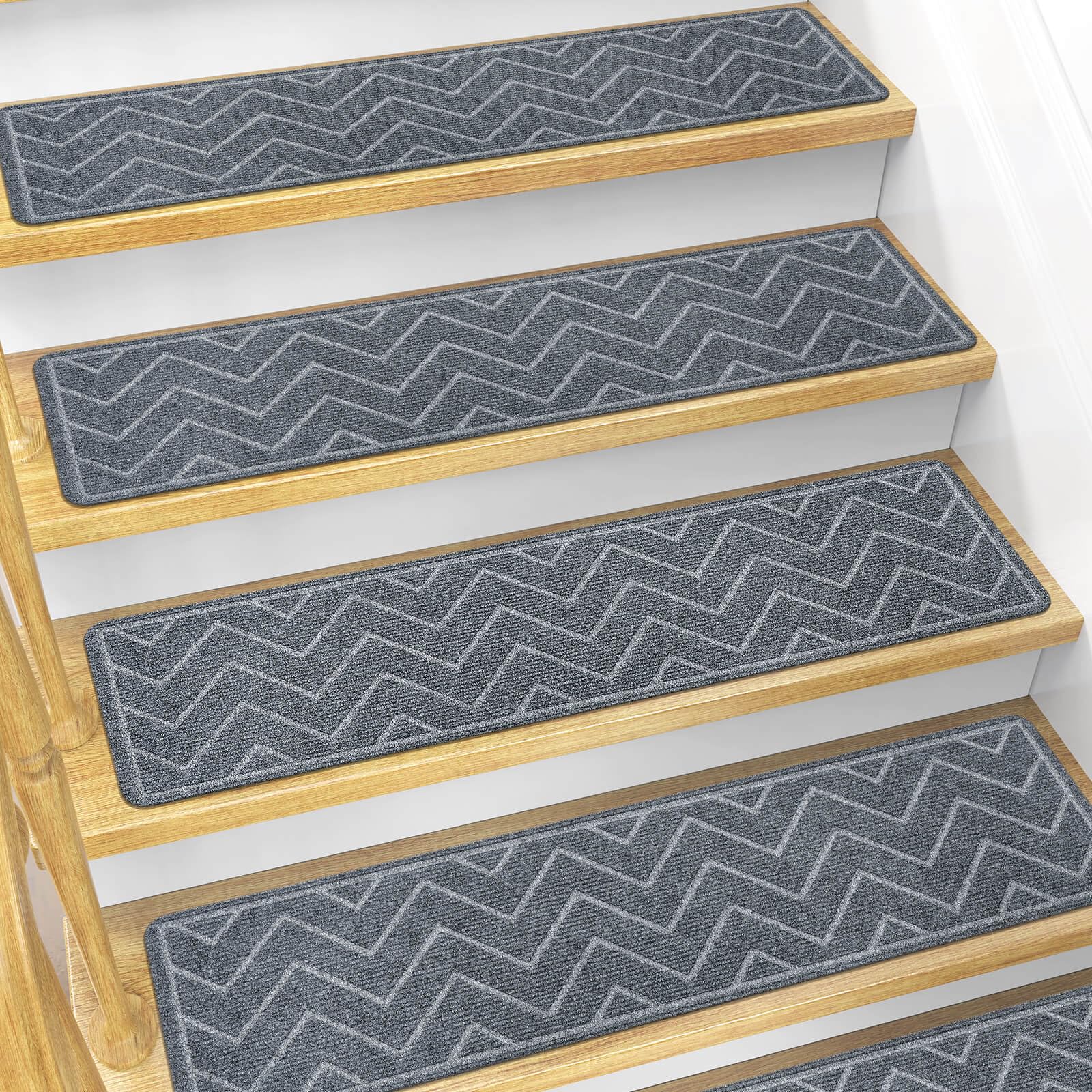
We recommend these treads for small indoor stairways because they add grip, reduce footstep noise, and can be trimmed to fit narrower steps.
Pros
- Strong hold on clean, smooth surfaces
- Soft, washable fabric helps reduce noise
- Easy to trim and install without tools
Cons
- The dark gray design may look plain
- Socks can still feel somewhat slippery
- Best suited to smooth, flat stairs
We found the peel-and-stick setup simple after cleaning the steps. The treads settled flat and stayed in place during regular use, making them a practical choice for wood or other smooth stair surfaces.
The fabric felt comfortable under bare feet and helped soften the sound of footsteps. We also liked that the material collected less loose debris than a deeper-pile runner, which matters in compact spaces.
For upkeep, we could vacuum the surface or remove the treads for washing. We would air-dry them rather than use a dryer. The adhesive backing is designed to lift without residue, but we would still test one tread first on delicate flooring.
Dayacoco Gray Stair Treads
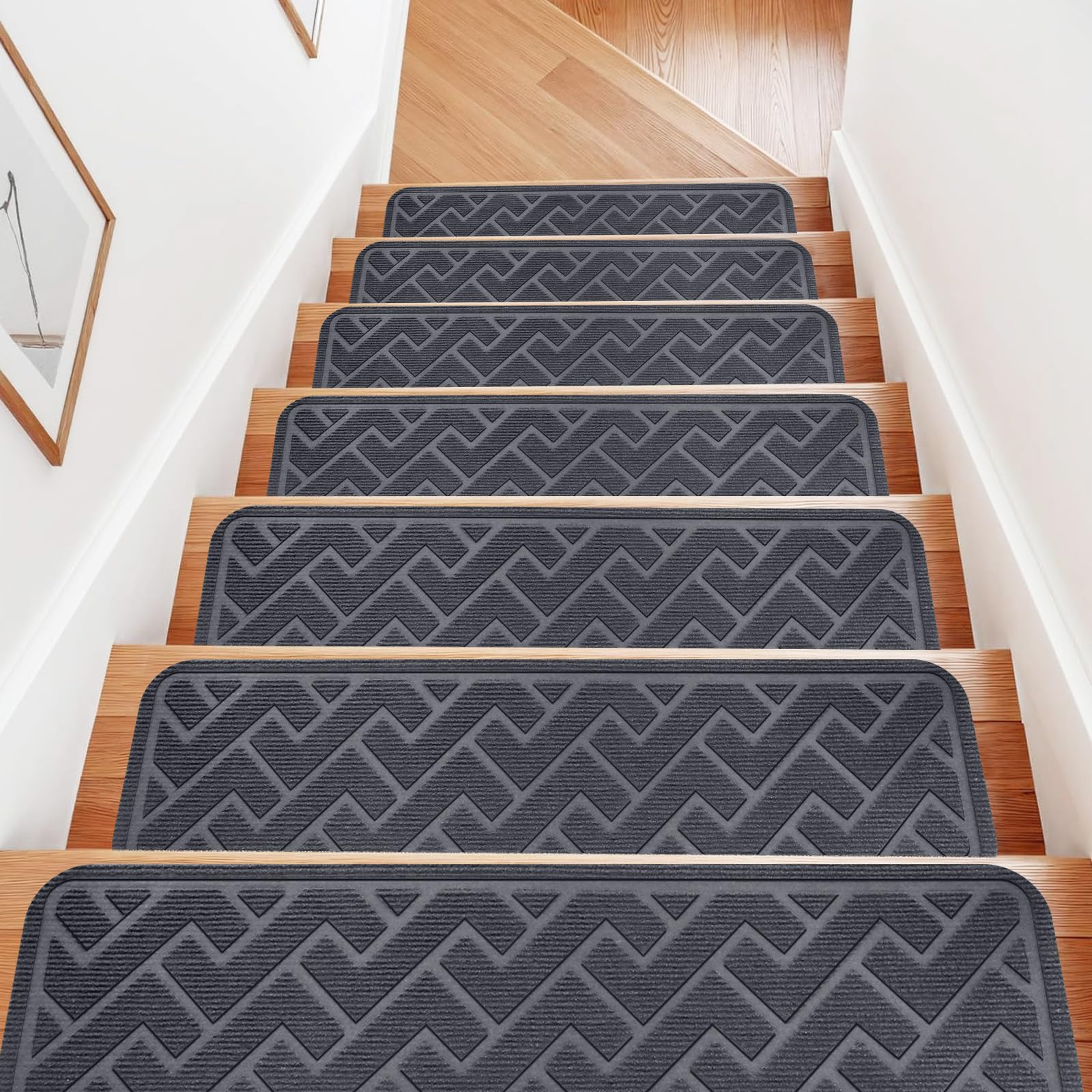
We recommend these treads for small indoor staircases because they add grip, reduce footstep noise, and install without glue or extra tape.
Pros
- Soft, low-profile surface feels comfortable underfoot
- TPE backing stays in place on smooth indoor steps
- Washable and easy to remove or reposition
Cons
- Some pieces may not adhere well
- The backing can take effort to peel away
- Not water-resistant for outdoor use
We found the 8-by-30-inch size useful for narrow stairs because it covers the walking area without making each step feel crowded. The gray color also gives small spaces a clean, simple look.
After cleaning the steps, we pressed each tread firmly into place. Most stayed secure on smooth wood, and the low profile helped prevent a bulky appearance. We also noticed less noise when walking upstairs, which works well in homes with pets or nearby bedrooms.
The polyester surface felt soft and offered useful traction for people and pets. We could vacuum the treads and wash them when needed, but we would air-dry them in the shade to help protect their shape and backing.
Installation was quick overall, though removing the film from the adhesive layer took patience on some pieces. A few customer reports mention weak adhesion, so we would clean and dry the stairs carefully before installation and check each tread after pressing it down.
Buying Guide
We should measure each step before choosing a tread. Record the width, depth, and shape, then check whether the stair has a nosing or rounded edge. For small spaces, slim designs can reduce bulk while still covering the walking area.
We should compare these features:
| Feature | What to check |
|---|---|
| Size | It should fit the step without blocking the edge or sides. |
| Material | Choose a surface suited to the stair’s traffic and indoor or outdoor location. |
| Grip | Look for a textured, slip-resistant surface. |
| Thickness | A low-profile tread helps preserve usable step space. |
| Installation | Check whether it needs adhesive, fasteners, or another method. |
| Cleaning | Select a finish that matches our cleaning routine. |
We should also check the product’s weight limits and care instructions when available. Treads that shift, curl, or leave exposed edges can create a tripping risk, so we should follow the installation directions closely.
For narrow stairs, we should avoid designs that extend beyond the step. A tread with a secure fit, a suitable shape, and a simple profile usually works better than one with extra material or bulky padding.
Editor’s Choice
We choose low-profile, non-slip stair treads for small spaces. They add grip without making narrow steps feel crowded. A slim design also leaves more of the original stair visible.
| Feature | What we look for |
|---|---|
| Size | Fits the step without covering the edges |
| Material | Durable fabric, rubber, or low-pile carpet |
| Backing | Non-slip and safe for the stair surface |
| Cleaning | Easy to vacuum, wash, or wipe |
We prefer treads with beveled or bound edges because they reduce curling and help prevent trips. Neutral colors, such as gray, beige, or black, can blend with the stairs and keep the area looking open.
For renters or temporary setups, we recommend removable treads with adhesive strips or a grippy backing. We check the product instructions first to confirm that removal will not damage wood, paint, or other finishes.
For stairs with unusual shapes, we select trim-to-fit rubber or carpet treads. We measure each step before buying, since small differences in width and depth can affect fit and safety.
Conclusion
We can make small stairways safer and more useful by choosing treads that fit the available space. Slim, low-profile options work well where every inch matters, while nonslip surfaces add grip without making the steps feel bulky.
Before buying, we should measure each step carefully and check the tread’s thickness, depth, width, and installation method. We should also choose a material that suits the stairway’s traffic, moisture level, and cleaning needs.
Key points to remember:
- Measure the steps before ordering.
- Choose a secure, nonslip surface.
- Avoid thick treads that reduce foot space.
- Match the material to indoor or outdoor use.
- Follow the manufacturer’s installation instructions.
With the right fit and secure installation, we can improve comfort and traction without taking up more room.
FAQs
What stair treads work best in small spaces?
We recommend thin, low-profile treads that improve grip without making each step feel cramped. Rubber, carpet, and textured vinyl options can work well, depending on the stair material and location.
Should we choose full-coverage or partial treads?
Full-coverage treads offer more traction and protect the entire walking area. Partial treads take up less visual space and may suit narrow stairs, but they must stay firmly in place.
Do stair treads make stairs look smaller?
Dark, bulky treads can make a narrow staircase feel tighter. We can create a more open look by choosing light colors, slim edges, and a simple pattern.
Are adhesive treads safe for small stairs?
Adhesive treads can provide a secure fit when we install them on clean, dry, smooth surfaces. We should check the product instructions and replace any tread that begins to lift.
Can we use stair treads on curved or irregular steps?
Some flexible rubber and carpet treads can fit curved steps. We should measure each step and select a product that allows trimming without exposing sharp or unstable edges.
How do we clean stair treads?
We can vacuum carpet treads and wipe rubber or vinyl treads with a damp cloth and mild cleaner. Avoid soaking materials that may trap moisture beneath the tread.
