
10 Best Fire Extinguishers for Disabled Adults: Accessible Safety Options

Fire extinguishers can help control a small fire before it spreads, but the right model must be easy to reach, hold, and operate. For disabled adults, design features such as a lighter weight, clear instructions, a simple handle, and a pressure gauge may make a greater difference than extra capacity.
The best fire extinguisher for a disabled adult should match the person’s strength, movement, vision, and living space while still being rated for common household fires. We also consider the extinguisher’s fire classes, safety seal, mounting options, maintenance needs, and whether another person may need to assist during an emergency.
We evaluated these factors to identify fire extinguishers that offer practical, accessible designs and dependable protection, then used them to guide our top picks and buying advice.
Best Fire Extinguishers for Disabled Adults
We selected these fire extinguishers based on ease of use, clear instructions, accessible design, and reliable performance. Our list includes options that can help disabled adults respond to small fires safely and quickly.
Kidde Basic 110 Fire Extinguisher

We recommend this compact extinguisher for disabled adults who need a visible, simple option for small household fires.
Pros
- Lightweight aluminum body
- Clear pressure gauge
- Easy-to-pull safety pin and included bracket
Cons
- Requires enough hand strength to squeeze the handle
- Single-use design
- Dry chemical powder can irritate skin and create cleanup work
The Kidde Basic 110 felt manageable to carry and easy to spot in its bright red finish. Its smaller size may help users with limited strength or mobility, especially when we mount it at a reachable height near the kitchen or another risk area.
We liked the large label and simple PASS instructions. The gauge also lets us check its status quickly without removing it from the bracket. However, users with weak grip strength may need help operating the handle, so we should plan for assistance and keep emergency phone access nearby.
This model works on common Class A, B, and C fires, including paper, wood, grease, and energized electrical equipment. Its dry chemical agent is not recommended for computers or similar devices, and it can make a sizable mess after use.
The included plastic bracket holds the extinguisher in place, but we need to provide suitable mounting screws. We should also replace the unit after discharge or when it reaches the end of its service life.
First Alert HOME1 Fire Extinguisher

We recommend this compact, rechargeable extinguisher for adults who can safely lift and operate a 4.5-pound unit during an emergency.
Pros
- Clear pressure gauge and simple instructions
- Metal valve, trigger, and safety seal
- Includes a wall-mounting bracket
Cons
- May still feel heavy for some users
- Requires professional recharging after use
- The bracket needs secure installation
We found the HOME1 easy to store near a kitchen, doorway, or work area. Its metal construction feels sturdy, while the color-coded gauge makes routine checks simple. The mounting bracket helps keep it visible and within reach instead of letting it sit in a cabinet.
The unit covers common Class A, B, and C fires, including paper, plastics, gasoline, oil, and electrical equipment. The pull pin and safety seal help prevent accidental discharge, but users may need assistance removing the pin if they have limited hand strength or movement.
We also liked the readable label and manageable size. Still, disabled adults should choose a mounting height and location they can reach quickly, and they should consider a lighter extinguisher or support from another person if lifting 4.5 pounds presents a challenge. This product works for small fires only; users should leave immediately and call emergency services when a fire grows or blocks an exit.
Ougist Signature ABC Fire Extinguisher
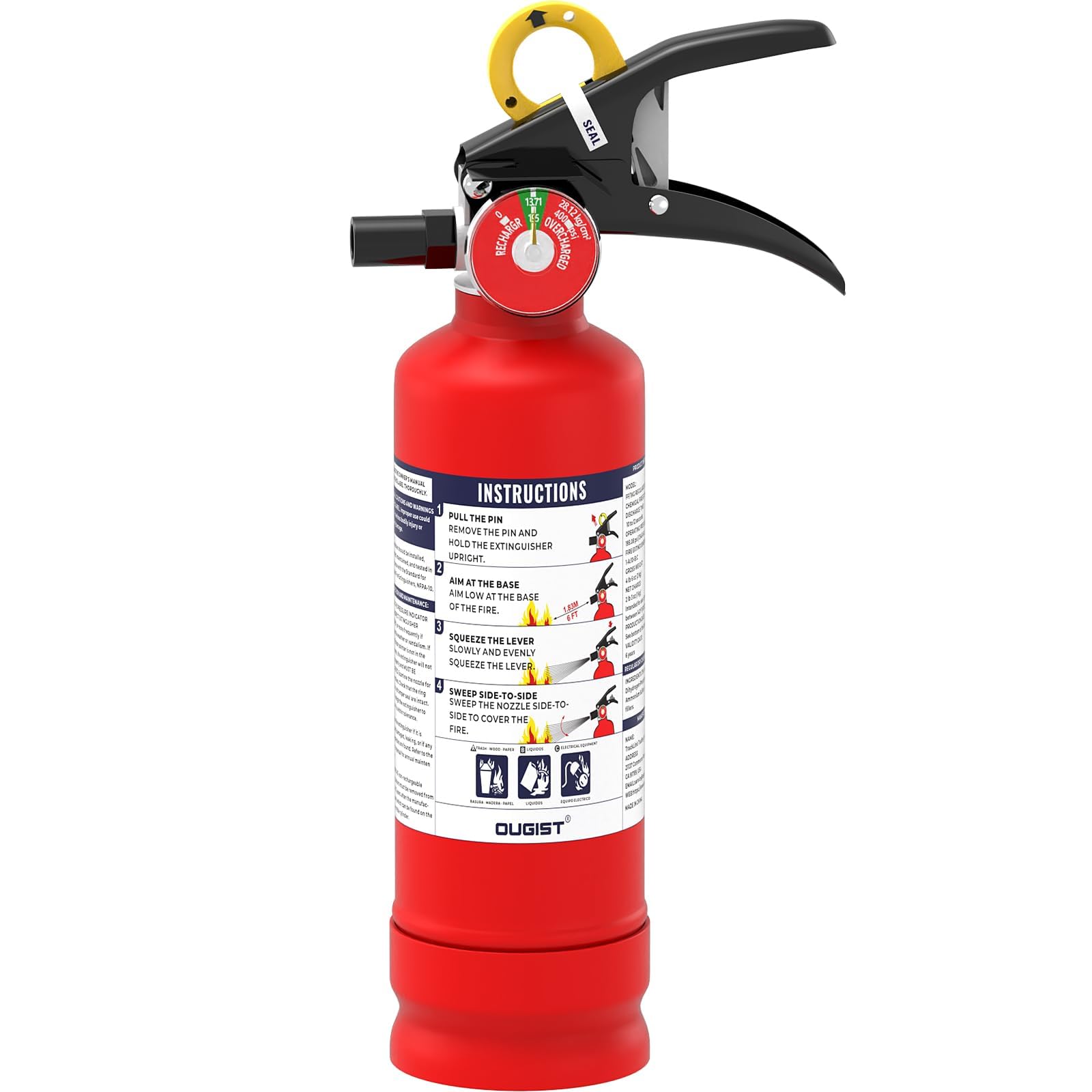
We recommend this compact extinguisher for adults who want a lighter, simple-to-grip option for small household, kitchen, garage, or vehicle fires.
Pros
- Handle design removes the need to twist or pull a safety pin.
- Compact size feels easier to carry and store.
- ABC rating covers common household fire types.
Cons
- Dry chemical powder can reduce visibility during use.
- The short reach may require close positioning.
- Users still need clear access and basic fire safety training.
We found the Ougist easy to hold and place in a reachable spot. Its smaller body may suit adults with limited strength or mobility better than a larger unit, though every user should test whether they can lift and aim it safely.
The quick-release handle reduces a step during an emergency. That feature may help users with limited hand movement, but we still recommend reading the manual and practicing the motion before a fire occurs.
This extinguisher uses dry chemical powder for Class A, B, and C fires, including common fires involving paper, grease, and electrical equipment. The powder can create a mess, so we would keep it near—but not directly beside—the stove, and mount it where a seated or standing user can reach it.
The included wall hook and location marker make placement easier. We would inspect the pressure gauge and condition each month, keep the unit within its stated temperature range, and replace it after any use.
Ougist ABC Fire Extinguisher
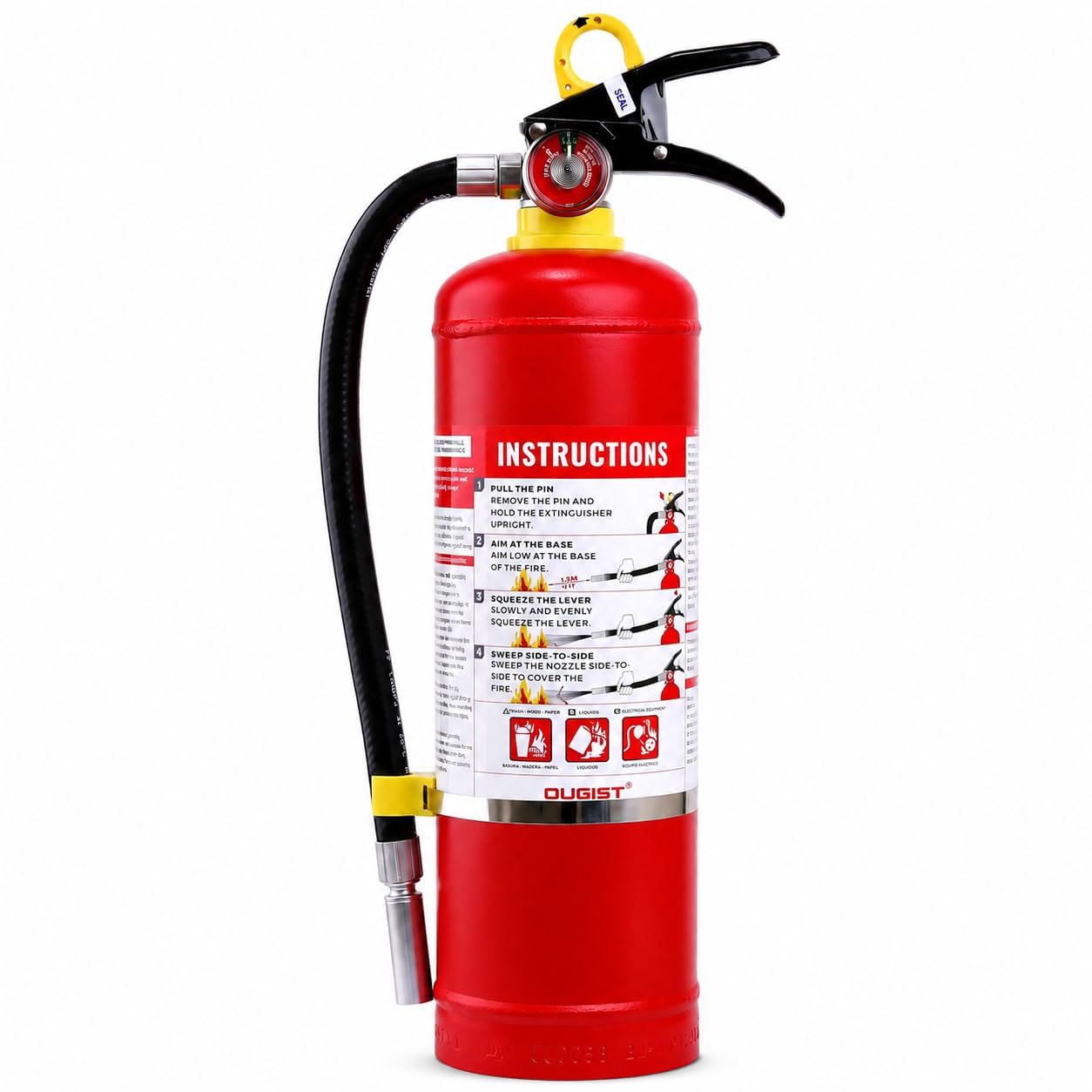
We recommend this extinguisher for adults who want a large, easy-grip handle and broad ABC fire coverage at home, work, or in a vehicle.
Pros
- Large handle supports quick activation
- ABC powder covers common household fire types
- Includes a wall bracket and operating guide
Cons
- Its weight may challenge some users
- Dry powder creates a cleanup mess
- Some buyers reported missing wall labels
The handle feels simple to understand, which can help users with limited hand strength or little emergency experience. We still suggest practicing the motion without removing the safety pin and placing the unit where it remains easy to reach.
Its ABC dry chemical agent covers fires involving ordinary materials, flammable liquids, and energized electrical equipment. The five-pound size offers useful capacity, but the full unit weighs about nine pounds, so some adults may need help carrying or aiming it.
We like the included bracket for mounting it near an exit, kitchen, garage, or vehicle. The powder can reduce visibility and requires cleanup after use, so we would use it only for a small, early-stage fire with a clear escape route.
First Alert HOME2PRO Fire Extinguisher

We recommend this sturdy extinguisher for homes where users need clear instructions, simple access, and a secure wall mount.
Pros
- Metal handle and valve feel durable.
- Color-coded gauge is easy to check.
- Bracket and strap support secure storage.
Cons
- Its 9.6-pound weight may be difficult for some users to lift.
- The handle may require strong hand pressure.
- Users must mount it within easy reach.
We found the all-metal design reassuring during setup. The mounting bracket and strap kept the unit steady, while the readable label made the operating steps easier to review before an emergency.
The color-coded pressure gauge allows a quick readiness check without tools. The pull pin and safety seal also help prevent accidental discharge, though some users may need help removing the pin.
This model handles common wood, paper, fabric, liquid, and electrical fires. Its weight could limit use for adults with reduced strength or mobility, so we recommend placing it at a reachable height and planning for assistance if needed.
After use, certified professionals can recharge it. The waterproof, chemical-resistant label should remain readable over time, which helps during routine safety checks.
AmzBoom 2-Pack Fire Extinguishers

We recommend this lightweight two-pack for disabled adults who need compact extinguishers with simple activation and easy-to-reach storage.
Pros
- Light, compact design is easier to handle.
- Two units support placement in separate rooms or vehicles.
- Water-based formula leaves little cleanup.
Cons
- Small size may provide less spray time.
- Mounting brackets may feel flimsy.
- Users must still aim and operate the can during an emergency.
We found the AmzBoom units easy to hold and store. Their slim shape fits well in a kitchen cabinet, car, or beside a doorway. The two included brackets also make it easier to keep one extinguisher within reach instead of storing both in one place.
The press-and-spray design requires basic hand control. Adults with limited grip strength or reduced arm movement may need help testing the grip and choosing a reachable mounting height before an emergency.
The formula is marketed for several fire types, including cooking oil, gasoline, and lithium-ion battery fires. We would still check the label and local fire safety guidance, since no portable extinguisher replaces a clear escape plan or emergency services.
The brackets help keep the cans visible, but we would use sturdy screws and inspect the mounts regularly. The six-year warranty adds useful support, while the compact size makes this set practical for kitchens, garages, campers, and cars.
Ougist Class K Kitchen Fire Extinguisher
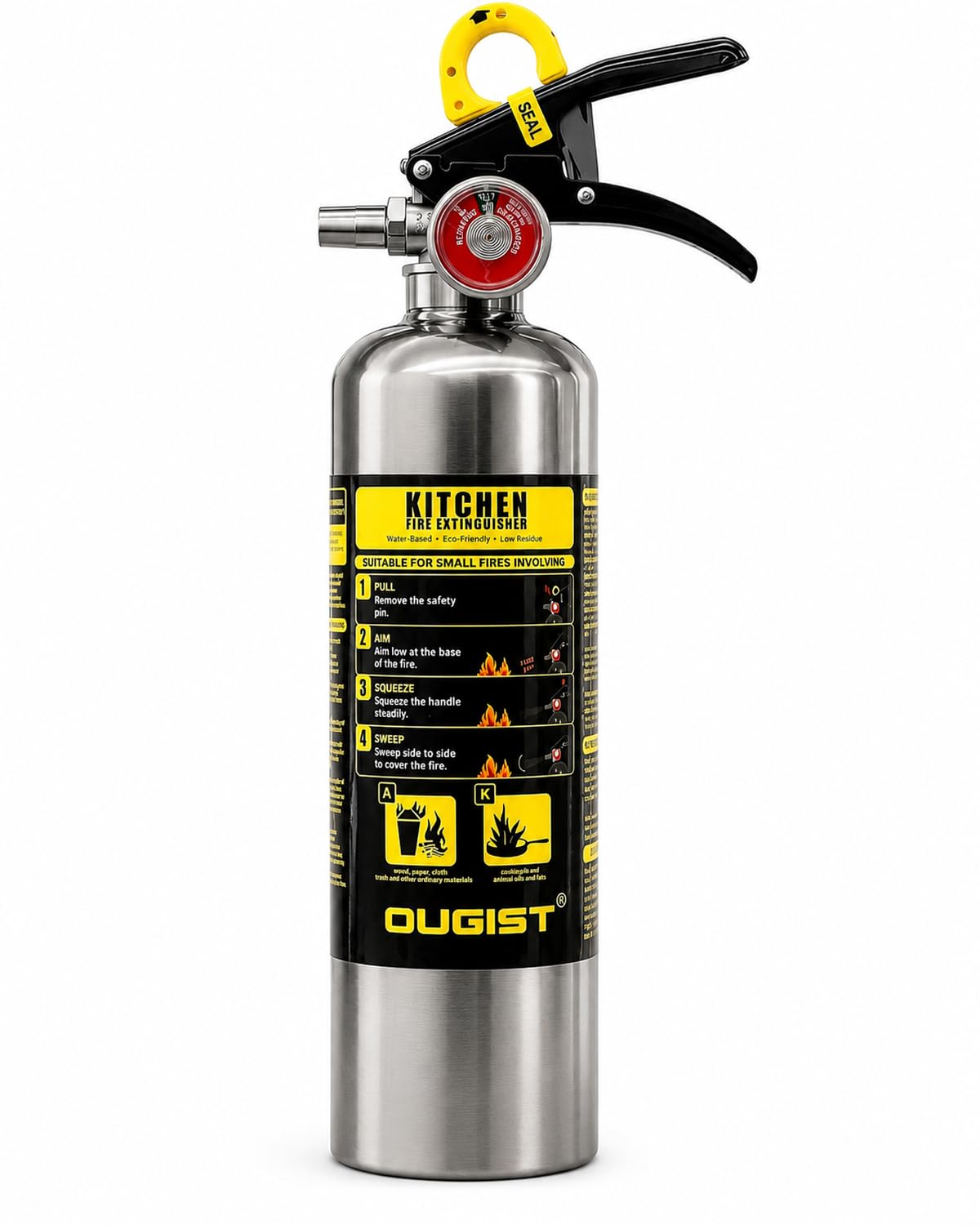
We recommend this compact extinguisher for adults who need a lighter kitchen safety tool for small grease or cooking-oil fires.
Pros
- Lightweight body and quick-pull handle
- Compact size fits under a sink or in a pantry
- Includes a hanger, manual, and safety sign
Cons
- Class K use limits it mainly to cooking-oil and grease fires
- The small size may not suit larger kitchens
- Users must read the instructions and practice the PASS steps
We found the Ougist easy to hold and simple to understand. Its quick-release handle supports the PASS method: pull the pin, aim at the fire’s base, squeeze, and sweep from side to side. These steps can help reduce confusion during an emergency.
The compact design works well for users who have trouble lifting larger extinguishers. We could place it within reach without blocking a walkway, but users should avoid storing it behind clutter or inside a hard-to-open cabinet.
This model targets small kitchen fires involving cooking oil and grease. It should not replace a general-purpose extinguisher for other fire types, and people with limited strength or mobility should keep emergency services as the first option when a fire grows or blocks an exit.
The stainless steel finish looks cleaner than many standard red units. We also liked the included wall hanger and sign, though the hanger connection may take a moment to understand. Regular checks remain important, and the six-year manufacturer warranty adds useful support.
Kidde Mariner PWC Fire Extinguisher
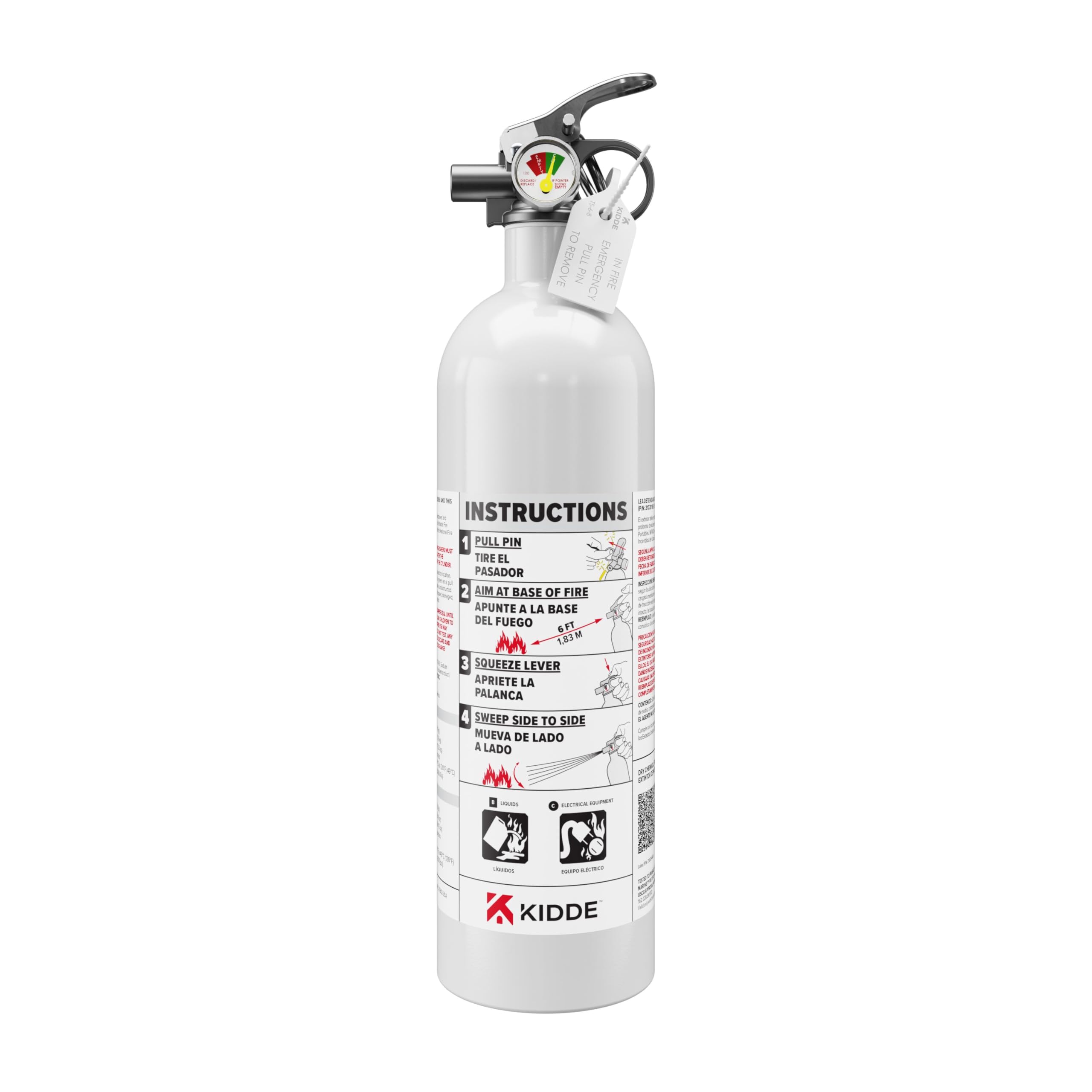
We recommend this compact extinguisher for disabled adults who need a lightweight, easy-to-mount option for a personal watercraft or small boat.
Pros
- Lightweight aluminum body
- Clear pressure indicator and easy-pull pin
- Bracket supports accessible mounting
Cons
- Single-use design
- Short discharge time
- Not suitable for every boat size
We found the Kidde Mariner easy to handle and simple to check. Its metal body kept the weight manageable, while the large lever and pull pin offered straightforward access during an emergency.
The included bracket lets us place it within reach instead of storing it in a hard-to-access compartment. That can help adults with limited strength, reach, or movement, but we still recommend mounting it where the user can safely grab and aim it.
This model covers small fires involving flammable liquids, gases, and electrical equipment. Its discharge lasts about 8 to 12 seconds, so users must act quickly and follow the PASS method: pull, aim, squeeze, and sweep.
The extinguisher works well for personal watercraft and smaller boats. Larger boats may need more than one unit. Because it is single-use, we must replace it after discharge, even if only partly used.
Ougist 2.5 lb ABC Fire Extinguisher
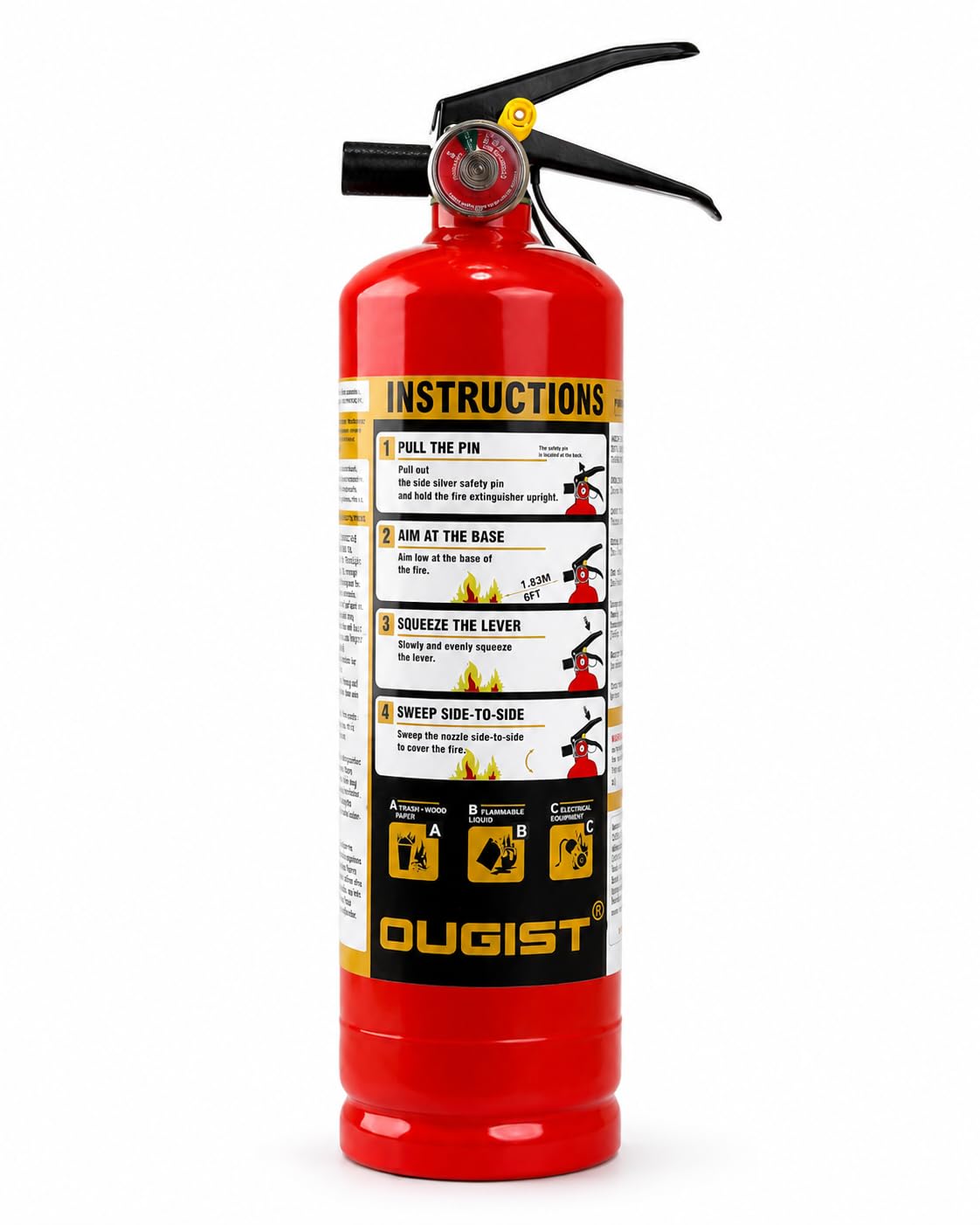
We recommend this compact extinguisher for adults who need a lighter, easy-to-store option for common household fires.
Pros
- Compact size fits near a kitchen, bed, or doorway
- ABC rating covers wood, liquids, and electrical fires
- Pressure gauge allows quick status checks
Cons
- Four-pound total weight may still be difficult for some users
- Dry chemical residue creates cleanup work
- The short discharge time requires quick action
We found the Ougist easy to place within reach because its narrow body fits under a sink or inside a cabinet. Its metal construction feels sturdy, while the pressure gauge provides a simple way to check whether it remains ready.
The 2.5-pound agent capacity keeps the unit more manageable than larger models, but some disabled adults may still need help lifting or aiming it. We suggest placing it at waist height and near a clear path, rather than storing it on the floor.
This ABC extinguisher can handle common Class A, B, and C fire types. It discharges for about 8 to 12 seconds, so we would use it only on a small fire with a safe exit behind us. The six-year limited warranty adds useful coverage, but users should confirm local disposal and replacement rules.
Kidde 2-A:10-B Home Fire Extinguisher

We recommend this Kidde model for adults with disabilities who need a compact extinguisher with a clear gauge, pull pin, and flexible hose.
Pros
- Clear pressure gauge helps us check readiness quickly
- Metal construction feels sturdy and durable
- Wall hanger supports convenient placement
Cons
- Four-pound weight may challenge some users
- Requires two-hand operation for best control
- Dry chemical residue can irritate skin and create cleanup work
The aluminum body felt manageable to carry, although the four-pound weight could still be difficult for someone with limited strength or mobility. We found the pressure gauge easy to read, which helps us confirm that the unit remains charged before an emergency.
The safety pin pulled easily, and the hose allowed us to aim from different angles. Users should still practice the PASS method—pull, aim, squeeze, and sweep—and choose a mounting height they can reach without bending or stretching.
This model covers common Class A, B, and C fires, including paper, wood, grease, gas, and electrical equipment. Its short discharge time means users must act quickly and keep a clear exit path. Because it is residential and single-use, we would replace it after any discharge or when it reaches the stated service limit.
Buying Guide
We should choose a fire extinguisher that the user can lift, aim, and operate safely. Check the extinguisher’s weight, handle design, grip size, and operating force. A lighter model may work better for people with limited strength, while a larger model may offer more capacity but prove difficult to control.
Look for an extinguisher rated for the likely fire types:
| Feature | What we should check |
|---|---|
| Fire rating | Match it to ordinary combustibles, flammable liquids, or electrical equipment |
| Weight | Choose a size the user can carry and steady |
| Handle | Look for a large, easy-to-grip handle |
| Gauge | Select a model with a clear, easy-to-read pressure gauge |
| Mounting | Use a secure, reachable location with no blocked access |
| Instructions | Choose clear labels with readable text and simple steps |
People with vision, hearing, or movement limitations may need extra safety features. We should consider large-print labels, high-contrast markings, tactile controls, and accessible mounting height. A caregiver or support person can help confirm that the user can remove the extinguisher, pull the pin, and direct the nozzle.
We should also verify the extinguisher’s approval for household use and check its maintenance needs. Inspect the pressure gauge, seal, hose, and cylinder regularly, and replace or service the unit according to the manufacturer’s instructions. Never choose a model based only on low price.
Editor’s Choice
We choose the First Alert HOME1 as our top pick for many disabled adults. Its 2-A:10-B rating covers common home fires, and its compact design helps users store it within easy reach.
The unit has a pull pin, pressure gauge, and clear operating label. We recommend mounting it at a height and location that each user can reach safely, such as near an exit but away from the stove.
| Feature | Why it matters |
|---|---|
| Lightweight design | Easier to lift and carry |
| Large handle | Supports a secure grip |
| Pressure gauge | Shows whether it is ready |
| ABC rating | Covers many household fire types |
People with limited hand strength may prefer a model with a wide handle and low activation force. People who use wheelchairs should check that they can approach, lift, and aim the extinguisher without losing balance.
We advise pairing the extinguisher with smoke alarms, an accessible escape plan, and regular fire-safety training. Users should only fight a small fire when they have a clear exit and feel physically able to do so.
Conclusion
We should choose a fire extinguisher based on the user’s strength, reach, vision, hearing, and ability to move quickly. A lightweight model with simple instructions, a clear pressure gauge, and an easy-grip handle can make emergency use more manageable.
We should place extinguishers where we can reach them without bending, climbing, or moving obstacles. Mounting them near exits and keeping pathways clear can support safer evacuation.
Key features to check include:
- Lightweight design for easier lifting
- Large, clear labels for quick identification
- Simple controls with minimal hand strength required
- Approved ratings for likely household fires
- Regular inspections to confirm proper pressure and condition
We should use a fire extinguisher only when the fire remains small, someone has called emergency services, and we have a clear exit behind us. If using one feels unsafe or physically difficult, we should leave immediately and let firefighters handle the fire.
FAQs
What type of fire extinguisher should we choose?
We recommend an easy-to-lift ABC extinguisher for most homes. It can handle common fires involving paper, fabric, flammable liquids, and electrical equipment.
What size works best for disabled adults?
We should choose a model that we can safely lift, aim, and operate. A smaller extinguisher may weigh less, while a larger model provides more agent but may require more strength. We can ask an occupational therapist or fire safety professional for guidance.
Should we use a fire extinguisher or leave the home?
We should use an extinguisher only if the fire is small, contained, and behind us stands a clear exit. If smoke spreads, the fire grows, or we cannot operate the extinguisher safely, we should leave immediately and call emergency services.
What features improve accessibility?
- Large, easy-to-read instructions
- A simple pull pin and squeeze handle
- A pressure gauge with clear markings
- A wall bracket at an accessible height
- A lighter weight that we can manage safely
Where should we keep one?
We should place an extinguisher near an exit and away from likely fire sources, such as the stove. We should keep the path clear and avoid storing it inside a cabinet that we cannot open quickly.
How often should we check it?
We should inspect the gauge, pin, hose, and body each month. We should replace or service the extinguisher if it shows damage, loses pressure, or reaches its expiration date.
