
10 Best Bath Transfer Benches for Disabled Adults: Top-Rated, Safe and Durable Picks for 2026


Bathroom Grab Bar Set

Cane with LED Light

Memory Foam Seat Cushion
Bath transfers help people get in and out of tubs and showers with less strain and more safety. They come in several designs—sliding benches, fixed benches, and models with added features like backrests, adjustable heights, and non-slip feet. These benches let users sit down outside the tub and then slide or pivot into the bathing area, reducing the need to lift legs over a high tub wall.
Choosing the right transfer bench depends on weight capacity, seat width, adjustability, and slip resistance. A bench with the correct height range, a strong weight rating, and a stable, non-slip seat will make bathing safer and easier for most disabled adults. We tested and compared models with different materials and features to find benches that balance comfort, stability, and ease of use, and we explain which ones fit different needs in the next section.
Best Bath Transfer Benches for Disabled Adults
Below is our full list of the best bath transfer benches for disabled adults. We chose benches that offer safety, comfort, and easy transfer for users with limited mobility. Our picks include options for different budgets and bathroom layouts.
Drive Tub Transfer Bench

We recommend this bench for most adults who need a safer, stable way to get into and out of a bathtub because it feels solid, adjusts easily, and stays put on wet surfaces.
Pros
- Feels sturdy and secure under weight.
- Height adjusts in small steps for a better fit.
- Seat drains well and the backrest adds real comfort.
Cons
- Suction-style feet can lose grip on very worn tub surfaces.
- Aluminum frame can feel a bit cold at first.
- Assembly takes some time and fiddly parts.
We used this bench daily while helping a family member with baths. Sliding across the wide seat felt smooth and less scary than stepping over the tub wall. The backrest gave them confidence, and the seat holes kept water from puddling.
Adjusting the legs was straightforward and let us fine-tune the height so transfers lined up with a walker and a wheelchair. In one bathroom layout we reversed the bench and it fit without fuss. The A-frame felt solid; even when the user leaned to reach, the bench did not wobble.
On slick enamel tubs the suction-style feet worked well most of the time, but we did have to re-seat them after several months on a tub with worn finish. Putting it together took patience; the instructions are fine but some bolts need careful tightening. Overall, the bench made bathing safer and preserved independence for the person we cared for.
Medline Transfer Bench

We recommend this bench for adults who need a stable, heavy-duty seat to get in and out of the tub safely because it feels solid and easy to adjust.
Pros
- Very sturdy build and high 400 lb. capacity
- Tool-free setup and simple height adjustments
- Backrest can move sides to fit different tubs
Cons
- Bench is fairly wide—may not fit small bathrooms well
- Plastic seat can feel cold and a bit hard at first
- Suction feet need careful placement for best grip
We used this bench for several baths and liked how stable it felt when sitting and shifting weight. The aluminum frame held steady and gave us confidence while transferring from a wheelchair to the tub.
Adjusting the height took seconds with the push-button system. Changing the backrest from one side to the other was straightforward and useful when the tub layout changed.
The suction cups inside the tub gripped well most of the time, though we double-checked their placement before each use. The seat drains fast and cleans easily, which kept it low maintenance between baths.
Moen Transfer Bench (DN7105)

We recommend this bench for adults who need a wide, stable seat and simple, durable construction.
Pros
- Very sturdy feel and holds up to heavy users.
- Wide, slip-resistant seat that makes transfers easier.
- Adjustable height and reversible setup fit most tubs.
Cons
- Frame is metal and can be cold to touch at first.
- Seat drainage holes can catch soap scum over time.
- Assembly takes two people for best results.
We used this bench for several weeks and found the seat felt solid the moment we sat down. The 33″ width gave us room to shift without feeling cramped, and the non-slip surface really helped when we moved wet. The support handle stayed firm while we leaned to stand.
Adjusting the height took only a few minutes, but we needed both hands and a second person to hold pieces while we locked the legs. Reversing it from left to right was straightforward once assembled. The basket organizer kept shampoo and soap within reach and off the tub rim.
Cleaning proved easy except where soap built up in the small drainage slots; we scrubbed those with a small brush. The metal frame looked like it would resist wear, though it did feel cool against bare skin until the bathroom warmed up. Overall, this bench gave us confidence during transfers and seemed built to last.
DMI Sliding Transfer Bench

We recommend this bench if you need a sturdy, easy-to-use sliding seat to make transfers safer and less tiring.
Pros
- Stable frame supports heavier users.
- Sliding seat reduces lifting strain for caregiver.
- Backrest and belt add extra security.
Cons
- Can feel large in small bathrooms.
- Plastic seat gets cold and may feel hard.
- Suction feet need careful placement on textured tubs.
We used this bench several times and liked how it made transfers smoother. The slide action felt controlled, and we could move the person with less lifting. The backrest gave a reassuring support during the transfer.
Assembly was quick and tool-free. Adjusting the legs to the right height took only a few minutes, and the bench stayed solid under weight. Moving it between bathrooms was easy because it’s fairly light.
The seat’s plastic surface is easy to clean, but it can be uncomfortable without a padded cover. The bench takes up a lot of space across the tub, so measure first if your bathroom is tight. Overall, it lives up to its claim of making baths safer for users and caregivers.
HOMLAND Transfer Bench
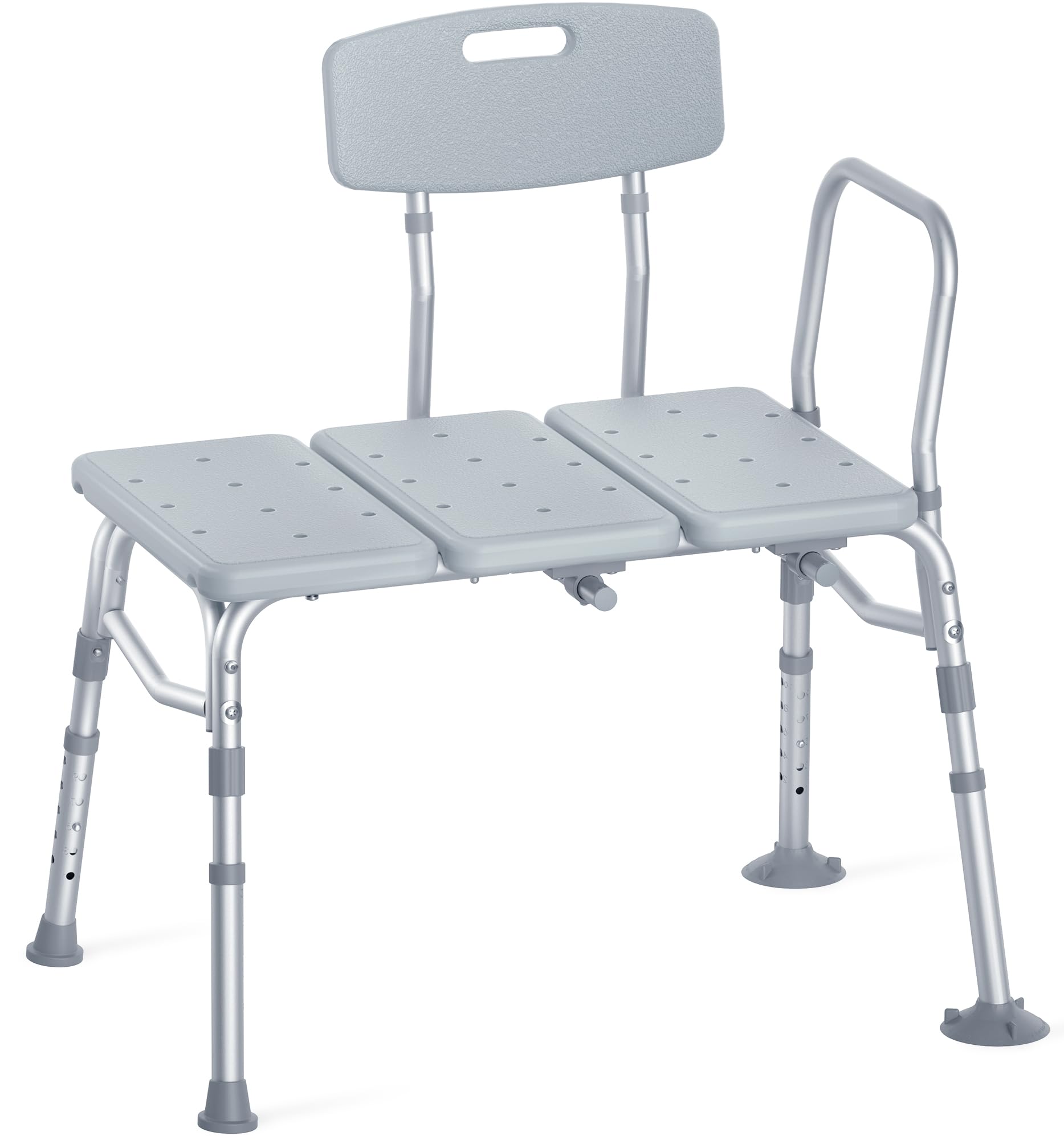
We recommend this bench when you want a sturdy, easy-to-move transfer bench that makes tub entry safer for adults with limited mobility.
Pros
- Very stable on wet floors thanks to A-frame legs and rubber feet
- Lightweight aluminum makes it easy for us to lift and reposition
- Reversible backrest and adjustable height fit different tubs and users
Cons
- Seat width is roomy but may feel wide in narrow tubs
- Plastic seat can feel firm during longer showers
- Assembly takes a few extra minutes to align parts correctly
We used this bench for several baths and liked how simple it was to sit, slide, and adjust the height. The aluminum frame felt solid under weight, and the rubber feet kept it from sliding on the tub surface.
Moving the bench was easy because it’s lighter than steel models. The push-button height changes let us set it without tools, and flipping the backrest to the other side fit a different tub layout we tried.
The seat drains well, so water didn’t pool and we didn’t feel cold from lingering moisture. One thing to note: the plastic seat is firm, so adding a thin cushion might help if someone sits for longer periods.
Pelegon Sliding Transfer Bench
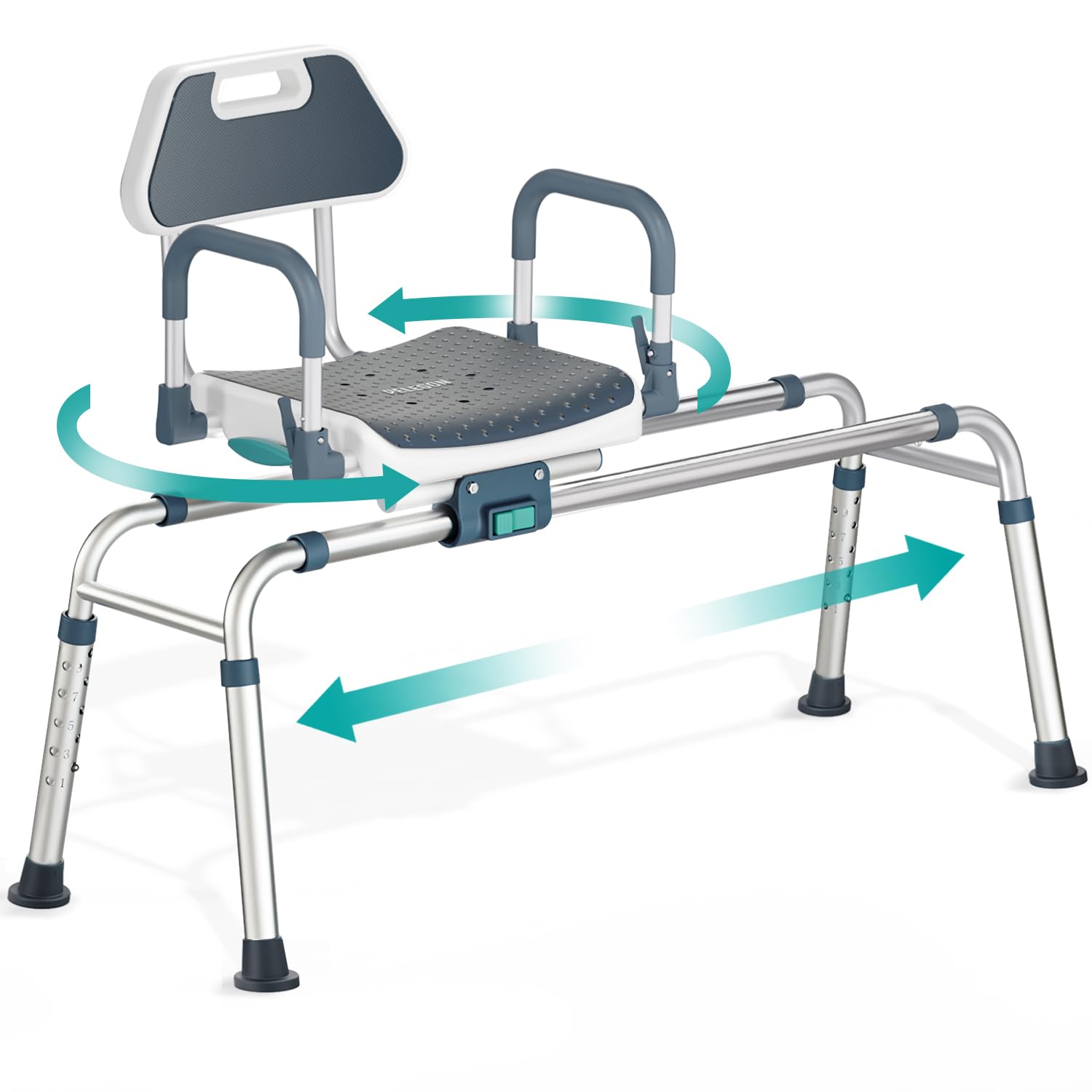
We recommend this bench if you need a stable, easy-to-use transfer seat that makes helping someone into the tub safer and less tiring.
Pros
- Smooth swivel and slide for easy transfers.
- Padded seat and armrests add comfort during use.
- Tool-free setup saves time and hassle.
Cons
- Plastic parts feel light compared with heavier metal options.
- May take adjustment to fit some tubs securely.
- Weight limit (250 lb) may not suit every user.
We used this bench daily while helping a family member with limited mobility. The swivel seat and one-touch slide button cut transfer time and reduced strain on our arms and back.
The padded seat kept the person comfortable during longer baths. The armrests made transfers feel safer, and the security belt added extra peace of mind.
Assembly really was quick and tool-free. The bench felt stable on most tubs, but we needed to tweak the legs to get a snug fit on a narrow tub edge.
Overall, this model hit the right balance of comfort, ease, and safety for moderate use; just check tub fit and weight needs before buying.
Platinum Carousel Sliding Shower Chair
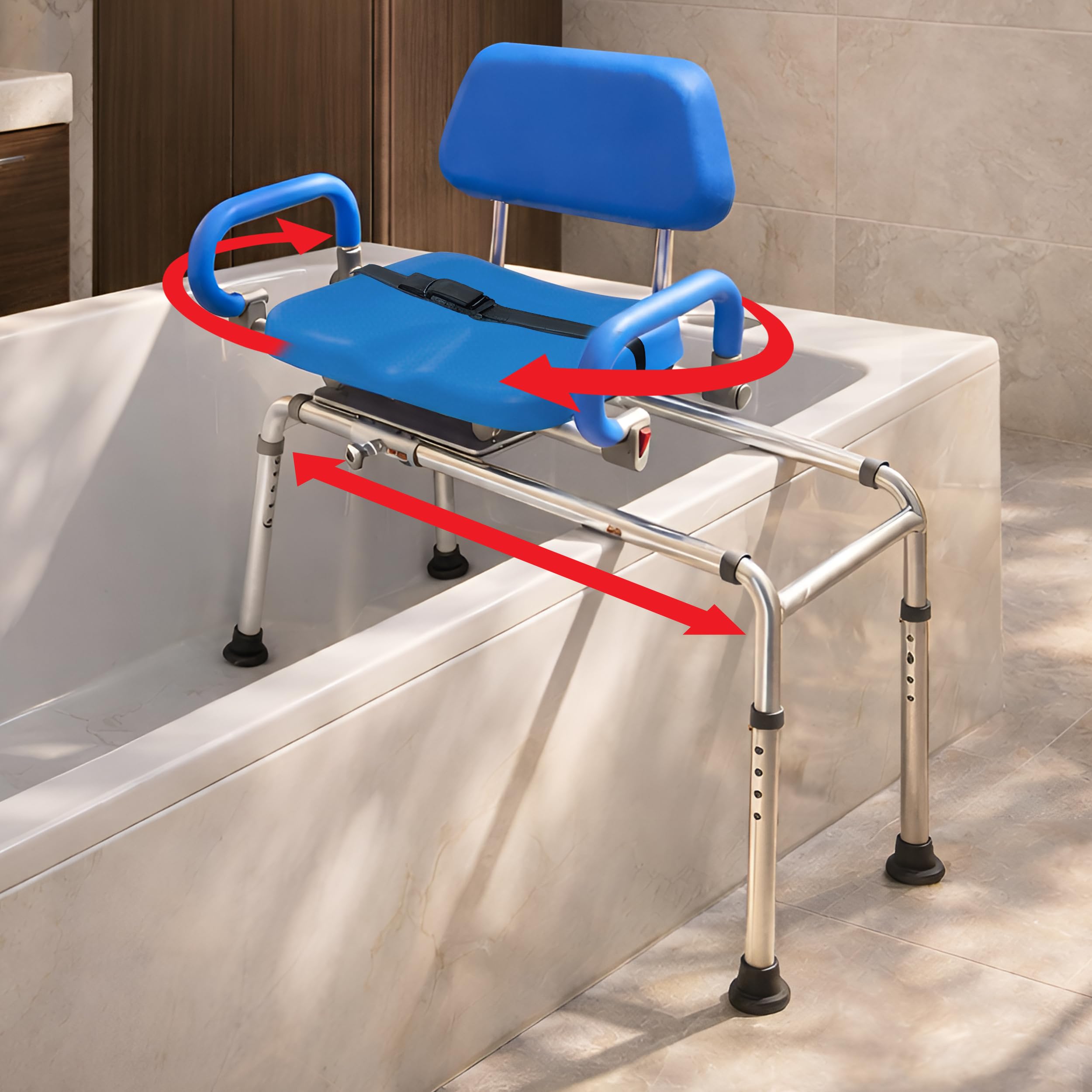
We recommend this if you need a stable, padded transfer bench that makes tub entry and exit safer and easier.
Pros
- Very comfortable padding on seat, back, and arms.
- Smooth swivel and slide make transfers simple.
- Reversible design fits either side of the tub.
Cons
- Takes up more room than a slim stool.
- Heavier than basic plastic benches.
- May need optional leg kit for high tub walls.
We used this bench for several weeks and found the padded seat really makes a difference. The cushion stayed warm and didn’t feel slippery when wet, so transfers felt steadier than on hard plastic chairs.
The swivel action is the standout. Pivoting and sliding cut down the awkward twists when getting in and out of the tub, and the armrests gave us solid support while moving. Assembly felt sturdy and the bench held up to daily use without wobble.
A few drawbacks showed up with small bathrooms. The unit’s footprint is larger than some compact benches, and it’s fairly heavy to move. If your tub has a high ledge, plan to add the leg extension kit so the bench clears the wall easily.
Platinum Carousel Sliding Shower Chair
Loyoda Sliding Swivel Transfer Bench
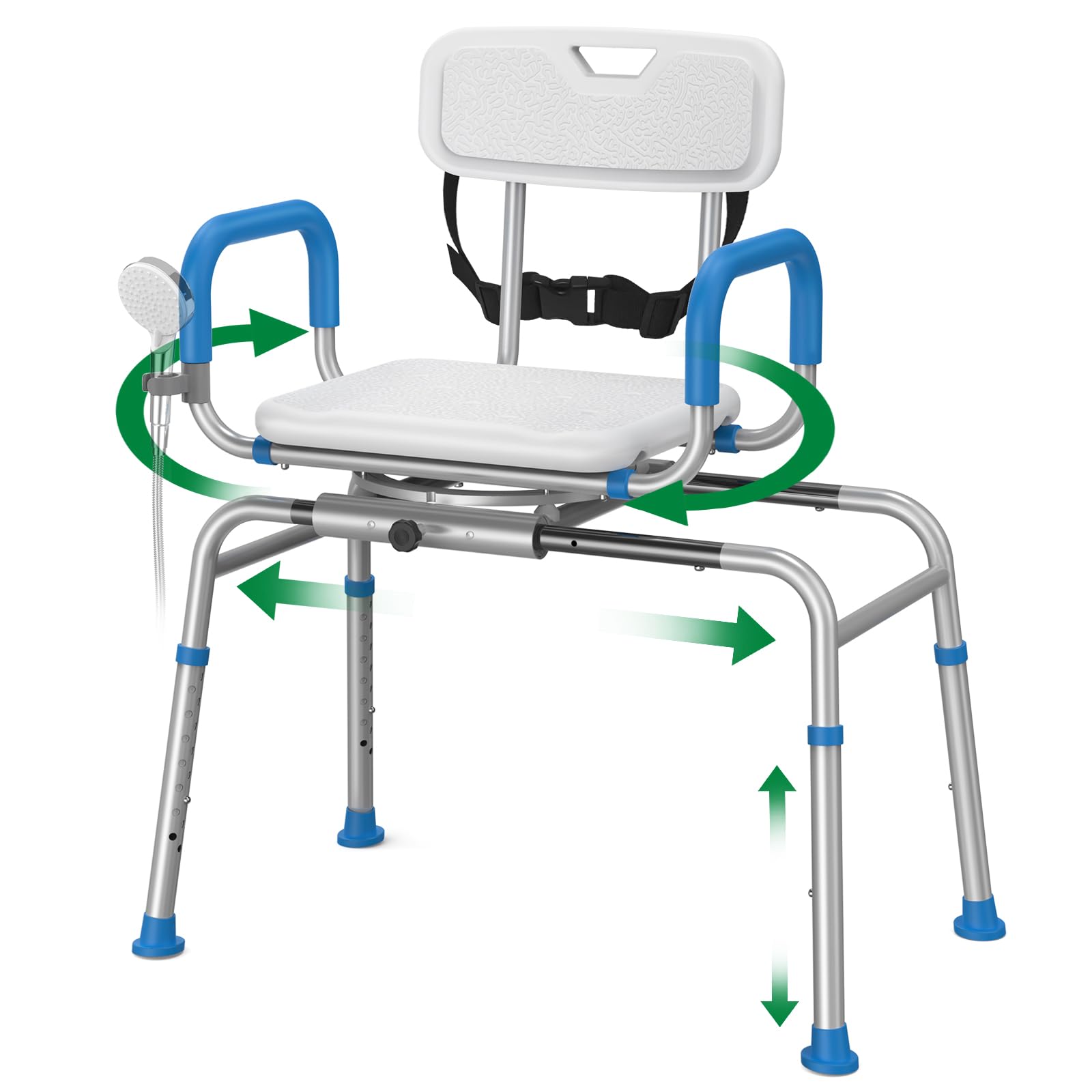
We recommend this bench when you need a space-saving, sturdy option that makes assisted transfers easier.
Pros
- Slides smoothly for safer transfers
- Swivels to save space in small bathrooms
- Lightweight aluminum resists rust
Cons
- Sliding action needs a caregiver to guide it
- Plastic seat feels firm after long sits
- Assembly takes a little patience
We used the Loyoda bench for several wash sessions and found the slide-and-swap motion cut down on the awkward lifting we usually do. Moving the chair into position was simple, and the swivel lets us tuck it close to the tub so it doesn’t block the bathroom.
The frame felt solid under weight and stayed dry thanks to the aluminum build. Seat height adjustments helped us match different users, but the plastic surface was firmer than expected for longer baths.
Setting it up took some time to line up the pivot and locks, and you’ll want two people for the transfer step until everyone gets used to the motion. Overall, it made transfers easier and saved useful floor space in our compact bathroom.
Medical King Sliding Tub Transfer Bench

We recommend this bench if you need a sturdy, no-install seat to make tub transfers safer and easier.
Pros
- Solid, stable feel when sitting and sliding.
- Adjusts to fit different tubs and user heights.
- Lightweight enough to move but strong enough for daily use.
Cons
- Plastic seat can feel firm and a bit slippery when wet.
- Assembly takes a few minutes and needs some strength.
- Armrests are fixed and may not suit every user’s transfer style.
We used this bench in a narrow tub and liked how it cut the effort to get in and out. The seat and backrest give real support while you slide over the rim, and the A-frame with non-slip feet kept it from shifting.
Adjusting the legs was quick and gave us a better fit for different caregivers and users. The unit stayed steady under weight and felt safe for routine showers, though the plastic seat would be nicer with a softer pad.
Moving the bench around was easy because it’s light for its strength. We noticed water made the seat a bit slick, so adding a small non-slip cushion helped. Overall, it’s a practical bench for people who need reliable, low-effort transfers.
Drseats Sliding Shower Chair
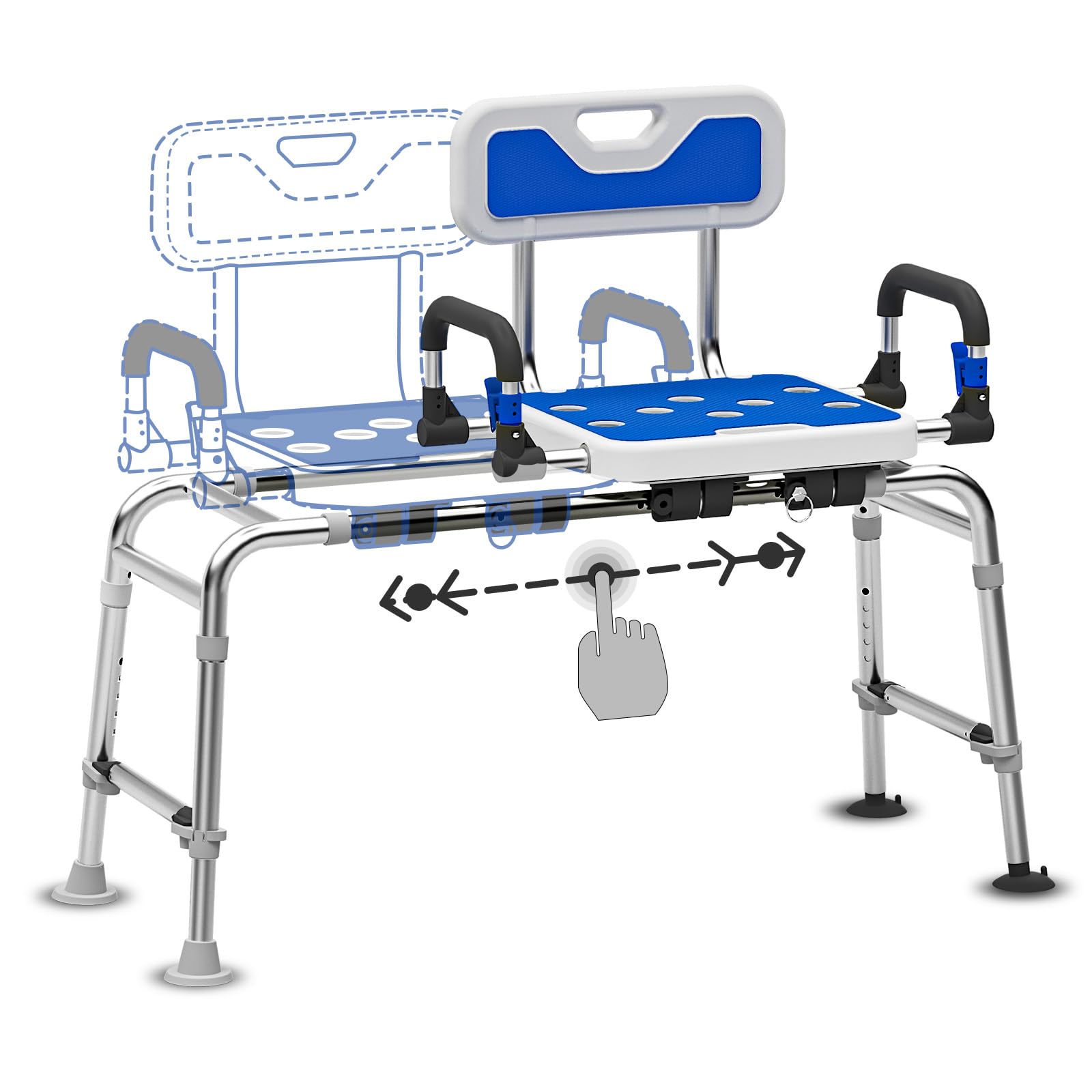
We recommend this bench when you need a sturdy, easy-to-slide transfer seat that reduces lifting and keeps transfers safer.
Pros
- Smooth, no-lift sliding action makes transfers easier.
- Strong frame and high weight capacity feel very stable.
- Soft, drained seat and backrest improve comfort and hygiene.
Cons
- Suction cups can be picky on some tub surfaces.
- Aluminum frame can feel cold at first in cool bathrooms.
- Seat width may feel large in narrow tubs.
We tested the sliding mechanism and used it for several transfers. The glide is noticeably smooth and removes the awkward leg swing over the tub edge. That reduced strain and made getting in and out less tense for both the user and the caregiver.
The chair felt solid under weight and didn’t wobble. The wide armrests give a sure grip and the rubber feet plus suction cups provided good hold on our tub. We had to adjust legs to get the best fit, which took only a minute.
The seat surface stayed mostly dry because water ran off quickly through the drain holes. The backrest helped during rinsing and lowered the need to stand. On textured or older tubs, the suction cups didn’t always grab firmly, so we double-checked stability before each use.
Buying Guide
We focus on safety first. Check weight capacity and seat width to match the user’s size and support needs.
We look for solid construction. Aluminum or steel frames resist rust and feel stable. Rubber-tipped legs or suction feet reduce slipping.
We inspect seat design and comfort. A contoured, padded seat reduces pressure points. Removable or flip-back arms help with transfers and personal care.
We evaluate adjustability. Height-adjustable legs allow a level seat with the tub edge. Swivel or sliding tops can ease movement during transfers.
We consider ease of use and cleaning. Fewer tools and quick-release parts make setup and removal simpler. Non-porous materials and drain holes lower mold risk.
We review installation and fit. Measure the tub ledge and inside tub width before buying. Portable benches should fit the tub depth and allow secure leg placement.
We prioritize safety features. Look for backrests, anti-slip surfaces, and locking mechanisms on moving parts. Clear, easy-to-follow assembly instructions help maintain safety.
We weigh portability and storage. Lightweight models are easier to move but must still meet strength needs. Foldable designs save space without sacrificing stability.
We compare warranty and support. A good warranty and accessible customer service protect us against defects and give confidence after purchase.
Editor’s Choice
Our Editor’s Choice is the Drive Tub Transfer Bench. It offers a practical balance of safety, comfort, adjustability, and everyday usability for disabled adults. Its wide seat, supportive backrest, adjustable legs, drainage holes, and non-slip feet help make bathtub transfers safer and less stressful.
We particularly like that the bench can be configured for different bathtub layouts. The lightweight aluminum frame is easy to reposition while still feeling stable during use. It is a strong all-around choice for adults who need dependable support without the added cost or size of a premium sliding and swiveling model.
However, users should always confirm the bench dimensions, weight capacity, and height range before purchasing. The suction feet should also be checked before each bath, especially when the bathtub has a textured, curved, or worn surface.
Conclusion
The best bath transfer bench for a disabled adult should make entering and leaving the bathtub safer, easier, and more comfortable. A suitable model can reduce the need to step over a high tub wall while also lowering physical strain on both the user and caregiver.
For most users, the Drive Tub Transfer Bench is our preferred overall option because it is stable, adjustable, reversible, and easy to clean. Users who require smoother assisted transfers may benefit more from a sliding or swivel model, such as the DMI Sliding Transfer Bench or Platinum Carousel Sliding Shower Chair. A heavy-duty bench with a wider seat and higher weight capacity may be more suitable for larger users.
Before making a final decision, measure the bathtub, compare the user’s weight with the bench’s rated capacity, and check whether the seat height can be adjusted to sit level with the tub wall. Features such as non-slip feet, a secure backrest, drainage holes, armrests, and locking mechanisms can provide additional support. The right bench should fit both the user and the bathroom rather than simply offering the longest list of features.
Frequently Asked Questions
What is a bath transfer bench used for?
A bath transfer bench helps a person enter and exit a bathtub without stepping directly over the tub wall. The user sits on the section positioned outside the bathtub and then slides or shifts across the seat into the bathing area.
Are transfer benches safe for disabled adults?
Transfer benches can provide a safer bathing setup when they are correctly sized, assembled, and positioned. The bench should have a suitable weight capacity, non-slip feet, a stable frame, and a level seat. Its stability should be checked before every use.
What is the difference between a shower chair and a transfer bench?
A shower chair normally sits completely inside the bathtub or shower. A transfer bench extends across the bathtub wall, with part of the seat outside the tub. This allows the user to sit down before moving their legs into the bathing area.
How do I choose the correct size transfer bench?
Measure the bathtub’s inside width, outer ledge height, and available bathroom floor space. Compare these measurements with the bench’s overall width, seat dimensions, and adjustable height range. There should also be enough room for the user or caregiver to move safely around the bench.
Should the transfer bench be level?
The seat should remain stable and approximately level when installed. Because the bathtub floor is usually higher than the bathroom floor, the inside and outside legs may need to be adjusted to different heights. Follow the manufacturer’s instructions when setting the leg positions.
Is a sliding transfer bench better than a fixed bench?
A sliding bench may be better for users who have difficulty shifting sideways or for caregivers who want to reduce lifting and pulling. A fixed bench is usually simpler, lighter, and more affordable. The better option depends on the user’s mobility, bathroom space, and level of assistance required.
What weight capacity should I choose?
Choose a bench with a rated capacity that comfortably exceeds the user’s body weight. Never use a bench above its stated limit. Heavier users may need a bariatric model with a wider seat, reinforced frame, and higher weight capacity.
Can a transfer bench fit any bathtub?
No. Some benches may not fit narrow tubs, unusually high tub walls, curved bathtub edges, sliding shower doors, or bathrooms with limited floor space. Measuring the bathtub and surrounding area before purchasing is essential.
How can I stop a transfer bench from sliding?
Place all rubber feet or suction cups firmly on clean, flat surfaces. Remove soap residue from the bathtub and bathroom floor, adjust the legs correctly, and check that every foot has full contact with the surface. Do not use the bench if it rocks, shifts, or has damaged feet.
How often should a bath transfer bench be cleaned?
The seat and frame should be rinsed and dried after regular use. Drainage holes, joints, suction cups, and rubber feet should be cleaned frequently to prevent soap buildup, mildew, and reduced grip. The bench should also be inspected periodically for loose parts, cracks, corrosion, or worn components.