
Best Ball for Senior Golfers: 5 Top Picks for 2026


Electric Kettle with Auto Shutoff

Adjustable Walker with Wheels

Hearing Aid Cleaning Kit
Choosing the best ball for senior golfers is less about age and more about swing speed and playing style. Many older golfers benefit from a softer, lower-compression ball that can help produce good speed without a harsh feel.
But not every senior golfer needs the same ball. A golfer with a faster swing may want more control, while someone with a slower swing may value easy distance and a soft feel. Here are five strong options for different needs.
Best Overall: Callaway Supersoft
The Callaway Supersoft is the best overall choice for many senior golfers because it combines soft feel, ball speed, distance, and useful greenside control.
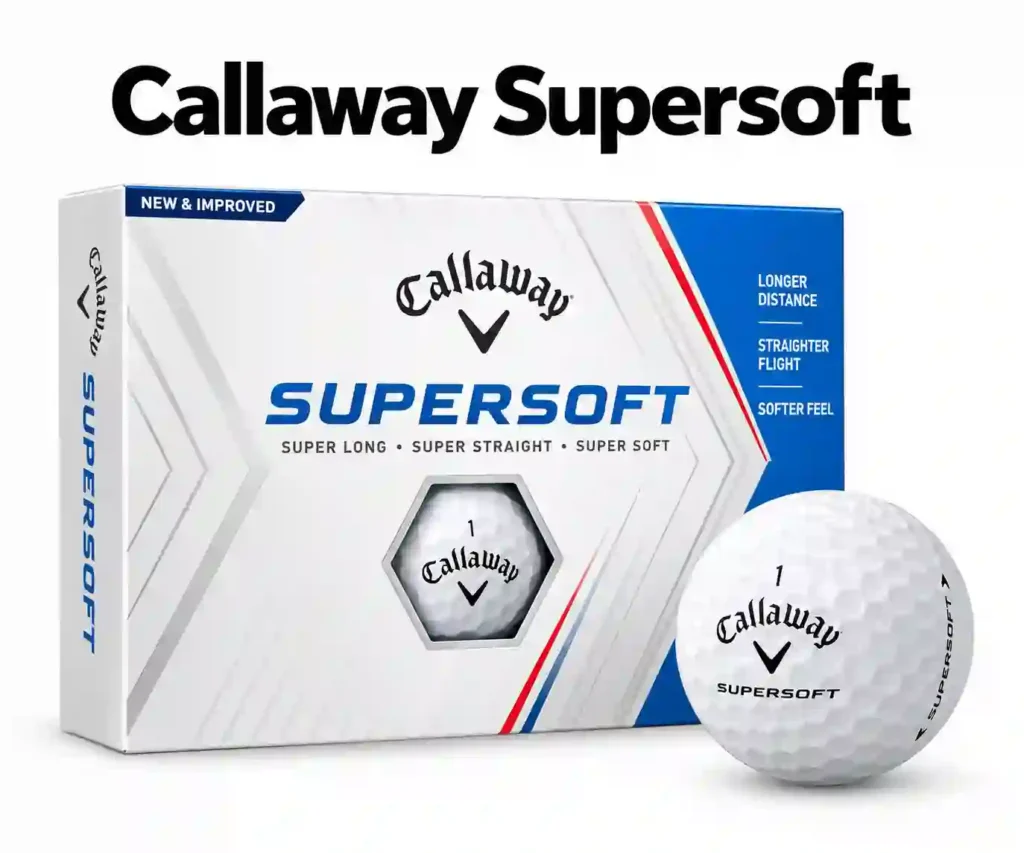
Callaway says the current Supersoft uses a HyperElastic SoftFast Core designed to increase ball speed while keeping a soft feel. Its hybrid cover is also designed to balance distance, feel, durability, and greenside control.
The main appeal for a senior golfer is its easy-going design. It can be a good match for players who do not generate very high clubhead speed and want a ball that feels comfortable off the club.
| Specification | Details | Why It Matters |
|---|---|---|
| Construction | Soft-focused design | Comfortable feel |
| Core | HyperElastic SoftFast | Helps promote ball speed |
| Cover | Hybrid cover | Balances feel and durability |
| Main strength | Distance and soft feel | Good everyday option |
Pros And Cons
The Supersoft offers a useful balance, but its soft construction will not suit every golfer.
| Feature | Pro | Con |
|---|---|---|
| Feel | Very soft | May feel too soft for some faster swingers |
| Distance | Designed for ball speed | Results vary with swing |
| Short game | Improved greenside control | Not a tour-style spin ball |
| Value | Usually reasonably priced | Premium options offer more advanced control |
Who Should Consider This Product
This is a strong choice for senior golfers who want a comfortable ball with good distance and do not need maximum tour-level spin.
It is especially worth considering if your swing speed has slowed over the years and you prefer a soft impact feel.
Best For: Senior golfers seeking a balanced mix of distance, feel, and value.
Not Ideal For: Players who want maximum short-game spin and tour-level control.
Best Premium: Titleist Tour Soft
The 2026 Titleist Tour Soft is a good step up for golfers who want soft feel without giving up more advanced all-around performance.
The latest Tour Soft was redesigned from core to cover. Titleist says the new version is built for longer tee shots, more consistent flight, higher iron launch, and more stopping power around the green.
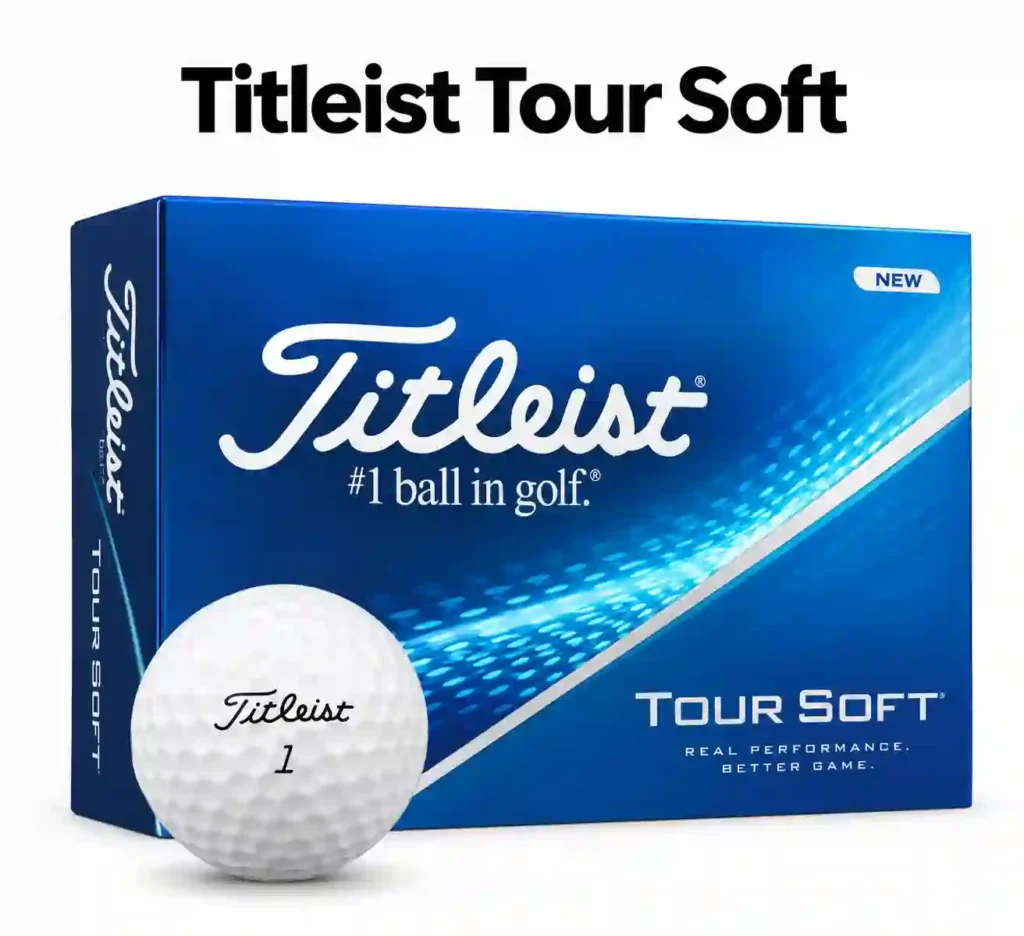
It is particularly interesting for senior golfers who still have a reasonably strong swing but prefer a softer ball than a typical tour model.
| Specification | Details | Why It Matters |
|---|---|---|
| Model | 2026 Tour Soft | Current generation |
| Construction | Redesigned core-to-cover | Updated performance |
| Dimple pattern | 386 quadrilateral dipyramid | Consistent flight |
| Cover | Elastomer cover | Soft feel |
| Main strength | Distance and stopping power | Better all-around play |
Pros And Cons
Tour Soft offers more scoring-focused performance than many basic soft balls, but it costs more.
| Feature | Pro | Con |
|---|---|---|
| Feel | Soft | Not the softest option here |
| Flight | Consistent | May not suit golfers seeking very low flight |
| Iron play | Higher launch | Benefits depend on swing |
| Short game | More stopping power | Higher price |
Who Should Consider This Product
Choose Tour Soft if you want a soft-feeling ball but still care about approach-shot performance and control.
It is also a sensible choice for an experienced senior golfer who does not want to move all the way down to an ultra-soft ball.
Best For: Active senior golfers who want soft feel with stronger all-around performance.
Not Ideal For: Golfers mainly looking for the lowest-cost ball or maximum softness.
Best For Straighter Shots: Bridgestone e12 Contact
The Bridgestone e12 Contact is a smart pick for senior golfers who want distance while also trying to keep shots straighter.
Bridgestone designed the e12 Contact around its Contact Science and FLEXATIV cover technology. The company says the cover is designed to produce faster speed on stronger impacts while reducing sidespin and improving forgiveness on off-center hits.

That makes it especially interesting for golfers who have lost some consistency with age or simply want a little more help keeping the ball on line.
| Specification | Details | Why It Matters |
|---|---|---|
| Main design goal | Distance and straighter shots | Helps inconsistent players |
| Cover | FLEXATIV Surlyn | Built for varied impact forces |
| Feel | Soft | Comfortable for regular play |
| Main strength | Forgiveness | Useful on mishits |
Pros And Cons
Its biggest advantage is not simply softness. It is the combination of distance, feel, and a design aimed at reducing unwanted curvature.
| Feature | Pro | Con |
|---|---|---|
| Forgiveness | Designed to reduce sidespin | Cannot fix major swing faults |
| Distance | Strong distance focus | Results depend on contact |
| Feel | Soft | Some players may prefer a firmer ball |
| Accuracy | Helps limit unwanted curvature | Not a replacement for proper fitting |
Who Should Consider This Product
The e12 Contact makes sense for senior golfers who often miss left or right and want a ball designed with forgiveness in mind.
It can also suit recreational players who care more about keeping the ball in play than maximizing short-game spin.
Best For: Senior golfers who want a straighter, more forgiving ball.
Not Ideal For: Low-handicap players who prioritize maximum greenside spin.
Best Ultra-Soft Feel: TaylorMade SpeedSoft
TaylorMade SpeedSoft is worth considering if soft feel is your top priority.
TaylorMade describes SpeedSoft as its softest golf ball and says its PWRCORE design aims to combine a very soft feel with ball speed. The current design uses a two-piece construction with an ionomer cover.
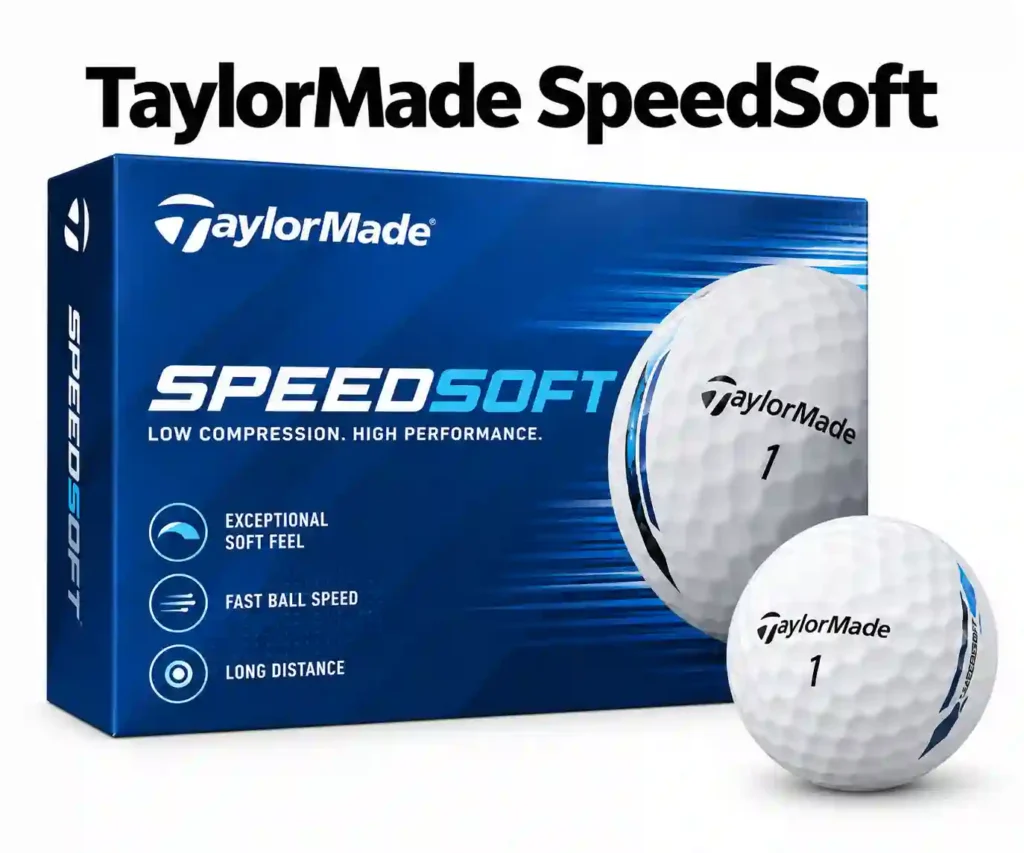
This can be appealing to senior golfers who dislike the harder sensation of firmer golf balls.
| Specification | Details | Why It Matters |
|---|---|---|
| Construction | 2-piece | Simple, easy-to-play design |
| Cover | Ionomer | Soft feel and durability |
| Core | PWRCORE | Designed for speed |
| Main strength | Soft feel | Comfortable impact |
Pros And Cons
SpeedSoft is easy to understand. It focuses heavily on soft feel while still targeting useful speed.
| Feature | Pro | Con |
|---|---|---|
| Feel | Extremely soft | May feel too soft to some golfers |
| Distance | Designed for speed | Not automatically longer for every swing |
| Price | Reasonable | Less advanced than premium tour balls |
| Visibility | White, yellow and high-visibility options | Visual preference varies |
Who Should Consider This Product
This ball is a good fit for seniors who value a soft sensation and want an easy-to-play ball for regular rounds.
It may also work well for golfers who find firmer balls uncomfortable off the driver or irons.
Best For: Senior golfers who want an especially soft feel.
Not Ideal For: Players who demand premium short-game spin and tour-level control.
Best Value: Srixon Soft Feel
The Srixon Soft Feel is one of the better choices for golfers who want a soft ball without paying premium-ball prices.
The current Soft Feel uses a FastLayer Core, a 338 Speed Dimple Pattern, and a soft thin cover. Srixon says the core transitions from soft in the center to firmer toward the outside, helping combine feel with ball speed.
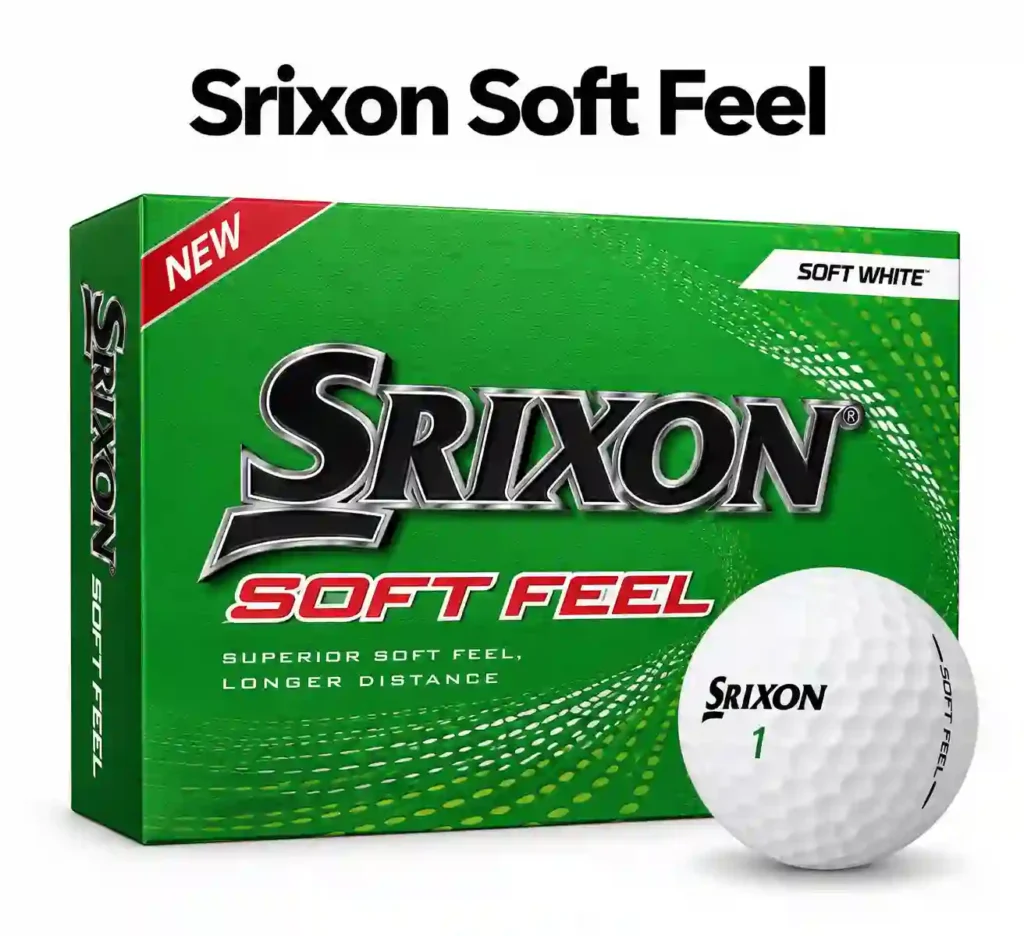
Its two-piece ionomer construction also keeps the design simple. That makes it a practical option for casual and regular senior golfers alike.
| Specification | Details | Why It Matters |
|---|---|---|
| Construction | 2-piece ionomer | Simple and durable |
| Compression | About 58–60, depending on current listing | Softer overall profile |
| Dimple pattern | 338 Speed Dimples | Designed to reduce drag |
| Flight | Mid-high | Helpful for many moderate swings |
| Main strength | Feel and value | Good everyday choice |
Pros And Cons
The Soft Feel gives up some premium-ball sophistication, but that is part of why it is attractive.
| Feature | Pro | Con |
|---|---|---|
| Feel | Soft | Less premium than urethane balls |
| Distance | Strong for a two-piece ball | Not designed as a tour ball |
| Price | Usually affordable | Premium control is limited |
| Flight | Mid-high | May not suit players wanting a low flight |
Who Should Consider This Product
The Soft Feel is a good option for seniors who play often and want a dependable ball without spending heavily on every dozen.
It is also a good starting point if you are unsure whether a softer ball suits your swing.
Best For: Budget-conscious senior golfers who want soft feel and solid distance.
Not Ideal For: Players who need maximum greenside spin.
Comparison At A Glance
The five balls serve slightly different types of senior golfers. Your swing speed and preferred feel should guide the final choice.
| Product | Best For | Key Trade-Off |
|---|---|---|
| Callaway Supersoft | Overall performance | Less tour-level control |
| Titleist Tour Soft | Premium all-around play | Higher price |
| Bridgestone e12 Contact | Straighter shots | Not a tour-spin ball |
| TaylorMade SpeedSoft | Ultra-soft feel | Less advanced construction |
| Srixon Soft Feel | Value | Limited premium control |
How We Chose These Products
The selections focus on the needs that matter most when choosing a golf ball for an older player.
We considered current manufacturer specifications, product design, expert reviews, performance claims, feel, distance, forgiveness, value, and the different needs of golfers with different swing speeds.
| Evaluation Factor | Why It Matters |
|---|---|
| Feel | Softer balls can be more comfortable for many players |
| Distance | Important when swing speed is lower |
| Forgiveness | Helps reduce the effect of less-than-perfect contact |
| Flight | Affects carry and how the ball performs in play |
| Short-game control | Important for scoring around the green |
| Value | Golfers lose balls, so replacement cost matters |
No single ball can be called the best for every senior golfer. A golfer with a fast swing may benefit from a very different ball than a golfer with a slower swing.
What To Look For When Buying
The biggest mistake is choosing a ball simply because it says “soft” on the box. Look at how the ball matches your swing and your normal game.
Match The Ball To Your Swing
Swing speed is one of the most useful factors when choosing a golf ball. A slower swing generally makes softer, lower-compression designs more attractive, while faster swingers may prefer a firmer ball with more control.
If you know your driver swing speed, use it as a starting point. If you do not, a golf-shop launch monitor can help you find it.
Think About Distance
Many senior golfers want to recover some distance lost as swing speed changes.
A softer ball can be a useful starting point, but do not assume that the softest ball will automatically fly the farthest. Your contact, launch, club, and swing all affect distance.
Consider Feel
Some golfers love a very soft sensation. Others prefer a firmer response because it gives them more feedback.
Try a sleeve before buying several dozen if you are unsure.
Do Not Ignore Short-Game Control
Distance is only part of scoring.
If you regularly rely on chips, pitches, and approach shots to save strokes, look for a ball that provides enough greenside control for your game. The Titleist Tour Soft, for example, is specifically designed to add stopping power while retaining soft feel.
Think About Visibility
Older golfers may also prefer a ball that is easy to see on the course.
Yellow and high-visibility options can be useful if white balls are difficult to track or find. TaylorMade offers SpeedSoft in white, yellow, and high-visibility versions, while Srixon offers Soft Feel in white and yellow.
Common Buying Mistakes
A good golf ball should match the player, not just the marketing on the package.
| Mistake | Better Approach |
|---|---|
| Choosing only by brand | Compare the ball’s design and your swing |
| Buying the softest ball | Match softness to swing and feel preference |
| Copying tour players | Choose for your own game |
| Focusing only on distance | Consider control and accuracy too |
| Buying in bulk first | Test a sleeve before committing |
Another common mistake is assuming that every senior needs a low-compression ball. “Senior” covers a huge range of swing speeds and skill levels.
A former low-handicap player who still swings hard may need a very different ball from a recreational golfer with a slower swing.
Safety Considerations
Golf balls do not usually create major safety concerns, but older golfers should still consider comfort, visibility, and their ability to track the ball during play.
If vision has changed, a high-visibility ball may make it easier to follow or locate shots. If hand or joint comfort is a concern, a softer-feeling ball may also be more pleasant to play.
Most importantly, do not change your equipment based only on age. If you are unsure which ball fits your swing, a professional fitting can provide more useful information than a generic “senior” label.
Frequently Asked Questions
What Is The Best Golf Ball For Senior Golfers?
For many senior golfers, the Callaway Supersoft is a strong overall choice because it combines soft feel, ball speed, distance, and greenside control.
Are Soft Golf Balls Better For Seniors?
Not automatically. Soft balls can be useful for golfers with slower swings, but the best choice depends on swing speed, launch, feel, and playing style.
What Golf Ball Is Best For A Slow Swing Speed?
The Callaway Supersoft and TaylorMade SpeedSoft are good starting points for golfers who want a soft feel and a design focused on ball speed. The right choice still depends on the individual swing.
Is Titleist Tour Soft Good For Older Golfers?
Yes. The 2026 Tour Soft is designed for distance, soft feel, consistent flight, and increased stopping power. It is particularly interesting for seniors who want more all-around performance than a basic soft ball.
Conclusion
The Callaway Supersoft is the best overall starting point for many senior golfers because it offers a strong mix of soft feel, distance, and everyday playability. The Titleist Tour Soft is better for golfers who want a more premium all-around ball with added stopping power.
For straighter shots, consider the Bridgestone e12 Contact. If very soft feel is your priority, the TaylorMade SpeedSoft is worth a look. And for value, the Srixon Soft Feel remains an appealing choice.
The key is not to buy a ball simply because it is marketed to seniors. Start with your swing speed, then consider feel, distance, control, visibility, and price. That approach is much more likely to lead you to the right ball for your game.