
Why Should Seniors Have Hobbies?


Bedside Commode Chair

Non-Slip Slippers

Kitchen Timer with Large Display
Quick Answer
Seniors should have hobbies because enjoyable activities can add purpose, mental stimulation, social connection, movement, and structure to everyday life. The National Institute on Aging encourages older adults to stay involved in meaningful activities they enjoy as part of healthy aging.
Why hobbies matter for older adults
- More purpose: A regular hobby gives you something enjoyable to anticipate and work toward.
- Mental engagement: Reading, music, puzzles, crafts, and learning challenge the brain in different ways.
- Social connection: Clubs, volunteering, classes, and group activities create natural reasons to meet people.
- Gentle movement: Walking, gardening, dancing, and similar hobbies can make physical activity more enjoyable.
- Daily structure: A hobby can give retirement days a comfortable rhythm without making them feel over-scheduled.
- Simple enjoyment: Hobbies provide time for curiosity, creativity, relaxation, and fun.
A practical way to start
- Choose one activity that fits your interests, mobility, energy, budget, and preferred level of social contact.
Hobbies aren’t just ways to fill spare time after retirement. They can give older adults meaningful reasons to stay curious, active, connected, and involved in everyday life.
I like to think of a good hobby as something that makes tomorrow a little more interesting. As of 2026, seniors have more options than ever, from gardening and walking to online classes, photography, volunteering, music, and creative projects.
In This Guide
- Why do hobbies matter for seniors?
- How do hobbies keep seniors mentally engaged?
- Can hobbies help seniors feel less lonely?
- How can active hobbies support physical health?
- Why do hobbies create purpose after retirement?
- Which types of hobbies are best for seniors?
- How should a senior choose a new hobby?
- Frequently asked questions
- Final takeaway
Why Do Hobbies Matter for Seniors?
Hobbies matter because they give older adults enjoyable ways to stay engaged with life. A good hobby can support several needs at once without feeling like another responsibility.
A senior hobby is a repeatable leisure activity chosen mainly for enjoyment, interest, creativity, learning, movement, or connection. It doesn’t need to be productive, competitive, or complicated.
Hobbies give ordinary days something to look forward to
Retirement can remove routines that existed for decades. Work once provided deadlines, conversations, responsibilities, and predictable places to be.
A weekly card game, Tuesday art class, morning garden routine, or Saturday walking group can restore some rhythm. The schedule remains flexible because the activity is chosen rather than required.
They encourage continued participation in life
The National Institute on Aging says social and productive activities people enjoy may support well-being and independence as they age. Those activities can include hobbies, volunteering, learning, exercise, and time with other people.
This doesn’t mean every senior needs a packed calendar. One or two meaningful activities may be more satisfying than seven commitments that create stress.
- Creative hobbies can offer self-expression and visible progress.
- Learning hobbies introduce new ideas and skills.
- Physical hobbies can add enjoyable movement.
- Social hobbies create opportunities for regular interaction.
- Quiet hobbies can provide relaxation and personal time.
I use a simple test: would you still want to do the activity if nobody graded, praised, or paid you for it? If the answer is yes, you’ve probably found a genuine hobby.
Section Takeaway: Hobbies matter most when they make daily life more interesting, meaningful, or connected without becoming another obligation.
How Do Hobbies Keep Seniors Mentally Engaged?
Many hobbies ask the brain to remember, plan, solve problems, notice details, or learn something unfamiliar. That mental engagement is one reason hobbies can be valuable throughout later life.
The National Institute on Aging’s healthy-aging guidance discusses research connecting hobbies, social activities, and other leisure activities with positive outcomes for older adults.
Different hobbies exercise different mental skills
A crossword isn’t mentally identical to learning piano. Photography asks you to observe, music combines listening with timing, and cooking requires planning and sequencing.
- Reading: Supports attention, comprehension, imagination, and discussion.
- Puzzles: Use pattern recognition, recall, and problem-solving.
- Music: Combines memory, listening, coordination, and practice.
- Photography: Encourages observation, decision-making, and creativity.
- Languages: Introduce vocabulary, recall, pronunciation, and communication.
- Crafts: Combine planning, fine-motor work, patterns, and creativity.
Learning creates progress you can see
One advantage of a hobby is the small sense of progress it can provide. You may finish a book, recognize a new bird, learn three guitar chords, or complete a watercolor.
Those milestones don’t need to impress anybody. The value comes from practicing, improving, and remaining curious.
I prefer hobbies with adjustable difficulty. A beginner can start with a 10-minute lesson, then gradually add complexity when the activity becomes familiar.
Health note: Hobbies can support an engaging lifestyle, but they don’t prevent or treat dementia or other medical conditions. Talk with a healthcare professional about concerns involving memory or thinking.
Section Takeaway: Choose mentally engaging hobbies for curiosity and enjoyment, not because you feel pressured to turn leisure time into a brain-training test.
Can Hobbies Help Seniors Feel Less Lonely?
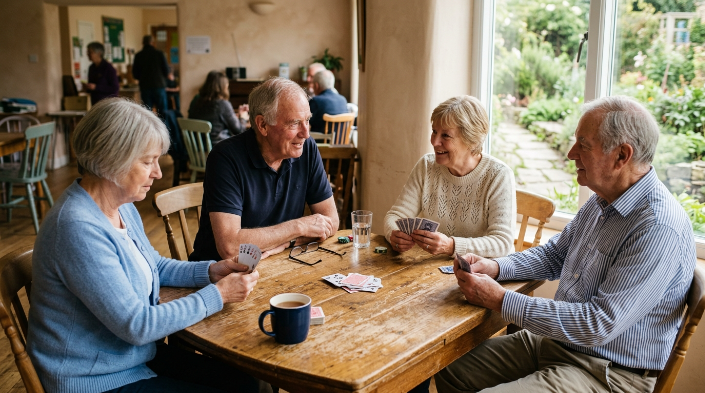
Social hobbies can create repeated, low-pressure opportunities to meet people around a shared interest. That can be especially helpful when retirement, relocation, mobility changes, or loss has reduced everyday contact.
The World Health Organization identifies loneliness and social isolation as important risk factors affecting mental health in later life. It also highlights meaningful social activities, community groups, creative arts, education, and volunteering as useful forms of social engagement.
Shared interests make conversation easier
Meeting strangers simply to “be social” can feel awkward. A hobby gives everyone something specific to talk about.
- Join a book or film club.
- Attend a painting or pottery class.
- Volunteer for a local cause.
- Play cards, chess, or board games.
- Sing in a choir.
- Join a gardening group.
- Walk regularly with neighbors.
The activity becomes a bridge. Conversation can grow naturally around books, plants, music, games, photographs, or the project everyone is working on.
Solo hobbies still have emotional value
Not every beneficial hobby needs a group. Reading, journaling, woodworking, knitting, birdwatching, gardening, and listening to music can provide calm and enjoyment.
Some solo activities can also become social later. A photographer can join a local group, a reader can try a book club, and a gardener can exchange plants with neighbors.
The goal isn’t maximum social activity. It’s finding the amount and type of connection that feels comfortable.
Health note: Persistent sadness, anxiety, severe loneliness, or withdrawal deserves professional attention. A hobby can complement support, but it shouldn’t replace appropriate healthcare.
Section Takeaway: Social hobbies can make connection easier because they give people a shared reason to meet, talk, and return.
How Can Active Hobbies Support Physical Health?
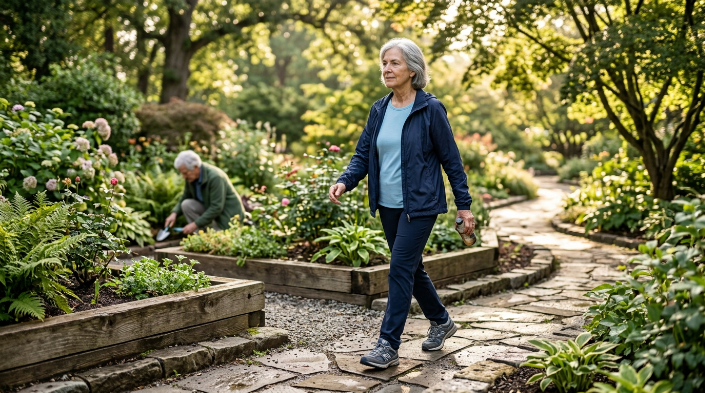
Active hobbies turn movement into something enjoyable rather than treating every minute of activity as exercise. Walking, gardening, dancing, swimming, and recreational sports are common examples.
Current CDC guidance for adults 65 and older recommends a weekly mix of aerobic activity, muscle-strengthening activity, and activities that improve balance.
How much physical activity is recommended?
CDC recommendations provide useful targets, but individual ability matters. Older adults who cannot meet the full recommendations should be as physically active as their abilities and health conditions allow.
| Activity type | CDC recommendation for adults 65+ | Hobby examples |
|---|---|---|
| Moderate aerobic activity | At least 150 minutes per week | Brisk walking, recreational cycling, dancing, swimming |
| Vigorous aerobic alternative | 75 minutes per week | Faster cycling, hiking, vigorous swimming when appropriate |
| Muscle strengthening | At least 2 days per week | Strength classes, resistance exercises, some gardening tasks |
| Balance activity | Include balance activities regularly | Tai chi, appropriate balance exercises, certain dance activities |
Enjoyment can make movement easier to repeat
Someone who dislikes a treadmill may happily spend time walking through a botanical garden. Another person may prefer dancing, tending vegetables, or swimming with friends.
Consistency matters more than choosing an activity because it sounds impressive. The best active hobby is one that matches your current ability and that you want to repeat.
Health note: Anyone with significant balance problems, heart or lung conditions, recent surgery, unexplained pain, or other medical concerns should ask their healthcare professional which activities are appropriate.
Section Takeaway: Active hobbies can make regular movement more enjoyable, but intensity and difficulty should always match the individual’s health and abilities.
Why Do Hobbies Create Purpose After Retirement?
Retirement can create freedom, but it can also remove familiar roles and routines. Hobbies provide small goals and responsibilities that a person chooses for themselves.
A garden needs watering. A choir rehearses on Wednesday. A grandchild may be waiting for the next chapter of a family-history project.
Purpose doesn’t have to mean productivity
People sometimes hear “purpose” and imagine they must start a business, volunteer every day, or master a difficult skill. Purpose can be much simpler.
- Finish one novel each month.
- Grow tomatoes through summer.
- Photograph local birds.
- Cook Sunday lunch for family.
- Learn one song on the piano.
- Help at a community event twice a month.
These small commitments create something to anticipate. They also create stories, progress, and moments worth sharing.
Hobbies can help redefine identity
A job title may disappear at retirement, but interests don’t have to disappear with it. Retirement can create room to rediscover parts of yourself that work and family responsibilities once pushed aside.
Someone who once said, “I’m an accountant,” may eventually also say, “I paint landscapes.” Another person may become known among friends for bread baking, genealogy, photography, or community volunteering.
That shift can feel surprisingly meaningful. You’re not merely filling hours; you’re continuing to build a life around things that matter to you.
Section Takeaway: A hobby gives retirement purpose by creating chosen goals, routines, interests, and roles rather than simply filling empty time.
Which Types of Hobbies Are Best for Seniors?
There isn’t one best hobby for every senior. The strongest choice fits the person’s interests, physical comfort, budget, available space, and desired level of social interaction.
A balanced mix often works well because different hobbies meet different needs.
| Hobby type | Examples | Main appeal | Easy starting point |
|---|---|---|---|
| Creative | Painting, knitting, photography, writing | Self-expression and visible progress | 20-minute beginner project |
| Learning | Reading, languages, history, technology | Curiosity and mental engagement | One short lesson or chapter |
| Social | Clubs, cards, choir, volunteering | Regular interaction and belonging | Attend one meeting before committing |
| Active | Walking, gardening, dancing, swimming | Movement plus enjoyment | Start with a comfortable short session |
| Relaxing | Birdwatching, audiobooks, journaling | Quiet enjoyment and personal time | 10-20 minutes at home |
What about seniors with limited mobility?
Limited mobility doesn’t eliminate the benefits of having interests. Many hobbies can be done seated, indoors, with adapted equipment, or in short sessions.
- Audiobooks and podcasts.
- Large-print reading.
- Journaling or memoir writing.
- Painting and drawing.
- Card and board games.
- Genealogy.
- Music appreciation or learning an instrument.
- Container gardening at a comfortable height.
- Online courses and virtual clubs.
- Photography from a window, porch, or accessible location.
Accessibility should shape the hobby, not determine whether someone is “allowed” to have one. A small adaptation can turn an uncomfortable activity into an enjoyable routine.
How Should a Senior Choose a New Hobby?
Start with interest rather than age. The question isn’t “What hobbies are seniors supposed to do?” but “What would I enjoy doing again next week?”
Use five practical filters
- Interest: Does the activity make you curious or excited?
- Comfort: Does it fit your mobility, vision, hearing, dexterity, and energy?
- Cost: Can you try it without making a large purchase first?
- Access: Do you have the space, transport, equipment, or internet access it requires?
- Social fit: Do you want private time, more company, or a mixture of both?
Try before investing
One of the easiest mistakes is buying equipment before knowing whether you enjoy the hobby. Rent, borrow, take a trial class, or begin with basic supplies whenever possible.
A person curious about watercolor doesn’t need a studio. A small beginner set and a few sheets of paper are enough to discover whether painting feels enjoyable.
Start smaller than you think you need to
I prefer a 15-minute first session over an ambitious two-hour plan. Stopping while you’re still interested makes it easier to return tomorrow.
The same rule works socially. Attend one club meeting before joining for a year, or volunteer for a single event before accepting a weekly commitment.
If the hobby involves significant movement, adapt it to your current abilities. The WHO’s information on social connection and older adults also reinforces the value of opportunities that help older people stay connected and engaged.
Section Takeaway: The right hobby is enjoyable enough to repeat and realistic enough to fit your actual life.
Frequently Asked Questions
Why are hobbies important for elderly people?
Hobbies can give older adults enjoyment, structure, purpose, mental stimulation, movement, and opportunities for connection. The benefits depend on the activity and individual, but meaningful leisure can be an important part of an active, satisfying life.
How many hobbies should a senior have?
There is no required number. One meaningful hobby may be enough, while someone else may enjoy several. A practical approach is to begin with one or two activities and add more only when the schedule still feels enjoyable rather than crowded.
What hobbies are good for keeping the mind active?
Reading, puzzles, card games, music, photography, crafts, languages, writing, genealogy, and classes all involve different mental skills. Choose something interesting enough to practice regularly instead of selecting an activity only because it is advertised as “brain training.”
What are good social hobbies for seniors?
Book clubs, choirs, walking groups, card games, community classes, volunteering, gardening clubs, dance groups, and group crafts are strong options. Shared interests can make conversation easier because participants already have a topic and activity in common.
What hobbies are suitable for seniors with limited mobility?
Reading, audiobooks, puzzles, journaling, genealogy, painting, knitting, music, photography, online learning, card games, and raised container gardening can work well. Activities can often be shortened, seated, simplified, or adapted to individual comfort and ability.
Is it ever too late to start a new hobby?
No fixed age makes someone too old to learn or enjoy something new. The important factors are interest, accessibility, safety, and realistic expectations. Start with beginner-level activities and allow yourself to enjoy the process without comparing your progress with others.
Can hobbies improve a senior’s health?
Some hobbies include physical activity, social interaction, relaxation, or mental engagement, all of which can support aspects of well-being. However, hobbies aren’t medical treatments. Health concerns should still be discussed with a qualified healthcare professional.
Final Takeaway: Give Yourself Something to Look Forward To
Seniors should have hobbies because later life should include more than appointments, errands, and responsibilities. Enjoyable activities can create purpose, connection, curiosity, movement, relaxation, and simple pleasure.
You don’t need the perfect hobby. Pick one activity that sounds interesting, try it in a small and affordable way, and notice whether you want to do it again.
That’s the best sign you’ve found the right one.