
Why Are Hobbies Important After Retirement?


Fall Detection Smart Watch

Page Magnifier Sheet

GPS Tracker for Elderly
Quick Answer
Hobbies are important after retirement because they give your days purpose, structure, enjoyment, mental stimulation, physical activity, and opportunities to connect with other people. The National Institute on Aging encourages older adults to stay involved in meaningful activities they enjoy as part of healthy aging.
Why hobbies matter in retirement
- Sense of purpose: A hobby gives you something meaningful to anticipate and work toward.
- Daily structure: Regular activities can create rhythm after the workweek disappears.
- Mental stimulation: Learning, creating, reading, and problem-solving keep your mind engaged.
- More movement: Walking, gardening, dancing, swimming, and similar hobbies naturally add activity.
- Social connection: Clubs, classes, volunteering, and group hobbies make meeting people easier.
- Enjoyment and relaxation: Retirement should also leave room for activities you simply love doing.
A practical starting point
- Start with one enjoyable activity and give it several weeks before deciding whether it belongs in your retirement routine.
Retirement changes more than your work schedule. It can change where you go, whom you see, what challenges you face, and what gives your week a sense of direction.
That is why I think hobbies deserve more attention than they usually get. The right activities aren’t just ways to fill empty hours; they can help you build a retirement that still feels active, curious, social, and distinctly yours.
In This Guide
- Why Are Hobbies Important After Retirement?
- How Do Hobbies Create Purpose and Routine?
- Can Hobbies Support Mental and Cognitive Well-Being?
- How Can Hobbies Keep You Physically Active?
- Why Do Social Hobbies Matter After Retirement?
- Which Hobby Types Fit Different Retirement Goals?
- How Do You Choose Hobbies You’ll Keep Doing?
- Frequently Asked Questions
- Start With One Hobby This Week
Why Are Hobbies Important After Retirement?
Hobbies matter because retirement removes many activities that once happened automatically. Work may have provided goals, conversations, deadlines, movement, problem-solving, and a predictable weekly schedule.
A hobby can replace some of those benefits without replacing your job. You choose the activity, pace, people, and amount of commitment.
A retirement hobby is a voluntary activity you regularly do for enjoyment, learning, creativity, movement, connection, or personal meaning. It doesn’t need to make money or produce an impressive result.
Retirement creates freedom, but freedom still needs direction
Having fewer obligations can feel wonderful at first. Sleeping later, traveling, or simply having an empty calendar can be refreshing.
After the novelty settles, however, some people discover that unlimited free time isn’t automatically satisfying. A few recurring activities can give the week useful landmarks.
- Monday: Meet a walking partner.
- Wednesday: Work on a garden, craft, or photography project.
- Friday: Attend a class, club, game, or volunteer shift.
- Weekend: Share an activity with family or friends.
You don’t need a packed calendar. The goal is having enough enjoyable activity that your days feel intentional rather than interchangeable.
Hobbies let you decide what this stage of life looks like
Retirement can also be a chance to recover interests that were pushed aside by work and family responsibilities. Music, woodworking, painting, fishing, gardening, travel, photography, and writing often become possible again when time opens up.
There is no correct retirement hobby. A quiet reader and an energetic pickleball player can both have fulfilling routines.
Section Takeaway: Hobbies help turn free time into meaningful time. Their real value comes from giving you enjoyable reasons to stay engaged with your own life.
How Do Hobbies Create Purpose and Routine?
Hobbies create purpose by giving you something to practice, complete, care for, anticipate, or share. Even a small project can answer the useful question, “What am I looking forward to this week?”
Purpose doesn’t have to mean pursuing a huge goal. It can be as simple as growing tomatoes, finishing a novel, improving a watercolor, or meeting your walking group every Tuesday.
A routine can make retirement feel more settled
Work once divided your day into clear periods. Retirement removes that framework almost overnight for many people.
A hobby can add structure without making retirement rigid.
- Morning hobbies: Walking, birdwatching, journaling, photography, gardening.
- Afternoon hobbies: Crafts, woodworking, reading, cooking, genealogy.
- Evening hobbies: Music, cards, book clubs, dancing, community classes.
I like to think of hobbies as anchors rather than appointments. They give shape to the week while leaving plenty of space for spontaneity.
Progress gives you something to notice
Many hobbies provide visible progress. You may walk farther, learn another song, identify more birds, finish a quilt, or grow your first successful crop.
Small improvements can make an ordinary week feel satisfying. The reward comes from participation as much as achievement.
Can Hobbies Support Mental and Cognitive Well-Being?
Yes. Mentally engaging and meaningful activities can keep you learning, creating, solving problems, and interacting with the world around you.
The National Institute on Aging notes that older adults can continue learning new skills and forming new memories. Its guidance on learning and healthy aging specifically rejects the idea that becoming older means losing the ability to learn.
Learning gives the brain something new to work on
The useful part is not finding the “perfect brain hobby.” It is choosing something engaging enough that you want to return to it.
- Learn a language.
- Practice a musical instrument.
- Take photographs and learn editing.
- Study genealogy or local history.
- Play chess, bridge, or strategy games.
- Take an online or community class.
- Write family stories or a memoir.
Activities that combine learning with creativity can be especially satisfying because there is always another technique to explore.
Enjoyable activities can also support emotional well-being
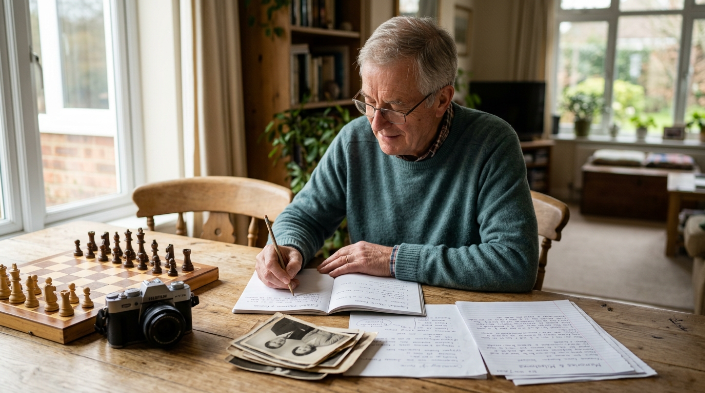
Retirement is a major transition, even when you wanted it. Meaningful activities can provide enjoyment and something positive to anticipate during that adjustment.
National Institute on Aging information about healthy aging and leisure activities discusses associations between hobbies, social participation, well-being, and cognitive health.
Health note: Hobbies can support well-being, but they aren’t a substitute for professional care. Persistent sadness, anxiety, major memory changes, or loss of interest in normal activities deserves a conversation with a qualified health professional.
How Can Hobbies Keep You Physically Active?
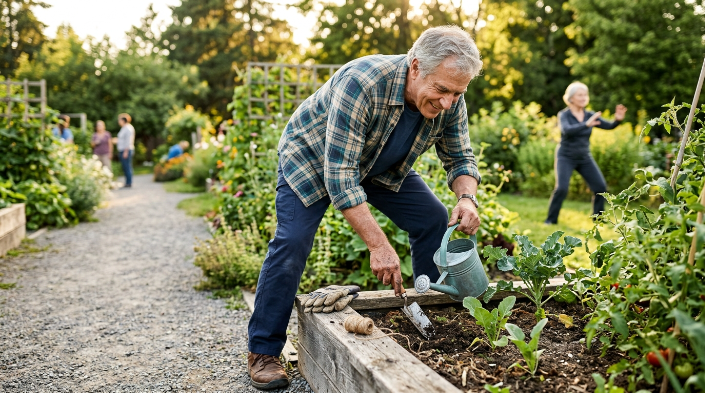
Active hobbies can make movement feel less like an exercise assignment. Gardening, walking, dancing, swimming, cycling, and recreational sports all give movement another purpose.
As of 2026, CDC physical activity guidance for adults 65 and older recommends a weekly mix of aerobic, muscle-strengthening, and balance activities.
Movement doesn’t have to happen in a gym
A hobby can help you accumulate activity while you focus on something you enjoy. That often makes consistency feel more natural.
- Walking: Start with a comfortable neighborhood or park route.
- Gardening: Mix light digging, watering, pruning, and carrying tasks.
- Dancing: Try a beginner class, social dance, or home practice session.
- Swimming: Use laps or water exercise for lower-impact movement.
- Tai chi: Combine controlled movement with balance practice.
- Golf: Add walking when distance and mobility make it practical.
Choose activity that matches your current ability
The best physical hobby is one you can perform safely and repeat comfortably. Someone with limited mobility may prefer chair-based exercise, container gardening, or short accessible walks.
Intensity can change as your health, stamina, and confidence change. Adaptation is part of making a hobby sustainable.
Health note: If you have significant heart, balance, joint, breathing, or mobility concerns, ask your health professional what level of activity is appropriate before starting a demanding new physical hobby.
Why Do Social Hobbies Matter After Retirement?
Social hobbies create regular opportunities to see and talk with other people. That can become especially valuable when daily workplace contact disappears.
The activity also removes some pressure from socializing. Instead of meeting simply to “make friends,” you already have a shared reason to be together.
Shared interests make conversations easier
A book club gives you a book to discuss. A gardening group gives you plants, weather, and growing problems to talk about.
That shared focus can make joining a new group feel less awkward.
- Walking groups
- Book or film clubs
- Community choirs
- Card and board-game groups
- Volunteer organizations
- Craft or quilting circles
- Community garden groups
- Cooking classes
- Local history societies
Volunteering combines connection with contribution
Some retirees miss feeling needed as much as they miss colleagues. Volunteering can provide both social interaction and a meaningful role.
Libraries, schools, museums, community organizations, food programs, animal shelters, and local charities may offer opportunities that use skills you already have.
The National Institute on Aging’s guidance on staying socially connected as you age includes hobbies, classes, volunteering, and shared activities among practical ways older adults can maintain connection.
Which Hobby Types Fit Different Retirement Goals?
The best hobby depends on what you want more of in your retirement. Start with the need, then choose an activity that meets it.
You may also want several hobbies serving different purposes. One can get you moving, another can challenge your mind, and another can bring you around people.
| Retirement goal | Good hobby examples | Social level | Easy starting routine |
|---|---|---|---|
| More movement | Walking, gardening, swimming, dancing | Solo or group | 20–30 minutes, 3 times weekly |
| Mental challenge | Languages, chess, music, genealogy | Mostly solo or class-based | 20 minutes most days |
| Creativity | Painting, writing, photography, crafts | Usually flexible | 1–2 project sessions weekly |
| More connection | Clubs, volunteering, choir, games | High | 1 regular meeting weekly |
| Relaxation | Reading, birdwatching, journaling, puzzles | Low | 15–30 minutes when desired |
| Contribution | Mentoring, volunteering, teaching skills | Medium to high | 2–4 hours monthly to start |
Those starting routines are examples, not requirements. Adjust frequency around your health, energy, responsibilities, and how much structure you want.
How Do You Choose Hobbies You’ll Keep Doing?
Choose hobbies based on enjoyment and repeatability rather than what retirement is “supposed” to look like. An activity that fits your actual personality will usually beat one that merely sounds impressive.
I use five simple filters when thinking about a sustainable hobby.
- Interest: Does the subject naturally make you curious?
- Comfort: Does it fit your mobility, energy, and current abilities?
- Budget: Can you start without an uncomfortable financial commitment?
- Access: Can you realistically reach the location, people, or equipment?
- Repeatability: Would you still want to do it next month?
Look backward for forgotten interests
Before searching for something completely new, think about what you enjoyed earlier in life. Retirement can give you another chance at activities that disappeared when work became demanding.
- Did you once play an instrument?
- Did you enjoy drawing or photography?
- Were you always growing plants?
- Did you like building or repairing things?
- Did you enjoy reading about history?
- Was there a sport you stopped playing?
An old interest sometimes needs less motivation than an unfamiliar one. You already know why it appealed to you.
Start cheaply before buying equipment
One common mistake is turning curiosity into a major purchase. A new hobby doesn’t need a room full of supplies on day one.
Borrow equipment, take a beginner class, rent what you need, or buy a basic starter kit. Upgrade after the activity earns a permanent place in your routine.
Try a balanced hobby mix
You don’t need dozens of activities. Two to four regular hobbies can provide plenty of variety for many retirees.
- One active hobby: Walking, gardening, swimming, dancing.
- One mental or creative hobby: Reading, painting, music, photography.
- One social or meaningful hobby: Volunteering, clubs, games, group classes.
You can overlap categories. A community gardening club, for example, can provide movement, learning, creativity, and conversation at the same time.
Adapt rather than quit
A hobby doesn’t have to stay identical forever. If standing becomes uncomfortable, move a gardening project to raised beds or containers.
If driving at night becomes difficult, switch an evening class to daytime or online participation. Good hobbies can evolve with you.
Section Takeaway: Pick hobbies for the life you have now, not the retirement you imagined years ago. Start small, notice what keeps drawing you back, and build your routine around those activities.
Frequently Asked Questions
How many hobbies should a retired person have?
There is no ideal number, but two to four regular hobbies can offer useful variety without making retirement feel overscheduled. A balanced mix might include one physical activity, one creative or mentally engaging activity, and one social or meaningful activity.
What are good hobbies for a newly retired person?
Walking, gardening, reading, photography, cooking, volunteering, crafts, music, and community classes are approachable choices. Start with hobbies that fit your existing interests, budget, mobility, and social preferences rather than trying to redesign your entire retirement at once.
Are hobbies important if I already have family and friends?
Yes. Relationships are valuable, but hobbies give you interests and routines that belong to you. They can also give you new experiences to share with family and expand your social circle beyond people you already know.
Can a hobby help with boredom after retirement?
A hobby can reduce boredom by giving you a recurring activity, challenge, project, or social commitment. Choose something you genuinely anticipate rather than filling every empty hour simply to stay busy.
What are inexpensive retirement hobbies?
Walking, reading library books, journaling, birdwatching, puzzles, free online learning, writing, basic gardening, and volunteering can all have low starting costs. Many libraries, community centers, parks, and nonprofit groups also offer free or inexpensive activities.
What if physical limitations make my old hobbies difficult?
Look for adaptations before giving up the interest completely. Raised gardening beds, audiobooks, seated crafts, accessible photography locations, online clubs, adaptive exercise, and shorter activity sessions can preserve much of what you enjoyed while matching your current abilities.
Start With One Hobby This Week
You don’t need to build the perfect retirement schedule today. Pick one activity that sounds enjoyable enough to try this week.
Walk somewhere new, borrow a library book, plant something, attend a class, call a local volunteer organization, take photographs, or return to a skill you once loved.
Then notice what happens. If you look forward to doing it again, put it on next week’s calendar.
That is how a hobby becomes part of retirement: not through a dramatic life overhaul, but through small activities worth repeating.