
Is It Too Late to Start a New Hobby? No—Here’s Why


Shiatsu Neck Massager
Spill-Proof Adult Cup

Automatic Jar Opener
Quick Answer
No, it is not too late to start a new hobby at 60, 70, 80, or beyond. A new hobby can give you enjoyment, structure, social connection, movement, or a fresh reason to keep learning, and the National Institute on Aging encourages meaningful activities you enjoy as part of healthy aging.
What matters most when starting
- Start small: Try a hobby for 15 to 30 minutes before making it a major commitment.
- Follow curiosity: Choose something you want to explore, not something you think you should enjoy.
- Match your abilities: Adapt the activity to your mobility, eyesight, hearing, hand comfort, and energy.
- Limit early spending: Borrow, rent, or buy beginner supplies before investing in expensive equipment.
- Allow beginner mistakes: You do not need talent or previous experience to enjoy learning something new.
Starting a new hobby later in life can feel surprisingly intimidating. You may wonder whether you have enough time to learn, whether you will be any good, or whether everyone else started years before you.
I think those are the wrong tests for a hobby. A better question is simple: Would learning this make your days more interesting?
As of 2026, older adults have more ways than ever to learn at home, in local groups, at libraries, through community programs, and online. This guide explains how to choose something realistic and start without putting unnecessary pressure on yourself.
In This Guide
- Why is it never too late to start a new hobby?
- What can a new hobby add to your life?
- What hobbies are easiest to start later in life?
- How do you choose the right hobby?
- How do you start a hobby without getting overwhelmed?
- What if age or physical limitations make hobbies harder?
- Frequently asked questions
- Final takeaway
Why Is It Never Too Late to Start a New Hobby?
It is never too late because a hobby does not require you to reach a professional level. Its main purpose can simply be enjoyment, curiosity, connection, creativity, or personal growth.
Definition: A later-life hobby is a voluntary activity you choose for enjoyment, learning, creativity, movement, relaxation, or connection as you grow older.
Starting at 70 is different from starting at 17, but different does not mean worse. You may have less interest in competition and more patience for enjoying the process.
You also bring decades of experience to a new activity. Skills such as patience, observation, problem-solving, planning, and communication can transfer into hobbies that appear completely unfamiliar at first.
You are allowed to be a beginner again
Many adults avoid new activities because they dislike feeling inexperienced. After years of knowing how to handle work and family responsibilities, being a beginner can feel uncomfortable.
That discomfort usually becomes smaller once you stop comparing your first attempts with someone else’s tenth year. Your first watercolor does not need to look professional, and your first guitar chord does not need to sound perfect.
- Painting: Your first goal can be mixing colors, not creating gallery art.
- Photography: Start by taking better phone photos before buying a camera.
- Gardening: Grow one herb before designing an entire garden.
- Music: Learn one simple song instead of trying to master theory immediately.
- Writing: Record one family memory instead of planning a 300-page memoir.
Small wins matter because they make the activity easy to repeat. Repetition is far more useful than an ambitious start followed by frustration.
Age can change the goal in a positive way
You may no longer need a hobby to prove anything. That freedom lets you focus on whether the activity gives something valuable back to you.
A hobby can be worthwhile even if nobody sees the result. A garden you enjoy tending, a song you enjoy practicing, or photographs you enjoy taking are enough.
What Can a New Hobby Add to Your Life?
A good hobby can add more than entertainment. It may give your week structure, introduce new people, encourage movement, create small accomplishments, or keep curiosity alive.
The National Institute on Aging notes that enjoyable social and productive activities can support well-being as people age. The goal is not to stay busy every minute but to spend some time on activities that feel meaningful.
A reason to look forward to part of the week
Retirement or reduced work hours can remove routines that once happened automatically. A regular hobby can create a gentler rhythm without turning your free time into another job.
- A Tuesday morning walking group adds movement and conversation.
- A Thursday art class gives you a creative appointment.
- A Saturday gardening session provides a hands-on project.
- A monthly book club gives you something to read and discuss.
I prefer this kind of structure because it leaves plenty of unplanned time. Hobbies should support your schedule rather than control it.
More chances for social connection
Some hobbies naturally bring people together. Clubs, classes, volunteering, community gardens, choirs, games, and walking groups give people a shared subject before anyone has to make conversation.
The CDC’s information on social connection notes that older adults can face an increased risk of social isolation. A hobby cannot solve every cause of loneliness, but shared activities can create regular opportunities for contact.
Mental challenge without school-like pressure
Learning a language, playing music, researching genealogy, reading, writing, photography, chess, and crafts all require attention and practice. The difference is that you choose the subject and set the pace.
You can spend 20 minutes learning something and stop while it is still enjoyable. There is no exam at the end.
Movement that feels like recreation
Walking, gardening, dancing, swimming, cycling, and nature photography can add physical activity without making exercise the only goal. The National Institute on Aging’s physical activity guidance explains that staying active can support physical function and independence.
Health note: If you have significant mobility, balance, heart, breathing, or other medical concerns, ask your healthcare professional what level of activity is appropriate before beginning a demanding physical hobby.
What Hobbies Are Easiest to Start Later in Life?
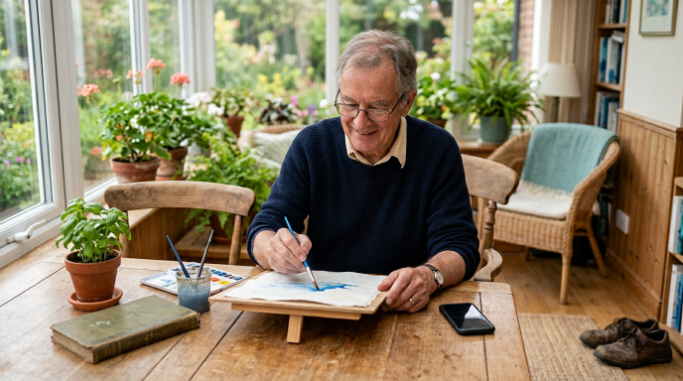
The easiest hobbies have a low entry barrier, adjustable difficulty, and a simple first session. You should be able to test the activity before spending much money.
Here are practical starter estimates rather than strict rules. Adjust them around your interests, abilities, available space, and budget.
| Hobby | First Session | Starter Cost | Social Level | Physical Demand |
|---|---|---|---|---|
| Walking | 10–20 minutes | Low | Solo or social | Low to moderate |
| Watercolor painting | 20–30 minutes | Low | Solo or class | Low |
| Container gardening | 20–30 minutes | Low to moderate | Usually solo | Low to moderate |
| Photography | 15–30 minutes | Low with a phone | Solo or social | Low |
| Reading or book club | 20–30 minutes | Low | Solo or high | Low |
| Learning an instrument | 10–15 minutes | Moderate | Mostly solo | Low |
| Volunteering | 1–2 hours | Usually low | High | Varies |
Creative hobbies
Painting, drawing, knitting, crochet, woodworking, pottery, photography, journaling, and writing can all grow with your skill level. Beginner projects let you see progress without needing months of preparation.
Active hobbies
Walking, gardening, swimming, dancing, birdwatching, and gentle cycling can combine recreation with movement. Choose intensity based on your current ability rather than your age alone.
The CDC’s activity guidance for adults 65 and older recommends aerobic, muscle-strengthening, and balance activity while also advising people to work within their abilities and health conditions.
Learning hobbies
Languages, musical instruments, local history, cooking, astronomy, genealogy, technology, and online courses are useful if curiosity matters more to you than making a physical object.
Social hobbies
Book clubs, card groups, volunteering, community theater, choirs, walking clubs, dance classes, and community gardening make meeting people part of the activity. This can feel easier than attending an event where socializing is the only purpose.
Section Takeaway: The best beginner hobby is not the most impressive one. It is the activity you can comfortably try, enjoy, and repeat.
How Do You Choose the Right Hobby?
Start with the experience you want, not a giant list of possible hobbies. Deciding how you want to feel quickly narrows the choices.
Ask yourself five questions
- Energy: Do I want something active or relaxing?
- Company: Would I rather do it alone, with a partner, or in a group?
- Setting: Do I prefer staying home or getting outside?
- Purpose: Do I want to create, learn, move, compete, help, or socialize?
- Budget: How much am I comfortable spending before I know I enjoy it?
Your answers can eliminate dozens of unsuitable activities. Someone who wants quiet creativity at home has different needs from someone hoping to meet new friends.
Use the three-hobby method
If you have more free time after retirement, you do not need one hobby to meet every need. I like choosing activities from three different categories.
- One for movement: Walking, gardening, swimming, tai chi, or dancing.
- One for your mind: Reading, music, languages, genealogy, photography, or puzzles.
- One for connection: Volunteering, clubs, classes, games, or group activities.
You do not need to start all three immediately. Try one first, then add another only when the first fits comfortably into your week.
Do not choose based on age stereotypes
There is no official list of hobbies a 70-year-old is supposed to enjoy. Your interests, abilities, personality, and goals matter more than the number on your birthday.
An 80-year-old may love photography while a 60-year-old prefers knitting. Another person may discover painting for the first time after decades of believing they were not creative.
How Do You Start a Hobby Without Getting Overwhelmed?
The easiest way is to treat the first month as an experiment. Your job is to discover whether you enjoy the activity, not prove that you can master it.
Follow a simple five-step start
- Choose one hobby. Avoid beginning four new activities during the same week.
- Plan one small session. Fifteen to 30 minutes is enough for many hobbies.
- Use basic equipment. Borrow, rent, or buy an inexpensive beginner version first.
- Repeat it three to five times. One awkward first attempt tells you very little.
- Review how you feel. Continue because you want another session, not because you already spent money.
Avoid the expensive-equipment trap
Buying gear can feel like progress before you have even started. A costly camera, premium golf clubs, or a room full of craft supplies will not guarantee that the activity suits you.
I use a simple rule: let the hobby earn the upgrade. Start with what you need for the first few sessions, then spend more when your interest becomes consistent.
Make the goal easy to keep
“Learn guitar” is vague and intimidating. “Practice two chords for 15 minutes on Monday, Wednesday, and Friday” gives you something concrete to do.
- Read 10 pages each evening.
- Take five interesting photographs during a Saturday walk.
- Paint one small watercolor each week.
- Grow three herbs in containers.
- Attend one community class this month.
- Practice a language for 10 minutes four days a week.
These goals are intentionally modest. You can always increase the time after the routine begins to feel natural.
Section Takeaway: Start cheaply, practice briefly, and judge the hobby by whether you want to return to it.
What If Age or Physical Limitations Make Hobbies Harder?
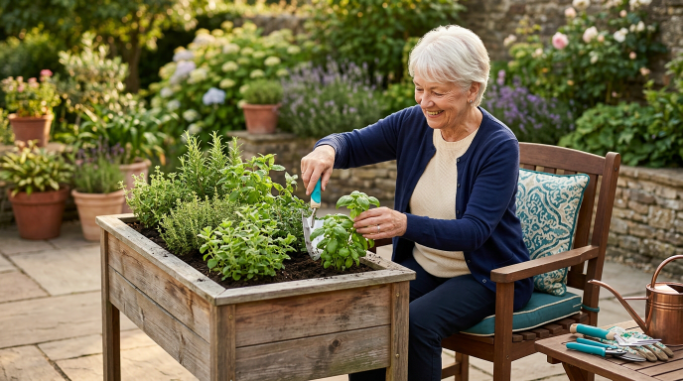
A limitation may change how you do a hobby without eliminating the hobby itself. Adaptation is often more useful than immediately giving up an activity you find interesting.
Adjust the setup
- Reduced mobility: Try container gardening, seated crafts, birdwatching from accessible locations, audiobooks, writing, or online classes.
- Hand discomfort: Consider larger-grip tools, thicker pens, lightweight equipment, or shorter sessions.
- Vision changes: Use brighter task lighting, large-print books, audiobooks, magnification, or larger project materials.
- Hearing changes: Choose quieter classes, written instructions, captions, or activities that rely less on spoken communication.
- Lower energy: Break a 60-minute activity into two or three shorter sessions.
The same principle applies to active hobbies. A shorter flat walk may be a better hobby than a difficult trail if it lets you participate comfortably and consistently.
Safety matters more than keeping up
Stop an activity if it causes unexpected pain, dizziness, unsafe balance, unusual shortness of breath, or other concerning symptoms. Do not use another person’s ability as your safety standard.
Health note: Anyone managing a significant medical condition, recent injury, fall risk, or major change in physical ability should discuss new strenuous activities with an appropriate healthcare professional.
Do not confuse adaptation with failure
Using a chair, larger tool, audiobook, raised planter, electric assistance, or shorter practice session does not make the hobby less legitimate. It simply makes the activity fit you.
That flexibility is one of the best parts of hobbies. You control the rules.
Frequently Asked Questions
Is 60 too old to start a new hobby?
No. At 60, you can start creative, social, intellectual, or physical hobbies that fit your interests and health. Start with a small commitment and focus on enjoyment instead of how quickly you improve.
Is 70 too old to learn something new?
No. Being 70 does not prevent you from learning photography, painting, gardening, technology, languages, music, crafts, or countless other skills. Choose an activity with a comfortable learning pace and expect to make beginner mistakes.
Can you start a new hobby at 80?
Yes. An 80-year-old can start many hobbies, especially when the setup matches current mobility, vision, hearing, dexterity, and energy. Reading, writing, photography, container gardening, music, crafts, games, classes, and social groups can all be adapted.
What is the easiest hobby for an older adult to start?
Walking, reading, journaling, puzzles, phone photography, birdwatching, drawing, and simple container gardening are easy starting points for many people. They require limited equipment and can be tested in short sessions before making a bigger commitment.
What hobby is best after retirement?
The best retirement hobby is one you enjoy enough to repeat. Look for an activity that matches the experience you want, whether that is movement, relaxation, creativity, mental challenge, purpose, or social connection.
What if I try a hobby and do not like it?
Stop and try something else. Testing a hobby and deciding it is not for you is useful information, not failure, especially when you avoided spending heavily before discovering whether the activity suited you.
How many hobbies should a retired person have?
There is no ideal number. One satisfying hobby may be enough, while another person may enjoy separate activities for movement, learning, and social connection.
Final Takeaway
It is not too late to start a new hobby. Your age may influence how you approach an activity, but it does not remove your ability to be curious, creative, social, active, or interested in learning.
Forget about finding the perfect hobby before you begin. Pick one activity that sounds interesting and give it a few low-pressure attempts.
Keep the first step small. A 20-minute session this week can be the beginning of something you enjoy for years.